Fintech go-to-market is the system a payments, banking, or lending startup uses to acquire customers when the buyer is deciding whether to trust it with money or sensitive financial data. It differs from ordinary SaaS go-to-market in one decisive way: trust is the first constraint on distribution, not a feature you add later. Every channel, from founder-led content to Reddit to paid social, has to clear a trust bar before it converts, so the winning motion sequences credibility and compliance up front and treats them as distribution surfaces rather than back-office costs. This playbook lays out that sequence: what makes fintech distribution different, which channels a regulated company can actually use, and how to time the whole motion around a license, a launch, and a raise.
TL;DR
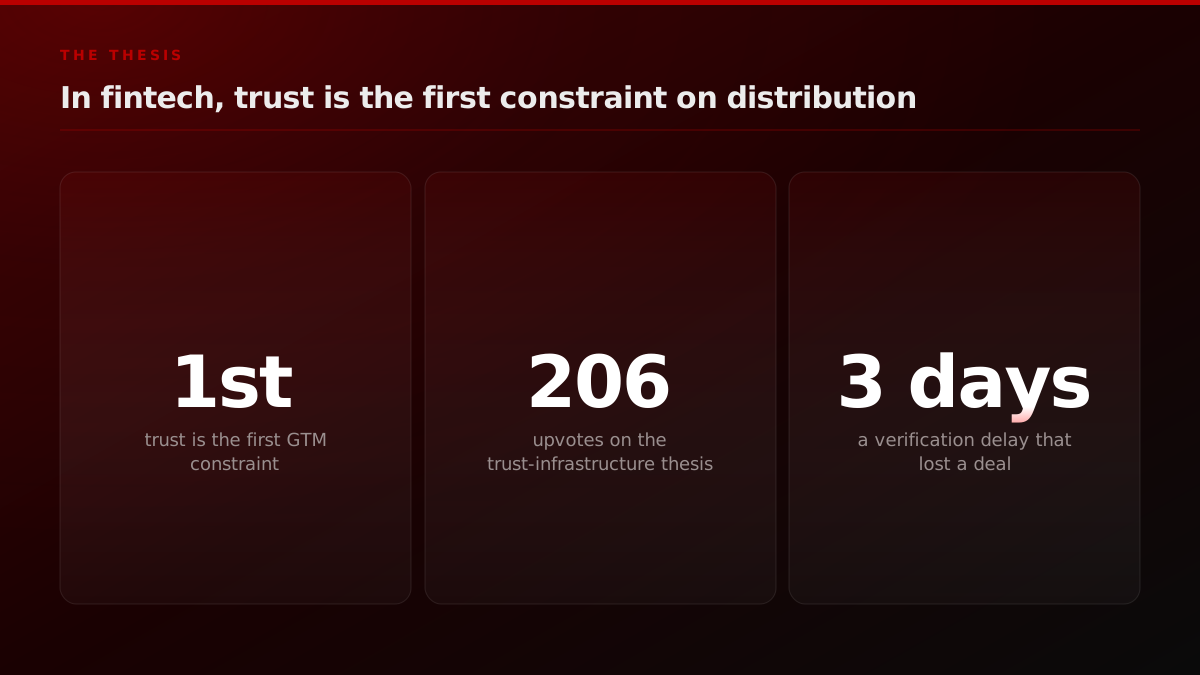
Fintech go-to-market fails when trust is treated as a compliance checkbox bolted on after growth. In a regulated category, trust is the first constraint on distribution, so you sequence it first, publish your regulatory and security posture, build a credible founder channel, participate genuinely in communities like r/fintech, and only then amplify with paid. Sequence the whole motion around the three catalysts that actually move a fintech (a license or charter, a launch, and a raise), and measure trust-adjusted pipeline (cost per funded account, and the owned-to-paid conversion ratio) rather than raw reach.
Most published fintech go-to-market advice is a generic seven-step template that could describe any B2B company. Even a genuinely good general primer, like Stripe's overview of go-to-market strategy or a fintech-native company's own guide to creating a go-to-market strategy, is written for startups broadly, not for the specific problem of earning trust with money. That is why the generic version does not work here. A fintech founder does not have a distribution problem that looks like a normal SaaS distribution problem. They have a trust problem that happens to express itself as a distribution problem, and until the marketing is built around that, the spend leaks. The stakes are not small: stablecoin payment volume alone reached roughly $33 trillion in 2025 and is projected to hit $56 trillion by 2030, according to reporting on Bloomberg's forecasts, so the fintechs that solve trust-first distribution are competing for an enormous and fast-moving market.
What makes fintech go-to-market different from normal SaaS?
Fintech go-to-market is different because the buyer is not evaluating whether a tool is useful; they are deciding whether to hand you their money or their identity. That single fact changes the gating constraint. For ordinary SaaS, the thing standing between you and growth is product-market fit: does the product work, and do people want it. For fintech, the product can work and people can want it, and the deal still does not close, because the prospect is not yet convinced you are safe.
This is why top investors treat fintech as its own discipline rather than a subset of SaaS, as a16z's fintech practice reflects, and why the category is built on a deep stack of payments and banking infrastructure that a buyer implicitly evaluates for safety before they commit.
That difference cascades through the entire motion. The first proof a normal SaaS buyer needs is that the product works; the first proof a fintech buyer needs is that the product is safe and, increasingly, that it is properly regulated. Paid channels that are broadly open to SaaS are restricted for financial products, with extra review and policy constraints across most ad platforms. The sales cycle is driven less by feature fit and more by risk, security, and regulatory review. The one constant is that founder-led content is the cheapest durable channel in both worlds, but in fintech it only works when the founder can speak credibly to security and regulation, not just growth.
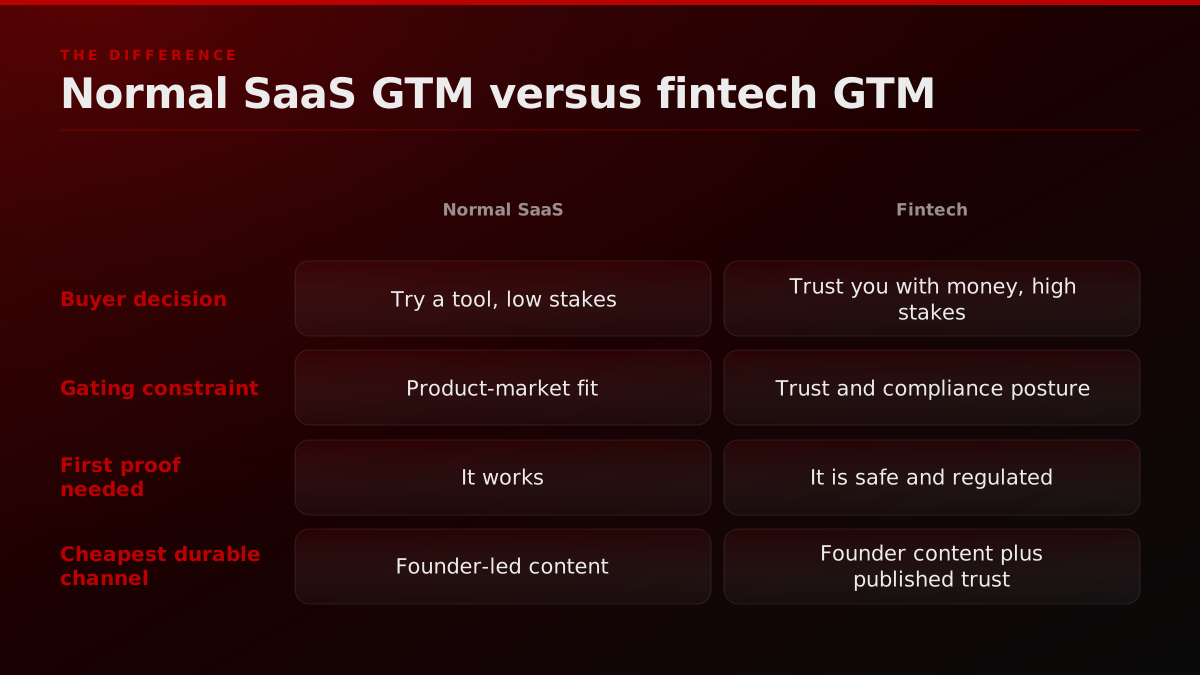
The table below makes the contrast concrete. Read it as a warning about borrowed playbooks: the tactics look the same as SaaS, but each one is gated by trust in a way the SaaS version is not, and running the SaaS version unmodified is how fintech budgets get burned.
Normal SaaS GTM vs Fintech GTM
| Dimension | Normal SaaS | Fintech |
|---|---|---|
| Buyer decision | Try a tool, low stakes | Trust you with money or identity, high stakes |
| Gating constraint | Product-market fit | Trust and compliance posture |
| First proof needed | It works | It is safe and regulated |
| Paid channel access | Broadly open | Restricted rules for financial products |
| Sales cycle driver | Feature fit | Risk, security, and regulatory review |
| Cheapest durable channel | Founder-led content | Founder-led content plus published trust posture |
The difference is not the marketing tactics; it is that trust gates every one of them in fintech.
There is also a structural reason fintech go-to-market carries more weight than SaaS go-to-market: the cost of building the thing that earns trust is enormous, and it is front-loaded. An operator on Hacker News captured the founder's reality of this bluntly.
The amount of regulation and infrastructure needed to deal with other people's or companies' money is downright insane and requires tons of upfront investment.
That upfront burden is not a reason to underinvest in distribution; it is the reason distribution has to be built around trust from day one. If you have spent a year and a large fraction of your capital building compliance and risk infrastructure, the single worst outcome is to then market the product as if that infrastructure did not exist, hiding your strongest asset in a compliance folder instead of putting it at the center of the story. The expensive thing you built is exactly what the buyer is trying to evaluate, so the go-to-market job is to make it visible, legible, and easy to trust.
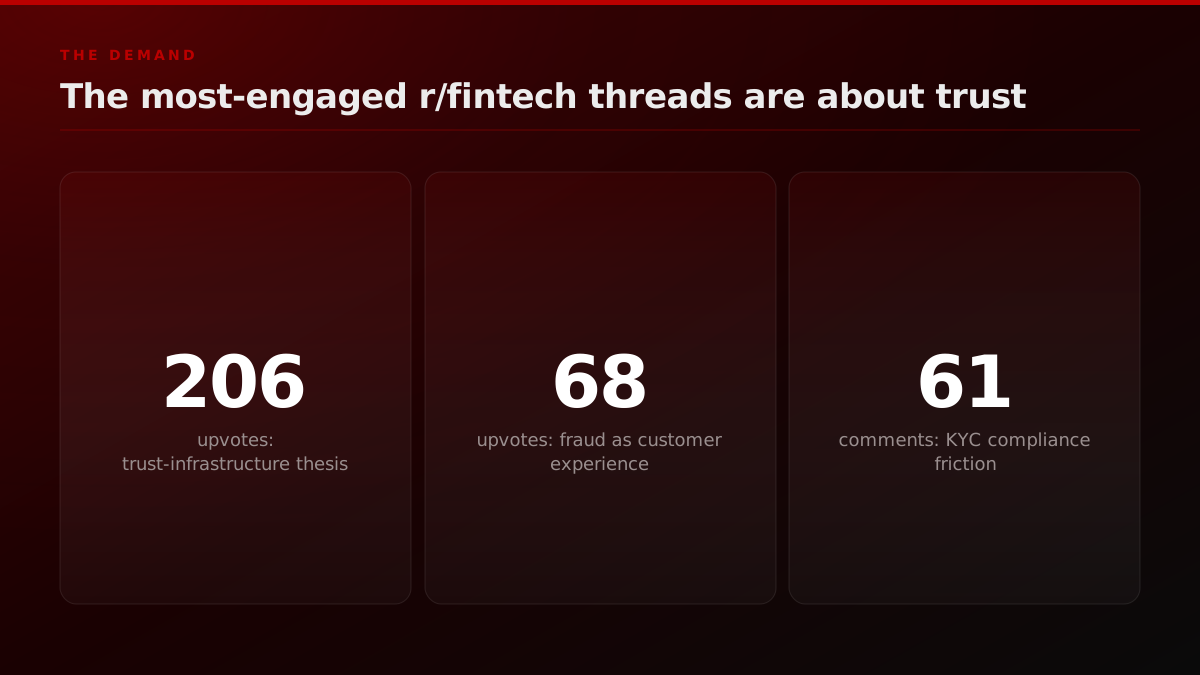
This is not a theoretical distinction. It shows up in the communities where fintech operators actually talk. On r/fintech, the most-engaged threads are rarely about features or pricing. They are about fraud, compliance, KYC, and whether a company can be trusted with money at all.
Trust Infrastructure Is the Real Moat
A widely-upvoted r/fintech thread from an operator who worked at both a bank and an early-stage fintech argued the opposite of the usual disruption narrative: what keeps incumbents alive is that "compliance, fraud, and risk infrastructure is genuinely hard and expensive to build, and most fintechs are subsidizing their growth by quietly underinvesting in it." The fintechs threatening incumbents long-term are the ones who built real risk infrastructure without killing product velocity. Trust is not a cost center bolted on after growth; it is the growth constraint.
Source: r/fintech operator thread (206 upvotes), 2026
Why does trust have to come before distribution in fintech?
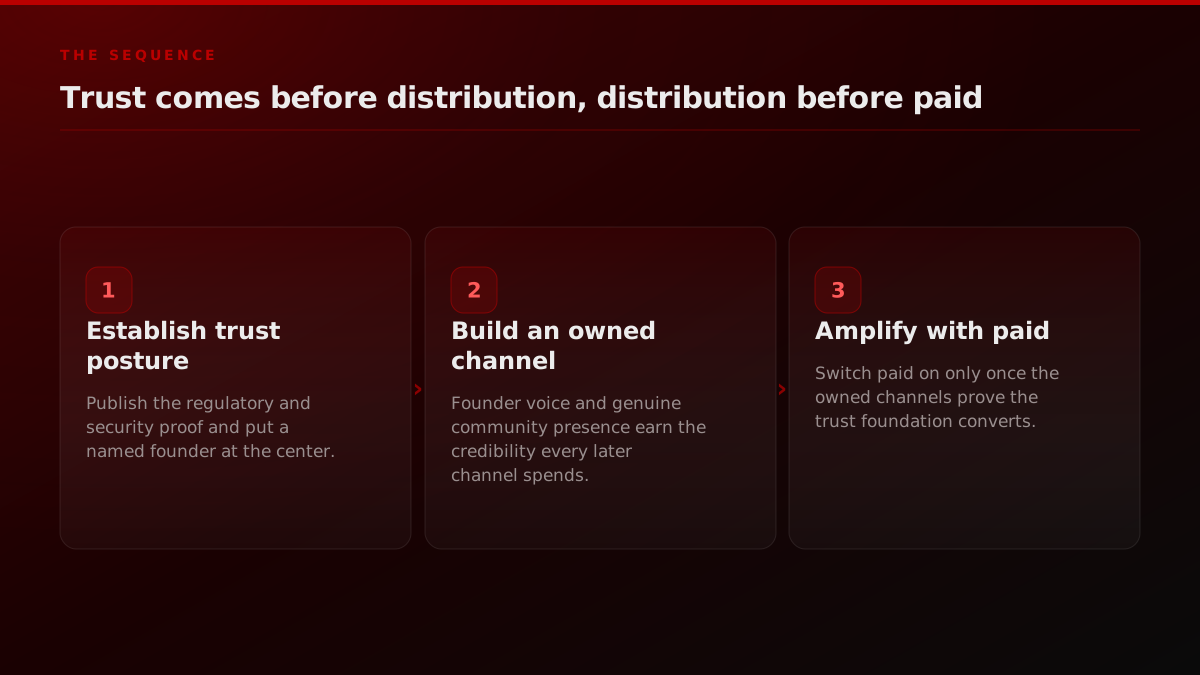
Trust has to come first because in fintech it is the constraint that every channel runs into. If you buy reach before you have earned trust, the reach arrives, the prospect checks whether you look safe to touch, and most of them leave. You paid for a click that a trust deficit turned into a bounce. The sequence is not a nice-to-have; it is causal. Trust enables distribution, distribution enables paid amplification, and reversing the order wastes the spend.
The strongest evidence for this comes from operators, not marketers. One widely-shared r/fintech thread, written by someone who worked at both a large bank and an early-stage fintech, argued that what keeps incumbents alive is not inertia. It is that compliance, fraud, and risk infrastructure is genuinely hard and expensive to build, and that many fintechs subsidize their growth by quietly underinvesting in it, with the bill arriving later as a regulatory action or a fraud wave. The takeaway for go-to-market is direct: the trust infrastructure you build is not a cost you offset with marketing. It is the thing your marketing is selling.
Trust is also not an abstraction the customer never sees. It is a lived, daily experience. A thread on how Barclays built explainable fraud detection framed it as the difference between treating fraud as a backend compliance function and treating it as a customer-experience problem that happens to involve security. Every false positive is a blocked transaction and a moment where the customer has to prove themselves to a system that should have handled it. In fintech, the way you handle trust is felt by every user, every day, which is exactly why it doubles as a distribution asset: the quality of the trust experience becomes word of mouth, or its absence does.
Trust Is a Customer-Experience Surface
One r/fintech thread on how Barclays built explainable fraud detection framed the insight sharply: "most fintechs treat fraud as a backend compliance function. Barclays treated it as a customer experience problem that happens to involve security." Every false positive is a blocked transaction and a customer doing work your system should have handled. In fintech, the way you handle trust is a distribution asset because it is felt by every user, every day.
Source: r/fintech Barclays fraud thread (68 upvotes), 2026
And the trust experience is the same funnel as the acquisition funnel. A founder in r/fintech described losing an enterprise deal because verification took three days. That is not a compliance story; it is a conversion story. Every acquisition dollar you spend can leak out at a slow or opaque onboarding step, which is why a fintech cannot run distribution and compliance as two teams that never talk.
Onboarding Friction Is a Distribution Leak
A founder in r/fintech described losing a deal directly to trust friction: "Last week we had a potential enterprise client ghost us because our verification took 3 days. THREE DAYS." Every acquisition dollar you spend leaks out at a slow or opaque onboarding step. In fintech, the trust experience and the conversion funnel are the same funnel, which is why distribution and compliance cannot be run by separate teams that never talk.
Source: r/fintech KYC thread (30 upvotes, 61 comments), 2026
Operator noteIf your growth team and compliance team never talk, your acquisition budget leaks at onboarding. In fintech they are the same funnel.
Which distribution channels can a regulated fintech actually use?
A regulated fintech can use nearly every modern distribution channel, but each one has a trust gate it must clear before it produces customers. The channels are the same ones a good SaaS company uses; the difference is the order you invest in them and the substance each one requires. Run them in roughly the trust order below, because the early channels build the credibility the later channels spend against.
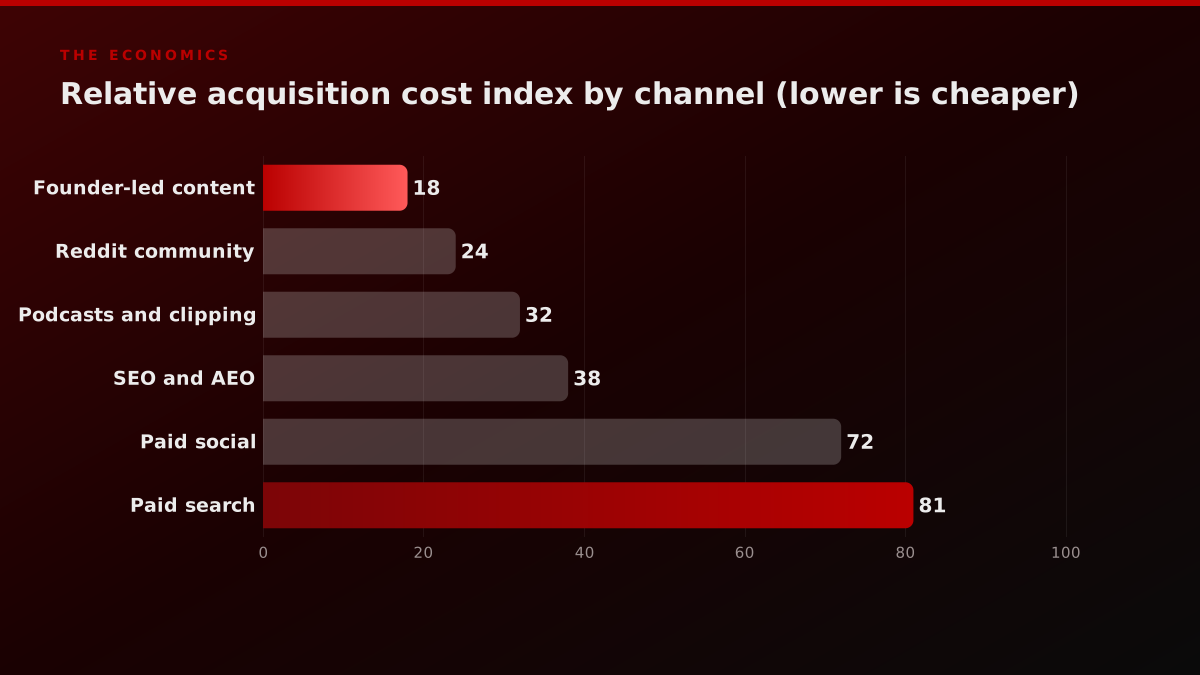
Founder-led content on X and LinkedIn comes first, because in fintech trust attaches to people, not logos. A founder who can explain fraud controls, regulatory posture, and why the money is safe carries credibility a brand account cannot manufacture. Reddit comes next, because communities like r/fintech and r/startups carry genuine high-intent demand, but they punish link-dropping and reward real answers to real compliance and fraud questions. Podcasts and clipping extend the founder's voice: a founder explaining, honestly, how the product keeps money safe is high-trust content that also travels well in short form. SEO and answer-engine optimization capture the prospect who Googles "is X safe" or asks an AI assistant about your category, so your first-party explanation is the one that gets cited. Paid social and search come last, because they scale a channel that trust has already made credible; they do not create the trust.
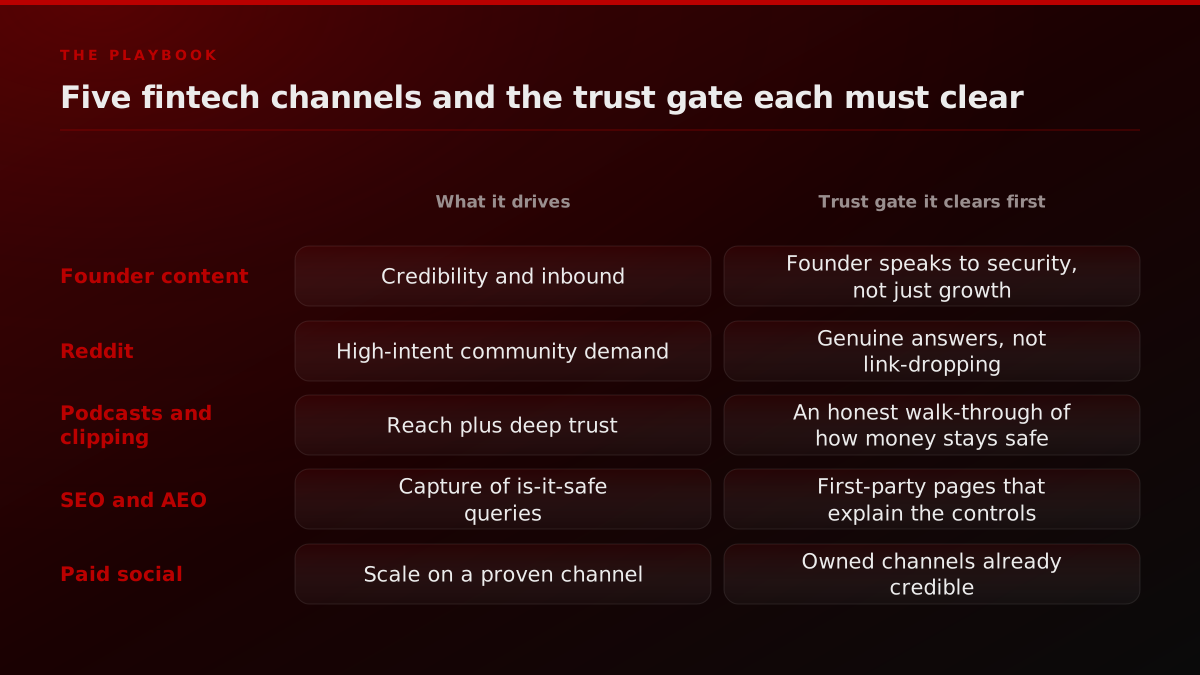
Fintech Channels and the Trust Gate Each Must Clear
| Channel | What it drives | Trust gate it must clear first |
|---|---|---|
| Founder-led content | Credibility and inbound | Founder speaks to security, not just growth |
| Reddit communities | High-intent community demand | Genuine participation and real answers |
| Podcasts and clipping | Reach plus deep trust | An honest how-money-stays-safe walkthrough |
| SEO and answer engines | Capture of category queries | First-party pages on the controls |
| Paid social and search | Scale on a proven channel | Owned channels already credible |
Run the channels in roughly this trust order. Paid is last because it amplifies trust; it does not create it.
It helps to see what each of these channels actually looks like when it is run well for a regulated product, because the trust gate changes the execution, not just the selection.
Founder-led content is where the motion starts, and the substance bar is the whole game. A payments founder who posts a thread explaining how their fraud model decides to hold a transaction, what the false-positive tradeoff is, and what they changed after getting it wrong, is doing something a competitor cannot copy with a brand account. That thread is simultaneously credibility, education, and a lead magnet, because the reader who understands your controls is the reader who trusts you enough to move money. The founder does not need to be a prolific poster; they need to be a credible one, publishing a small number of genuinely informative pieces about how the product keeps money safe rather than a high volume of generic growth commentary. Running this well on X is its own discipline, which is why we treat Twitter and X growth as a dedicated service, and if you are weighing where a regulated founder should concentrate, our comparison of Reddit versus LinkedIn for B2B distribution is a useful map.
Reddit is the community layer, and it is unforgiving of the wrong approach. Subreddits like r/fintech and r/startups carry exactly the buyers you want, but they treat a dropped link as spam and a genuine answer as gold. The winning pattern is to find the threads where people are already asking your category's trust questions, which KYC vendor actually works, how to handle multi-market compliance, whether a given model is safe, and to answer them substantively, as an operator who has solved the problem. The account earns standing over weeks, and the standing is what makes an eventual, sparing mention of your product land as a recommendation rather than an ad. This is a real service line, not a growth hack, and it is why we treat compliant Reddit marketing as its own discipline. If you are building this in-house, our Reddit marketing strategy guide covers the mechanics, and our roundup of the best subreddits for B2B founders helps you find where your fintech buyers actually gather.
Podcasts and clipping extend the founder's voice into formats that travel. A founder who goes on a fintech or startup podcast and explains, honestly, how the money moves and where the risks are, produces an hour of high-trust content. Clipping into short form, the best two minutes of that conversation reach an audience that would never sit through the full episode, and each clip carries the founder's credibility with it. This is the same mechanic that powers creator distribution generally, applied to a regulated product where the differentiating content is the safety story rather than a demo.
SEO and answer-engine optimization capture the searches that happen at the exact moment of doubt. When a prospect Googles your company name plus "safe" or "legit," or asks an AI assistant whether your category can be trusted, the answer that appears is either your first-party explanation or someone else's guess. Owning that moment means publishing real pages about your controls, your regulatory posture, and your security model, structured so both Google and the answer engines can cite them. In a trust category, the "is it safe" query is one of the highest-intent searches a prospect ever runs, and losing it to a forum thread or a competitor comparison is an expensive miss.
Paid social and paid search come last, not because they do not work, but because they only work once the earlier channels have made the destination credible. A paid click in fintech lands on a profile or a page that the prospect then evaluates for trust, and if that destination is thin, the click is wasted. Paid is the amplifier you switch on after the owned channels prove that the trust foundation converts.
The point is not that any single channel is magic. A former fintech founder put the channel reality bluntly: there is no magic trick to growth in fintech, so you try cold email, cold LinkedIn, performance marketing, referral, partners, and affiliates, then double down on the one or two that work. The trust-first frame does not reject that. It is the filter that predicts which channels will convert for a regulated product, and it tells you not to spend on the ones that need a trust foundation you have not built yet.
There Is No Magic Channel
Luka Ivicevic, who previously founded the fintech Penta (acquired), put the channel reality plainly: "There is no magic trick to growth in fintech. Cold emails, cold LinkedIn, performance marketing, physical mail, word of mouth/referral, partners, affiliates, etc. Try them all and then double down on what works." The trust-first framing is not a rejection of channels; it is the filter that tells you which of them will actually convert for a regulated product, and in what order to invest.
Source: Luka Ivicevic (ex-Penta founder), X, 2026
Luka Ivicevic
@lukaivicev
There’s no magic trick to growth in fintech. Cold emails, cold LinkedIn, performance marketing, physical mail, word of mouth/referral, partners, affiliates, etc. try them all and then double down on what works and expand with scale. Ideally find 1-2 channels that you know work
The demand these channels tap is real and it is specifically about trust. The most-engaged fintech community threads are about compliance, fraud, and safety, which means the content that earns attention in this category is the content that addresses those directly.
After working at both a big bank and an early-stage fintech, here's the thing nobody tells you about why legacy institutions actually survive
How do you sequence fintech go-to-market around a license, launch, and raise?
You sequence the motion around the three events that actually create leverage for a fintech: a license or charter, a product launch, and a fundraise. Each one is a trust catalyst, a moment when your credibility jumps, and each is something you distribute against rather than let pass quietly. Distribution without one of these catalysts has no wind behind it; distribution timed to one compounds.
A license or charter is proof that a regulator has judged you fit to handle regulated activity, which is among the strongest trust signals a fintech can hold. Distribute against it with an authority push: publish what the license means in plain language, get cited for it in search and AI answers, and reference it across every channel so it does the trust work on your behalf. A product launch is not the moment to start building an audience; it is the moment to convert the one you built in the months before, which is why the pre-launch trust and content work matters more than launch day itself. The launch-day mechanics still matter, and our product launch playbook and Product Hunt launch playbook cover the sequencing, with the fintech caveat that trust proof should lead the launch narrative. A fundraise is external validation from credible backers, and you amplify it to accelerate the founder brand and open partnership and press channels that were harder to reach before.
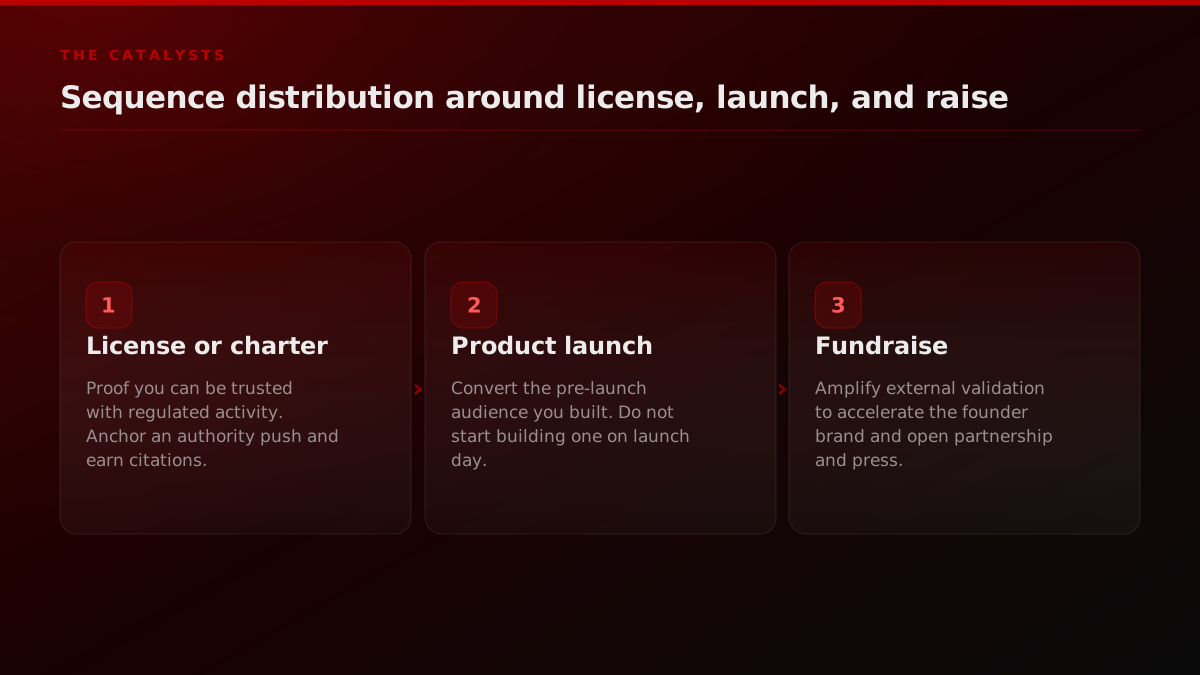
Sequencing Distribution Around License, Launch, and Raise
| Catalyst | What it proves | How you distribute against it |
|---|---|---|
| License or charter | Trusted with regulated activity | Authority push, publish and earn citations |
| Product launch | The product is real and usable | Convert the pre-launch audience |
| Fundraise | Credible external validation | Amplify to accelerate the founder brand |
No catalyst, no leverage. The most common stall is spending against a launch before the pre-launch audience exists.
Operator noteNo license, launch, or raise on the horizon? Build the founder channel and trust posture now, so you have leverage when a catalyst lands.
The most common failure here is spending against a launch before the pre-launch audience exists, so launch day produces a spike that decays to nothing instead of converting a warm audience. The same discipline that governs a strong SaaS launch applies, and if you want the mechanics of building demand before launch day, our pre-launch marketing playbook covers the sequence in detail. The fintech-specific addition is that the pre-launch work is not only audience-building; it is trust-building, so it starts earlier and leans harder on proof.
The sequencing also depends on where you are in the product's maturity, and the right activity is different before and after product-market fit. QED Investors, which has backed a long list of fintechs, frames the early stage around learning rather than scaling.
We'd encourage pre-product-market-fit companies to orient around learning as much as possible from customers.
That is the trust-first motion stated in growth-stage terms. Before product-market fit, the founder channel and the community layer are doing double duty: they distribute, and they surface the exact trust objections that tell you what to build and what to publish next. After product-market fit, the same channels shift toward scale, and paid amplification finally earns its place. Skipping the learning phase, spending on reach before you understand which trust objections are blocking conversion, is how a fintech buys a lot of clicks and learns nothing from them.
There is a human layer to this that founders underrate. Trust is not only what customers extend to the product; it is what investors, partners, and early employees extend to the founder, and the same credible-founder motion earns all of it at once. A founder in r/fintech, reflecting on how brutal fintech fundraising is, landed on a point that applies equally to customers.
The only kind of investor you can succeed with is the one you find yourself, who believes in you and trusts in your vision.
Replace "investor" with "customer" and the sentence is still true. In a trust category, the people who back you, buy from you, and build with you are all responding to the same signal, which is why the founder-led channel is not one distribution tactic among many. It is the source of the trust that every other channel spends.
What does fintech customer acquisition cost, and how do you lower it?
Fintech customer acquisition costs more than ordinary SaaS acquisition because the buyer is deciding whether to trust you with money, which lengthens the consideration cycle and raises the proof burden on every touch. A low-stakes SaaS trial converts on a demo; a decision to fund an account, wire money, or connect a payroll feed does not. Add restricted paid channels and higher compliance overhead on the channels you can run, and the cost per acquired, funded customer climbs well above the SaaS baseline.
The lever that lowers it is counterintuitive: not more spend, but more trust per touch. When a prospect arrives already believing you are safe, because they found a founder who speaks credibly about security, a published page explaining your controls, a license they can verify, and real customer proof, the same ad or post or thread converts at a materially lower cost. That is why owned, trust-building channels are the cheapest durable acquisition in fintech. They are slower to start, but they compound, and every unit of trust they bank lowers the cost of every channel downstream, including paid.
Consider the two paths side by side. A fintech that runs a cold-start paid campaign sends traffic to a page, and each visitor independently tries to answer the trust question with whatever they can find, which in a new company is very little, so conversion is low and the cost per funded customer is high. A fintech that spent the prior months building a founder channel, publishing its security posture, and earning standing in the communities where its buyers gather sends the same visitor into a context where the trust question is already answered before the visit. The visitor has seen the founder explain the controls, or read the security page an AI assistant cited, or watched a clip where the founder walked through how the money moves. Same ad spend, very different conversion, because the trust work was done upstream and now compounds across every impression. This is why chasing a lower cost per click is the wrong optimization in fintech; the number that moves the business is the cost per funded customer, and that number is governed by trust, not by bid strategy.
One honest caveat: a trust-first motion lowers acquisition cost, but it does not rescue broken unit economics. A Hacker News discussion on neobanking captured the tension well, with operators pointing out that many consumer fintechs run on margins so thin that reward-funded growth eventually collapses. Trust-first distribution makes the customers you acquire cheaper and stickier, but the underlying business still has to make money on them. Use the playbook to compound trust, not to paper over a model that does not work.
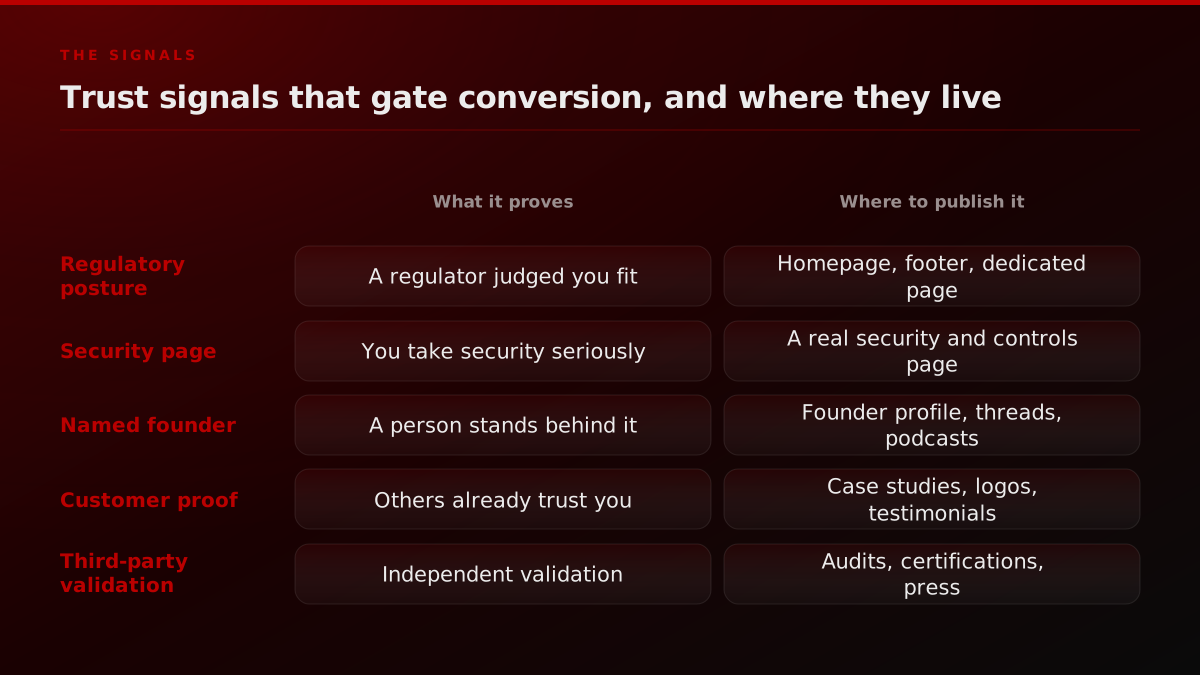
The trust signals that do this work are concrete and publishable. Regulatory posture, a real security page, a named and visible founder, verifiable customer proof, and third-party validation are not compliance artifacts to hide; they are distribution assets to surface. A prospect who reads them converts faster and cheaper, and an AI assistant that reads them is more likely to cite you when someone asks whether your category is safe.
The Cost of Getting Trust Wrong
Binance paid a $4.3 billion settlement, at the time the largest of its kind, over anti-money-laundering and compliance failures, and its founder pleaded guilty personally. The r/fintech discussion distilled the lesson: the failures were "basic stuff they did not do: check who your customers are, report weird transactions." For an early-stage fintech the number is smaller but the dynamic is identical: trust is the only thing that cannot be bought back after it breaks, which is exactly why it belongs at the front of the go-to-market, not the back.
Source: r/fintech Binance settlement thread (53 upvotes), 2026
If you want the search and AI-answer layer of this to actually capture the "is it safe" queries your buyers run, that is a build, not a hope. Our approach to SEO and answer-engine optimization is designed to make your first-party trust content the cited answer. And the reason it matters that much is the same reason getting trust wrong is fatal: in this category, credibility is the one asset you cannot buy back after it breaks.
How do you build the distribution engine behind a trust-first motion?
You build it around a credible founder voice and then amplify that voice through the channels the trust order allows. The founder is the anchor because, as established above, fintech trust attaches to people. Everything else, community presence, podcasts, clips, and eventually paid, extends and scales what the founder has made credible. This is the same founder-led distribution engine that works across categories; fintech simply raises the substance bar, requiring the founder to speak to safety and regulation rather than growth alone.
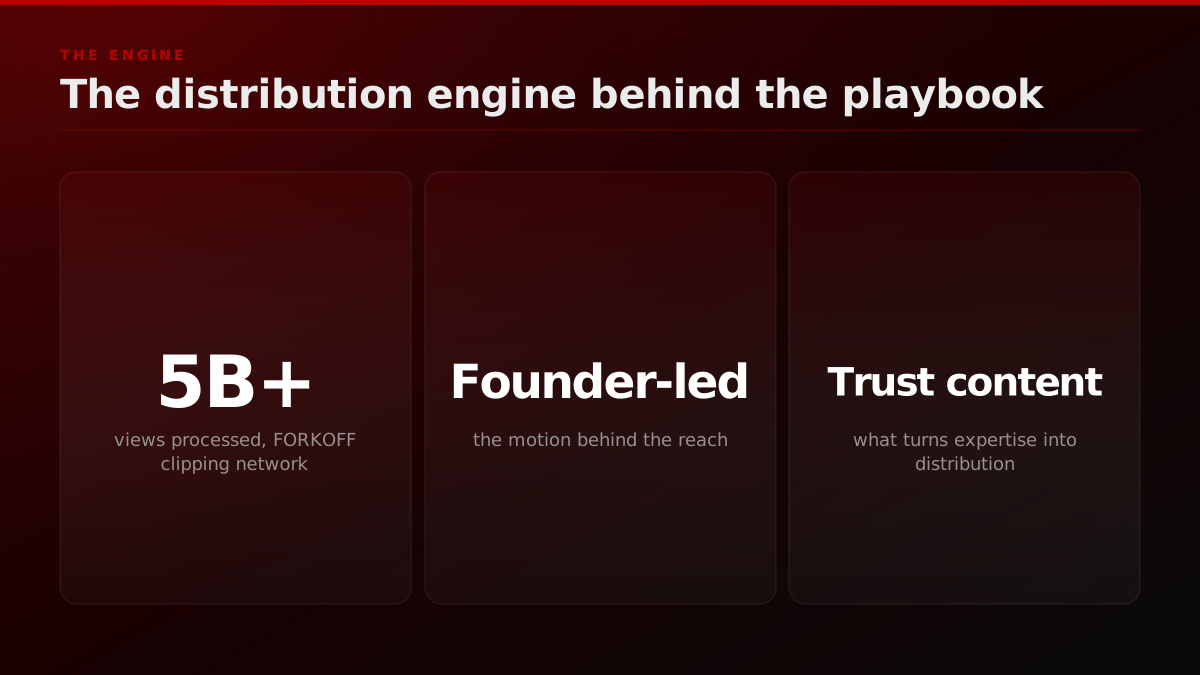
This is exactly the motion FORKOFF runs as a go-to-market engine. The clipping network behind it has processed 5B+ views, and the founder-led system that generated those views, turning a founder's genuine expertise into reach across short form, podcasts, and social, is the same system a fintech uses to turn trust content into distribution. For the mechanics of what actually makes distribution travel, our analysis of what the data says about viral marketing is a useful companion. The mechanics of that founder motion are covered in our founder-led growth approach, and the underlying community layer in our Reddit marketing for B2B founders playbook.
Operator noteA founder posting generic growth takes adds nothing. One teaching how the money moves and what the controls are builds trust that converts.
Fintech Go-to-Market Strategy: A Complete Guide to Successful Launches
upGrowth
A complete walkthrough of fintech go-to-market strategy. Useful context for the sequencing and channel decisions in this playbook.
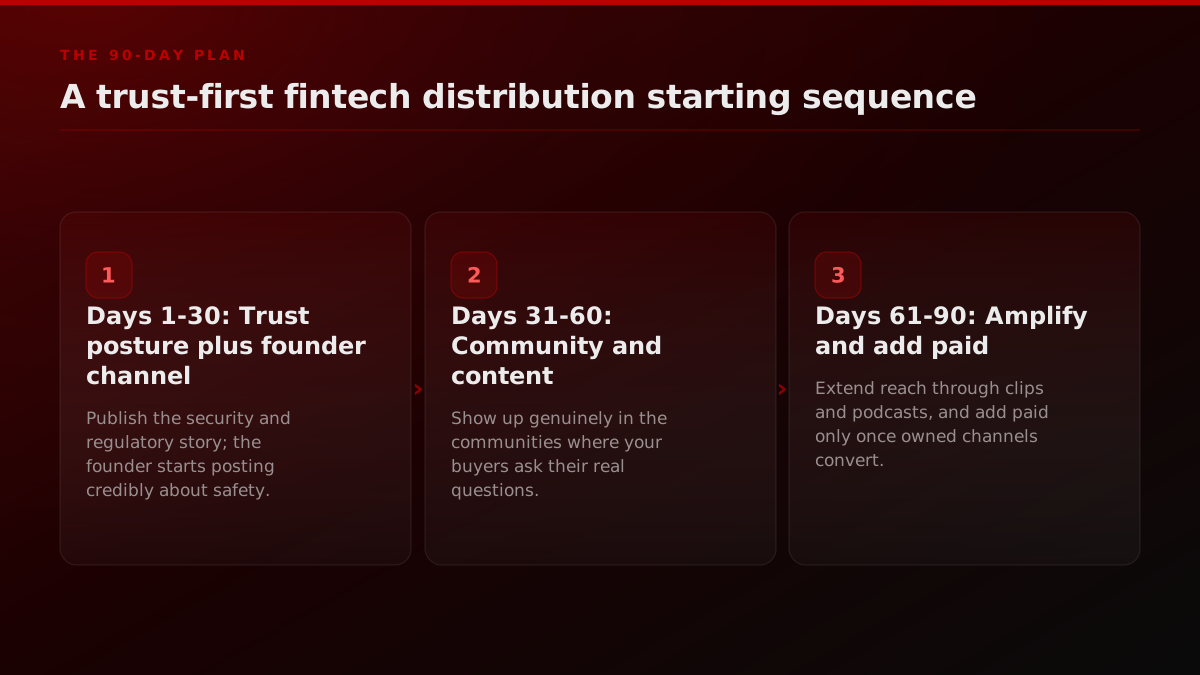
A practical 90-day starting sequence keeps the trust order intact. Spend the first month on trust posture and the founder channel: publish the security and regulatory story, and start the founder posting credibly about how the product keeps money safe. Layer community and deeper content in the second month, showing up genuinely in the places your buyers ask questions. Amplify in the third month, extending reach through clips and podcasts and adding paid only once the owned channels are credible enough that paid reach lands on substance.
Operator noteDo not run paid until an owned, credible channel exists. Paid reach landing on a thin profile in a trust category mostly bounces.
How do you measure a trust-first distribution motion?
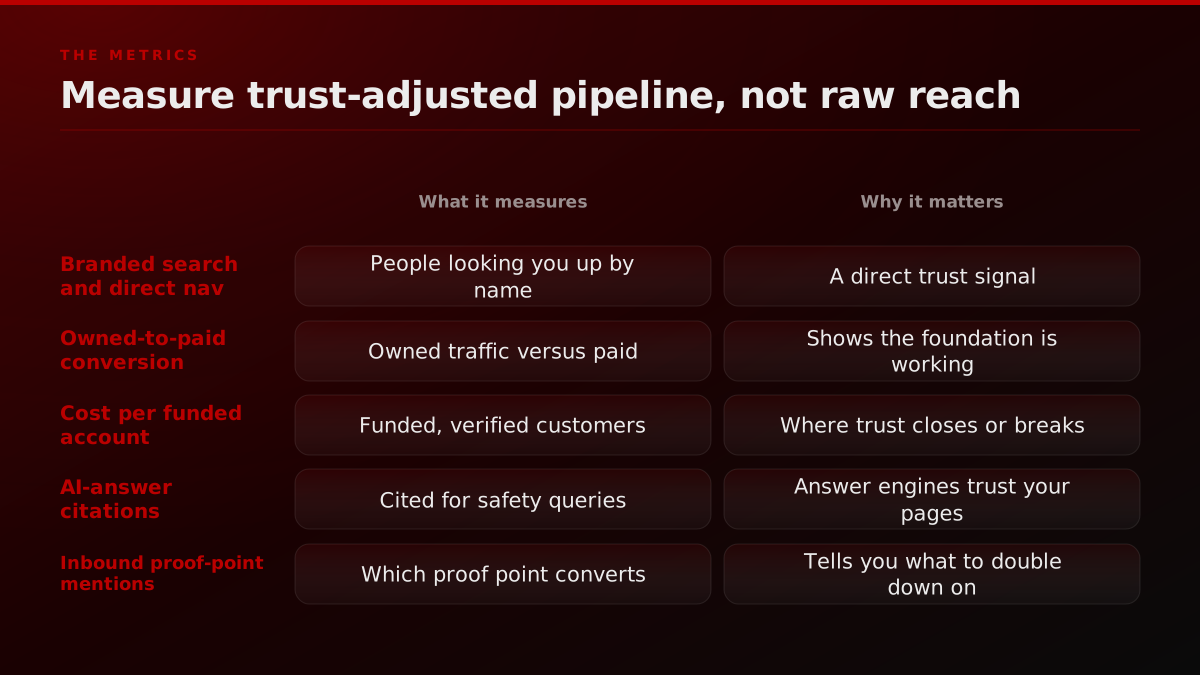
You measure it on trust-adjusted pipeline, not raw reach, because reach that does not clear the trust bar does not become customers. The leading indicators are the ones that reveal whether people trust you enough to act. Branded search and direct navigation growth, people looking you up by name, is a trust signal. The share of inbound that cites a specific proof point, a license, a security page, or a founder thread, tells you which trust assets are doing the work. The conversion rate of owned-channel traffic versus paid tells you whether the foundation is strong. And AI-answer citations for safety and category queries tell you whether the answer engines trust your first-party explanation.
On the acquisition side, track cost per funded account or per activated customer, not cost per signup. In fintech the gap between a signup and a funded, verified customer is precisely where trust either closes the loop or breaks it, so a metric that stops at signup hides the exact failure the whole playbook exists to prevent. A rising owned-to-paid conversion ratio is the single clearest sign that the trust foundation is carrying the distribution. Watch the trend, not the snapshot: if branded search, direct navigation, and owned-channel conversion are all climbing quarter over quarter while paid holds flat, the trust engine is compounding exactly as designed, and that is the moment to lean harder into the channels that built it.
For a deeper treatment of choosing the right acquisition metric by channel, our breakdown of the three-ring distribution model and its pipeline attribution applies directly, with the fintech adjustment that the qualifying event is a funded, verified customer rather than a marketing-qualified lead.
Barclays built fraud detection that explains itself and I think most fintechs are approaching this completely backwards
What are the most common fintech go-to-market mistakes?
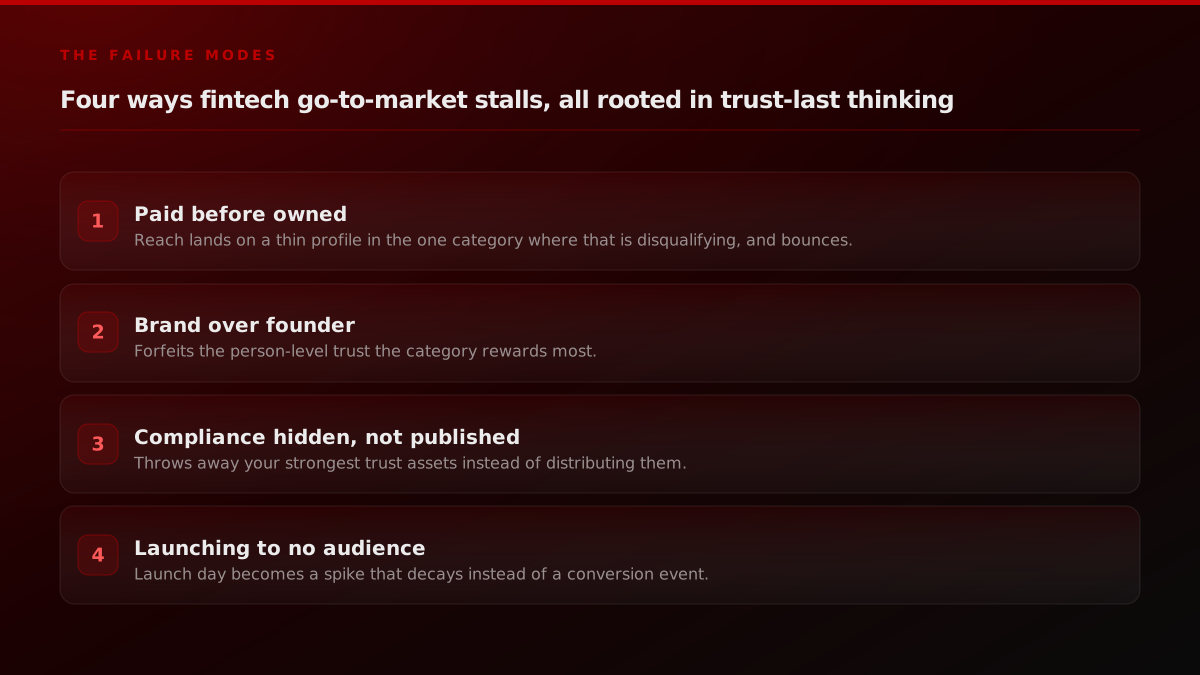
The four most common mistakes all come from the same root: treating trust as an afterthought instead of the first constraint. The first is buying paid reach before an owned, credible channel exists, so the traffic bounces off a thin profile in the one category where a thin profile is disqualifying. The second is running a brand account instead of a founder account, which forfeits the person-level trust the category rewards most. The third is treating compliance and security as a back-office function to hide rather than a distribution surface to publish, which throws away your strongest trust assets. The fourth is launching to an audience you never built, turning launch day into a spike that decays rather than a conversion event.
Each of these is fixable, and the fix is always the same shape: sequence trust first and distribution second. Build the founder channel before you buy reach. Publish the trust posture instead of hiding it. Build the pre-launch audience before the launch. None of it is exotic; it is just the discipline of respecting the constraint that defines the category.
Anyone else drowning in KYC compliance hell? Need recommendations
The verdict
Fintech go-to-market is not a harder version of SaaS go-to-market. It is a different problem wearing the same clothes. The channels look identical, the tactics rhyme, and every one of them is gated by a constraint SaaS does not have: the buyer is deciding whether to trust you with money. Win that, and distribution follows cheaply. Ignore it, and you will spend against a trust deficit that quietly turns every click into a bounce.
The playbook is therefore simple to state and demanding to execute. Publish your trust posture as a distribution asset. Build a founder channel that can speak credibly to safety and regulation. Show up genuinely where your buyers ask their real questions. Sequence the whole motion around the license, launch, and raise catalysts that create leverage. Measure funded customers and owned-to-paid conversion, not reach. Do that, and the trust-first motion compounds into the one thing a fintech cannot buy: a market that already believes you are safe.