A B2B SaaS referral program is a growth loop that rewards existing customers for recommending your product to people they know, with the reward tied to a verified paid outcome rather than a signup. Done right, it turns satisfied customers into a low-cost acquisition channel, and it compounds with the channels where those customers already talk about you, which for most B2B SaaS is LinkedIn. Done wrong, it becomes an open offer that fake accounts, self-referrals, and bots line up to farm. This playbook builds the program around fraud resistance from the first step.
TL;DR
A B2B SaaS referral program is a growth loop, not a coupon. The reason most of them disappoint is not weak incentives, it is that they reward the wrong event and get farmed by fake signups, self-referrals, and bots. Reward on a verified billing event, gate the payout behind a grace period, and run a 3-layer detection stack borrowed from the same logic FORKOFF uses to screen bots across a clipping network that has processed 5B+ views. Build the fraud controls first, then turn on the incentive.
Most referral advice starts with the reward and treats fraud as a closing footnote. That order is backwards. The reward is the easy part, and the fraud controls are what decide whether the program produces real pipeline or just moves your marketing budget into the pockets of people gaming it. FORKOFF has spent years screening bots at scale, running a 3-layer bot-detection system across a clipping network that has processed more than 5 billion views, and the same detection logic is what makes a referral program safe to turn on. So this guide leads with the honest question of whether you should build one at all, then designs the incentive and the detection stack together.
What is a B2B SaaS referral program, and how is it different from an affiliate program?
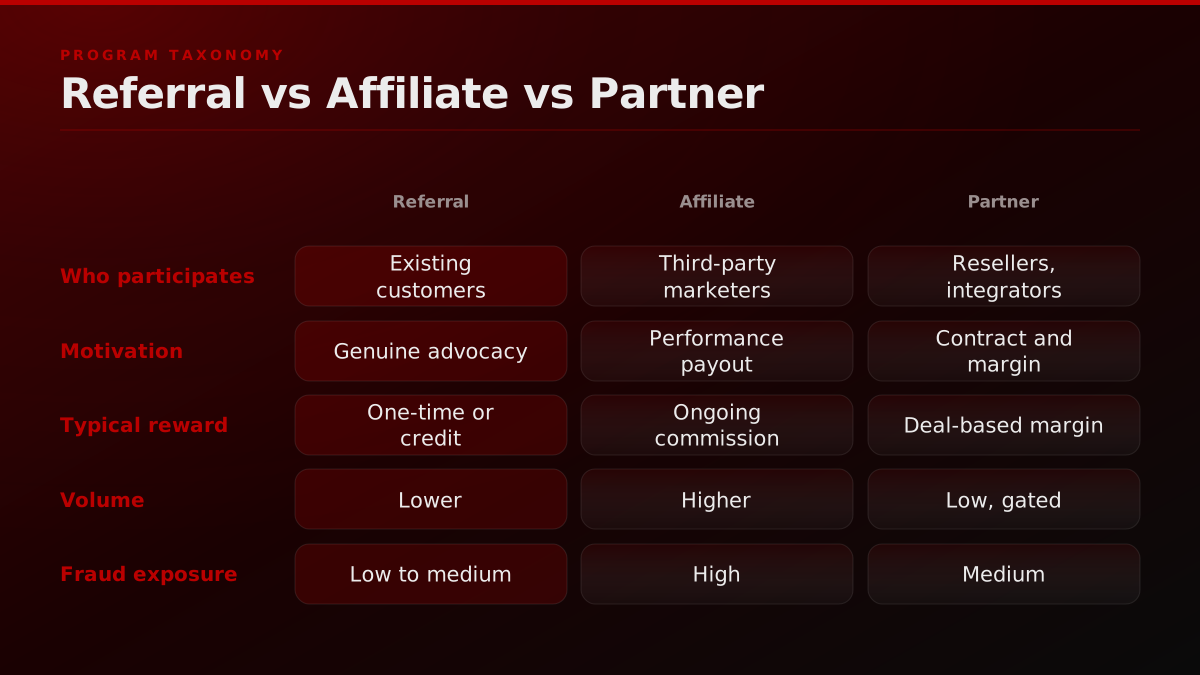
A B2B SaaS referral program rewards your existing customers for introducing the product to peers, usually with a modest one-time benefit or short recurring credit, and it runs on genuine advocacy. An affiliate program rewards third-party marketers and publishers who may never have used the product, usually with ongoing percentage commissions, and it runs on performance-marketing incentives. The distinction matters because the two attract different people and different abuse. Referrals skew lower volume and higher trust. Affiliates skew higher volume and higher fraud exposure, since the participants are motivated purely by the payout. A partner program is a third thing again, built around formal reseller and integration relationships with contracts behind them. Many companies run all three, and the mistake is treating them as one program with one set of rules.
The reason to separate them is that each carries a different fraud profile and needs different gating. A customer referring a peer they genuinely know is a low-risk, high-trust event. A stranger dropping affiliate links across the internet is a higher-risk event that needs stricter attribution and screening. When you blur the two, you either over-police your best customers or under-police the highest-fraud channel. The cleanest B2B setups keep referral, affiliate, and partner motions tracked and fraud-screened separately, even when they share one underlying tool.
The framing that helps here is to think of a referral program as one loop inside your broader go-to-market, not as a standalone campaign. It sits alongside your founder funnel and your organic distribution, and it only works when those upstream motions have already produced customers worth referring. If you want the deeper version of how these loops fit together, our breakdown of community-led vs founder-led growth covers where advocacy actually comes from, and our two-sided marketplace cold-start piece covers the harder version of the same loop.
There is a practical reason B2B teams keep these motions distinct rather than merging them into one payout. The abuse patterns diverge. A customer referral is fraud-screened for self-referral and duplicate accounts. An affiliate link is fraud-screened for cookie stuffing and traffic quality. A reseller partner is screened for deal registration conflicts and margin stacking. If a single tool pays all three from one rule, the loosest rule sets your fraud exposure for the whole program. The same discipline applies to the paid amplification channels that feed advocacy in the first place: influencer marketing and Twitter marketing build the visibility that turns customers into referrers, but each has its own abuse surface and belongs in its own report. Track the motion, gate the reward, and never let one channel's rules leak into another's.
Operator noteReward on a verified billing event, not a signup. Most incentive farming dies at the gate before a cent is paid., FORKOFF GTM playbook
Do B2B SaaS referral programs actually work?
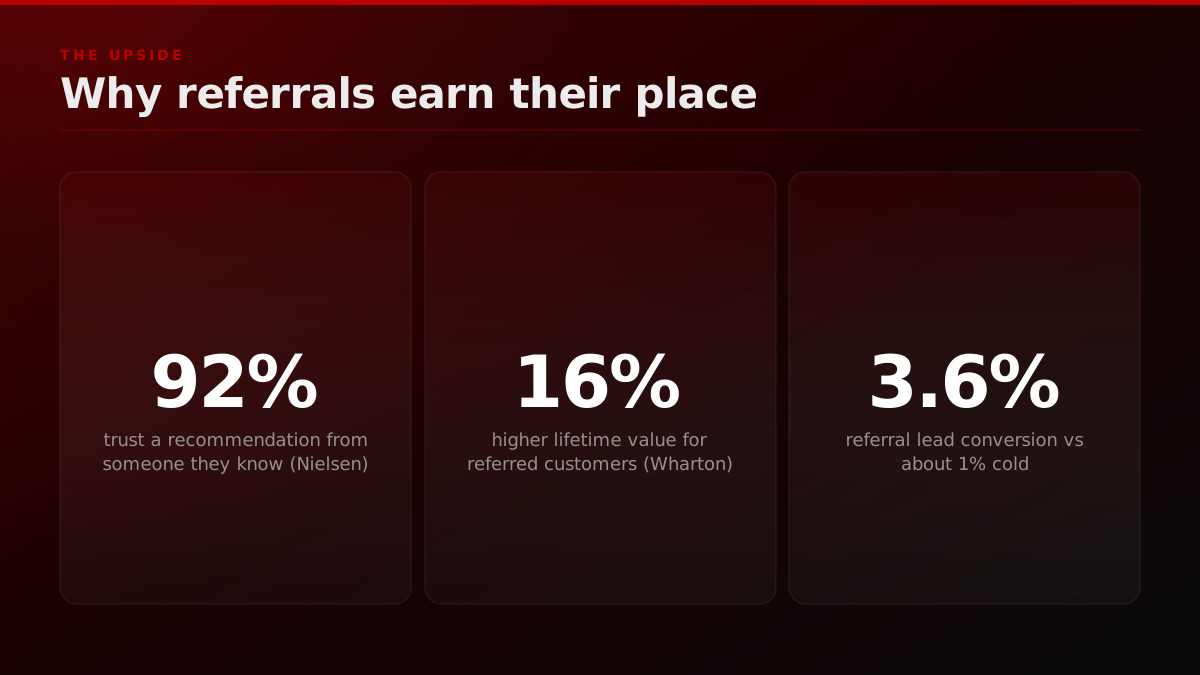
They work when two conditions are true at the same time: the product already delivers enough value that customers would recommend it unprompted, and the program rewards a verified paid outcome rather than a signup. When either condition is missing, the program disappoints. The upside, when it lands, is well documented. Referred customers carry roughly 16 percent higher lifetime value and are about 18 percent more loyal than customers acquired other ways, according to Wharton School research published in the Journal of Marketing and compiled in these 2026 referral marketing stats. And 92 percent of people say they trust a recommendation from someone they know above any other form of advertising, per Nielsen's Global Trust in Advertising survey of more than 28,000 people across 56 countries.
The referred-customer premium is real
Referred customers show roughly 16 percent higher lifetime value and are about 18 percent more loyal than customers acquired other ways, according to Wharton School research published in the Journal of Marketing. Paired with Nielsen finding that 92 percent of people trust recommendations from someone they know, the case for referrals is strong. The catch is that the premium only shows up on genuine referrals, which is exactly why fraud control is what protects the ROI.
Source: Wharton School, Journal of Marketing
That is the case in the brochure. The honest counterweight is that plenty of experienced founders remove their programs. Cody Smith, who runs EmailGuard and EmailBison, put it bluntly: the referral program came out months ago and the business still gets customers, because the operational burden was not worth the upside. That is not a failure of referrals as a concept, it is a signal that a referral program is a system with real ongoing cost, and it should earn its place against your other growth levers.
unpopular opinion: you don't need a referral program for your b2b SaaS. we had them in a limited capacity for both EmailGuard and EmailBison, but they've been removed for months now. we still get customers. why did I remove it? operational burden with not much upside
Cody Smith
gat0rtheskater
unpopular opinion: you don't need a referral program for your b2b SaaS. we had them in a limited capacity for both EmailGuard and EmailBison, but they've been removed for months now. we still get customers why did I remove it? operational burden with not much upside
The other failure mode is generosity without advocacy. On r/SaaS, a founder described offering a 25 percent recurring commission plus a first-month discount for the referred customer, and still getting almost no traction. Generous incentives do not manufacture advocates. If customers are not already recommending you for free, paying them to do it produces a trickle of reward-chasers, not a loop. The reward is a multiplier on existing advocacy, not a substitute for it.
Anyone growing their SaaS using referral programs? I'm getting zero traction
So the real question is not whether referral programs work in the abstract, it is whether they work for you right now. TK Kader, who has built and advised B2B SaaS go-to-market for years, frames the upside case well in his breakdown of why best-in-class SaaS companies get roughly a fifth of their customers referring through word of mouth.
TK Kader
Tawheed
There’s an organic pipeline that has a 70% higher conversion rate, 59% higher LTV, and closes 69% faster. It’s one of the oldest, most basic forms of pipeline generation: Asking Your Customers for Referrals. The stats show how effective referrals are, yet only 3 out of 10 B2B
B2B SaaS Referral Programs
TK Kader
TK Kader on B2B SaaS referral programs and why best-in-class companies get roughly a fifth of their customers referring through word of mouth.
The economics are worth stating plainly, because they decide whether the program is worth its operational cost. A referral reward is a customer acquisition cost you pay only on a closed deal, so on paper it should beat paid channels. In practice, the effective cost depends entirely on how much fraud leaks through. A program that pays a 250-dollar reward on every genuine closed referral has an excellent acquisition cost. The same program paying that reward on farmed signups that never convert has an infinite one, because the numerator keeps rising while the denominator stays flat. This is the same unit-economics logic we apply to any channel in our breakdown of AI agency pricing and unit economics: a channel is only as cheap as its worst-attributed spend. Fraud control is not a compliance chore, it is the single variable that decides whether your referral acquisition cost is real.
The pattern across all of this is consistent. Referrals amplify whatever you already have. Strong retention and real advocacy, and the loop compounds. Weak activation and thin advocacy, and the loop amplifies the weakness and invites farming. That is why the readiness check comes before the build.
When should a B2B SaaS launch a referral program?
Launch after you have product-market signal, never as a way to manufacture it. The prerequisites are concrete: a base of active, retained customers who already recommend the product unprompted, a positive net promoter reading, enough density of ideal-customer accounts that referrals land in the right hands, and the operational capacity to review referrals and pay rewards on time. Miss the retention prerequisite and a referral program amplifies churn, because the only people motivated to participate are chasing the reward rather than endorsing the product. Miss the capacity prerequisite and you either pay fraud or leave rewards unpaid, and both erode trust.
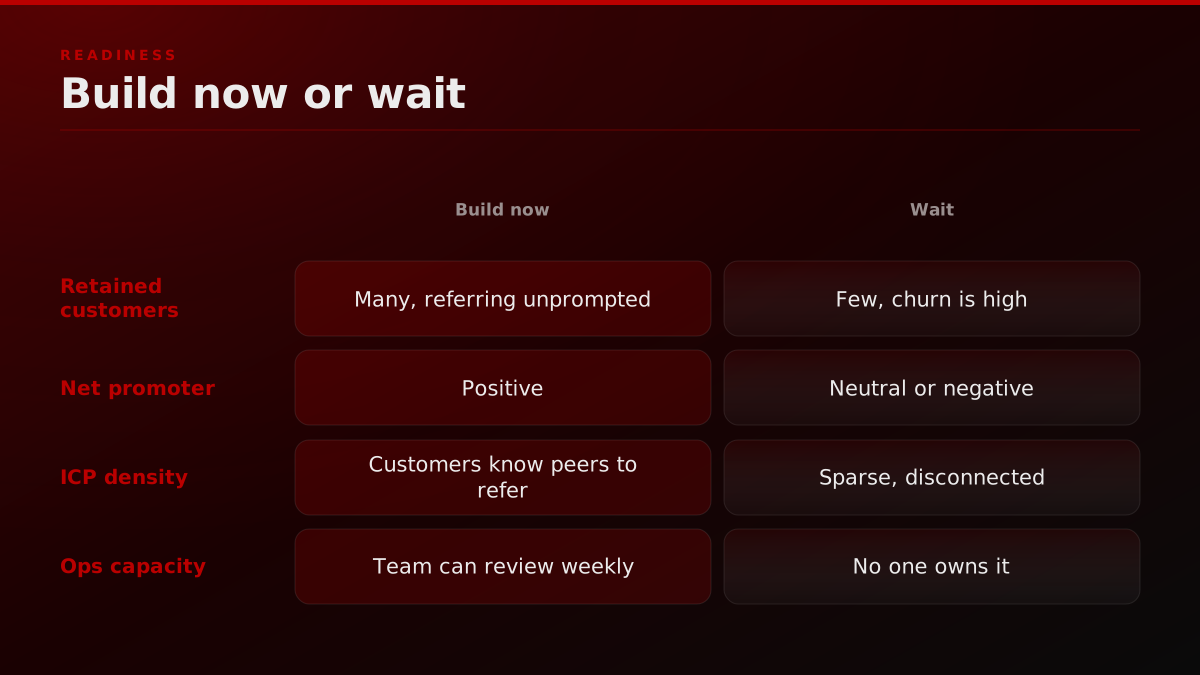
If the readiness check tells you to wait, that is a useful answer, not a failure. The highest-leverage move for a pre-product-market-fit team is not a referral program, it is the upstream work that creates advocates in the first place: activation, retention, and founder-led distribution. Our founder-led growth playbook covers how to build the visible, credible presence that earns organic recommendations, and our guide to the first 90 days with a growth agency covers how to sequence that work. Come back to referrals once real advocacy already exists.
There is a timing nuance for B2B specifically. Because B2B sales cycles are long, the referral you get today may not convert for months. That changes both the reward structure, which we cover next, and the readiness threshold: you need enough pipeline volume that a months-long referral lag does not make the program feel dead while it is actually working. A program that looks like it is failing at week six can be quietly compounding at month four.
How do referral programs attract bots and fraud?
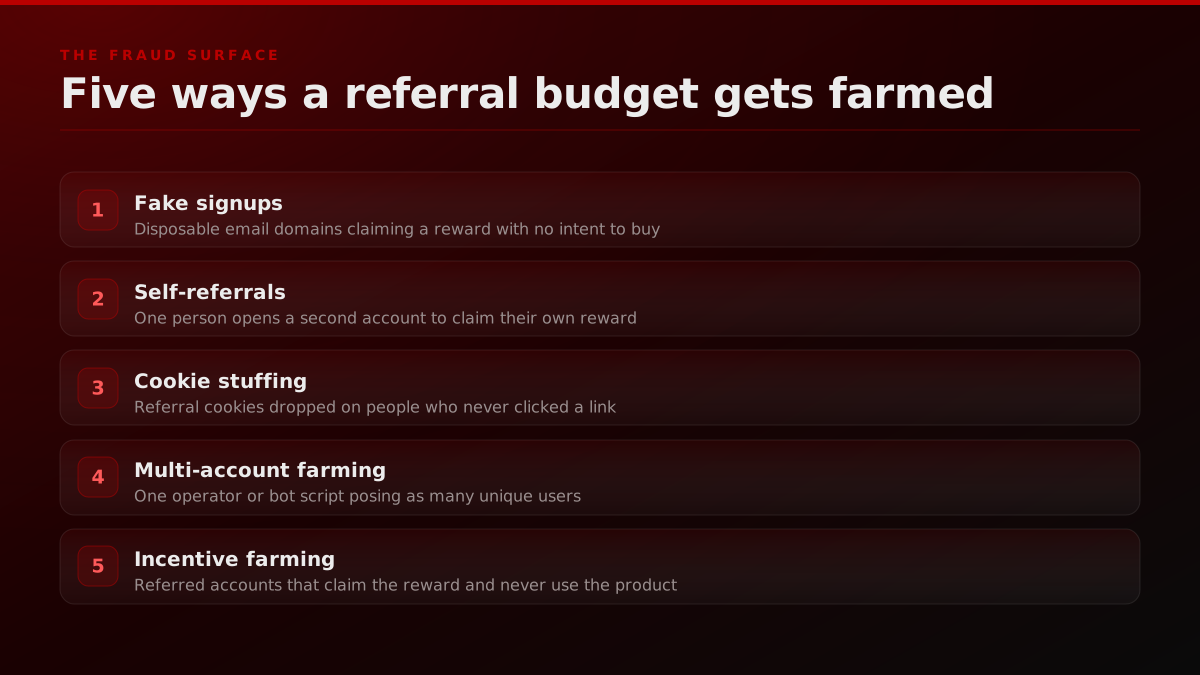
A referral program is an open, standing offer to pay money for an action, and any standing offer to pay for an action attracts people who will fake the action. The fraud is not exotic. It is a handful of repeatable patterns that most early-stage programs never plan for and only discover when they audit the payouts. The most common are fake signups from disposable email domains, self-referrals where one person spins up a second account to claim their own reward, cookie stuffing where an affiliate drops referral cookies on people who never clicked a link, and duplicate or multi-account farming run by a single operator or a bot script pretending to be many unique users. According to fraud-prevention resources like SEON and Unit21, most referral fraud runs through duplicate accounts controlled by one person or by bots programmed to look like distinct users.
The scale of this is not trivial. The broader fraud-detection and prevention market reached an estimated 43.4 billion dollars in 2025 and is projected to more than quadruple over the following decade, as reported in these referral fraud-prevention statistics. Around 42 percent of retailers acknowledge their fraud-prevention capability is still insufficient for loyalty and referral programs specifically, and 69 percent of executives report that fraud negatively affects brand perception. Those numbers come from consumer commerce, but the mechanism is identical for B2B SaaS: an incentive plus weak verification equals farming.
B2B does add a few fraud patterns of its own. Because B2B rewards are larger, the incentive to game them is larger, and the fraud gets more deliberate. The common B2B-specific patterns are colleague collusion, where two people at the same company refer each other to double-claim, and reward laundering, where a referrer routes a deal that would have closed anyway through a referral link to capture a bounty on organic pipeline. There is also the gift-card farming problem: many B2B programs reward referrers with gift cards to reduce financial risk, which impact.com notes is common in B2B, but a gift card is liquid and anonymous, which makes it the single most farmable reward type if the qualification gate is weak. None of these break the model. They just confirm that the gate belongs on the paid event, not the intent to refer.
Fraud is ignored until it is expensive
One B2B SaaS affiliate manager summarized the pattern on Reddit: fake sign-ups, cookie stuffing, and self-referrals get ignored until a program discovers it has paid out commissions it never should have. Most early-stage programs run with no monitoring and find the problem only after the money is gone. Basic fraud hygiene from day one is not optional, it is the cheapest control you will ever add.
Source: r/B2BSaaS operator, 2026
The reason fraud stays invisible is timing. On a signup-triggered reward, the fraud pays out immediately, long before anyone notices that the referred accounts never became customers. One B2B SaaS affiliate manager described the pattern precisely: fake signups, cookie stuffing, and self-referrals get ignored until a program realizes it has paid commissions it never should have, and by then the money is gone.
I manage affiliate programs for several B2B SaaS companies. Here's why most of them start wrong
That single sentence is the whole argument for building fraud controls before you turn on the incentive. The good news is that the controls are not complicated, and the first one is nearly free. It is a change to what event you reward.
Operator noteNew-customer-only rewards stop existing users trading referrals for fake credit, the cheapest control you can ship., Pinecast referral program
How do you design the referral reward so it does not attract fraud?
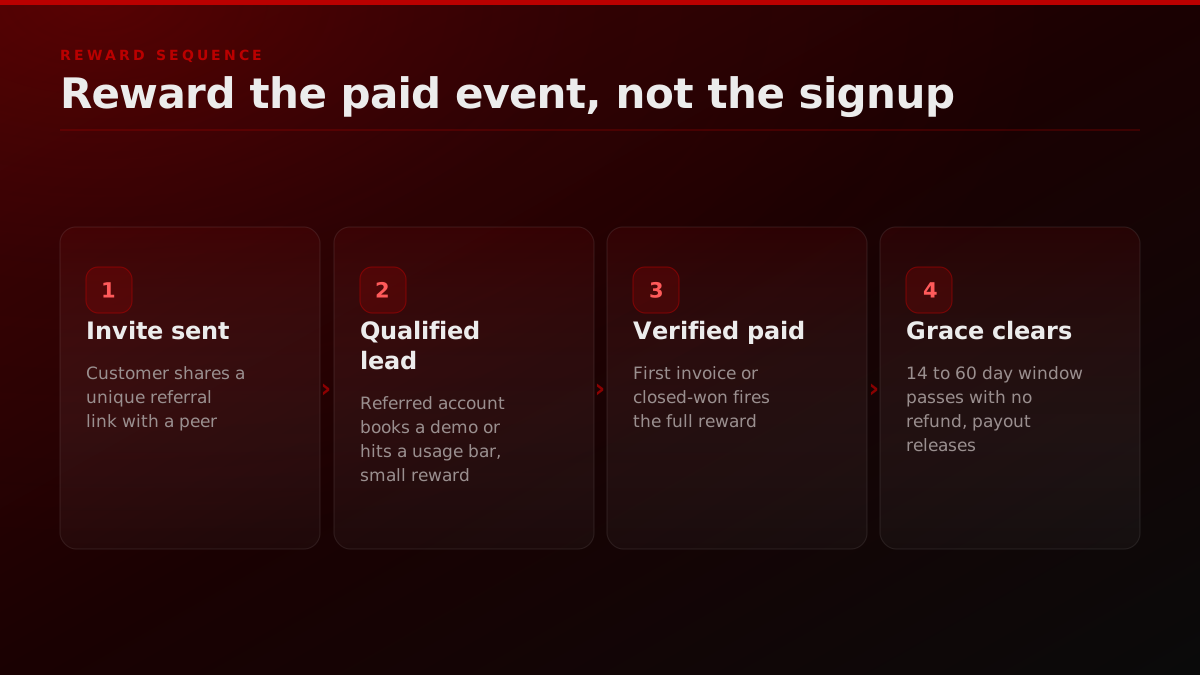
The single most important design decision is the trigger event. Reward on a verified billing event, never on a signup. A signup is trivial to fake and impossible to bill against, so a signup-triggered reward is an invitation to farm. A verified paid event, the first invoice or a closed-won deal in your CRM, is expensive and slow to fake, which removes most incentive farming at the gate before a cent moves. The second decision is the grace period. Hold the payout for 14 days or more so refunds, chargebacks, and cancellations resolve before the reward is released. Operators who run clean programs build this delay in on purpose. Gimme holds referral credit for up to 14 days to avoid paying out on refunded orders, and Pinecast requires a two-month wait and restricts referrals to new customers only.
The grace period does the quiet work
Operators who run clean programs build a delay into the payout on purpose. Gimme holds referral credit for up to 14 days to prevent rewards on refunded or canceled orders, and Pinecast requires a two-month wait and restricts referrals to new customers only, so existing users cannot trade referrals for fake credit. The grace period is unglamorous and it removes a large share of fraud before a person ever has to review a case.
Source: Gimme and Pinecast referral programs
The third decision is the reward amount and shape. A common starting point is a referrer reward worth 100 to 150 percent of the first month of contract value, paired with a smaller benefit for the referred customer such as a first-month discount, as the referral-software guides at Referral Rock lay out. For a 200-dollar-per-month product, that is roughly 200 to 300 dollars per closed referral. For longer B2B sales cycles, a two-step structure keeps referrers engaged: a small reward when the referred account becomes a qualified lead, and a larger reward when they become a paying customer.
Referral Reward Model by Contract Value (starting points)
| ACV band | Referrer reward | Trigger event | Grace period |
|---|---|---|---|
| Under $600 per year | 100 to 150% of first month | Verified first invoice | 14 days |
| $600 to $6,000 per year | Two-step, lead plus paid | Qualified lead, then paid | 14 to 30 days |
| $6,000+ per year | Flat bounty or account credit | Closed-won in CRM | 30 to 60 days |
Directional starting points, not benchmarks. Set the reward against your gross margin and payback period, and review any referrer whose volume spikes.
The reward type is a design decision too, not just the amount. Cash and account credit keep the referrer inside your economy, which is why credit is popular for product-led tools: it costs you margin, not cash, and it increases the referrer's own retention. Gift cards reduce your financial exposure and work well when the referrer is not the buyer, which is common in B2B where the champion who refers you is not the person who signs the contract. Charitable donations and swag work for brand-led programs but rarely move a B2B referrer who is doing you a real favor. Whatever the type, the rule is the same: the reward only releases on a verified paid event, and a liquid reward like cash or a gift card needs a stricter gate than an in-product credit that is worthless to a farmer with no real account.
The two-step shape matters more than it looks. It keeps the referrer invested across a sales cycle that can run months, and it caps your exposure, because the expensive reward only fires on a verified paid event. The micro-reward at the qualified-lead stage is small enough that farming it is not worth the effort, and the paid-stage reward is gated behind an event that is genuinely hard to fake. That is the whole design in one sentence: make the cheap-to-fake event carry a cheap reward, and make the expensive reward depend on an event that is expensive to fake.
Operator noteA 14-day payout grace period catches refund and cancellation fraud, the pattern Gimme and Pinecast both built their programs around.
One more guardrail belongs in the terms, not the software: reserve the right to review and reverse any reward, and cap or scrutinize any referrer whose volume suddenly spikes. A customer who refers two peers a quarter is normal. An account that produces twenty referrals in a week is either a genuine power-user worth a conversation or a farming operation worth a hold. The terms should let you tell the difference before you pay.
What does a 3-layer fraud-detection stack look like?
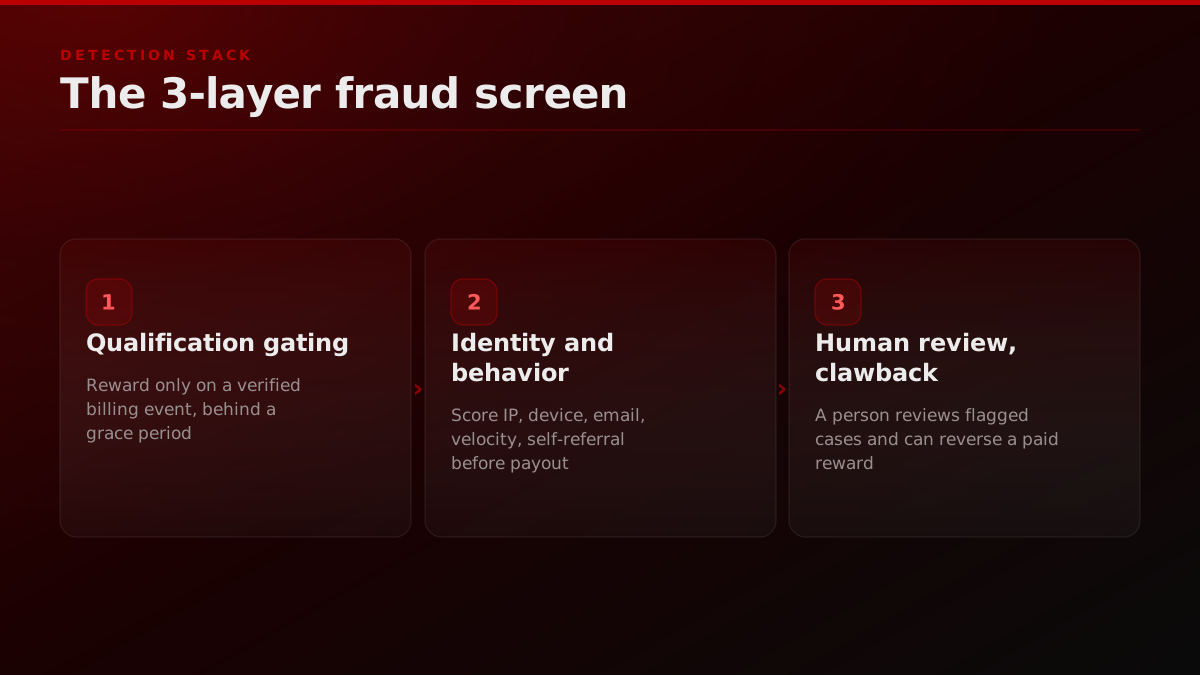
The detection stack has three layers, and each one removes a different slice of fraud. Layer one is qualification gating, which you already have if you reward on a verified billing event behind a grace period. Layer two is identity and behavior screening, which flags the patterns a farmer leaves behind. Layer three is human review and clawback, which catches what the automated layers miss and lets you reverse a payout already made. This is the same philosophy FORKOFF runs to screen bot views across a clipping network that has processed more than 5 billion views, adapted to the referral funnel. The 3-layer bot-detection system we use for clipping and the referral stack here share the same spine: score the signals, gate the reward, keep a human in the loop.
Bot detection transfers across growth loops
The detection logic that separates real referrals from farmed ones is the same logic FORKOFF runs to screen bot views across a clipping network that has processed more than 5 billion views: score identity and behavior signals, gate the reward behind a verification window, and keep a human in the loop with the power to claw back. A referral funnel is just another place where an incentive attracts abuse, and the same 3-layer screen applies.
Source: FORKOFF clipping bot-detection system
Layer two is where most of the automated work happens, and it is a set of signals any decent referral tool or a lightweight internal script can score. The strong signals are a shared IP or device between referrer and referred, a duplicate or disposable email domain, a referral velocity spike from one account, a self-referral match on name, payment method, or address, and a referred account with zero product usage after signup. No single signal is proof. Two together should hold the payout for review. The design goal is not to block every edge case automatically, it is to surface the suspicious cases to a human cheaply.
The signals below are the practical checklist. You do not need a machine-learning model to start. You need the reward gated on a paid event, a grace period, and a query that flags the obvious duplicates and same-device pairs. The guidance on how to design a fraud-proof referral program and the playbook on how to combat referral abuse and fraud both converge on the same handful of checks.
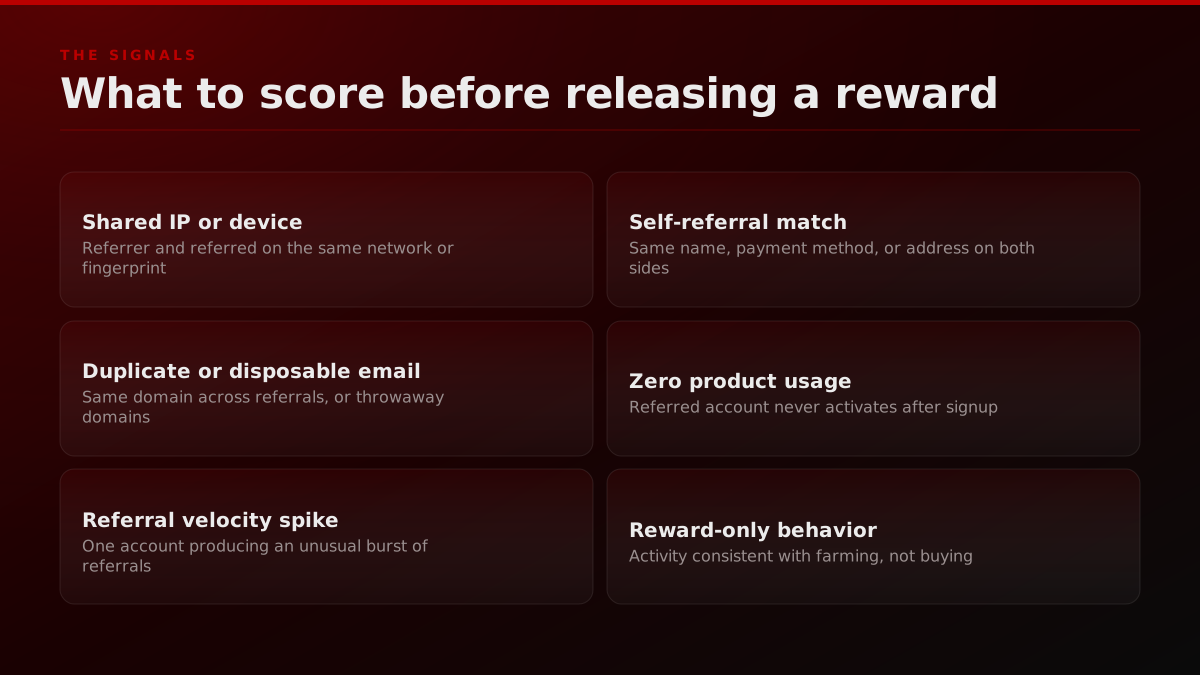
You do not need a fraud team to run layer two. Most of these checks are one database query away: group referrals by IP, by device fingerprint, by email domain, and by payment method, and look for clusters. A single account tied to five referred signups on the same device is not a coincidence. The point of the automated layer is not perfect detection, it is cheap triage, so that the small number of genuinely ambiguous cases reach a human instead of every case or no case. This is the same operating principle behind Reddit marketing done safely and any other channel where volume and authenticity have to be balanced: automate the obvious calls, escalate the judgment calls.
Why is this available for new customers only? This prevents existing users from trading referrals with each other and getting fake credit.
Layer three is the one teams skip, and it is the cheapest insurance in the whole program. A person reviews every flagged case, and the terms give you the right to claw back a reward already paid. Without clawback, a farmer who beats your automated checks keeps the money permanently. With it, a payout is provisional until the referred account is a retained customer. That single clause changes the economics of attacking your program, because the attacker can no longer treat a paid reward as banked.
How do you build a B2B SaaS referral program in eight steps?
The build sequence puts the prerequisites and the fraud controls in the right order, so you are not bolting detection onto a leaking program after the fact. Steps one and two confirm you should build at all. Steps three through six are the core build: pick the trigger, set the reward, wire the detection, and choose the tool. Steps seven and eight are the parts most programs skip and later regret, instrumenting the metrics and running the review loop. Skipping seven and eight is how a program farms your budget for a quarter before anyone notices.
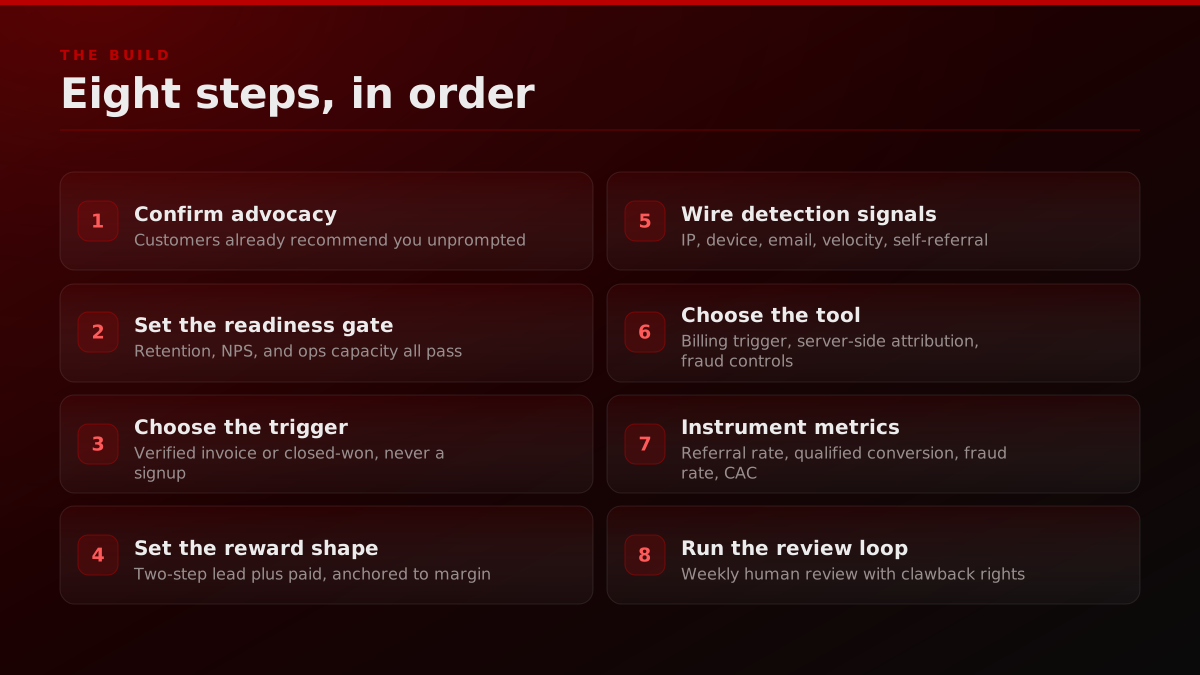
Here are the eight steps in words. Step one is confirm advocacy: look for customers already recommending you unprompted, in support tickets, reviews, and community threads, because that unpaid behavior is the signal that a paid loop will amplify something real. Step two is set the readiness gate: check retention, net promoter, and operational capacity, and if more than one reads weak, stop and fix the upstream work first. Step three is choose the trigger event: a verified first invoice or a closed-won CRM stage, never a signup. Step four is set the reward shape: a two-step lead-plus-paid structure for longer cycles, with an amount anchored to your gross margin, not a competitor's headline number. Step five is wire the detection signals: same-device and duplicate-email checks, velocity limits, and a self-referral match, scored before any payout. Step six is choose the tool: the one that fires rewards on a billing event, attributes server-side across a long cycle, and ships fraud controls in the box. Step seven is instrument the metrics: referral rate, qualified-referral conversion, fraud rate, and referral acquisition cost, on one dashboard. Step eight is run the review loop: a human reviews flagged cases weekly and the terms allow clawback. Steps seven and eight are the ones teams cut to ship faster, and they are exactly the ones that let a farmer operate undetected.
The tooling choice in step six is simpler than the vendor market makes it look. For a product-led B2B SaaS under a few million in annual recurring revenue, a purpose-built, self-serve referral tool that integrates with your billing and CRM is the fastest path. The vendor name matters far less than three capabilities: billing-event reward triggers, server-side attribution that survives a long sales cycle, and built-in fraud controls such as self-referral blocking and duplicate detection. Evaluate any tool against the fraud-control fit below before you compare pricing.
Referral Software Selection by Fraud-Control Fit
| Capability | Why it matters | Fraud exposure if missing |
|---|---|---|
| Billing-event reward trigger | Rewards fire on a verified invoice, not a signup | Incentive farming on fake signups |
| Server-side attribution | Referral identity survives a long sales cycle | Misattributed or stuffed referrals |
| CRM integration | Credit is tied to real closed-won pipeline | Rewards paid on deals that never close |
| Self-referral and duplicate detection | Blocks one person claiming their own reward | Multi-account and self-referral farming |
| Manual review and clawback | A human can reverse a paid reward | Irreversible payouts on abuse |
Evaluate any referral tool against these five capabilities before the vendor name. Miss one and the program leaks on attribution, reward correctness, or fraud.
If your program also crosses into affiliate or partner territory, the same integration requirements apply with stricter screening, because third-party affiliates carry higher fraud exposure than customers referring peers. Keep the two motions in separate reports even inside one tool. And if you are wondering where referral fits against your other channels, our SaaS go-to-market three-ring distribution model shows how to sequence a referral loop against founder voice and paid amplification, and the best subreddits for B2B SaaS founders guide covers where early advocates actually gather.
How do you measure a B2B SaaS referral program?
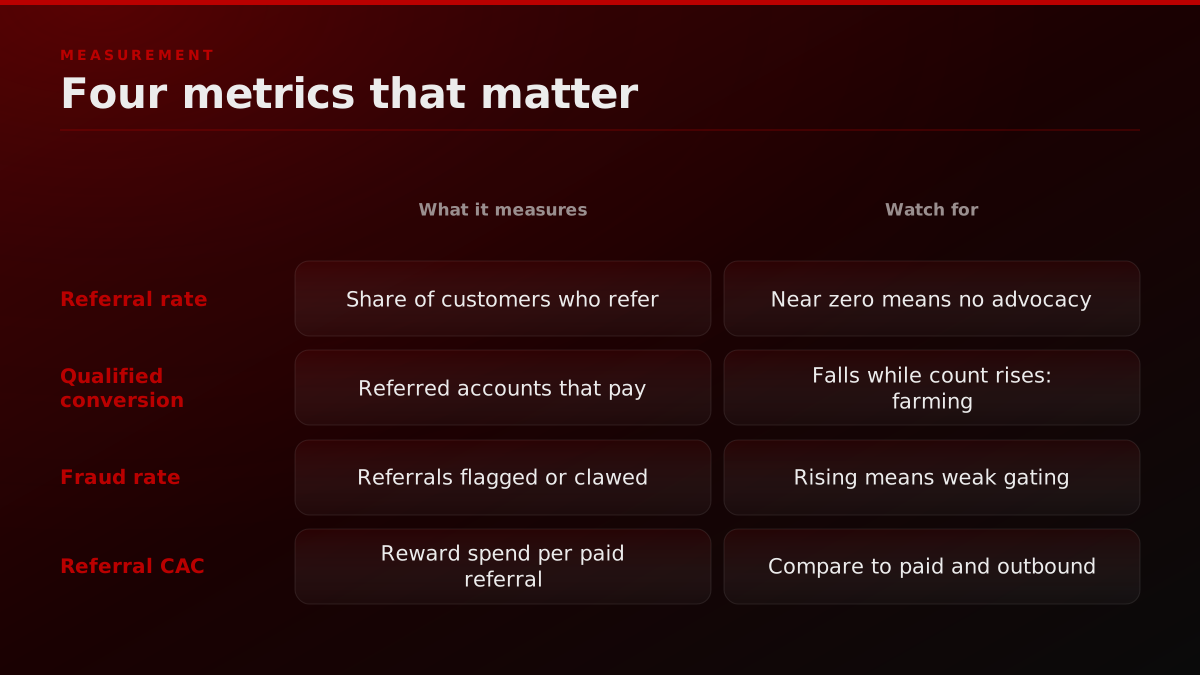
Four metrics separate a healthy program from a leaking one, and they only mean something when you read them together. Referral rate is the share of customers who send at least one referral, and it tells you whether advocacy exists. Qualified-referral conversion is the share of referred accounts that reach a verified paid event, and it tells you whether the referrals are real. Referral fraud rate is the share of referrals flagged or clawed back, and it tells you whether the program is being farmed. Referral customer acquisition cost is the total reward spend divided by paid referrals, and it tells you whether the loop is economical against your other channels. Watch qualified-referral conversion and fraud rate together, because a rising referral count with a falling paid rate is the clearest farming signal there is.
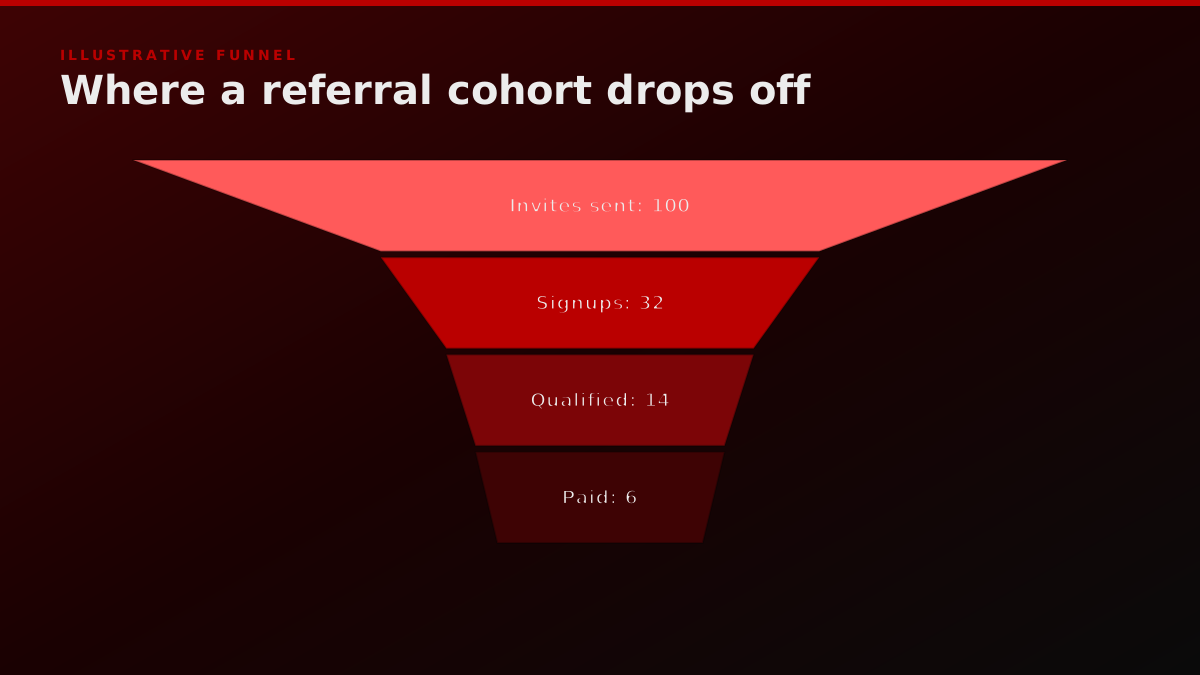
The funnel above is illustrative, not a benchmark, and the drop from qualified to paid is the diagnostic zone. On a clean program, that drop reflects a normal B2B sales cycle. On a farmed program, it collapses, because farmed signups never reach a verified paid event. If your referral count is climbing while your paid conversion is falling, the gap is fraud, and the reward trigger is the fix.
Attribution is what makes these metrics trustworthy, and B2B attribution is genuinely hard because the referral you get today may not close for months. Persist the referral identity server-side rather than relying on a browser cookie that decays or gets cleared, and tag every referral with a unique parameter that carries through your CRM to the closed-won stage. When a deal closes, you want to answer one question without guessing: was this referred, and by whom. If you cannot answer that from your CRM, you cannot separate a real referral from a laundered one, and you cannot pay the reward safely. This is the kind of measurement discipline worth installing early, and it is the same server-side rigor we apply to make content and channels citable in our work on answer engine optimization. Get the attribution right first, and the four metrics start telling the truth.
Fraud gets ignored until it's expensive. Fake sign-ups, cookie stuffing, self-referrals. Most early-stage programs have no monitoring in place and discover the problem after paying out commissions they shouldn't have. By then the damage is done. Basic fraud hygiene from the start is not optional.
The last thing to measure is opportunity cost. A referral program competes for the same attention as your other growth work, and Cody Smith's point stands: it carries real operational burden. If the metrics show a healthy loop, protect it. If they show a trickle of reward-chasers and a rising fraud rate, the honest move is to pause the program and put the energy back into the upstream advocacy work. A referral loop is a multiplier on a real business, not a growth strategy on its own.
The playbook, in one line: build the fraud controls first, reward a verified paid event, gate it behind a grace period, screen with a 3-layer stack, and keep a human able to claw back. Do that, and a B2B SaaS referral program becomes a compounding, low-cost channel instead of an open budget for bots. FORKOFF builds the founder-led distribution, Reddit marketing, and organic advocacy that give a referral loop something real to amplify. If you are not sure referrals are your next lever, book a strategy call and we will map where your pipeline actually comes from first.