Go-to-market for an AI-infrastructure startup is a developer-adoption problem wearing a pricing problem's clothes. If you build inference, GPU cloud, a vector database, model serving, or orchestration, the honest situation in 2026 is that your raw product is commoditizing underneath you, and the companies that win are not the cheapest, they are the ones developers already trust before they open a pricing page, which is the whole premise of developer marketing. This is a playbook for earning that trust: a channel map for where your ICP actually evaluates, the benchmark-as-content mechanics that travel through this audience, the five-move adoption sequence, and the launch-day script. It is written for the founder or DevRel lead at a seed-to-Series-B AI-infra company whose job to be done is developer adoption plus benchmark credibility.
The short version
AI-infrastructure go-to-market is a developer-adoption problem, not a pricing problem. Inference, GPU cloud, and vector-DB products are commoditizing fast: a barrel of intelligence costs $56 from Anthropic and $0.50 from Chinese models, a 112x spread that Chamath laid out on CNBC. When the token is a commodity, the defensible ground is the exact thing your ICP already tells you they want, developer adoption plus benchmark credibility. That means three moves. First, treat every buying trigger (a launch, a benchmark, a funding round) as a distribution trigger, and publish the proof, not the logo. Second, show up where the AI-infra developer already evaluates, r/LocalLLaMA, r/mlops, Hacker News, engineering-blog threads, and answer first before you ever link. Third, run two motions at once: a fast developer-adoption motion won in minutes at the docs, and a slower enterprise-trust motion won in quarters with reliability and control. The benchmark is your best content because it is the unit this audience shares, argues about, and cites. This playbook has the channel map, the five-move adoption sequence, the first-100-developers breakdown, and the launch-day script.
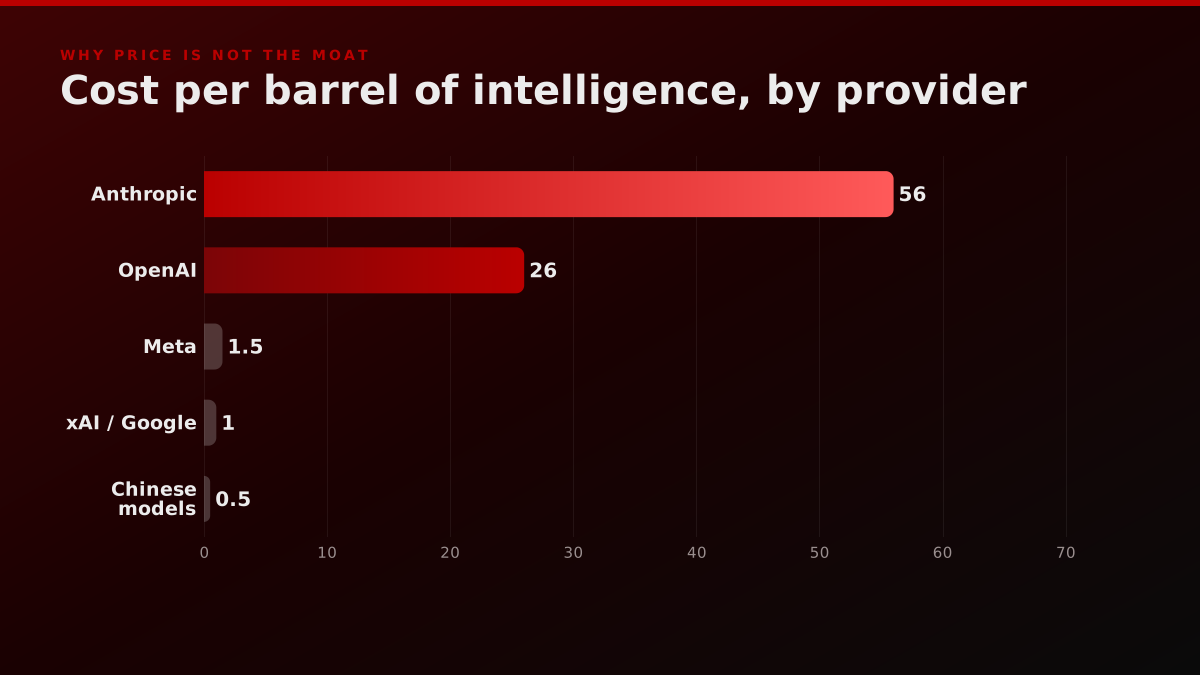
Start with the uncomfortable number. A barrel of intelligence, the reference unit Chamath Palihapitiya used on CNBC, costs roughly $56 from Anthropic and roughly $0.50 from Chinese models, a spread of about 112x that Clara Bennett summarized on X. When ten providers can serve the same open weights and the raw token races toward zero, the price line is not a moat, it is a cliff. The moat is the thing your own ICP keeps telling you they want.
Clara Bennett
@CodeswithClara
Chinese models are 112x cheaper than Anthropic per million tokens. Chamath laid it out on CNBC: a barrel of intelligence costs $56 from Anthropic, $26 from OpenAI, $1.50 from Meta, $1 from xAI and Google, and $0.50 from Chinese models. That is not a pricing quirk.
Inference is commoditizing on price, so price cannot be the moat
The cost of a barrel of intelligence spans roughly 112x across providers, from about $56 for Anthropic down to about $0.50 for Chinese models, per figures Chamath Palihapitiya laid out on CNBC. When the raw token approaches zero and ten providers can serve the same open weights, competing on the price line is a race to the bottom. The durable ground is the developer relationship and the benchmark credibility that make a developer choose you before they compare unit prices.
Source: Chamath Palihapitiya on CNBC, cited via @CodeswithClara
Why is developer adoption the real AI-infrastructure GTM problem?
Developer adoption is the real problem because the product itself no longer differentiates. Inference throughput, GPU availability, and vector-search latency are converging across providers, and a developer can reverse-engineer your serving economics from your own engineering blog, as one operator did when he estimated a provider at roughly 90% API margins from their published cluster architecture. When the technical surface is legible and the price is commoditizing, the deciding factor is whether a developer has already used your thing, trusts your numbers, and reaches for you by default.
That is why the best framing of AI-infra GTM is not "how do we get cheaper" but "how do we get adopted." The creator of Redis, antirez, put the buyer psychology plainly: the inference decision is about freedom and access, not just comparing hardware cost to an API bill. Developers do not pick infrastructure on a spreadsheet cell. They pick what they have tested, what their peers vouch for, and what earns their trust in public. The entire GTM has to be built to produce that trust, cheaply and verifiably.
In 2030, maybe the point of local vs remote inference will be pricing. Now when people keep comparing energy and hardware costs to what you would pay for the same API, they are missing the point of all that. It is about freedom and access, and eventually equality of access.
antirez
@antirez
In 2030, maybe the point of local vs remote inference will be pricing. Now when people keep comparing energy / hardware costs to what you would pay for the same API, they are missing the point of all that. It's about freedom and access, and eventually equality of access.
There is a second reason adoption is the game, and it is the most quoted sentiment among builders: technical excellence does not distribute itself. As one operator observed, there are thousands of genuinely excellent free tools built by developers with zero marketing ability, and nobody uses them. For AI infrastructure specifically, the gap between a working runtime and an adopted one is not an engineering gap. It is a distribution gap, and closing it is what GTM is for.
There are thousands of free tools on the internet built by genius developers who have zero marketing ability. The tools already exist. They work. They are incredible. And nobody uses them.
This is not a soft opinion, it is how developers actually choose tools. Research on how teams adopt technology, like the DORA gen-AI adoption findings, consistently shows that trust and demonstrated value drive adoption far more than feature lists or marketing spend, and the annual Stack Overflow Developer Survey shows developers reaching for the tools their peers already vouch for. Developers discover and vet infrastructure through hands-on trials, peer signal, and public evaluation, not through interruptive ads, which is a point GitHub has made repeatedly about how developer skills and tools spread. For an AI-infra startup, that means the marketing budget that would buy impressions on a horizontal SaaS is close to wasted here. The same money spent producing reproducible proof and staffing genuine participation in developer communities returns far more, because it moves the two levers that actually decide adoption: verifiable value and peer trust.
There is a structural reason this matters more for infrastructure than for an app. An application can win on UX and onboarding polish that a non-technical buyer feels immediately. Infrastructure is chosen by the person who will have to operate it at 3am when it breaks, so their evaluation is adversarial by design. They are not asking whether your landing page is nice, they are asking whether your numbers hold, whether your failure modes are documented, and whether they can get out if they need to. GTM that ignores this and leads with polish reads as a warning sign to the exact person you need to convince.
Operator notePublish the benchmark the same day you announce the round. The number travels, the logo does not.
How does every buying trigger double as a distribution trigger?
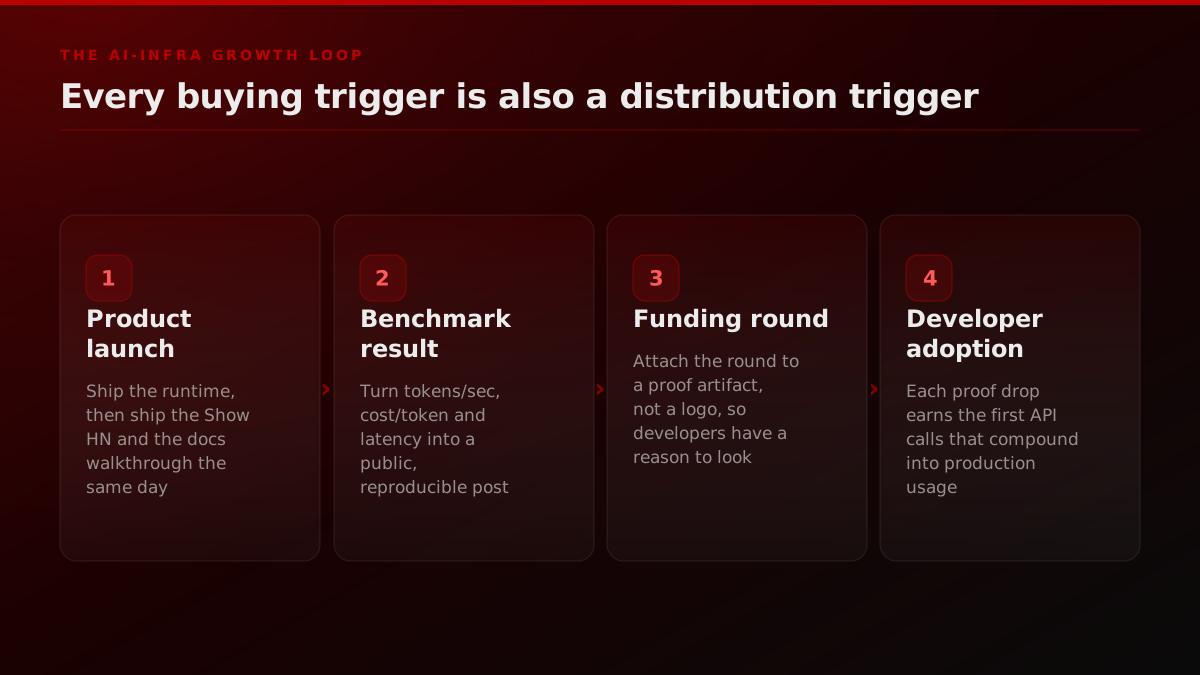
Every buying trigger in this niche is also a distribution trigger, which means your calendar of GTM moments is already written by your product roadmap. The three triggers that move an AI-infra buyer are a product launch, a benchmark result, and a funding round. Each is a reason for a developer to look, but only if you attach a proof artifact to it. Announce a round with a logo and developers scroll past. Announce it with a reproducible benchmark and a repo, and you have given the exact audience you want a reason to click.
Benchmark results are the strongest of the three because they are native to how this audience already talks. When OpenAI reportedly found inference optimizations that more than halved its serving cost, that was treated as a market event, not an internal detail, because an efficiency win is a reason to switch. The lesson for a startup is direct: do not save your best number for a sales call. Publish it. The benchmark that convinces a buyer is the same benchmark that earns the distribution, so the artifact does double duty.
A benchmark result is a buying trigger, which makes it a distribution trigger
In this niche, an efficiency win or a throughput record is a reason to switch providers. When OpenAI reportedly found inference optimizations that more than halved its serving cost, that was a market event, not an internal footnote. Because a benchmark result moves buyers, the same artifact that drives the buying decision also drives distribution, so the highest-leverage content an AI-infra team can publish is a reproducible benchmark.
Source: The Information, cited via @kimmonismus
If you want the mechanics of turning a proof moment into a coordinated push, our SaaS product launch three-ring distribution guide and the product launch playbook cover the sequencing, and our launch video service runs it end to end for infra teams.
Where do AI infrastructure developers actually gather?
AI-infrastructure developers concentrate in a small set of high-intent, high-trust surfaces, and knowing the intent, effort, and trust weight of each one is the whole channel strategy. The subreddits carry the highest raw intent: a developer asking in r/LocalLLaMA how to scale a local API to 500 to 1,000 users is a buyer self-identifying by their exact pain, which no ad targeting can replicate. Hacker News and your own docs carry the highest trust weight, because a Show HN and a five-minute quickstart are where skeptical engineers convert.
The clearest proof that these are the right rooms is that your ICP is already in them, publicly stuck. One founder building an open-source inference runtime went to r/LocalLLaMA to do market research on how to even find the businesses self-hosting inference, because, as he put it, companies do not wear a tag with their whole inference stack on it. That thread is the entire GTM problem in one post: the developers who would adopt your product are gathered in a specific place, asking a specific question, and the company that answers it well earns them.
Doing market research on self-hosted AI inference — how do you even find who's doing it?
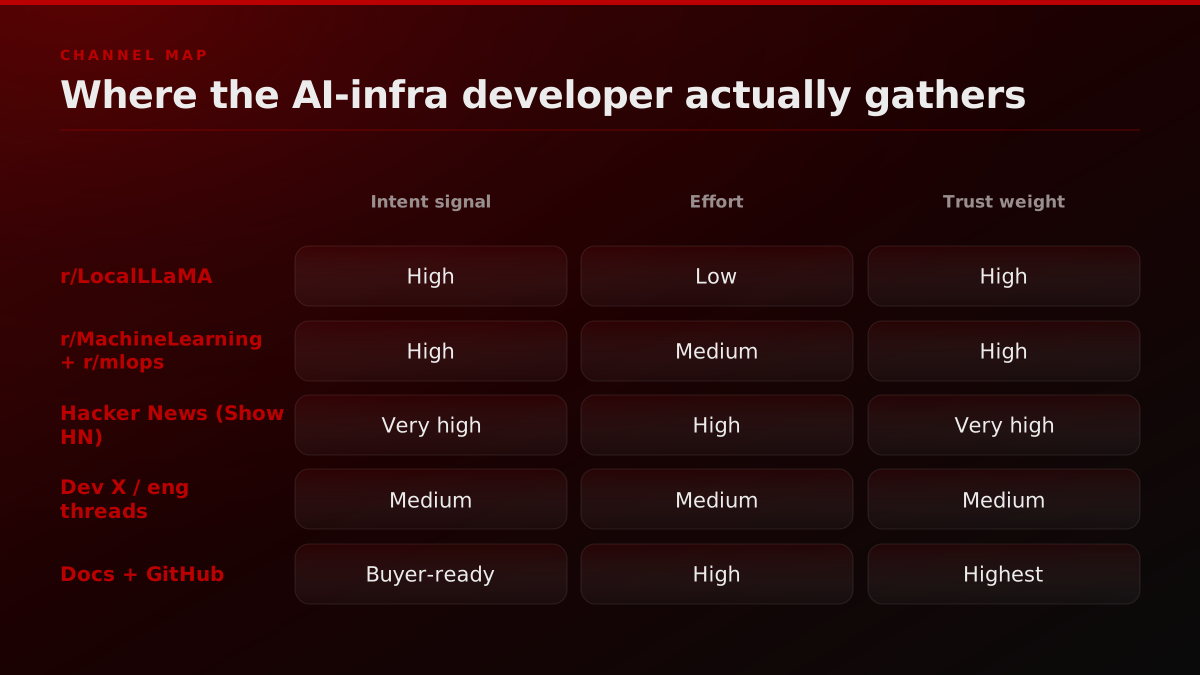
The reason participation beats placement here is trust. Adoption of infrastructure is a control decision as much as a features decision, which is why ML startups often stick with on-prem even when a managed option is cheaper on paper. You cannot buy your way past a control-and-lock-in concern with an ad. You address it by showing up as a credible practitioner in the thread where the concern lives. The 90/10 discipline that keeps that credible over months is at how to build a developer community on Reddit. For the community-selection framework, our best subreddits for B2B SaaS founders piece and our Reddit marketing service map the surfaces and the posture, and our developer marketing strategy guide covers the broader motion.
I have seen quite a few ML startups sticking with on-prem infrastructure
Each surface earns its place through a different behavior, so treat them as distinct rooms with distinct etiquette. r/LocalLLaMA is where self-hosting, serving stacks, and inference-runtime tradeoffs get debated in the open, which makes it the highest-intent room for anyone selling inference or serving, but also the least forgiving of a pitch. r/mlops and r/MachineLearning skew toward production and research respectively, so the credible entry there is an operator lesson, not a launch. Hacker News is where a genuinely technical Show HN or an honest engineering writeup earns the widest reach, and the bar is honesty about tradeoffs. Developer X is where a benchmark thread travels, but only if a reproducible artifact sits behind it. Your own docs and your GitHub repo are the conversion surface, the place where interest becomes a first call, which is why the design of an inference API's documentation is a GTM decision as much as an engineering one. A docs page that reads like a five-minute quickstart converts, and one that reads like a reference manual loses the developer who was ready to try.
The mistake most infra teams make is treating these as broadcast channels and posting the same launch announcement into each one. That is the fastest way to get ignored, or banned. The correct model is to match the artifact to the room: the benchmark thread on X, the operator lesson on r/mlops, the self-hosting deep-dive on r/LocalLLaMA, the Show HN on Hacker News, and the quickstart in the docs. One proof artifact, decomposed into the native format of each surface, beats one announcement sprayed across all of them.
Operator noteAnswer-first on Reddit. Earn the link by solving the problem in-thread before you paste a URL.
How do you use a benchmark to market an AI infrastructure product?
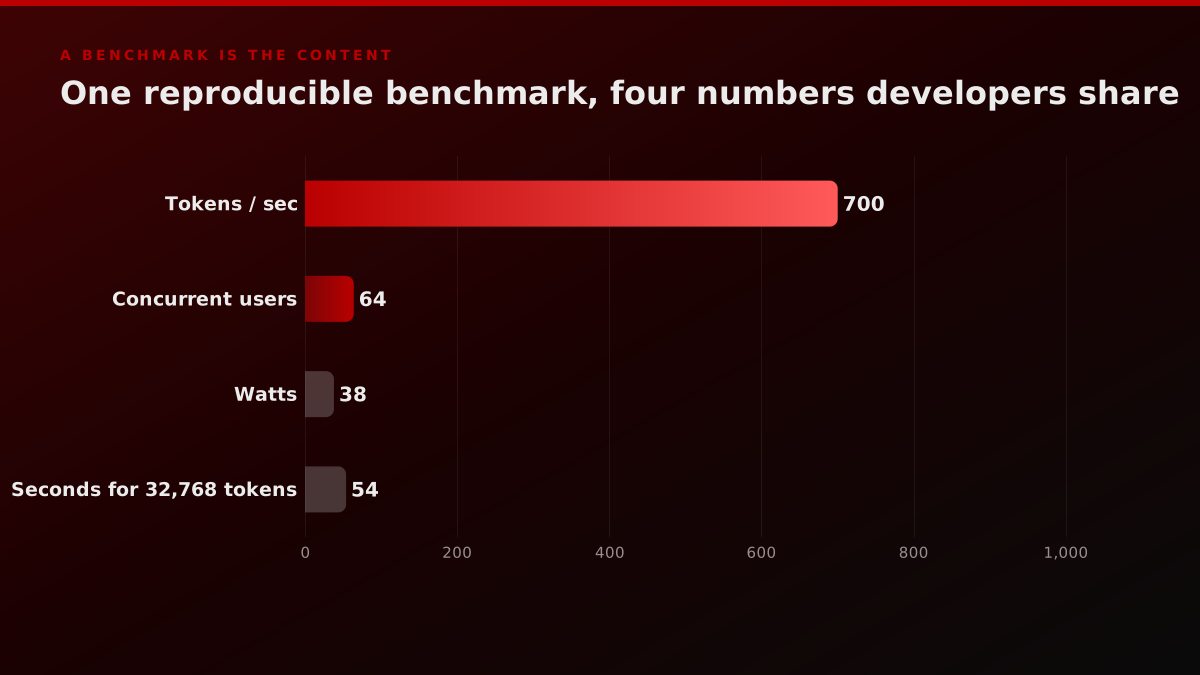
You make the benchmark the primary content asset, not a line in a deck, and you publish it so anyone can rerun it. The reason is that a benchmark is the native unit of proof for this audience. When someone posts that one $3,999 DGX Spark served 64 concurrent users at 700-plus tokens per second on 38 watts, generating 32,768 tokens in 54 seconds, that number gets shared and argued about precisely because the reader can imagine reproducing it. A benchmark enters a conversation that is already happening. A marketing claim interrupts one.
The mechanics are simple and strict. Publish the exact command, the hardware, the model, and the raw numbers, so the benchmark is reproducible on the reader's own machine. Then decompose it: a technical X thread that is one claim and one command per tweet, a Reddit answer in the thread where the question is already live, and a docs page that turns the benchmark config into a quickstart. The failure mode is the unverifiable benchmark. A number nobody can rerun reads as marketing and gets dismissed by exactly the audience you are trying to win, so reproducibility is not a nice-to-have, it is the entire mechanism.
NO1ennn
@N01ennn
One $3,999 DGX Spark just served 64 concurrent users on Qwen 3.6-35B at 700+ tokens per second on 38 watts. The benchmark output shows 32,768 tokens generated in 54 seconds.
The AI-infra buyer evaluates in the open, in public and in detail
Developers evaluating inference and infrastructure do it publicly and comparatively, in r/LocalLLaMA and r/mlops threads, in Hacker News comments, and by reverse-engineering serving economics from engineering blogs. One founder on r/LocalLLaMA was openly doing market research on how to even find the businesses self-hosting inference. That means GTM is a matter of showing up where the evaluation already happens with real, checkable proof, not interrupting a feed with a claim.
Source: r/LocalLLaMA and r/mlops field observation, 2026
What makes a benchmark credible enough to travel? Four things, and skipping any one of them turns proof back into marketing. First, the exact command and configuration, so the reader can rerun it verbatim. Second, the hardware and the model, named specifically, because a number without its context is meaningless. Third, the raw output, not a rounded headline, because this audience will ask for the tail latencies and the failure cases. Fourth, an honest boundary, the conditions under which the number does not hold, because a benchmark that admits its limits is trusted and one that hides them is discounted. Buyers in this niche have learned to vet inference platforms adversarially, comparing claimed throughput against reproducible reality, so a benchmark that survives that scrutiny is worth more than any amount of promotional copy. The teams that win publish the benchmark they would be comfortable defending in the comments, then defend it in the comments.
The corollary is that you should benchmark against the comparison your buyer is actually making, not the one that flatters you. If a developer is deciding between self-hosting on their own GPUs and paying for your managed API, the benchmark that matters is cost and throughput at their scale, not a synthetic best case. Meeting the buyer's real comparison head-on, including where you lose, is what separates a credible infra brand from a vendor nobody trusts.
What is the five-move developer-adoption motion?
The five-move motion turns a reproducible benchmark into adopted usage, in order. First, publish the benchmark, leading with a number a developer can rerun rather than a tagline. Second, make the docs the demo, because a five-minute first-call quickstart converts a curious developer better than any sales deck. Third, answer in the threads, showing up in r/LocalLLaMA and r/mlops to solve the real problem before you ever link. Fourth, run the technical thread on X, turning the engineering post into a narrative of one claim, one chart, one command per tweet. Fifth, convert trust to trials, routing the earned attention to a self-serve first API call with no credit-card wall in the way.
The reason the order matters is that each step earns the right to the next. The benchmark earns the docs visit. The docs earn the first call. The threads earn the trust that makes the developer willing to try at all. Skip the proof and go straight to the trial ask, and you are a cold pitch. Lead with the proof and the trial becomes the natural next click. This is the same distribution-first logic that turns founder-led growth into pipeline, applied to an audience that will only trust what it can verify.
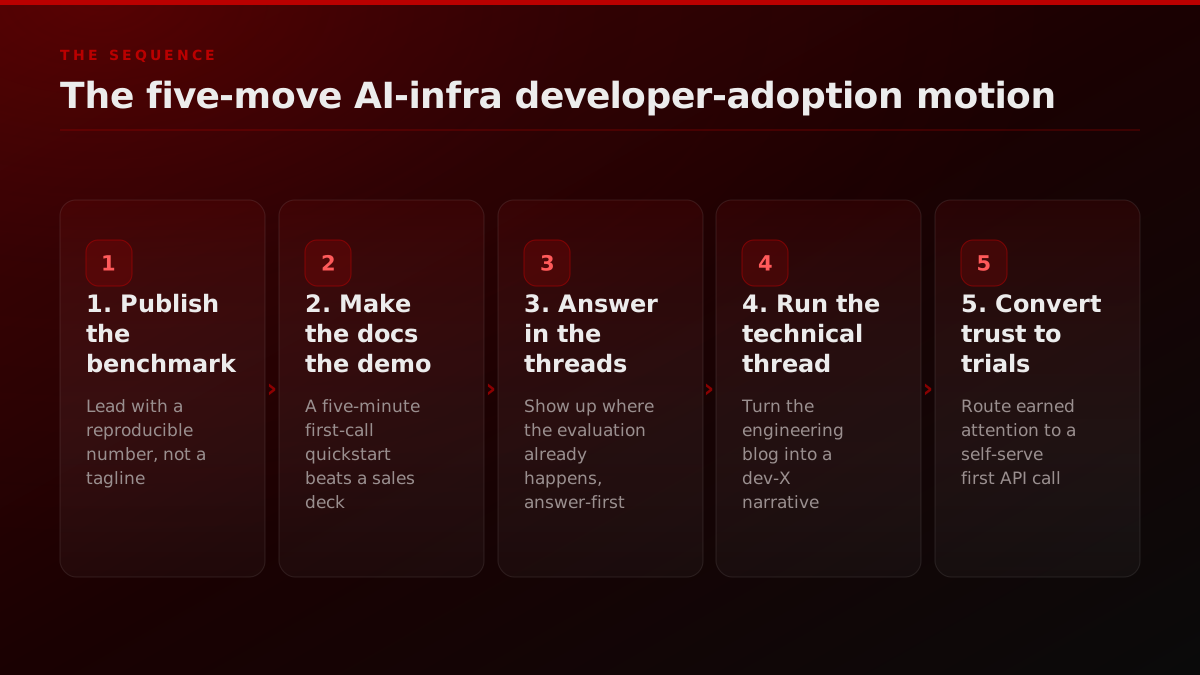
Where does the motion break? Almost always at the quickstart. A developer who saw your benchmark and clicked through will abandon if the first API call needs a sales call, a demo booking, or a fifteen-step setup. The adoption funnel has a specific failure mode at every stage, and the quickstart is where most AI-infra startups lose the developer they already earned.
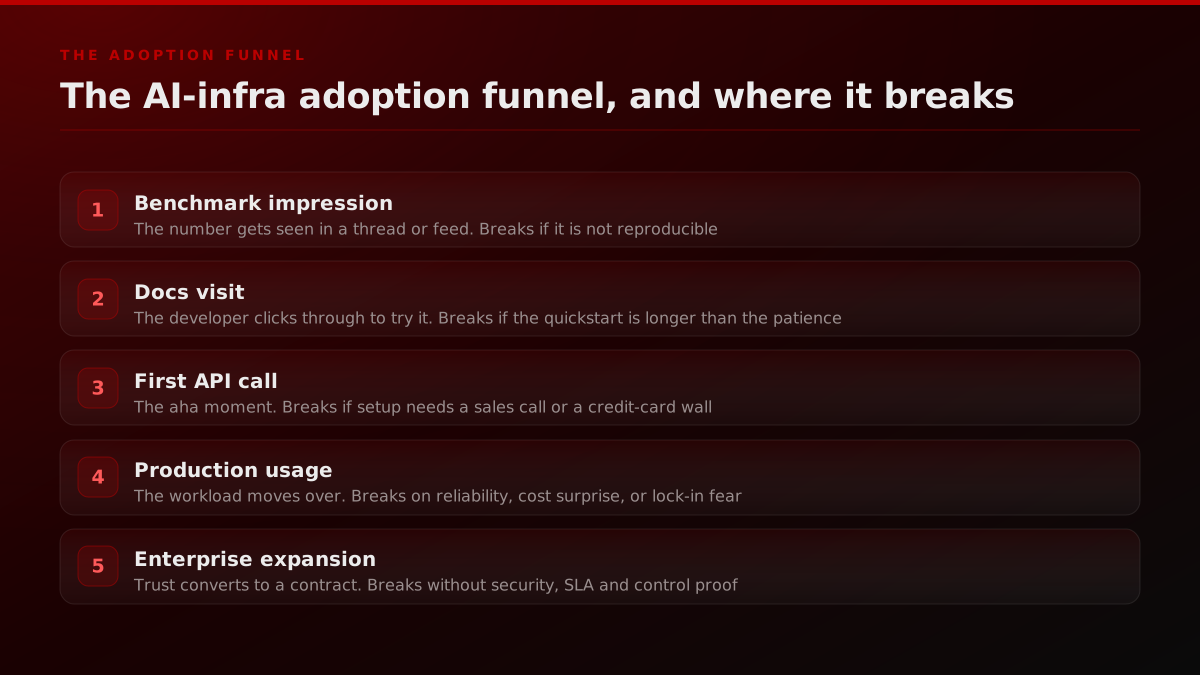
Operator noteIf your quickstart needs a sales call, your top of funnel is your sales team, and it will not scale.
How does GTM differ across inference, GPU cloud, and vector databases?
The core motion is the same across AI-infra sub-niches, but the proof artifact and the buyer's primary anxiety differ, so the emphasis shifts. For an inference or model-serving product, the benchmark is throughput and cost per token at real concurrency, and the buyer's anxiety is reliability under load and lock-in, which is why inference API documentation and quickstarts carry so much GTM weight. The developer wants to see a first call working in minutes and wants proof that your latency holds when traffic spikes. For a GPU cloud, the benchmark is availability, price-performance, and time-to-provision, and the anxiety is being stranded without capacity at the worst moment, so the proof that matters is transparent availability and honest pricing rather than a peak-throughput hero number.
For a vector database, the motion is subtly different again because the buyer is usually building retrieval-augmented generation and cares about recall, latency at scale, and operational simplicity, not raw tokens per second. The credible content here is a real recall-versus-latency tradeoff at a named dataset size, and educational content that helps the developer reason about the problem, which is why the best vector-DB companies invest heavily in teaching what a vector database is and how to use it well rather than only pitching their product. Across all three, the pattern holds: lead with the proof your specific buyer is trying to verify, answer the anxiety they actually have, and educate before you sell. The sub-niche only changes which number goes on the chart.
How is developer adoption different from enterprise trust?
Developer adoption and enterprise trust are two separate motions, with different deciders, different proofs, and different timelines, and an AI-infra company has to run both at once. Developer adoption is decided by the individual engineer, who wants speed to a first API call, is won in Reddit, Hacker News, docs, and X, is proven by a reproducible benchmark, and closes in minutes. Enterprise trust is decided by a buyer and a security team, who want reliability and control, is won with case studies, SOC 2, and references, is proven by an SLA and a reference customer, and closes in quarters.
The mistake is running only one motion. A pure developer-love play stalls at self-serve revenue and cannot land the contracts that justify the infrastructure burn, while a pure enterprise-first play has no bottoms-up pipeline feeding the sales team. The two reinforce each other: developer adoption produces the usage data and the internal champion that make an enterprise sale credible, and an enterprise logo produces the trust signal that makes the next developer feel safe adopting. Run them as one system, not as a sequence. The distribution, platform, and team gap that stalls infra companies is usually a company running one motion and hoping the other happens by itself.
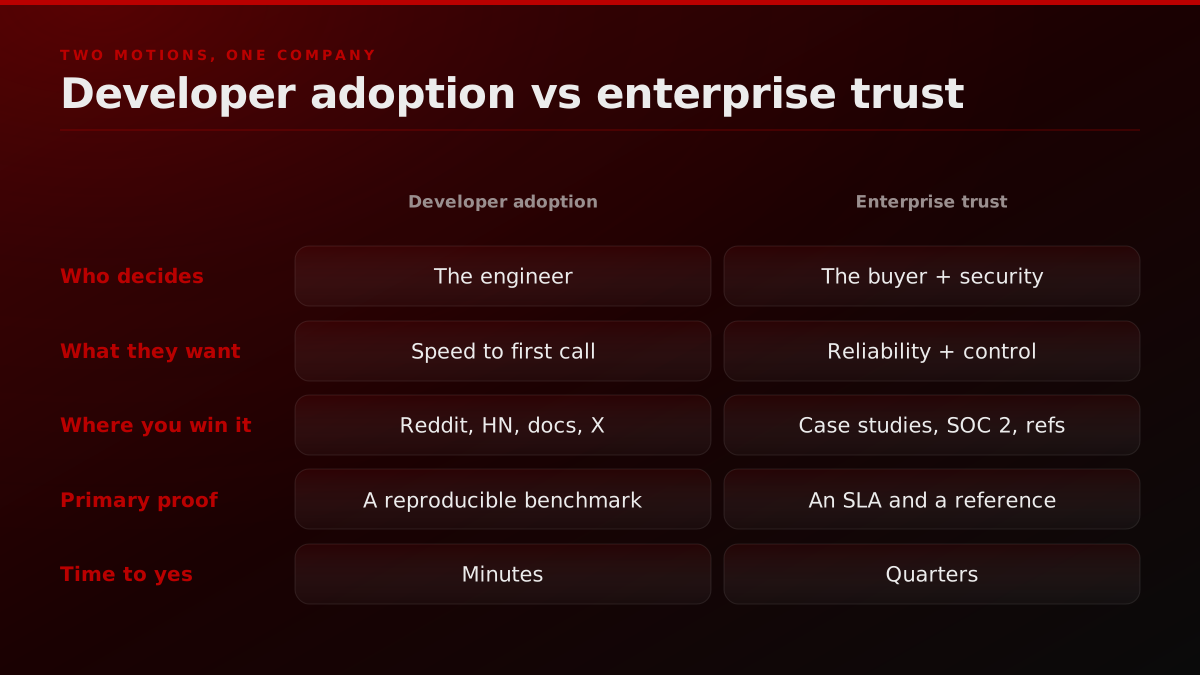
Developer adoption vs enterprise trust: two motions, one company
| Dimension | Developer adoption | Enterprise trust |
|---|---|---|
| Who decides | The individual engineer | The buyer plus the security team |
| What they want | Speed to a first API call | Reliability, control, and no lock-in |
| Where you win it | Reddit, Hacker News, docs, X | Case studies, SOC 2, references |
| Primary proof | A reproducible benchmark | An SLA and a reference customer |
| Time to yes | Minutes | Quarters |
An AI-infra startup has to run both motions; each feeds the other.
The enterprise-trust motion has its own literature worth reading, because the mistakes are well documented. Enterprises adopting AI infrastructure run a structured evaluation, and frameworks like the Microsoft Cloud Adoption Framework for AI and ThoughtWorks on rethinking go-to-market for AI both make the same point: the enterprise buyer is managing risk, not chasing novelty, so the winning vendor reduces perceived risk at every step. That means SOC 2 and security documentation before the buyer asks, a reference customer in their industry, a clear data-handling and residency story, and a migration path that does not read as a trap. Even the internal-adoption playbooks, like GitLab's strategies for helping developers accelerate AI adoption, reinforce that trust is built through enablement and proof, not persuasion.
For the trust layer specifically, credibility content and answer-engine visibility matter more than most infra founders expect, because a security reviewer and a technical buyer both search before they commit. When a buyer asks an AI engine to compare inference providers, you want to be the cited answer, and that is an earned position, not a bought one. Our AI Overview optimization patterns, our guide to measuring your share of AI citations, and our answer-engine optimization service cover how to earn that citation. The through-line from developer adoption to enterprise trust is proof: the developer wants a benchmark, the enterprise wants a reference, and both want to verify before they believe.
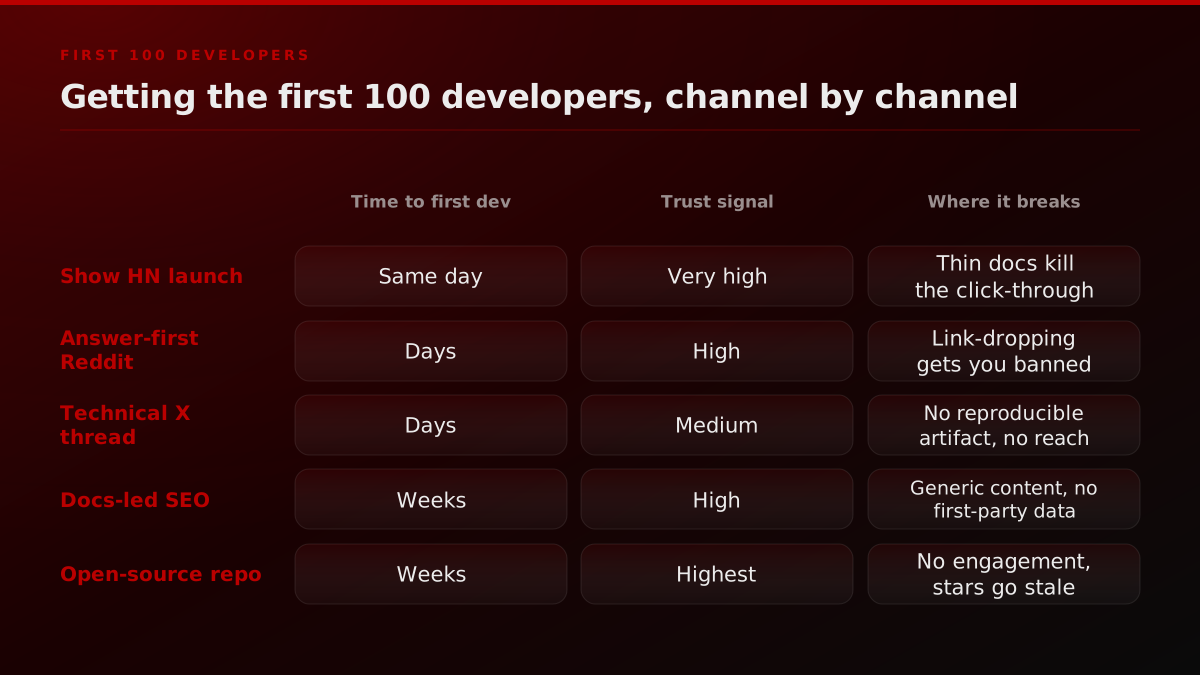
Where do the first 100 developers actually come from?
The first 100 developers come from a handful of channels with very different time-to-first-dev, trust signals, and failure modes. A Show HN can deliver developers the same day but dies if the docs are thin. Answer-first Reddit delivers within days and carries very high trust, but link-dropping gets you banned. A technical X thread can move fast but reaches nobody without a reproducible artifact behind it. Docs-led SEO takes weeks and needs genuine first-party data to rank. An open-source repo carries the highest trust of all but goes stale without engagement.
The through-line is that none of these channels reward the pitch, they reward the artifact and the participation. This is why a benchmark and a genuinely helpful answer outperform any amount of paid reach at this stage, and why the founder's own presence in the first launch window is worth more than a marketing budget. If you are earlier than your first 100 developers and need the demand surface built, our dev-tools GTM page and our AI startups page lay out how we run the motion for infra teams, and our go-to-market playbooks sequences it.
Sequencing matters more than volume in the first 100. Trying to run all five channels at once with a two-person team produces thin participation everywhere and standing nowhere. The better pattern is to pick the one channel where your ICP is densest, usually r/LocalLLaMA for an inference or self-hosting product, and become genuinely useful there first, answering questions for weeks before you ever mention what you are building. That earned standing is what makes a later Show HN or benchmark drop land, because the community already recognizes you as a practitioner rather than a marketer. The first 100 developers are not a growth-hacking problem, they are a reputation problem, and reputation compounds only when you show up consistently in one room before you try to be in five.
Should you build DevRel in-house or hire a partner?
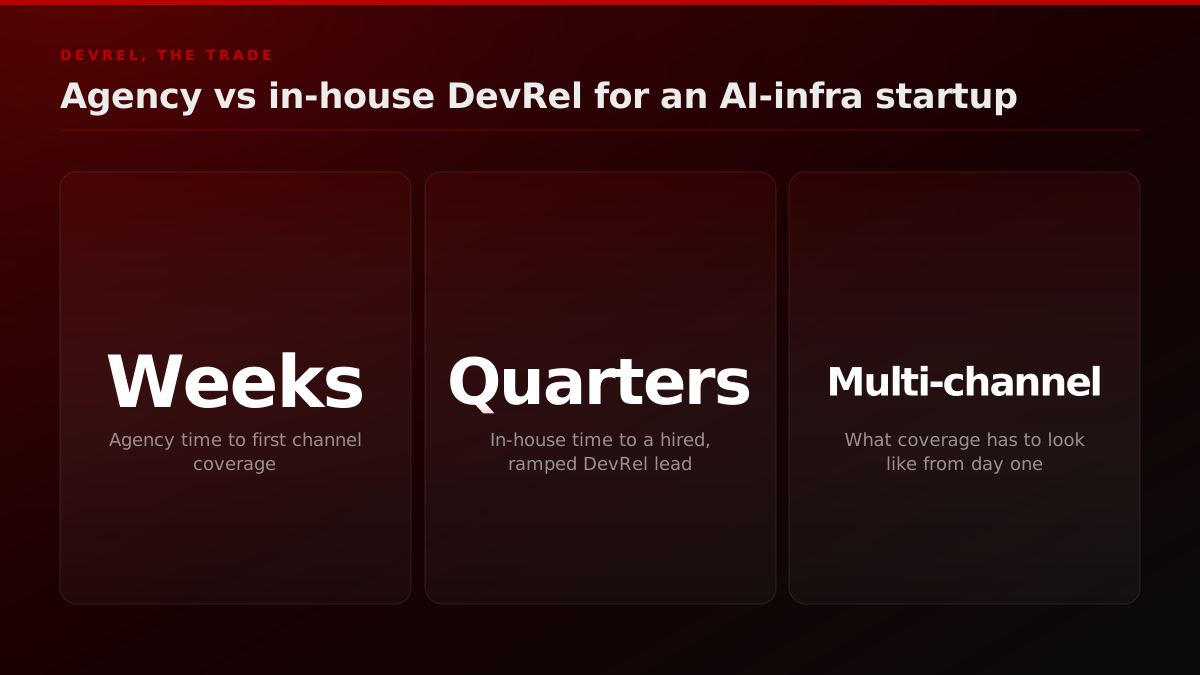
The DevRel build-versus-buy decision comes down to speed against permanence, and the right answer depends on your stage and your launch calendar. An in-house DevRel hire takes quarters to source, hire, and ramp to the point of producing coverage across benchmarks, docs, Reddit, Hacker News, and X, and a single hire rarely covers all of those at once. A DevRel or full-funnel partner produces multi-channel coverage in weeks, because the community presence, the content motion, and the channel relationships already exist. Neither is free, and the deeper truth is that DevRel for AI infrastructure is a proof-production job, not a content-calendar job, so the real question is who can produce reproducible benchmarks and credible answers at the cadence your launches demand.
For a seed-stage team with a launch coming, waiting two quarters for a hire to ramp usually means shipping the launch into a void, so a partner for surge coverage is the pragmatic call. For a Series B team building a durable developer brand, the permanence of an in-house function plus a partner for surge capacity is often right. We break the full trade down in our developer marketing strategy guide, and our Twitter marketing service runs the technical-thread half of the motion.
How should an AI infra startup run launch day on Hacker News and Reddit?
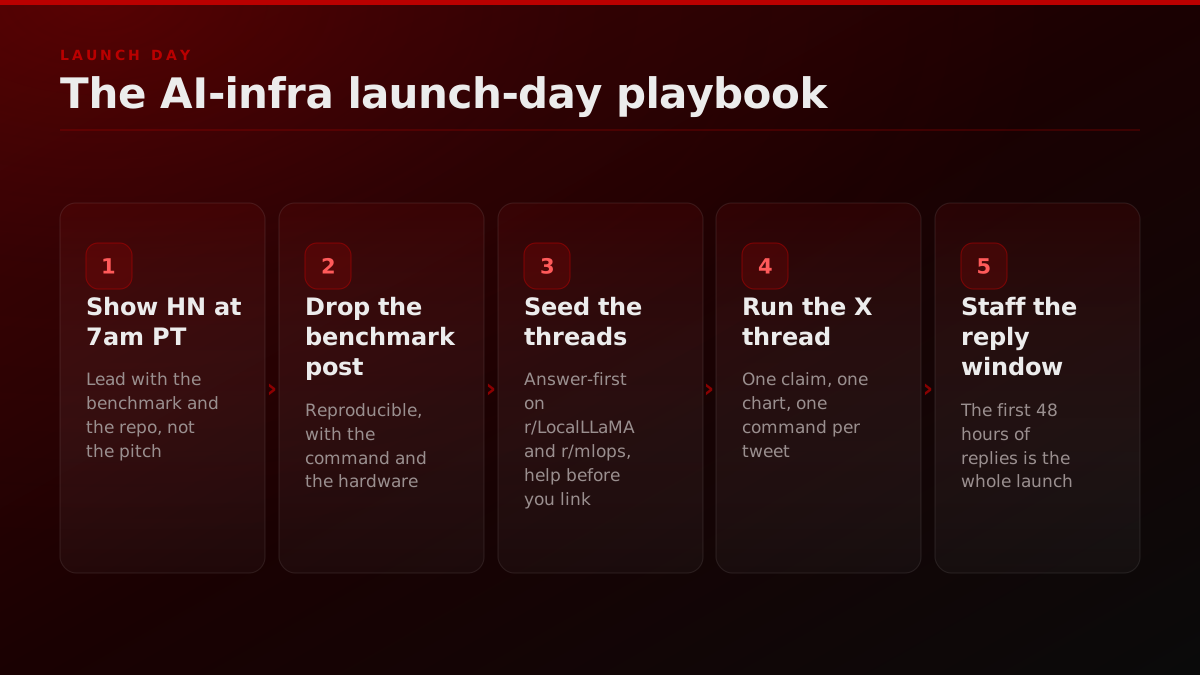
Run launch day by leading with the artifact and staffing the reply window, because in this niche the comment thread is the launch. On Hacker News, post a Show HN that opens with the benchmark and the repo, not the funding or the tagline, and have the founder present and answering for the first 48 hours. The audience that reads a Show HN is exactly your ICP, and the way engineers talk about what they learn building real integrations, as in the Hacker News thread on what a team learned building 100 API integrations, is the standard your launch has to meet: specific, comparative, and honest about tradeoffs.
On Reddit, the answer-first rule is absolute. Find the threads in r/LocalLLaMA and r/mlops where your exact question is already live, answer as a practitioner fully first, and link your product only when it genuinely answers the question. A helpful answer that references your benchmark compounds for months as the thread resurfaces in Google and AI search, while a link-drop gets you banned and torches your standing. The single biggest launch-day mistake is staffing the posting and not the replies. The volume and quality of your answers in the first two days is the whole launch, because that is what earns both the algorithm signal and the developer trust.
There is a timing discipline underneath the launch that most teams get wrong. A launch is not a single day, it is a window, and the artifact has to be ready before the window opens, not scrambled together during it. That means the benchmark is published and reproducible before the Show HN goes up, the docs quickstart is tested by someone outside the team before the traffic arrives, and the founder has cleared their calendar for the 48 hours of replies before they hit post. The teams that treat launch day as a sprint of improvisation lose the window, because a thin docs page or an unanswered top comment on Hacker News in the first hour is a signal the whole audience reads. Preparation is the unglamorous half of the launch, and it is the half that decides whether the benchmark you worked so hard on actually converts into adopted usage. For the enterprise-trust framing that runs in parallel, this walkthrough of AI-infrastructure cost and simplification is a useful reference on why adoption is a control decision.
DigitalOcean Is Lowering AI Infrastructure Costs and Simplifying Cloud
TeqTalk
The enterprise-trust framing behind why AI-infra adoption is a control and cost decision, not just a features decision.
Cost per barrel of intelligence, by provider (2026)
| Provider | Cost per barrel of intelligence | Implication for GTM |
|---|---|---|
| Anthropic | ~$56 | Premium; sells on capability and trust |
| OpenAI | ~$26 | Efficiency wins used as launch events |
| Meta (open weights) | ~$1.50 | Open weights commoditize serving |
| xAI / Google | ~$1 | Price pressure on every closed API |
| Chinese models | ~$0.50 | The floor; raw inference races to zero |
Figures from Chamath Palihapitiya on CNBC, cited via @CodeswithClara. A ~112x spread from top to bottom.
The verdict: build the adoption motion, not the price war
The AI-infrastructure companies that win in 2026 are not the cheapest, because cheap is a floor that keeps dropping, from $56 a barrel to $0.50 and falling. They are the ones a developer already trusts. That trust is manufactured in a specific, repeatable way: publish reproducible benchmarks, make the docs a demo, show up answer-first where developers already evaluate, and run the developer-adoption and enterprise-trust motions as one system. Every buying trigger you have, a launch, a benchmark, a round, is a distribution trigger if you attach proof to it. Your roadmap is already your GTM calendar. The only question is whether you publish the proof or keep it in a deck.
If you want that motion built and run for your inference, GPU, or vector-DB product, from the benchmark to the answer-first Reddit and Hacker News launch to the technical X thread, that is exactly what FORKOFF does for AI-infrastructure startups. See how we run it on our dev-tools page, our foundation-models page, and our founder funnel service.