Most portfolio companies that die did not die from a bad product. They died from a missing function. Somewhere between the raise and product-market fit, owned distribution needed an owner, and there was not one, because the job is too early for a VP of Growth, too heavy for a founder to run alone, outside what a fund's platform team actually operates, and mis-served by agencies that rent attention instead of building it. That unstaffed function is the platform-team gap, and it is quietly fatal. For a technical product the missing function usually has a name, developer marketing.
TL;DR
Funded startups with viable products still die, and the cause is rarely the product. It is the absence of owned distribution as a staffed function. That function falls into a hole on the org chart: it is too early for a VP of Growth, more than a founder can run alone, outside what a fund's platform team actually operates (they do intros and events, not a running distribution engine), and mis-served by agencies that rent attention through campaigns instead of building owned assets. This is the platform-team gap. The fix is to treat distribution as a role from day one, run the founder funnel as its operating system, and instrument clipping and Reddit as owned surfaces you can attribute, not a blended reach number nobody can act on.
TL;DR: Funded startups with viable products still die, and the cause is rarely the product. It is the absence of owned distribution as a staffed function. That function falls into a hole on the org chart: too early for a VP of Growth, more than a founder can run alone, outside what a fund platform team actually operates, and mis-served by campaign agencies. This is the platform-team gap. The fix is to treat distribution as a role from day one, run the founder funnel as its operating system, and instrument clipping and Reddit as owned surfaces you can attribute.
Last updated 2026-07-19.
Why do funded startups with good products still die?
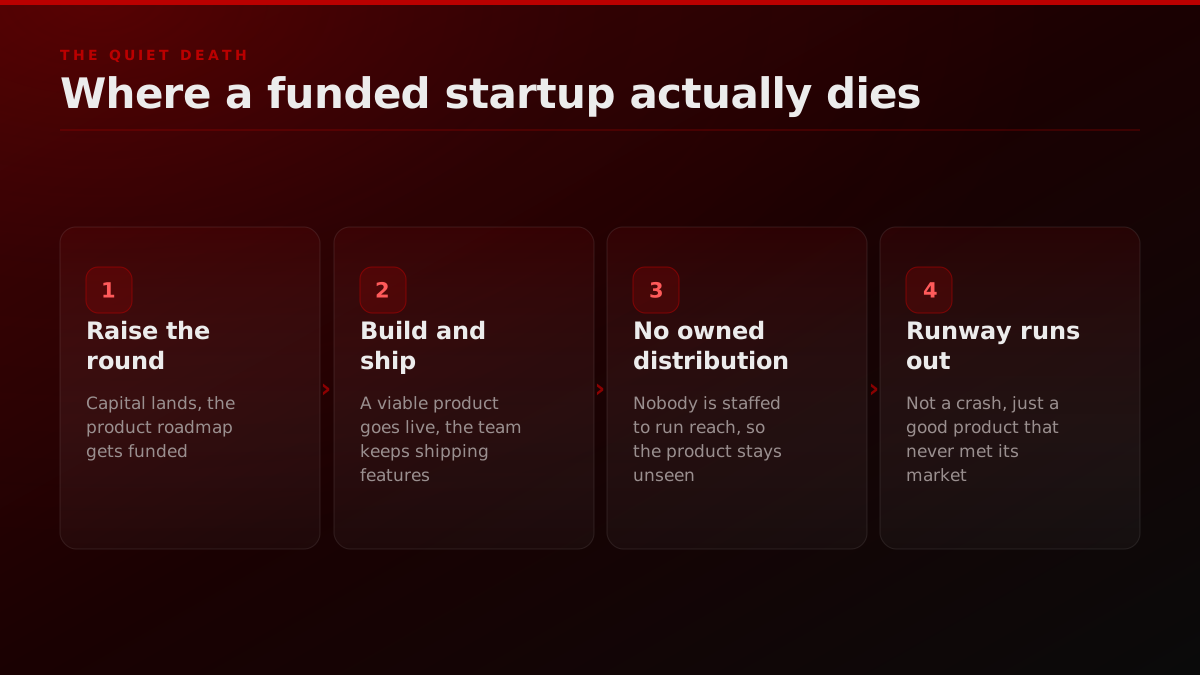
Because a working product is the price of entry, not the win. Once the thing functions, the binding constraint stops being can we build it and becomes can we get anyone to care, and that is a distribution question. The failure is hard to see precisely because it is quiet. There is no outage and no bug report, just a capable product that never reaches enough of the right people, while the team fills the silence by shipping more features nobody asked for. This is the failure mode the market is loudest about right now, and it is worth taking seriously before treating it as a slogan.
Poor distribution, not the product, is the number one cause of failure.
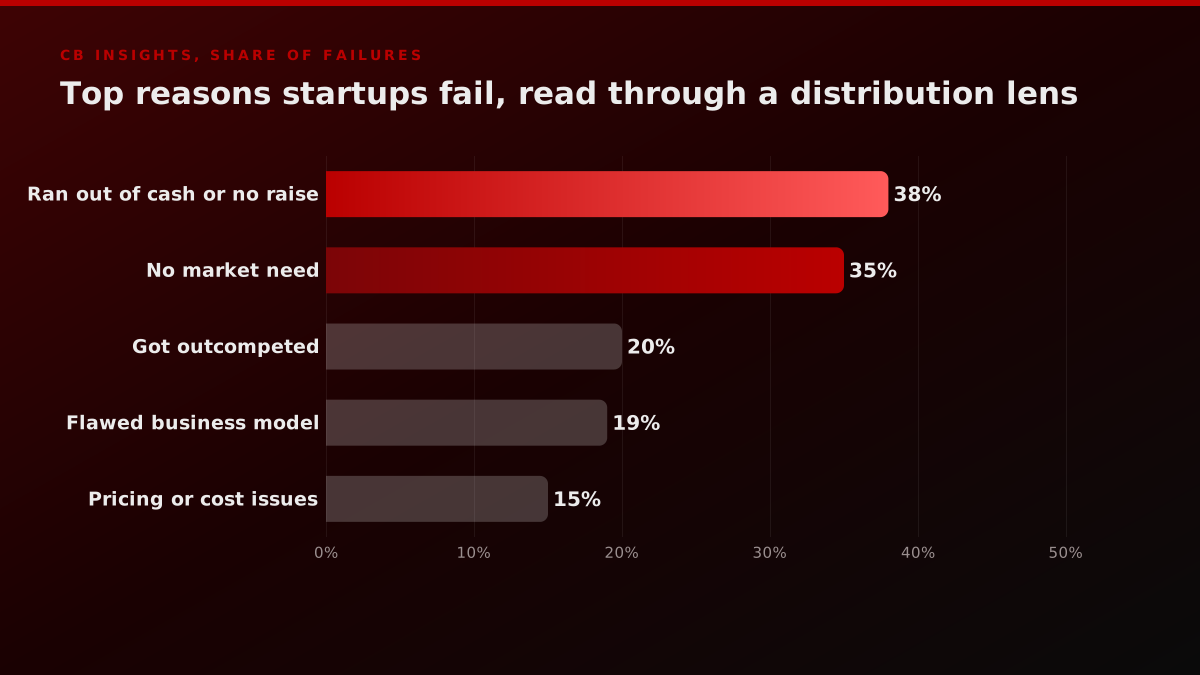
Peter Thiel wrote the canonical version of this in Zero to One, that poor distribution rather than a bad product is the number one cause of failure, and the data underneath the aphorism holds up. According to CB Insights' analysis of startup post-mortems, the single most-cited reason companies fail, at roughly 35 percent, is no market need. That phrase sounds like a product problem, but read it again through a distribution lens. A team that never got its product in front of enough of the right people never learned what the market actually wanted, which is a discovery-and-reach failure at least as much as a product one. GeekWire's write-up of the same idea quotes the harder version, most businesses get zero distribution channels to work, and zero channels is not a product defect.
The academic literature points the same way. A 2024 review of why startups fail frames the common causes as financial issues, market gaps, and team shortcomings, and each of those has a distribution component hiding in it, the company that could not raise had no traction to show, the market gap went unfilled because no one reached the market, the team was short exactly the operator who runs reach. Even the discovery half of product, the talk-to-your-users discipline Y Combinator teaches, is a reach problem before it is a research one, you cannot learn from users you never got in front of. The operators saying it out loud on the ground agree. On Reddit, founders keep landing on the same conclusion, that the hard part moved.
Software is getting easier to build, distribution is the real moat now
With AI, APIs, and no-code, building the first version of almost anything is faster and cheaper than ever, so the biggest risk shifted from can we build it to can we get anyone to care. The moat is shifting to distribution.
Operator noteWe have watched product-strong portfolio companies stall for two quarters with zero owned distribution surface.
What makes the diagnosis so slippery is that the company almost never writes distribution on its own autopsy. The founders who lived it usually describe the end as a fundraising problem, we could not raise the next round, or a timing problem, we were too early. Both descriptions are sincere and both are downstream of the same root cause. The round did not come together because the traction chart was flat, and the traction chart was flat because the product never reached enough of the right people to produce traction. Timing gets blamed because the founders assume a later market would have pulled harder, when the truer read is that they never built the channel to find the buyers who were ready now. Distribution failure is the one cause of death that consistently gets relabeled as something more forgivable on the way out.
The uncomfortable part for a well-run company is that being good at product makes this failure easier to walk into, not harder. A strong product team gets deep satisfaction from shipping, so when the top-line numbers are flat, the instinct is to build the next feature, because building is the thing the team is good at and enjoys. That instinct feels like progress and is often the exact opposite, because the constraint was never the feature set, it was that not enough of the right people ever saw the product that already existed. We wrote about the individual-level version of this trap in why your dashboard hides the real growth signal, and it applies here at the company level, a rollup that looks stable can hide a distribution engine that was never built.
What exactly is the platform-team gap?
A platform team is the group inside a venture fund whose job is to give portfolio companies leverage they could not buy on their own, recruiting help, business-development introductions, events, and marketing support. It is one of the genuinely good inventions in modern venture. The platform-team gap is the one function that sits just outside what that team actually operates, a compounding owned-distribution engine run week after week. The platform team makes introductions and hosts demo days, which are episodic by design, and it does not run any single company's owned channels day to day, because that is operations and it does not spread across a portfolio from one small team.
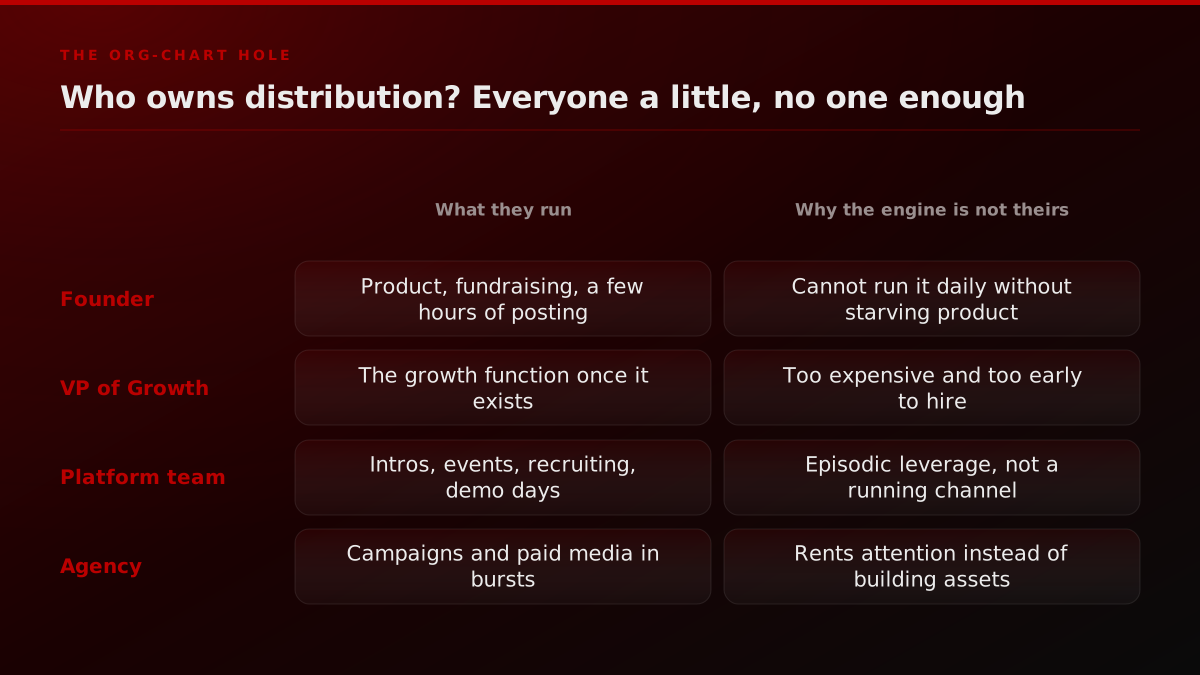
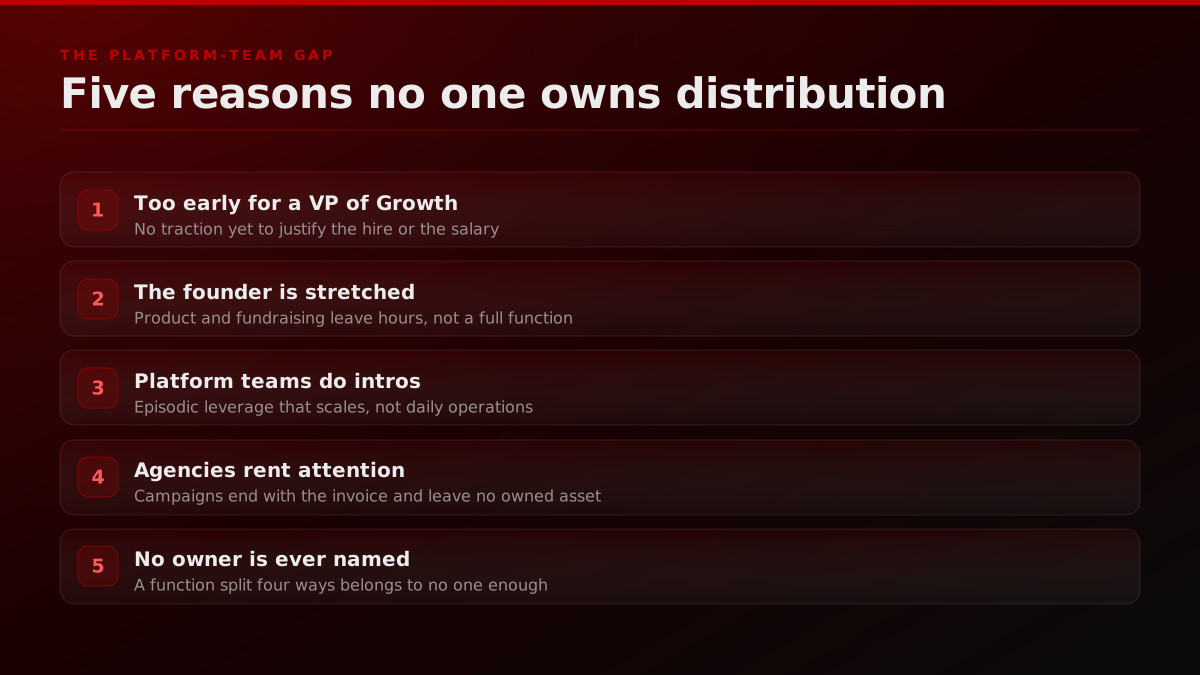
Look at the four candidate owners for a company's distribution and the gap becomes obvious. The founder can run it a few hours a week at most before it starves the product. A VP of Growth would own it, but hiring one is too expensive and too early before there is traction to grow. The fund's platform team does introductions and events, not daily operations. A traditional agency runs campaigns that end when the budget does. Every one of them has a legitimate reason it is not their job, and the intersection of all those reasons is a function that belongs to no one. Our venture portfolio go-to-market playbook lays out how a fund can close this deliberately, but the first step is naming that the hole exists.
The org chart has a hole exactly where distribution should sit
Every other core function of an early company has a clear owner. The founder owns product and fundraising. Engineering owns the build. Even finance, thin as it is, has someone whose name is on it. Distribution is the one function that everyone touches and no one owns. The founder does a little, the platform team does a little, an agency does a little when there is budget, and the sum of those fractional efforts is not a system. A function split four ways among people who each consider it someone else's real job is a function that does not compound, and distribution only works when it compounds.
Platform teams are built for leverage, not operations
A fund's platform team is one of the best inventions in venture, but it is designed around a specific shape of help, high-value episodic leverage. An introduction to a design partner, a recruiter relationship, a slot at a demo day. These are real and they matter. What a platform team is not built to do is run a company's owned distribution week after week, because that is operations, not leverage, and it does not scale across a portfolio of forty companies from one team. So the platform team correctly does the episodic work and correctly leaves the operational work alone, and the operational work is precisely where owned distribution lives.
Operator noteIntros and demo days are episodic. An owned channel compounds every week you actually run it.
This is not a criticism of platform teams. They do the episodic, high-leverage work exactly right, and that work is worth a lot. The point is structural, the operational work of running owned distribution is a different shape of help than a platform team is built to provide, so it correctly falls outside their remit, and then nobody else picks it up. A16z's Andrew Chen has been making the adjacent argument for years, that once the product itself commoditizes, defensibility has to come from somewhere else.
andrew chen
@andrewchen
REVENGE OF THE GPT WRAPPERS: Defensibility in a world of commoditized AI models The AI landscape has evolved a ton in the past year, with many new entrants, booming traction for many AI-first products, and existential questions for foundation model startups.
The portfolio math is what forces the gap to stay open. A platform team of a handful of people supports thirty, forty, sometimes a hundred companies at once, which means every hour they spend has to be leveraged across many portfolios or the model breaks. An introduction scales, one warm email helps a company for years. A running distribution operation does not scale that way, because operating one company's owned channels is full-time work for that one company, and no small team can run forty distribution engines in parallel. So the platform team rationally invests in the leverage that spreads and rationally declines the operations that do not, and the operations that do not spread are precisely the compounding, week-after-week owned-distribution work. The gap is not an oversight. It is the predictable output of a support model optimized for leverage meeting a function that only pays off through sustained operations.
Why does nobody actually own distribution?
Because owning it well requires a combination that no single existing role has. It needs the founder's voice and credibility, which an agency cannot fake. It needs daily operational consistency, which a stretched founder cannot sustain. It needs to compound over months, which a campaign-based vendor is not structured to deliver. And it needs to start before the company can justify a full-time growth hire, which is exactly when budgets are tightest. So the function sits in the seam between four roles, and seams are where work goes to die. The result is a company that is strong at everything with a clear owner and weak at the one thing with no owner.
You can watch this play out in public constantly. Builders ship a product in a weekend now, and then discover the second half of the job has no obvious owner and no obvious playbook.
You can't vibe-code an audience
Building software used to carry natural friction: you knew how to code or paid someone who did. Now it is twenty dollars a month and a weekend, the App Store filled with products, and most get no distribution. You cannot vibe-code an audience.
Operator noteThe founder funnel is the owned-distribution function most companies never staff until it is already late.
The seam is widened by a timing problem. The moment distribution matters most, the first year, is the moment the company can least afford to hire for it. A VP of Growth is a real salary and a real search, and no responsible founder makes that hire before there is something to pour fuel on. So the default is to postpone, to treat distribution as a phase-two problem that starts after the seed extension, after the next milestone, after the product is a little more done. The problem is that owned distribution compounds, which means postponing it does not just delay the benefit, it forfeits the compounding you would have banked in the months you waited. A channel you start in month two is worth far more in month twelve than a channel you start in month ten. This is the same logic behind treating a part-time operator as the bridge before a full growth hire, name the owner early even if the owner is not yet full-time.
Naming an owner does not mean making a premature hire. It means someone is accountable for a specific, measurable outcome, that the company owns more reach at the end of the quarter than it did at the start, and that accountability lives with a named person rather than dissolving across the founder, the platform team, and whichever vendor is under contract this month. In practice the owner is usually the founder plus one outside operator who runs the system day to day, so the founder's voice and judgment stay in the loop while the operational consistency comes from someone whose only job is the channel. That structure gets the compounding started in month two instead of month ten, and the months you bank early are the ones that matter most, because a channel that has been running for a year carries an audience, a backlog of assets, and a track record that a channel started last week simply does not have.
The distribution owner gap, by who could take it
| Candidate owner | What they actually do | Why the engine is not theirs |
|---|---|---|
| Founder | Product, fundraising, a few hours of posting | Cannot run it daily without starving product |
| VP of Growth | Owns growth once the function exists | Too expensive and too early to hire |
| Platform team | Intros, events, recruiting, demo days | Episodic leverage, not a running channel |
| Agency | Campaigns, paid media, one-off launches | Rents attention instead of building assets |
What does "owned distribution" really mean?
Owned distribution is reach the company controls and can run again without paying for every impression, a founder audience on X, an email list, a clipping engine that cuts every appearance into native assets for each platform, a Reddit presence inside the communities where buyers already are, a podcast footprint. The defining property is that it compounds. A post today makes the next post land a little better, an audience you built last quarter is still there this quarter, and the cost of the next unit of reach falls over time. That is the opposite of rented distribution like paid ads, where reach stops the instant the budget stops and the cost per impression never structurally improves.
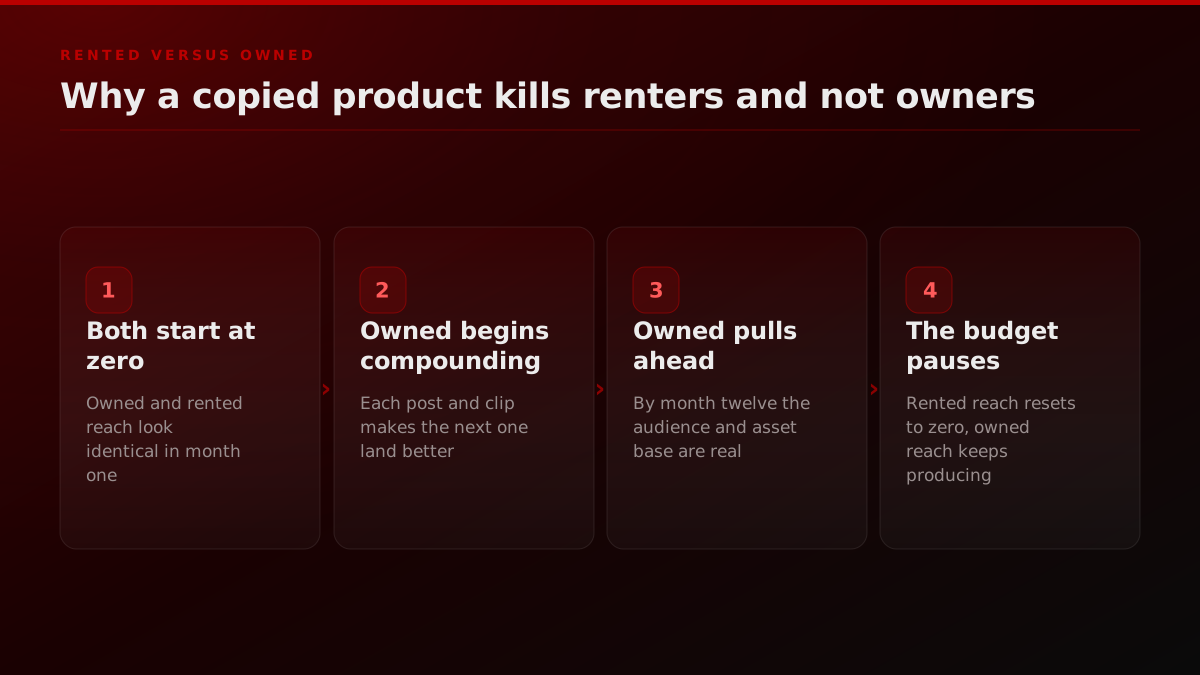
The distinction matters most for exactly the companies most at risk, the ones whose product can be copied quickly. Andrew Gazdecki put the timeline on it, that a startup has roughly twelve months before anyone really notices, and the right move is to spend that window building a distribution moat so it does not matter when the product gets cloned. Rent your reach and a copied product is an existential threat, because the moment you stop paying, you have nothing. Own your reach and a copied product is an annoyance, because the relationship with the market is the asset and that did not get copied.
Andrew Gazdecki
@agazdecki
Every startup gets copied. When you first launch you have around 12-months before anyone really notices you but shorter if you build in public. So accept it and spend the first 12-month building your distribution moat so it doesn't matter when your product is copied.
Agencies rent attention, owned distribution compounds it
The default answer to a distribution gap is to hire an agency, and most agencies are structured to run campaigns, paid media, a launch, a burst of activity that ends when the invoice does. That is renting attention. It can be useful, but it does not leave the company with an asset, and a company whose product can be cloned in a weekend cannot afford to rent its only moat. The alternative is building owned distribution, a founder audience, an email list, a clipping engine, a Reddit presence, channels the company keeps. The test for any distribution spend is simple, does the company own more reach after this than before, or did it just rent some.
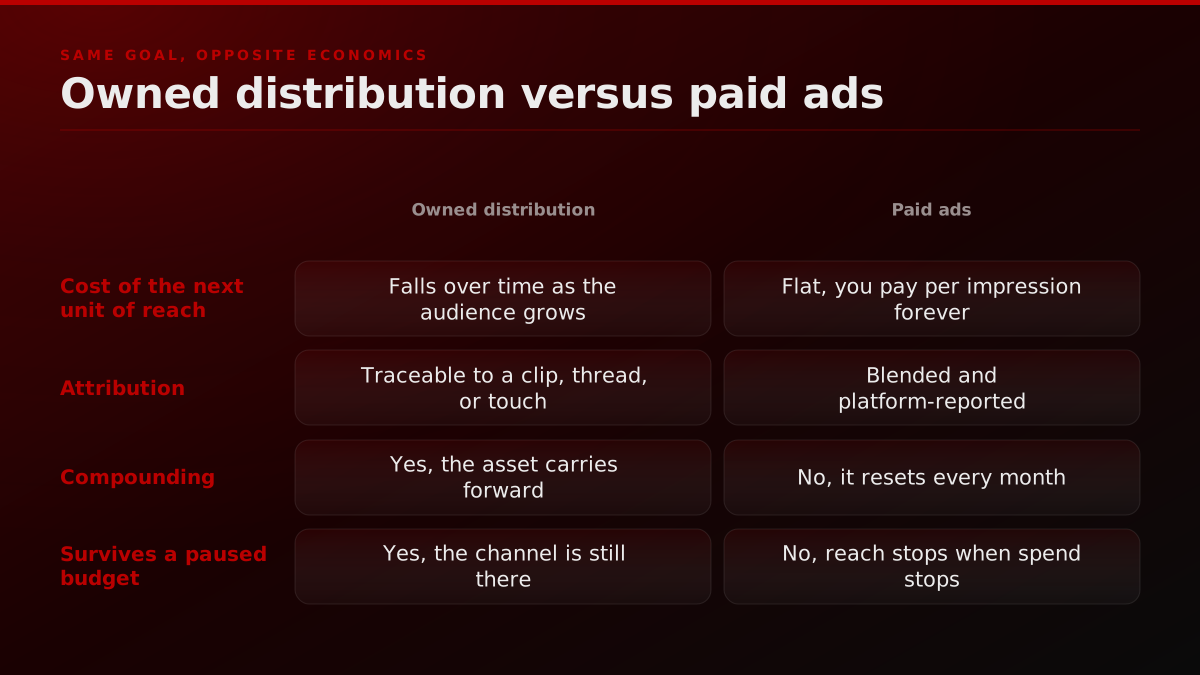
This is why the honest version of the advice is not spend more on ads, it is build owned distribution first and let paid amplify it. Paid media on top of a working owned channel is an accelerant. Paid media with no owned base underneath is renting a moat that resets to zero every month, and the CB Insights ran-out-of-cash category is full of companies that did exactly that. Our new-media distribution playbook walks through how to build the owned side without a newsroom, borrowing and clipping and repurposing until the company controls its own reach, and the three-ring distribution model shows how to sequence owned, then earned, then paid so the paid dollars land on an asset instead of on sand.
How much of the portfolio does this quietly kill?
More than the post-mortems admit, because distribution failure rarely gets written on the death certificate. It hides inside softer, more forgivable categories. When a company dies, the story is no market need, or ran out of cash, or got outcompeted, and all three are true and all three usually have a distribution failure underneath them. The team that could not find market need often never reached enough of the market to find it. The team that ran out of cash often burned it on build and paid ads with no owned channel to compound. The team that got outcompeted often lost to a weaker product with a stronger distribution motion.
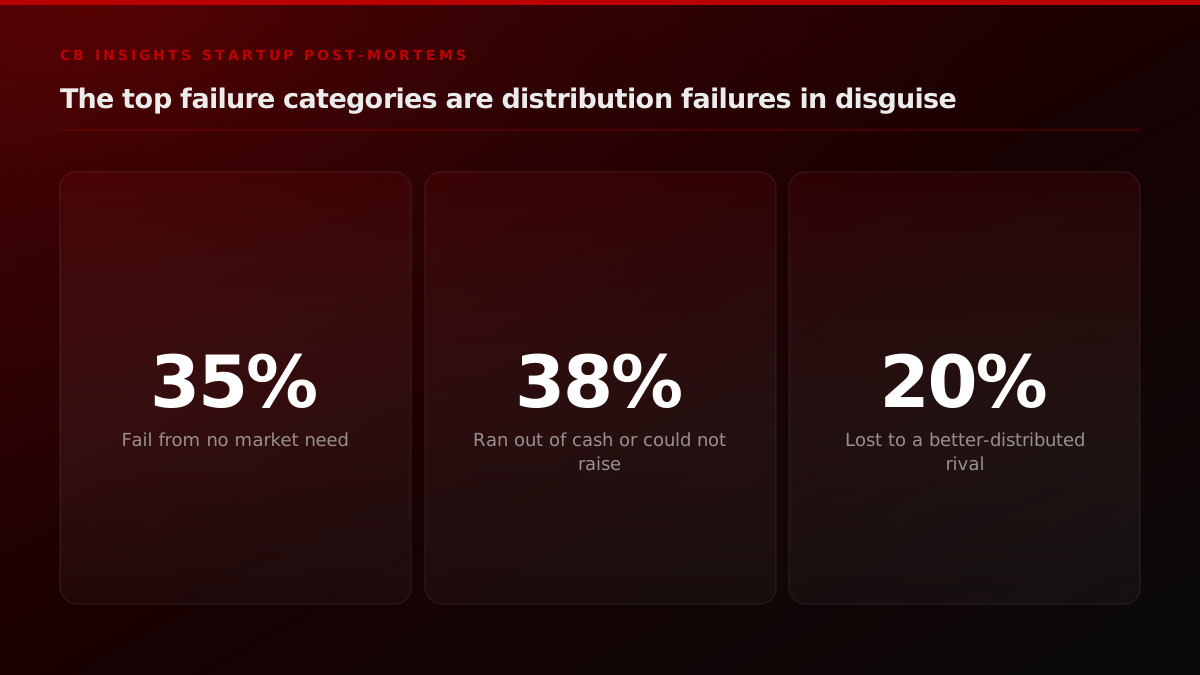
Put the numbers next to the narrative. CB Insights' 35 percent no-market-need is the largest single bucket, and a large share of financing failures are companies that never built enough traction to justify the next round, which is a reach problem before it is a fundraising one. Read the whole post-mortem list and the pattern is that the categories most likely to end a company are the ones most entangled with distribution, not the ones about code quality or uptime.
What the post-mortem blames versus what actually failed
| Cause on the post-mortem | The distribution failure underneath | Who should have owned the fix |
|---|---|---|
| No market need | Never reached enough people to learn the market | A distribution owner running discovery |
| Ran out of cash | Burned runway with no owned channel to compound | A founder funnel that lowers cost per lead |
| Got outcompeted | A weaker product with a stronger reach motion won | A staffed distribution engine from day one |
| No marketing | Reach left to a part-time founder and stray intros | A named owner, founder plus an operator |
AI collapsed the product gap, which promoted distribution to the moat
The reason this gap is now fatal rather than merely costly is that the product moat has thinned. When anyone can ship a competent version of your software in a weekend with AI and no-code, the feature list stops being defensible. Operators across ecommerce learned this years ago and software is learning it now, the winning product can be copied faster than ever, so the durable advantage moves to whoever owns the relationship with the market. That is distribution. The companies that treated it as a staffed function all along are the ones that do not care when they get copied.
The reason this share is rising rather than falling is the collapse of the product moat. When shipping a competent product got cheap, the durable advantage moved to whoever owns the relationship with the market. Ecommerce operators learned this a decade ago, that a winning product gets ripped and relisted within days, so the operators who win are the ones who own their distribution. Software is now living the same lesson, which is why the distribution-is-the-moat consensus got so loud so fast, and it is why a company that treats distribution as a someday function is taking on more mortality risk every year the product layer commoditizes further. For a sharper read on which distribution spend actually builds equity versus rents attention, we broke down credibility campaigns against raw user-acquisition pushes, and the same test applies at the portfolio level.
There is a second-order effect that makes the gap even more expensive than the direct failures suggest. Distribution does not only decide whether a company reaches customers, it decides whether a company can tell a fundable story. A founder with an owned channel walks into the next round with a narrative that is legible to investors, here is the audience we built, here is the pipeline it produced, here is the cost per qualified lead falling quarter over quarter. A founder without one walks in with a product demo and a hope. Even when both companies have similar underlying quality, the one that can show a distribution asset raises more easily and on better terms, which means the distribution gap quietly taxes valuation and dilution long before it ever threatens survival. The companies that treated distribution as a function from the start are not just more likely to live, they are more likely to raise well when they do.
Is distribution really the moat, or is that just a slogan?
Partly a slogan, and the slogan needs a correction before it is useful. The loudest version of distribution is the only moat overshoots, because a product that does not work cannot be rescued by any amount of reach, and the contrarian operators are right to push back. Retention and habit gate everything downstream of the first install. Team quality and execution history are real moats too. So the defensible claim is narrower than the tweet, among companies whose product already works, the most common missing piece is a distribution function with an owner, and that is a very different statement from distribution beats product.
I don't think consumer crypto has a distribution problem. I think it has a habit problem. Downloads are relatively easy when incentives are attractive. Returning tomorrow without feeling obligated is where most products quietly lose people.
Take the pushback seriously. If a consumer product has a habit problem, no distribution engine fixes it, you just pour reach into a leaky bucket faster. If the product does not solve a real job, distribution accelerates the discovery that it does not. The honest sequence is product first, then distribution, and the essay is not arguing to invert that. The most rigorous product-market-fit engine of the last decade, First Round's account of how Superhuman found fit, earned the right to scale distribution only after the product cleared a hard bar with real users. It is arguing that once you clear the product bar, the very next function you need is the one nobody is staffed to run, and teams skip straight from product to paid ads without ever building the owned layer in between. Greg Isenberg framed the modern version of why that owned layer matters, that when models and features are commoditized, the story becomes the product.
A startup that knows how to storytell today can beat one 10x its size, because AI is killing the product gap in software. Everyone has the same models, the same features, the same playbooks. The only thing left is the story.
How To Run a Distribution-First Company
Varun Mayya
Varun Mayya on running a distribution-first company, building the channel before the product needs it.
The operators who treat distribution as a real function, not a slogan, tend to be the ones who can point at revenue and name the lever that produced it. Nevo David built Postiz to 154k in monthly recurring revenue and credited distribution and positioning by name, not a feature.
Postiz reached 154k MRR. I can't say it was easy. One of the things that made that happen was the distribution and the positioning.
There is also a first-party rebuttal to the slogan being empty, which is that distribution done right is measurable, not vibes. The reason distribution gets dismissed as a soft function is that most people measure it softly, in impressions and follower counts, the vanity metrics Amplitude documents and the vanity metrics Mixpanel warns about, numbers that move without telling you what to do. Owned distribution run as a real function is the opposite, every clip attributable to an install, every Reddit thread to a qualified reply. That is the version worth staffing, and it is the version that survives a skeptical board conversation.
What should a fund and a founder do about it?
Staff distribution as a function from the first weeks, not as a hire you postpone. For a founder, that means naming an owner for owned distribution on day one even if that owner is you plus an outside operator, standing up one owned channel before you touch paid, and instrumenting it so it produces decisions instead of vanity totals. This is the do-things-that-do-not-scale logic Paul Graham assigns every YC batch, the early distribution work is manual and unglamorous, which is exactly why a founder has to own it before it can be delegated. For a fund, it means treating distribution as part of the portfolio-support model rather than a series of introductions, giving each company an owned-distribution operating system early so the platform-team gap closes by design instead of by luck. The specific fix is boring and repeatable, which is exactly why it works.
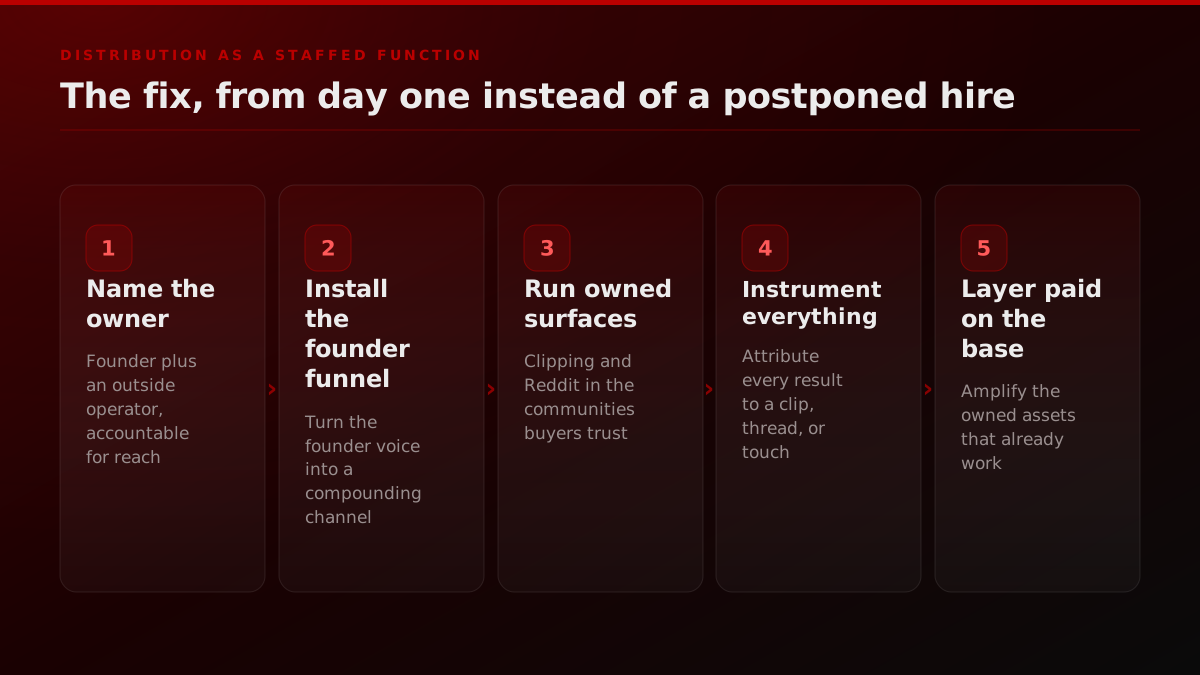
The operating system for the founder side is the founder funnel, which turns the founder's own voice into a compounding channel instead of a sporadic one, and it is the function most companies never staff until it is late. Underneath it sit the owned surfaces, clipping that cuts every appearance into native assets, Reddit marketing that shows up in the communities buyers already trust, and X and Twitter growth that compounds the founder's reach. The reason to run these as a system rather than as separate tactics is attribution, when they are instrumented together you can see which single clip drove installs and which exact thread produced a qualified reply, which is what turns distribution from a cost center into a decision engine.
Running the surfaces as separate tactics is how most companies end up with the worst of both worlds, a founder posting sporadically on X, an agency running a launch, a contractor cutting a few clips, none of it measured against the same yardstick and none of it compounding. The system view fixes the two failures at once. It fixes consistency, because one owner runs all of it on a cadence instead of in bursts, and it fixes measurement, because every surface reports to the same definition of a qualified outcome. A clip is not counted by views, it is counted by the installs it drove. A Reddit thread is not counted by upvotes, it is counted by the qualified replies it produced. That shared definition is what lets a founder compare an owned channel against a paid one honestly, and it is what lets a fund see, across the whole portfolio, which companies actually have a distribution function and which ones only have activity.
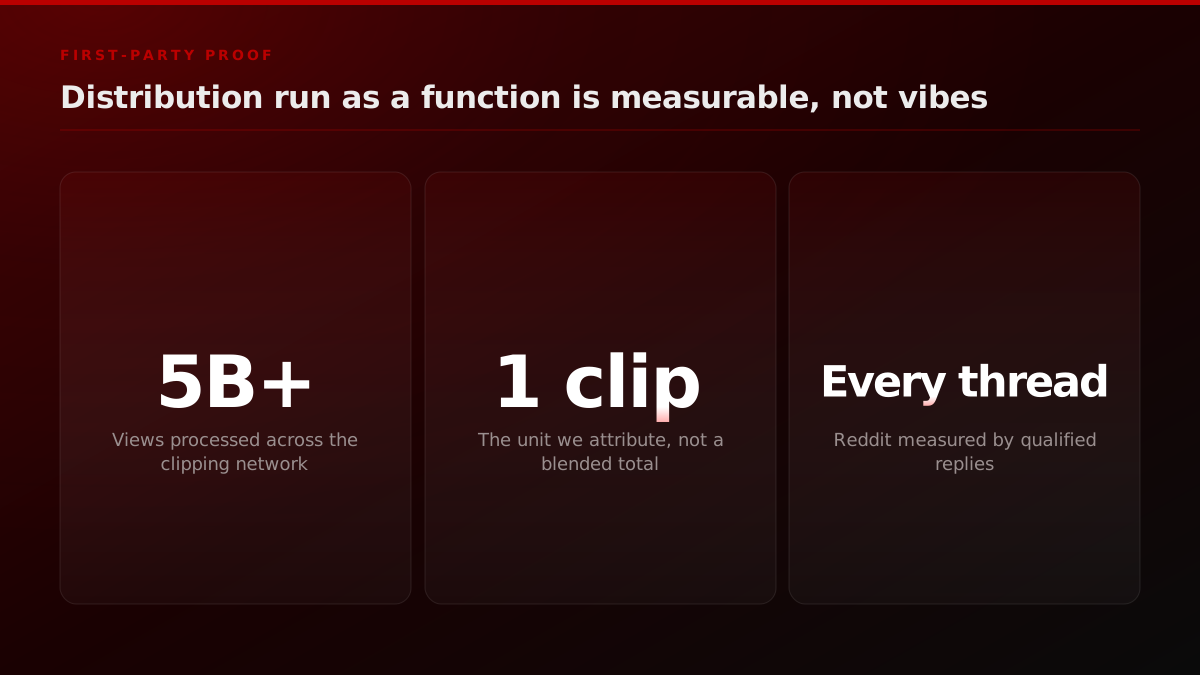
Operator noteAcross our clipping network we have processed over 5B views, each one attributable to a single clip.
That instrumentation is not theoretical for us. Across our clipping network we have processed over 5 billion views, and the entire point of the system is that each of those views is attributable to a specific clip, creator, and platform, not blended into one reach number nobody can act on. The same discipline runs across the other surfaces, which is how owned distribution earns its place as a staffed function rather than a slogan. For the deeper version of how founders learn to run this themselves, the founder-led growth playbook is the long form, and for the decision of whether to run it in-house or bring in an operator, we compared an agency against an in-house hire with the real cost math.
The first 90 days of a staffed distribution function
STEPS- 01
Weeks 1 to 2: name the owner
Assign the distribution function a single owner, founder plus an outside operator, before hiring a full-time growth lead.
- 02
Weeks 2 to 4: stand up one owned channel
Turn the founder's voice into a running channel, an X account and a clipping engine cutting every appearance into native assets.
- 03
Weeks 4 to 8: add a second surface
Layer in Reddit presence in the communities the buyers already live in, measured by qualified replies, not upvotes.
- 04
Weeks 6 to 10: instrument everything
Attribute every result to a specific clip, thread, or touch, so the channel produces decisions, not vanity totals.
- 05
Weeks 10 to 12: layer paid on the owned base
Only now add paid spend, amplifying the owned assets that already work rather than renting a moat from zero.
The measurement is what makes the function fundable. When distribution is a number a founder can point at, cost per qualified lead falling quarter over quarter, a specific clip that drove a spike, it stops being the soft line item that gets cut first and becomes the compounding asset it always was. We keep the whole picture honest with a cost-per-qualified-lead read across every channel, so the owned surfaces are compared on the same yardstick as the rented ones.
What is the verdict on the platform-team gap?
Staff the function before you need it, because owned distribution is the one function whose value comes entirely from compounding, and you cannot compound a function you have not started. The companies that die with good products almost always died in the seam, the place where distribution belonged to the founder a little, the platform team a little, and an agency a little, and therefore to no one enough. The fix is not a bigger ad budget or a louder launch. It is a named owner, an owned channel started early, and instrumentation that turns reach into decisions. Do that and a copied product is an annoyance instead of an obituary.
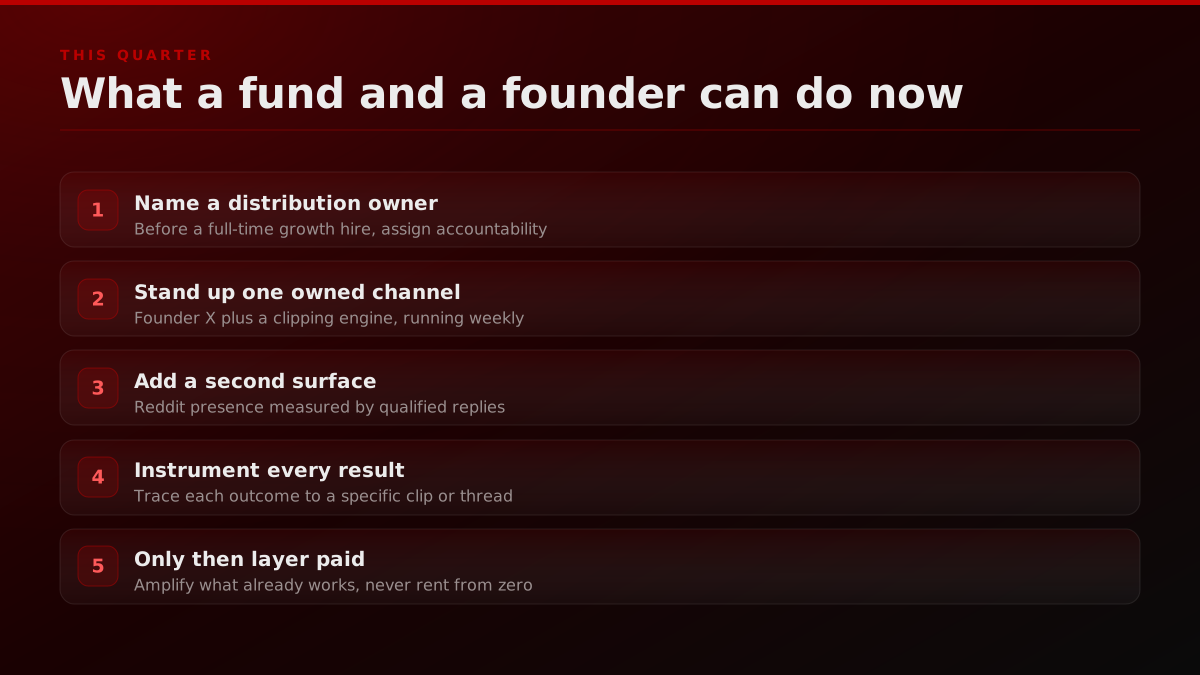
For a fund, the highest-leverage move is to stop treating distribution as introductions and start treating it as a function you install across the portfolio, one operator running the owned-distribution system for every company so the platform-team gap never opens. For a founder, it is to name the owner this week and stand up one owned surface before the runway makes it urgent. Either way, the go-to-market groundwork that ties tracking, positioning, and owned channels together is what a distribution function stands on, and the community-led versus founder-led motion is worth choosing deliberately rather than by default. The gap is structural, which means it closes only when someone decides to own it. Decide before the market decides for you.


![How to Make a Launch Go Viral on X: The 5-Lever Playbook [2026]](/blog/covers/how-to-make-launch-go-viral-on-x-2026-cover.jpg)