Most founders do not have a community-led versus founder-led growth problem. They have a naming problem that hides a sequencing problem. They lump both motions into one bucket called "personal branding" or "building in public," pick whichever is loudest on their feed that week, and then wonder why the effort does not compound. The two motions are not the same thing wearing two labels. They are different machines that turn different inputs into growth, and running the wrong one for your stage is one of the most expensive mistakes an early team can make with its time.
Here is the distinction that the whole decision hangs on. Founder-led growth makes one person the distribution channel. The founder's account is the top of the funnel, and trust transfers from a named human to the product. Community-led growth makes your users the distribution channel. The asset is the network between members, not any single account, and its defining property is that it keeps working when the founder logs off. Founder-led growth is fast to start and stops when you stop. Community-led growth is slow to start and, once it catches, compounds without you. That single difference, who the channel is, drives every other difference in this guide.
FORKOFF runs both motions for founders as an outcome-priced founder-funnel engagement, so we model this exact tradeoff for companies every week. The numbers below are directional operator estimates from our founder-funnel work, framed as such, alongside public benchmarks and verified operator voice. What matters up front is the principle: these are two motions with two failure modes, and the winning move for most founders is not to choose one forever but to sequence them correctly.
The 30-second answer on community-led vs founder-led growth
Community-led growth and founder-led growth are not the same motion with two names. Founder-led growth turns one person's voice, face, and reputation into the distribution channel. Community-led growth turns your users into the channel, where members answer members and the network compounds without you. The practical rule: founder-led growth starts faster and fits high-trust, high-ACV, or category-creating products where a human has to be the reason someone buys. Community-led growth compounds slower and fits lower-ACV, high-volume, workflow products where users have a reason to talk to each other. Most founders should not pick one. Lead with founder-led for tempo, because it produces qualified inbound in weeks, then layer community once you have enough users for members to help members. The wrong move is starting a community before you have a crowd, or leaning on the founder's feed forever and calling it a growth system.
Two motions, not one personal-brand tactic
The market keeps blurring these two into a single bucket called personal branding, and the blur costs founders real time. Founder-led growth is a distribution motion: the founder's account is the top of the funnel, and trust transfers from a named human to the product. Community-led growth is a retention-and-acquisition motion: the asset is the network between your users, not any single account, and its defining property is that it keeps working when the founder logs off. They compound on different curves, they fail for different reasons, and they fit different products. Treating them as interchangeable is why so many founders run the wrong one for their stage and conclude that content or community does not work, when the real error was the match.
Source: FORKOFF founder-funnel engagements, 2026
About these numbers
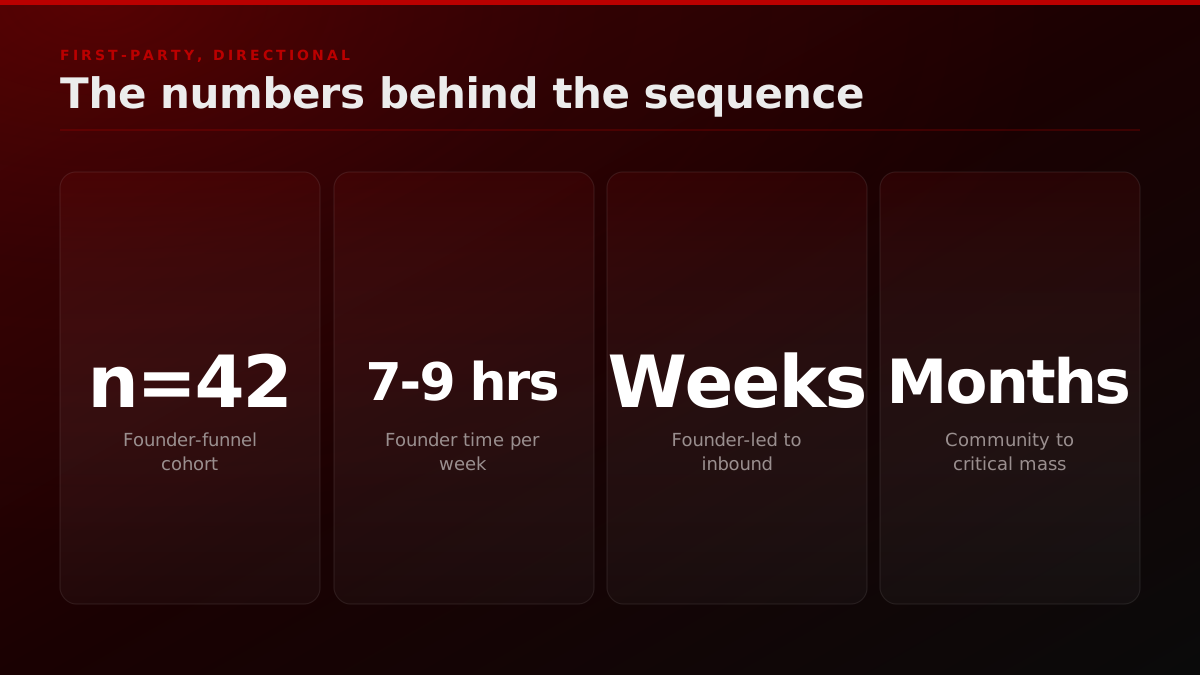
Timing figures, weekly-hour estimates, and cohort references in this post are directional. Where a number comes from FORKOFF's own founder-funnel engagements, it is labeled as an operator estimate, not a precise benchmark, because individual results vary by product, category, ACV, and founder. Public claims are attributed inline to their source. First-party cohort references point to the FORKOFF Founder-Funnel Cohort 2026 (n=42 retainers) already documented in our founder-led growth playbook. Nothing here is a guarantee of results; it is a decision framework built from repeated engagements.
Community-led vs founder-led growth: which should you run?
The short answer is that founder-led growth should be your opening motion in almost every case, and community-led growth should be the layer you earn after you have a crowd. Founder-led growth needs nothing but a founder with a point of view, and it produces qualified inbound in weeks. Community-led growth needs a critical mass of active users before members have anyone to talk to, which most pre-traction products simply do not have yet. The exception is a low-ACV, inherently social product where users arrive ready to talk to each other, where community can lead sooner. Everyone else should read the matrix below down the "time to first result" and "best-fit ACV" rows before deciding.
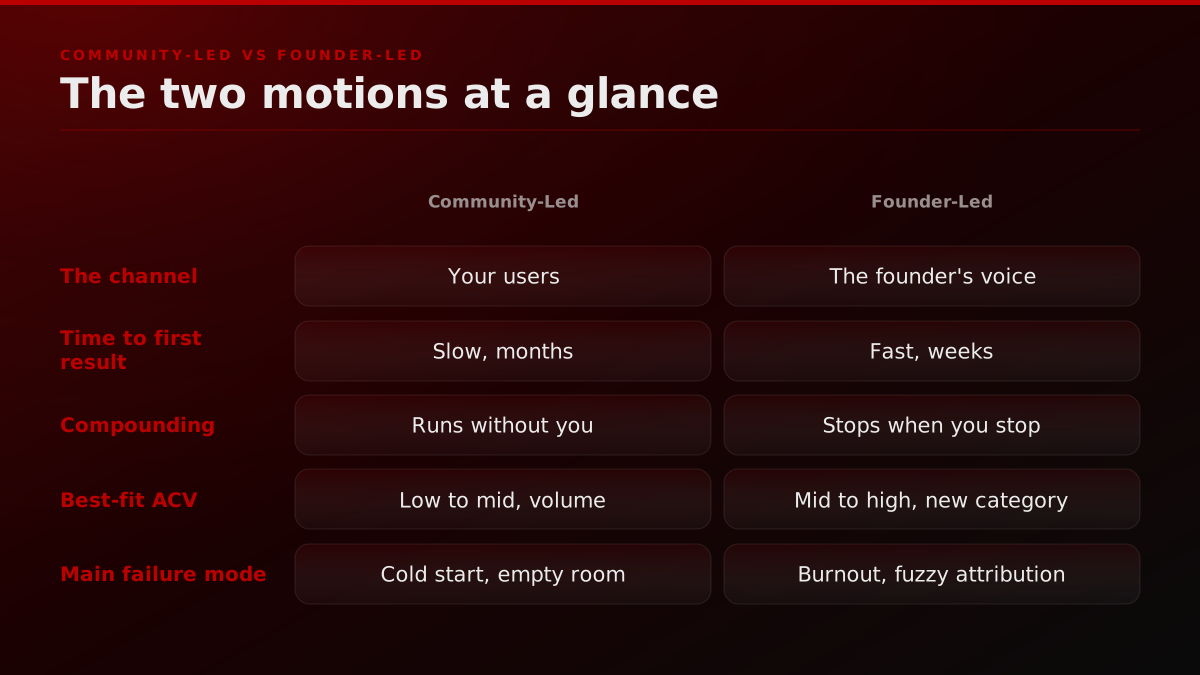
The mistake is treating this as a values question, as if choosing community meant you believe in users and choosing founder-led meant you believe in yourself. It is not a values question. It is a fit-and-tempo question, and the honest read is that they are two different machines. This is the same modeling discipline we bring to every founder funnel engagement, where the motion is chosen from the product's shape, not the founder's mood.
The decision matrix, community-led vs founder-led growth
| Axis | Community-led growth | Founder-led growth |
|---|---|---|
| Who is the channel | Your users, talking to each other | The founder's voice, face, reputation |
| Primary surface | Slack, Discord, forum, sub-community | X, LinkedIn, YouTube, podcasts |
| Time to first result | Slow, months to reach critical mass | Fast, qualified inbound in weeks |
| Compounding curve | Compounds without you once it catches | Stops the day you stop posting |
| Best-fit ACV | Low to mid, high volume of users | Mid to high, or category creation |
| Main failure mode | Cold start, empty room, ghost town | Founder burnout, unclear attribution |
| Owned by | Community and lifecycle function | The founder, hard to delegate early |
Directional framing from FORKOFF founder-funnel engagements plus public community benchmarks, 2026. Individual results vary by product, category, and founder.
Read the matrix top to bottom and the pattern is clear. On tempo, founder-led wins early and community-led wins late. On compounding, community-led wins because it runs without you while founder-led never does. On product fit, they split cleanly by ACV and user count. There is no universal winner, which is exactly why a single "which is better" answer is the wrong question. The right question is which one fits your product right now, and that is what the rest of this guide resolves.
What is community-led growth?
Community-led growth is a motion where your users become the primary engine of acquisition and retention. Instead of the company broadcasting to prospects, members onboard other members, answer each other's questions, produce showcase content for free, and pull new users in through their own networks. Notion is the canonical example: a community of power users built templates, tutorials, and ambassador programs that did more acquisition work than the company's own marketing team. The defining trait is that the value flows between users, not just from company to user, and once that flow catches, it compounds without the founder in the loop. The catch is that "once it catches" hides a hard cold-start problem.
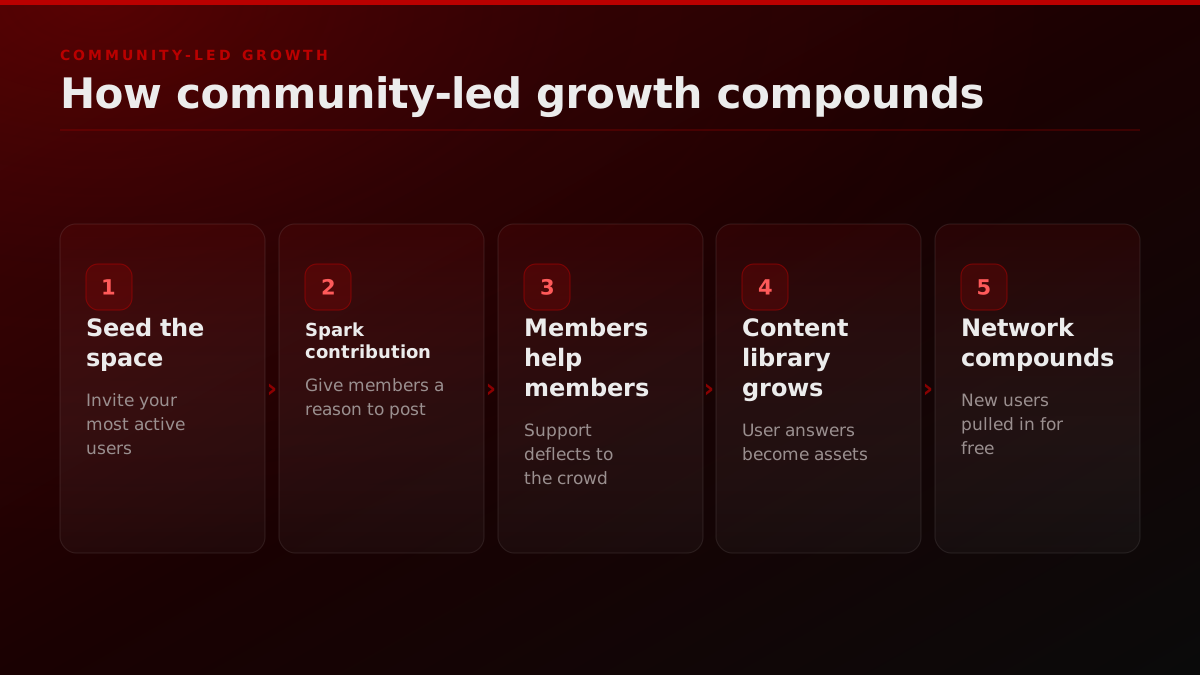
The reason community-led growth is so attractive is the same reason it is so hard: the asset is a network, and networks have a threshold. Below a critical mass of active members, a community is a room with the lights on and nobody talking. Above it, the room runs itself. The operators who have built these engines describe community not as a channel you switch on but as a discipline you sustain, and the sharpest of them draw a hard line between an audience and a community.
Greg Isenberg
@gregisenberg
I've seen 'community designers' turn a cute product into a cult product worth $200,000,000+. Community designers are the new marketers. 10 tweets about community design to 10x your business:
#24 Community-led Growth - Olivia Nottebohm (Notion) | Builders' Studio: a Founder School by Slush
Slush
Olivia Nottebohm on Notion's community-led growth, the canonical example of users becoming the channel.
That line matters more than it sounds. An audience is people who listen to you, which is a founder-led asset. A community is people who talk to each other, which is a community-led asset. Confusing the two is how founders end up calling their follower count a community and then wondering why nobody shows up when they open a Slack. The Notion operators who built the textbook version of this motion treated the community as the product's second surface, not a marketing add-on. Community-platform explainers like Bettermode's community-led growth guide and Chameleon on community-led growth frame it the same way, as a driver of acquisition and retention at once, and the practitioner writing at First Round Review and Lenny's Newsletter shows how much of the growth work moves off the company and onto the members. If you want the underlying mechanics of turning users into a self-serving network, our breakdown of the two-sided marketplace cold start covers the same threshold dynamics that make or break a community.
Community-led growth is a slow asset with a high floor of failure
Community-led growth has the best long-run economics of any motion and the worst short-run reliability. When it works, members onboard members, support deflects itself, and the product's best content is written by users for free. When it fails, and it fails often, you get an empty Slack with three pinned messages and a founder posting into silence. The reason is a cold-start problem: a community needs a critical mass of active users before members have anyone to talk to, and most products launch a community long before they have that crowd. The honest read is that community-led growth is a compounding asset you earn after traction, not a distribution engine you switch on to create it.
Source: Community benchmarks and FORKOFF operator estimates, 2026
There is one more reason founders reach for community too early: it looks free. A Slack costs nothing to open, so it feels like a zero-cost growth channel. It is not. Community benchmarks tracked by practitioner groups like CMX Hub show that an active community is a staffed function with rituals, moderation, and programming, not a channel you switch on and walk away from. The venture writing on the topic, including Bessemer's Atlas essays on bottoms-up growth, makes the same point: the community becomes an acquisition engine only after it becomes a genuine home for users, and that home takes real operating hours to build. Budget for the work, or the room stays empty. When you are ready to run a community-native motion, our Reddit marketing service is one place we operate this for founders, alongside a broader Reddit marketing strategy for finding where your users already gather.
Community-Led Growth: Camille Ricketts on marketing at Notion
Grow and Tell
Camille Ricketts on building marketing at Notion, the operator's view of community-led growth in practice.
What is founder-led growth?
Founder-led growth is a motion where the founder's own voice, face, and reputation are the primary distribution channel. That voice can be drafted by somebody else, but not every part of it transfers. The founder publishes a point of view where their buyers already are, on X, LinkedIn, YouTube, or podcasts, and trust transfers directly from a named human to the product. It works because people trust people more than they trust brands, and because a founder with genuine domain expertise can say things a marketing team never could. For a company with no audience, no domain authority, and no ad budget, the founder's account is usually the single highest-leverage channel available on day one and, when operator time is the resource you have, the lowest cost per qualified lead of any founder channel, which is why it is the right opening move for most teams. Our full breakdown lives in the founder-led growth playbook.
Founder-led growth is the fastest zero-to-one channel most teams own
For a company with no audience, no domain authority, and no ad budget, the founder's own account is usually the highest-leverage channel available on day one. It requires no permission, no platform approval, and no paid reach. A founder with genuine domain expertise and a real point of view can produce qualified inbound within weeks, because trust transfers directly from a named human to the product in a way brand content cannot match. The catch is that it is a treadmill, not an asset: output stops the day the founder stops posting, and it does not compound on its own. That is exactly why it should be the opening motion, then handed context by a community layer that keeps running when the founder is busy building.
Source: FORKOFF founder-funnel cohort 2026 (n=42)
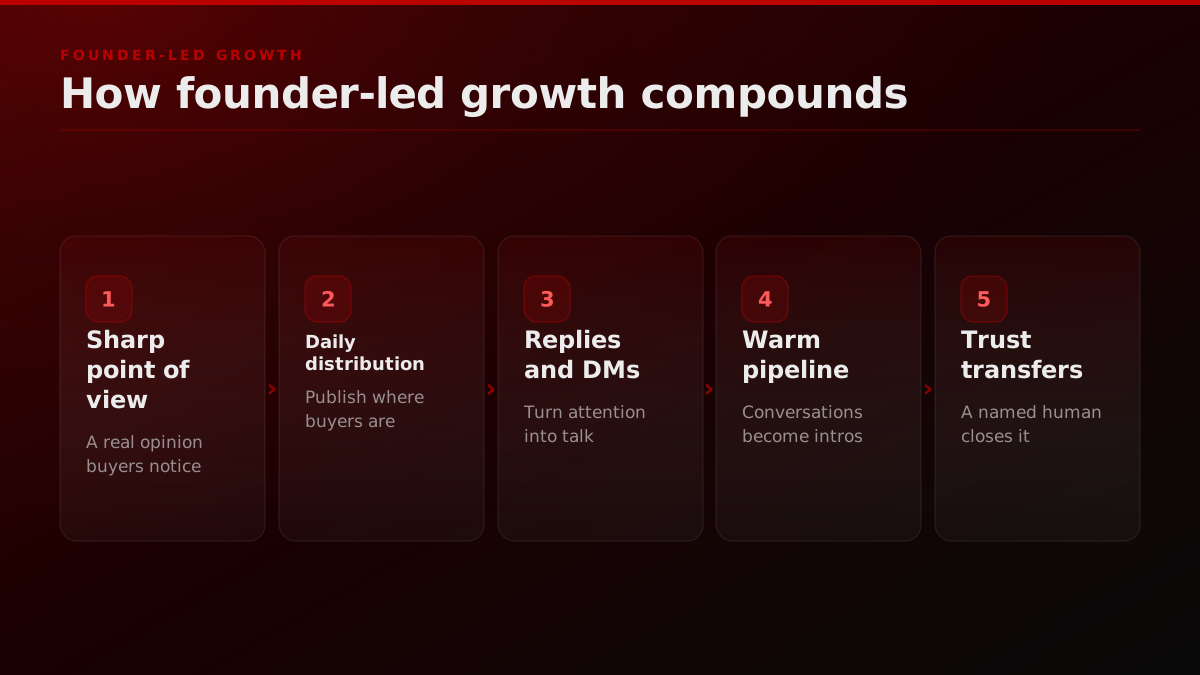
The engine is not just publishing. The compounding happens in the relationship layer underneath the posts: the replies, the DMs, the warm introductions that a visible founder can start. A post is the top of the funnel; the conversation it starts is where pipeline is actually made. The operators who have scaled this treat content as a testing surface, not a broadcast.
Greg Isenberg
@gregisenberg
The fastest path to your first $10M today is not in the IDE. It is in the FYP. Content is the new code. Every post is an A/B test. Every view is user research. When something spikes, pour gasoline on it. The modern founder playbook:
I think it's just the latest way to do content marketing on socials, where people prefer to listen to other people instead of brands.
That framing, that people prefer to listen to other people instead of brands, is the entire mechanism of founder-led growth in one sentence. It is also the mechanism's limit: it depends on a specific person, so it is hard to delegate and it does not compound on its own. The founder is the treadmill and the moat at the same time. The strongest programs pair the founder's feed with a real distribution system, the way we run founder new-media distribution, so the motion is not one exhausted person posting into the algorithm. Audience research from SparkToro is a useful reality check here, because a founder's true reach is rarely their follower count, it is the specific corners of the internet where their buyers actually pay attention. Even Harvard Business Review's marketing coverage keeps landing on the same conclusion, that trust in a named expert now outperforms trust in a faceless brand for high-consideration purchases.
B2B Go To Market Strategy: Embracing Founder Led GTM
TK Kader
TK Kader on embracing founder-led go-to-market as the primary B2B channel early.
Community-led vs product-led growth: where does product-led fit?
A fair objection at this point is that there is a third motion, product-led growth, and that it muddies a clean two-way comparison. It does not, once you see what each motion actually owns. Product-led growth is the product selling itself through a free tier, a fast time-to-value, and in-product virality. Community-led growth is users selling the product to each other outside the app. Founder-led growth is a person selling the product with their reputation. They are not rivals so much as layers, and the best-known product-led companies run all three at once. The practitioner canon on this, from Lenny's Newsletter to Kyle Poyar's Growth Unhinged, keeps making the same point: product-led growth gets you efficient self-serve conversion, but it does not create demand or trust on its own. That is what the founder's voice and the community supply.
The practical read for a founder choosing where to spend the next quarter is this. If your product has genuine in-product virality and a real free tier, lean on product-led mechanics for conversion and use founder-led growth to create the demand that feeds the funnel. If your product is high-consideration and self-serve conversion is weak, founder-led growth carries more of the load and product-led is a supporting act. Community-led growth sits on top of either one as the retention-and-advocacy layer you earn once you have users. None of this changes the core decision in this guide; it just clarifies that product-led growth is a conversion mechanism, while community-led and founder-led are the two demand-and-trust motions you actually choose between. We model the unit economics of running these layers together in our note on AI agency pricing and unit economics.
How fast does each motion pay off?
The tempo gap is the most practical difference between the two motions, and it is the one founders most often ignore. Founder-led growth produces qualified inbound in weeks because it borrows an existing trust relationship: the founder shows up with expertise, and the right people respond. Community-led growth produces almost nothing for months because it has to manufacture a network from scratch, and a network is worthless below critical mass. Paid sits at the extreme fast end, buying attention with money instead of time. If you need pipeline this quarter, the tempo chart below already tells you which motion to open with, regardless of which one you find more appealing.
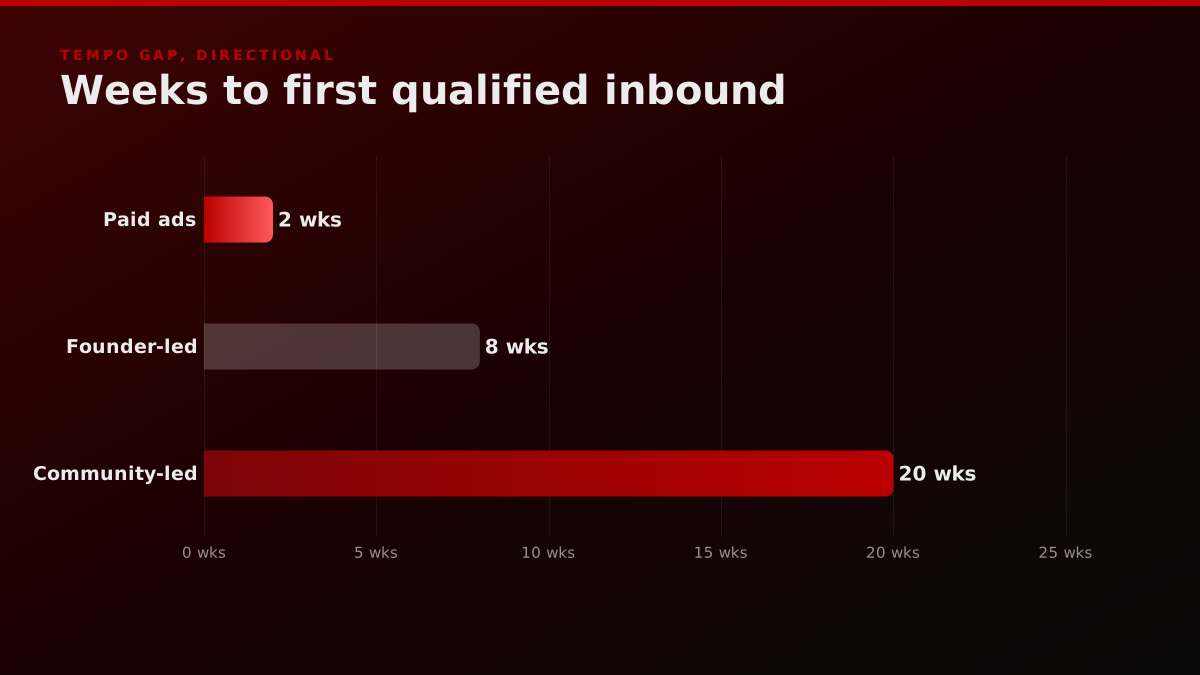
Those numbers are directional, drawn from our own founder-funnel engagements rather than a published benchmark, and your mileage will vary with category and founder. The shape is what matters: founder-led is measured in weeks, community-led in months. That gap is why so many founders quit community too early, judging a multi-quarter asset by its first month and concluding it does not work.
Operator noteFounder-led shows qualified inbound in weeks; community-led takes months. Match the motion to your runway., FORKOFF founder-funnel engagements, 2026
Founders feel this tempo problem acutely, which is why the same question recurs across every operator community: is the founder-led effort actually producing anything, or is it just noise? It is a fair question, and the honest answer is that it depends entirely on the match between the founder, the product, and the audience.
There is a second-order effect worth naming. Founder-led tempo does not just produce pipeline faster, it also produces learning faster. Every post is a cheap test of a message, a positioning line, or an objection, and the ones that land tell you what your buyers actually care about long before a community would surface the same signal. Community-led growth eventually produces richer learning, because members reveal their real workflows to each other, but it produces that signal on a delay. For a team still hunting product-market fit, the speed of the feedback loop matters as much as the speed of the pipeline, and that is another reason the founder motion earns the opening slot.
Does founder-led personal branding actually drive SaaS growth?
A SaaS founder asks whether investing heavily in founder personal branding on YouTube, Twitter, and LinkedIn actually drives more users and higher conversions, or whether it is mostly top-of-funnel awareness with unclear short-term ROI.
Which growth motion fits your product?
Product shape decides the motion, and the two variables that matter most are ACV and user count. A low-ACV, high-volume product has thousands of users who can help each other, so community-led growth has fuel; a high-ACV product with a handful of large deals does not have enough users for a community to spin, so the founder's expertise has to carry the trust. Category maturity is the third variable: a product in a category nobody searches for yet needs a human to narrate that category into existence, which is founder-led work by definition. Read your own product down the grid below before you commit a single hour, because the wrong match wastes quarters.
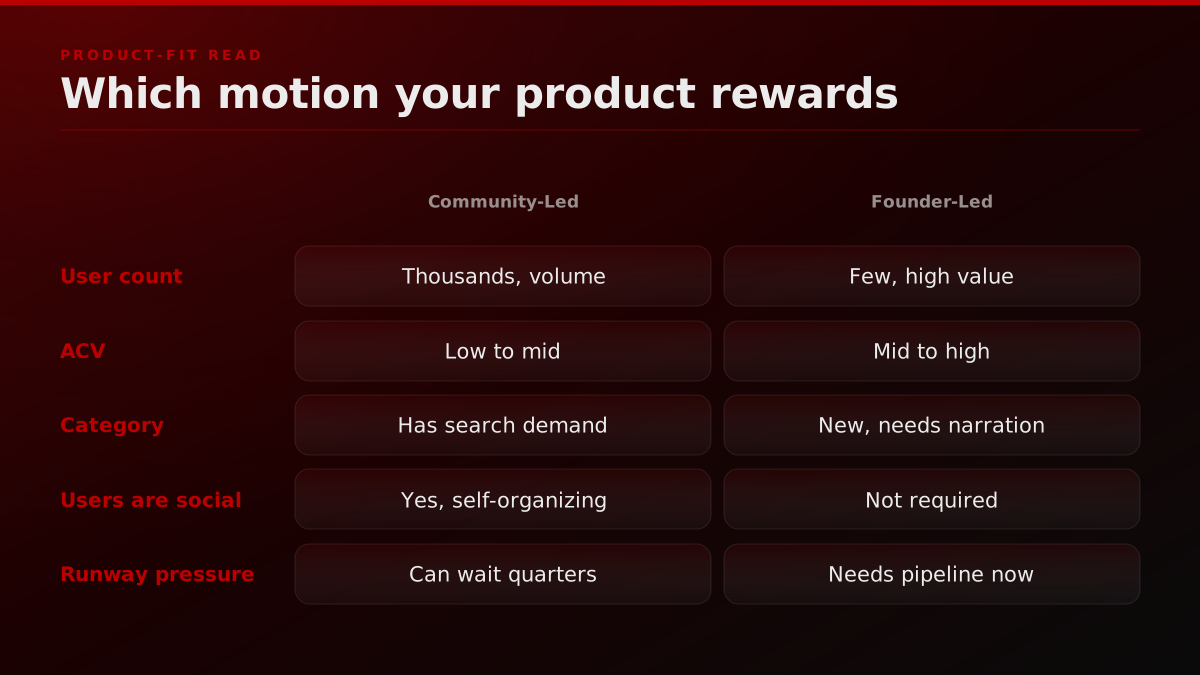
The router is a heuristic, not a law, and most products eventually run both. But the opening motion should follow the product's shape. A developer tool, for instance, usually needs founder credibility to open the door and a community to become the support-and-answers moat once developers arrive, which is why we treat the Twitter DM outreach playbook for developer tools as founder-first and community-second. A prosumer or creator product, by contrast, has users who are social by default and produce showcase content without being asked, so community can lead sooner. A services business is the clearest founder-led case of all, where the solo operator's first five clients come almost entirely from the founder's own reputation long before any community exists.
Product-fit router, which motion your product rewards
| Your product looks like | Motion that fits first | Why |
|---|---|---|
| Low-ACV self-serve tool, thousands of users | Community-led | Enough users to help each other; support deflects |
| High-ACV B2B, few large deals | Founder-led | Trust closes deals; too few users for community |
| Developer or technical tool | Both, founder-led first | Founder opens the door; community becomes the moat |
| New category nobody searches yet | Founder-led | Someone must narrate the category into existence |
| Prosumer or creator product | Community-led | Social users make showcase content for free |
| Two-sided marketplace | Founder-led to seed, community to hold | Founder seeds supply; community retains both sides |
A starting heuristic, not a law. Most products end up running both; the router picks the opening motion. See the hybrid sequence below.
Operator noteLow-ACV, high-volume products reward community; high-ACV or category creation rewards the founder's face., FORKOFF product-fit router, 2026
The router also explains a common failure: a high-ACV enterprise startup that copies a low-ACV product's community playbook, launches a Slack with forty invited users, and watches it go silent, because forty enterprise buyers do not want to hang out with each other. That founder needed the founder-led motion and ran the community one. The reverse error is just as common and just as costly, and it is why we insist on matching the motion to the product rather than to the founder's preference. The same discipline applies when choosing between an agency and an in-house hire: the right answer is a function of stage, not taste.
Why Most Founders Underestimate Personal Branding (And Why That's Changing)
An r/SaaS thread arguing that most founders underestimate founder-led personal branding, and why the calculus is shifting toward founder distribution.
When does community-led growth win?
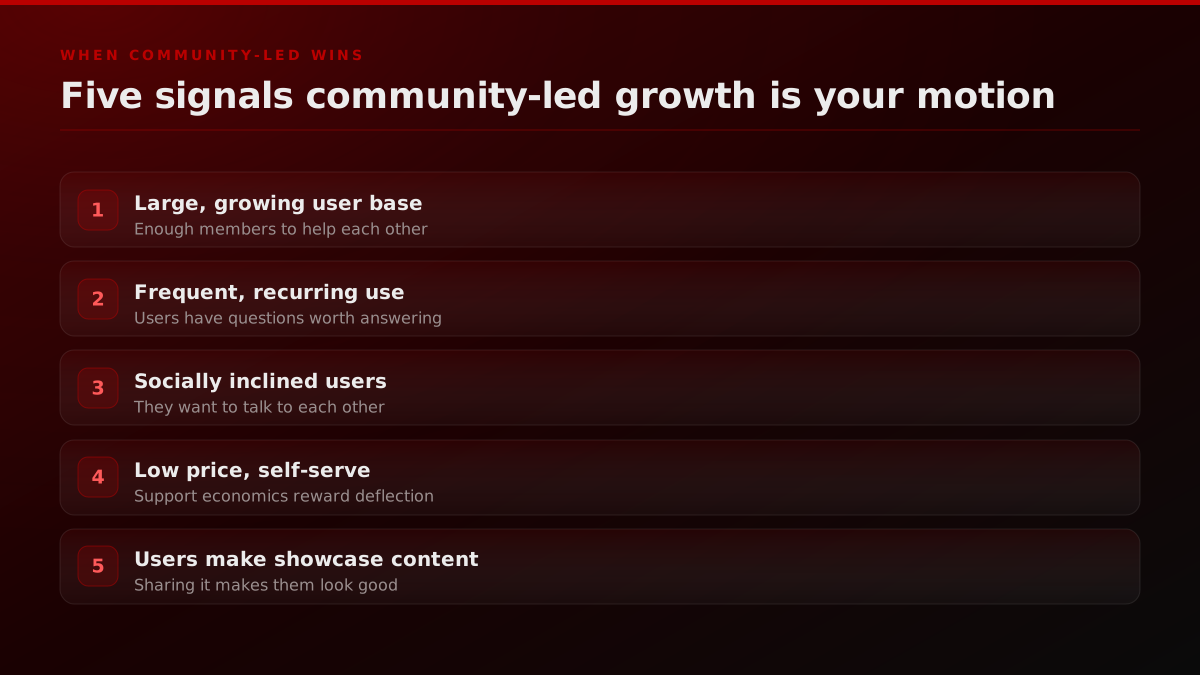
Community-led growth wins when you already have the crowd and the reasons for members to talk to each other. The clearest signals are a large and growing user base, a product people use often enough to have recurring questions, users who are social by nature, a low enough price point that self-serve support economics matter, and content that users are motivated to create because it makes them look good. When most of these are true, a community is not a gamble; it is the highest-return motion you can run, because it turns your users into your marketing, support, and product-research teams at once. When few of them are true, a community is a room you will end up talking to yourself in.
The bridge between the two motions lives right here. The founders who build the best communities often start by being a generous presence in other people's communities first, earning the right to convene one of their own. That is founder-led reach in service of community-led growth, and it is the most underrated move in the whole playbook.
Arvid Kahl
@arvidkahl
Practice selfless self-promotion: contribute freely to communities, amplify others voices by exposing them to your audience, help people without asking for anything in return, be a great community nexus and connect people. Be humble. Be present. Engage and empower.
The mechanics of actually running the community, the rituals, the seeding, the moderation, sit downstream of this fit decision. If the fit is there, the tactics are learnable; if the fit is not there, no amount of tactics will fill the room. That is why we scope community and Reddit-native motions only after confirming the product actually has a crowd to activate.
When does founder-led growth win?
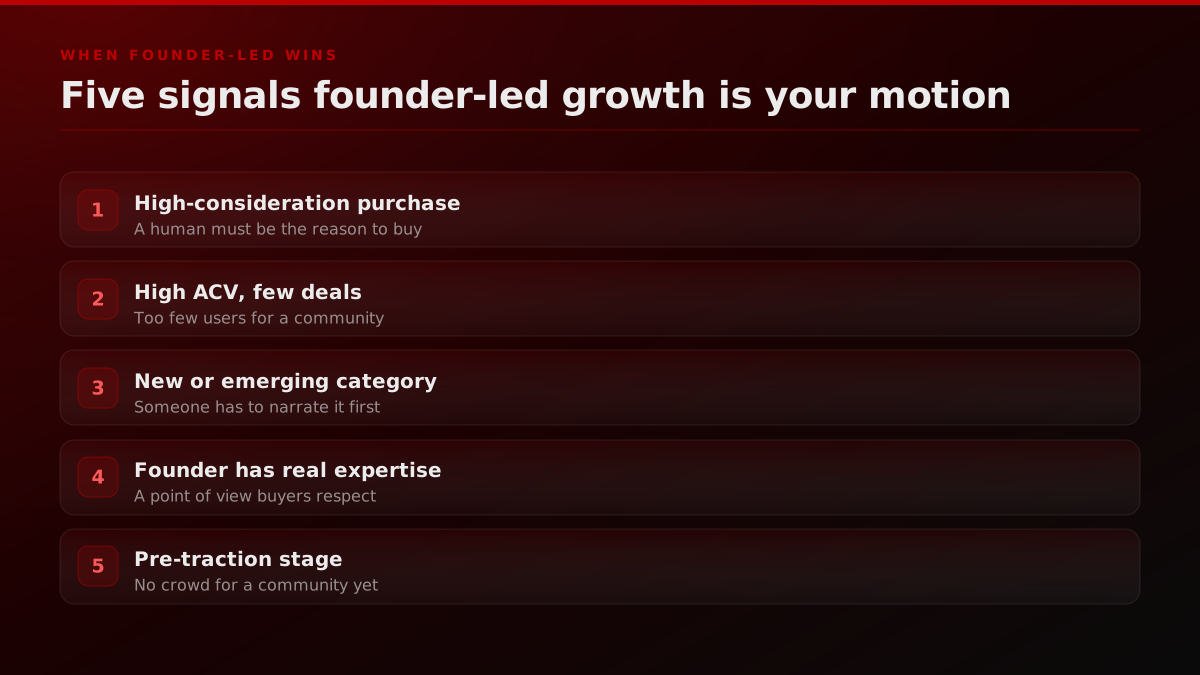
Founder-led growth wins when trust is the buying blocker and the product does not yet have the user base to support a community. The signals are a high-consideration or high-ACV purchase where a human has to be the reason someone buys, a founder with genuine domain expertise and a real point of view, a new or emerging category that needs narration before it has search demand, and a pre-traction stage where you simply do not have enough users for a community to reach critical mass. In all of these, the founder's voice is not a nice-to-have; it is the only channel that can transfer the specific trust the sale requires. This is the default opening motion for most companies precisely because these conditions describe most early-stage products.
The failure to watch for is the one operators name most often, and it is worth taking seriously rather than dismissing as pessimism.
Honestly I'm skeptical of founder-led branding for most saas companies. For every founder who makes it work there are 100 founders tweeting into the void with 200 followers. What's actually worked for us is boring stuff we can track. Founder branding is too fuzzy.
That skepticism is healthy. Founder-led growth is real, but its wins are inflated by survivorship bias, and its attribution is genuinely fuzzy. The founders for whom it works usually have a specific, hard-won point of view and a product where trust is the blocker. The founders for whom it fails are often posting generic content for a low-consideration purchase, where a personal brand adds nothing a landing page could not. Knowing which situation you are in is the difference between a compounding channel and months of shouting into the void, which is why we measure it against real pipeline signal rather than vanity metrics.
What nobody selling you a motion will admit
Every vendor and every guide has an incentive to tell you their motion always works. The truth is that both motions fail more often than they succeed, and they fail for opposite reasons. Community-led growth fails at the cold start: most communities never reach the critical mass where members help members, so they die as ghost towns with three pinned messages. Founder-led growth fails at the effort ceiling: it is a treadmill that stops the day the founder stops, and most founders cannot sustain the output while also building the product. A serious operator plans for these failure modes instead of pretending the motion is a switch. Start with the reality of where a founder-led week actually goes.
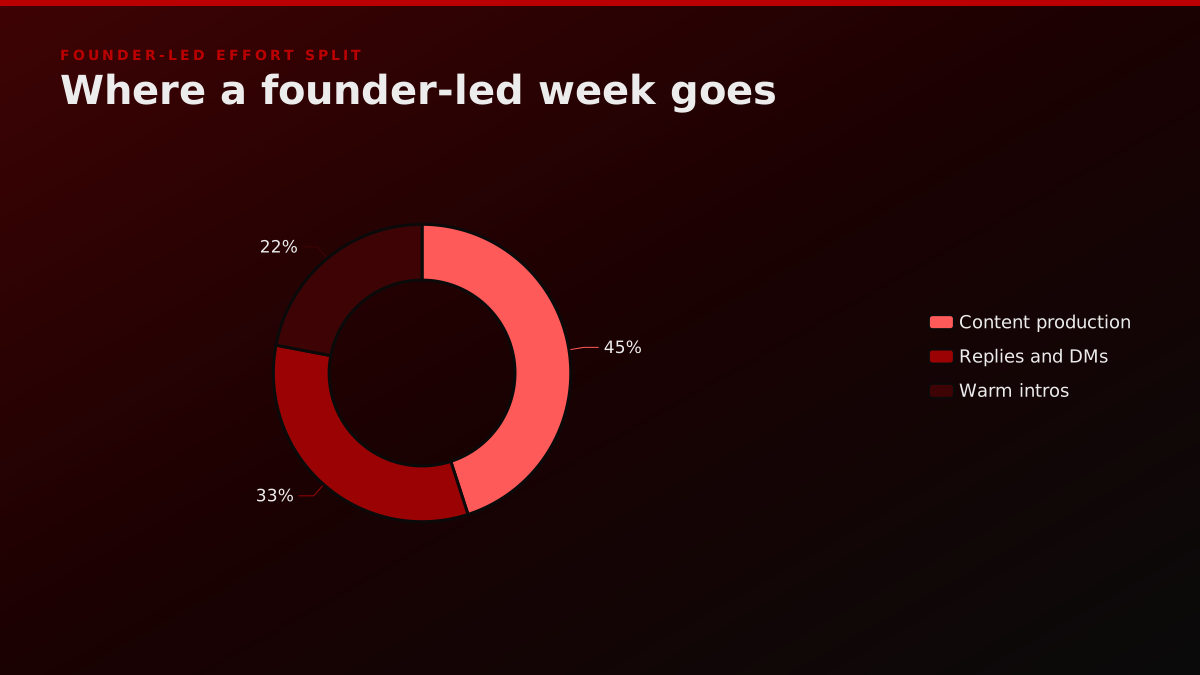
Most founders picture founder-led growth as writing posts. The chart above shows the real shape: a large share of the productive time is the relationship layer, the replies and DMs and warm introductions, not the broadcasting. Founders who only broadcast and never work the relationship layer get reach without pipeline, which is the specific way founder-led growth disappoints. On the community side, the failure is even more common and even more brutally simple.
There are 1.8B active users in Facebook Groups in 2024. But I've noticed 95% of paid communities are dead. RIP.
That is not cynicism; it is the base rate. Ninety-five percent of paid communities being dead, as the operator quoted above puts it, is exactly why community-led growth is a compounding asset you earn after traction, not a distribution engine you switch on to create it. The founders who succeed with community treat the cold start as the hardest part of the entire motion and do not launch until they have a crowd. The founders who fail launch a community as a growth hack and discover it is a maintenance burden with no members. Respecting these two failure modes is what separates a real motion from a hopeful one.
How do the two motions stack? The hybrid sequence
The answer for most founders is not community-led or founder-led; it is founder-led first, then community, in sequence. Founder-led growth solves the cold-start problem that kills communities, because the founder's voice earns the first crowd. Once that crowd is large enough for members to help members, a community layer catches, and it takes over the retention and support load that a founder cannot scale. The founder's role then shifts from daily support to category and narrative. This is the pattern that compounding companies converge on, and it is why the two motions are complements, not competitors.
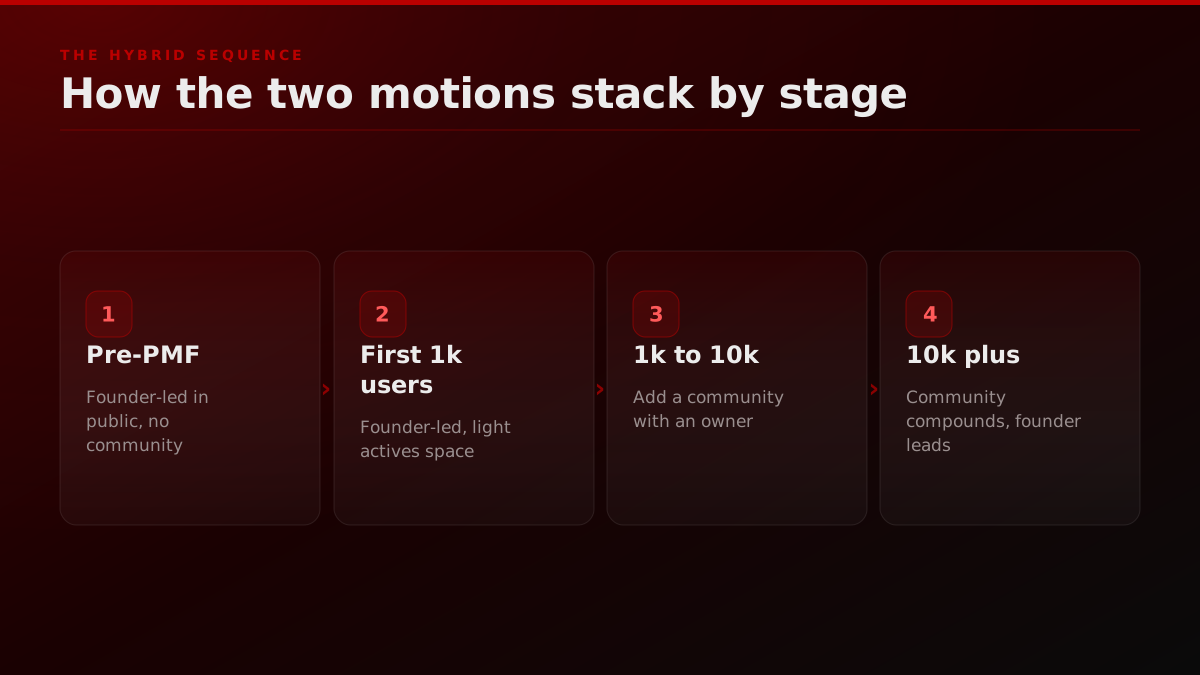
The sequencing is stage-gated. Before product-market fit, you have no crowd, so it is founder-led in public and nothing else. Through the first thousand users, still founder-led, with at most a light space for your most active users. Somewhere between one thousand and ten thousand users, a real community function earns its owner and its rituals. Past ten thousand, community-led growth becomes the compounding engine and the founder's feed moves up-market to category leadership. The first-party numbers behind this sequence are directional but consistent across our engagements.
The hybrid sequence by stage
| Stage | Lead motion | Layer in |
|---|---|---|
| Pre product-market fit | Founder-led, in public | Nothing yet, you do not have a crowd |
| First 1,000 users | Founder-led | A light touch space for your most active users |
| 1,000 to 10,000 users | Founder-led plus community | A community function with an owner and rituals |
| 10,000-plus users | Community-led compounding | Founder shifts to category, not daily support |
Stage bands are directional and product-dependent. The point is sequence, earn the crowd with founder-led tempo, then let community carry retention.
Operator noteLead with founder-led for tempo, layer community once users can help users. Sequence, not either-or., FORKOFF founder-funnel cohort, 2026
The handoff between the two motions is the part founders get wrong most often. They treat the community launch as a moment, a single announcement, when it is really a gradual shift in where the growth work happens. In practice the founder keeps posting the whole way through; what changes is that a growing share of the questions, the onboarding, and the advocacy moves from the founder's inbox to the members. Get the timing right and the community absorbs load the founder was about to drop. Get it wrong, launch too early, and you have added a second empty channel to maintain while the founder motion was still doing all the work.
The clearest public example of the stack is a company that used a visible founder and a strong point of view to earn its first users, then let a users-help-users motion carry the growth as the base grew, compounding both at once.
How Beehiiv Grew from $0 to $30M ARR in 4 Years (With the 'Worst Product in the Market' at Launch)
A case study of how Beehiiv scaled from zero to 30M ARR in four years, stacking founder-led distribution with a users-help-users growth motion.
How FORKOFF runs this
FORKOFF runs the founder funnel as an outcome-priced engagement, which means we pick the motion from your product's shape and sequence it correctly instead of selling you a generic personal-brand retainer. For a pre-traction or high-ACV company, that means opening with founder-led distribution: a real point of view, a publishing cadence the founder can sustain, and the relationship layer of replies and warm intros that turns reach into pipeline. As the user base grows, we layer the community motion so retention and support stop depending on the founder's hours. You can model what either motion is worth against your own numbers before committing.
The reason we lead with sequence rather than a single motion is the same reason this guide does: running the wrong motion for your stage burns quarters you do not have. A community before you have a crowd is a ghost town; a founder feed with no system behind it is a treadmill. Both assume someone is closing, which at this stage is founder-led sales. The engagement exists to run the right one at the right time, priced to delivered results rather than hours, the same way we structure the first ninety days with a growth agency and the founder-led sales motion around outcomes, not activity. Founders weighing whether to run this in-house or bring in help can compare the options in our top AI marketing agencies comparison, and those leaning on creators to seed the founder-led layer should read how we run influencer marketing. If you want the motion mapped to your product, that is the conversation to have.


![How to Make a Launch Go Viral on X: The 5-Lever Playbook [2026]](/blog/covers/how-to-make-launch-go-viral-on-x-2026-cover.jpg)