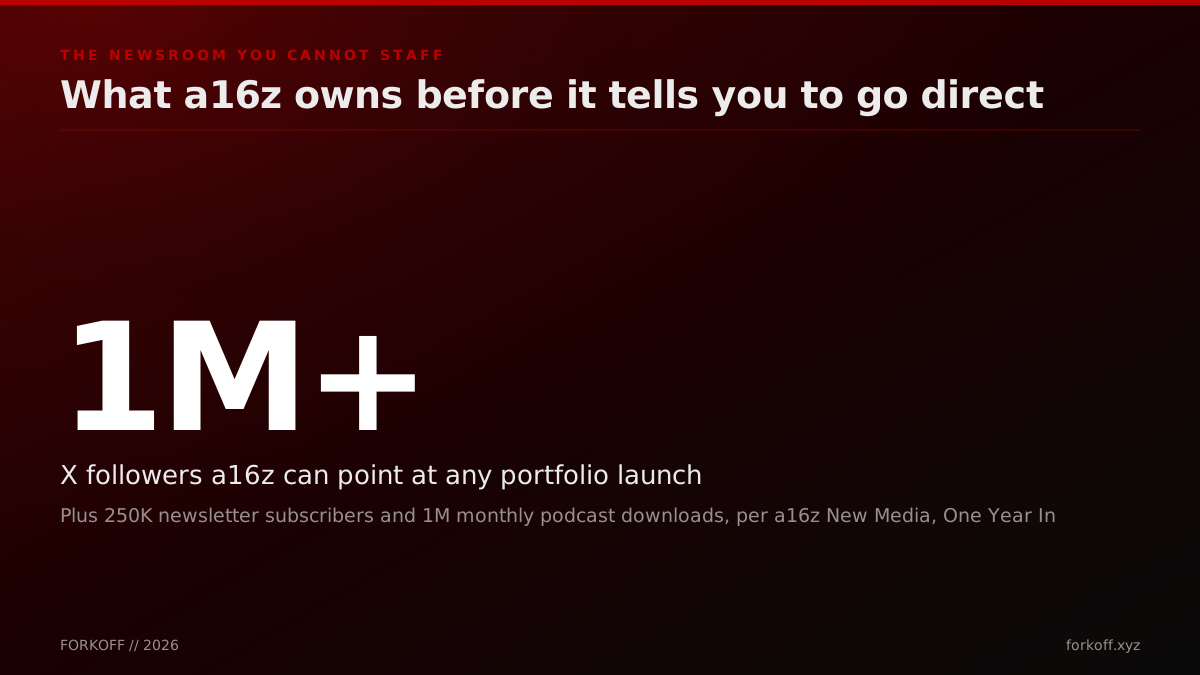
In November 2025, a16z published a thesis with a line that spread through founder timelines almost immediately: own your distribution, or better yet, use ours. The harder truth underneath that thesis is that owned distribution is a function almost no company actually staffs, which is why so many founders nod at the idea and never build the engine. A year later the firm followed up with New Media, One Year In, a report on what happened when it treated media as a core business function rather than a marketing afterthought. The doctrine is sharp, quotable, and mostly correct. It is also written from inside a building that owns more than a million X followers, a 250,000-subscriber newsletter, and a podcast network doing a million downloads a month.
The 30-second version
a16z's New Media thesis is correct and survivorship-biased at the same time. Owning your distribution is the right goal, but a16z can staff a literal newsroom, owns a captive audience of more than a million followers, and has fund-scale capital to produce five times a week. The other 99.9 percent of founders have none of that. You do not need a media department. You need a distribution engine: borrow other people's audiences first, clip every appearance into native assets, repurpose one recording across every surface, and route the borrowed attention into an email list you own. Founder-led beats logo-led because signal travels through people. Going direct without that engine is shouting into a void, and daily-production advice is a trap for a ten-person team.
That is the part the retweets leave out. When a16z says it can guarantee distribution, it is telling the truth, because it already owns the channels. The median seed-stage founder reading that advice owns none of it. This playbook takes the a16z thesis seriously, agrees with most of it, and then translates every principle into what a founder without a newsroom actually executes. The short version: you do not need a media department. You need a point of view people can name, which is where building a founder brand starts. You need a distribution engine that borrows other people's audiences first, clips every appearance into native assets, repurposes one recording across every surface, and ends on an email list you control.
Other operators have reached for the same framing. The independent founder's new media playbook argues, as we do, that the real work is building distribution you control in a format your buyers actually consume, then treating platforms as discovery and owned channels as conversion. This page takes that instinct and turns it into a system a resource-constrained founder can run.
This is a pillar guide, so it links out to the deeper tactical posts under each section. If you want the founder-led argument in full, start with the founder-led growth playbook and founder-led content that AI cannot fake. If you want the channel-mix math, the 2026 SaaS distribution guide goes deep. This page is the spine that ties them together.
What does owning your distribution actually mean?
Owning your distribution means you can reach the people who matter without asking a gatekeeper for permission each time. a16z argues that this capability is now table stakes, that media is a core business function rather than a marketing line item, and that the firm has built enough owned reach to promise its portfolio companies distribution that other investors and agencies cannot. In its own framing, a16z New Media is go-direct as a service. The doctrine rests on a handful of claims that are worth stating precisely before we argue with any of them.
Own your distribution, or better yet, use ours.
That single line, from the founding New Media essay, is the whole thesis in miniature, and the way outlets have covered it makes the second half plain. As TechTimes framed the playbook, the point is to make the founder the brand rather than the company. Independent breakdowns, like this analysis of the a16z playbook, read it the same way: distribution has become the asset, and the firm that owns the channels sets the terms.
The founding essay and the one-year follow-up make six claims that matter for founders. The clearest way to see them is side by side.
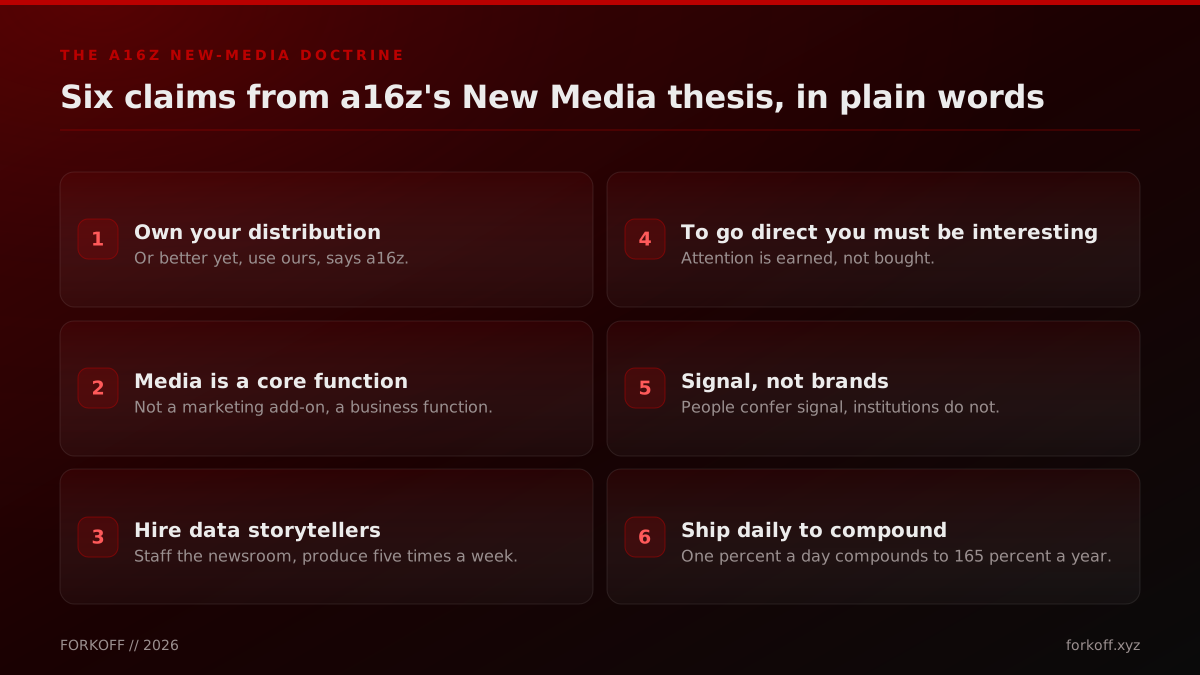
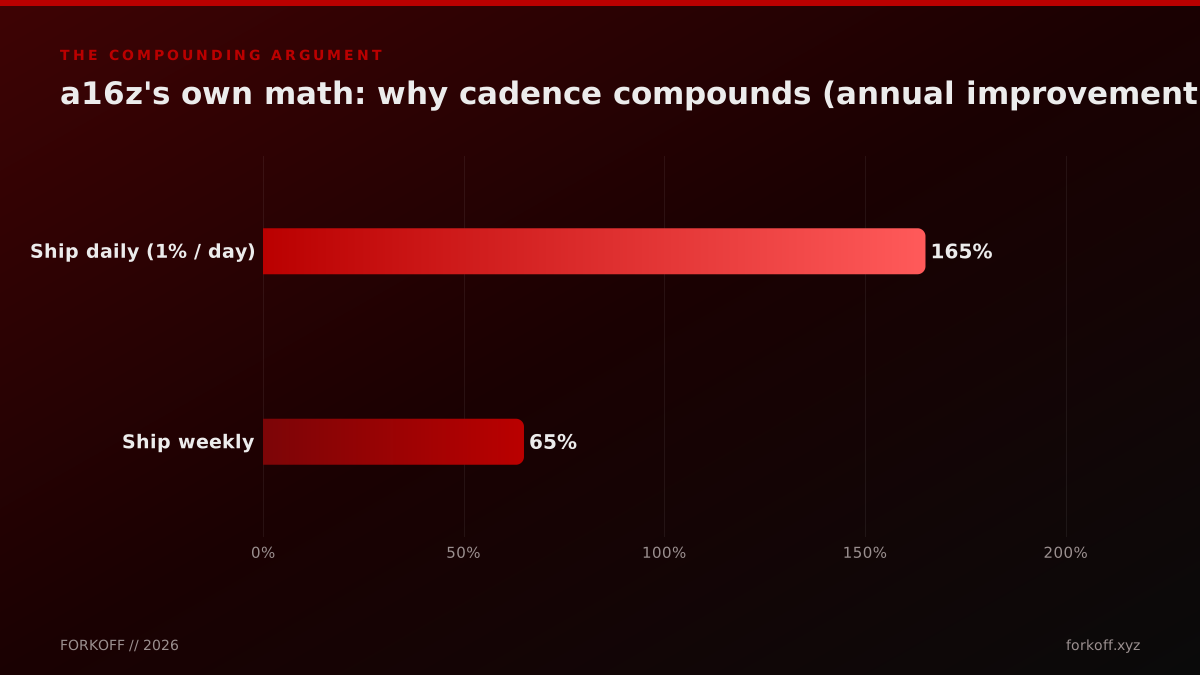
Each of these is defensible on its own. Distribution really has become the scarce resource. Founder signal really does travel further than a logo. Cadence really does compound. a16z put real numbers behind the cadence claim, and it is the most quotable line in the founding essay.
If you ship every day, even if you only get 0.02% better, by the end of the year you're 165% better.
The firm backs the doctrine with the reach it has built, and the scale is the whole point. This is not a founder posting into the void and hoping. It is a media operation with owned surfaces that can be pointed at any launch on command.
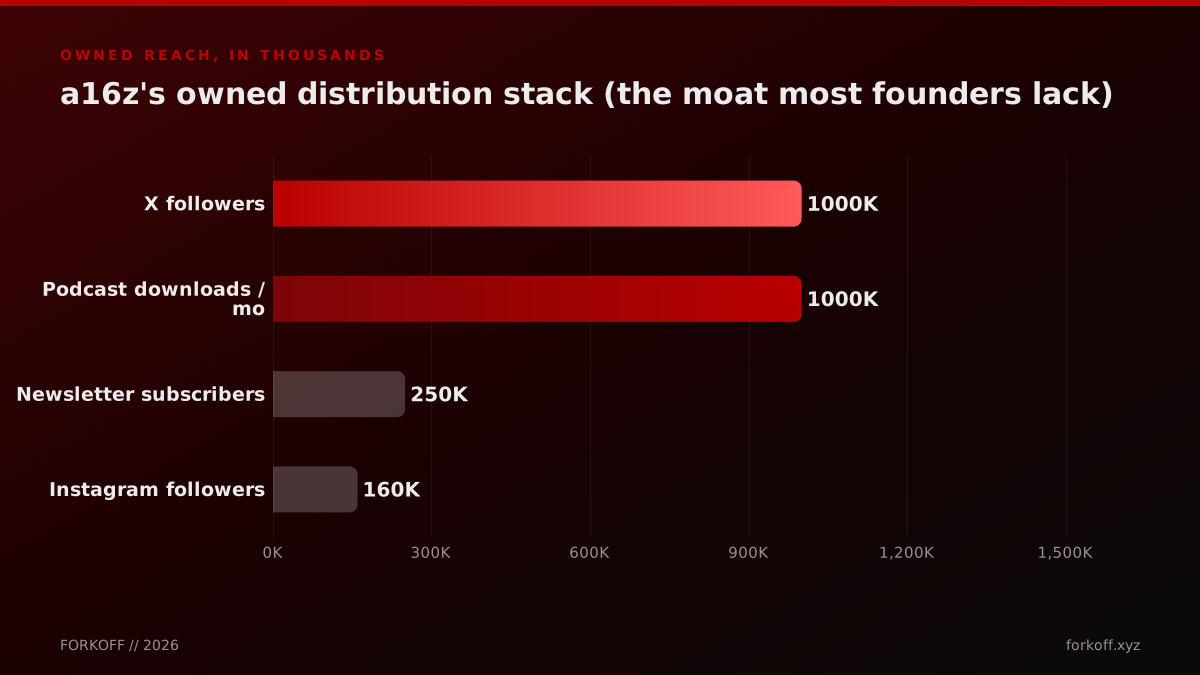
a16z's owned distribution stack (the moat most founders lack)
| Owned asset | Reported scale | What it buys at launch |
|---|---|---|
| X account | More than 1 million followers | Guaranteed reach at any portfolio launch |
| Newsletter | 250,000 subscribers | Direct inbox access no algorithm can throttle |
| Podcast network | 1 million monthly downloads | Long-form authority and repeat attention |
| 160,000 followers | Native visual reach for launches and clips |
Owned-reach figures reported in a16z, New Media, One Year In (2026).
Put those numbers on a chart and the moat is obvious. When a16z tells a portfolio company it will handle distribution, it is drawing on assets that took years and fund-scale capital to build.
The one-year report is candid about what the firm actually did with its owned reach, and the examples are instructive because they all lean on distribution a16z supplied. It points to launches it helped orchestrate, describing one portfolio company's debut as the strongest launch it had seen and another as having taken over the timeline for a day. Those outcomes are real, and they are also a demonstration of the precondition, not a counterexample to it. The launches took over the timeline because there was a timeline-owning machine pointed at them. Strip out the machine and the same launch content lands in a feed nobody is watching. The examples prove the doctrine works with distribution, which is exactly the claim under scrutiny.
The report also raises the quality bar in a way that is easy to miss and important to internalize. It insists the goal is not to ship a large volume of content but to surface what is genuinely interesting about the founder, and it contrasts new-media candor, saying what you really mean, with old-media caution, staying on message and out of trouble. This is good advice and it is orthogonal to distribution. Being interesting improves the conversion of attention you already have. It does not manufacture the attention. A founder who becomes more interesting but never solves distribution has optimized the wrong stage of the funnel, and the a16z framing makes that mistake easy because, inside the firm, distribution is the stage that is already handled.
The firm is also explicit that this is not really new. As the one-year report puts it, the world changed to reward being interesting over everything else, and the tools to go direct became available to anyone. That framing is generous and, for most founders, slightly misleading. Access to the tools is not the same as access to an audience.
To go direct you must be interesting.
To hear the argument from the source, the a16z New Media podcast lays out why the media game changed and why owned distribution now sits with the people who built it. The model a16z points to for habit-forming owned media is Ben Thompson's Stratechery, a one-person operation whose distribution comes entirely from a subscriber relationship no platform controls.
The Media Game Has Changed
a16z
a16z on why the media game changed and distribution moved to those who own it.
Operator notea16z points a million followers at a launch. Your day-one number is zero, so borrow reach first.
There is a historical rhyme worth naming, because a16z names it too. The firm points back to Michael Ovitz building CAA in 1975, an agency whose power came from controlling access and packaging talent. The new-media version of that power is owned distribution: whoever controls the channels sets the terms. a16z is explicit that it wants to be that layer for its portfolio, running programs it describes as launches as a service and go-direct as a service, complete with an eight-week New Media Fellowship and forward-deployed team members embedded inside portfolio companies. That is a serious operation. It is also the tell. When distribution requires a fellowship and embedded staff to run properly, it is not a weekend project for a founder who is also closing the seed round.
The other quiet assumption in the doctrine is that being interesting is the hard part, and reach follows automatically. For a firm with millions of followers, that is close to true, because anything it publishes gets seen. For a founder starting from zero, interesting content with no distribution is a tree falling in an empty forest. Both halves matter, and the a16z framing weights the first half because the second half is already solved inside the building. This playbook inverts that weighting for the reader who does not have the reach yet.
It helps to take the six claims one at a time, because each contains a true observation wrapped around a hidden assumption. The claim that distribution is now table stakes is true, and the hidden assumption is that you can acquire it the way a fund does, by building or buying owned reach. The claim that media is a core function rather than marketing is true, and the hidden assumption is that you can afford to staff that function. The claim that you should hire data storytellers is a luxury recommendation that only parses if you have a payroll for non-revenue roles. The claim that you must be interesting is true and mostly harmless, except that it quietly reframes a distribution problem as a talent problem, which sends founders to work on their personality instead of their reach. The claim that signal comes from people is the most portable of the six, and it is the one this playbook leans on hardest. And the claim that daily cadence compounds is arithmetically correct and practically backwards for a team with no audience, because it optimizes the wrong variable first.
The tell in all six is the same. Each assumes the audience already exists, so the only remaining questions are about production and personality. For a16z, that assumption holds, which is why the advice is honest rather than cynical. The firm is describing its own reality accurately. The error is one of transfer, not of truth. When a reader without reach imports the advice unchanged, they inherit a production plan for an audience they do not have, and the plan silently fails because its foundational assumption was never met. This is why the rest of this guide spends most of its time on the one thing the doctrine treats as already solved: how to get reach when you start with none.
The doctrine, then, is not wrong. It is a description of what works once you already have reach. The question this playbook answers is what a founder does in the far more common situation of having the right message and no audience to hear it. For the intent-and-channel version of that question, the SaaS distribution guide breaks down the specific loops. Here we stay at the level of principle.
The new-media thesis, in one page, and the step-by-step version of this playbook
What "new media" means here. The argument, made most visibly by a16z's own media build-out and by shows like TBPN, is that the audience a founder needs now lives with individual operators, newsletters and shows rather than with mastheads, and that a company can own that channel instead of renting it through PR. The playbook below is the operating version of that thesis for a founder with no newsroom and a few hours a week.
The step-by-step distribution playbook.
- Pick one owned surface (a newsletter or a weekly show) and one borrowed surface (the podcasts and newsletters your buyers already read), and commit to both for two quarters before judging either.
- Write one long piece a week from real work: a customer call, a number from the dashboard, a mistake. The long piece is the source; everything else is a cut of it.
- Cut it into the short formats your borrowed surfaces want (a thread, a clip, a guest answer), and send each cut to one place, not everywhere.
- Track two numbers: subscribers or followers you own, and qualified conversations that started from a piece. Ignore views.
- Every quarter, drop the format that produced no conversations and double the one that did.
What if there is no time for social? Then skip social and keep the long piece and the borrowed surfaces; a guest appearance on a show your buyers already trust is worth more than a month of posts nobody asked for, and it takes an hour.
The incentives and economics behind the thesis are covered in depth in the founder-led growth playbook, and the SaaS distribution reset sets out why the gated-funnel version of this stopped working.
Reviewed 2026-09-22 against the live search results for this topic: the questions people ask about it, and the pages that rank for it, are reflected in the section above.
Why is the own-your-distribution doctrine survivorship-biased?
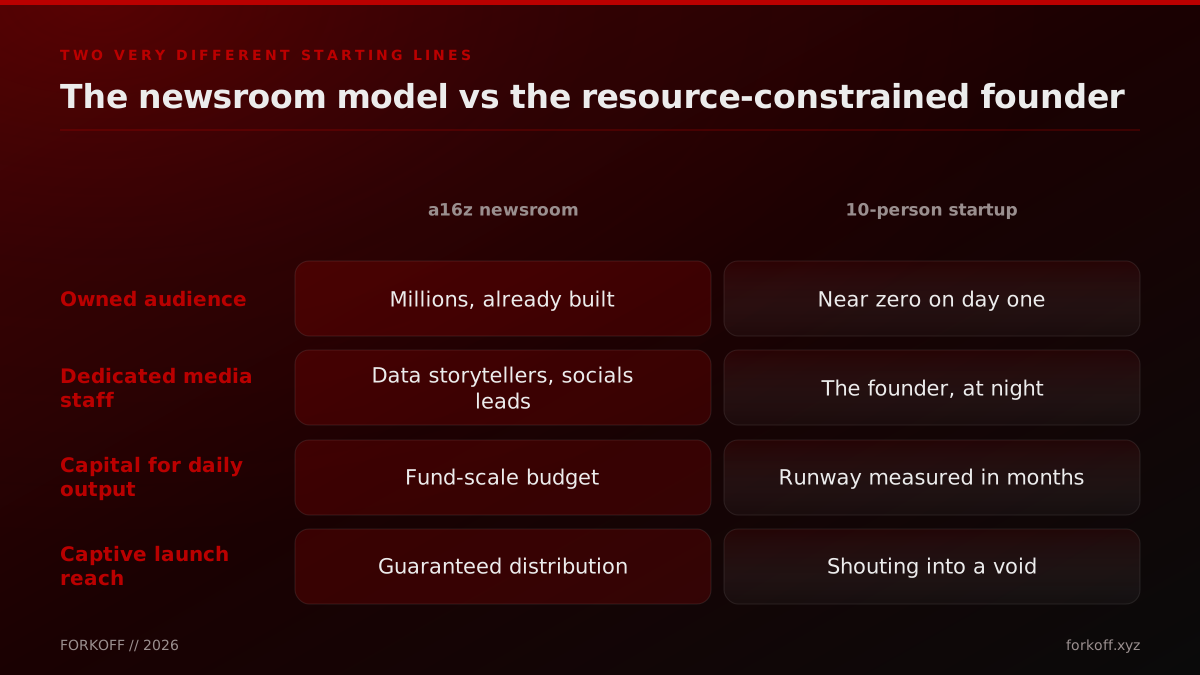
The a16z playbook is survivorship-biased because it generalizes from a case that almost no founder shares: a firm with a captive audience, dedicated media staff, and fund-scale capital. The advice is real, but the preconditions are invisible in the retweeted one-liner. When you strip the advice of those preconditions and hand it to a ten-person startup, most of it inverts from leverage into a time sink. The gap is not about whether the principles are true. It is about what you must already own for them to pay off.
Look at the two starting lines next to each other. On one side, a media operation that owns its audience and staffs a newsroom. On the other, a founder doing distribution at night between sales calls and hiring.
The premise underneath the doctrine is not in dispute, and that is what makes it dangerous. Distribution really has become the moat. Forbes documented VCs betting billions on exactly this shift, and Evan Spiegel, in a widely shared conversation on why distribution is now the most important moat in consumer tech, made the same point from the operator seat. The premise is right. The prescription, copy a firm that already owns its distribution, is where founders get hurt.
The most seductive trap in the doctrine is the cadence advice. Ship five times a week, hire data storytellers, produce daily. That math compounds beautifully when an audience is already on the other end. When there is no audience, daily production is a founder pouring hours into a channel that returns almost nothing, because reach has to come first.
Daily production is a trap at ten people
The compounding math a16z cites assumes an audience already receives what you ship. For a ten-person team with no audience, daily original production burns the founder's calendar and returns almost nothing. Cadence follows reach, not the other way around.
Source: a16z, New Media, One Year In (2026)
This is not a hypothetical failure mode. It is the single most common way founders burn a quarter on content. Marc Andreessen and Ben Horowitz describe the collapse of traditional media and the new playbook that replaced it, and even in their telling the leverage assumes an existing platform to broadcast from.
Marc & Ben on the Collapse of Traditional Media - Podcasts, Politics & the New Media Playbook
a16z
Marc Andreessen and Ben Horowitz on the collapse of traditional media and the new playbook.
Founders who study the problem tend to arrive at the same conclusion from the other direction. Distribution, not product, is the divider between early-stage winners and everyone else, which is exactly why copying the output of a firm that already won the distribution game does not transfer.
I studied 100+ early-stage SaaS startups. The winners didn't build better products.
Operator note5B+ views ran through the engine before any founder hired a data storyteller.
Survivorship bias has a precise definition, and it fits here exactly. You study the winners, extract what they did, and miss that thousands of others did the same things and lost, because the winners also had an advantage the losers lacked. In this case the hidden advantage is preexisting reach. Every visible a16z distribution win runs on top of an audience that was already there. Copying the visible behavior, the daily posting, the personality-forward content, the confident go-direct posture, without the invisible precondition, produces the behavior without the result. Founders end up cosplaying a media company instead of building distribution.
The clearest symptom is the calendar. A founder who buys the daily-cadence advice spends the scarcest resource in the company, founder time, on producing content that reaches almost nobody, while the actual growth levers, talking to buyers and shipping product, get squeezed. The advice was not free. It cost the one thing a small team cannot get back. That is why the correct first question is never how often should I post. It is where does attention already exist that I can borrow, which is a distribution question, not a content question.
There is also a positioning risk hiding in the doctrine. a16z can afford to be interesting for its own sake because attention is already monetized through deal flow and fund returns. A founder cannot. Founder attention only matters if it converts to pipeline, and content built to be interesting without a conversion path is a hobby with good production values. The engine in this playbook is built backward from conversion, which is what keeps it from becoming performance.
It is worth being concrete about the preconditions that make the doctrine work, because naming them is how you avoid copying the wrong thing. The first precondition is a preexisting audience large enough that anything you publish gets seen by default. The second is capital that can fund non-revenue headcount, the data storytellers and socials leads, without threatening runway. The third is a distribution guarantee, the ability to point owned channels at any piece of content on command. The fourth is a brand that already confers trust, so a new founder attached to the network borrows credibility instantly. a16z has all four. The median seed-stage founder has none of them. Every visible success in the doctrine sits on top of these four preconditions, and the preconditions are invisible in the highlight reel.
Once you see the preconditions, the survivorship bias becomes impossible to unsee. The founders who go direct and win are, almost without exception, founders who already had reach, or who plugged into someone else's, whether a fund, an accelerator, an existing following, or a well-connected cofounder. The ones who tried the same behavior from a standing start and got nothing do not write case studies about it, so they vanish from the sample. What looks like proof that going direct works is actually proof that going direct works when you already have distribution. That is a very different claim, and it changes the first move entirely.
There is also a subtler version of the bias, which is temporal. a16z's own reach did not appear fully formed. It was built over years, through a period when the firm was doing exactly what this playbook recommends: borrowing other people's audiences, showing up on other people's platforms, and slowly converting that attention into owned channels. The doctrine describes the end state and quietly omits the years of borrowing that produced it. Read charitably, a16z is not hiding the road. It is simply standing at the destination and describing the view. The founder's job is to reconstruct the road the view leaves out.
The correction is not to reject the doctrine. It is to notice that a16z is describing the destination and skipping the road. The rest of this playbook is the road. If you want the adjacent argument about spending on credibility versus raw user acquisition, the credibility versus user acquisition breakdown is the companion piece.
Principle one, translated: borrow other people's audiences first
The literal translation of use ours is borrow theirs. Since you cannot point a16z's million followers at your launch, the first move is to rent attention from audiences that already exist. That means going on other people's podcasts, posting in communities where your buyers already gather, appearing on threads and shows with reach you have not had to build. Borrowing is faster than building, it compounds while you sleep, and it is the only version of use ours that a founder can execute on day one. This is the first stage of the engine, and everything downstream depends on it.
The full engine has four stages, and borrowing is where it starts. Each stage exists to feed the next, and the sequence matters more than the volume.
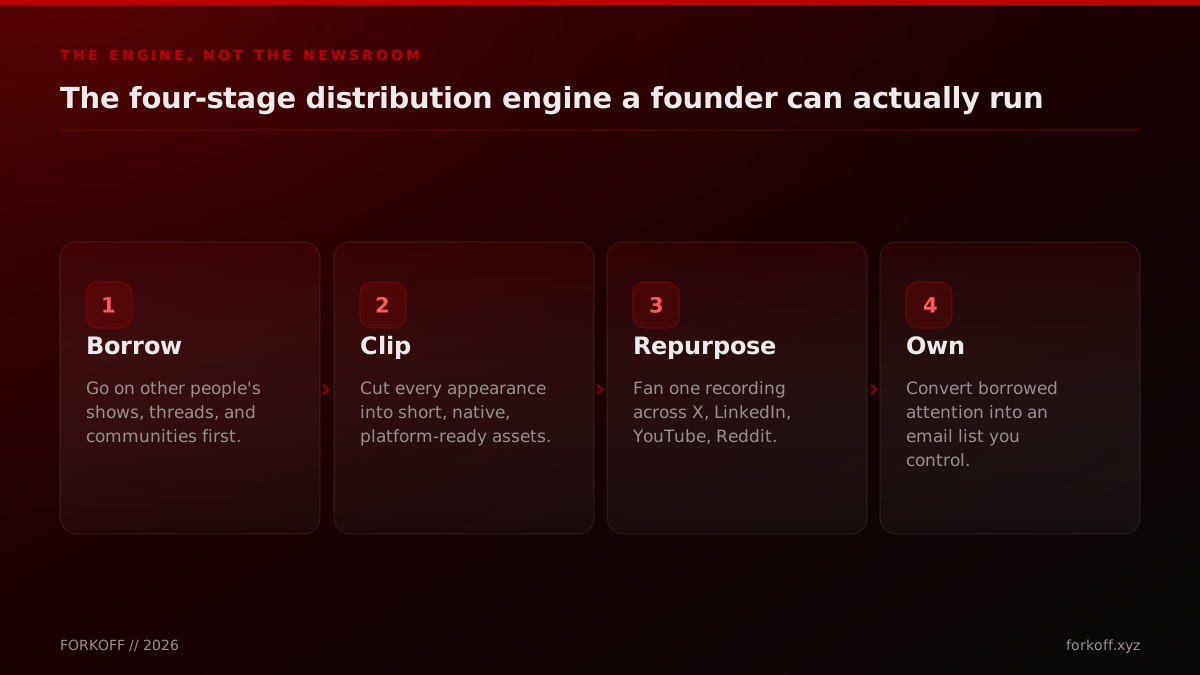
The reason borrowing works is that distribution is under-invested even by people who talk about it for a living. When an operator on the VC side notices that owned distribution is undervalued, that is a signal about where the leverage sits, not just a personal note.
Srijan Mahajan
@srijan_mahajan
if you're in vc, you're probably spending less on media + IP + owned distribution than you should looking into this space while working with a friends fund & started forming early thoughts but just saw that lightspeed hired creator claire zau, so here they are tldr; capital is
Borrowing is concrete. A single post in the right community can move real numbers, because you are drawing on an audience someone else spent years assembling. That is the whole idea of renting reach before you own it.
One Reddit post. 525 visitors in a day. 20 signups. Here's exactly what I learned.
The catch is that a guest appearance is worthless if it dies inside a two-hour recording. Borrowed attention has a short shelf life unless you capture it. That is where the clip layer comes in, and it is the step most founders skip.
One recording is not one asset
The unit of distribution is not the two-hour podcast. It is the 30 clips that podcast becomes. A founder who publishes the long-form and stops has done the hard part and skipped the distribution.
Source: FORKOFF clipping network
Good clipping is a craft, not a crop. A clip that travels is not just a random ninety seconds cut from the middle of a recording. It opens on a hook in the first second, stands on its own without the surrounding context, is captioned for silent autoplay, and is framed for the platform it is going to. The same conversation yields a different cut for a vertical feed than for a landscape one, and a different hook for an audience that knows the founder than for one that does not. This is why the clip layer is where most founders quietly fail: they treat clipping as a mechanical afterthought, publish a flat crop, and conclude that clips do not work, when what did not work was the crop.
The volume math is what makes the clip layer worth getting right. A single hour-long appearance contains, realistically, eight to fifteen moments worth clipping: a sharp answer, a contrarian take, a story, a number, a framework. Each of those becomes one to three native assets depending on platform. One recording, clipped well, becomes twenty to thirty pieces of distribution that run for weeks after the appearance itself is forgotten. That is the leverage a media department buys with headcount and the engine buys with a clipping discipline. The founder's scarce hour of recording becomes a month of feed presence without a single additional hour of founder time.
Clipping is not a nice-to-have. It is the mechanism that turns one borrowed appearance into weeks of native assets across platforms. A founder who records a great podcast and posts the link has done the hard part and skipped the distribution. For the deeper mechanics of turning long-form into clips that travel, see what clipping actually is and the startup launch video distribution gap.
Operator noteOne podcast a month is a diary, not distribution. Clip it into 20 native assets.
The mechanics of borrowing are worth getting specific about, because founders often nod at the idea and then do it wrong. Borrowing well means picking audiences by buyer overlap, not by size. A 2,000-person community full of your exact buyers beats a 200,000-follower show whose audience will never purchase. It means showing up with something the host's audience actually values, a real teardown or a contrarian take, not a thinly veiled pitch. And it means treating every appearance as a distribution asset from the first minute, which is why the clip layer has to be planned before you record, not bolted on after.
This is not a fringe tactic. The case for building a distribution moat before product-market fit rests on the same logic: attention assembled early is the asset that makes the eventual product launch land instead of leak. Borrowing is simply the cheapest way to assemble that attention when you have none of your own.
There is a compounding effect that makes borrowing better than it looks on paper. Each appearance is evidence for the next booking. A founder with ten good clips is an easy yes for the eleventh host, because the risk to the host is now visible and low. Reach that starts as a favor becomes a track record, and the track record lowers the cost of every future borrow. This is the founder version of the a16z network effect: not a fund's rolodex, but a body of work that makes the next door easier to open.
Finding the right places to borrow is a research task, not a guessing game, and it rewards specificity. Start from where your buyers already spend attention. If you sell to engineering leaders, that is a specific set of podcasts, newsletters, Slack and Discord communities, and subreddits, not "tech Twitter" in general. Make a list of twenty to thirty of those surfaces ranked by buyer density. For each, identify the host or moderator and what their audience values. Then approach with a specific, useful contribution: a teardown, a data point, a contrarian take backed by experience, something the host would want even if you were not attached to a company. The pitch is never "can I promote my thing." It is "I have something your audience will find valuable," and the promotion takes care of itself when the founder is the source of the value.
The order of operations inside borrowing matters too. Warm up the smaller, higher-density surfaces first. A niche podcast with two thousand of your exact buyers is a better first appearance than a general show with fifty thousand tourists, both because the conversion is higher and because the smaller host is an easier yes. Early appearances also let the founder find their material, the three or four stories and arguments that land, before stepping onto larger stages. By the time a bigger show says yes, the founder is not improvising. They are running proven material that has already been tested on a friendlier crowd.
Borrowing also compounds through relationships, not just clips. Every host you appear with becomes a node in a small network. Hosts talk to other hosts, recommend guests to each other, and reshare each other's episodes. A founder who is generous and easy to work with, who shows up prepared and promotes the host's episode as hard as their own, gets recommended into the next set of rooms without asking. This is the founder-scale version of the network a16z sells: not a rolodex you inherit, but one you build appearance by appearance, and it is durable precisely because you built it.
Once the clip layer exists, the same recording fans out across every surface. One appearance becomes a thread, a set of vertical clips, a written post, and a newsletter section. That is repurposing, and it is how a small team matches the surface area of a media department without the headcount. Repurposing is also where most of the yield hides. The raw appearance reaches the host's audience once. The clips and posts reach your borrowed and owned audiences for weeks, on platforms the host never touched. One recording, handled well, becomes ten to twenty native assets that each carry the founder's signal into a different feed. The clipping service is the operational version of this stage, and the three-ring distribution model is the tactical breakdown.
Principle two, translated: founder-led, not logo-led
The a16z line that people confer signal, not brands, translates into a simple operating rule: keep the founder in frame on every asset. Signal attaches to a person with a track record, not to a company account, so the founder's face and voice carry attention that a logo cannot. This is not a branding preference. It is the reason a clip of the founder explaining a decision outperforms the same message posted by a brand account. Founder-led distribution is the practical expression of signal over brands, and it is the highest-leverage lever a small team has.
The mechanism is worth stating plainly, because it explains why the substitution works.
Signal is what's important, and people confer signal, not brands.
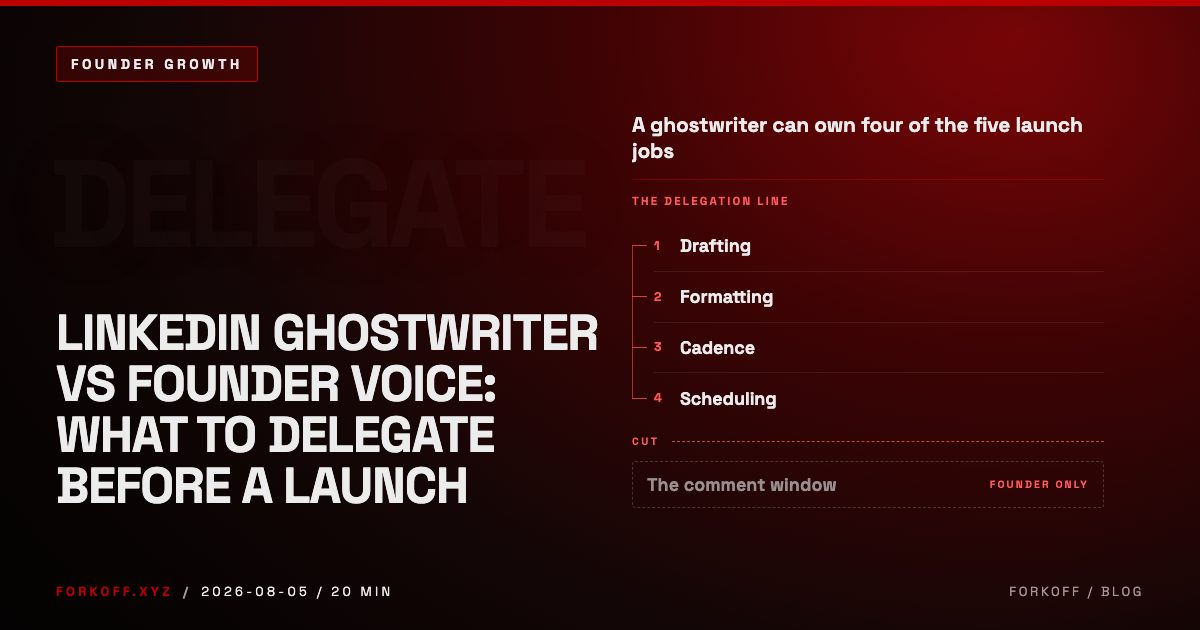
When you trace how attention actually moves, the path runs through the person. A founder shows up, the clip travels because it carries a face and a voice, trust transfers to the viewer, and the owned list grows. That is also why ghostwriting has a hard stop at the comment thread, whatever the drafting arrangement. A logo interrupts that chain at every step.
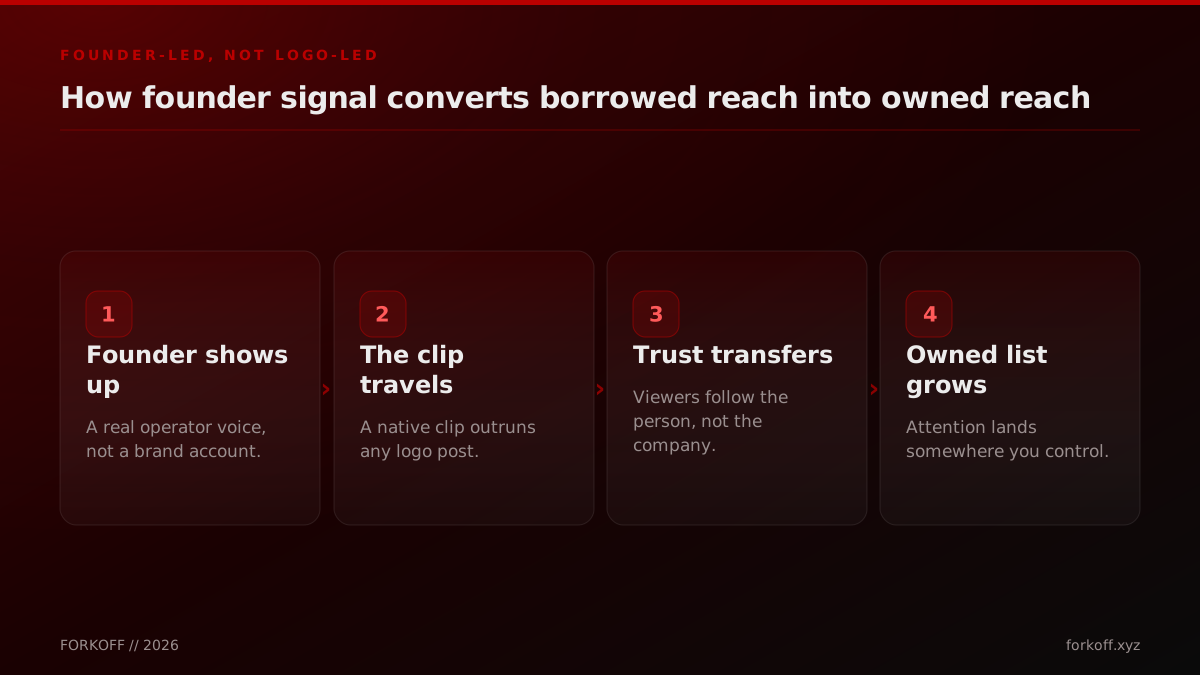
The broader shift is well documented. First Round Review has spent years chronicling how the strongest early companies grow on operator voice rather than paid reach, and the emerging consensus, captured in pieces like the founder-as-media shift, is that the next generation of companies will own their distribution through the founder rather than the logo.
This is why founder online presence gets treated as a genuine asset by people who have worked inside both the fund and the operating side. An ex-a16z operator left to prove exactly this thesis over a decade: that a founder building an online presence is one of the highest-leverage moves available.
Ish Verduzco
@ishverduzco
Friday was my FTE last day at a16z. I'll still be supporting the crypto team & founders but as a consultant. The change is because I've been working on a thesis I will prove over the next decade. My thesis states that building an online presence is one of the highest-leverage
The signal argument also sets the bar for what you actually publish. a16z is blunt that going direct only works if you are worth paying attention to, and that the job is not to flood feeds with content but to surface what is genuinely interesting about the founder.
The point isn't to ship a bunch of content. The point is to highlight what's already interesting about the founder.
Signal travels through people
The reason founder-led distribution outperforms a brand account is mechanical, not sentimental. Trust and attention attach to a face and a track record, which is exactly why a clip of the founder outruns the same claim posted by a logo.
Source: a16z New Media thesis (2025)
Operator noteThe founder's face outruns the logo account every time a clip travels on X.
The signal-over-brands rule has a sharp practical edge for early companies. Before you have logos, case studies, or a category position, the founder is the only credible signal you own. The company has no track record yet, but the founder's judgment, taste, and willingness to say what they actually think are legible immediately. This is why the earliest stage is precisely when founder-led distribution matters most, and it is also when founders most often hide behind a brand account because it feels safer. Safer is exactly wrong here. The brand account has nothing to confer.
There is a common objection worth answering directly: what if the founder is not a natural performer. The answer is that the engine does not require performance. It requires the founder to say true, specific, non-obvious things about the problem they are closest to, and then it handles turning that into distribution. The most effective founder content is rarely polished. It is a real operator explaining a real decision, captured and clipped. Interesting, in the a16z sense, does not mean entertaining. It means worth listening to, and worth listening to is a function of what you know, not how you present.
Founder-led also does not mean the founder is the only voice forever. Early on, the founder is the signal because there is no other. As the company grows, the engine can extend to other credible people, a head of product, a strong engineer, a customer with a story. The pattern holds: signal attaches to people, so put people in frame. Logos remain the wrapper, never the source.
The signal argument also changes what you measure. A brand account chases reach as the top metric, because a brand has nothing else to offer but exposure. A founder-led engine can chase something better: resonance. When the founder says something specific and true, the people who respond are disproportionately the right people, because the message was precise enough to filter. A viral post from a brand account often brings a flood of the wrong audience. A smaller, sharper founder post brings fewer people who are far more likely to buy. Founder-led distribution trades raw reach for qualified reach, and qualified reach is what converts.
This is also why founder-led content resists the commoditization that is swallowing brand content. As more companies use AI to generate high volumes of competent, generic posts, the value of generic content approaches zero, because anyone can produce it. What cannot be generated is a specific operator's judgment, their real opinions, the decisions they actually made and what they learned. That is the moat under founder-led distribution: it is the one kind of content that is expensive to fake because it requires having actually done the thing. The engine amplifies that scarce input rather than replacing it.
There is a discipline that keeps founder-led content from decaying into personal-brand theater. The test for every asset is whether it teaches the audience something true about the problem you solve. If a post is about the founder's morning routine or generic motivation, it is building a personality, not distributing the company. The founder is the signal source, but the signal has to be about the work. Kept on that rail, founder-led content compounds into category authority. Let off it, it becomes a lifestyle feed that reaches people who will never buy.
Founder-led does not mean the founder does everything. It means the founder is the signal source and the engine handles the surface area. For the argument that AI cannot fake this layer, and why that matters for defensibility, the founder-led content piece is the deep dive. For the raw-reach version of the same idea on one platform, see how to go viral on Twitter.
The honest counter a16z leaves out
Here is the counter the doctrine omits: going direct without distribution infrastructure is shouting into a void. a16z can afford to talk about being interesting and shipping daily because the reach is already there to catch it. A founder who takes the advice literally, opens a brand account, and posts every day into an audience of zero is not executing the playbook. They are performing it. The infrastructure that makes going direct work is invisible in the advice, which is exactly why so many founders follow it and get nothing back.
There are five specific ways this goes wrong, and each one has a fix that lives in the engine rather than in more posting.
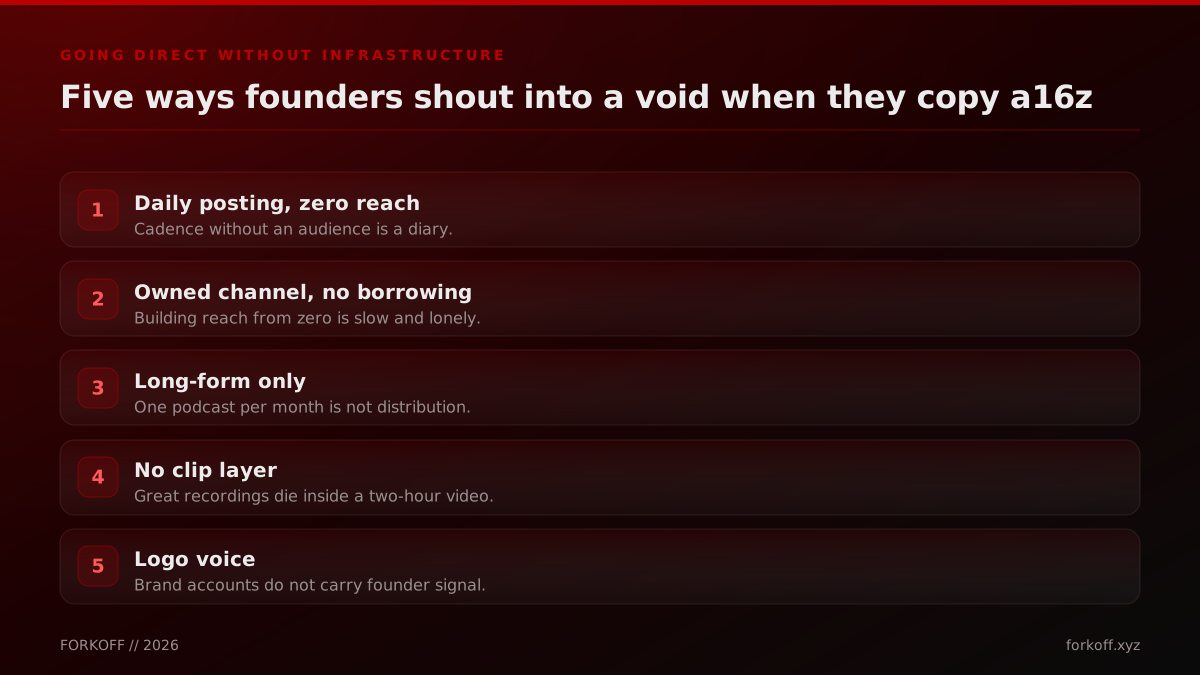
Put the failure modes in a table and the pattern is clear. In every case the symptom looks like a content problem and the root cause is a distribution problem.
The five ways founders shout into a void when they copy a16z
| Symptom | Why it fails | The engine fix |
|---|---|---|
| Daily posting, near-zero reach | Cadence without an audience is a private diary | Borrow reach where your buyers already gather |
| Owned channel built from scratch | Zero-to-one audience building is slow and lonely | Rent attention first, convert it to owned later |
| One long podcast per month | A monthly two-hour recording is not distribution | Clip every recording into native short assets |
| Recordings with no clip layer | Great long-form dies inside the full video | Cut every appearance into platform-ready clips |
| Brand-account voice | Logos do not carry trust or signal | Keep the founder in frame on every post |
Founders feel this directly when they compare notes. Ask a room of operators which channels are actually working and the answers cluster around borrowed reach and founder presence, not around posting volume on a cold brand account. The same pattern shows up when you compare cost per qualified lead across the channels founders run: borrowed reach and founder presence carry the lowest cost when operator time is the resource you have.
Founders, what marketing channels are actually working for you in 2026?
The other quiet trap is momentum. Distribution is not a one-time launch. It is a habit, and the habit is fragile early because the returns lag the effort. Experienced founders name this directly: build the audience before the product, and treat distribution as the priority rather than the afterthought.
Sharath Kuruganty
@5harath
Three tips to first-time founders: 1. Build an audience before building a product. 2. Focus on distribution more than anything. 3. Building momentum is as important as breathing.
Rented reach can be revoked
Every borrowed channel, from a podcast host to an algorithm, can change its mind. The only distribution a founder truly keeps is the list of people who agreed to hear from them directly. That is why the engine ends on an owned list.
Source: FORKOFF founder funnel
Operator noteRented reach gets revoked. The email list is the one channel a founder keeps.
The void has a financial cost that founders underestimate. Every hour spent producing content that reaches nobody is an hour not spent on the two things that actually move an early company, talking to customers and improving the product. Content without distribution is not neutral. It is a negative-return activity dressed up as progress, and it feels productive precisely because it looks like the winners' behavior. The discipline is to refuse to produce until there is a channel to distribute into, borrowed or owned, because production without distribution is the most expensive form of busywork a founder can choose.
There is a sequencing error underneath most void stories. Founders reach for the owned channel first, a company blog, a brand account, a podcast nobody knows exists, because owning feels like the goal. But owning is the last step, not the first. You cannot own an audience you have not yet borrowed and converted. Reversing the order, building the owned channel before you have any borrowed reach to feed it, guarantees the empty room. The engine exists to enforce the correct order so the owned channel launches with an audience already flowing into it.
A useful way to diagnose the void is to separate the two things a piece of content needs: a reason to exist and a way to travel. Most founder content has the first and lacks the second. The post is well written, the argument is sound, and then it is dropped into a feed with no distribution behind it and sinks without a trace. Adding more posts does not fix this, because each new post has the same missing half. The fix is to attach every piece of content to a distribution mechanism before it ships: a host who will share it, a community where it belongs, a clip that will travel, a list that will receive it. Content plus distribution is a growth loop. Content alone is a hobby.
The void also has a morale cost that quietly kills engines before they compound. A founder who posts into silence for a month concludes, reasonably, that this does not work, and stops. The conclusion is wrong but the evidence felt real, because the feedback loop was broken from the start. Borrowing fixes the morale problem as much as the reach problem. When a founder's first serious content lands on a host's engaged audience, the early signal is real: comments, follows, replies, sometimes a first inbound lead. That early signal is what sustains the founder through the months of compounding that follow. Starting from an owned channel with no audience removes the one thing that keeps a founder going.
There is a specific failure worth calling out because it is so common: the founder who treats a single launch as their distribution strategy. They save up, produce a big launch video or a coordinated post, fire it into the void, and get a spike that decays to nothing within a week. Then they wait months and do it again. This is not distribution. It is a series of disconnected events. Distribution is a standing capability that runs every week on one recording at a time, so that by the time the real launch arrives there is already an audience primed to receive it. The launch should be the loudest moment of an engine that was already running, not the only moment.
The honest version of own your distribution, then, includes the part a16z skips: you need the engine before the direct approach pays off. Without it, direct is just a slower way to reach nobody. The counter is not to abandon the goal. It is to build the machine that makes the goal reachable. For the specific case of launch videos, where this void shows up most painfully, how to get 100k views on a launch video and are Twitter launches a scam are the tactical companions.
What do you build instead of a media department?
Instead of a media department, you build a distribution engine: a small system that turns one founder recording into a week of native assets, keeps the founder in frame, borrows reach before it builds reach, and ends on an owned list. The engine replaces headcount with repurposing leverage. Where a16z staffs data storytellers and produces daily, the engine takes a single input and multiplies it across surfaces, which is how a ten-person team matches the reach of a media operation without the media operation. This is the core substitution of the entire playbook.
The two models are worth comparing directly, because the differences are structural, not cosmetic.
The media department vs the distribution engine
| Dimension | Media department (a16z model) | Distribution engine (founder model) |
|---|---|---|
| Headcount | Data storytellers, socials leads, editors | The founder plus one distribution partner |
| Starting audience | Millions, already owned | Borrowed on day one, owned over time |
| Content source | Daily original production | One recording repurposed many ways |
| Cost structure | Fund-scale budget | Runway-friendly and outcome-priced |
| Endpoint | More owned channels | An email list you fully control |
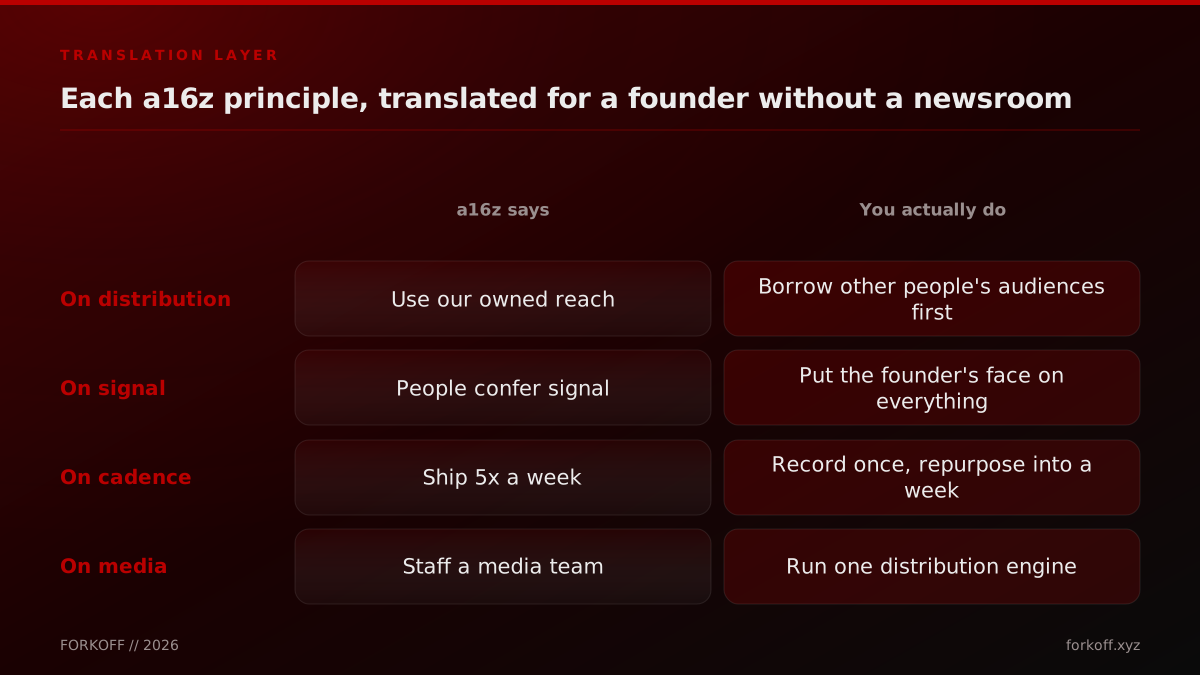
The translation from a16z principle to founder move is the heart of it. Read the doctrine in the left column, ignore the newsroom version in the middle, and execute the right column.
Each a16z principle, and what it becomes without a newsroom
| a16z principle | If you had a newsroom | What you do instead |
|---|---|---|
| Own your distribution, or use ours | Point millions of owned followers at every launch | Borrow other audiences before building yours |
| Signal, not brands | Staff named personalities and analysts | Put the founder's face on every asset |
| Ship five times a week | Hire data storytellers to produce daily | Record once, then repurpose into a week of posts |
| Media is a core function | Run an in-house media department | Run one engine ending on an owned list |
This is not a theoretical claim. The clipping and distribution network behind this argument has processed more than five billion views, and it did that as an engine, not as a newsroom. No founder in that network hired a data storyteller to make it work.
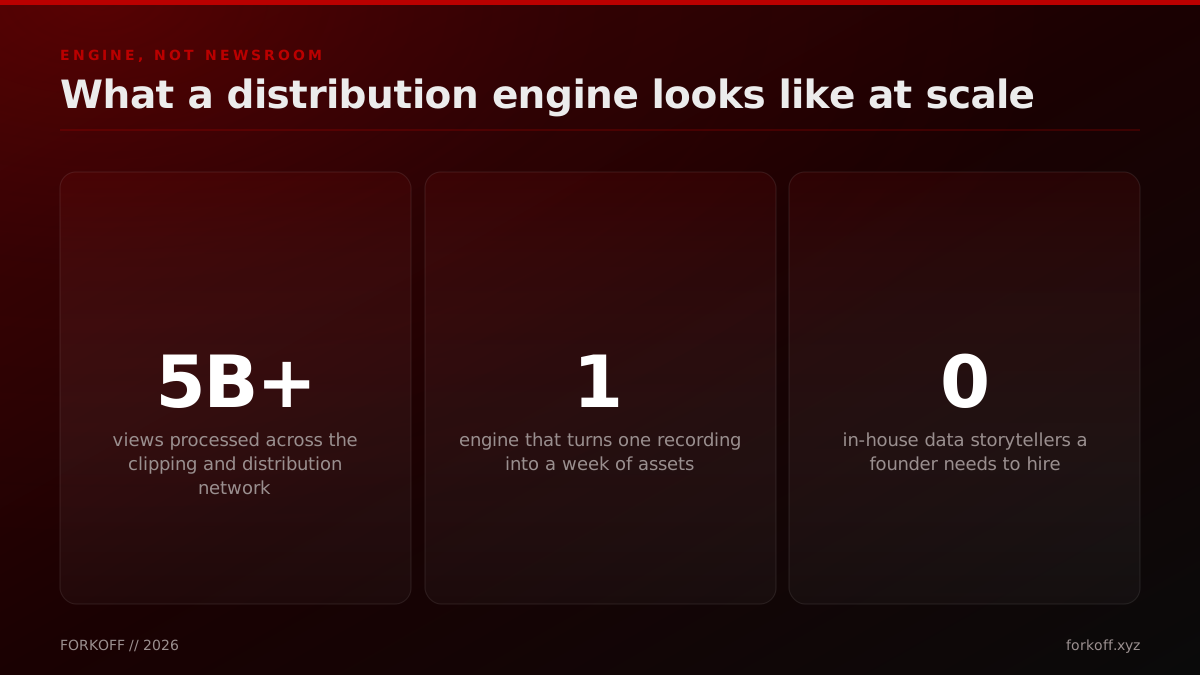
The strategic version of the same idea shows up when investors and founders talk about media as a competitive asset rather than a cost center. a16z frames founders, media, and memes as a strategy, and the engine is how a founder without a fund executes that strategy on a runway budget.
Founders, Media, & Memes: a16z's Strategy for the Future | a16z LP Summit 2025
a16z
a16z LP Summit on founders, media, and memes as a strategy.
The word a16z uses is guarantee
a16z can tell a founder it will guarantee distribution because it already owns the channels. A seed-stage founder has no such guarantee, so the first move is to borrow reach, not to broadcast into an empty room.
Source: a16z, New Media, One Year In (2026)
The economic case for the engine over the newsroom is straightforward. A media department is a fixed cost that only pays off at scale, which is why it makes sense for a firm managing billions and almost never for a company managing a runway. The engine is variable and leverage-based: it converts one input the founder already produces, their thinking, into many outputs, without adding headcount for each new surface. That is the difference between a cost center and a growth loop. One requires you to already be big. The other is how you get big.
The engine also degrades gracefully, which the newsroom does not. If a media department loses its staff, output stops. If a founder engine has a slow month, the founder still records one conversation and the system still turns it into a week of assets. The floor is higher and the fixed cost is lower, which is exactly the risk profile a company with limited runway should want. Resilience, not maximum output, is the right target when the downside is running out of money.
None of this is a reason to skip the owned layer forever. The end state a16z describes, owned channels that guarantee distribution, is the right end state. The disagreement is only about the path. You reach owned distribution by running the engine long enough that the borrowed reach converts into a list, a following, and a body of work that compounds. The engine is the on-ramp the doctrine leaves out.
The owned-list endpoint deserves special attention, because it is the part founders most often skip and the part that matters most. Every stage before it, borrowing, clipping, repurposing, produces rented attention. Rented attention is good, but it lives on someone else's platform and can be revoked by an algorithm change, a host's decision, or a policy shift. The email list is the only asset in the entire engine that the founder fully owns and can reach without permission. This is why the engine is designed to funnel everything toward it. A viral clip that adds a thousand followers on a platform is nice. The same clip that adds two hundred people to an email list is durable, because those two hundred can be reached again tomorrow regardless of what any platform does.
The engine also has a compounding property the newsroom lacks, which is that its inputs get cheaper over time. The first month of borrowing is the hardest, because you have no track record and every booking is a cold ask. By the sixth month, the clips exist, the appearances are evidence, the relationships are warm, and each new appearance takes less effort to book and produces more downstream assets. A media department's cost is roughly flat: staff cost the same every month. The engine's cost per unit of reach falls as the body of work and the relationships accumulate. That is the difference between a fixed cost and a compounding asset, and it is why the engine is the right structure for a company that needs leverage rather than scale.
None of this requires expensive tooling, which is another way the engine differs from the newsroom. The stack is deliberately boring: a way to record, a way to clip, a scheduler, and an email tool. The leverage is not in the software. It is in the discipline of running the loop consistently and keeping the founder in frame. Founders who wait to build the perfect content operation before starting have misunderstood where the value comes from. The value comes from reps, and reps start with one recording and a willingness to clip it.
The engine is also the thing that turns distribution from a launch event into an operating system. That is the point of the founder funnel: to wire borrowing, clipping, repurposing, and the owned-list endpoint into one measurable loop rather than a pile of one-off campaigns. If your foundation is not set yet, the founder funnel is where the tracking and owned surfaces get built first, and the founder funnel strategy post explains the sequencing.
The first-90-days playbook
The fastest way to stand up a founder distribution engine is a single quarter organized around the four stages: borrow in weeks one to three, clip in weeks four to six, repurpose in weeks seven to nine, and own in weeks ten to twelve. You do not build all four at once. You sequence them, because each stage produces the raw material the next stage needs. Booked appearances become clips, clips become written repurposed assets, and repurposed assets drive signups to the list. By the end of the quarter you have a loop that runs on one recording at a time.
Here is the quarter laid out as a plan you can hand to one person.
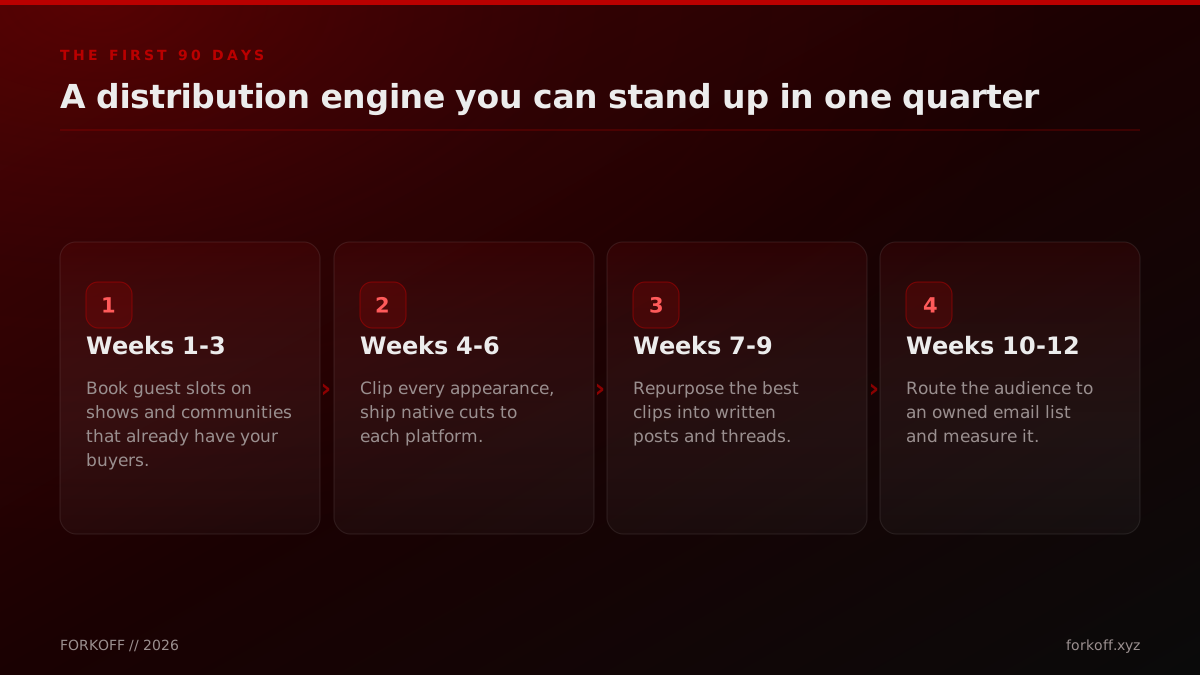
The same plan as a table, with the concrete output each phase should produce, so you can tell whether it is working.
The first 90 days of a founder distribution engine
| Phase | Weeks | Move | Output |
|---|---|---|---|
| Borrow | 1 to 3 | Book guest slots where your buyers gather | 4 to 6 booked appearances |
| Clip | 4 to 6 | Cut every appearance into native platform clips | 30 or more clips in rotation |
| Repurpose | 7 to 9 | Turn the best clips into written posts and threads | A week of assets from each recording |
| Own | 10 to 12 | Route the audience to an email list and measure it | A first-party list you control |
The cadence question resolves itself once reach exists. a16z's compounding math is real, and it becomes real for you the moment there is an audience on the other end of the daily one percent. The mistake is applying the cadence before the reach. Get the borrowing working, prove the message travels, and then let cadence compound.
There is a foundation question underneath all of this. An engine needs tracking, positioning, and owned surfaces to point the borrowed attention at, or the signups leak. That is the unglamorous first step most founders skip. If you are choosing between building this in-house or with a partner, the marketing agency versus in-house hire breakdown is the honest comparison, and the broader marketing strategies for AI startups guide covers the wider channel set.
Each phase has a concrete definition of done, and skipping ahead is the most common way founders sabotage the quarter. The borrow phase is done when you have four to six appearances booked or completed, not when you have "reached out to some people." The clip phase is done when every appearance has been cut into a set of native assets sized for each platform, not when you have posted the full recording. The repurpose phase is done when the strongest clips have become written posts and threads that stand on their own, not when you have reshared the video. And the own phase is done when there is a working path from a clip to an email signup, and the list is growing week over week. Each definition is deliberately behavioral, so there is no ambiguity about whether you have actually done it.
The single most common mistake in the first quarter is treating the four phases as sequential rather than overlapping. In practice, once the engine is running, all four happen every week: you are booking future appearances while clipping last week's, repurposing the best of the month, and watching the list. The phases describe the order in which you build the capabilities, not a rigid calendar you pass through once. By the end of the quarter, the goal is not to have finished the four phases but to have a loop where a single new recording flows through all four in the same week, automatically, because the habit and the tooling are in place.
Founders often ask how much time this takes, and the honest answer is less than they fear if they hold the discipline of record-once. The founder's irreducible time is the recording itself, the appearances and the occasional original piece, which is a few hours a week. The clipping and repurposing is production work that does not require the founder and can be handled by one person or a partner. The mistake that blows up the time budget is the founder trying to produce original content daily, which is the newsroom model creeping back in. Held to record-once, the founder's weekly commitment is small and the output is large, which is the entire point of choosing an engine over a department.
A word on measurement, because the quarter only works if you can tell whether it is working. The vanity number is views. The real numbers are further down: how many people from a borrowed appearance clicked through, how many joined the owned list, and how many of those turned into conversations or pipeline. Track the appearances booked, the clips shipped, and the list growth every week. If appearances are happening but the list is not growing, the conversion step is broken, and no amount of extra posting fixes a broken conversion step. The engine is a funnel, and you debug it stage by stage.
There is a leading indicator worth watching in the first month, before the list moves, because it tells you the engine will work before the results prove it. That indicator is reply quality. When the founder's clips and posts start drawing replies from the right kind of person, an operator in the target market, a potential customer, a relevant peer, the message is landing with the audience that matters even if the raw numbers are small. Reply quality moves weeks before list growth, and it is the earliest honest signal that the content and the borrowing are aimed correctly. If a month of appearances produces engagement only from bots and unrelated accounts, the problem is targeting, and you fix it by choosing better surfaces to borrow, not by posting more into the wrong ones.
Expect the first month to feel slow. Borrowing takes lead time to book, clips take a few cycles to find their format, and the list barely moves at first. This is normal, and it is exactly where founders quit and conclude that distribution does not work for them. It works. It lags. The compounding a16z describes is real, but it starts small and only becomes visible after the inputs have been running for weeks. The founders who win are the ones who keep feeding the engine through the flat part of the curve.
It also helps to set the right expectation about what a good quarter produces. The output of the first ninety days is rarely a viral moment or a large audience. It is a working loop, a handful of relationships, a small but real owned list, and a body of clips that keeps returning value. That is a modest-looking result that is worth far more than a one-time spike, because it is a capability rather than an event. From that base, the second and third quarters compound, because every input is now cheaper and every asset adds to a growing library. Founders who judge the first quarter by spike-size metrics miss that they built the thing that produces spikes later.
One more surface deserves attention as answer engines take over discovery. The clips and posts your engine produces are increasingly what gets cited by AI systems when someone asks about your category, which means the engine now feeds AI visibility as well as human reach. The how to get cited by ChatGPT guide connects the distribution engine to that citation layer.
The durable scorecard: engine over newsroom
The durable takeaway is a scorecard you can apply to any distribution decision: does this build the engine or does it try to recreate the newsroom? Borrowing before building, clipping every long-form asset, keeping the founder in frame, repurposing rather than re-creating, and ending on an owned list are the five checks. If a tactic fails those checks, it is newsroom thinking applied to a team that cannot afford a newsroom. The scorecard is what keeps the engine honest as you scale.
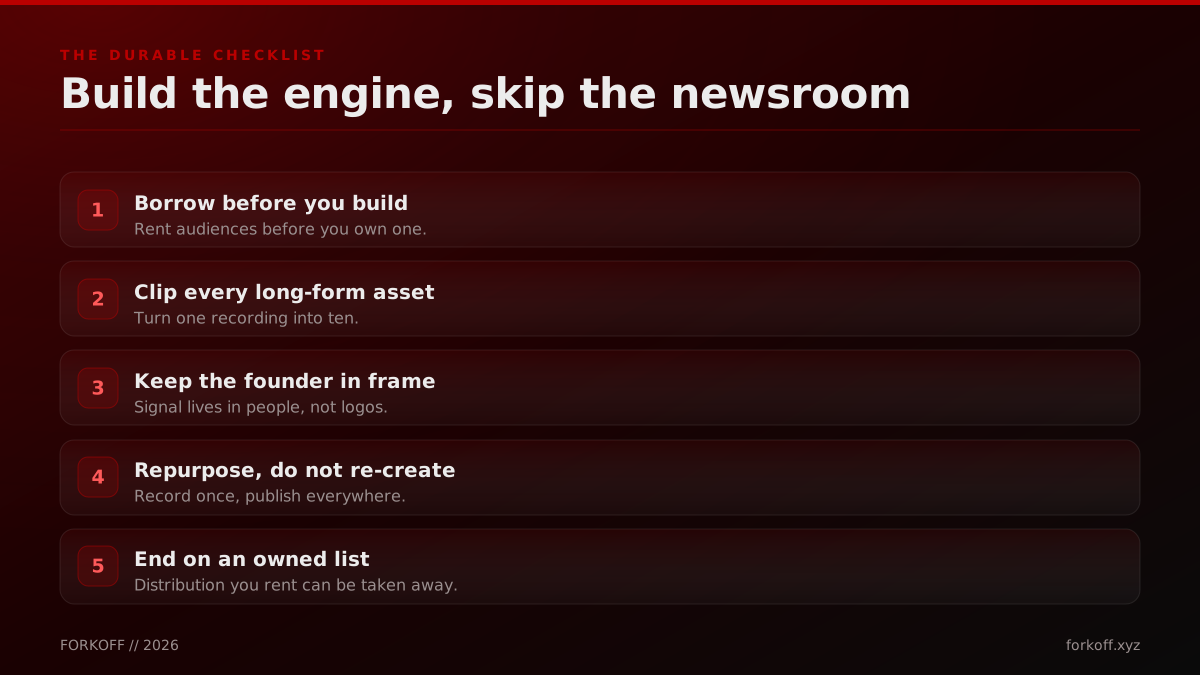
The scorecard is most useful as a filter on new tactics, because founders are constantly pitched distribution ideas that sound sophisticated and fail the checks. A proposal to hire an agency to run a brand content calendar fails the founder-in-frame check and the borrow-before-build check at once. A plan to spend the quarter building a company blog with no promotion behind it fails the end-on-an-owned-list check, because a blog with no distribution is another empty room. A push to produce daily original video fails the repurpose-do-not-re-create check and quietly reintroduces the newsroom. Running each idea through the five checks turns an abstract philosophy into a fast, concrete yes or no.
The checks also compose into a simple priority order when resources are tight. If you can only do one thing, borrow, because reach is the binding constraint. If you can do two, add clipping, because it multiplies every borrowed appearance. If you can do three, add repurposing, because it extends each recording across surfaces. Own comes last in build order and first in importance, because it is the endpoint everything else feeds. A founder who internalizes that order will make good distribution decisions even without this document in front of them, which is the real goal of a pillar like this one: not a checklist to follow once, but a model that produces the right call every time.
There is one more reason the engine beats the newsroom for a founder, and it is strategic rather than tactical. A distribution engine makes the company anti-fragile to platform risk. Because the engine borrows across many surfaces and ends on an owned list, no single platform change can take out its distribution. A company that built its reach entirely on one algorithm is one policy update away from irrelevance. A founder running the engine has spread the borrowing, captured the audience, and kept the endpoint in their own hands. That resilience is worth more than any single viral moment, and it is invisible until the day a platform changes the rules.
a16z is right that distribution is now the game. It is also playing that game with a stadium it already built. The founder's version of own your distribution is not to build the same stadium. It is to build the engine that lets you borrow stadiums, capture the crowd, and walk away with a list of people who want to hear from you directly. That engine is affordable, it is founder-led, and it compounds. The newsroom is optional. The engine is not.
If you take one idea from this playbook, take the order of operations. Borrow, clip, repurpose, own. The doctrine everyone is quoting starts at own and skips the first three, which is why it works for the firm that wrote it and stalls for the founder who copies it. Reverse the omission. Begin where you can actually begin, on other people's platforms, with the founder in frame and a clip layer ready to catch every appearance, and let the owned audience accumulate as the output of the work rather than the precondition for it. That is the whole difference between performing distribution and building it.
For the channel-level detail under each stage of the engine, the 13 marketers on the distribution move roundup collects the specific plays that turned content into pipeline in 2026. Read this pillar for the framework, then go there for the tactics.

![How to Make a Launch Go Viral on X: The 5-Lever Playbook [2026]](/blog/covers/how-to-make-launch-go-viral-on-x-2026-cover.jpg)