Developer relations for startups is where most developer platforms quietly lose the race. A cloud, API, PaaS, or edge platform ships a genuinely good product, wires up a docs site, and then waits for developers to show up. They do not show up, because nobody told them, and because the ways a founder is used to telling people, ads, decks, gated ebooks, are exactly the channels developers have trained themselves to ignore. The platforms that win their first 1,000 developers treat developer relations as a distribution motion they run on purpose, not a job title they will hire into later.
Developer relations for startups in one scroll
Developer relations for a startup is not a job you hire, it is a distribution motion you run. A developer platform earns its first 1,000 developers by shortening time to first win, then compounding trust across the channels developers actually check, docs, Reddit, Hacker News, X, and short-form video, before it spends a dollar on ads. The Evans Data Developer Marketing Survey shows developers rely on product trials, documentation, and peer recommendations over anything marketing produces. So the 2026 playbook leads with a working first-five-minutes, then runs Reddit and founder-voice on X and clip distribution as the trust layer, and hires a dedicated DevRel person only after the founder has proven the channels convert. Build the motion first, staff it second.
This is a playbook for the founder or early DevRel hire at a developer platform, seed to Series B, whose job to be done is developer adoption and ecosystem, and whose trigger is a launch or a wave of open-source traction. It is not a definition post about what DevRel is, there are enough of those from 2019 still ranking. It is the operator sequence for turning a product developers would like into a product developers actually find, try, and tell each other about. If you want the broader marketing frame around it, the developer marketing strategy pillar covers the full five-surface stack, and the AI DevRel playbook covers the AI-tool variant, this post is the platform-and-startup cut.
What is developer relations for a startup?
Developer relations for a startup is the practice of earning developer adoption through trust instead of through a sales funnel. It is the docs, the sample code, the community presence, the technical content, and the credible human voice that make a developer willing to try your platform and then tell a colleague. At a big company DevRel is a department with advocates, event budgets, and a content pipeline. At a startup it is usually one person, often a founder, doing the smallest version of all of it. The distinction that matters is not the org chart, it is that the audience buys differently. A developer reads your code before your landing page, trusts a peer over a case study, and abandons a tool the moment the README breaks.
Because the audience is different, the function is different. Developer relations is less about broadcasting a message and more about removing every reason a skeptical developer has to bounce, then showing up where they already are with something genuinely useful. The five things it does at an early-stage platform are narrow and concrete.
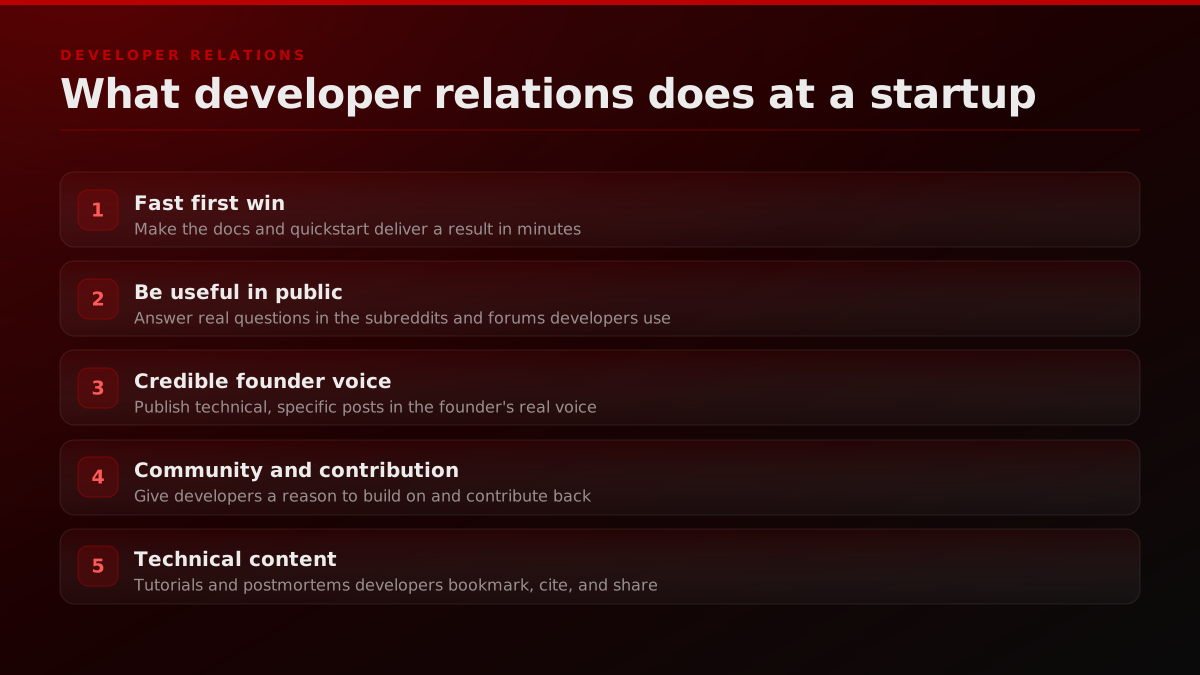
Notice what is not on that list, no lead-nurture sequence, no gated report, no webinar funnel. Those are the artifacts of a buyer who fills out forms, and developers are not that buyer. The community-led versus founder-led growth breakdown goes deeper on who should own each of these functions at each stage, but the short version is that at the start, the founder owns most of them, because the founder is the only person on the team with the technical credibility to be believed.
Developers evaluate by doing, not by reading your marketing
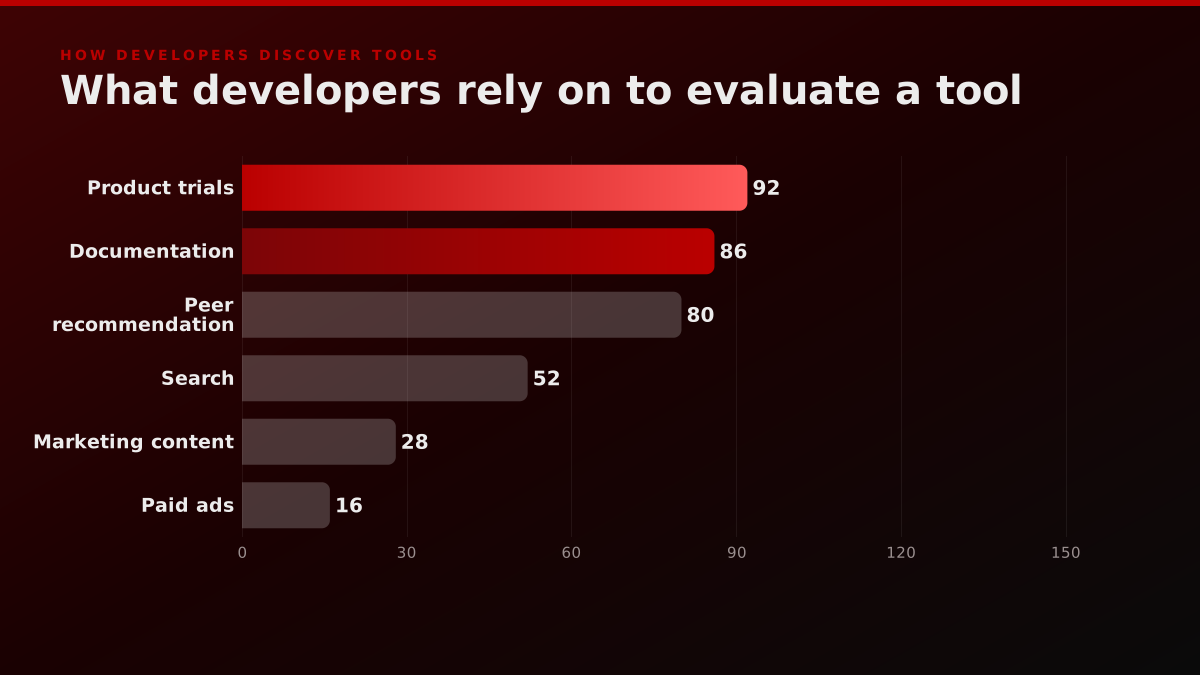
The single most important fact about developer relations is that the audience routes around the funnel. The Evans Data Developer Marketing Survey found that developers rely more on product trials, documentation, and recommendations from peers than on anything a marketing team produces. They evaluate tools through experience, not persuasion. That is why the first five minutes of your product, the quickstart, the sample repo, the free tier that does not time out, is the real top of funnel for a developer platform. SlashData's State of the Developer Nation estimates the global developer population well past 40 million, so the audience is enormous, but attention inside it is earned by working code and peer proof, not by a gated whitepaper.
Source: Evans Data Developer Marketing Survey; SlashData State of the Developer Nation
If this looks like more work than a marketing campaign, that is the point. There is no shortcut past a working product and a credible voice.
Why do developers ignore your marketing?
Developers ignore your marketing because it is built for a buyer who does not exist in their world. The traditional business funnel assumes a prospect who wants to be educated, nurtured, and gently qualified over weeks. A developer wants to solve a problem in the next ten minutes and will happily read your source to do it. When your homepage answers a demo request instead of a curl command, when your best content is behind an email wall, when your quickstart assumes a stack they do not run, you have signaled that the product is not built for them. They close the tab. They are not hostile to marketing, they are hostile to hype with no payload.
The clearest statement of this came from a DevRel author writing about exactly why developers tune the funnel out.
Most teams still market to developers like it's 2010. Pitch decks, nurture campaigns, and gated whitepapers still get top billing. But developers are tuning it all out.
That is the whole problem in two sentences. The teams that keep winning are the ones that accept it and rebuild the top of their funnel around a fast first win and honest technical content, rather than around persuasion. The data backs it, the Evans Data Developer Marketing Survey finds developers rely on product trials, documentation, and peer recommendations over anything marketing produces, and the Stack Overflow Developer Survey year after year shows the same trust pattern. The audience itself is enormous, SlashData's State of the Developer Nation puts the global developer population well past 40 million. Here is what the discovery pattern actually looks like when you measure it.
The founder-side version of this pain is just as instructive. A non-technical growth hire lands at a developer platform, opens the usual playbook, and realizes none of it fits, because the audience can smell that the person writing has never used the tool.
New grad here, helping a startup grow, but struggling to market to software engineers
I don't come from a tech background, and I'm realizing that I don't fully understand how to speak to this audience. Where do developers usually find new tools or communities? What kind of content actually resonates with them?
This is not a knock on that hire, it is structural. Credibility with developers does not transfer from a generic marketing background, which is exactly why developer relations exists as its own discipline and why, at a startup, it starts with the founder. The Reddit marketing for B2B founders guide covers how to build that credibility in public without getting banned, and it is the same muscle every channel below depends on.
There is a specific list of moves that quietly signal built-for-developers, and their opposites that signal built-for-a-pitch. A clear call to action that says try it now with no signup, a working repo or command that actually runs, code samples with enough context to copy and adapt, and docs written by people who obviously used the product, all of these read as respect for the developer's time. The opposites, a contact-sales button where a curl command should be, a gated ebook where a quickstart should be, marketing copy that describes the product in adjectives instead of showing it, all read as a wall. The developer audience pattern-matches these signals faster than any other segment, often inside the first screen, and the decision to stay or leave is usually made before they have read a full paragraph. Getting these details right is not polish, it is the difference between a channel that converts and a channel that leaks.
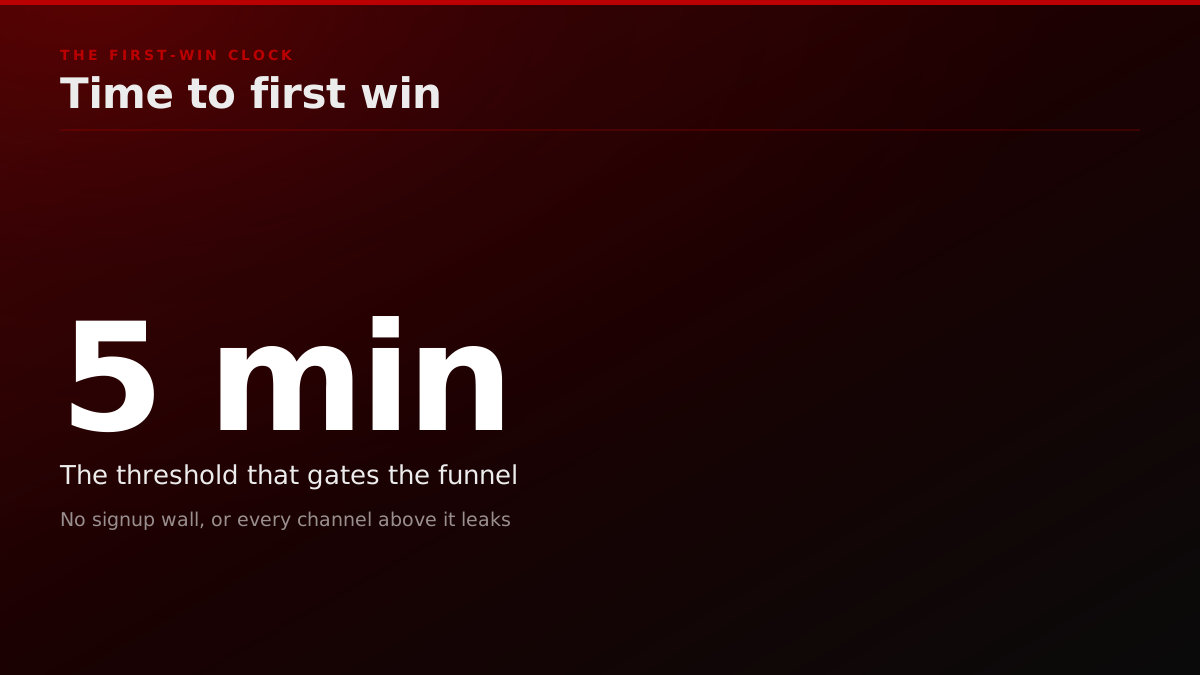
Operator noteIf a developer cannot get a first win in five minutes, no amount of content saves the funnel above it.
What actually earns a developer platform its first users?
What earns a developer platform its first users is a sequence of trust deposits across the exact channels developers already check, in the order they check them. The first deposit is the product itself, a first win that happens in minutes with no wall. The rest are the places a developer goes to decide whether a tool is real, the right subreddit, the Hacker News front page, the founder's timeline on X, and increasingly the short-form feed where conference talks and demos get clipped. None of these is a campaign. Each is a place you show up with something useful, repeatedly, until the platform becomes the obvious answer to a question developers are already asking.
The mistake is treating these as interchangeable ad channels. They are not, they deposit different kinds of trust at different speeds and fail in different ways. Here is the scorecard.
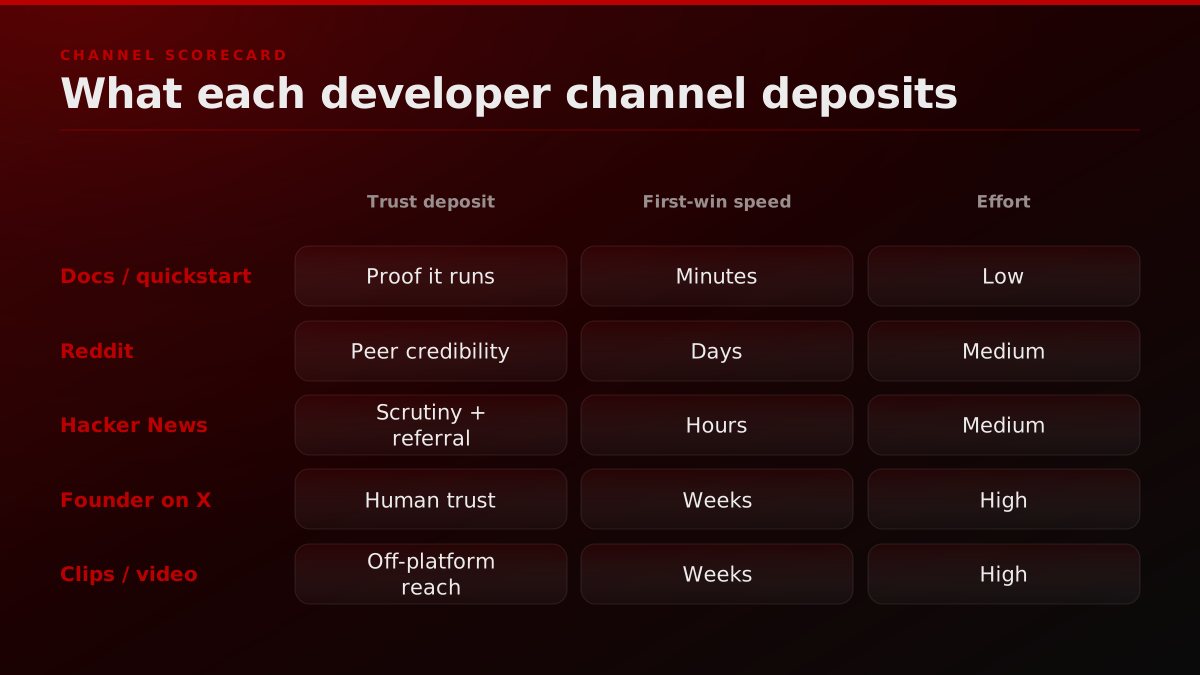
The table below is the same scorecard in detail, because the failure mode column is where most platforms lose, they post a pitch in the subreddit instead of an answer, they launch a landing page on Hacker News instead of something runnable, they let a copywriter ghost-write the founder voice.
The channels that earn a developer platform its first users
| Channel | What it deposits | First-win speed | Failure mode |
|---|---|---|---|
| Docs and quickstart | Proof the product runs | Minutes, if no signup wall | Quickstart that assumes you know the tool |
| Reddit (right subreddits) | Peer-attested credibility | Days, as threads index | A pitch instead of an answer, then a ban |
| Hacker News launch | Technical scrutiny plus referral | Hours, then a long tail | A landing page, not something runnable |
| Founder-voice on X | A credible human, in public | Weeks of cadence to compound | Ghost-written, caught inside 50 words |
| Short-form clips | Off-platform feed reach | Weeks to build a clip habit | One polished ad nobody shares |
Channels ranked by how developers actually discover tools, per the Evans Data Developer Marketing Survey (trials, docs, and peer recommendation over marketing).
The discipline itself was born at platforms like Twilio, whose developer evangelism motion in the early 2010s became the template every API company copied, show up where developers are, give them something that works, and let the product sell itself through their experience of it. What has changed since then is the channel mix, not the principle. The feed matters more, video matters more, and the AI answer engine now sits above the whole thing, deciding whether a developer even hears your name when they ask an assistant which tool to use. The principle is identical, trust is earned through developer experience and peer proof, and it is spent instantly by a broken example. What the modern playbook adds is that you now have to earn that trust in more places at once, which is precisely why sequencing and focus beat spreading thin.
Two of these deserve special attention for a developer platform. Reddit is where developers ask which tool to use and then find the answer for years afterward, which is why a first-party subreddit map for API and developer tools is worth more than a month of ad spend, it tells you exactly which 27 communities to be useful in and which to avoid. Hacker News is the other, a technical launch on Hacker News delivers a concentrated burst of the most scrutinizing developers on the internet, and if the thing you link is runnable, that scrutiny converts. For the AI-startup-specific version of the channel stack, the Reddit for AI startups breakdown maps the same idea onto that niche.
Trust is built in the details, and developers keep score
Every broken code sample, inconsistent CLI flag, and skipped install step is a vote against you. Developers keep score on the small things because those details predict whether the product will waste their afternoon. The platforms that win developer relations treat their docs and first-run experience as a system of trust cues, and they fix the paper cuts publicly. Stripe is the canonical example, the company famously worked through its top onboarding friction points and saw activation accelerate, without shipping a single new feature. It was not new capability, it was removing the tiny blockers that slow a developer down between sign-up and first success.
Source: Stripe engineering and developer experience, widely documented
The through-line is that distribution beats another feature. A platform that shows up in the thread, on the front page, and in the timeline the week a developer is deciding will beat a quieter platform with a marginally better product. That is the discipline behind the distribution and platform team gap, the teams that internalize it early compound, the teams that keep shipping features into silence do not.
The gap is distribution, not another feature
The reflex at a developer platform is to answer weak adoption with more product. The evidence points the other way. On a developer offer, peer-attested traffic converts far better than paid traffic, so the leverage is in the channels that carry peer trust, not in the ad account. This is the discipline FORKOFF runs across developer platforms, and it is the same distribution muscle behind the 5B+ clipping views processed on the network. A platform with a good product and a silent distribution layer loses to a comparable platform that shows up in the subreddit thread, on the Hacker News front page, and in the founder timeline the week a developer is deciding.
Source: FORKOFF distribution network, 5B+ views processed
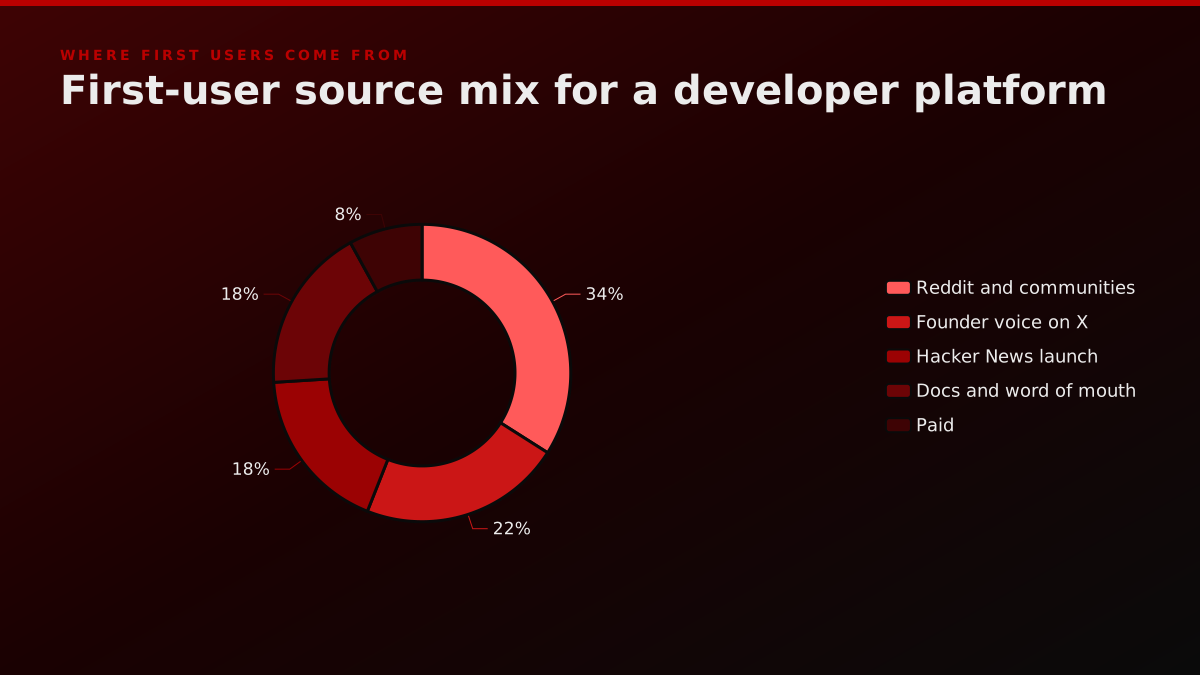
When you tally where a developer platform's first users actually come from, the weighting is lopsided toward the channels that carry peer trust, and paid sits at the bottom of the list rather than the top. That is not an argument against ever running ads, it is an argument for sequencing, you earn the peer-attested channels first, because they are the ones that convert on a developer offer, and you layer paid on only once the free channels are working.
What is the zero-to-one developer relations playbook?
The zero-to-one developer relations playbook is five moves run in order, first-win, then the trust channels, then the launch, and each move only pays off if the one before it is real. You do not start with a launch, because a launch that sends scrutinizing developers to a broken quickstart burns the most valuable attention you will ever get. You start by making the product prove itself in five minutes, then you seed the channels where developers decide, then you use a launch to concentrate all of that into a single high-visibility moment. Run out of order, the sequence backfires. Run in order, it compounds.
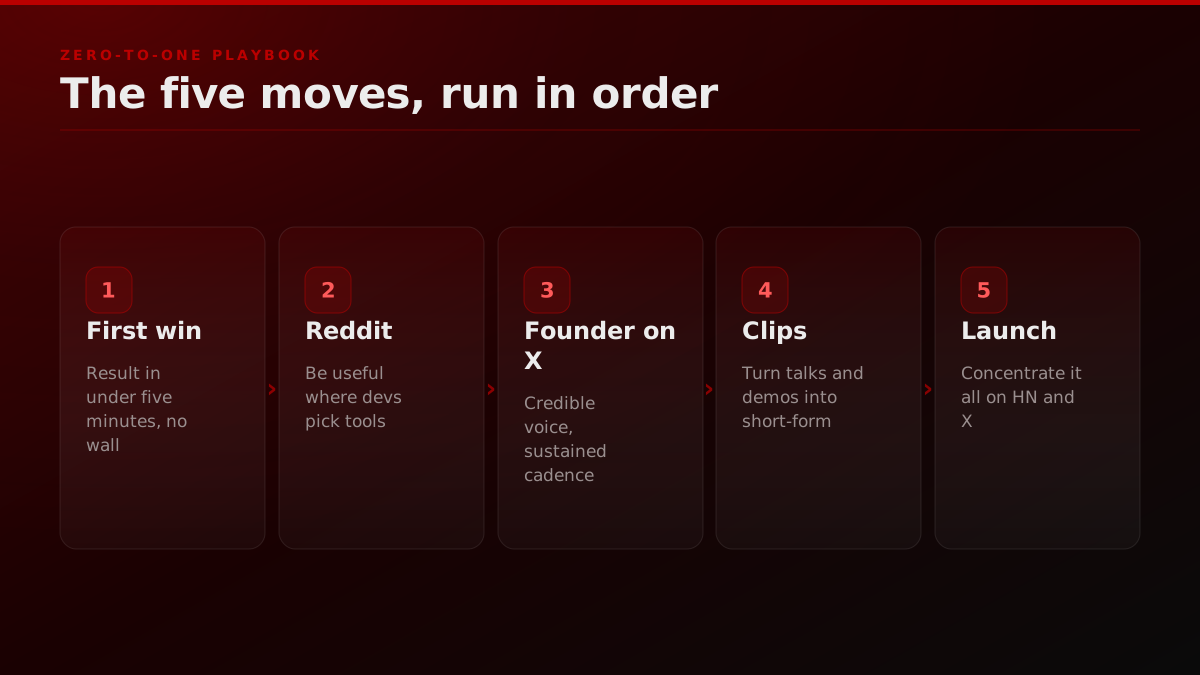
Move one, collapse the time to first win. Open your own quickstart on a clean machine, one that does not already have your CLI, your keys, or your mental model installed, and time it with a stopwatch. If a developer cannot get something to deploy, return a real response, or render a result inside five minutes with no signup wall, fix that before you touch a single distribution channel. Run the audit like a product, not like a doc review, watch a real developer follow the quickstart cold and note every place they hesitate, re-read, or open a second tab. Those hesitations are your leak. Vercel built an empire partly on deploy-from-GitHub in minutes with no tour, and Supabase and Stripe are studied for the same reason, the first five minutes feel like progress rather than setup. A free tier that times out before the test finishes, a quickstart that assumes a stack the developer does not run, a required credit card before the first call, each of these quietly kills the funnel above it. This is the single highest-leverage move in developer relations, because every channel below is a funnel into an experience that either works in five minutes or does not.
Move two, be useful in the right subreddits. Find the communities where your buyers already ask which tool to use, and answer real questions without pitching. The discipline here is uncomfortable for a founder, you spend weeks being genuinely helpful in threads that have nothing to do with your product before you ever mention it, and when you do mention it, it is because it is the honest answer to a specific question, with the disclosure that you built it. This is slow trust, it deposits over days and weeks as threads index and get found in search, and it is the most durable channel you have because a good answer keeps converting for years after you write it. The fastest way to waste this channel is to treat it as an ad slot, post a launch announcement, get downvoted, and in the worst case get the account banned, which is why a first-party map of which communities reward help and which auto-remove promotion is worth more than the posting itself. This is the core of what a Reddit marketing engagement for a developer platform looks like, being genuinely useful in the right threads at a cadence a founder cannot sustain alone.
Move three, run founder-voice on X. Publish in the founder's real voice at a sustained cadence, three to five times a week, technical, specific, and occasionally wrong in public. Show the bug you hit, the benchmark that surprised you, the design decision you reversed. The audience detects a ghost-writer inside fifty words, so the writing itself cannot be delegated to a copywriter, though the production around it, the clip cutting, the scheduling, the thread formatting, can and should be. Founder-voice is the channel that makes every other channel warmer, because a developer who has read the founder thinking in public for a month arrives at the docs already half-convinced the product is built by people who understand the problem.
Move four, turn talks and demos into clips. Every conference talk, office-hours session, livestream, and product demo is raw material for short-form video that reaches developers where they already scroll, off your platform and inside the feeds. Most developer platforms record a talk, upload the full 40-minute video, and let it die at 200 views. The teams that win cut that one talk into a dozen 30-to-90-second clips, each answering a single question a developer would search for, and distribute them across the feeds over weeks. This is where clip distribution turns a one-time talk into months of compounding reach, and it is the FORKOFF distribution muscle, the same one behind the 5B+ views processed on the network, applied to a developer audience.
Move five, launch to concentrate it all. Only after the first four moves are real do you launch, because a launch is a lever that multiplies whatever is already there. Launch on Hacker News with something runnable, not a landing page, launch on platforms beyond Product Hunt that reach developers specifically, and launch on X where a launch can go viral if the first four moves have already built the audience that carries it. A launch into an empty room converts nothing. A launch on top of a fast first win, a seeded subreddit presence, a founder audience, and a stack of clips converts a burst of scrutinizing developers into your first real cohort. The pre-launch demand and Product Hunt timing guides cover the mechanics of the launch moment itself.
Even the largest platforms run a version of this, and the demand for people who can is loud. A developer advocate at a hyperscaler put the staffing reality plainly.
Ifeanyi (REXTECH)
@ifeanyi_otuonye
Yo! My team is hiring crazy right now at @awsdevelopers! Looking for Developer Advocates on all levels. We also got Developer Marketing roles out for ICs & Managers
That is a hyperscaler hiring developer advocates and developer marketers at every level. At a startup you cannot outspend that, so you out-focus it, you pick the two channels your specific developers actually use and you are genuinely excellent there, rather than mediocre everywhere. The founder new-media distribution playbook goes deep on running the X and clip layers as a founder without a media team.
Operator noteA ghost-written founder post is detected in 50 words. The credible voice has to be the founder's.
When should a startup hire its first developer relations person?
A startup should hire its first dedicated developer relations person once a founder has already proven that a specific channel converts developers, and the founder can no longer keep up with the volume that channel is producing. That is the whole rule. Hiring before you have a validated channel means paying a full-time salary to produce content for a motion nobody has shown works, and DevRel is expensive enough that a wrong early hire can cost a quarter of runway. Hiring after validation means handing a proven, running channel to someone whose only job is to make it bigger, which is a far safer bet. The trigger is not a fundraise or a headcount plan, it is evidence.
The signals that you have crossed that line are specific and worth watching for.
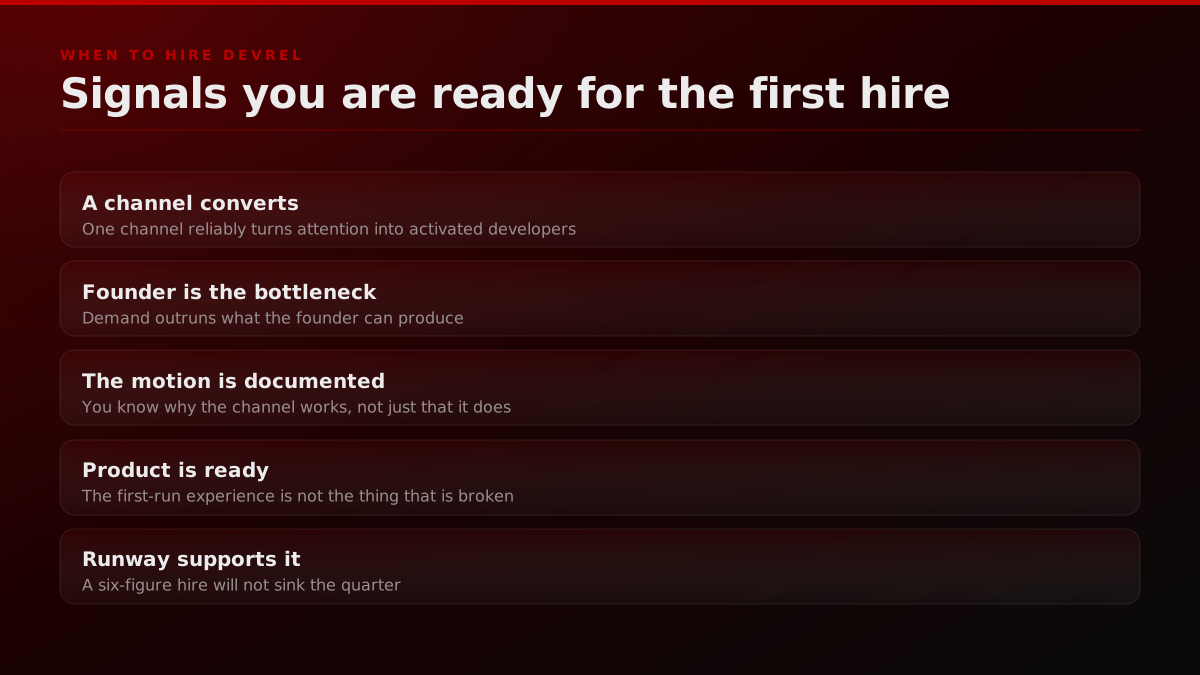
The cost math is why the timing matters so much. A dedicated developer advocate or DevRel lead in the United States is a six-figure hire, base compensation commonly lands in a wide band from roughly the low six figures to well over 180,000 dollars depending on seniority and location, per public compensation data on Levels.fyi and Glassdoor. Loaded with equity and overhead, one DevRel hire can absorb a meaningful slice of a seed-stage burn. Spending that on a channel nobody has validated is the most expensive way to learn that the channel does not work. Spending it to pour fuel on a channel a founder has already proven converts is one of the best growth investments an early platform can make. Same salary, opposite expected value, and the only variable that changed is whether you hired before or after validation.
The skeptic's case is worth taking seriously here, because the Hacker News threads on DevRel are full of engineers who watched well-funded teams add advocates and still ship a platform developers found painful. One commenter, reflecting on a hyperscaler, said maybe he was the idiot for ever thinking a large, well-paid DevRel team would make the platform less of a nightmare to use. The lesson is not that DevRel is worthless, it is that headcount without a working distribution loop and a good product is theater. Hire DevRel to scale a motion that already works, never to invent one from scratch, and never as a substitute for fixing a first-run experience that developers already find painful.
Operator noteHire DevRel after a channel converts, not before. Headcount is not a distribution loop.
There is also a market saturation reality to price in. The developer audience is increasingly building for itself, which makes standing out harder and distribution more valuable, not less.
Vineer
@vineerpasam
Every developer I know is building an AI startup. Who's left to be the customer?
Developer relations versus developer marketing versus a distribution partner?
Developer relations, developer marketing, and a distribution partner are three answers to the same question, who runs the motion, and the right answer depends on the founder's time and the stage of the platform. Developer marketing is the broad discipline, everything from positioning to the AI-answer-engine surface. Developer relations is the trust-and-community layer inside it. A distribution partner is an outside operator who runs the channels for you. At a startup these collapse into a single practical decision, does the founder run it, do you hire for it, or do you buy it, and the honest answer is usually a hybrid that keeps the credible voice in-house and buys the production and reach.
One Hacker News commenter reduced the whole category to its core, and it is worth confronting rather than dodging.
DevRel is marketing that targets developers.
Pretending developer relations is not, at its core, distribution to developers is exactly why teams under-resource it and then wonder why nobody found the launch. Own the goal openly and the staffing decision gets clearer. Here is the build-versus-buy grid.
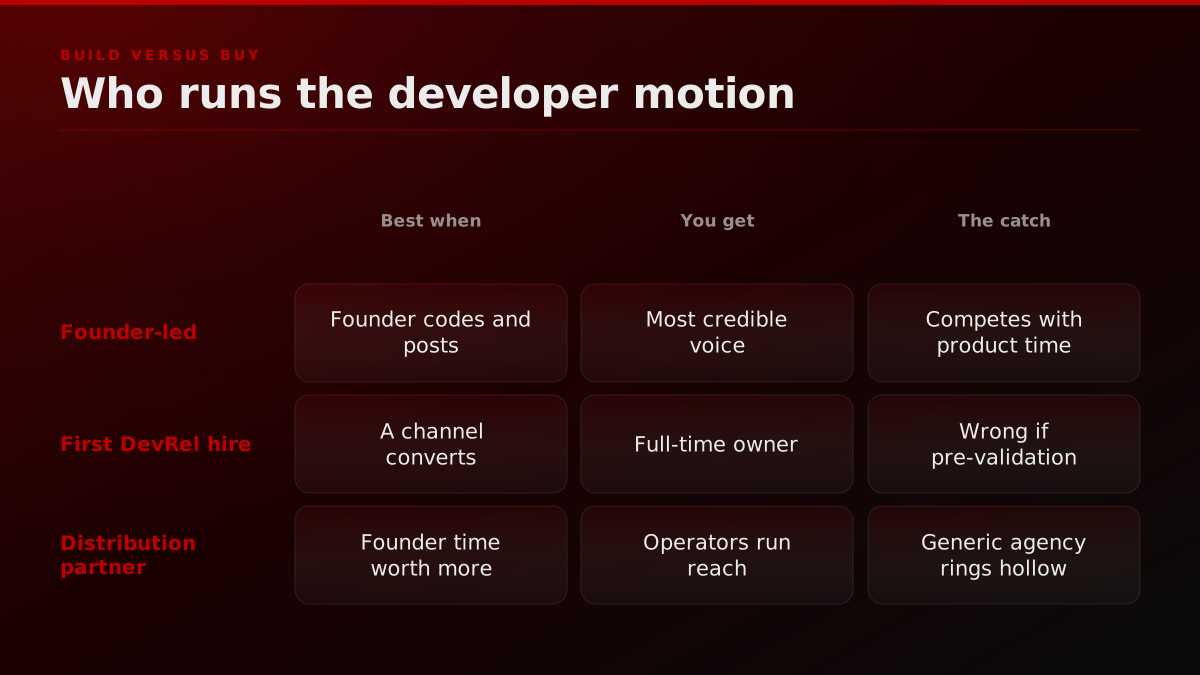
The comparison in full, with the catch for each option spelled out, because the catch is where the decision actually lives.
DevRel hire versus developer marketing versus distribution partner
| Option | Best when | What you get | The catch |
|---|---|---|---|
| Founder-led DevRel | Founder codes and will publish for a year | The most credible voice, at zero cash cost | Competes with product time, caps at the founder |
| First DevRel hire | A channel converts and the founder is maxed | A full-time owner for a validated motion | Fund an unproven channel if you hire too early |
| Distribution partner | Founder time is worth more on the product | Reddit, clips, launches, AI visibility run for you | Generic agency cannot read code, rings hollow |
The build-versus-buy call for early-stage developer relations. Keep the technical voice with the founder in every column.
A real developer platform account of running this motion is more useful than any framework. Appsmith, an open-source developer platform, walked through how they actually acquired users for a developer tool, and the pattern matches, first-win, community, and content ahead of paid.
How to acquire users for your developer tool? with Rishabh Kaul (Appsmith)
crowddotdev
Appsmith on acquiring users for a developer tool, a real developer-platform account of the motion.
If you decide to buy the distribution layer, the DevRel agency versus full-funnel distribution guide is the buying framework, and the general agency versus in-house hire breakdown covers the economics. The one rule that survives every option, keep the credible technical voice with the founder, and buy the reach around it. A generic B2B agency that cannot read the code will produce content that rings hollow to a developer inside a paragraph, and that broken trust is expensive to recover.
How do you measure developer adoption?
You measure developer adoption by the funnel, not by the vanity total. GitHub stars and social impressions are lagging trust signals, pleasant to watch and useless to steer by. The numbers that steer a developer platform are the ones between attention and a second developer, sign-ups, time to first win, activation from first success to a real production deployment, and the share of activated developers who bring a colleague. That last one is the flywheel, because peer referral is the channel that converts best on a developer offer, so a rising second-developer share means the whole motion is compounding rather than leaking.
The funnel to instrument looks like this, and each stage has a different failure mode.
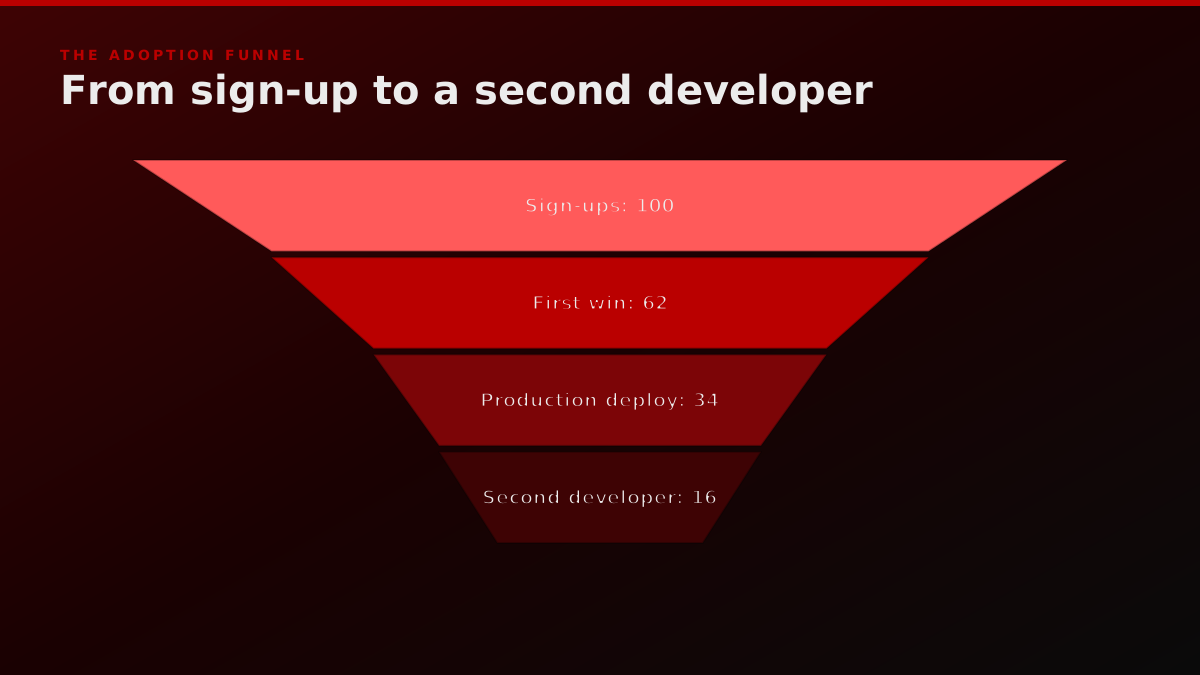
The second-developer share deserves its own attention because it is the only metric on the list that is genuinely a flywheel. Sign-ups, first win, and activation are things you push developers through. The second developer is a developer choosing, unprompted, to bring a colleague, and that only happens when the product plus the experience around it crossed from useful into worth-recommending. When that share climbs, every dollar of attention you buy or earn is quietly worth more, because each activated developer now returns a fraction of another. When it stalls, you have a product people tolerate rather than love, and no amount of top-of-funnel spend fixes that, it just fills a leaking bucket faster. Track it as a cohort, the share of each month's activated developers who bring a second developer within 60 days, and treat a rising line as the clearest signal that the whole developer relations motion is compounding.
The gap between a top-quartile developer platform and a median one, on identical traffic, is almost entirely in this funnel, not in the top-line traffic number. Two platforms can pull the same attention and convert it into wildly different activated-developer counts, and the difference is time to first win plus the trust the channels above deposited. There is a content dimension to this too, for a developer platform the blog, the docs, and the tutorials are not marketing extras, they are part of the product, the thing a developer bookmarks, cites, and shares is a tutorial that solves a real problem or a postmortem that is honest about what broke, not a high-level overview. Postman's engineering blog and the way GitHub and Glitch treat their first-run experiences are studied for exactly this, the content reads like a technical team sharing what it learned, which is why developers trust it. The three numbers worth running against every week are narrow.
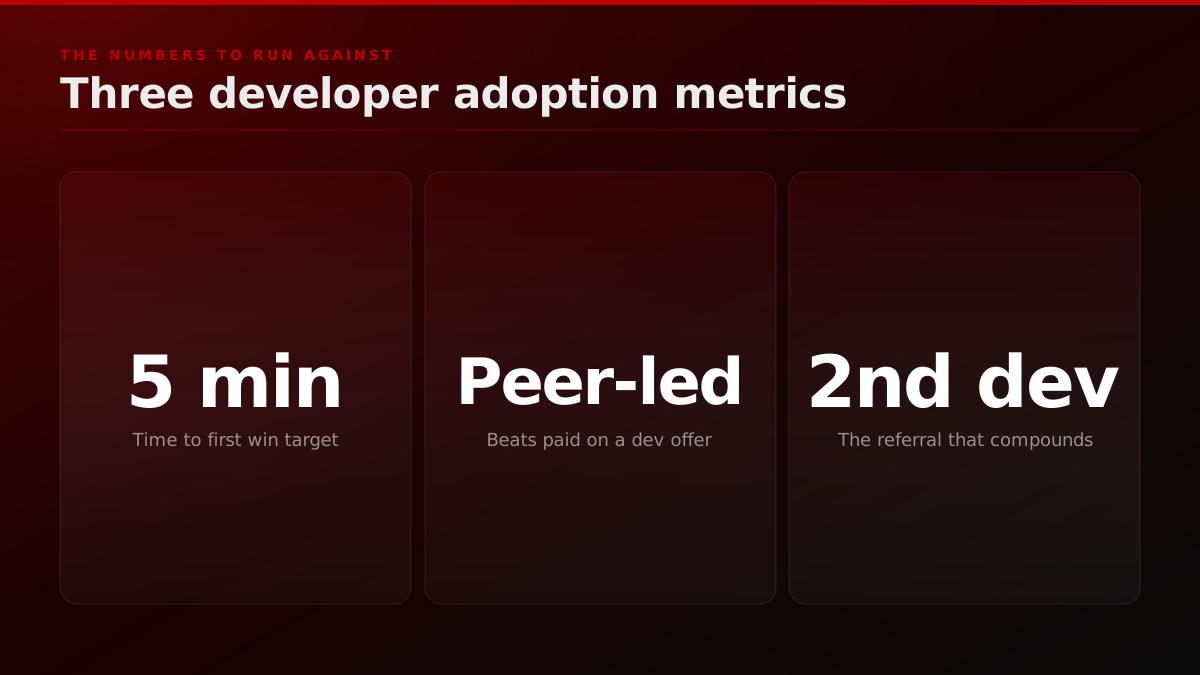
Track these and the strategy decisions get obvious, a low time to first win with high sign-ups and low activation means the product's first five minutes are broken, high activation with low referral means the product works but nobody loves it enough to share, and low sign-ups with high activation means the distribution layer is too quiet. For the AI-answer-engine slice of measurement, whether ChatGPT and Perplexity surface your platform when a developer asks for a tool in your category, the how to get cited by ChatGPT guide covers the citation surface that increasingly sits above the whole funnel.
The reason the funnel keeps pointing back at the product is the same reason a founder shared after three years stuck at the same revenue, you cannot outmarket a broken product. When the numbers say the distribution is working but activation is not, the fix is upstream, in the first five minutes, not in more posting.
6 habits that took my SaaS from $40K to $72K MRR in 12 months
You cannot outmarket a broken product. Trial to campaign creation rate went from 20% to 50% after we fixed a backend problem I kept ignoring while pouring budget into marketing.
The bottom line on developer relations for startups
Developer relations for a startup is a distribution motion a founder runs, not a job description a startup fills. The platforms that win their first 1,000 developers collapse the time to first win, then compound trust across the channels developers actually check, Reddit, Hacker News, X, and clips, before they spend on ads, and they hire a dedicated DevRel person only after a channel has proven it converts. The order is the whole game. A great product with a silent distribution layer loses to a comparable product that shows up where developers decide, in the week they are deciding.
If your platform is good and quiet, the fix is not another feature, it is the distribution layer. That is the work FORKOFF does for developer platforms, seeding the right subreddits, running founder-voice on X, cutting clips from your talks and demos, and making you citable when a developer asks an AI which tool to use, on an outcome-priced basis with the credible voice kept with your founder. Start from the founder-led growth playbook if you want the wider frame, or from the founder-growth blog for the full library, and treat the first win as the thing you fix this week.


![How to Make a Launch Go Viral on X: The 5-Lever Playbook [2026]](/blog/covers/how-to-make-launch-go-viral-on-x-2026-cover.jpg)