A startup launch video should get 100,000 views at the floor and can reach 1,000,000, and that range is not luck. It is bought. Reach is priced on real delivered views and assembled through a vetted creator roster chosen for audience quality and sales power, then multiplied across feeds by clipping. How much of that ladder you can buy depends on the tier you are at, which our product launch ideas by budget breakdown covers from a $0 founder launch to a $50k program.
The short version
A startup launch video in 2026 should clear 100k views at the floor and can reach 1m, and that range is not luck. It is bought. Reach is priced on real delivered views, a creator's recent median views stripped of bots and multiplied by audience quality, then charged at a niche CPM, never on follower headlines. The play is a vetted creator roster assembled for two things buyers underrate, audience quality (how many high-intent people actually follow) and sales power (whether that audience moves when the creator speaks). One launch video is then multiplied into hundreds of platform-native cuts through clipping, so the same asset earns reach across many feeds instead of one. The first-party benchmark behind this is the FORKOFF clipping network, which has processed 5B+ views. This guide gives the view benchmark, the pricing math, how to read a creator's real numbers, how to size a roster for a 100k, 500k, or 1m target, and the launch-week sequence that makes the views land.
There is a question every funded founder asks the week before a launch and almost nobody answers honestly: how many views should this video get, and how do we actually get them? The internet is full of advice on how to make the video. Hooks, pacing, the first three seconds, the screen recording set to a trending sound. Almost none of it tells you the thing that decides the outcome, which is what happens to the file after you post it. A launch video does not earn 500,000 views because it was shot well. It earns them because there was a distribution engine behind it that put it in front of the right feeds at the right moment. This guide is about that engine.
The engine has a name in practice even if no ranking page uses it. It is a creator roster, a set of accounts whose audiences you rent for a launch window, priced on the real views they deliver rather than the followers they list, and selected for whether their audience is the kind that buys. Layered on top is clipping, which takes the one video you made and turns it into hundreds of native cuts so the same asset earns reach across many feeds instead of betting everything on a single post. Put those two together and the 100k-to-1m range stops being a hope and becomes a plan with a budget attached.
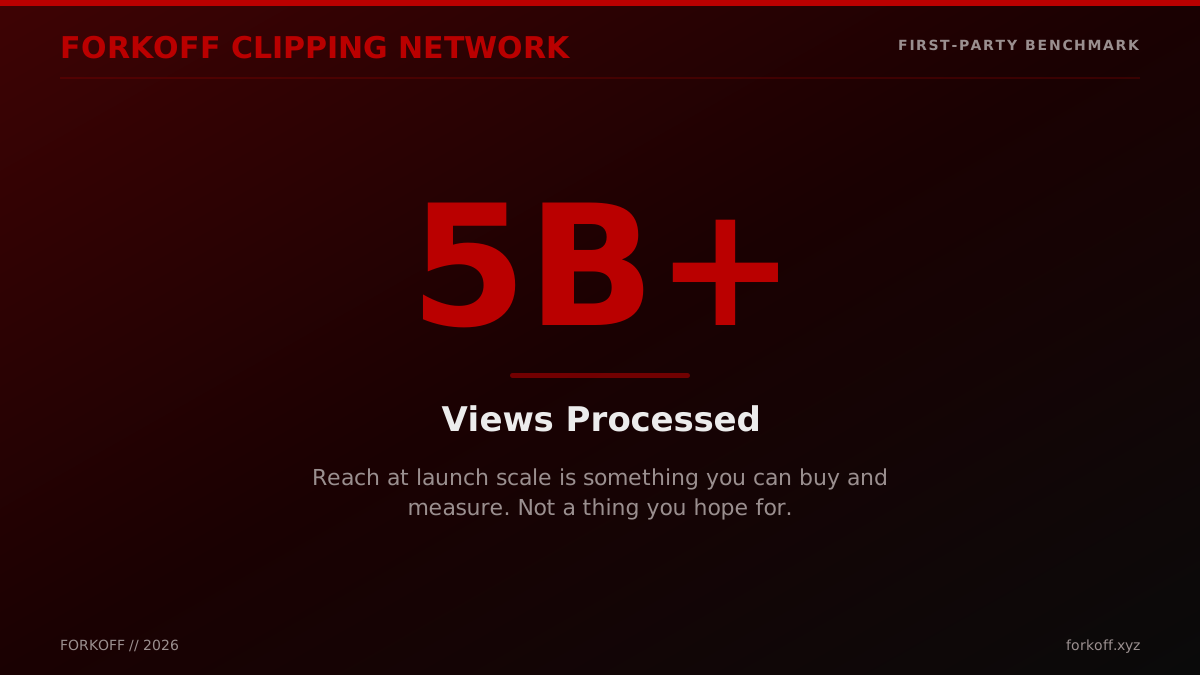
The first-party number that frames everything below is plain. The FORKOFF clipping network has processed 5B+ views moving short-form across platforms. That is not a marketing line, it is the reason the rest of this is written from receipts rather than theory. Reach at launch scale is a thing you can buy, measure, and predict, which is exactly why it can be priced. Most of the founder anxiety around launches comes from treating reach as weather. It is closer to logistics.
Operator note5B+ views processed through the FORKOFF clipping network is the first-party reach benchmark behind every number in this guide.
Okara
@askOkara
how to get 100k-1m+ views on your launch video 1. create a launch video. you can hire someone to make it or create one yourself using screen studio. we made the video below using screen studio 2. use our influencer agent to reach out to 100+ x creators 3-4 days before your
How many views should a startup launch video get?
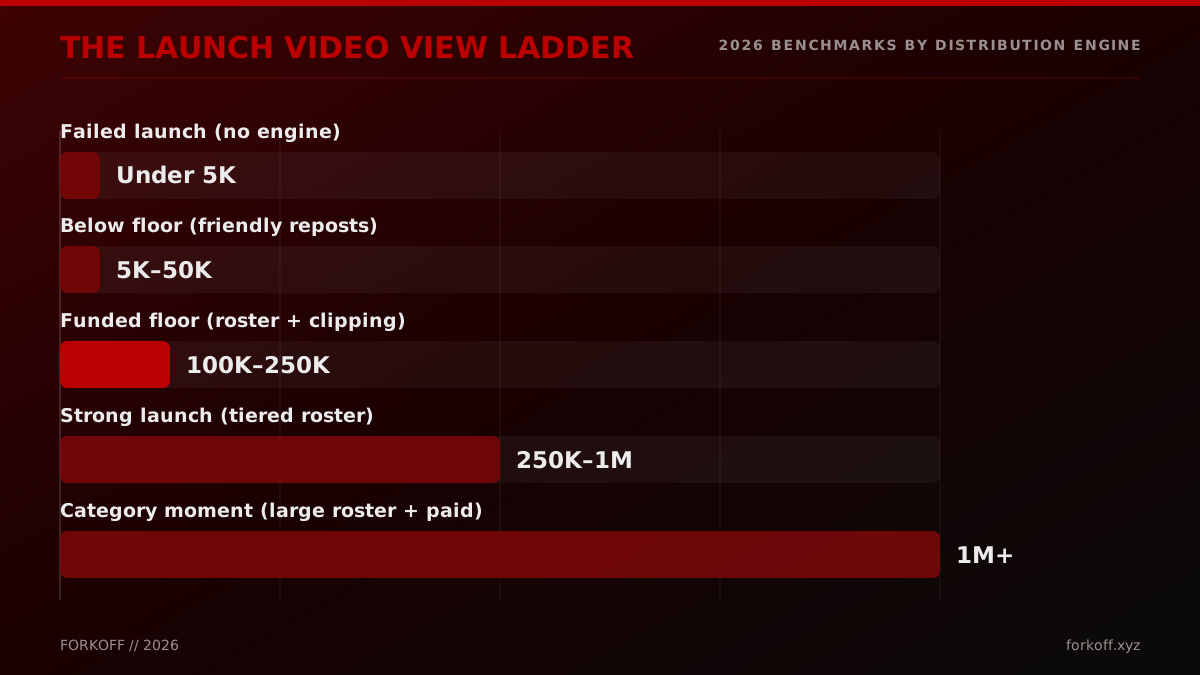
A funded startup launch video should clear 100,000 views as a floor and can reach 1,000,000 or more when there is a real distribution engine behind it. That is the answer, stated as a benchmark, and the spread inside it is information. Under 5,000 views means the video reached almost no one beyond your own followers, which almost always means it was posted cold. Five to fifty thousand views means there was some organic pickup but no engine, a founder account and a handful of friendly reposts. One hundred thousand is the floor that says a launch actually happened. Two hundred and fifty thousand to a million is the range a tiered creator roster plus clipping can realistically produce. Above a million, the launch crossed into the broader feed and became something people quoted.
How many views should a startup launch video get in 2026?
| Outcome | View range | What it usually means | Realistic mechanism |
|---|---|---|---|
| Failed launch | Under 5,000 | The video reached almost no one outside your own followers | Posted cold, no roster, no seeding |
| Below the floor | 5,000 to 50,000 | Some organic pickup, no distribution engine behind it | Founder account plus a few friendly reposts |
| The floor for a funded launch | 100,000 to 250,000 | A real launch moment with reach bought and earned | Small vetted roster plus clipping plus owned channels |
| A strong launch | 250,000 to 1,000,000 | The video became a cluster event people quoted | Tiered roster, wave-riding, paid amplification on winners |
| A category moment | 1,000,000 plus | The launch crossed into the broader feed | Large roster, heavy clipping, a genuinely sharp hook |
Ranges are directional 2026 benchmarks from founder threads and creator-marketing data, not guarantees. The view a launch earns is a function of the distribution behind it, not the production budget.
The reason the benchmark matters is that it reframes the whole budget conversation. If you believe a great video earns views on its own, you spend the entire launch line on production and treat distribution as something that will happen. If you accept that views are a function of the engine, you spend on the engine and treat production as the cheaper input it has become. The data backs the second view. Wyzowl's State of Video finds 91% of businesses now use video as a marketing tool and 85% of people say a video has convinced them to buy, and HubSpot's video marketing research reports similar buyer pull, which means the video is no longer the differentiator. Everyone has one. The differentiator is whether anyone watches yours.
It helps to be honest about the failure case, because it is the most common one. A founder spends months in stealth, ships a launch video, and it lands to a few hundred views. The video was probably fine. It never got a fair test, because it never reached an audience large enough to test it. That is not a production problem you can edit your way out of. It is a distribution gap, and the only reliable way to close it is to arrange the reach before launch day rather than refreshing the analytics after.
A founder ive been speaking to has been in stealth mode since january and finally released his launch video yesterday. It got a grand total of 234 views and one retweet.
Why follower counts are the wrong way to buy launch reach
Followers do not predict reach, and buying launch distribution on follower counts is the single most expensive mistake founders make. A creator with 500,000 followers can post to a median of 8,000 views because the audience went dormant or was partly inflated to begin with. A creator with 30,000 followers can median 40,000 views because their audience is alive and shows up. If you build a roster on the follower headline, you are paying for a number that has almost no relationship to the attention you will actually receive. The market already knows this. As the 2026 YouTube creator sponsorship rate guide states flatly, brands are buying views, not followers.
brands are buying views, not followers.
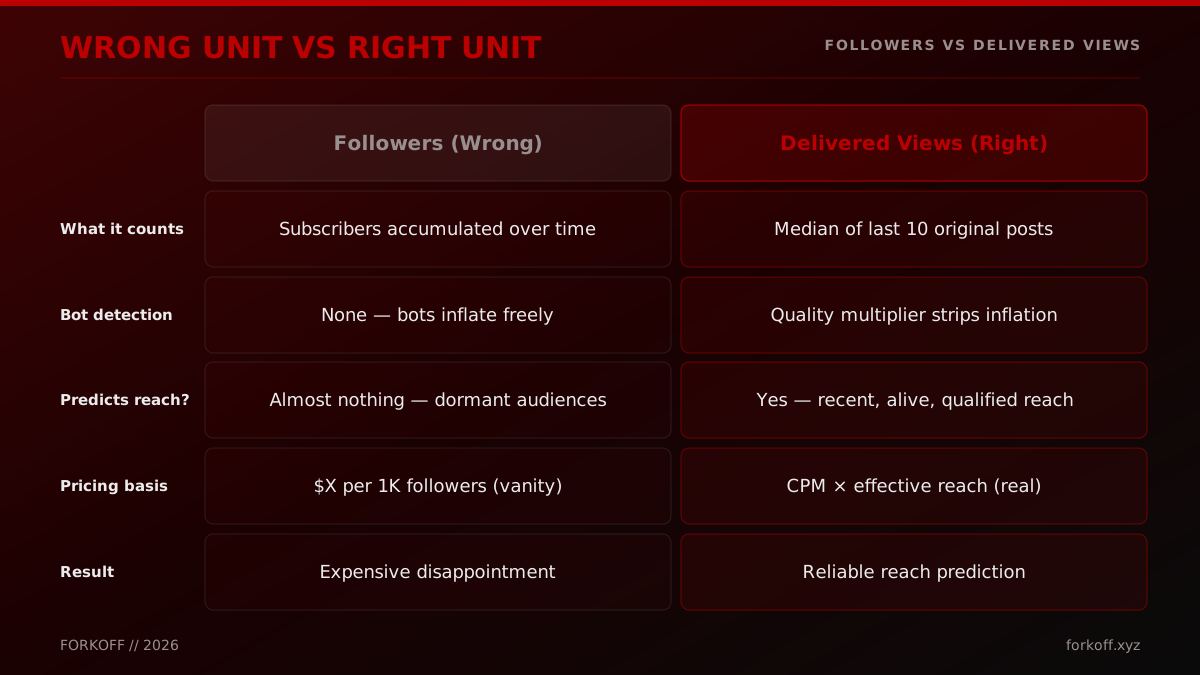
The correct unit is recent delivered views, and the correct adjustment is quality. A creator's reach anchor is the median views of their last ten original posts, not their best-ever spike and not a number from two years ago. Then you strip that down to the audience that actually exists and could plausibly buy. Heavy bot engagement, a view count wildly out of proportion to likes, a dead audience that never interacts, an audience in the wrong geography or the wrong niche for your buyer, each of these bends the real value of the reach downward. What remains after that adjustment is effective reach, the bot-stripped, fit-adjusted audience you are genuinely renting. That is the number worth paying for, and it is the number a follower count hides rather than reveals.
Operator notePricing is effective reach: median views times a quality multiplier that strips bots and off-fit reach. You pay for delivered buyers.
This is also why a small clean creator can out-deliver a large botted one for the same dollar. The smaller account, if their audience is real and engaged and the right kind of person, sends you qualified attention that converts. The larger account, if half their reach is inflated and the rest scrolls past, sends you a vanity impression number and very little else. Pricing on effective reach rather than followers is what lets you tell the two apart before you spend, instead of after.
What is the creator-roster approach, exactly?
The creator-roster approach is buying launch reach as a coordinated set of creator placements rather than hoping the video spreads from your own account. Instead of posting once and praying, you assemble a roster of accounts whose audiences fit your buyer, brief them on the launch, and have them post in a tight window around your drop so the feed reads your launch as a cluster event rather than a single tweet. It is the difference between one voice and a chorus, and platforms reward the chorus, because a burst of independent posts about the same thing in a short window is exactly the signal their ranking systems treat as momentum.
Buying reach through creators is now the mainstream launch move
86% of US marketers partnered with influencers and creators in 2025, and 74% plan to increase that budget in 2026, per Sprout Social and SociallyIn. Creator distribution is no longer experimental. It is how funded teams reliably put a launch in front of an audience, which is exactly why the launch video has shifted from a production question to a distribution question.
Source: Sprout Social and SociallyIn, 2025 to 2026
This is now the mainstream move, not a growth hack. Sprout Social's influencer research reports 86% of US marketers partnered with creators in 2025, and that 69% of them say creator-published content outperforms brand-directed content. The reason is structural. A creator's audience chose to follow that person and trusts their feed, so a launch arriving inside that relationship lands warmer than the same message broadcast from a brand account a stranger has no reason to trust. You are not just renting reach. You are renting context and credibility, which is why creator-published video consistently beats the same asset posted from the company handle.
The public version of this playbook is everywhere if you know where to look. Operators describe lining up dozens or hundreds of creators to post around a launch, and the results they report are not subtle. One operator broke down an AI app that reached a nine-figure view count in a month through creator content alone.
an AI app hit 132 million views in 30 days through organic creator content alone. 2.1 million shares. no paid media behind either number.
That is the upper bound of what coordinated creator distribution can do. The point of a roster is not to chase the nine-figure outlier, it is to make the 100k-to-1m range reliable, which it becomes once the reach is arranged in advance rather than left to chance. For the broader frame of how a launch is a distribution system rather than an event, the three-ring distribution model and the launch video readiness checklist are the companion reads, and 13 marketers on the content distribution move shows the same thinking applied across operators.
How is launch reach priced? Delivered views, not follower headlines
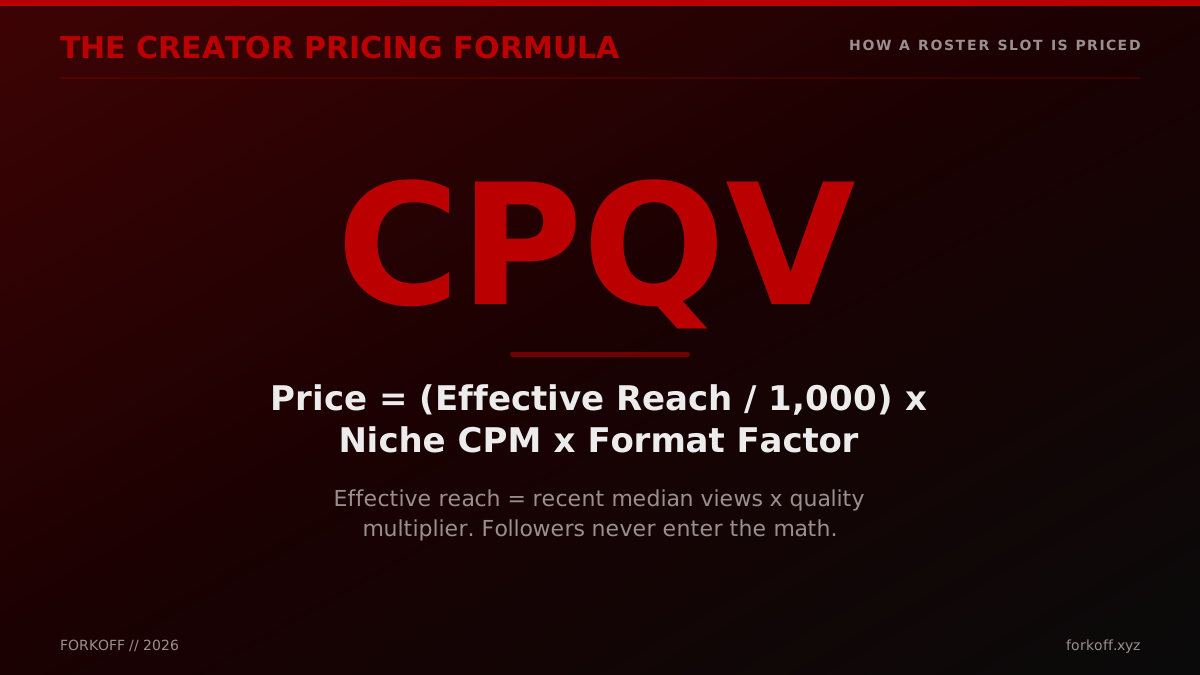
Launch reach is priced per creator as effective reach over 1,000, times a niche cost per 1,000 impressions, times a factor for the format and the deal terms. That is the whole formula, and the discipline is in refusing to let a follower count anywhere near it. Effective reach is the creator's recent median views multiplied by a quality score that strips out bots, dead audiences, and off-fit reach. The niche CPM is what 1,000 real impressions are worth in that vertical, and it varies a lot, because a thousand crypto or B2B founders watching is worth far more than a thousand entertainment viewers who will never buy software.
How a creator's price is actually built (delivered views, not followers)
| Input | What it is | Why it matters |
|---|---|---|
| Recent median views | The median views of the creator's last 10 original posts | The real reach you are buying, not the best-ever spike |
| Quality multiplier | Bot share, view-to-like ratio, audience aliveness, niche fit, geo | Strips inflated reach down to people who actually exist and care |
| Effective reach | Recent median views times the quality multiplier | The number that gets priced, the bot-stripped delivered audience |
| Niche CPM | Cost per 1,000 real impressions for that vertical | A crypto or B2B audience is worth more per view than entertainment |
| Format and terms | Single post, thread, exclusivity, usage rights, rush | The deliverable and the deal terms move the final number |
The model FORKOFF uses, in one line: fair price equals effective reach divided by 1,000, times the niche CPM, times a format factor, times a strategic factor. Followers never enter the formula except as a sanity check.
The niche CPM is where commercial intent gets priced. A crypto or DeFi audience carries a high CPM because the buyers have money and intent. Finance and fintech sit just below. B2B SaaS and founders, the core audience for most launches reading this, command a strong rate because the audience converts. General AI and tech sit a notch lower, marketing and ecommerce around the same, and broad entertainment reach is cheap precisely because the eyeballs rarely turn into buyers. Pricing on a niche CPM is what keeps a 20,000-view creator with a clean B2B audience correctly valued above a 200,000-view account full of disengaged entertainment reach. Independent sponsorship-rate guides put the same picture in numbers, with CPMs running from the high tens of dollars for small creators down to low double digits for the largest, which is exactly why a diversified roster outperforms one big name on cost. You can pressure-test any single quote against this with the KOL rate calculator, and the influencer marketing pricing tiers guide shows where the bands sit by audience size.
The market already prices reach on views, not followers
Creator pricing guides are blunt about the unit. As one 2026 rate guide puts it, brands are buying views, not followers, and the standard formula is average views divided by 1,000 times a niche CPM. A founder who buys a roster on follower headlines is paying for a number that does not predict reach. A founder who buys on recent delivered views is paying for the thing that does.
Source: Creators Agency, YouTube Sponsorship Rates 2026
The quality score is the part that does the real work, and it is multiplicative on purpose. Bot share, the ratio of views to likes, how alive the audience is, how well the creator's niche fits your buyer, the audience geography, brand safety, posting consistency, each is a separate factor, and they multiply rather than add. The reason is that failure modes compound. A creator who is both botted and off-fit and inflated should collapse toward zero value, not just lose three small deductions. Multiplying the factors encodes the rule that any one fatal flaw kills the price, while a clean creator keeps full value. It is also exactly how the vetting works in practice, because every filter you toggle is just one factor moving.
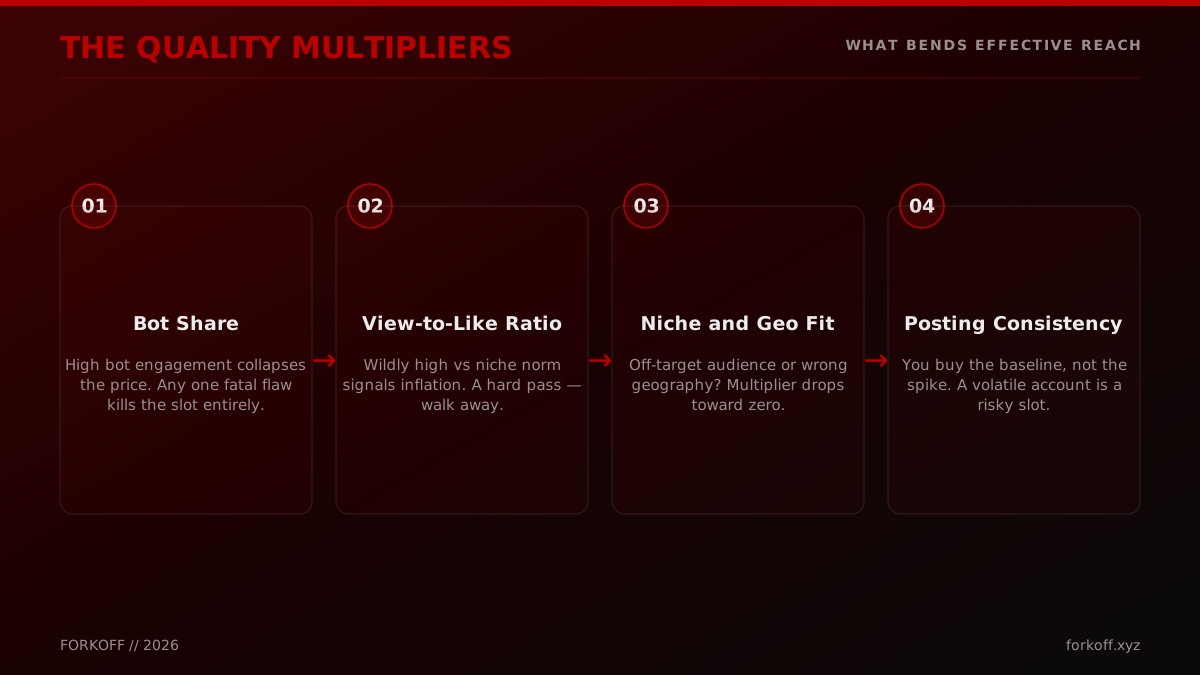
A worked example makes it concrete. Take a clean mid-tier AI creator with a recent median of 26,000 views, a healthy view-to-like ratio, a real and engaged audience, an on-target niche, and a US audience. Their quality score lands around 0.92, so their effective reach is roughly 23,920 delivered views. At a B2B-adjacent CPM, a single dedicated post from them is priced at a few hundred dollars, scaled up modestly for a thread or an exclusivity window. That is a defensible number, built entirely from what they actually deliver. Now compare an inflated whale with a 200,000-view headline but a view-to-like ratio that screams inflation and an engagement audience that is half bots. Their quality score collapses, their effective reach falls to a fraction of the headline, and the model prices them as a pass, not a premium. The follower count said premium. The delivered-views math said walk away. Telling those two apart before you pay is the entire point of pricing on effective reach.
How do you read a creator's real numbers?
You read a creator on two axes that the follower count obscures, audience quality and sales power, and a roster slot is won in the top-right of that grid, not the far right. Audience quality is how many of a creator's followers are real, awake, and the kind of person who buys what you sell. You read it from the things that are hard to fake at scale, the ratio of engagement to reach, how consistent the views are across recent posts rather than one viral spike, whether the comments are human and on-topic, and whether the audience geography and interests match your buyer. A high view count sitting on top of near-zero genuine interaction is a warning, not a green light.
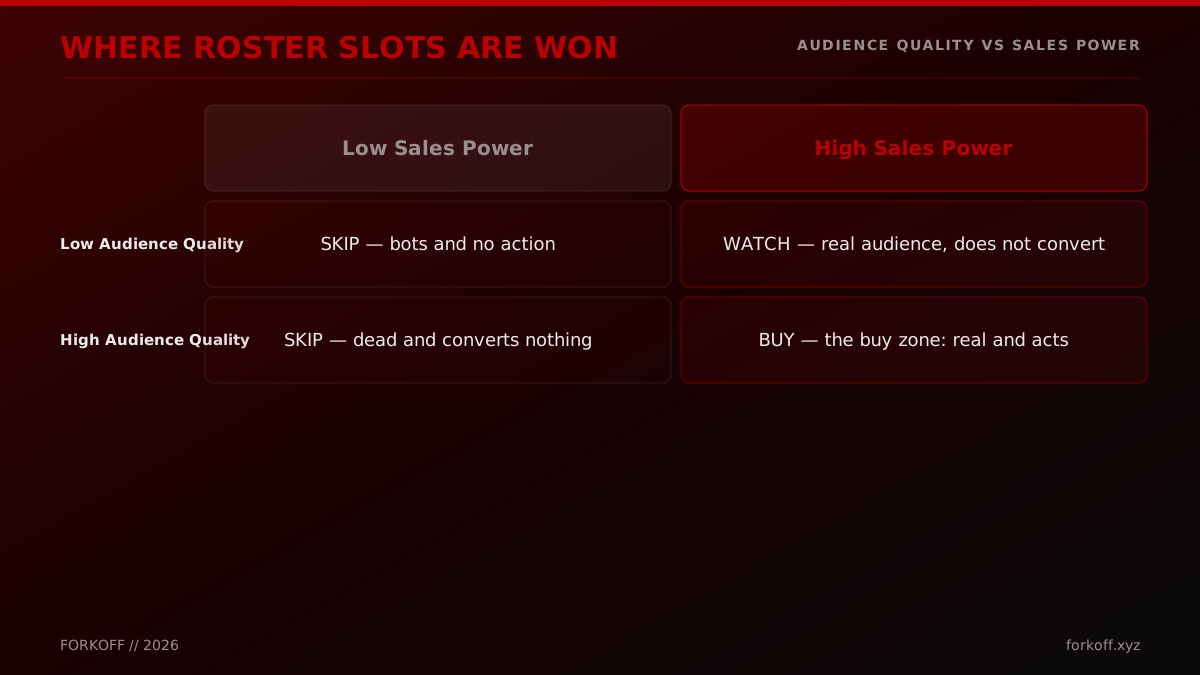
Sales power is the second axis and the one founders forget. It is whether the audience moves when the creator speaks. Some creators have large, real, engaged audiences who treat the feed as entertainment and never click. Others have smaller audiences who buy what the creator recommends because they trust them as a buying signal. For a launch, the second creator is worth more per view, because a launch video is trying to produce action, signups and trials and word of mouth, not just impressions. The best roster slots go to creators who score high on both axes, a clean buyer-heavy audience that also acts. That combination is rarer than raw reach and far more valuable, and it is invisible if you only look at follower counts. The FORKOFF creator engagement benchmark lays out what healthy engagement actually looks like across audience sizes, and the best crypto KOL marketing platforms guide shows the vetting applied to the placement layer.
Operator noteA roster is picked for audience quality, not size. A 20k-view creator with a buyer-heavy audience beats a 500k account half full of bots.
There is a sanity layer underneath both axes that catches the most common scams. A view-to-like ratio that is wildly high relative to the niche norm usually means inflated reach. It is the same views-to-likes read RADAR runs across real launches to tell organic reach from amplified. An account that posts in bursts with one giant spike and a flat baseline is volatile, not reliable, and you are buying the baseline, not the spike. A bio stuffed with promo links or a feed that is mostly paid placements means the audience is fatigued and your message will be one more ad in a stream of ads. None of this shows up in the follower number. All of it shows up if you look at the last ten posts the way a buyer should.
How do you size a roster for 100k, 500k, or 1m views?
You size a roster by working backward from the view target to the effective reach you need, then composing it in tiers so the launch reads as a cluster rather than a single big post. A roster is not one giant creator, it is a shape. A couple of anchors with high reach and clean audiences carry the first wave and signal the launch is real. A handful of mid creators build the cluster so the feed registers a moment. A larger group of sharp small creators add depth, credibility, and the best CPM efficiency, because tight, alive audiences punch above their size. The tiers cover each other, an anchor that underperforms on the day is cushioned by the cluster, which is the whole reason you spread the bet.
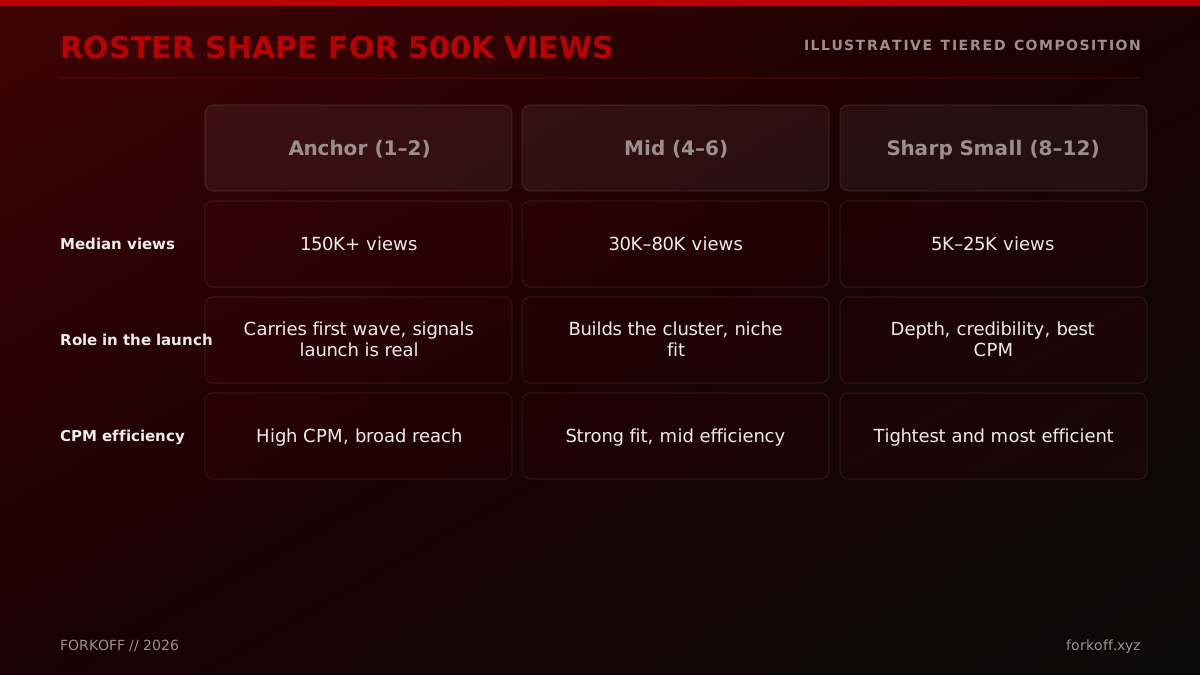
Example roster shape for a 500,000-view target
| Creator tier | Recent median views | Role in the launch | Why it earns its slot |
|---|---|---|---|
| Anchor (1 to 2) | 150,000 plus | Carries the first wave and signals the launch is real | High reach plus a clean, buyer-heavy audience |
| Mid (4 to 6) | 30,000 to 80,000 | Builds the cluster so the feed reads it as a moment | Strong niche fit and high sales power per view |
| Sharp small (8 to 12) | 5,000 to 25,000 | Depth, credibility, and the highest CPM efficiency | Tight, alive audiences that punch above their size |
Illustrative composition only. The real roster is assembled from vetted metrics per creator, and the spend is set against each creator's effective reach, not their follower count.
For the 100,000-view floor, a small vetted roster of six to ten creators, weighted toward sharp small accounts with one or two mids, plus clipping and your own warmed channels, will usually clear it. For the 250,000-to-500,000 range, you add anchors and lean harder on the mids, and you start wave-riding, watching which posts catch early and amplifying them. For 1,000,000 and up, you need a larger roster, heavier clipping across multiple platforms, and honestly a genuinely sharp video the feed wants to spread, because at that scale you are no longer just renting audiences, you are asking the broader algorithm to carry you, and it only does that for content that earns it. The Twitter viral launch view targets at each tier are summarized below, and the broader mechanics of crossing a million views on X are covered in the go viral on Twitter guide.
What it takes to hit each view target
| View target | Roster shape | Distribution mechanism | The real constraint |
|---|---|---|---|
| 100,000 | Small vetted roster, 6 to 10 creators | Roster posts plus clipping plus owned channels | A sharp hook and clean creator audiences |
| 250,000 to 500,000 | Tiered roster with anchors and mids | Cluster seeding plus wave-riding plus light paid | Audience quality and timing, not budget alone |
| 1,000,000 plus | Large roster plus heavy clipping | Multi-platform cuts plus paid on the winners | A genuinely quotable video the feed wants to spread |
Across every tier the binding constraint is distribution and audience quality, not production polish. A scrappy video with a great roster beats a polished one posted cold.
The composition also protects you from the thing that kills naive roster buys, overpaying for one big name. A single 500,000-view anchor feels safe and is usually the worst value on the sheet, because their CPM is high, their audience is broad, and if they post at a bad moment the whole launch leans on one swing. The tiered roster spends the same budget across more, better-fit creators and produces a denser, more credible cluster. It is the same logic that makes a diversified set of placements beat a single bet, applied to attention.
Why does clipping multiply a single launch video into hundreds of cuts?
Clipping turns one launch video into hundreds of platform-native cuts, which is how the same asset earns reach across many feeds instead of dying as a single post. A launch video shot once contains dozens of moments, the hook, the demo beat, the founder line, the before-and-after, the funny aside. Each of those can become its own short, edited natively for the platform it runs on, captioned for sound-off viewing, and posted across accounts and over time rather than all at once. One shoot becomes a vertical short for one feed, a square cut for another, a six-second hook for a third, and a longer cut for the platforms that reward it. The production cost was paid once. The reach compounds.
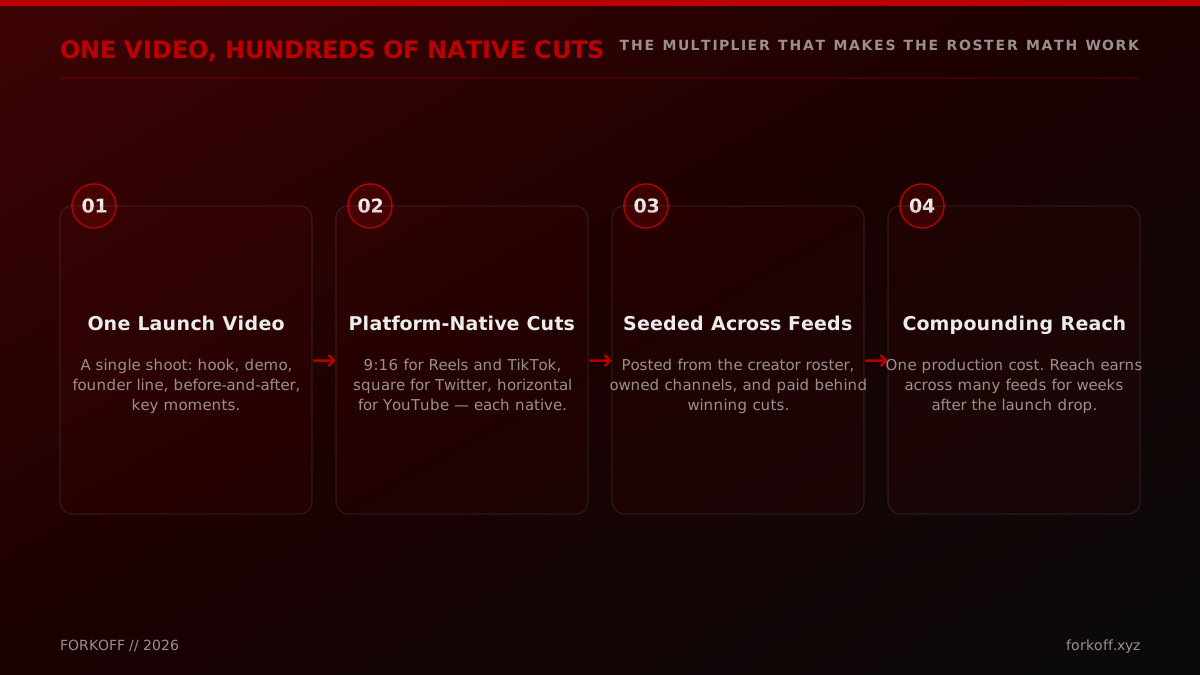
This is the multiplier that makes the roster math work at scale, and it is the reason the FORKOFF clipping network has processed 5B+ views, because clipping is fundamentally a volume engine. A roster gives you a burst of coordinated reach on launch day. Clipping extends that into a tail that runs for weeks, feeding the algorithm fresh native cuts long after the original post would have gone cold. It also de-risks the single-asset bet. If the hero cut does not catch, one of the thirty clips might, and you learn which framing works from the data rather than guessing. The clipping service page lays out the pipeline, the best clipping agency comparison shows how the model compares to alternatives, and podcast clipping applies the same engine to long-form. For the operators living the distribution-gated reality, the founder story below is the clearest version of why this matters.
Went from 0 to 3,000 customers in 3 days, here's the story
our launch video on X did 200k+ views. people absolutely loved it. the whole idea came from one core belief: building is no longer the bottleneck, distribution is.
What does the launch-week sequence actually look like?
The launch-week sequence is warm-up before the drop, a tight coordinated posting window at the drop, and wave-riding amplification after, in that order. The warm-up matters more than founders expect. In the days before launch you prime your own channels, tease the thing, get your account active so the launch post does not land cold, and you lock the roster, confirming who is posting, when, and with what cut. Creators get the assets and the approved framing in advance so launch day is execution, not scramble. This is the part the public playbooks emphasize, lining up the creators three to four days out and getting approvals before the window, because a roster assembled on launch morning is a roster that misposts.
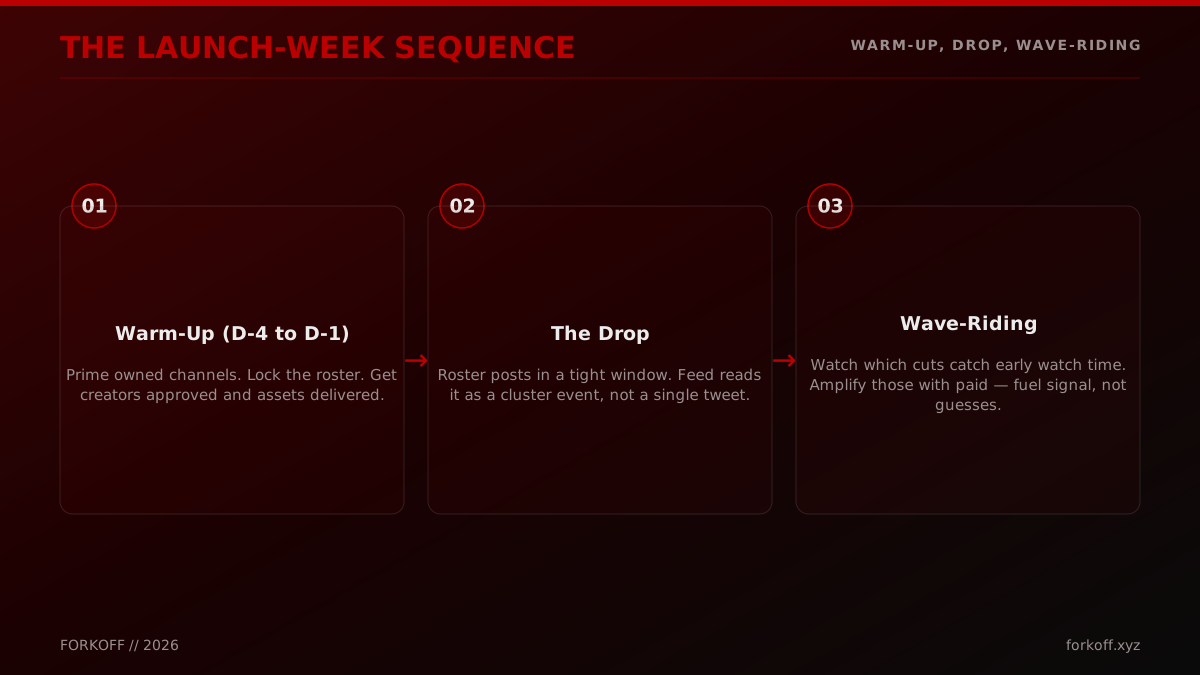
At the drop, the roster posts in a tight window so the feed registers a cluster. This is where the chorus beats the single voice. A dozen independent, credible accounts posting about the same launch inside a few hours is a momentum signal, and the platform widens the audience in response. Your own post anchors it, the clips start rolling, and the early watch data begins to tell you what is working. Then comes the part most founders skip entirely, wave-riding. You watch which creators and which cuts are catching real early watch time and you put paid amplification behind those specifically, pouring fuel on signal instead of guessing. You do not boost the post you wish was working. You boost the one the audience already chose. The product launch video service runs this sequence end to end, and the Twitter marketing and founder funnel layers handle the owned-channel side.
How to Market a Viral App (500K Downloads Playbook)
Florian Darroman
How a 500k-download app playbook runs 150-plus creator partnerships to generate tens of millions of views. The distribution logic behind these numbers mirrors the creator-roster approach this guide describes.
There is a hard technical reason the sequence is built this way. Platforms gate content at ingestion, showing a new video to a small seed audience and watching the first seconds and first minutes before deciding whether to widen it. Strong early retention and shares mean the audience grows in waves. Weak early signals mean a quiet cap the video never recovers from. Think with Google's video research is blunt that the early moments carry most of the outcome. A roster posting in a tight window manufactures strong early signals across many accounts at once, which is exactly what the gate is looking for, and clipping keeps feeding the gate fresh native cuts so you get many bites at the seed-audience test instead of one.
What does a 100k to 1m view launch realistically cost?
A launch's cost scales with the effective reach you are buying and the niche CPM, not with a flat package price, which is why honest budgeting is per qualified view rather than per video. A roster aimed at the 100,000-view floor is a meaningfully smaller line than one engineered for 1,000,000, because you are buying more effective reach and more creator slots for the larger number. Clipping changes the equation in your favor by letting one production spend earn reach across many cuts, so the cost per delivered view falls as the clip volume rises. The mistake is to think of it as buying a video. You are buying watched minutes, and the right comparison is what each genuinely watched, qualified view costs across production plus the roster.
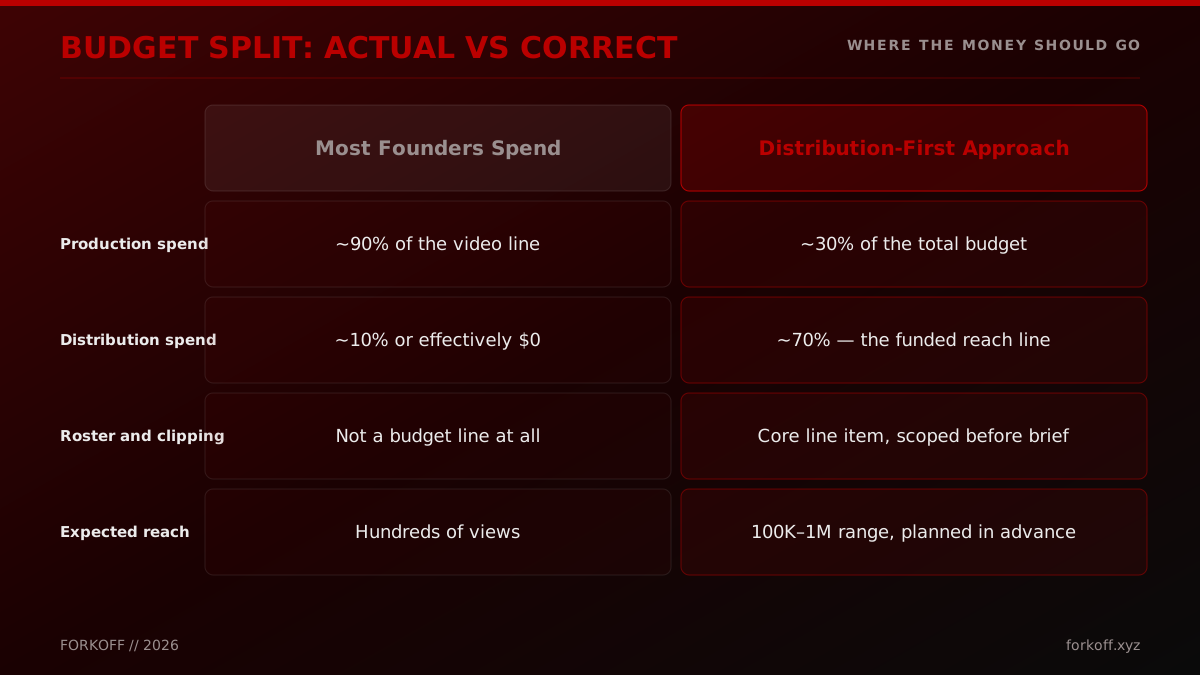
This is where most launch budgets are allocated exactly backward. Founders pour the whole line into the asset and leave nothing for the roster and the clipping, then wonder why a polished film produced a few hundred views. Production in 2026 is cheap and close to solved. A clean launch video can be made for a fraction of what it cost two years ago, even as Wistia's State of Video tracks businesses publishing more video per year than ever, which is the real source of the attention crunch. Attention is the scarce, expensive thing, which means the budget should weight toward the engine that buys attention, not the file. Model the real number before you commit with the cost per qualified view calculator, pressure-test individual creator quotes with the KOL rate calculator, check the campaign-level return with the marketing ROI calculator, and if you are running a creator payout model, the payout estimator sizes it. The cost question is covered in depth in what a launch video actually costs, and the best video marketing agencies guide ranks the production-plus-distribution field.
The return justifies treating it as a real line rather than an afterthought. SociallyIn's roundup of creator-marketing data puts average creator-campaign ROI at around 5.78 dollars per dollar spent, with the best programs far higher, and notes 74% of marketers are increasing creator budgets. Buying reach through a vetted roster is not a cost center you tolerate, it is a channel that returns, provided you buy on delivered views and not on follower theater.
When is the roster approach the wrong call?
Sometimes a full roster is the wrong move, and no agency pitch will tell you that, so here it is plainly. If you are pre-seed with runway you cannot spare and no real launch budget, do not assemble a paid roster. Ship a scrappy founder-shot video, seed it through your own network and the communities you already belong to, and revisit this when you have raised and have a window worth spending on. If your product is genuinely niche enough that the entire buyer universe is a few hundred people, broad creator reach is the wrong tool and direct outreach plus a few highly targeted placements will serve you better than a cluster. And if you have no clear hook, no reason the video is worth watching beyond the fact that you launched, fix that before you buy reach, because a roster amplifies whatever you give it, and amplifying a forgettable video just buys you a forgettable launch at scale.
The roster is also the wrong call if you treat it as a substitute for a product people want. Distribution makes a good thing visible. It does not make a weak thing good. The founders who win with this approach have something worth seeing and use the roster to make sure it is seen, which is a very different thing from using reach to paper over a product that has not found its audience. If you are unsure which situation you are in, the are Twitter launches a scam breakdown and the distribution-gated founder funnel reset are honest about where bought reach helps and where it does not.
Most launch videos die quietly, and not because they were bad
The common failure is not a weak video. It is a good video posted into a void. Founders describe it constantly, a launch that took months to build going live to a few hundred views and one repost. The video never failed an audience test, it never reached an audience to be tested. That is a distribution gap, and a roster is how you close it before launch day, not after.
Source: Founder threads, r/SaaS and X, 2026
How do you brief this so it actually works?
The single biggest predictor of whether the spend pays off is the brief, and a tight brief on four fronts removes most of the failure modes. Start with the goal stated as a number, not a vibe. Not a great launch but 250,000 qualified views from our buyer and 400 signups in launch week. A number forces every later decision, the roster shape, the cut lengths, the hooks, the amplification triggers, because now there is a target to design against. A team that cannot map its work to your number is telling you it does not think about your number.
Name the buyer and the moment precisely. Who specifically is this for, which feeds do they live in, and what mindset are they in when the clip catches them mid-scroll. That answer decides which creators belong on the roster, because audience fit is the factor that moves effective reach the most, and it decides how the clips are cut, because a buyer caught on a phone needs a different first second than a buyer who clicked through from your site. Then fix the roster criteria in writing, that creators are selected on recent delivered views, audience quality, and sales power, not on follower headlines, so nobody pads the sheet with a big dormant account.
Finally, scope the clipping and the amplification up front. Decide how many cuts come out of the shoot, who owns them, which platforms they are native to, and what the rule is for putting paid behind a winner. The most common budget leak is paying again later for the vertical cuts and platform versions that should have been scoped from the start, and the second most common is having no pre-agreed trigger for amplification, so the moment passes while everyone debates. Write the cuts and the amplification rule into the brief and the launch runs itself when the window opens. For the cross-channel comparison of where this sits among agency options, the best KOL marketing agency and the broader reddit marketing and KOL marketing layers round out the distribution stack, and when you are ready to map a plan, talk to us.
The verdict for a founder with a launch coming
If you are pre-seed and scrappy, do not buy a roster yet. Make a real video cheaply, seed it where you already have standing, and put your energy into the hook. If you are funded with a window and you want the 100k-to-1m range to be a plan rather than a wish, the roster approach is how you buy it, priced on delivered views, composed in tiers for audience quality and sales power, and multiplied by clipping so one shoot earns reach across many feeds. The benchmark is not the hard part. Hitting it on purpose is, and that is a distribution engineering problem with a known shape.
The reason FORKOFF builds it this way is not that the videos are prettier than anyone else's. It is that the question this whole category dodges, after the video is made, who actually sees it, is the one the roster and the clipping network exist to answer. FORKOFF runs production, the vetted creator roster, and clipping distribution as one system, backed by a network that has processed 5B+ views, and prices the engagement on outcomes rather than a retainer. If all you want is a beautiful file and you will handle reach yourself, hire a production shop and you will be happy. If you want the video and the audience that watches it, that is the kind of partner this guide describes. When you are ready to map the reach plan and the roster against your launch window, book a call.