KOL marketing rents you a large account's audience for the length of one post, paid as a flat fee, with high exposure to bots and rented followings and nothing left over once the post scrolls away. Clipping cuts your founder and product into many short videos seeded across owned and creator feeds, priced per genuinely-watched view, with traceable attribution and a clip library you keep. Those are two different purchases wearing the same label of "awareness," and if you are allocating a token launch budget you should stop treating them as interchangeable line items. This guide compares them on the five things that decide a launch: cost per real view, reach, speed, control, and believer quality.
The short version
KOL marketing and clipping both buy attention for a token launch, but they buy different things. A KOL post rents a large account's audience for the length of one post, priced as a flat fee, with high bot exposure and no asset left over. Clipping cuts the founder and product into many short videos seeded across owned and creator feeds, priced per genuinely-watched view, with traceable attribution and a clip library you keep. On directional 2026 numbers a top-tier KOL post costs roughly $400 per 1,000 real views while managed clipping runs near $3, and the metric that predicts a launch is believer quality, watch-time that converts to holders, not impressions. The honest answer is not either-or. Weight clipping for narrative and retention, add a vetted KOL layer for the TGE-week spike, and split the budget by launch stage.
The dishonest version of this comparison would tell you to pick one. We are not going to do that, and we should say why up front: FORKOFF sells clipping, so we have a side, and we are going to name exactly where a KOL still wins so you can weight our verdict against that bias. The short answer is that clipping carries the pre-TGE narrative and the post-TGE retention, while a vetted KOL layer earns its keep for the TGE-week spike, and the split changes by launch stage. The rest of this compares the two models on the numbers, the failure modes, and what you keep after the money is gone.
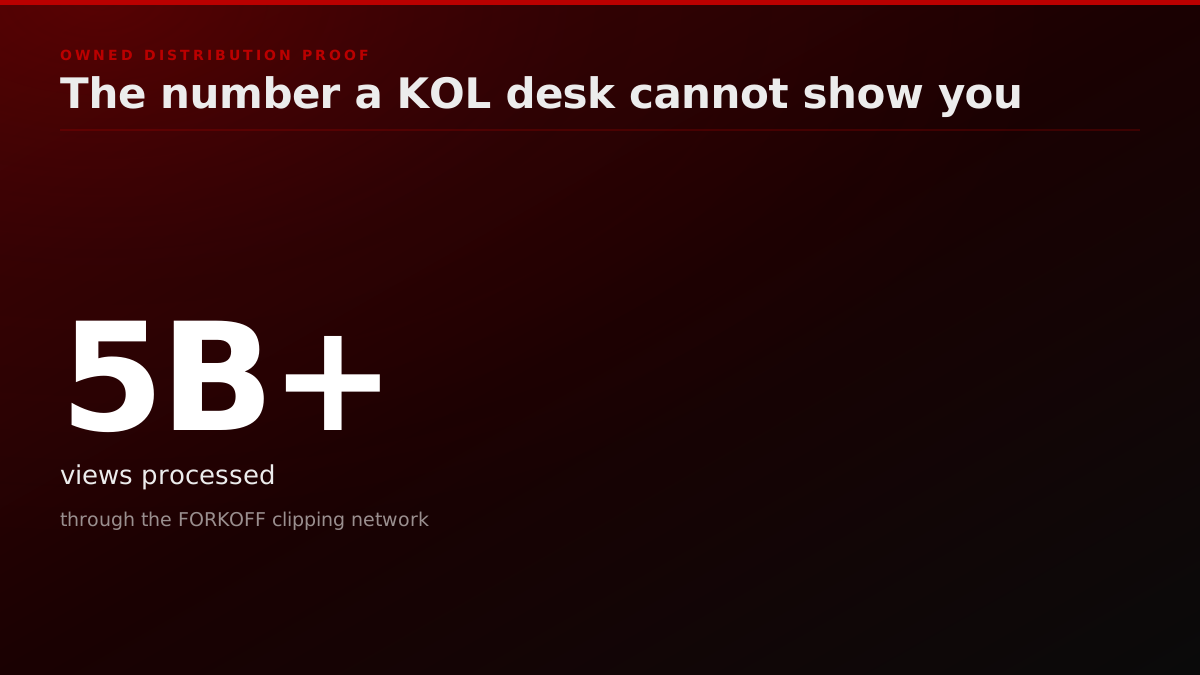
Here is the one number a KOL desk cannot show you, because they do not own distribution the way a clipping operator does: 5B+ views processed through the FORKOFF clipping network. That is not a follower count you buy on trust. It is watched-view volume moved across owned and creator feeds, and it is the first-party proof behind everything that follows. When a sell-side agency argues KOLs are the answer, ask them for their own distribution number. They cannot give you one, because their model is to resell someone else's audience, not to build their own. That structural fact is the whole reason this comparison exists.
WINNABOLLA
@Winnabolla
Marketers in Web3 ever spent $50k on a KOL campaign, only to realize most of the engagement wasn't real? DAOs ever promoted something to a community that turned out to be full of bots? Builders ever partnered with a big account that brought zero real users or results? Yeah it
That field summary is not an outlier. It is the median experience of a Web3 team that treated a KOL post as a distribution strategy instead of a spike. Five figures spent, engagement that turned out not to be real, a community that turned out to be bots. The failure was not the KOL being a scammer. The failure was buying rented reach and expecting owned outcomes from it. That mismatch is the thread through this entire piece.
What is the real difference between KOL marketing and clipping?
The real difference is what you are renting versus what you are building. A KOL post is a rental: you pay a flat fee for one large account to say something about your project once, and when that post ages out of the feed, you own nothing. Clipping is construction: you pay per genuinely-watched view to cut your founder and product into many short videos seeded across owned and creator feeds, and when the campaign ends you keep the clip library and the audience data. One buys you a moment. The other buys you an asset that keeps working. That distinction, rental versus asset, is the axis none of the pages ranking for this term will draw for you, because they are agencies selling the rental.
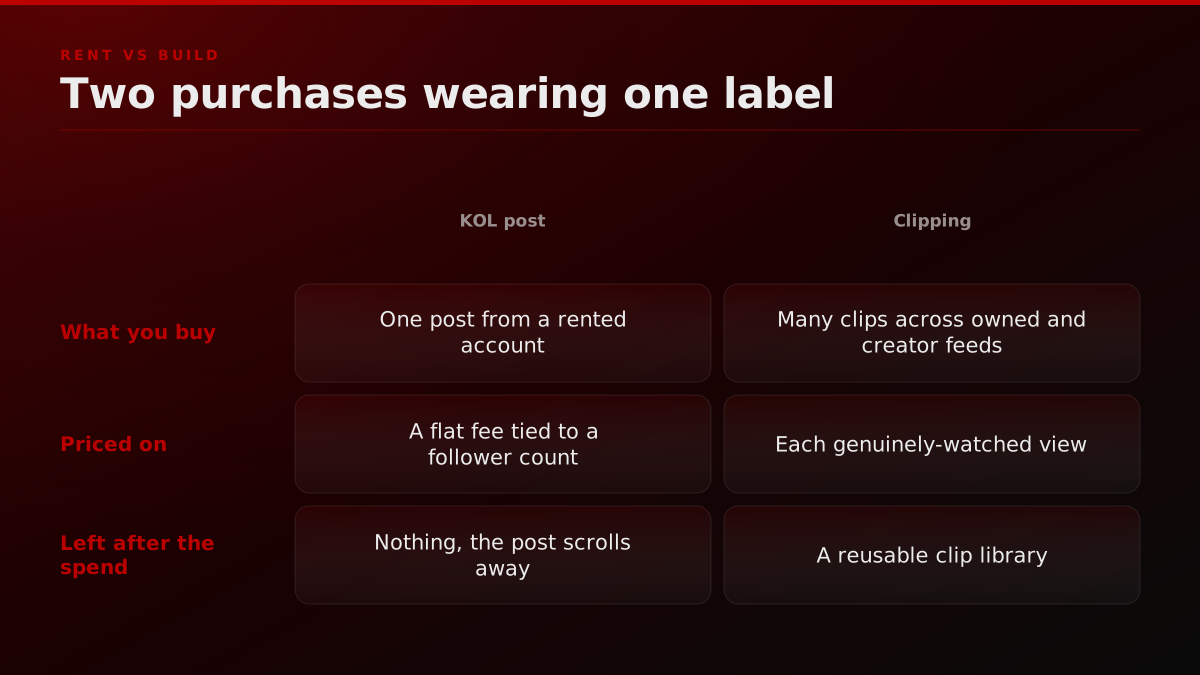
Walk the mechanics of each. In a KOL deal you brief a large account, they post, and their followers see it in a window that closes fast. You are borrowing their trust, not building yours. That framing comes from the sell side itself, which tells you something.
You have to understand it's not about buying views. It's about borrowing trust.
Sit with that line, because it is a crypto marketing operator telling on his own industry. If a KOL post is borrowing trust rather than buying views, then the entire value is contingent on the audience not fully pricing in that the trust is rented. That is a fragile thing to build a launch on. Owned distribution does not have this problem: a clip of your founder explaining the actual product is not borrowing anyone's credibility, it is building your own, and every view compounds into your audience rather than renting someone else's. The web3 marketing question is not whose trust can we borrow for a week, it is whose trust can we build that we keep. The managed clipping playbook walks the operational side of that in detail.
KOLs Are Killing Your Crypto Project. Warning for Founders & CMOs
A crypto marketer's warning to founders on how the wrong KOLs quietly kill a launch. The throughline: KOL marketing borrows trust, it does not buy views.
How much does a crypto KOL post cost per real view versus clipping?
On directional 2026 numbers a top-tier KOL post costs roughly $400 per 1,000 genuinely-watched views, while managed clipping runs near $3 per 1,000 at a blended cost per qualified view around $0.003. Treat those figures as directional estimates, not published rate cards, because KOL pricing is opaque and varies wildly by account. But the gap is not a rounding difference you can optimize away. It is two orders of magnitude, and it exists precisely because the KOL price is anchored to a follower count that includes bots and one-time impressions, while the clipping price is anchored to views that had to actually be watched to count. Same dollar, radically different denominator.
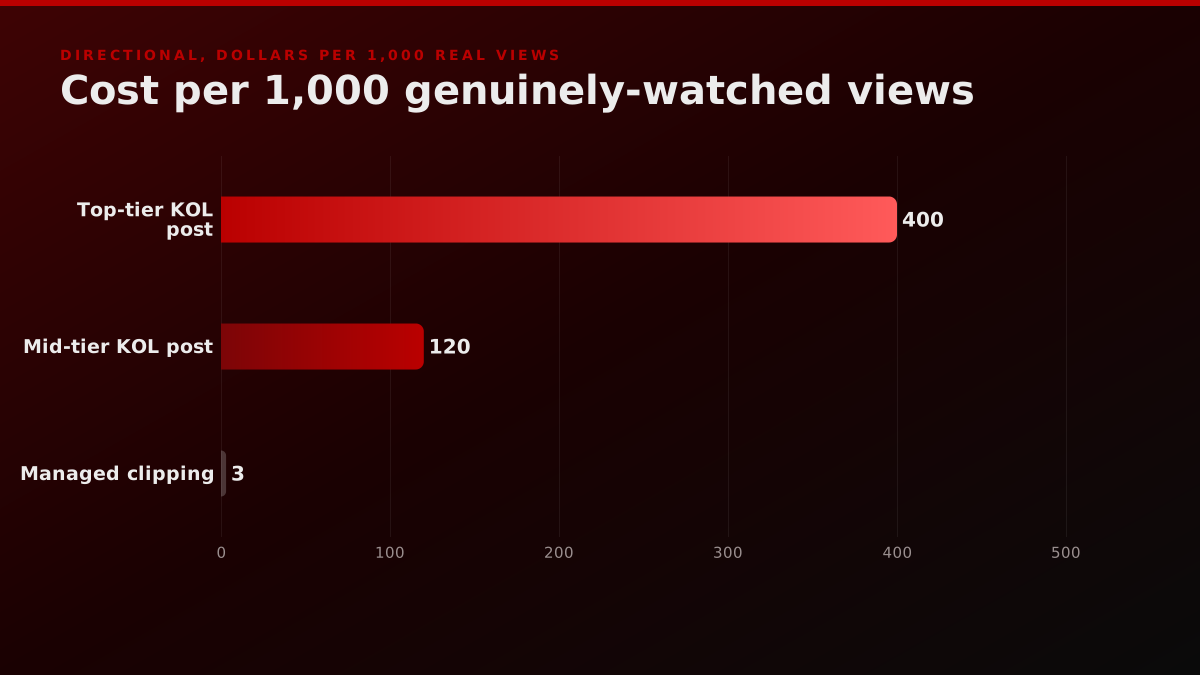
Look at that chart and resist the urge to read it as "KOLs are a scam." They are not. A top-tier account genuinely puts your project in front of a large audience at a specific moment, and sometimes that peak-moment reach is worth a premium. The point of the chart is narrower and more useful: on a per-genuinely-watched-view basis the two models are not in the same universe, so if your goal is efficient real reach across the whole launch arc, you cannot fund it primarily on KOL posts without burning your budget on impressions. The $400 figure is what a top-tier post costs per thousand real views once you strip out the bots and the scroll-past. The $3 figure is what managed clipping costs for the same thousand watched views, priced on the qualified-views metric that only counts a view when someone actually watched.
Operator noteManaged clipping runs a blended CPQV near $0.003 per qualified view. KOL reach costs dollars per thousand.
That blended figure is the number to anchor on, because it is priced on the thing you actually want. But a blended average is not your number. Your number depends on your budget, your target reach, and your vertical, which is exactly what a calculator is for.
Do not take the $3 versus $400 on faith. Put in the budget you are considering for a KOL campaign and the reach you are hoping to buy, and the CPQV calculator returns the implied cost per genuinely-watched view, which you can then set beside a clipping campaign priced the same way. The discipline this forces is the whole point: it makes you compare the two models on the same unit, a real view, instead of comparing a KOL's follower count against a clipping campaign's watch data as if they were the same currency. For a crypto founder allocating a finite launch budget, that is the difference between spending on hope and spending on outcome.
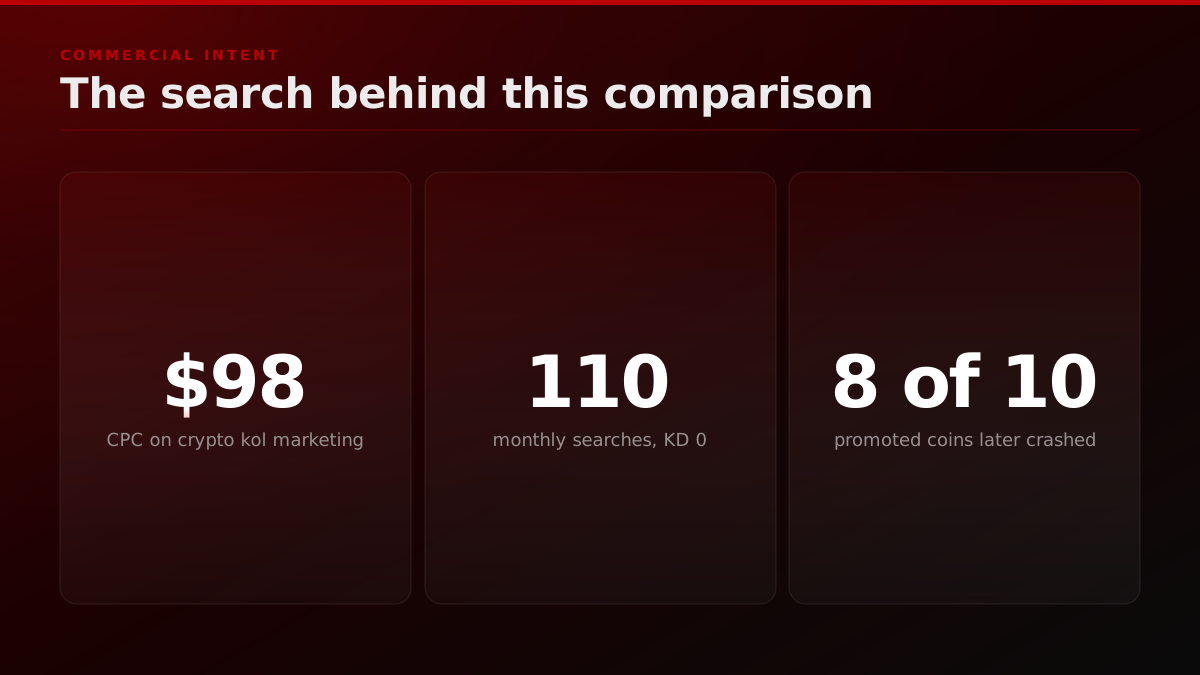
The commercial intent behind this whole comparison is visible in the search data. The term crypto kol marketing carries a cost-per-click of roughly $98 in DataForSEO's US data. Nobody pays that kind of click price for idle curiosity. That number tells you the people searching this are teams with a budget, actively hunting a vendor, mid-evaluation on where to put launch money.
Operator note$98 cost-per-click on crypto kol marketing. That is budget hunting for a vendor, not idle curiosity.
Which channel actually reaches more real humans, not bots?
Clipping reaches more genuinely-watched humans per dollar, and a KOL reaches a larger nominal audience in one burst that includes a heavy bot tax. This is the reach question everyone skips: a KOL post quotes you a follower count, but a meaningful share of that count is inauthentic across the influencer industry, so the reach you paid for is partly fake. Clipping does not quote you a follower number at all. It counts a view only when someone actually watched, so the reach it reports is reach that happened. The two "reach" figures are not measured on the same instrument, and treating them as comparable is how launches overpay for impressions that never became anything.
Fake followers and engagement fraud are a structural tax on influencer spend
An entire category of vetting tools exists specifically because influencer audiences are routinely padded with bots and bought engagement. When you buy a KOL post you are buying their follower count on trust, and a meaningful share of that count is inauthentic across the influencer industry. Clipping sidesteps the problem by pricing on genuinely-watched views rather than on a follower number you cannot audit.
Source: HypeAuditor, influencer fraud detection
An entire category of software exists purely to catch fake influencer audiences, and its existence is the tell. Tools like HypeAuditor are a market response to the fact that follower counts are routinely padded with bots and bought engagement across the influencer industry, crypto included. When you buy a KOL post you are buying that follower number on trust, and you cannot fully audit it before you pay. Clipping sidesteps the whole problem structurally, not by vetting harder, but by pricing on genuinely-watched views instead of on a follower count. You are not trusting a denominator, you are paying for a numerator that had to actually happen.
Checked 10 Coins which were Promoted on r/CryptoMoonShots 20+ Days Ago, 8 Out of 10 Crashed
First-hand data on promoted-coin outcomes: a reader tracked ten promoted coins and found eight had crashed within weeks. Promotion reach and launch outcome are not the same variable.
That thread is the empirical version of the argument. A reader checked ten coins that had been promoted and found eight of them had crashed within weeks. Promotion reach and launch outcome are not the same variable, and the gap between them is exactly the bot-and-scroll-past tax that a follower count hides. This is the part of the web3 GTM playbook most launch teams learn the expensive way.
Filtering real crypto experts from fake influencers is basically the same skill as spotting a real diamond in a bucket of glitter.
The vetting problem that quote describes is real and it is expensive, because vetting is labor and labor is cost. Even a diligent team pays for the hours spent separating the real diamond from the glitter, and they still get it wrong sometimes. If you are going to run a KOL layer anyway, the how to vet a crypto KOL checklist and the guide on spotting bought tweet engagement are the two references to run before any money moves. Owned distribution moves the cost from vet-the-audience-and-hope to pay-for-the-watch-and-verify, which is a strictly better place to spend money.
How fast can each channel move for a launch?
A KOL post is faster to a single spike; clipping is slower to peak but compounds and lasts. Speed is the one axis where a KOL genuinely wins, and it is worth naming plainly rather than pretending clipping wins everything. One large account can put your project in front of a big audience on the day you need it, which is a density of attention a fresh clip library builds more slowly. But that speed has a short shelf life: the spike lands and then decays as the post scrolls away. Clipping is the opposite shape. It takes weeks to build momentum, and then it keeps surfacing, because every clip is a durable object that the platforms can resurface long after it was posted.
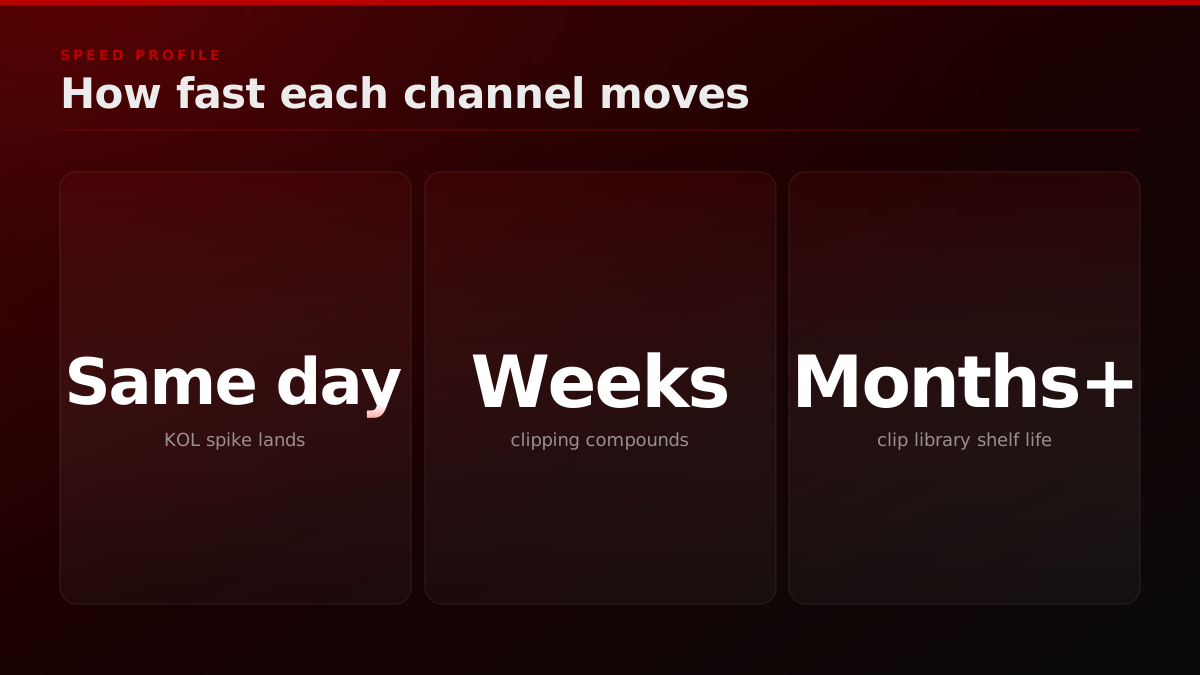
Read those two speed profiles as two different tools, not a winner and a loser. If your single most important date is TGE day, a KOL layer buys you attention density on that exact day that clips alone build slower. If your problem is the eight weeks before the launch and the twelve weeks after, clipping is the channel that compounds through both. The mistake is using the spike tool for the whole launch, then wondering why the community evaporated the week after the KOL posts stopped. The product launch video view shows how a concentrated launch-day push and the compounding clip spine get sequenced together rather than bought as rivals.
The Cheap AI KOL Scam That’s Killing Crypto Marketing
A crypto marketing coach breaks down the cheap-KOL and AI-KOL scam, the exact fake-and-cheap traps that make a rented layer underperform its invoice.
That breakdown from a crypto marketing coach is useful precisely because it prices the failure mode honestly: the cheap-KOL and AI-KOL traps that make a rented layer underperform what you paid for it. Treat the KOL layer as a speed buy, then decide how much of your launch actually needs same-day density versus durable reach.
Who controls the message, a rented account or your own clips?
You control almost nothing in a KOL deal and almost everything in a clipping campaign, and control is where the hidden risk of rented reach lives. When you pay a KOL, they write the post, they own the account, and they keep whatever audience the post reaches. You are a brief and an invoice. When you run clips, your team shapes every message, you own the feeds you seed into, and you keep the library and the audience data. That difference is not cosmetic. It determines who carries the conflict of interest, and in crypto the conflict is not hypothetical.
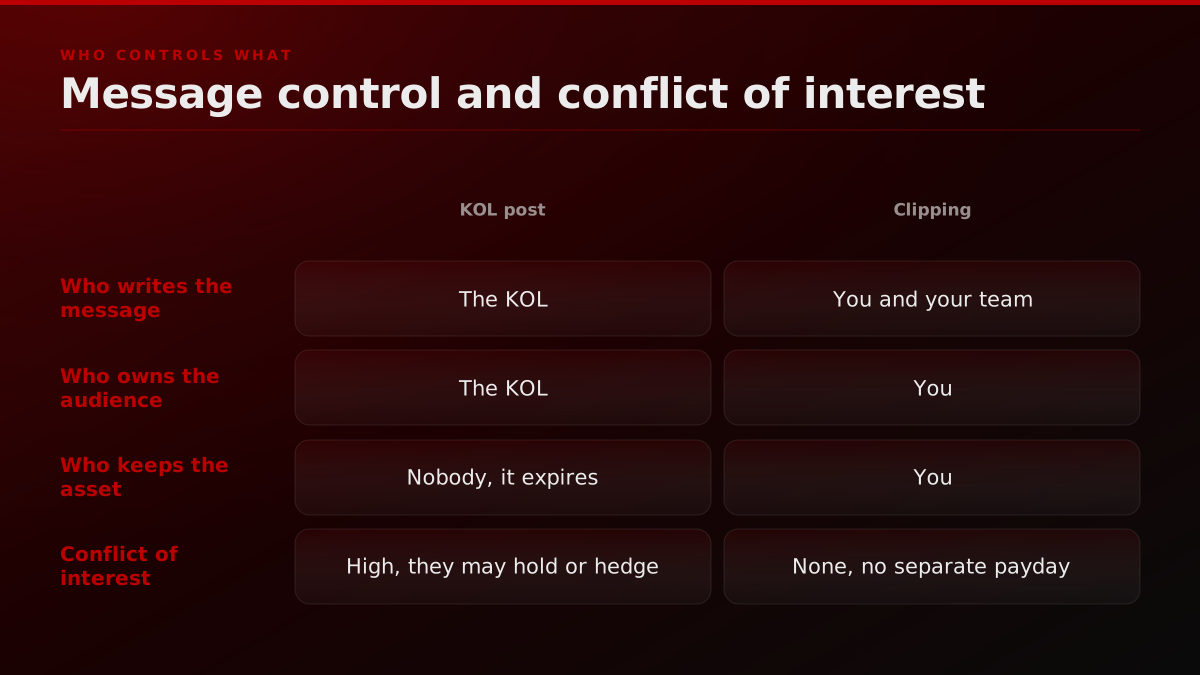
The cleanest illustration of the control problem is a real one that made headlines: a project revoked a KOL's roughly $1M token allocation after the influencer publicly discussed hedging his position, which violated the launch's no-hedging terms, as Cointelegraph and the wider crypto press covered at the time. The KOL was rationally following his own incentive, which was to protect his own position, and that incentive pointed directly against the project that paid him. You cannot fully contract your way out of this, because you cannot see the KOL's other positions. Owned distribution carries none of this, because a clip of your founder has no separate payday to chase and no allocation to hedge against.
Most do work hard, no doubt about that, but the claims of making money only from trading is not true. 80% of their total income would be from affiliates and fixed deals to promote exchanges or coins.
An insider's estimate makes the incentive plain. When you pay a KOL you are usually one affiliate line in a portfolio of affiliate lines, and their job is to service the portfolio, not to make your specific launch work. That is not villainy, it is the business model. But it means the KOL's diligence, timing, and care are spread across many deals, while your launch needs concentrated attention. Owned distribution concentrates by default, because the only project the clips are about is yours. This is the exact posture the crypto KOL marketing framework takes toward any allocation before it goes out the door.
What is believer quality, and why does it beat impressions?
Believer quality is the share of an audience that watches enough to understand your thesis and then acts on it: joins, buys, holds. Impressions are the opposite, rented and shallow and gone the moment the post scrolls. The reason believer quality beats impressions is that a token launch is not graded on how many eyeballs passed over a post, it is graded on how many wallets showed up and stayed. A KOL campaign optimizes for the impression, because the impression is what the follower count sells. Clipping optimizes for the genuine view, because that is what it is priced on. And only the genuine view has any chance of becoming a believer, because belief requires enough watch-time to actually absorb why the project matters.
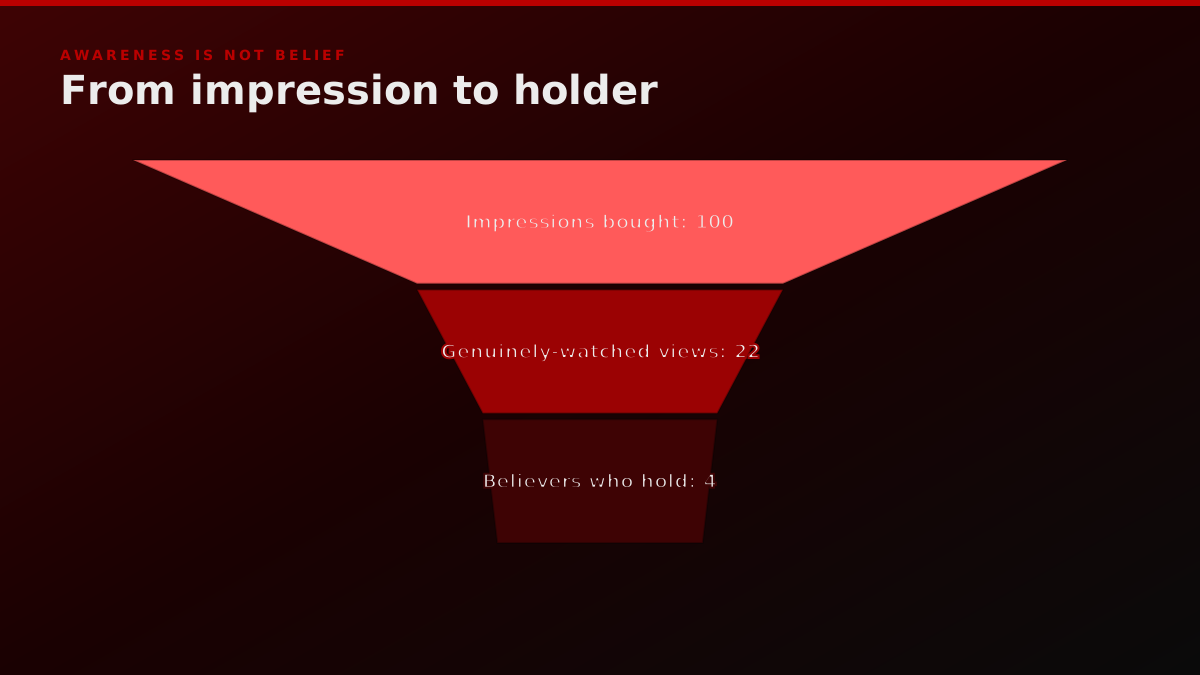
That funnel, impression to genuine view to believer, is the mental model to launch with. Most KOL spend dies at the first step: it buys impressions that never become genuine views because the audience is padded or the format is a static post nobody watches. Clipping is built to survive the second step, because short-form video is watch-time by construction, and watch-time is the raw material of understanding. Skip a step and the whole thing collapses into vanity metrics, which is how a team ends up with a "successful" campaign by impression count and an empty holder base. This is the retention logic that pre-TGE protocols most need to internalize before they spend a dollar on awareness.
On-chain attribution finally lets you grade awareness by who holds
On-chain analytics now let a launch trace which wallets actually bought and held after a campaign, not just who liked a post. That means awareness gets graded on believer quality, holders and retained community, instead of impressions. It is the measurement layer that makes the clipping thesis testable and the KOL thesis auditable.
Source: Nansen, on-chain analytics
For the first time you can actually grade this. On-chain analytics like Nansen let a launch trace which wallets bought and held after a campaign, not just who liked a post, and general market data from CoinGecko and CoinMarketCap give you the holder and volume context around it. That measurement layer is what makes the believer-quality thesis testable rather than rhetorical: you point a KOL campaign and a clipping campaign at the same launch and read, on-chain, which one produced holders. A DeFi protocol with real on-chain data has no excuse to grade awareness on likes.
A big reason fake crypto KOLs still survive is because most new investors want certainty, not education. The creators who say 'this might work' grow slower than the ones screaming 'easy 50x.'
That quote explains the demand side of the fake-KOL economy, and it matters here because it is why impression-optimized spend persists despite everyone knowing better. New buyers want certainty, not education, so the KOL screaming "easy 50x" grows faster than the one building genuine understanding. Clipping does not fix human psychology, but it changes what you are paying for: watch-time on your actual thesis, not a borrowed voice manufacturing false certainty.
Where do crypto KOL incentives break down?
KOL incentives break down because the KOL's payday and your launch's success are not the same thing, and often are not even correlated. A large share of top-KOL income comes from affiliate and allocation deals rather than from being right, which means their incentive is to post volume and collect fees, not to protect your outcome. Worse, when a KOL holds an allocation of your token, their incentive can actively invert yours: they hedge, dump, or hedge quietly while posting bullishly. Owned distribution carries none of this, because a clip of your founder has no separate payday to chase and no allocation to hedge against. The conflict simply does not exist.
MR SHIFT
@KevinWSHPod
There is literally ZERO ROI hiring KOLs in crypto today This comes from a top founder in the space I talked to this week His company paid a bunch of KOLs to promote their product to then see their competitors hire the same KOLs right after to not only promote the competitor's
That founder's verdict names the sharpest version of the misalignment. You pay a set of KOLs to promote your product, and the same accounts turn up promoting your competitor the week after, because to the KOL you were an affiliate deal, not a mission. The reach you rented was never exclusive and never loyal. This is exactly the failure taxonomy the airdrop marketing playbook is built to avoid.
The three biggest KOL traps in crypto marketing are fake KOLs, cheap KOLs, and the wrong KOLs.
Fake KOLs, cheap KOLs, and the wrong KOLs are the three traps, and notice that all three are audience and incentive problems, not production problems. You avoid them the way you avoid any rented-reach failure: vet the audience with fraud tooling, require disclosure, grade on holders, and cap the spend at what a peak-moment spike is genuinely worth. What you cannot do is vet your way to owned distribution. A perfectly vetted KOL is still a rental.
A paid KOL post is an ad, and regulators treat it that way
Under the FTC endorsement guides, a creator paid or granted tokens to promote a project has to clearly disclose that material connection, because the audience reads an undisclosed post as an organic opinion when it is really advertising. That gap between how a KOL post is perceived and what it actually is, is the same gap that makes rented reach worth less than it looks on the invoice.
Source: FTC, Disclosures 101 for Social Media Influencers
Start with the disclosure gap, because founders underweight it. Under the FTC endorsement guides, a creator paid or granted tokens to promote a project has to clearly disclose that material connection, because an audience reads an undisclosed post as an organic opinion when it is actually advertising. The value of a KOL post comes from it feeling like genuine belief, and the moment it is correctly labeled as paid, some of that borrowed trust evaporates. You are paying a premium for a perception the rules require you to puncture.
When is a KOL genuinely the right call?
A KOL is the right call for a short, vetted, peak-moment spike at TGE, and for very little else. This is the steelman the bias-disclosure owes you: there is a real job only a KOL does well, and pretending otherwise would be dishonest. A coordinated push from a few genuinely-vetted large accounts on launch day manufactures a density of attention that a clip library builds more slowly, and for the single most important date on the calendar that density is worth paying for. The failure is not hiring a KOL. The failure is funding the entire launch on rented reach, or hiring the wrong KOL against the wrong incentive, when the durable work belonged somewhere else.
Black Mamba
@blaack_mambaa
The crypto industry loves blaming KOLs for failed launches, but rarely asks the harder question: Was the product actually worth talking about? Too many founders expect a few tweets to compensate for weak products, poor tokenomics, no retention, and no clear market fit. That's
That counterpoint from a working KOL is the fairest challenge to this whole piece, and it is correct on its own terms: a few tweets cannot rescue a weak product with no retention and no market fit. Read it as the boundary condition on both channels. Neither clipping nor a KOL layer fixes a product nobody wants; both are distribution, and distribution amplifies whatever is actually there. If the product is real, the question is which channel amplifies it efficiently and leaves you something you own.
How do you vet a crypto KOL before you pay?
You vet a crypto KOL by auditing the audience, requiring disclosure, and grading on on-chain outcomes rather than on likes. Vetting is the price of admission for the KOL layer, and skipping it is how the five-figure-for-bots story keeps repeating. Run a fraud-detection pass on the account's audience before you pay, so you know what share of the follower count is real. Require clear paid-partnership disclosure in the post itself, per FTC guidance, so you are not buying a perception the rules require you to break. And write the deal so success is graded on wallets that bought and held, not on the impression count the KOL will screenshot for you.
Price the layer before any call. The KOL rate calculator estimates what a creator mix costs across platforms, so the spike shows up as a bounded line item rather than an open-ended retainer. Pair it with the best crypto KOL marketing platforms breakdown to see who actually owns the outcome in each model, then cap the KOL spend at what a peak-moment spike is genuinely worth. Our own bylines and earned coverage on this exact topic are collected on the FORKOFF press page if you want the outside-in view before you commit budget.
Influencers are getting paid to scam you. They are not your friends.
The crypto community's base-rate stance on paid influencer promotion: treat it as adversarial by default. If you lose money following a paid shill, that is the model working as designed, not an accident.
That 12,000-upvote thread is the audience you are marketing into, and it is worth internalizing. The crypto community treats paid influencer promotion as adversarial by default. That base-rate distrust is a tax on every undisclosed KOL post and a reason the disclosed, owned, founder-voiced clip often lands better than the rented shill.
How should you split the awareness budget across the launch?
Split the awareness budget by launch stage, because the job changes at each stage and so should the model. Pre-TGE the job is narrative and trust, which is watch-time work, so weight it heavily toward clipping. In TGE week the job is a peak-moment community spike, the one thing a vetted KOL genuinely adds, so split it closer to even. Post-TGE the job is retention and depth, which is again watch-time work, so weight it back toward clipping. The through-line is that clipping carries the long arc of the launch because it builds a durable asset, and the KOL layer is a concentrated buy for the single moment when you need reach a clip cannot manufacture on its own.
Awareness budget split by launch stage (directional framework)
| Launch stage | Primary goal | KOL share | Clipping share |
|---|---|---|---|
| Pre-TGE build | Narrative and trust | 30% | 70% |
| TGE week | Community and peak-moment spike | 50% | 50% |
| Post-TGE retain | Retention and depth | 20% | 80% |
Directional allocation, not a rule. Tune to budget, vertical, and how much owned content you can produce.
Those percentages are a directional framework, not a rule, and you should tune them to your budget, your vertical, and how much owned content you can actually produce. The shape is what matters: clipping-heavy on the flanks, balanced in the middle. Pre-TGE at roughly 70% clipping seeds the story into feeds you control before you need the spike, so that when the TGE-week KOL layer fires, it lands on an audience that already has context instead of a cold one. Post-TGE at roughly 80% clipping is where most teams underinvest and then wonder why the community evaporated after the spike, because they funded the moment and starved the retention.
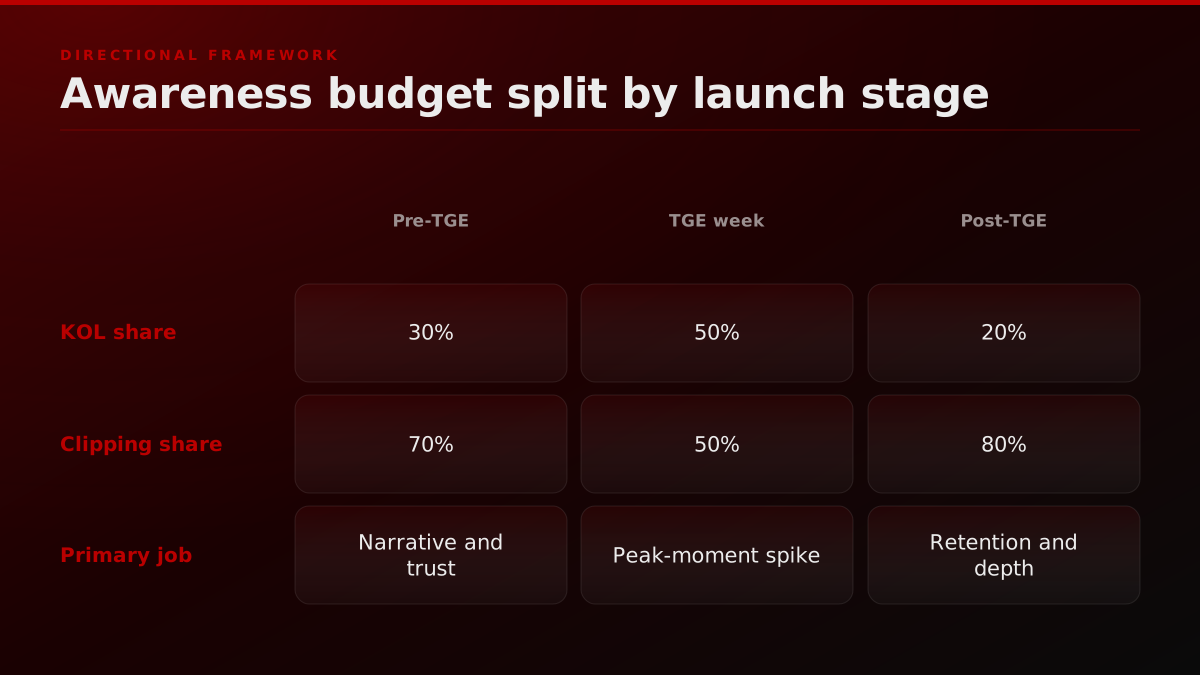
Read that allocation against what actually happens at each stage. Pre-TGE, a KOL spike is wasted because there is nothing to convert it into yet. TGE week is the one time a KOL earns a near-even split, because a coordinated peak-moment push manufactures the density of attention a launch needs on the day. Sequenced through a proper TGE marketing plan, the spike lands on a warm audience the clips already built. The web3 ecosystem growth OS treats the inverse ordering, funding the spike first and the spine last, as the default mistake to design around.
KOL marketing vs clipping, at a glance
| Dimension | KOL marketing | Clipping distribution |
|---|---|---|
| Core unit | One post from a rented account | Many clips across owned and creator feeds |
| Pricing | Flat fee per post or campaign | Per qualified (genuinely-watched) view |
| Bot exposure | High, tied to the account's followers | Low, verified per view |
| Speed to peak | Fast, a single post spikes on the day | Slower, reach compounds over weeks |
| Message control | The KOL writes and owns the post | You write it and keep the clips |
| Attribution to holders | Opaque | Traceable to watch-time and wallets |
| Asset after the spend | None, the post scrolls away | A reusable clip library |
Editorial comparison. Publisher is FORKOFF, which sells clipping; the bias is disclosed and the verdict names where KOLs win.
Read that table one row at a time and the pattern is consistent: KOL wins speed, and clipping wins everything durable. The pricing row is the one most founders skip and should not, because it changes your entire risk profile: you stop paying for a number that can be faked and start paying for behavior that cannot.
So which should you choose for a token launch, KOL, clipping, or both?

Choose by budget and by what you are optimizing for. Under roughly a $10k awareness budget, choose clipping by default, because a single top-tier KOL post can spend that entire line and leave you with no asset and no way to audit what you got. If you are optimizing for holders rather than impressions, choose clipping, because watch-time correlates to conviction and impressions do not. If you have real budget and a real launch, choose both, but with clips carrying the narrative across the whole arc and a vetted KOL layer added for the TGE-week spike. The one choice that is almost always wrong is funding the launch primarily on KOL posts, because that buys the spike and starves the spine.
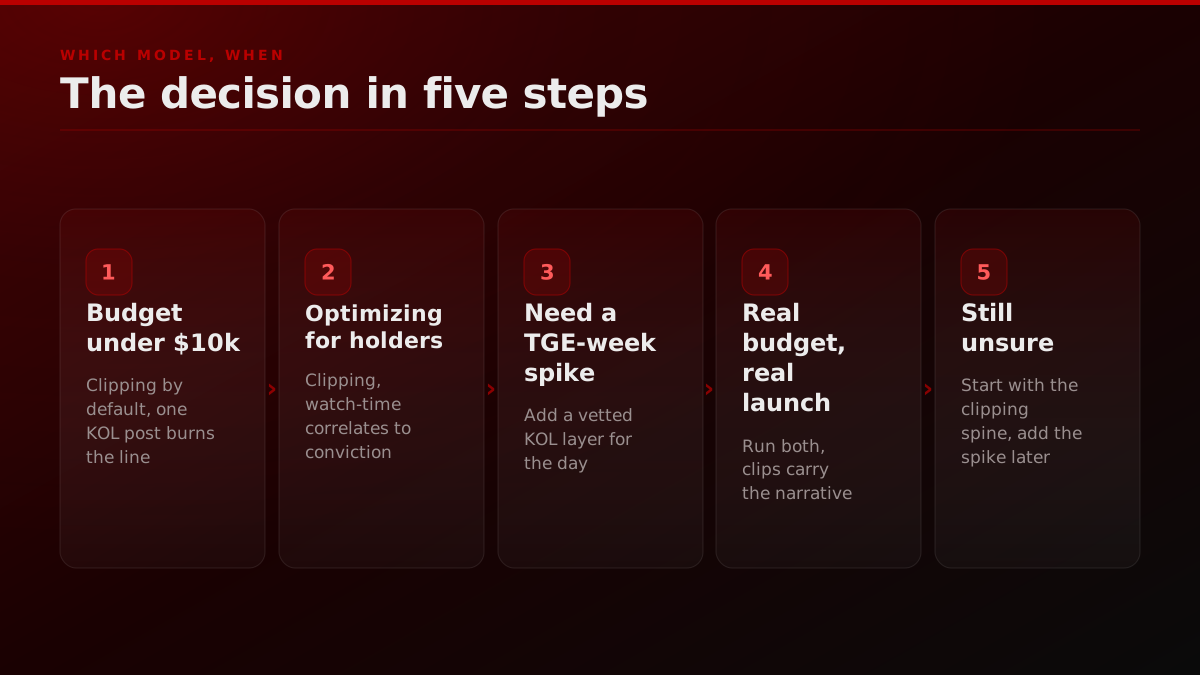
That decision flow is deliberately simple because the decision is simpler than the agencies make it sound. The first fork is budget: under roughly $10k there is no real debate. The second fork is goal: optimizing for holders points to clipping, optimizing for a one-day attention spike points to a KOL layer on top of a clipping base. The third fork is scale: a real launch with real budget runs both, and the only question is the split, which the stage framework already answered. Distribution is the hard part of any launch, as the standard startup literature keeps repeating, and paying to rent it rather than build it is why so many launches spike and vanish. The broader web3 marketing agency landscape is full of desks that will happily sell you the spike and skip the spine.
KOL, clipping, or both, by scenario
| Scenario | Best model | Why |
|---|---|---|
| Pre-TGE narrative building | Clipping | Seeds the story into owned feeds early and cheaply |
| TGE-week attention spike | KOL layer (vetted) | Buys peak-moment reach a clip cannot manufacture alone |
| Budget under $10k | Clipping | One KOL post burns it with no asset left over |
| Optimizing for holders | Clipping | Watch-time correlates to conviction; impressions do not |
| Real budget, real launch | Both | Clips carry the narrative, a vetted KOL adds the spike |
That scenario table is the whole argument compressed. Read it as a lookup, not a mandate: find your scenario, take the model, and weight the split to your stage. Every row points the durable jobs to clipping and reserves the KOL layer for the one job it is genuinely best at.
Are clipping campaigns actually effective for brands?
A brand marketer asks directly whether clipping campaigns actually work for brands, the live demand this comparison answers.
The fact that a brand marketer is asking, in a public thread, whether clipping campaigns actually work is the demand this comparison exists to answer. The honest answer is the same one the on-chain data keeps confirming: measured on real watched views and retained holders, owned clipping is the efficient spine, and a vetted KOL is the spike you add on top.
What is the verdict for a token launch?
The verdict is: build on clipping, spike with a vetted KOL, and split the budget by stage. Clipping wins the durable jobs, pre-TGE narrative and post-TGE retention, because it is cheaper per real view, lower on bot exposure, traceable to holders, and it leaves you an asset. A vetted KOL still wins the TGE-week spike, because a well-timed large account manufactures a density of attention on the day that a clip library builds more slowly. Fund the spine like it is the spine and the spike like it is the spike, and grade the whole thing on believers, not impressions.
Operator note5B+ views moved through the FORKOFF clipping network. No KOL desk owns a first-party distribution number like that.
We owe you the disclosure one more time, plainly: FORKOFF sells clipping, so we have a commercial reason to favor it, and you should read this verdict with that in view. But we are not telling you to skip KOLs, and that is the tell that the bias did not eat the analysis. A vetted KOL genuinely wins the TGE-week moment, and any honest distribution plan includes a KOL layer at the peak. What we are telling you is not to fund the entire launch on rented reach, because the numbers, the incentive structure, and the failure taxonomy all point the same way. As the broader crypto industry research and ongoing on-chain analysis both keep showing, retained real participation is what separates a launch that lasts from one that trends for a day, and the dApp activity data after the spike tells the truth the impression count hides.
If you are mapping the awareness budget for a launch, start with the split by stage, model both models on the same real-view unit with the CPQV calculator, and put the durable spend into owned clipping distribution with a vetted KOL layer reserved for the TGE-week spike, sequenced through a proper TGE marketing plan. The crypto founders and web3 protocols pages map it to your stage. Or skip the reading and get the reach plan built for you: book a strategy call and we size the split, model the cost per believer, and show you where a KOL genuinely earns its slot before you spend a dollar.