Podcast ROI in B2B is not a download count, it is a pipeline number, and the reason so many founder-led shows get killed after two quarters is that they were judged on the first number instead of the second. A download proves a file started transferring. It does not prove a buyer engaged, remembered you, or moved one inch toward a deal. This guide replaces the download report with a model that a CFO can check: a three-surface attribution stack, direct CRM tagging plus self-reported answers plus assisted conversions, run on a 90-day window, anchored to a first-party benchmark most agencies will not show you. The thesis is one line. Downloads are a vanity metric, pipeline is the number, and the whole job is to make the pipeline attributable.
Podcast ROI in one scroll
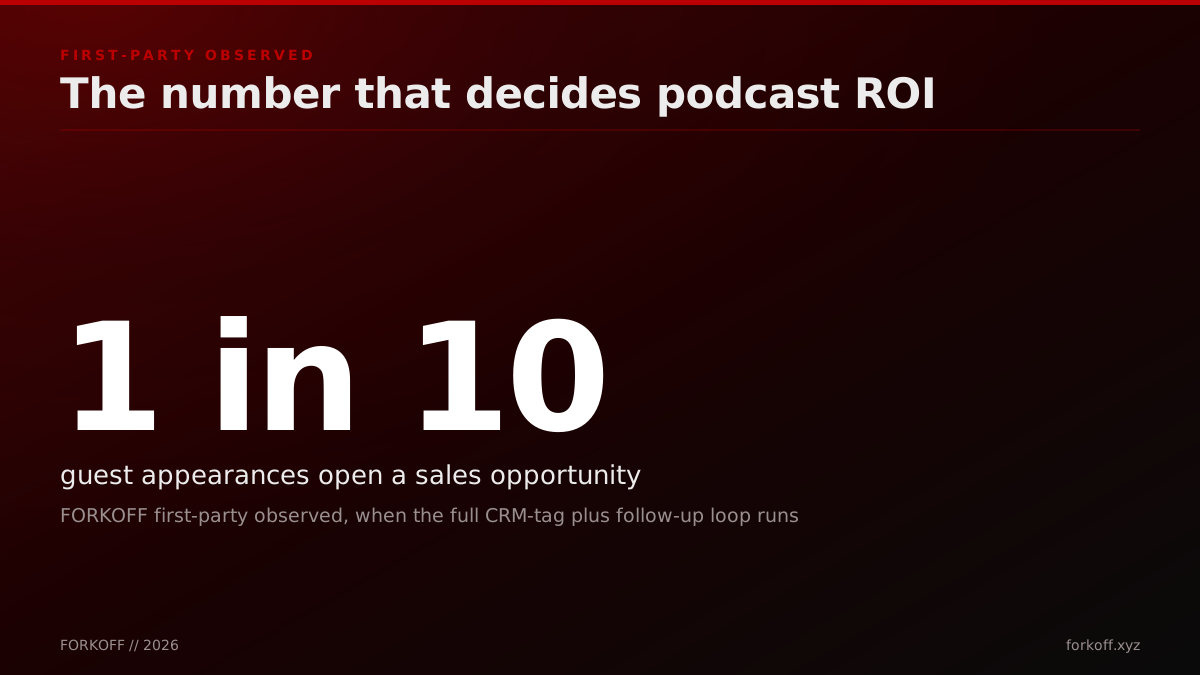
Podcast ROI in B2B is the qualified pipeline a show sources or influences, not its download count. Downloads are a vanity metric because the industry bar is tiny: roughly 30 first-week downloads puts an episode in the top half of all podcasts. Replace the download report with a three-surface attribution stack, direct CRM tagging plus self-reported (how did you hear about us) plus assisted conversions, run on a 90-day window. In the FORKOFF Podcast Ledger 2026 (n=84 monitored client shows, first-party observed), direct tagging captures 60 to 70 percent of attributed podcast pipeline, indirect listener references 20 to 25, and branded search the residual 10 to 15. The number that decides ROI is the guest-to-opportunity rate, roughly 1 in 10 when the full loop runs. The buyer-side test is whether an agency will show you that math before you sign.
The discomfort under this whole topic is that everybody already suspects downloads are the wrong scoreboard, and almost nobody has replaced them with something better. Operators keep spending because they believe the medium works, then they cannot defend it when finance asks for a return. That gap, between believing a podcast works and being able to prove it, is the entire problem this article solves. It is not an argument that podcasting is worth it, our founder-led sales podcast strategy already makes that case with the guest list as the target-account list. It is a measurement build: how to attribute B2B pipeline to a show so the budget survives a review.
What is podcast ROI in B2B, and why is it not downloads?
Podcast ROI in B2B is the qualified pipeline and revenue a show sources or influences, measured against its full cost, over a complete sales cycle. The numerator is opportunities and pipeline dollars. The denominator is total podcast spend, production, distribution, and the loaded staff hours, not just the invoice. Downloads sit nowhere in that equation because they measure audience size, not buyer movement, and a show can grow downloads while sourcing zero pipeline just as easily as it can source real pipeline on modest downloads when the guest list is engineered against an ICP. The correct question is never how big is the audience, it is how much pipeline did the audience and the guests produce, and can you trace it.
The word ROI is doing a lot of work here, and it splits by format. If you run host-read ads on other shows, ROI is a media-buying question with its own tooling. If you are a B2B founder guesting on shows or hosting your own, ROI is a pipeline-attribution question, and it is the harder, more valuable one because the tooling barely exists. The distinction matters because the two get conflated constantly, and the conflation is why so much podcast-measurement advice reads as either ad-tech dashboards or vague brand-building. This guide is about the second case, the founder using podcasting as a founder funnel, where the guest is often the prospect and the episode is the first long-form touch.
Real operators describe the pain precisely, and it is not doubt about the medium, it is doubt about the tracking. A survey thread of entrepreneurs measuring podcast effectiveness surfaced the exact split: people believe it works and cannot trace it, some spending over a thousand dollars a month with no way to tie it to a result.
The true ROI behind podcasting (for businesses & brands)
A camera operator on large creator shows reframes the true ROI of podcasting for businesses: keep an eye on download numbers and revenue, but shift your main attention to leveraging the medium to build a powerful brand ecosystem rather than chasing the download count.
That is the tell. The problem is not belief, it is instrumentation, and instrumentation is a solvable engineering problem, not a philosophical one. The rest of this guide is the instrumentation.
Why are podcast downloads a vanity metric?
Downloads are a vanity metric for a pipeline goal because the bar is low, the number is gameable, and it does not correlate with intent. By Buzzsprout's global benchmark, an episode that clears roughly 32 downloads in its first seven days already sits in the top half of all podcasts, and around 130 puts it in the top 25 percent. Those are small numbers, which means a download count tells you almost nothing about whether a real buyer engaged. A metric can be a useful health signal and a terrible scoreboard at the same time, and downloads are exactly that: watch the trend to make sure distribution is not broken, but never report it as the return.
Downloads (vanity) vs pipeline (the number), and what to track instead
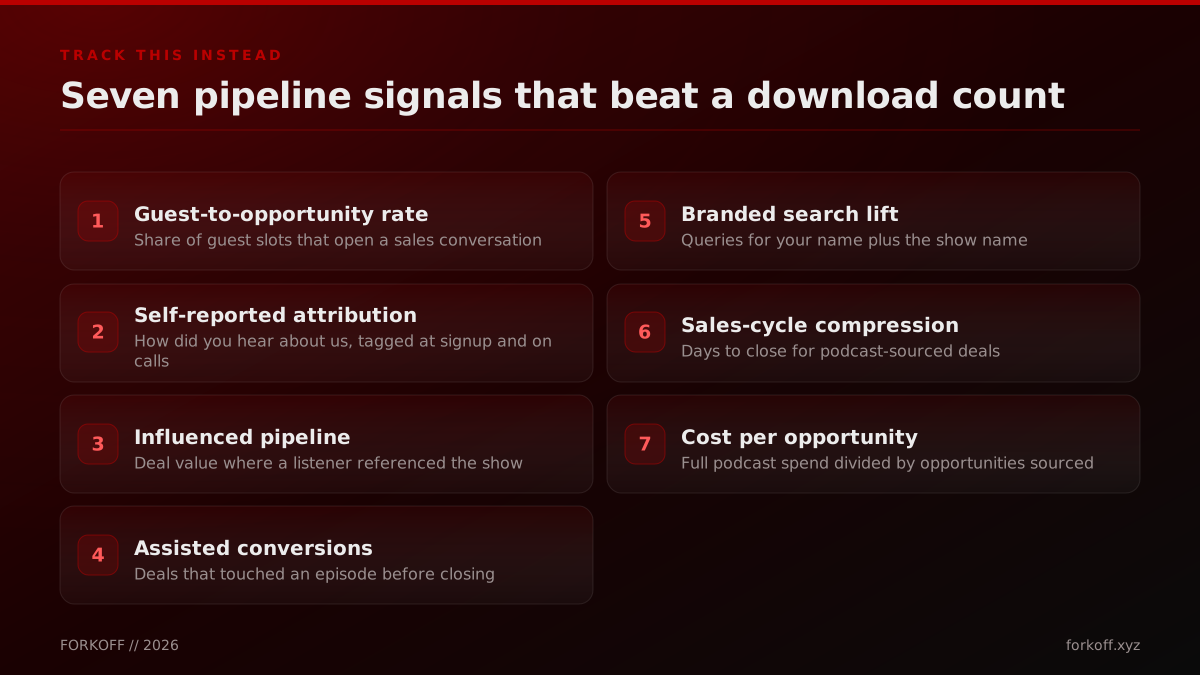
| Vanity metric | What it actually proves | Pipeline metric that replaces it |
|---|---|---|
| Downloads per episode | A file started transferring | Guest-to-opportunity rate |
| Total followers / subscribers | Audience size at a point in time | Influenced pipeline value |
| Chart position | Relative rank among shows | Self-reported attribution answers |
| Average listen-through | Content engagement, not intent | Assisted conversions to closed deals |
| Social impressions on clips | Reach, not remembered brand | Branded search lift (name plus show) |
The left column is a health signal, the right column is a scoreboard. Track both, report the right column. FORKOFF Podcast Ledger 2026 framing.
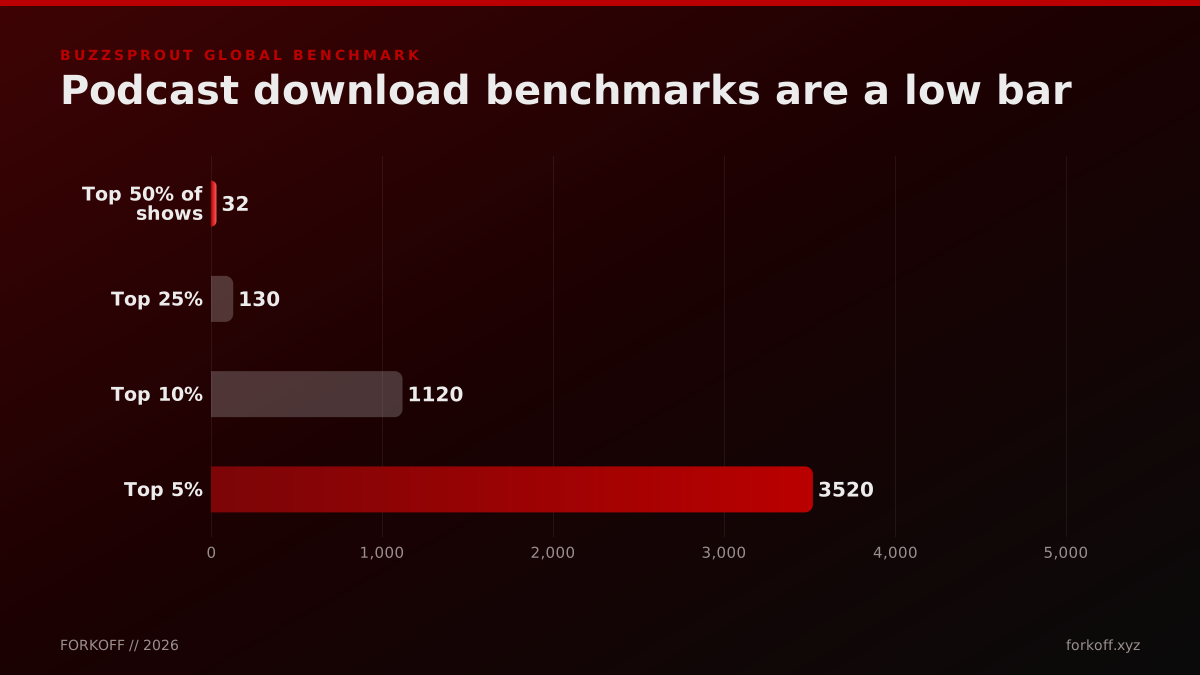
The benchmark chart makes the point visceral. When the top decile of all shows on earth is roughly a thousand first-week downloads, a B2B founder chasing a bigger download number is optimizing a metric that tops out well below where their pipeline goal lives. This is not a knock on audience growth, a larger, right-fit audience compounds in year two. It is a warning against letting the audience number stand in for the business result, because the two decouple constantly. A niche B2B show with a few hundred downloads per episode can out-produce a show ten times its size on pipeline, because five of those few hundred listeners are named accounts and the guest was a prospect.
Even the operators who track downloads closely will tell you the numbers are not the scoreboard. A camera operator who works on large creator shows wrote up the true ROI of podcasting for businesses and landed on the same conclusion: keep an eye on downloads, but shift your real attention to the brand ecosystem the show builds. The consensus that downloads are the wrong measure is already there. What is missing is the replacement.
Shannon Eastman
@ShannonEastman
"If you get over 32 downloads for a new podcast episode in the first week of its release, you're in the top 50% of all podcasters." <- this is an industry benchmark. Trauma Informed Growth averages 65 in first 24 hours.
That download benchmark, roughly 32 in the first week to clear the top half, is worth sitting with. It reframes the entire conversation from how do I get more downloads to what do I actually track instead, which is the whole point of the podcast monetization math that shows where audience-based models break down. For a B2B pipeline goal, the answer to what do I track instead is attribution, and attribution has three surfaces.
What is the podcast attribution stack?
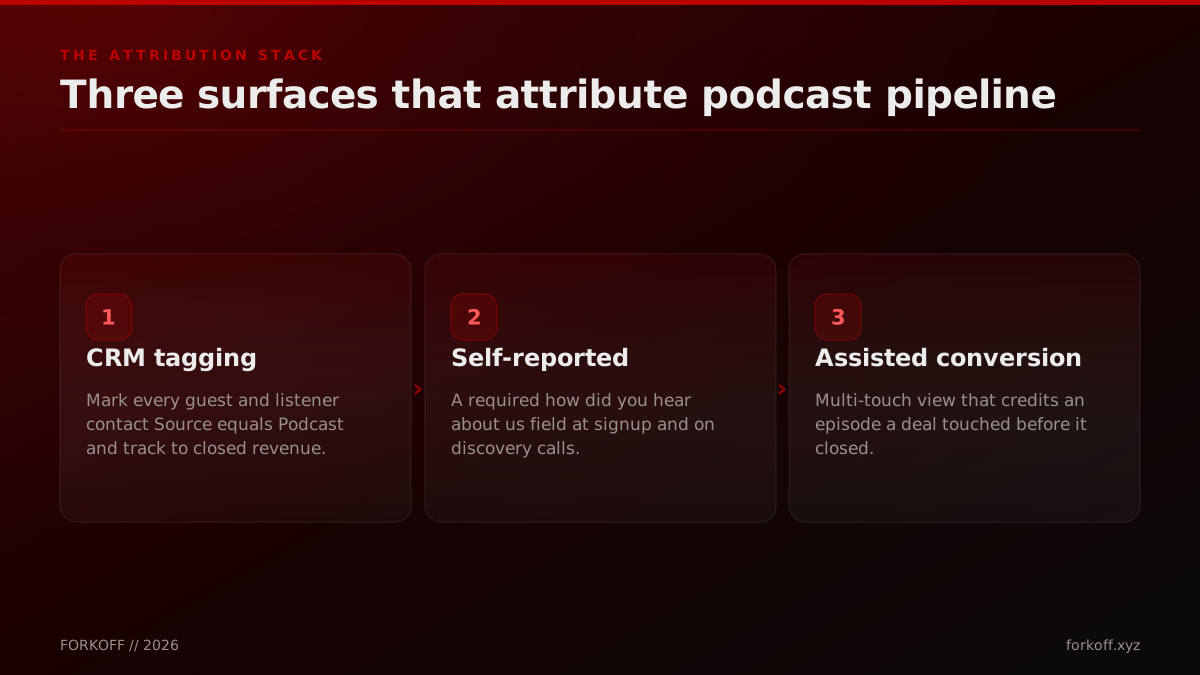
The podcast attribution stack is three measurement surfaces used together: direct CRM tagging, self-reported attribution, and assisted conversions. You need all three because each one is blind where the others see. Direct CRM tagging catches the guests and inbound contacts you can mark by hand and trace to a deal, but it misses the anonymous listener who never fills in a form. Self-reported attribution, the how did you hear about us field, catches that dark-social listener, but it is fuzzy and people misremember. Assisted conversions catch the episode a deal touched on its way to closing, but they depend on a multi-touch model that most B2B stacks do not run cleanly. Stack them and the blind spots cancel out.
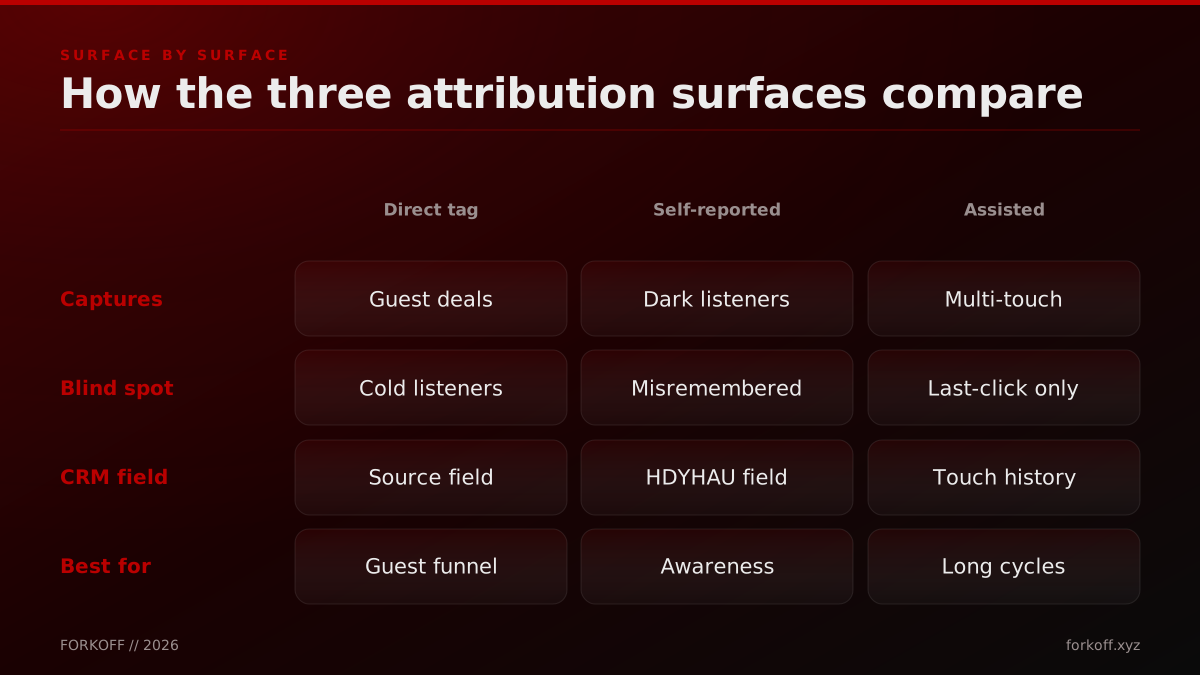
Look at the surfaces side by side and the logic of using all three becomes obvious. The strongest single lever for most teams is the cheapest one, the self-reported field, because it is the only surface that reliably connects a specific podcast appearance to a specific deal without any tracking infrastructure at all. The operator case for it is blunt, and it comes from people who measure B2B for a living.
Cody Schneider
@codyschneider
obsession with attribution in b2b is rookie focus on blended cac decreasing over time layer marketing channel pixel conversion event + UTMs + a required "How did you hear about us?" on form you'll have a 90% accurate picture without crazy tech
That framing, obsession with perfect attribution is rookie, layer a pixel plus UTMs plus a required how did you hear about us and you get to 90 percent accurate without exotic tooling, is the practical heart of this whole model. B2B attribution vendors have built product lines around surfacing exactly that self-reported answer next to the tracked session, precisely because the tracked session alone misses the offline and word-of-mouth touches a podcast creates. You can read the vendor-side methodology in Dreamdata's B2B attribution work and in Fairing's post-purchase survey approach, and the through-line is the same: the self-reported answer is not a nice-to-have, it is the surface that catches what analytics structurally cannot.
How do you make "how did you hear about us" actually work?
You make self-reported attribution work by asking the question explicitly, at the right moment, and by treating the answer as one signal you triangulate rather than gospel you trust. The most common failure is a vague field that leaves the customer guessing whether you want their first touch or their last. Ask how did you first hear about us, not the ambiguous version, so a listener who discovered you on a podcast eight months ago and converted through a branded search this week credits the podcast, not the search. Put the field on the signup form and repeat it verbally on discovery calls, because the two capture different slices, and reconcile the free-text answers into a clean taxonomy weekly so podcast shows up as a countable source and not fifty spellings of the same thing.
The mechanism is simple, but it is not free of skeptics, and the skeptics are right about its limits. A self-reported field is a survey, and surveys carry bias: people forget, they name the last thing they remember, and marketers themselves famously write essays in the box. That is a real caveat, not a reason to abandon the field, because an imperfect signal that catches offline touches beats a precise signal that erases them. The honest posture is to hold the self-reported answer loosely, weight it against the direct tag and the assisted-conversion view, and never let any single surface make the whole call. This is the same triangulation discipline our Reddit B2B lead-gen guide applies to community-sourced demand, where last-click also lies by default.
The operational detail that separates a useful self-reported field from a noisy one is the taxonomy you reconcile the answers into. Left raw, a how did you hear about us box produces fifty spellings of the same source, podcast, the podcast, your show, heard you on a podcast, and none of them roll up into a number a board will accept. Define a fixed source list before launch, map every free-text answer into it on a weekly cadence, and keep one clean podcast bucket that a founder can report without a footnote. The measurement vendors whose entire business is tying an audio touch to a downstream action reconcile exactly this way, and the Podscribe measurement approach is a useful reference for how rigorous the mapping gets even when the raw input is a survey answer. The goal is not to trust the field, it is to make it countable, because a countable fuzzy signal beats a precise signal that erased the channel before you ever looked.
The deeper objection is not about the survey field at all, it is about attribution itself, and it is the most important caveat in this article.
Attribution can't tell you what actually caused conversions - and that's the real problem
Attribution tells you what was present when a conversion happened, it cannot tell you what caused it. The thread warns about the failure loop where a team shifts budget to whatever attribution credits, then watches pipeline dry up 12 months later because the credited channel was harvesting demand another channel… Show more
The critique is that attribution records what was present when a conversion happened, not what caused it, and that teams who chase whatever their model credits often watch pipeline dry up a year later because the credited channel was harvesting demand another channel created. Podcasting is usually the channel that creates and warms demand, which means a naive last-click model will systematically starve it. The fix is not a better single model, it is refusing to let one surface decide.
Attribution is arguably the biggest challenge in marketing. If you know that someone bought because of an ad you know you can spend more on that ad, if you know no one is buying from it you know not to.
What is the 90-day podcast pipeline attribution model?
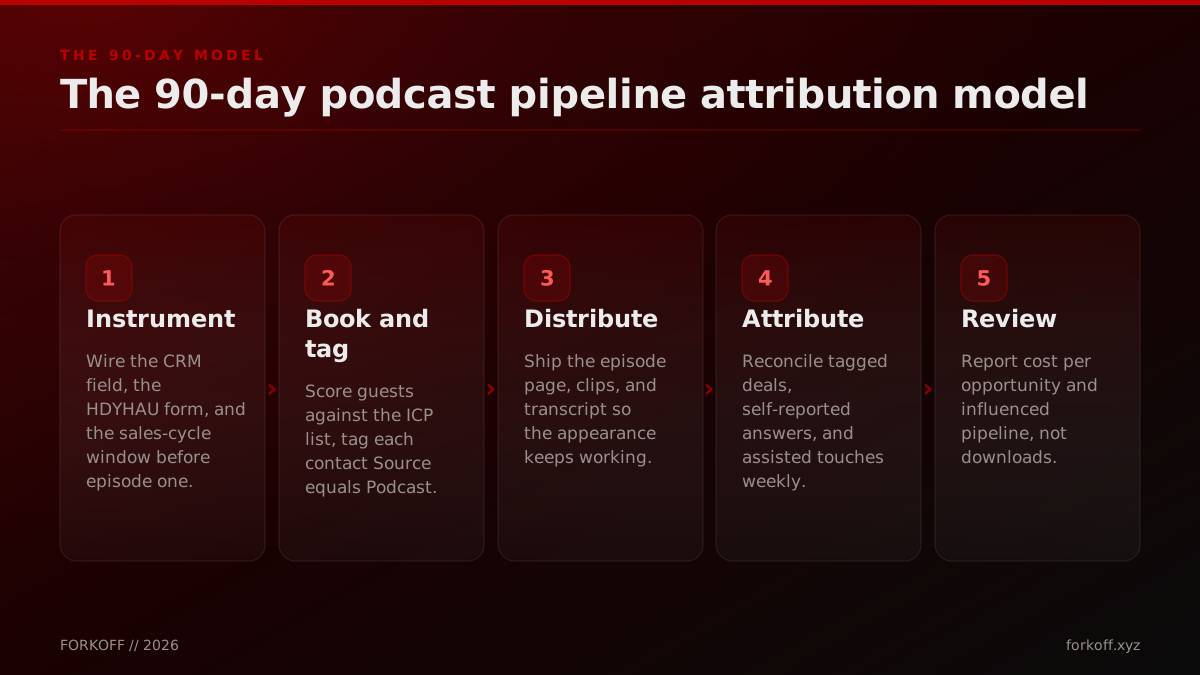
The 90-day podcast pipeline attribution model is a five-phase build that instruments attribution before the first episode, then reconciles the three surfaces weekly across a sales-cycle window. Phase one, before any spend, wires the CRM Source field, the how did you hear about us form, and a defined sales-cycle window, because attribution you bolt on after launch cannot see the first quarter of pipeline. Phase two books an ICP-scored guest list and tags every contact. Phase three ships the distribution layer, the episode page, clips, and transcript, so each appearance keeps working. Phase four reconciles tagged deals, self-reported answers, and assisted touches weekly. Phase five reports influenced pipeline and the guest-to-opportunity rate, not downloads.
The 90-day podcast pipeline attribution model at a glance
| Phase | Days | Instrument | Output |
|---|---|---|---|
| 1 Instrument before episode one | Days 1-10 | CRM Source field, HDYHAU form, sales-cycle window defined | Attribution surfaces live before any spend |
| 2 Book and tag | Days 11-40 | ICP-scored guest list, every contact tagged Source equals Podcast | 4-6 appearances booked, contacts in CRM |
| 3 Distribute | Days 31-60 | Episode page, clips, transcript per appearance | 30-50 owned assets per appearance, working the long tail |
| 4 Attribute | Days 55-75 | Weekly reconcile of tagged deals, HDYHAU answers, assisted touches | A defensible cost-per-opportunity figure |
| 5 Review | Days 76-90 | Report influenced pipeline and guest-to-opportunity, not downloads | 2-4 attributable deals in motion, board-ready number |
First-party observed median across FORKOFF Podcast Ledger 2026 (n=84 monitored client shows). Illustrative of the process, not a guaranteed client result.
The phase that teams skip is the first one, and skipping it is fatal to the measurement. If you launch and then decide to measure, the guests from your first two months are already un-taggable, the listeners who heard you have no field to self-report into, and you have quietly made the highest-intent early cohort invisible. Instrument first. It is a day of CRM configuration and one form field, and it is the difference between a defensible number at day 90 and a shrug. The podcast booking system for founders covers the guest-pipeline half of this, and the FORKOFF Podcast Engine covers the distribution half that turns one appearance into 30 to 50 owned assets.
Operator noteThe costliest mistake is instrumenting attribution after launch. Wire the CRM field and the HDYHAU form before episode one, not after.
Video is where a lot of this compounds, because a recorded appearance becomes clips, a transcript, and an indexable episode page, each of which is a separate attributable surface. Practitioners who have built the podcast-to-pipeline motion describe exactly this, that the show is not the deliverable, the distributed and measured system around it is.
Using podcasts to drive pipeline in B2B
RevenueHero
A B2B revenue team on using podcasts to drive pipeline, not downloads.
That system view is what separates a show that pays back from a show that gets abandoned. A single un-clipped, un-tagged episode on one platform has almost no attributable surface. The same episode, tagged and distributed, has a dozen.
How do you attribute pipeline to a single podcast appearance?
You attribute a single appearance by carrying it all the way down to opportunities and revenue, the same way you would price a conference sponsorship against pipeline. Take a quarter of guesting as a worked example. Say a founder books 12 ICP-aligned appearances, tags 9 of the resulting guest and inbound contacts with Source equals Podcast, converts 5 of those into meetings that self-report or trace back to an episode, advances 3 into opportunities, and closes 1. That is a guest-to-opportunity rate near 25 percent on this illustrative cut and one closed deal you can point a finger at. The exact counts are not a promise, they are a shape, and the shape is what a defensible report looks like.
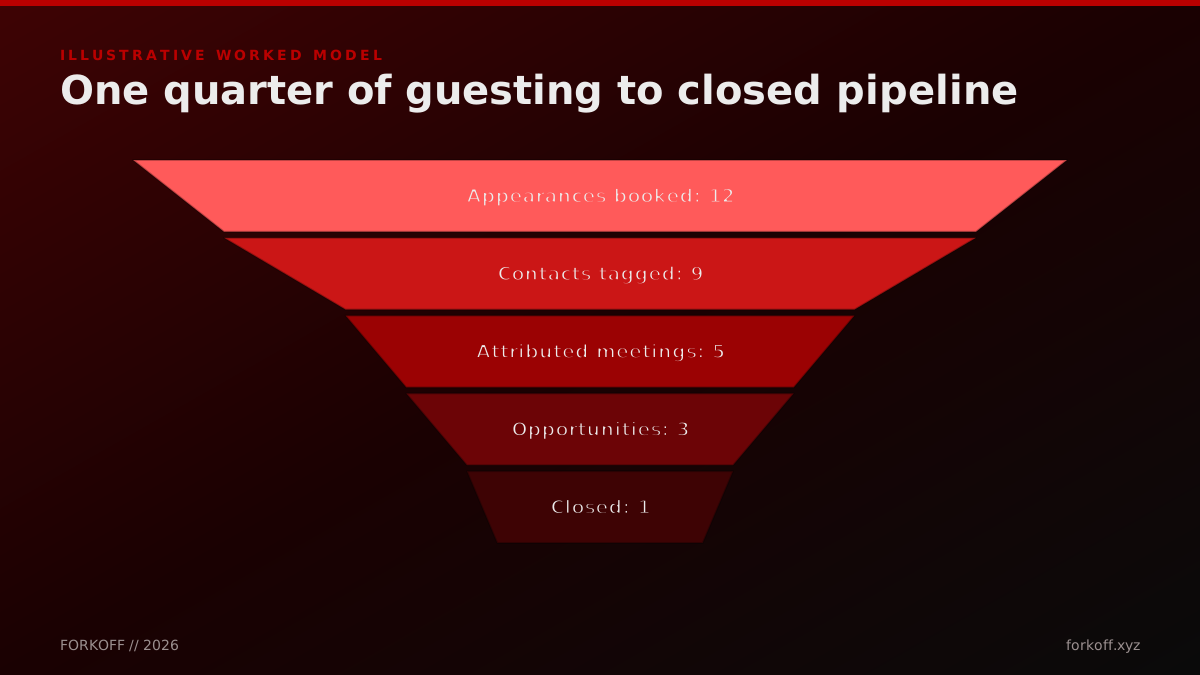
The number to watch inside that funnel is the guest-to-opportunity rate, because it is the earliest honest signal. In the FORKOFF Podcast Ledger 2026, a first-party read across 84 monitored client shows, roughly 1 in 10 ICP-aligned appearances that run the full tag-and-follow-up loop opens an opportunity. Treat that 10 percent as an operator estimate, not a law, it moves with guest selection and follow-up quality, and it collapses toward zero the moment guests are chosen by who will say yes instead of by fit. We watch it above every other number because it tells us within one quarter whether a show is a sales channel or a hobby, which is exactly the distinction the podcast agency versus DIY guesting math turns on.
Operator noteGuest-to-opportunity moves entirely with guest selection. An ICP-scored list converts; a whoever-says-yes list produces only downloads.
When you roll the appearances up, the attributed pipeline does not distribute evenly across the three surfaces, and knowing the split changes how you report. Across the ledger, direct tagging captures the majority, self-reported catches the next chunk, and branded search is the smallest slice, which is the exact inverse of what a last-click dashboard will tell you.
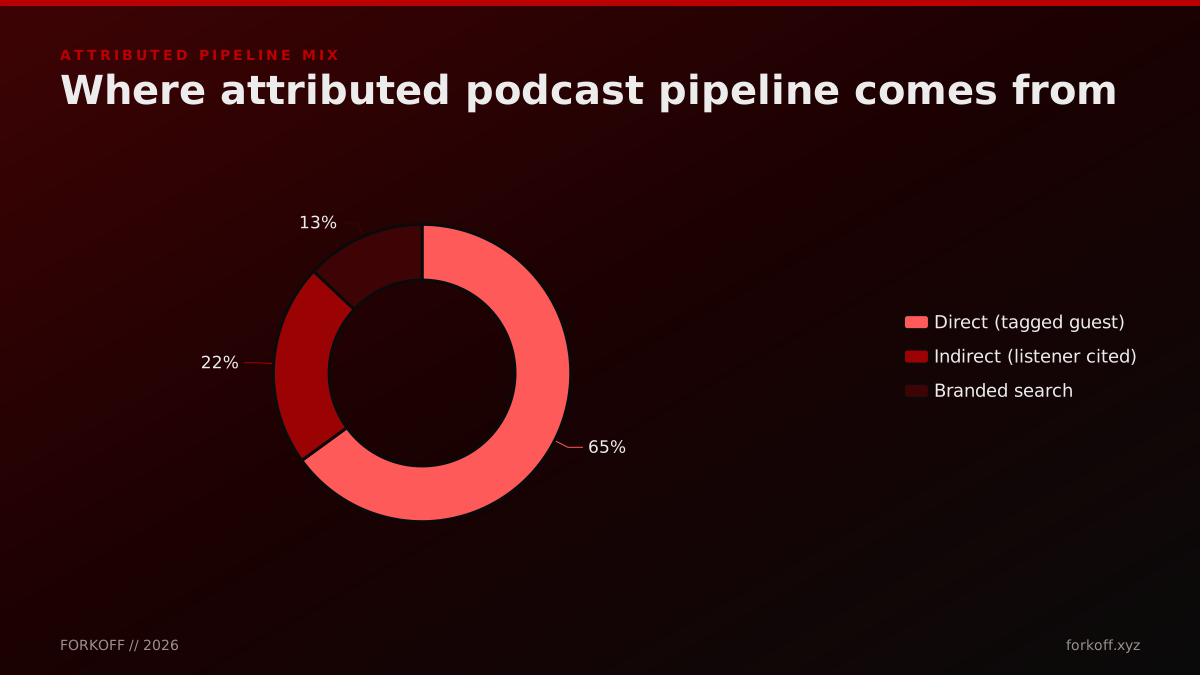
Where attributed podcast pipeline actually comes from
Across the FORKOFF Podcast Ledger 2026 (n=84 monitored client shows, first-party observed), when a show runs the full attribution stack the attributed pipeline splits roughly into direct tagging 60 to 70 percent, indirect listener references 20 to 25 percent, and branded search the residual 10 to 15 percent. The practical lesson is that a last-click analytics view, which only ever sees the branded-search sliver, structurally undercounts a podcast by four to five times. The direct tag plus the self-reported layer is where two-thirds to three-quarters of the real pipeline shows up, and it is invisible to any dashboard that was not instrumented to catch it before the first episode shipped.
Source: FORKOFF Podcast Ledger 2026 (n=84 monitored client shows); first-party observed, cited as operator estimate
The practical consequence is that if your only measurement is a last-click analytics view, you are seeing roughly the smallest slice of the pie and concluding the podcast does not work. It works, your instrument is just pointed at the wrong 13 percent. Fix the instrument and the channel stops looking like a cost center. This is the same lesson the crypto sponsorship first-party ROI playbook reaches from the events side: own the measurement or the channel looks worthless by construction.
The compounding tail is what makes the single-appearance math understate the real return. A guest slot does not stop producing when the episode drops. The clip keeps circulating, the transcript keeps getting indexed, and the episode page keeps ranking for the guest and the topic, which is why a podcast guesting motion outperforms cold email on compounding assets even when the raw first-touch volume looks similar. A show that also invests in audience growth stacks a second, slower attribution surface on top of the guest-sourced one, and the mechanics of that build are covered in how to grow a podcast. The honest way to attribute a single appearance is to hold the record open across the full window and keep crediting the touches that arrive late, rather than closing the books three days after publish and declaring the appearance a miss. The deals that make podcasting worth it are disproportionately the ones that close on the delayed touch, which is exactly the pipeline a launch-week download count cannot see.
Why can't attribution alone tell you what caused a conversion?
Attribution alone cannot prove causation because it only records correlation in time, which touchpoints were present when a deal closed, not which one moved the buyer. This is not a flaw in a particular tool, it is the definition of what attribution does, and pretending otherwise is how teams talk themselves into defunding the channels that create demand. The delayed, brand-building half of a podcast's value is the part most invisible to a dashboard, and it is real. The answer is to combine the hard number you can defend with the soft signals you can corroborate, and to extend the window long enough to catch the deals that close months after the episode.
If someone hears your podcast ad and doesn't immediately visit your website, is that a failure? But not everything that matters shows up in a dashboard.
Coleman Insights, a media-research analyst house, put the limit plainly in its analysis of attribution in podcast marketing: not everything that matters shows up in a dashboard. That is not a license to stop measuring, it is a reason to measure with more than one instrument. A defensible model treats the CRM-tagged number as the floor, the self-reported answer as the corroborating signal, and the assisted-conversion view as the tiebreaker, and it never reports a single one of them as the whole truth. The B2B marketing community has argued the ROI of a podcast in exactly these terms for years, and the mature position, visible across communities like Exitfive and in podcast-industry data from Edison Research, is that podcast value is real, delayed, and multi-touch, which means it must be measured that way or not at all.
Practitioners who work inside podcast measurement are candid about how crude the underlying signal still is. On a Hacker News thread about podcast measurement, an ad-tech operator noted that the medium's tooling lags video by years because of how RSS delivery works, and that a download, the main engagement metric, does not hold up against something like minutes actually listened, a read worth sitting with in the full thread. That is the technical floor under the whole vanity-metric argument: even the number everyone reports is a weak proxy for engagement, let alone intent. It is one more reason the defensible model refuses to lean on any single surface and corroborates the CRM tag with the self-reported answer and the assisted-conversion view instead of trusting a download to carry the weight of a business case.
Attribution shows presence, not cause, so triangulate
The honest limit of any attribution model is that it records what was present when a conversion happened, not what caused it. Analysts warn about the failure loop where a team shifts budget to whatever attribution credits, then watches pipeline dry up 12 months later because the credited channel was harvesting demand another channel created. Podcasting sits on the wrong side of that bias: it creates and warms demand that a downstream channel then claims. The defense is not a better single model, it is triangulation, the hard CRM-tagged number plus self-reported plus assisted-conversion, read together across a full cycle, so no one surface gets to lie by omission.
Source: Coleman Insights, The Limits of Attribution in Podcast Marketing; r/analytics operator thread (causation critique)
How long does a B2B podcast take to pay back?
A B2B podcast pays back on a sales-cycle-length window, which for most considered deals is 60 to 120 days and often longer for enterprise, so judging it on a launch-week download count is a category error. The shows that get killed are almost always killed on the wrong clock: the team looks at day three, sees a small download number, and quits before the delayed and self-reported pipeline arrives. First-party observed across the ledger, most monitored shows have 8 to 12 episodes live and 2 to 4 attributable deals in motion by day 90, with the distribution layer still compounding. Payback is a window question. If you cannot commit to measuring across a full cycle, you cannot fairly measure a podcast at all, and you will conclude it failed on evidence that was never going to show up in the first three days.
Self-reported attribution is the cheapest lever most B2B teams skip
The single highest-leverage, lowest-cost fix in podcast measurement is a required how did you hear about us field at signup and on discovery calls. It captures the dark-social and offline touches that click-tracking erases, and operators who add it routinely report a very different channel picture than their analytics platform shows, usually with far less credit to last-click search. Marketing-measurement vendors and B2B attribution tools have built entire product lines around surfacing this self-reported answer next to the tracked session. For a podcast it is often the only signal that ever connects a specific appearance to a specific deal, and it costs one form field.
Source: Dreamdata B2B attribution + Fairing post-purchase survey methodology (self-reported attribution)
The compounding is the part the launch-week view misses entirely. An episode page keeps ranking, a clip keeps circulating, and a transcript keeps getting cited by AI answer engines, which is its own attribution surface covered in the podcast AEO citation strategy. The pipeline from a single appearance does not arrive on a schedule, it dribbles in across the window, which is exactly why the window has to be long enough to catch it and the instrument has to be running the whole time.
There is a discipline question hiding inside the window, and it is really a question about the team, not the channel. Committing to a full sales cycle of measurement means resisting the urge to kill the show at the first slow month, which is precisely when the download-watching instinct screams loudest. The teams that get paid back are the ones that pre-commit to the window, instrument before launch, and agree in advance what the day-90 review will actually look at, the guest-to-opportunity rate and the influenced-pipeline number, not the audience chart. Write those success criteria down before the first episode, share them with whoever controls the budget, and the show gets the runway it needs to produce the delayed pipeline instead of getting cut on a launch-week metric that was never going to tell the truth. That single act of pre-agreeing the scoreboard is, in practice, the difference between a podcast that survives its first quarter and one that does not.
How do you prove it before you sign a podcast agency?
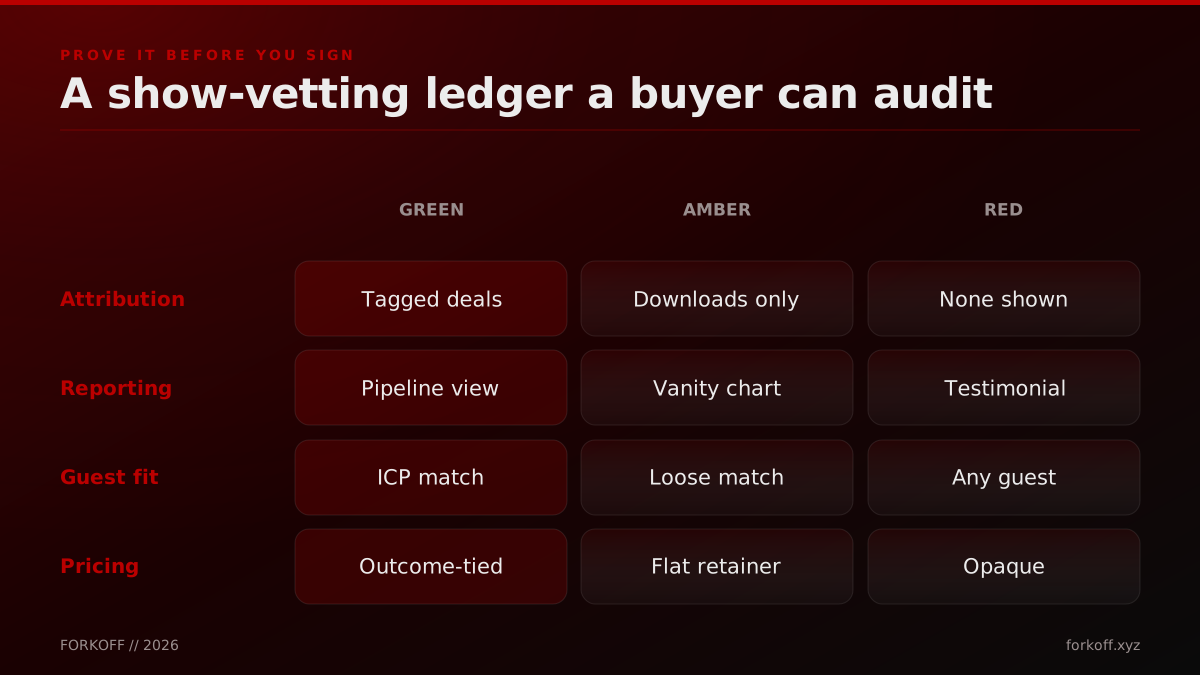
You prove it before you sign by demanding the attribution math up front, and by treating any refusal to show it as the answer. A credible partner will tell you how they tag pipeline, what their guest-to-opportunity rate is, and how they report influenced pipeline instead of downloads. The cleanest tell is whether they will show you a show-vetting ledger, a plain GREEN, AMBER, RED read on attribution proof, reporting quality, guest fit, and pricing structure, that you can inspect before any money changes hands. An opaque flat retainer backed by testimonials cannot show you that math, which is the exact risk you are trying to price, and the market is full of shows that produce downloads on a retainer and no pipeline.
The measurement lane for B2B podcasting is wide open
A live DataForSEO SERP pull in July 2026 shows the phrase podcast attribution carries a keyword difficulty of 2, and the entire first page is owned by ad-attribution vendors measuring podcast ADS through pixels and RSS, not by anyone attributing B2B pipeline from a founder guesting or hosting a show. The measurement guides that do rank teach a KPI checklist and then fall back to downloads. Nobody publishes a first-party, CRM-tagged pipeline-attribution model with a guest-to-opportunity benchmark. That gap is the reason a rigorous, honest model wins the intent: the demand exists, the difficulty is low, and the incumbents skip the one axis (real outcome data) that a buyer with a CFO actually needs.
Source: FORKOFF SERP analysis 2026; live DataForSEO pull 2026-07-08 on `podcast attribution` (KD 2) and `how to measure podcast roi`
That vetting ledger is the difference between buying a service and buying a slot machine. GREEN means tagged deals, a real pipeline view, ICP-matched guests, and outcome-tied pricing. RED means downloads-only reporting, a testimonial in place of data, any-guest booking, and an opaque retainer. Most of the market sells somewhere in the AMBER-to-RED band and asks you to trust it. The reasonable buyer response is not to distrust podcasting, it is to demand the proof that separates a measurable channel from a hopeful one, which is the same standard the best podcast marketing agency comparison applies across the field. When the proof is on the table before the retainer, the download-versus-pipeline argument settles itself.
Operator noteThe buyer test: show the attribution math and the vetting ledger before the retainer. An agency that will not is hiding the risk you price.
Operator notePodcast Ledger 2026 figures (n=84 shows, ~10% guest-to-opportunity, 60-70/20-25/10-15 split) are first-party estimates, not law.
The honest summary is that podcast ROI in B2B was never unmeasurable, it was just usually un-instrumented. Downloads are a vanity metric because they measure the wrong thing on the wrong clock. Pipeline is the number because it survives a finance review, and you get to it with three attribution surfaces, a 90-day window, and a guest-to-opportunity rate you watch like a hawk.
::directive{id="mc-9"} Do that, and the podcast stops being the line item nobody can defend and becomes the founder funnel that books the pipeline. FORKOFF builds and measures the B2B podcast growth motion as an attributable sales channel, and it turns each appearance into the distribution and clipping system that makes the attribution worth having. The measurement is not the hard part. The discipline to report the right number is.