Podcast guesting and hosting your own show look like the same channel, but they are two different motions with two different payoff curves. Guesting borrows an existing audience fast, on the host's trust, with almost no production overhead. Hosting builds an audience you own, slowly, at real production cost, and it compounds. For most B2B founders the right answer is not to pick one. It is to guest first, learn what lands, warm the network, then host once you can commit to a cadence, and run both through a single distribution engine. This guide gives you the decision framework, the economics, and the order.
Podcast guesting vs hosting in one scroll
Guesting borrows an existing audience fast, with almost no production overhead, and converts on the host's trust. Hosting builds an owned, compounding asset slowly, at real production cost, and pays off over 6 to 12 months. For most B2B founders the answer is not either, it is both, in order: guest first to learn what lands and warm the funnel now, then host once you can commit to a cadence, and run every appearance and episode through one clip and distribution engine so nothing airs once and dies.
About these numbers
A note on sourcing before the framework. The search-demand figures (start a podcast at about 2,900 a month, podcast guesting at about 480 a month) are DataForSEO United States data pulled on 2026-07-07. The asset-yield and qualified-view figures (30-plus distribution assets per appearance, 8 to 12 clips per 60-minute episode, 5 billion-plus views processed) are first-party FORKOFF operating numbers from our podcast distribution work, not third-party benchmarks, and individual results vary by show, topic, and founder cadence. Timeline claims (weeks for guesting, months for hosting) are directional operator observations, not guarantees. For the broader trend, media researchers such as Edison Research and the Pew Research Center have tracked the steady rise of United States podcast listening for years, and industry trackers like Podnews follow the show-level data daily. Every operator quote in this post is verbatim and links to its public source. Where a range is a market estimate, it is labeled as one.
Host, guest or both: the questions founders ask before choosing
Should you start your own podcast or guest on podcasts? Guest first, for at least a quarter. Guesting costs an hour per episode, puts you in front of an audience someone else spent years building, and tells you within ten appearances whether your story holds attention. Hosting costs a day a week once production is counted, starts with an audience of zero, and pays back only after a year of consistency. The founders who host well are almost always the ones who guested first and learned what the audience asked.
Why are so few founders self-hosting? Because the hidden production load is real: booking, prep, recording, editing, show notes, distribution and the guest follow-up add up to a part-time job, and the first thirty episodes reach almost nobody. Most shows stop before episode ten, which is the argument for the guesting quarter before any hosting decision.
Is solo hosting harder than hosting with guests? Yes, in a specific way: a guest supplies half the content and the whole promotion when they share the episode; a solo show supplies neither, so it lives or dies on the host's ability to be interesting alone for thirty minutes, every week. Solo works for a founder with a strong point of view and a written backlog; interview formats work for everyone else.
Which works better for a founder, hosting or guesting? Measured on qualified conversations per hour of founder time, guesting wins in the first year and hosting can overtake it in the second, provided the show is the founder's category rather than the founder's company. The "both" strategy in the sections below is how to bridge the two without doubling the workload.
For the guesting side in depth read the podcast guesting playbook for AI startups, and for how guesting compares with outbound as a lead channel, podcast guesting versus cold email.
Reviewed 2026-09-22 against the live search results for this topic: the questions people ask about it, and the pages that rank for it, are reflected in the section above.
What is the real difference between podcast guesting and hosting your own show?
The real difference is ownership of the audience. When you guest on a podcast, you are renting someone else's audience for an hour, and you inherit their trust the moment the host says your name. When you host your own show, you are building an audience you own, one episode at a time, and every listener relationship is yours to keep. That single distinction, rented reach versus owned reach, drives every other difference in cost, speed, control, and payoff. Guesting is a distribution tactic you can start this week. Hosting is an asset you build over quarters.
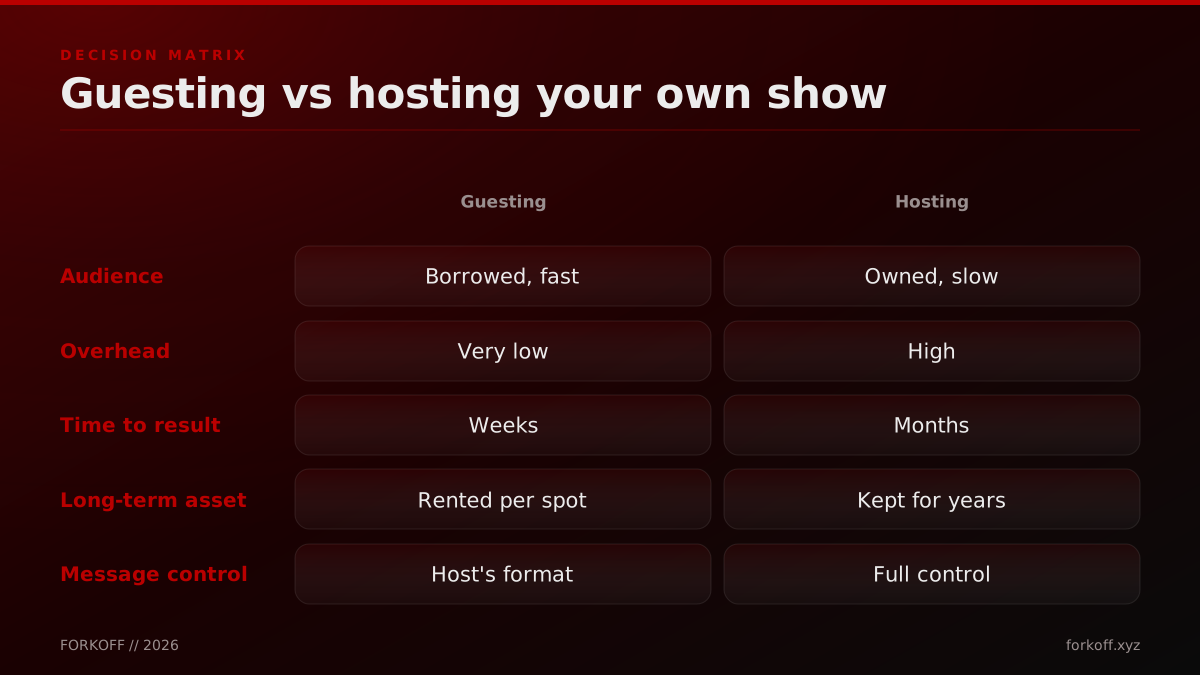
Both motions put a founder's voice in front of buyers, but they load the effort at opposite ends. Guesting front-loads the relationship work (finding shows, pitching, prepping) and back-loads almost nothing, because the host handles production, editing, and distribution to their own audience. Hosting inverts that: the pitch work disappears, but you now own recording, editing, clipping, publishing, and the slow grind of growing listeners from zero. The naive read is that hosting is more serious and therefore better. The honest read is that they solve different problems at different speeds, and the founder who treats them as interchangeable usually picks wrong.
It helps to name what each motion is actually optimizing for. Guesting optimizes for reach efficiency: the most qualified attention for the least production effort, borrowed from someone who already earned it. Hosting optimizes for ownership: a direct line to an audience that no platform or host can take away, plus a searchable, citable body of work that compounds. A founder who is clear about which of those two they need this quarter rarely picks wrong. The confusion sets in when a founder wants ownership but only has the hours for reach, or has the hours for ownership but needs reach this month. That mismatch, wanting one and being resourced for the other, is the single most common reason founders stall on the decision instead of just starting.
That is why the most useful framing is not which is better, it is which job are you hiring the channel to do. If the job is warm pipeline in the next quarter, guesting almost always wins. If the job is a durable audience and category authority you still own in three years, hosting wins, but only if you survive the ramp. Plenty of founders start a show for the first reason and quit before it delivers the second, which is the specific failure the next voice is warning about.
Evan Hynes
@EvanDHynes
sometimes I wanna grab a founder by their shoulders and yell "DON'T MAKE A PODCAST" Like literally no one cares about your deep insights on starting a company as a first time founder.
The caution is fair. A show built on generic first-time-founder insights, published into a void, with no distribution behind it, is worse than no show, because it burns hours you could have spent guesting your way onto audiences that already exist. The decision is not hosting good, guesting bad, or the reverse. It is a sequencing and commitment question, and it starts with search demand.
The search demand tells you these are two different jobs
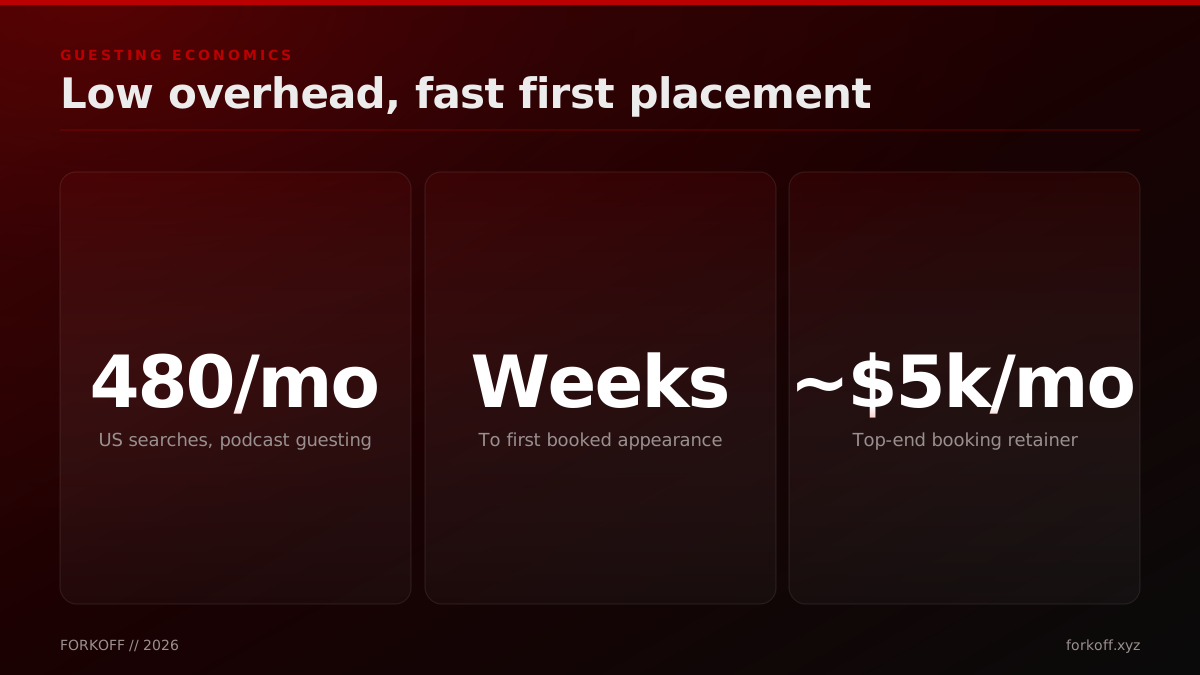
The demand data frames the choice cleanly. In DataForSEO's United States dataset for 2026, start a podcast draws about 2,900 searches a month at medium competition, while podcast guesting draws about 480 searches a month at low competition. The exact head to head phrase, podcast guesting vs starting your own podcast, returns almost no standalone volume, which is the tell: very few people search the comparison because most treat the two as unrelated tasks. They are not. They are two entries to the same outcome, an audience of buyers who trust the founder, reached one on borrowed attention and the other on owned attention. Reading them as one decision, rather than two hobbies, is where the leverage is.
Is podcast guesting the right first move for a B2B founder?
For most B2B founders, yes, guesting is the right first move, because it delivers the two things an early founder needs most: fast feedback and borrowed trust. You can pitch a show this week and be recorded within a month, and the moment you appear, the host's audience extends you the credibility they have already granted the host. You do not have to build an audience, buy attention, or wait for compounding. You borrow all of it. That is why guesting reaches buyers in weeks while a new show is still talking to a handful of friends and family, and it is the founder-led motion behind the FORKOFF work on the podcast booking system for founders and the podcast guesting playbook for AI startup founders.
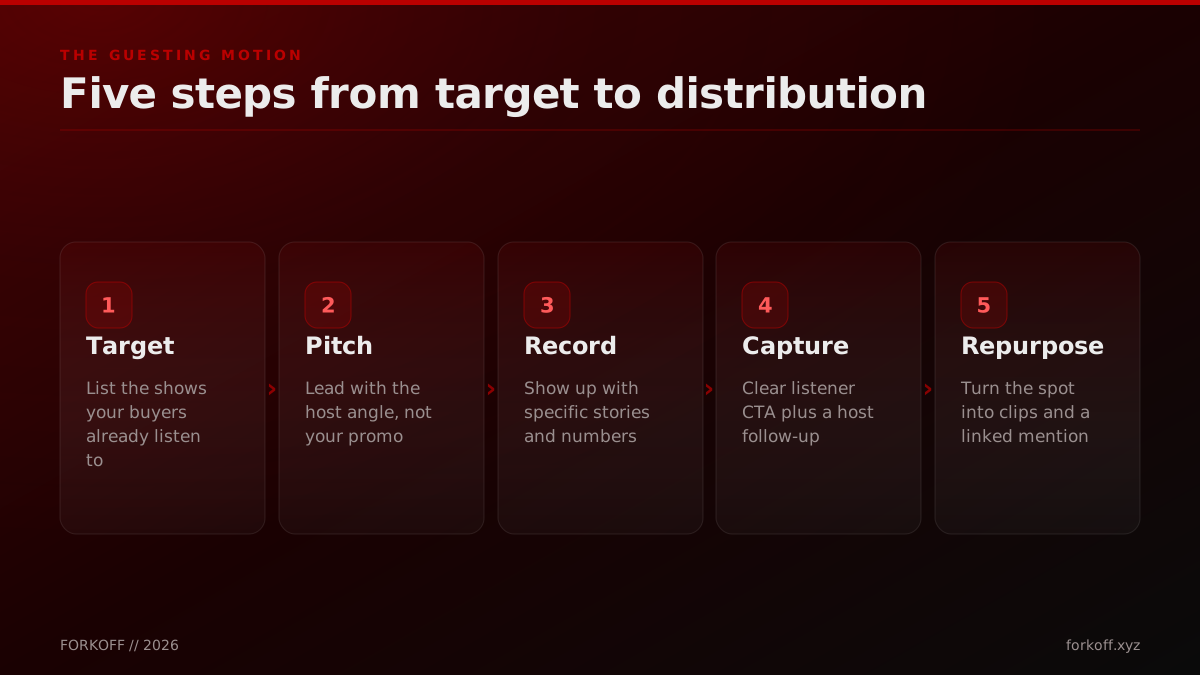
The mechanics are unglamorous and repeatable, and practitioner guides such as The Podcast Host and Edward Sturm document the same basic loop. You build a targeted list of shows your buyers actually listen to, you pitch from the host's angle rather than your own promotional one, you show up prepared with specific stories and numbers, and then, critically, you repurpose the appearance into clips, quote cards, and a linked mention so one recording works for months. Done well, this is a lead channel and a link-building channel at the same time, because guest spots routinely come with a show-notes backlink and a branded mention that answer engines can cite. The economics are attractive precisely because the overhead is so low.
The quality of the target list is what separates a guesting channel from a guesting hobby. Not every show is worth an hour of a founder's time. The highest-yield appearances are on shows whose audience overlaps tightly with your buyers, whose host has genuine reach, and whose format lets you tell a specific, numbers-backed story rather than a generic founder origin tale. A useful habit is to tier your target shows: a small top tier of dream shows your buyers definitely listen to, a middle tier of solid niche shows that book guests readily, and a long tail you use to practice and sharpen your talking points. Pitch the middle tier first to build a track record and clips, then use those clips as proof when you pitch the top tier. Founders who skip the tiering and pitch only the biggest shows usually get silence, because they have no track record to point to yet.
There is a real, verifiable version of this working. One outbound operator described running targeted outreach for a booking client and landing eight confirmed appearances in four weeks, not through anything clever, just consistent pitching to the right hosts instead of spraying every show with a template.
Ayesha Ameen
@AyeshaAmeen78
Underrated off-page move in 2026: podcast guesting. One niche podcast appearance gets you: - A backlink from the show notes - A branded mention AI engines can cite - Referral traffic that actually converts Pitch 5 shows in your space this month.
Four weeks later, one of their clients had eight confirmed appearances booked. Nothing complicated, just consistent outreach to the right hosts instead of spray and pray.
That said, guesting is not free money, and the honest failure mode is important. Guesting without a system is a treadmill: you prep, you show up, you pour energy into a great conversation, and then nothing happens, because you never captured the audience, never followed up, and never repurposed the appearance. The friction is real even at the booking stage, where founders bounce between guest exchanges, cold pitches, and matching tools like PodMatch with mixed results.
How can I get on podcasts? does Podmatch work and is it worth the trouble?
Operator noteDefault for pre-seed and seed founders: guest first. You learn what lands in weeks, before you fund a show nobody is waiting for., FORKOFF founder podcast engagements, 2026
The fix for the treadmill is not to guest less, it is to guest with a capture system: a clear call to action for listeners, a follow-up sequence for the host and their audience, and a repurposing pipeline so every appearance becomes durable assets. That is the difference between the founder who did 150 appearances and built real reach and the founder who did ten and felt nothing changed.
The repurposing step is also where guesting quietly becomes a link and authority channel, not just a reach channel. A single appearance often produces a show-notes backlink, a mention on the host's site, and a page that names the founder and the company. Over a year of consistent guesting, those add up to a spread of third-party mentions across relevant sites, which is exactly the footprint that answer engines reward when they decide who to cite for a query. This is the compounding most founders miss, because they judge an appearance on the leads it produced this week and never count the durable link and citation value it produced for the next year. If you want the head-to-head against a different channel, the FORKOFF comparison of podcast guesting versus cold email covers the conversion math, and the agency versus DIY guesting cost breakdown covers what placements actually cost.
When should a founder host their own show instead?
Host your own show when you have validated a message, can commit to a real cadence, and want an asset you own rather than reach you rent. Hosting only pays off if you sustain it, so the honest gate is not do I want a podcast, it is can I ship an episode every week or two for a year without the wheels coming off. If yes, hosting builds something guesting never can: a back-catalog, a subscriber relationship, full control of format and topic, and a search-ranking surface that compounds. If no, hosting will quietly become the abandoned project in your content graveyard, and you would have been better served guesting. The FORKOFF founder-led sales podcast strategy is built for exactly the founder who can make that commitment.
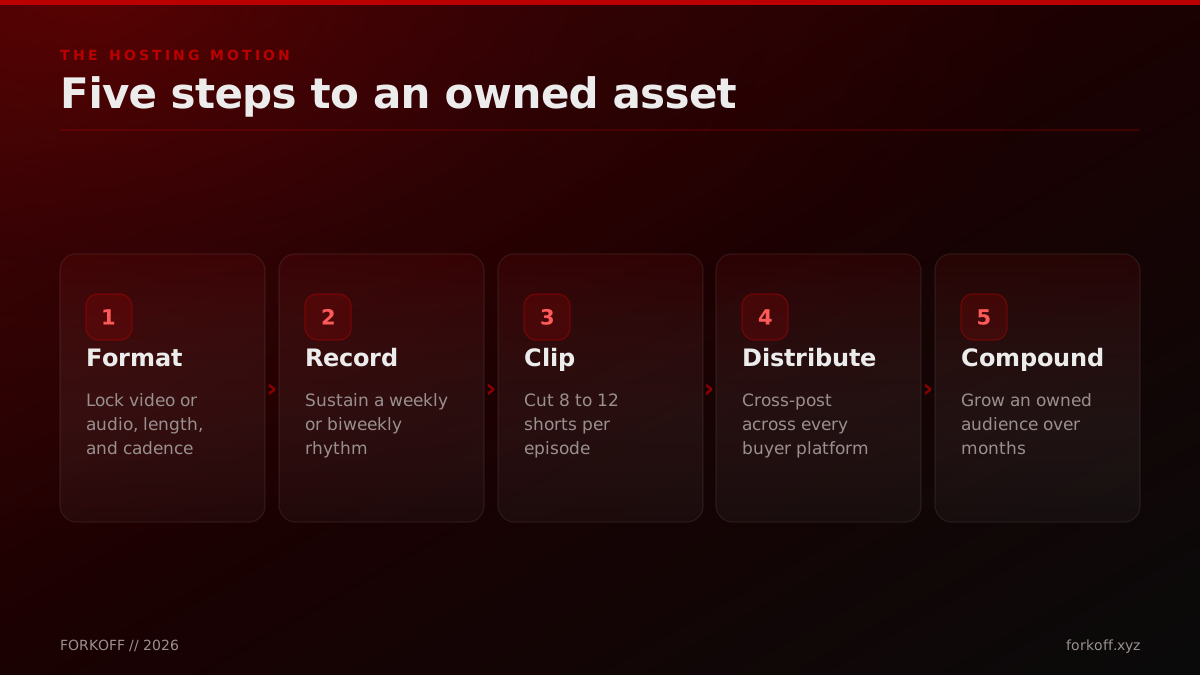
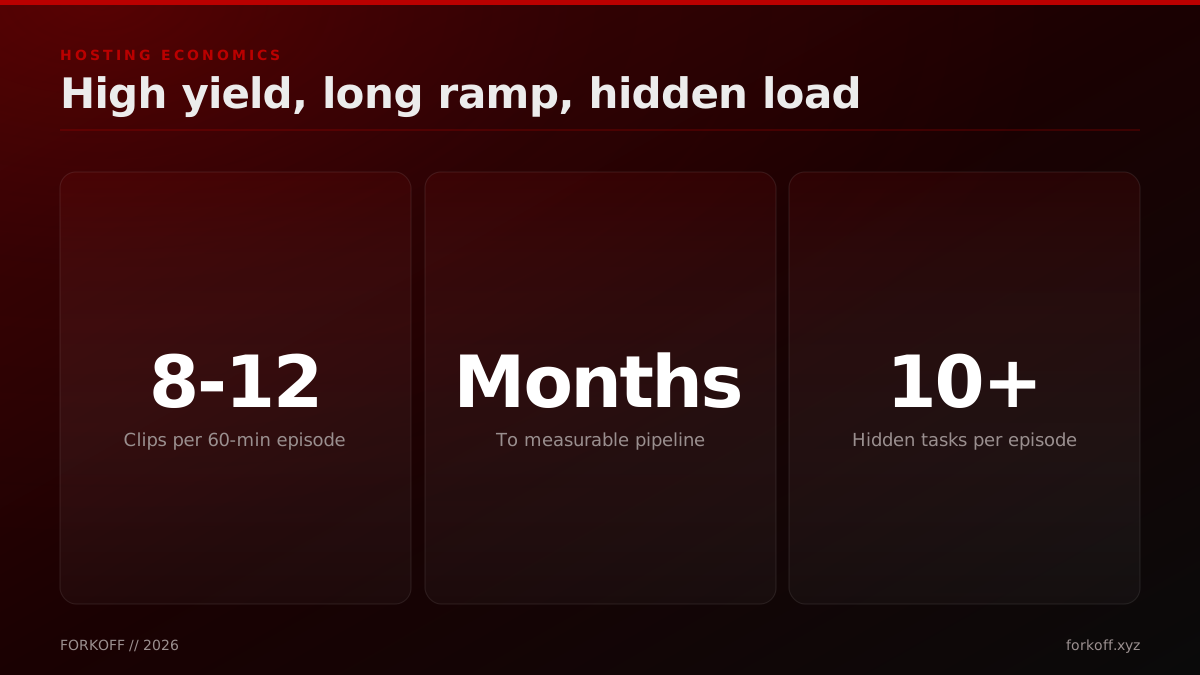
The reason hosting demands a commitment test is the hidden production load. The part listeners hear is the tip of the iceberg. Under it sits research, scripting, recording setup on a tool like Riverside, audio cleanup, editing, titles, thumbnails, clip selection, scheduling, and social distribution, every single episode. Founders who start a show imagining an hour of talking usually discover the invisible work within the first month, and it is the single most common reason shows die before they compound.
A year of Podcasting from absolute zero: Here's what I learned.
Operator noteThe show is not the mic. It is research, editing, clipping, thumbnails, and scheduling every week. Budget the iceberg, not the hour., FORKOFF podcast production, 2026
The way to survive the production load is to treat the show as a system with clear owners, not a weekly scramble. The FORKOFF podcast engine breaks a single episode into six repeatable blocks: the narrative spine that decides what the episode is about, the recording, the master edit, the clip cadence, the written and search-ready page, and the cross-platform distribution. Each block has a checklist and can be handed to a different owner, which is what turns an unsustainable solo effort into a repeatable engine. It is also why an outcome-priced production partner changes the math: the founder keeps the 60-minute recording commitment and the approval step, and the engine carries the iceberg underneath.
None of that is a reason to avoid hosting. It is a reason to resource it properly, because when a show survives the ramp, the payoff is genuinely different in kind from guesting. You own the audience, so you can talk to them again next week without asking anyone's permission, and owned reach is measurable in a way rented reach is not, which is why audience-measurement firms like Nielsen exist at all. You own the back-catalog, so every episode page keeps ranking and getting discovered long after it airs, which is the entire premise of the FORKOFF work on podcast transcript SEO and using YouTube as a podcast discovery engine. And you control the format, so the show becomes a category-defining asset rather than a guest slot shaped by someone else's brand, the kind of thought-leadership surface that buyer-trust research in outlets like Harvard Business Review has long tied to B2B purchase decisions. Teams that treat the show as a pipeline engine, not a vanity project, build it deliberately for business results.
How We Build Video Podcasts That Drive Real Business Results | B2B Podcast Agency
bcjr Podcast
A B2B production team walks through building a video podcast that drives real business results, the hosting side of this comparison in practice.
One decision compounds the production load more than any other: format. A video podcast published to YouTube reaches a discovery engine that audio-only shows cannot touch, but it multiplies the production work, adding lighting, framing, editing, and thumbnail design to every episode. An audio-only show is far cheaper to sustain but gives up the largest podcast discovery surface there is. Most B2B founders who commit to hosting land on video precisely because the discovery upside is where the pipeline is, but that choice should be made with eyes open about the hours it adds, not defaulted into after three episodes when the editing backlog piles up.
The rest of the format choice matters as much as the commitment. Cadence and length change the production load and the distribution ceiling too, which the FORKOFF breakdown of video podcast versus audio only covers in detail, and the growth mechanics of getting past the early plateau are covered in the FORKOFF guide to growing a podcast. Hosting is not one decision, it is a stack of them, and each one adds to the iceberg you are committing to carry.
How do the economics of guesting and hosting compare?
The economics split along the same rented-versus-owned line, and the clearest way to see it is time to first result. Guesting is front-loaded value: low cost, mostly your time or a booking retainer, and a payoff that arrives in weeks because you convert on borrowed trust. Hosting is back-loaded value: recurring production cost and a payoff that arrives in months, because you are building an audience from zero before it can move pipeline. Neither is cheaper in the abstract. Guesting is cheaper to start and faster to return; hosting is more expensive to run but builds an asset you keep. The right lens is not cost per hour, it is cost against the job you are hiring the channel to do.
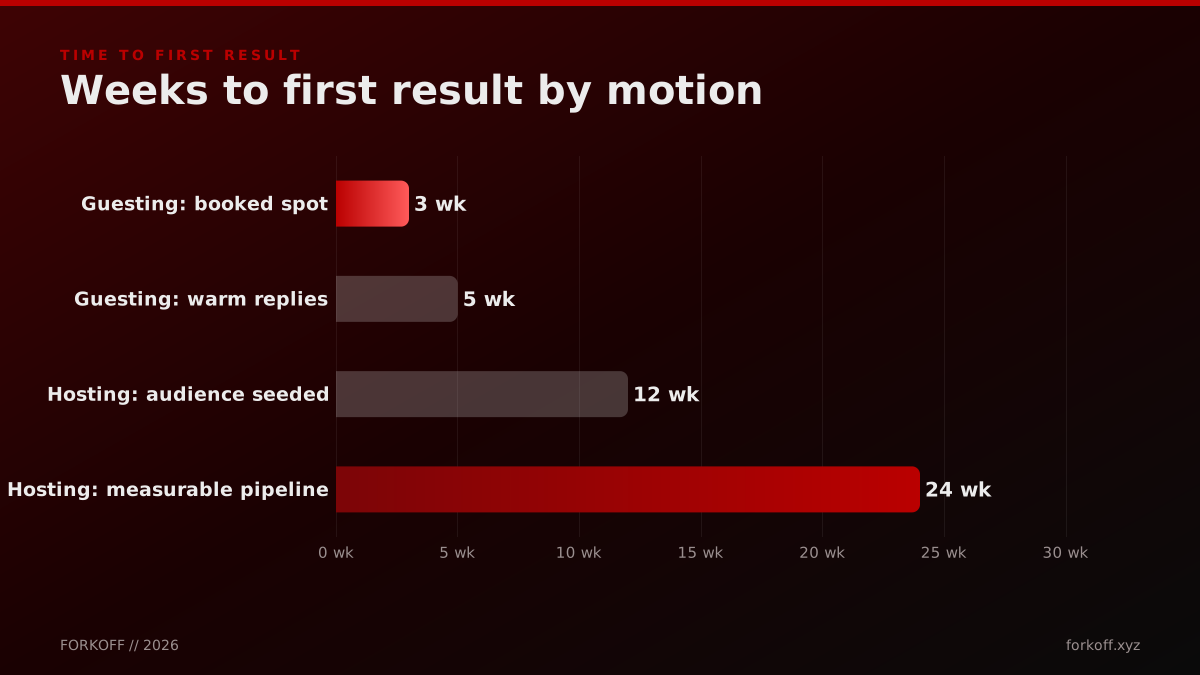
Put the two side by side and the trade becomes concrete. On cost, DIY guesting is time only, while premium guest-booking retainers run roughly 4,000 to 5,000 dollars a month at the market's upper end, and hosting layers on recurring recording, editing, clipping, and distribution costs regardless of who you book. On yield, both motions can throw off a lot of assets per output if you run the repurposing pipeline, but hosting adds one thing guesting cannot: a search-ready episode page you own and control.
Podcast guesting vs hosting your own show, B2B founder comparison 2026
| Dimension | Podcast guesting | Hosting your own show | Edge |
|---|---|---|---|
| Audience | Borrowed from the host | Owned and compounding | Guesting now, hosting later |
| Production overhead | Very low, you just show up prepped | High, recording, editing, clipping, distribution | Guesting |
| Time to first result | Weeks to a booked appearance | Months of cadence before measurable pipeline | Guesting |
| Trust transfer | Inherited from the host on day one | Built slowly with your own listeners | Guesting early, hosting compounds |
| Long-term asset | Assets you rent per appearance | A back-catalog and audience you keep | Hosting |
| Control of message | Shaped by the host's format | Full control of format and topic | Hosting |
The more honest way to compare cost is per outcome, not per month. A guesting placement that took ten hours of research, pitching, scheduling, and prep, spread across a founder whose time is worth real money, is not free even when no cash changes hands, and a booking retainer simply converts that time into a predictable line item. A hosted episode carries a similar hidden cost in production hours, but it amortizes differently because the episode page keeps working: it ranks, it gets discovered, and it can be cited months later, so the cost per durable outcome falls over time. Guesting is cheaper per placement today; hosting is cheaper per outcome once the back-catalog compounds. Neither reading is wrong, they just answer different questions.
It is also worth being honest about the market you are buying into. The guesting side has matured into a real services category: premium retainers that book founders and executives onto shows their buyers listen to, self-serve marketplaces that match guests to hosts, and full-service shops that bundle booking with production. Prices range from free-but-time-intensive DIY to five-figure monthly retainers at the top end. The hosting side has a parallel spread, from a founder recording alone into a laptop mic to a fully produced, clipped, and distributed video show. Knowing where your budget and hours sit on that spectrum is half the decision, because the right answer for a bootstrapped solo founder and a funded team with a marketing budget are genuinely different.
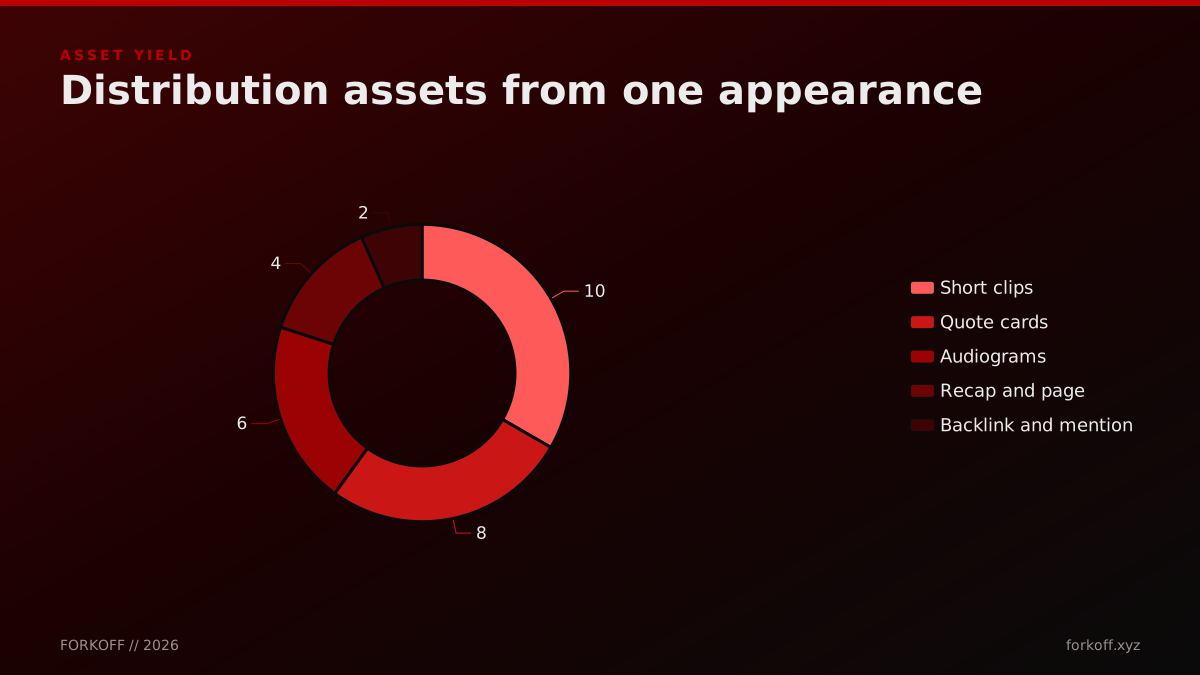
Asset yield is where the numbers get interesting, and where the two motions actually converge. A single appearance or episode, run through a proper distribution engine, does not air once and die. It becomes short clips, quote cards, audiograms, a written recap, and, for a hosted show, a transcript-backed page that ranks. FORKOFF's own operating benchmark is that one founder appearance yields more than 30 distribution assets, with 8 to 12 short clips per 60-minute episode, and those clips cross-post across X, TikTok, Reels, and Shorts. The distribution engine is the same whether the source is a guest spot or your own episode, which is the entire argument for running both.
Guesting quietly feeds answer-engine visibility
There is a second-order payoff to guesting that most founders miss, and it shows up in AI search. When a founder appears on a niche show, the episode page, the show notes, and any recap usually name the founder and link the company. Those are exactly the branded, third-party mentions that answer engines lean on when deciding who to cite for a query. A hosted show helps here too, because a well-built episode page with a chunked transcript is citable in its own right, as covered in the FORKOFF work on podcast AEO and transcript SEO. The point is that the guesting versus hosting choice is not only a pipeline decision, it is also an AI-visibility decision, and both motions contribute if the pages are built to be read by machines, not just streamed.
Cost and yield of podcast guesting versus hosting, 2026 estimates
| Line item | Podcast guesting | Hosting your own show |
|---|---|---|
| Direct cost | Mostly time, or a premium booking retainer | Recurring production and distribution cost |
| Typical spend | DIY is time; retainers about $4k to $5k a month | Recording, editing, clipping, hosting monthly |
| Assets per output | Clips, quotes, and a show-notes backlink | Clips, quotes, plus a search-ready page |
| Payoff curve | Front-loaded, converts on borrowed trust fast | Back-loaded, compounds as the audience grows |
Which should a B2B founder pick? A decision matrix by stage
The honest answer is that founder stage decides the pick more than personal preference does. A pre-seed or seed founder with limited hours and an unvalidated message should almost always guest first, because guesting delivers fast learning and warm pipeline without a production commitment they cannot yet keep. A Series A or later founder with a validated angle, some budget for production, and a genuine willingness to commit to a cadence has earned the right to host, and should, because the owned asset compounds into category authority. The founders who get this wrong are usually early-stage teams who start a show for status and abandon it, or later-stage teams who never build the owned asset and stay dependent on other people's audiences forever.
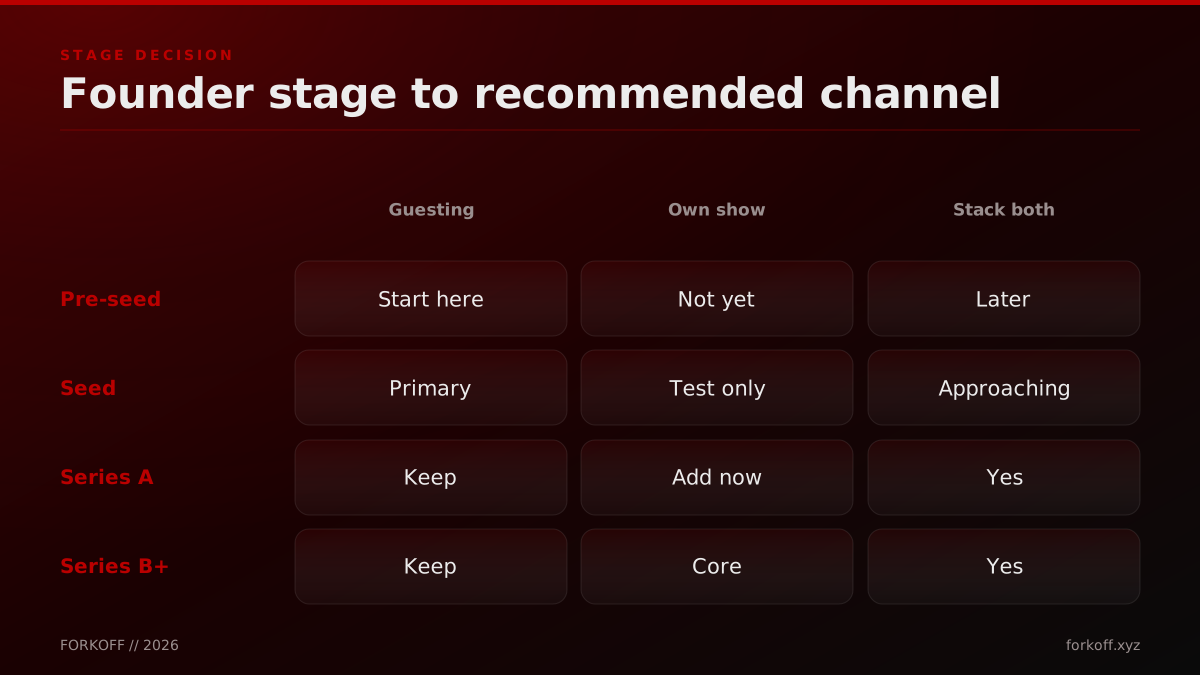
The hours math is the fastest way to check yourself. Guesting can run on a few hours a week of pitching and prep, which almost any founder can find. Hosting a weekly show, done properly, is closer to a part-time job once you count recording, editing, clipping, and distribution, unless you resource it with a team or a partner. If you cannot honestly commit those hours or that budget for a full year, the decision is made for you: guest, and revisit hosting when you can. The founders who ignore this are the ones whose podcast feed shows six episodes and then a two-year gap, a public signal of a project started on enthusiasm and abandoned on reality.
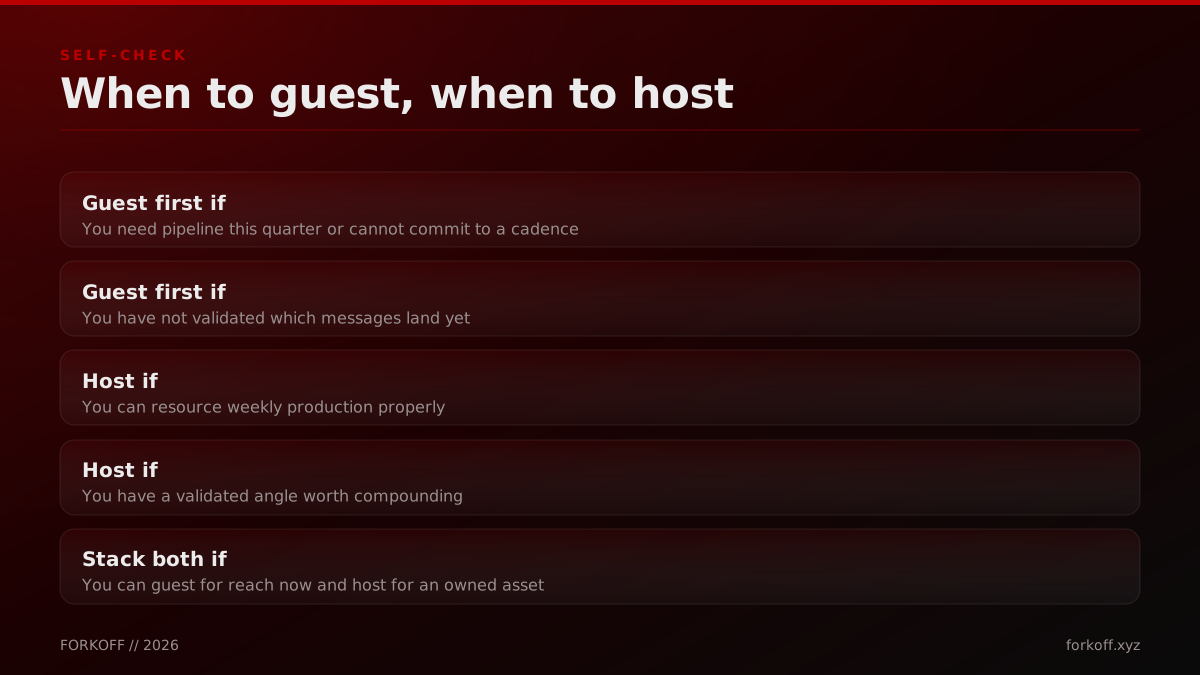
The self-check is simple. Lean guesting if you need pipeline this quarter, cannot commit to a weekly or biweekly cadence, have not yet validated which messages land, or want to test the podcast channel before investing in it. Lean toward hosting your own show if you can resource production properly, have a validated angle worth compounding, want to own the audience relationship, and are optimizing for a durable asset over a three-year horizon rather than a lead this month. Most founders sit somewhere in between, which is exactly why the answer is usually a sequence, not a single pick.
Operator noteWhether the voice ships as a guest spot or your own episode, run it through one clip-and-distribution engine so nothing airs once and dies., FORKOFF podcast engine
There is a distribution reality underneath all of this. Whichever motion you choose, the founder's voice is the raw material, and the value comes from how widely and repeatedly that voice gets distributed. This is where the podcast decision connects to the broader Founder Funnel motion and to owned channels like Twitter and X marketing and Reddit marketing: a guest spot or an episode is not the finish line, it is the source clip for a week of distribution across every surface your buyers actually use.
Can you run guesting and hosting together?
Yes, and for a founder who can resource it, running both is the highest-leverage answer, because the two motions feed each other in a specific order. Guest first to learn which messages make hosts lean in and audiences reply, to warm a network of hosts who now owe you a return invite, and to build a library of clips that prove your format works. Then host your own show carrying all of that forward: a validated angle, warm guests to invite back, and a distribution muscle you already built. Run in that order, guesting is not a competitor to hosting, it is the research phase and the audience-seeding phase for the show you host later.
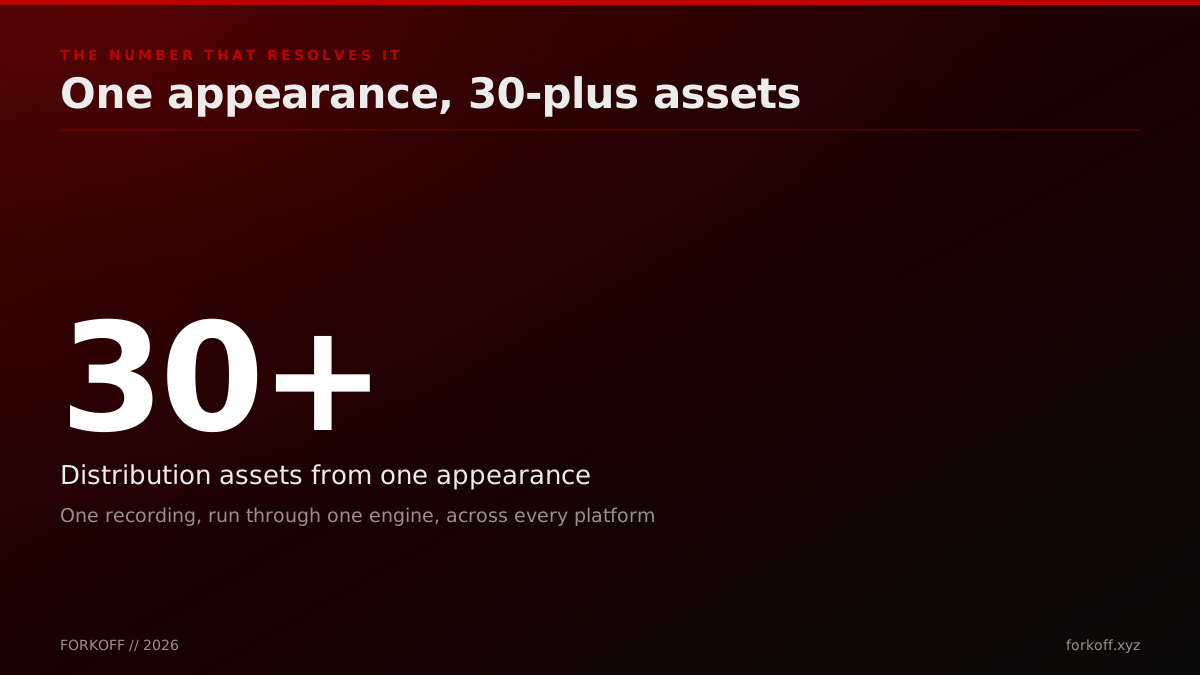
The mechanism that makes stacking work is a single distribution engine sitting under both motions. Every guest appearance and every owned episode enters the same pipeline: clip it into 8 to 12 shorts, pull quote cards, cut audiograms, write the recap, build the page, and cross-post everything. That is how one recording becomes more than 30 assets, and it is why the source of the recording matters less than the engine behind it. FORKOFF has processed more than 5 billion views through this clipping and distribution network, and the qualified-view rigor behind it is the same whether the founder was a guest or the host.
The order matters more than the pick
The most common mistake is not choosing the wrong motion, it is choosing them in the wrong order or running them disconnected. Founders who launch an owned show first, before they know which messages land, spend months producing episodes that no audience is waiting for, which is the trap the contrarian voices in this post warn about. Founders who guest first learn, in weeks, which framings make hosts lean in and audiences reply, and they arrive at their own show with a validated angle, a warm network of hosts who now owe them a return invite, and a library of clips proving the format works. Guesting is not just faster pipeline, it is market research and audience seeding for the show you host later.
Podcast guesting has helped me share my message with new people. One conversation at a time. I have been on over 150 podcasts.
There is a compounding social mechanic that only shows up if you run the motions in order. Every host you guest for is a relationship, and hosts reciprocate: they come on your show later, they refer you to other hosts, and they amplify your episodes to their audience. A founder who guested widely before launching a show arrives with a warm bench of guests and cross-promotion partners already in place, which solves the cold-start problem that kills most new shows. Run in the other order, launching a show first with no network, and every guest is a cold ask and every listener is a stranger. The order is not a preference, it is the difference between a show that starts warm and one that starts from zero.
The order also protects you from both failure modes at once. Guesting first means you never launch a show into a void, because you already know what lands. Committing to hosting second means you eventually stop renting reach and start owning it. The founders who only guest stay dependent on other people's audiences; the founders who only host, before validating, usually quit before the compounding begins. Stacking, in order, is how you get the speed of one and the durability of the other, and it is the model behind the six-block FORKOFF podcast engine and the podcast monetization math that decides when a show pays for itself.
How do you know podcast guesting or hosting is working?
You know it is working by tracking outcomes, not vanity metrics. Downloads, impressions, and follower counts feel like progress but say almost nothing about pipeline. The signals that matter are warm replies, booked calls, and attributed deals: the prospect who says they heard you on a show, the inbound message that quotes your episode, the warm intro that traces back to a host relationship. A founder motion is only as good as its attribution, which is why the FORKOFF Founder Funnel reports a weekly outcomes ledger of warm intros, qualified applicants, and partnership conversations rather than reach numbers.
The measurement also differs by motion, which changes how patient you should be. Guesting attribution is fast and direct: within days of an appearance you can see whether listeners clicked through, replied, or booked, because the audience already exists and acts immediately. Hosting attribution is slower and more diffuse: an owned show builds trust over many episodes, so the deal that closes in month eight may have started with an episode the buyer heard in month three. If you judge a young show on week-four pipeline, you will kill it before it can pay off. Judge guesting on near-term replies and hosting on quarter-over-quarter audience and inbound growth, and you will make the right continue-or-cut call for each. That measurement discipline is the same one behind the FORKOFF podcast service qualified-view rigor, where every view is logged with a reason code rather than counted blind.
The verdict: which pipeline channel should you pick?
If you have to pick one to start, guest. Guesting is the faster, cheaper, lower-risk entry, it delivers pipeline and learning in weeks, and it doubles as the research and network-building for a show you may host later. Reach for hosting your own show when you have validated a message, can commit to a real cadence, and want an owned asset that compounds into category authority, and treat the production load as a real budget line, not an afterthought. And if you can resource both, stack them in order, guest first and host second, running everything through one distribution engine, so a single appearance or episode becomes 30-plus assets instead of a conversation nobody remembers.
The channel matters less than the discipline: the founders who win podcasting are not the ones who picked guesting or hosting, they are the ones who distributed relentlessly whichever one they chose. This decision sits inside the broader podcast AEO and citation strategy that governs how any of this reach becomes durable visibility, and the FORKOFF podcast service and answer engine optimization work exist to run the whole motion for founders who would rather own the outcome than the workflow.