A podcast guest one-sheet, also called a podcast media kit, is the single page a founder hands a booker to prove they are worth an episode. It answers the only question a host really has before saying yes: is this person interesting, and are they easy to have on the show. Once the yes lands, the recording itself has its own prep, at how to prepare for a podcast interview. Most founders never build one. They send a bare cold pitch, and the show never replies. This is the exact anatomy of the asset that changes that, block by block, plus how it moves your booking reply rate.
The founder guest one-sheet, in one scroll
A podcast guest one-sheet, or media kit, is the single page a founder hands a booker to prove they are worth an episode. Most founders skip it and send a bare cold pitch, which asks the host to imagine the angle, guess the audience, and trust a stranger can carry an hour. The one-sheet answers all three on one page. It has seven blocks: a headline and photo with the one line you want repeated, a positioning bio in a 40-word and a 15-word version, three to five named angles, a concrete talking point under each, audience proof that describes who listens, two or three watchable clips, and a links block with a booking next step. The pitch email earns the open; the one-sheet earns the booking. Built well and paired with a personalized pitch, it is a directional two-to-three-times lift on reply rate versus a bare pitch. The moat is not the template, it is the founder specificity: named angles, real proof, and a clear next step a booker can act on in thirty seconds.
About these numbers
The reply-rate lifts, the funnel shapes, and the decision-weight index in this post are FORKOFF editorial judgment and directional operator benchmarks from podcast booking and distribution engagements across 2025 and 2026, not a controlled study. Treat every number as directional and illustrative. Actual results vary by show, angle, audience fit, and the strength of your offer. What does not vary is the structure: the seven blocks below are the ones bookers consistently look for, and the failure modes are the ones that consistently get a one-sheet ignored. Every external example and host voice cited here is real and publicly linked.
What is a podcast guest media kit and one-sheet?
A podcast media kit, in the guest sense, is a one-page document a founder attaches to a booking pitch to show a host what an episode with them would look like. The speaking world calls the same artifact a speaker one-sheet, and podcast educators use the terms media kit and one-sheet interchangeably, as Jane Friedman does in her guide on creating a media kit to get on podcasts. Whatever you call it, the job is the same. It is not a resume and it is not a brochure. It is a fast, scannable argument that you are bookable, and it lives next to the pitch email as a second, heavier asset.
The reason it works is that it removes the host's hardest job. A booker reading a cold pitch has to do three things in their head: picture the angle, guess whether their audience cares, and decide whether a stranger can carry an hour on the mic. Each of those is friction, and a busy inbox turns friction into a polite no. The one-sheet answers all three on the page, so the host is not imagining anything. The clearest signal that the asset is established, not a novelty a founder is inventing, is that dedicated guides for it rank across the podcast one-sheet and media kit search results, and practitioners teach it directly.
Where the asset lives matters as much as what is on it. Build it in two formats and keep both current: a clean one-page PDF the host can save or forward to a co-host, and a hosted web link the host can open on a phone with every link live and clickable. The web version is the one that actually gets used, because a booker screening guests on a Tuesday morning is not downloading attachments, they are clicking. Platform guides like the blubrry media kit walkthrough treat the media kit as a living page for this reason. Keep the file naming boring and searchable too, since a host who wants to book you in three weeks needs to find the page again without digging through their inbox. A founder one-sheet is a document you maintain, not a thing you make once and forget, and the founders who keep it fresh are the ones whose proof block still lands a year later.
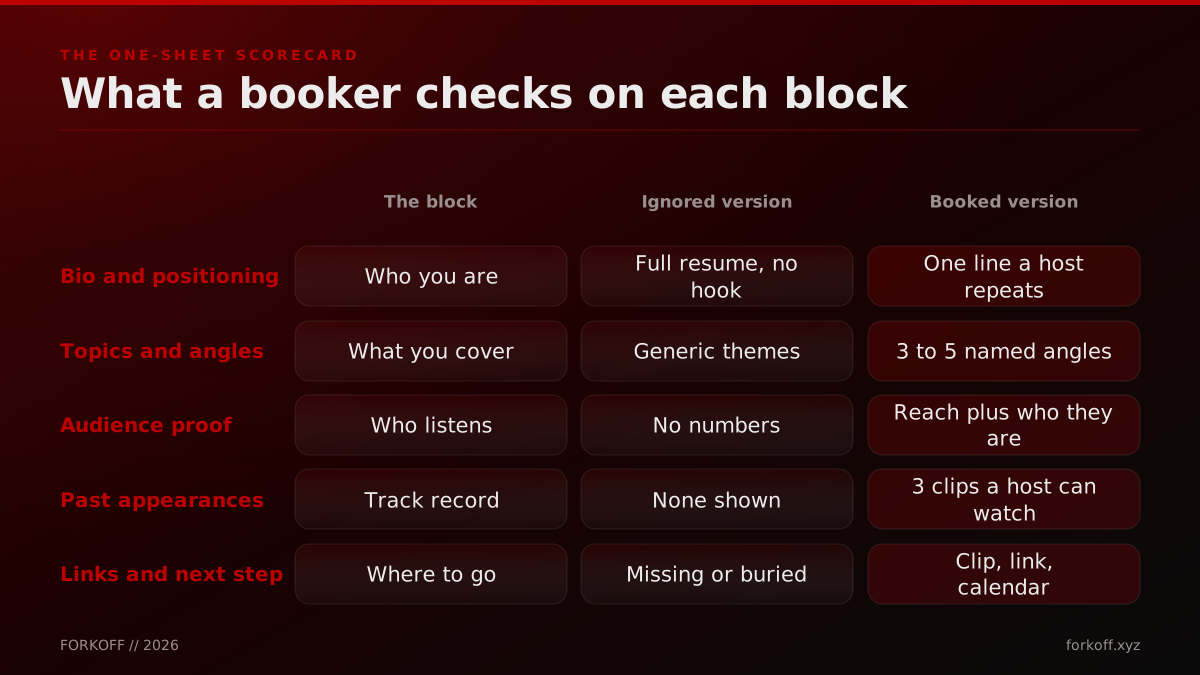
The scorecard above is the whole idea in one frame. For every block a booker checks, there is a version that gets ignored and a version that gets you booked, and the gap between them is almost never about design. It is about whether the block answers the host's real question or dodges it. Before you build a single section, watch how a practitioner frames the same asset.
How to Create a Podcast One Sheet That Will Get You Booked On More Podcasts
Keynote Content with Jon Cook
A practitioner walkthrough of the one-sheet as a booking asset, not a design exercise.
Operator noteThe headline line is the whole game. If a host cannot repeat who you are in one sentence, the rest of the page does not get read.
What are the 7 blocks of a founder guest one-sheet?
A founder guest one-sheet has seven blocks, and they belong in a fixed order because a host reads top to bottom and stops the moment they are convinced or bored. The blocks are a headline and photo, a positioning bio, topics and angles, talking points, audience proof, past appearances, and a links block with a next step. Only one of the seven is optional, and only if you are starting from zero: the past-appearances block. Everything else earns its place because it answers a specific question a booker is silently asking as they scan.
The order matters as much as the contents. The headline and photo have to land the one line you want the host to repeat when they introduce you, because if they cannot say who you are in a sentence, nothing below gets read. The castos guide on podcast one-sheets and the riverside media kit walkthrough both put identity and angle at the top for the same reason. Below that, each block narrows from who you are to what the episode is to why it is safe to book you.
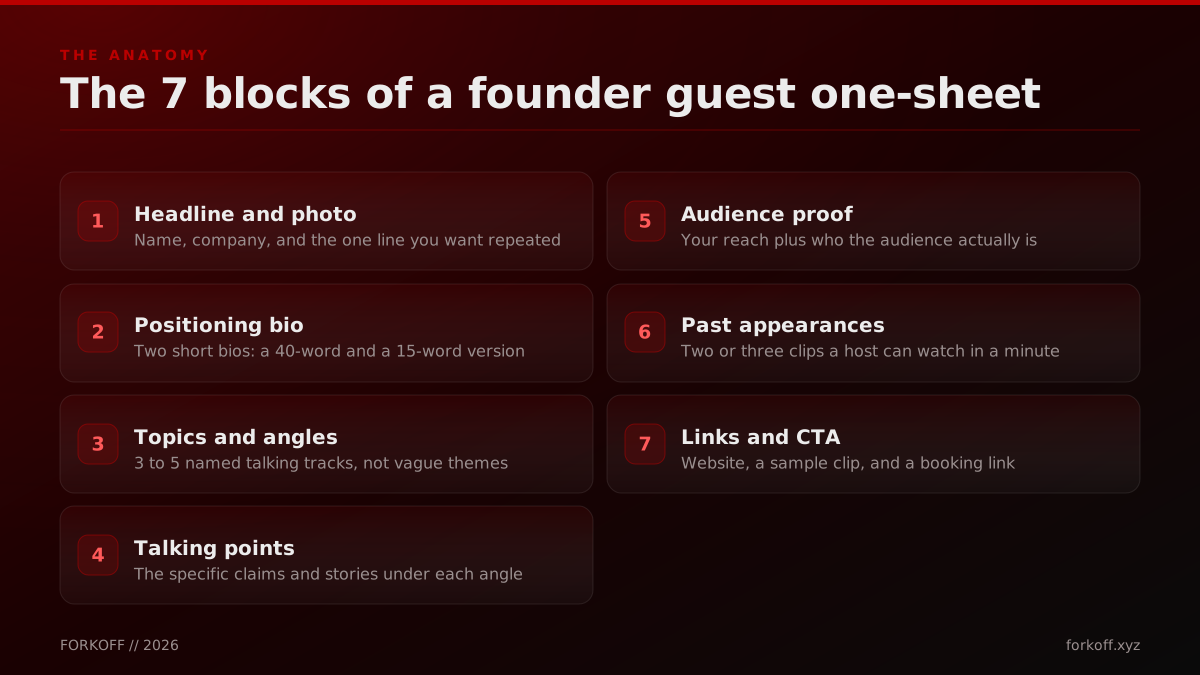
Read the list above as a build order, not a menu. You do not get to skip the angle because the bio was easy to write, and you do not get to pad the page with a fourth bio because you have nothing to put in the proof block. The table below turns each block into the exact question it answers for the host and the version that actually books, so you can audit your own draft line by line.
The 7 blocks of a founder guest one-sheet
| Block | What it answers for the host | The booked-worthy version |
|---|---|---|
| Headline and photo | Who is this and why now | A repeatable one-line and a real headshot |
| Positioning bio | How do I introduce them | A 40-word and a 15-word version, hook first |
| Topics and angles | What is the episode about | 3 to 5 named angles, not vague themes |
| Talking points | Will this be interesting | A concrete claim or story under each angle |
| Audience proof | Will this reach my listeners | Who listens, described, plus your own reach |
| Past appearances | Can they carry an hour | 2 to 3 clips a host can watch in a minute |
| Links and CTA | What do I do next | Site, a sample clip, and a booking link |
That audit is the fastest way to find the hole in your own one-sheet, because most founders are strong on two or three blocks and completely silent on the rest. The silence is what kills it. Hosts are not shy about telling you what they screen for, either, if you go and read the rooms where they talk to each other.
What's one thing you look out for in a podcast Guest? I'd love to hear from podcast host about what makes a good pitch.
A podcast host asks other hosts what actually makes a good guest pitch, the criteria a one-sheet has to satisfy on a single page.
Why the one-sheet removes the host's hardest work
A host's scarcest resource is not slots, it is the effort of picturing an episode from a cold pitch. When a founder sends only an email, the host has to imagine the angle, guess whether the audience overlaps, and trust a stranger can hold an hour. Every one of those is friction, and friction on a busy inbox resolves to no. A one-sheet does that work for the host on a single page, which is why across FORKOFF podcast booking engagements the asset consistently moves reply rate more than any single line of pitch copy.
Source: FORKOFF Podcast Service benchmarks 2026
How does a media kit lift your booking reply rate?
A media kit lifts your booking reply rate because it converts a request for the host's imagination into a request they can evaluate in thirty seconds. A bare cold pitch is a leap of faith for the booker. A pitch with a one-sheet is a decision with the evidence attached. Across FORKOFF podcast booking engagements, attaching a well-built one-sheet to a personalized pitch is a directional two-to-three-times lift on reply rate compared with a bare pitch and no asset. That figure is illustrative, and it moves with the show and the offer, but the direction is consistent across cohorts.
Run the mechanism in plain terms and the lift stops being mysterious. A host on a well-known show gets more qualified pitches than they can accept, so their default is no, and the pitch has seconds to overturn it. Every question the host has to answer themselves is a reason to fall back on that default. When the pitch forces the host to imagine your angle, they usually will not bother, and the pitch dies of ambiguity rather than of a real objection. The one-sheet converts ambiguity into a yes-or-no they can settle at a glance, and a clear yes-or-no is the only thing that beats a default no. That is the entire lift: not persuasion, but the removal of the work that produces the no.
The lift is not evenly distributed across the blocks, which is the part founders miss. The angle carries most of the decision, then the audience proof, then the watchable clips, then the logistics. That ranking is why a clear named angle sits at the top of the page and a beautiful gradient sits nowhere on the priority list.
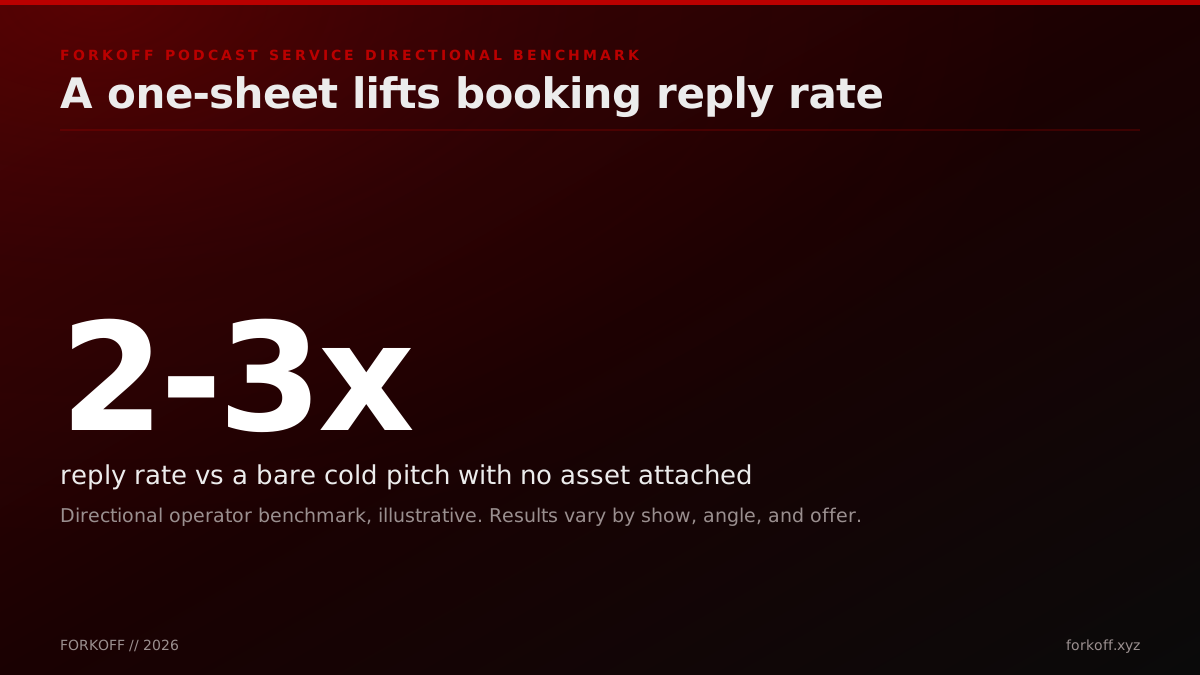
The stat above is the headline, but the mechanism underneath it is what you should trust, because the exact multiple will always depend on your inputs. The cleaner signal is the pattern in how reply rate responds to two separate levers, personalization and the asset, when you change them one at a time.
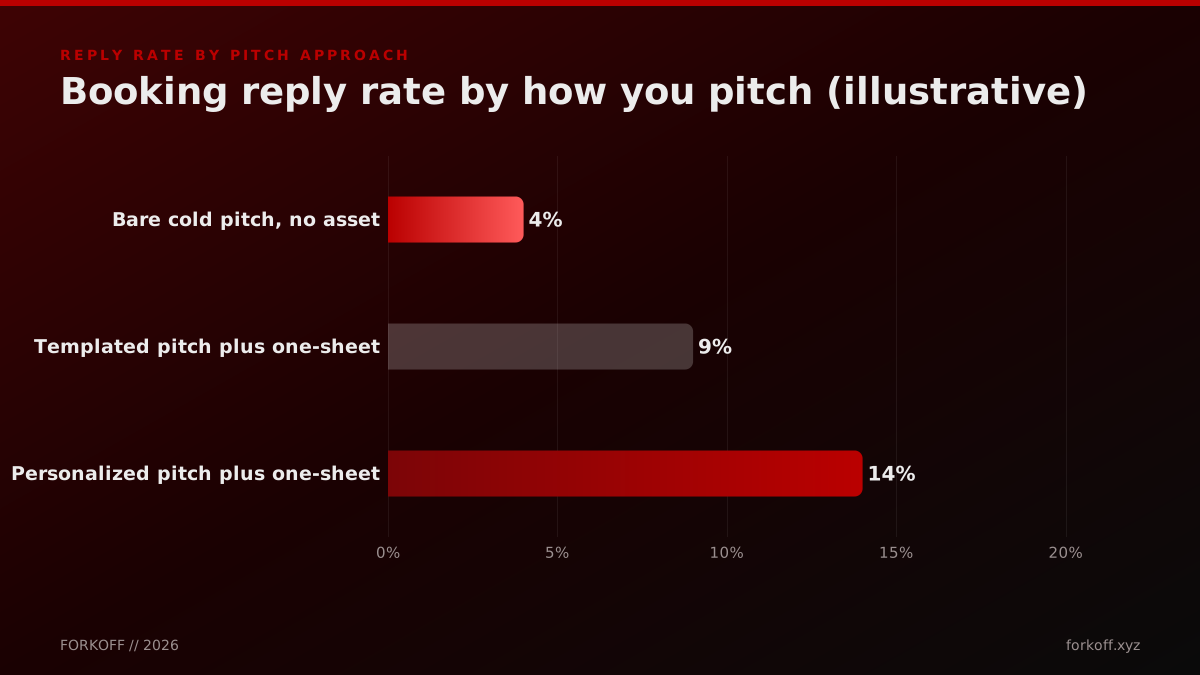
The two levers stack. Personalization alone helps, the asset alone helps, and a personalized pitch carrying a real one-sheet clears both bars at once. This is also the mechanism behind why guesting is worth the effort in the first place, since the appearance itself is only the start of the return on a podcast tour. Founders who already run outbound recognize the shape immediately: a proof asset attached to a targeted pitch is the same move that works everywhere else.
Connor Gillivan
@ConnorGillivan
15 ChatGPT Prompts to Help Build Quality Backlinks: Prompt #1: List 20 websites in the [industry] space that accept guest posts. How it helps: Saves time. Gives you real targets to pitch. Prompt #2: Write a cold email pitch to contribute a guest article to [website name]. How
If it ever seems like there's no room for another podcast/newsletter/book/etc, there's always room for better.
Bio and positioning: the top third of the page
The bio and positioning block owns the top third of the one-sheet, and it has to do its job in two lengths. Write a 40-word bio for the version a host reads before the interview and a 15-word bio for the version they read aloud to introduce you. Both lead with the hook, not the chronology. A booker does not need your career in order. They need the single sentence that makes their audience lean in, and they need it before they have decided whether to keep reading. If your bio opens with where you went to school, you have already lost the scan.
Positioning is the harder half. The bio says what you have done, the positioning says why your point of view is worth an hour. This is where a named perspective beats a title. A founder who leads with a specific, slightly contrarian claim gives the host a reason to book that a job description never will, which is the same logic behind founder-led sales and personal brand as a distribution strategy.
Make it concrete with a worked example. A weak 40-word bio reads like a directory entry: "Jane is the co-founder and CEO of a Series A software company. She previously worked in product at two larger companies and studied computer science. She is passionate about building great products and helping teams succeed." That books nothing, because it is chronology with no hook. The booked-worthy version leads with the claim: "Jane runs a Series A infrastructure startup and has a contrarian take on why most usage-based pricing quietly loses money. She has shipped it, broken it, and rebuilt it, and she can walk through the exact mistakes on air." The 15-word introduction version compresses that to the single line the host repeats out loud: "Jane, who argues most usage-based pricing loses money, and has the receipts to prove it." Same founder, same facts, entirely different booking odds. The speaker world learned this first, which is why a good speaker one-sheet leads with the signature idea, not the resume.
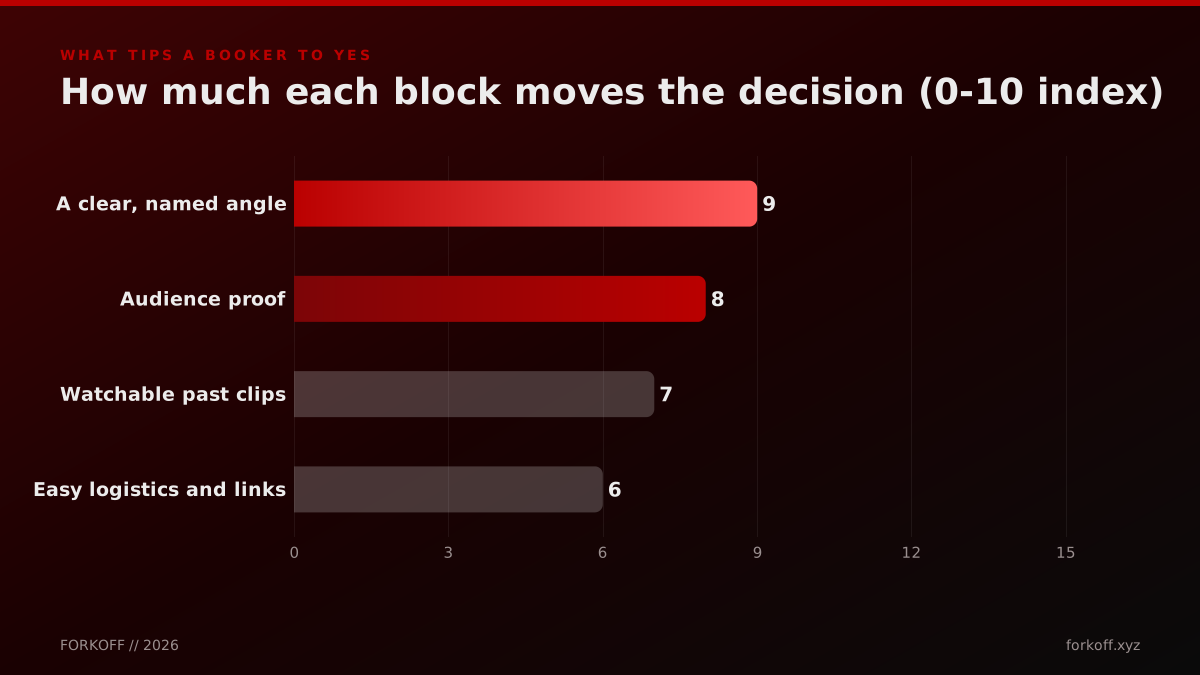
The index above is why the top of the page carries the most weight. Nail the angle and the identity, and the blocks below are confirmation. Get them wrong, and no amount of audience proof rescues the page, because the host never gets far enough to see it.
Operator noteNamed angles beat broad themes every time. "The economics of open-source models" books. "AI and the future of work" does not.
Topics, angles, and talking points
The topics block is where most founder one-sheets quietly fail, because founders write themes instead of angles. A theme is a category. An angle is a specific, bookable episode. "The future of AI" is a theme and it books nothing, because every founder in the inbox has the same one. "Why we killed our own top feature and grew faster" is an angle, and it books, because a host can already hear the episode. List three to five angles, and under each one put a concrete talking point: the specific claim, number, or story you would actually say on air. That talking point is the proof that the angle has substance behind it.
A worked angle set makes the standard obvious. For the same infrastructure founder, a strong menu reads: one, "Why we killed our top-requested feature and grew faster," with the talking point being the exact retention number before and after. Two, "The hidden margin trap in usage-based pricing," with a concrete story about the month the bill scared away the best customers. Three, "What we learned shipping to enterprise before we were ready," with the specific deal that taught it. Each angle is an episode a host can already hear, and each talking point is a promise that the angle has substance behind it. A menu of themes like "growth," "pricing," and "enterprise sales" is the same founder with none of the booking power, because a host cannot picture a single minute of tape from a category noun.
The angles also have to be matched to the show, which is why the block should be easy for you to re-order per pitch. A founder following the AI-startup podcast guesting playbook uses a different angle set than the same founder on a general operator show, and the best podcasts for founders to guest on reward the angle that fits their audience. Build the full menu once, then lead with the two angles that fit the specific host. This is also the block that keeps working long after the recording, because a sharp angle is what makes an episode worth clipping, whether it is a video podcast or audio-only, rather than a pleasant hour nobody revisits.
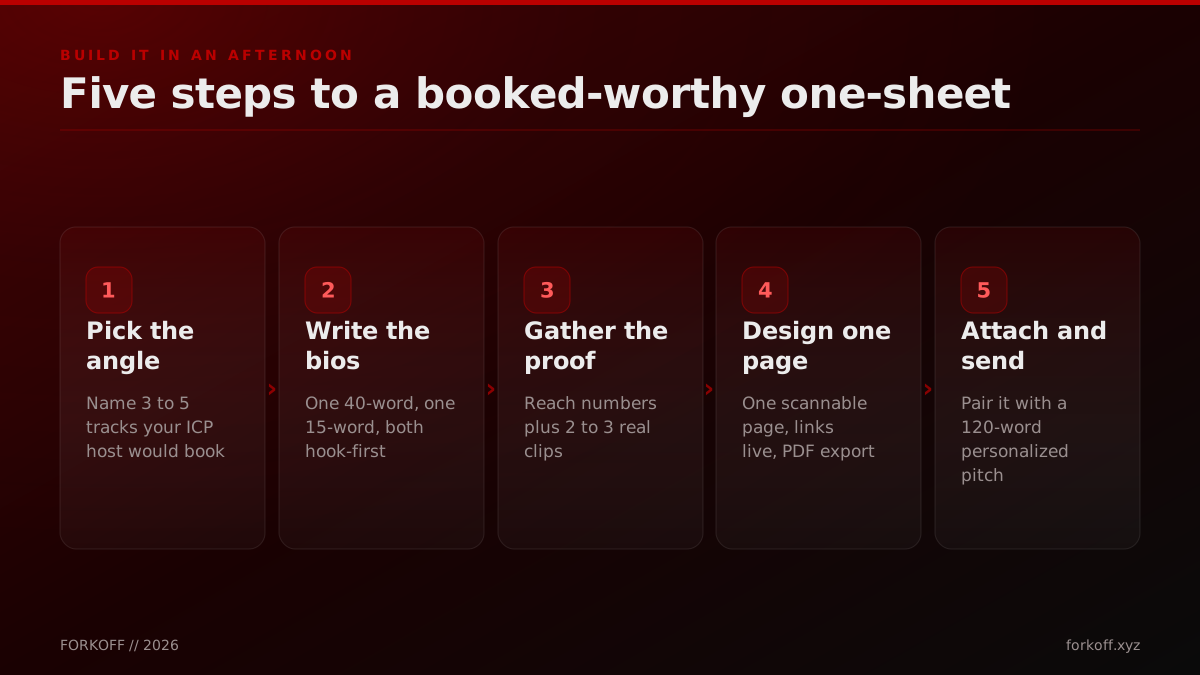
That five-step build is deliberately boring, because the work is in the thinking, not the tooling. You can assemble the page itself in an afternoon in any document editor. The examples-first walkthrough below shows what belongs on the page and, just as usefully, what to cut before it gets crowded.
How to Create a Podcast Media Kit (WITH EXAMPLES)
Audio Insider by James Mulvany
An examples-first breakdown of what belongs on a media kit and what to cut.
Proof: past appearances, audience, and links
The proof section is what converts an interesting stranger into a safe booking, and it has three parts: past appearances, audience, and links. For past appearances, do not list titles, link two or three clips a host can watch in under a minute, ideally on camera so they can see you carry a conversation. For audience, describe who listens rather than dropping a raw follower count, because a host cares far more that your audience is their potential guests and buyers than that the number is large. For links, give your site, one sample clip, and a booking link, so the host's next action is one click, not an email thread.
Describing the audience is the move most founders get wrong, and it is worth spelling out. A follower count is a number a host cannot use, because it does not tell them whether your people are their people. The strong version names the audience: "roughly forty thousand across the newsletter and X, mostly technical founders and heads of engineering at seed to Series B startups, the same people who guest on and listen to your show." Now the host can see the overlap instead of guessing at it. If your own reach is small, describe the quality anyway and lean harder on the angle, because a precise audience of the right people beats a vague large one every time. Reach is a supporting actor in the proof block, not the lead.
The no-appearances case deserves its own answer, because it stops more founders from building a one-sheet than anything else. If you have never guested, you do not skip the proof block, you substitute for it. Swap past episodes for one clip of you speaking on camera, a recorded talk or webinar, or a written piece that carries your framework so the host can hear your thinking even without tape. Bookers are not screening for a long guest history, they are screening for someone interesting and easy to work with, and a single clear clip clears that bar. Build the rest of the page well and the empty appearances block stops mattering.
The proof block is also where the compounding value of guesting shows up, because the same links that reassure a host are the ones that keep working after the episode airs. Show notes carry backlinks, the transcript becomes a podcast AEO citation surface AI answer engines can pull from and increasingly a measurable answer-engine visibility play, and a video-first appearance feeds the YouTube podcast discovery engine. That is why the founders who win treat proof as an investment, not a formality.
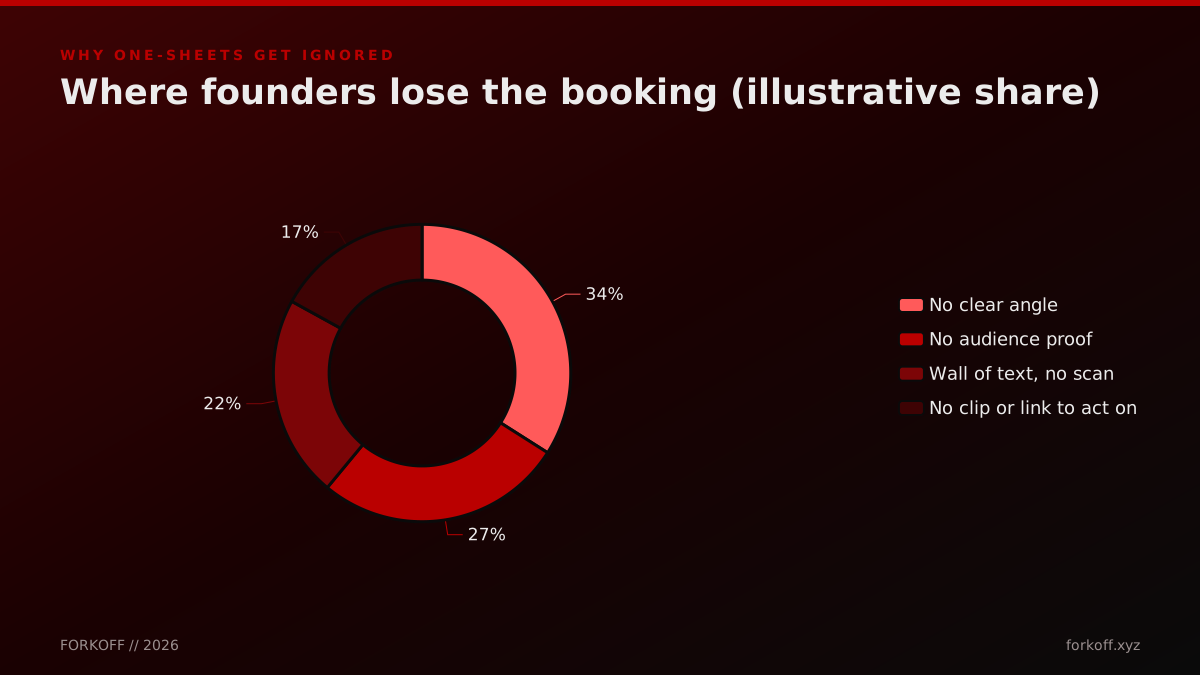
The donut above is the honest picture of where bookings die, and note what is not on it: being underqualified. Founders rarely get rejected for lacking substance. They get rejected for hiding it behind a missing angle, a follower count with no context, or a wall of text no host scans. The failure is presentation, not credentials. Posture is its own trap, and hosts see through it fast.
Mid-range guests who try to 'big time' you
A host venting about guests whose posture does not match what they bring, the failure mode a one-sheet should avoid by proving fit instead of inflating status.
The appearance is a durable citation surface, not just a moment
A booked episode does more than reach an audience once. The transcript becomes a page AI answer engines can cite, the show notes carry links back to your site, and the recording becomes the source for a library of clips. That is why the links and proof blocks on a one-sheet matter beyond the booking itself. A founder who treats guesting as a distribution and citation channel, wired into the rest of the funnel, compounds far more from the same hour than one who treats each appearance as a one-off.
Source: FORKOFF Podcast Service benchmarks 2026
The one-sheet versus the pitch email
The one-sheet and the pitch email are two assets with two jobs, and collapsing them is the single most common founder mistake. The pitch email is short, 80 to 120 words, and its only job is to earn the open and the reply by proving you researched this specific show. The one-sheet is the page attached to or linked from that email, and its job is to prove you are bookable once the host is curious enough to look. The email is the knock on the door. The one-sheet is what you hand over when it opens.
Founders break this in two directions. Some write a five-paragraph email that tries to be the whole media kit, and no host reads it. Others attach a polished one-sheet to a generic template with no personalized line, and the host deletes the email before the attachment is ever seen. The fix is to keep each asset in its lane, which the comparison below makes concrete.
A booked-worthy pitch email is short and does exactly three things: it proves you listened to the show, it names one angle tailored to that audience, and it points to the one-sheet. It reads roughly like this. "Hi Sam, your episode with the founder who rebuilt their pricing three times was the rare one that got into the actual numbers, which is why I am writing. I run a Series A infrastructure startup and I have a contrarian take on why most usage-based pricing quietly loses money, with the retention data to walk through it on air. One-page background and two past clips here, [link]. Happy to work around your recording schedule." That is under 90 words, it is unmistakably about that show, and the heavy proof lives in the linked one-sheet where it belongs. The email earns thirty seconds of attention; the one-sheet uses them.
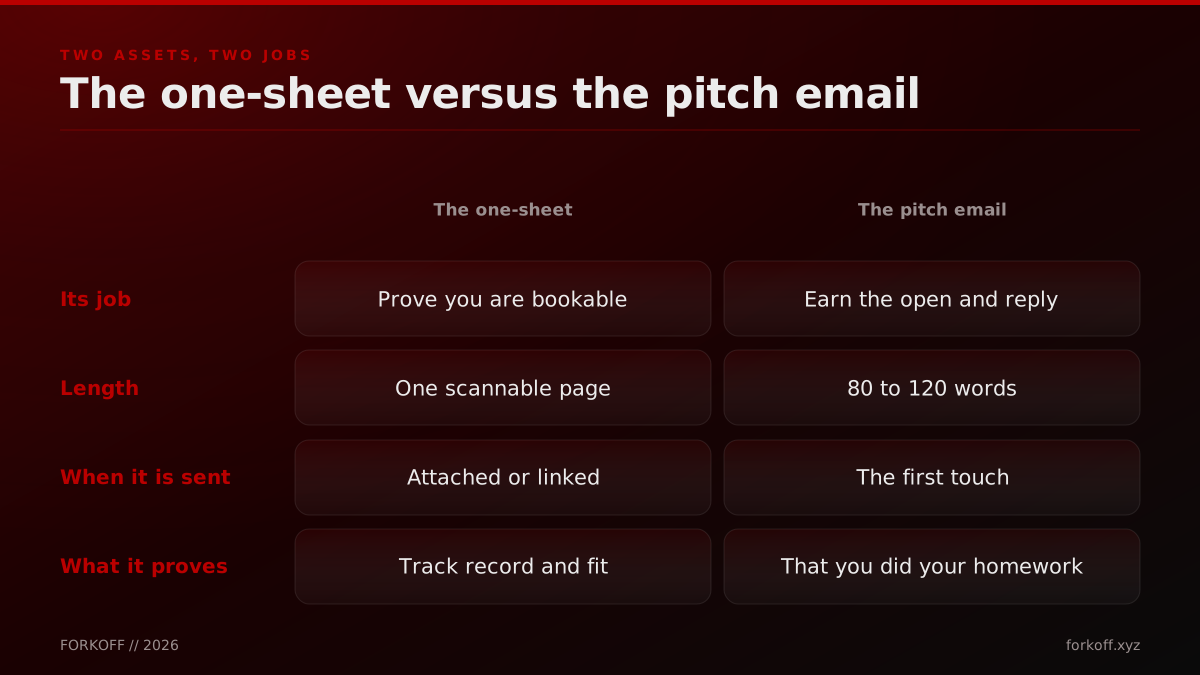
Seen side by side, the division of labor is obvious, and it maps directly onto the 90-day founder podcast booking system, where the email is the outreach step and the one-sheet is the qualification asset attached to it. The table below is the same split in the exact terms a host experiences it.
The one-sheet versus the pitch email
| Dimension | The one-sheet | The pitch email |
|---|---|---|
| Its job | Prove you are bookable | Earn the open and the reply |
| Length | One scannable page | 80 to 120 words |
| When it is sent | Attached or linked from the email | The first touch |
| What it proves | Track record and topical fit | That you researched this specific show |
| Failure mode | A wall of text nobody scans | A generic template a host deletes |
The comparison also settles the question of when the asset is worth it versus doing it yourself, which is really a question of time, not capability, and one the agency versus DIY guesting cost analysis breaks down in full. Either way, quality of the asset beats volume of pitches, every time.
Lenny Rachitsky
@lennysan
Inspiring profile of @dwarkesh_sp. If it ever seems like there's no room for another podcast/newsletter/book/etc—there's always room for better.
Podcast and webinar guesting: guest spots often come with backlinks from show notes, event pages or recaps. These links build authority while surfacing your expertise to AI-trained content.
Common mistakes that get a one-sheet ignored
Most one-sheets that get ignored fail on the same short list of mistakes, and every one of them is fixable in an afternoon. The page is too long and cannot be scanned in thirty seconds. The headline line is a job title instead of a repeatable hook. The topics are themes, not named angles. The audience is a follower count with no description of who those people are. There are no clips, so the host cannot see you speak. The links are dead or missing. And the whole thing is a design template with a generic bio dropped in, which a booker reads as effort spent on the wrong thing.
Each mistake has a root the founder usually cannot see in their own draft. The length problem is a confidence problem: founders who are unsure of their angle pad the page to look substantial, when the fix is to cut to the one claim that lands. The theme-instead-of-angle problem comes from trying to be bookable by every show at once, which makes you bookable by none. The follower-count problem is treating reach as proof when hosts read reach as vanity unless you say who those people are. The missing-clip problem is the most self-defeating of all, because a host booking a guest they have never seen speak is taking a risk they do not have to take when a competing pitch includes a clip. And the dead-link problem simply reads as carelessness, which is the one signal that makes a host assume the interview will be the same. Naming the root is how you stop the mistake from creeping back in on the next revision, the same discipline that separates a founder who learns how to grow a podcast audience from one who ships once and stalls.
The cure is a pre-send checklist you run every time before the asset leaves your outbox. It is not glamorous, but it is the difference between a page that books and a page that gets skimmed and closed. Run all ten checks, and if any single one fails, the one-sheet is not ready to send yet.
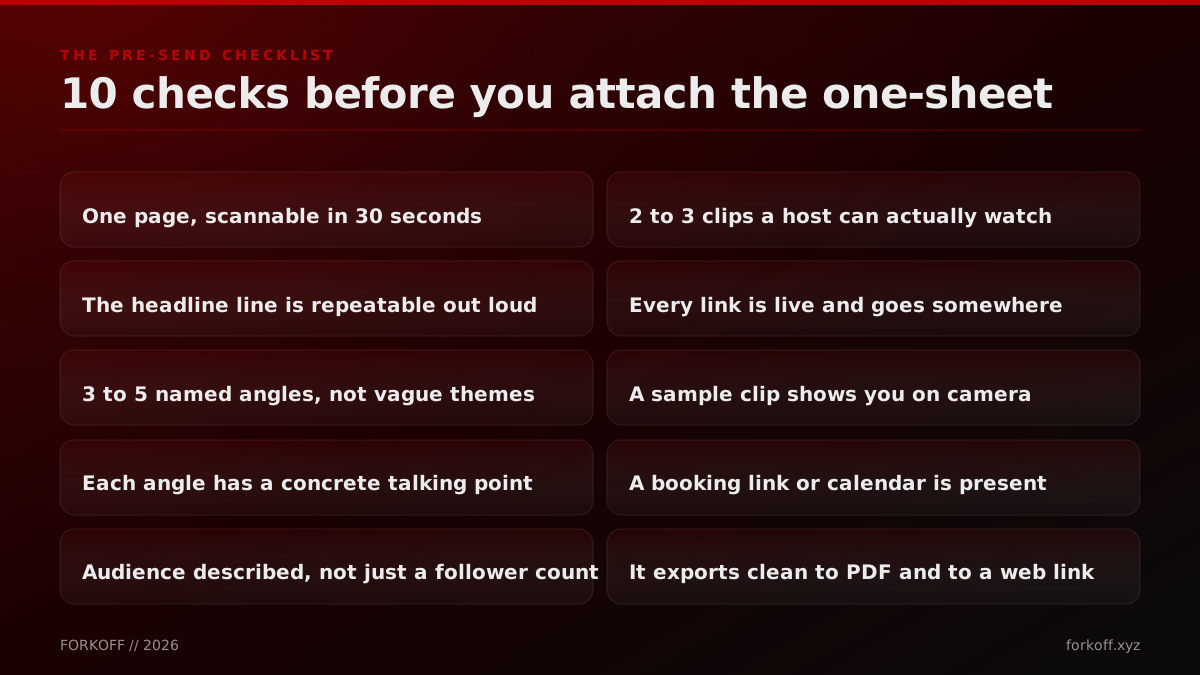
That checklist is also the fastest way to improve an existing one-sheet that is not converting, because it turns a vague sense that something is off into a specific list of fixes. If you want to see the screen from the other side, the way hosts actually source and filter the guests they book, read the room where they talk about it.
Where to find podcast guests
A host describing how they source and screen guests, the screen a guest one-sheet has to survive to earn a yes.
Operator noteNo past appearances is not a blocker. One clip of you speaking on camera clears the bar. Interesting and easy to work with is the real test.
Build yours in an afternoon, or hand it to an agency
You can build a booked-worthy one-sheet in an afternoon if you spend the time on the argument instead of the aesthetics. Pick three to five named angles, write the two bios hook-first, gather two or three real clips and an honest audience description, put it on one scannable page with live links and a booking next step, then export it clean to both a PDF and a web link. Pair it with an 80-to-120-word personalized pitch, and you have the two-asset system that actually books. The template is worth a few percent. The founder specificity is worth the booking.
Do not overbuild it, either. The failure at the other extreme is a founder who spends a week perfecting a page and never sends it, when a good-enough one-sheet in the inbox beats a perfect one still in the design tool. Ship the version that clears the ten-point checklist, start pitching, and let the replies tell you which angle to lead with next. The one-sheet is a living asset, and the fastest way to improve it is to watch which shows say yes and to double down on the angle that earned the booking.
The reason the asset is worth building well is that a single right booking compounds. One appearance on a show whose audience is your buyers can outrun a quarter of scattered effort, and the one-sheet is what earns that appearance in the first place. If you would rather have it built for you, wiring guesting into distribution is exactly what the FORKOFF podcast service and the Founder Funnel are for, and the resulting appearances feed a clip library through podcast clipping and rank through transcript SEO. However you build it, the one-sheet is the cheapest, highest-leverage asset in a founder's distribution toolkit, and most founders still do not have one.
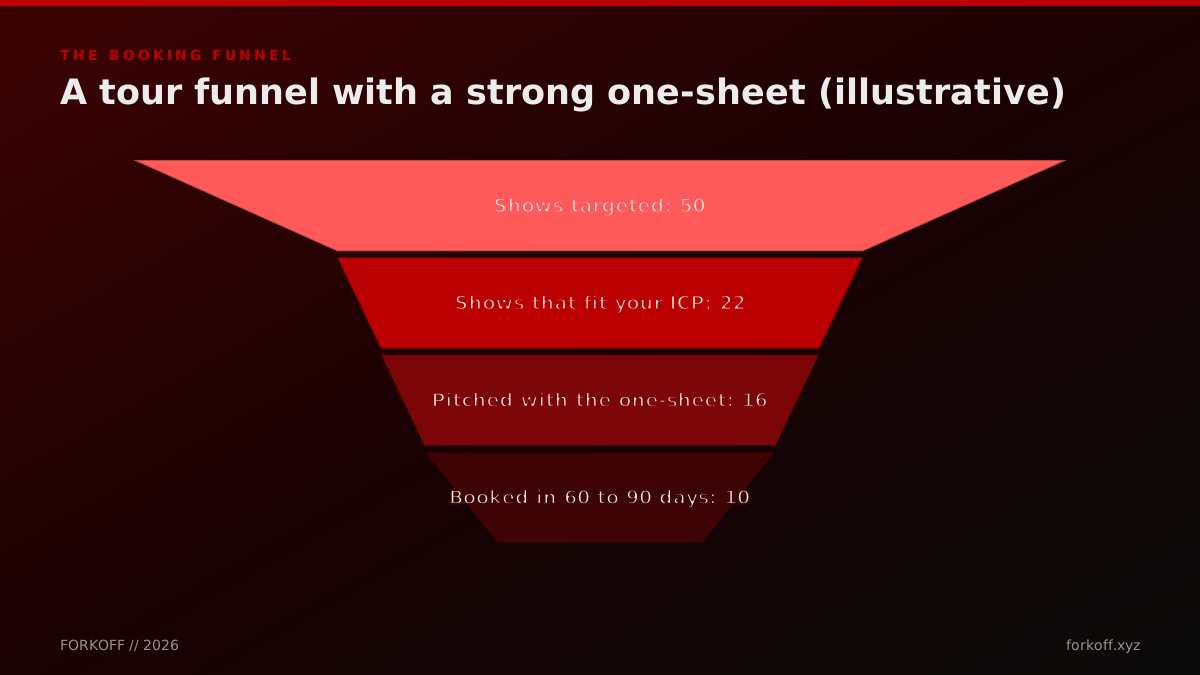
The funnel above is the payoff. A strong one-sheet is what carries a founder from a long list of target shows down to a real cluster of bookings, because it is the asset that survives every screen between the pitch and the yes. Build it once, keep it current, and it earns compounding returns across every show you pitch, the way one right appearance can dwarf years of scattered outreach.
Dr. Roman Yampolskiy
@romanyam
OFFICIALLY #1. My interview with @StevenBartlett is now the most-viewed video in the history of The Diary of a CEO. Nearly 20 million views. Number one out of more than 800 videos on a channel with approximately 18 million subscribers and over 1.5 billion total views. To put
Creating Your Podcast Guest One Sheet
Interview Connections
The guest one-sheet is an established, recognized asset in the booking world, not a novelty a founder is inventing.
The template trap
The most common failure is treating the one-sheet as a design deliverable instead of an argument. Founders buy a beautiful template, drop in a generic bio and a follower count, and wonder why nothing books. A booker does not reject an ugly page, they reject a page with no angle and no proof. The design is worth a few percent. The founder specificity, named angles, a real point of view, and watchable evidence, is worth the booking. Spend the afternoon on the argument, not the gradient.
Source: FORKOFF Podcast Service benchmarks 2026