A podcast guest pitch is a short email that asks a host to book you as a guest, and the founder version lives or dies on one line: a specific reference to a recent episode and the single idea in it that your pitch extends. Most guides hand you a template and stop there. This piece gives you the copy-paste 125-word template with every field annotated, the subject-line rules, the follow-up cadence, and the two numbers that actually decide whether a reply turns into a booking that moves pipeline. The wider five-move system the template sits inside is at how to get on podcasts.
About these numbers
The reply-rate and booking figures attributed to FORKOFF are directional operator estimates from first-party podcast booking and distribution work, not audited averages. Third-party benchmarks are cited inline to their source (Podseeker's 8,757-pitch dataset, JustReachOut, Fame, SavvyCal, Prezly). Individual outcomes vary by niche, buyer, audience, and execution. Treat every range as a calibration target, not a promise.
The founder podcast guest pitch in one scroll
Most podcast guest pitch guides hand you a template and stop. This one gives you the copy-paste 125-word episode-specific pitch with every field annotated, then the two numbers that actually move a booking. First, keep the body under 125 words: real pitch data shows 51 to 150 word messages respond at 7.13 percent versus 1.45 percent for 500-plus word notes. Second, list targeting beats copy polish by roughly eight to one, so the show-selection score matters more than the wording. The subject line names the episode topic in under 40 characters, never the show. The follow-up runs three touches over 17 days, and across FORKOFF cohorts roughly two of three confirmed bookings land on those follow-ups, not the first send. The FORKOFF layer no template gives you is the audit-ledger show-selection score, which filters for the shows where your actual buyer is in the audience, so the reply converts into pipeline instead of a vanity download.
What makes a founder podcast guest pitch get a reply?
A founder pitch gets a reply when it proves, in the first two lines, that you listened to the show and have a specific idea their audience has not heard yet. Hosts read pitches the way founders read cold email: the first line decides everything. A pitch that opens with flattery ("big fan of the show") reads like the twenty other pitches in the inbox. A pitch that opens with a named episode and one sharp reaction to it reads like a person, not a list. The load-bearing variable is not politeness or length, it is episode-specificity, and it is the one edit that moves reply rate the most in a pitch teardown.
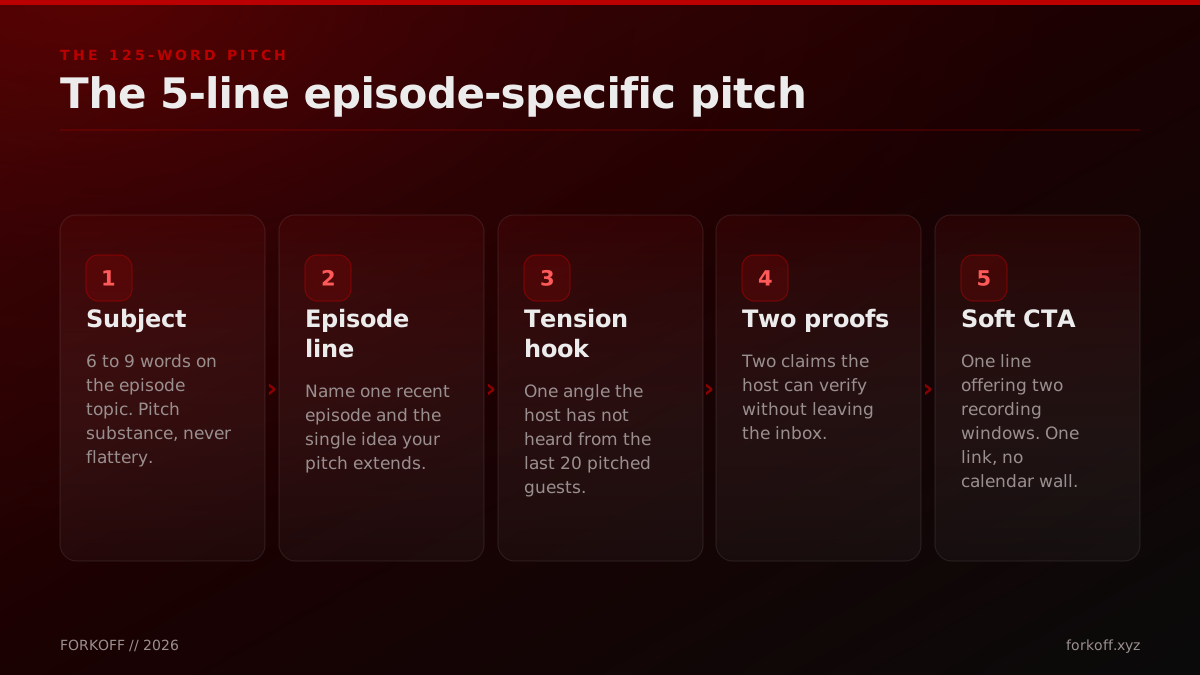
The five lines are ordered by impact, not by convention. Line one is the episode reference because that is the line a host uses to decide whether you are worth a second line. Lines two and three carry the topic and the tension hook, which is where a founder's lived operator experience beats a generic guest. Line four is proof the host can check in sixty seconds, and line five is a single soft close. Founders who invest their editing time in the subject and the sign-off, and leave the episode line generic, produce the 4 to 6 percent reply rates a flat template earns. Founders who hold the structure constant and sharpen line one and line three produce the 16 to 24 percent blended reply rate FORKOFF sees on a scored list. The mechanics of turning a booked appearance into distribution are covered in the FORKOFF Podcast Engine 6-block system; this piece is the layer before that, the pitch that gets you in the room.
Operator noteA named-episode opening line lifts reply rate more than any other single edit in a pitch teardown, roughly 9 points., FORKOFF pitch teardowns, directional
The 125-word episode-specific pitch template (copy-paste)
The template is five lines and stays under 125 words for a measured reason: analysis of 8,757 real pitches by Podseeker found that messages between 51 and 150 words drew the highest response at 7.13 percent, while pitches between 501 and 1,000 words fell to 1.45 percent. JustReachOut's pitch template guide reports the same 50 to 125 word sweet spot from a different sample. A host decides in the first two lines whether to keep reading, so every word past the ask spends attention you do not get back. Here is the field-by-field structure.
The 5-line pitch, field by field
| Line | What it does | The rule |
|---|---|---|
| Subject | Names the topic, not the show | 6 to 9 words, under 40 characters |
| Line 1 | References one recent episode | Name the episode and the single idea in it |
| Line 2 | Proposes a topic with a tension hook | An angle their last 20 guests did not bring |
| Line 3 | Gives two 60-second proofs | Claims the host verifies without leaving the inbox |
| Line 4 | One soft close | Two recording windows, one link, no calendar wall |
Word-count and subject-length rules corroborated by JustReachOut and Podseeker; the field structure is the FORKOFF pitch template.
The copy-paste version reads like this. Subject: [Episode topic in 6 to 9 words]. Body: "Hi [Host], your episode with [prior guest] on [specific idea] stuck with me, specifically the part about [one concrete detail]. I run [company], where we [one-line what you do], and I think your audience would get a sharp take on [topic proposal with a tension hook the host has not heard]. Two things you can verify in a minute: [proof one] and [proof two]. If it is a fit, I have [day] or [day] open to record. Either way, thanks for [the specific thing the show does well]." That lands between 90 and 120 words with the brackets filled, which is exactly where the response data peaks.
The bracket that decides the outcome is the tension hook in the topic proposal. A hook is a contrarian or operator-specific framing the host has not heard from the last twenty pitched guests. "How we price outcomes instead of retainers" is a hook. "Marketing tips for founders" is not. The podcast guesting playbook for AI startups has a fuller angle library if you are stuck on the hook, and the founder-led content marketing motion is where you pull the proof points that are already public. Do not outsource the hook. A host hears an outsourced pitch inside three lines, the same way they hear an outsourced recording inside three minutes.
Here is the template filled in for a concrete case, a Series A founder of an AI pricing tool pitching a B2B SaaS show. Subject: "Why usage-based pricing quietly loses money." Body: "Hi Dana, your episode with the Metronome team on billing infrastructure stuck with me, specifically the part where you pushed back on seat-based pricing for AI products. I run Ledgerly, where we price 40 AI companies on outcomes instead of seats. Your audience would get a sharp take on why usage-based billing quietly loses money on high-inference products, which cuts against the current consensus. Two things you can verify in a minute: our teardown of three public AI pricing pages, and the churn delta we published last quarter. If it is a fit, I have Tuesday or Thursday open to record. Either way, thanks for keeping the billing conversation this concrete." That runs 104 words, names a real episode and a specific pushback, proposes a contrarian angle, and offers two checkable proofs. It is the whole template working at once.
Sweetfish Media's guest checklist gives a beginner subject formula, "I'm a big fan of [show name]," and it is worth naming exactly why a founder should not use it. That subject leads with your feeling about the show, which the host already knows and does not need. The episode-topic subject leads with an idea the host can evaluate, which is the only thing that earns the open. The difference is the same episode-specificity lever, applied one line earlier.
What should the subject line say?
The subject line names the episode topic, not the show, and stays under 40 characters. Pitch on the substance a host can evaluate at a glance, never on how much you love their show. Across FORKOFF pitch teardowns, subject lines built on the topic ("How AI agencies price outcomes") outperform flattery lines ("Loved your last episode") by 4 to 6 percentage points on open rate, and SavvyCal's guest-email guide frames the same rule as direct yet intriguing. Prezly's pitch guide recommends the literal format "Idea for your podcast: [specific topic]," which is a clean default when you are unsure. The subject is not where you get creative, it is where you get specific.
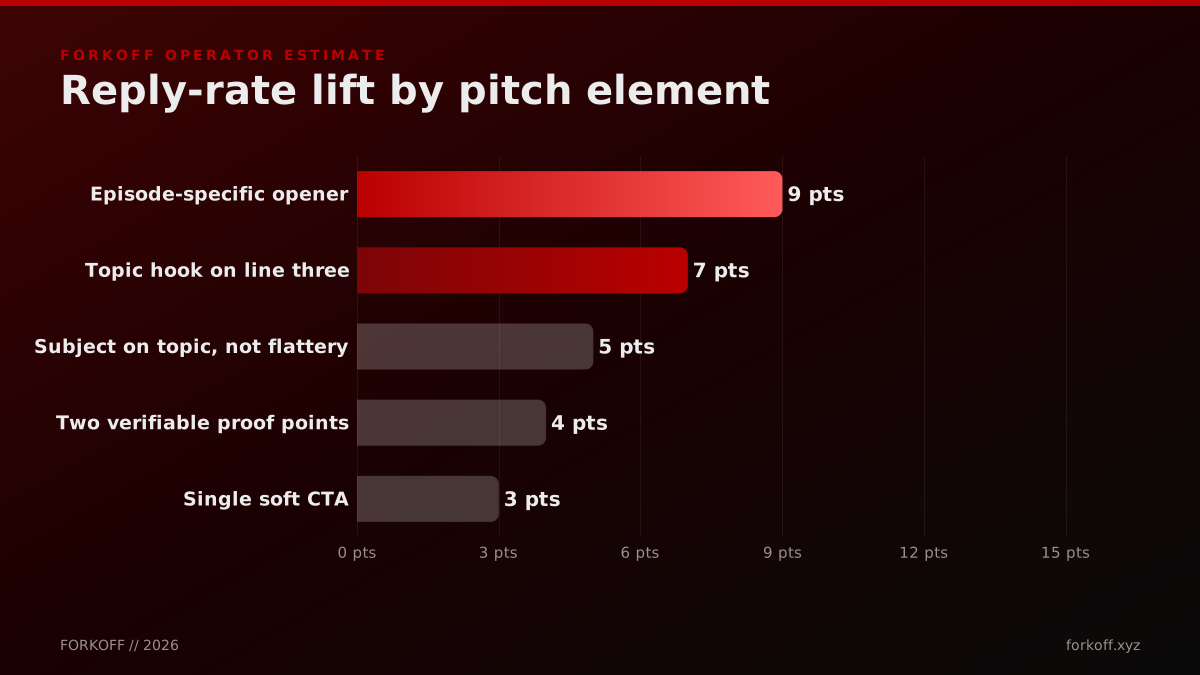
Every element in that chart is a directional estimate of reply-rate lift versus a flat template baseline, and the ordering is the point. The episode-specific opener and the line-three hook carry most of the lift; formatting, signature style, and length tuning carry the least. This is why a founder who spends an hour A/B testing the sign-off and leaves the opener generic sees no movement. The host psychology behind it is not subtle. A public post from a host with more than two million monthly listens spells the screening criteria out in the open, and none of the three filters is about the pitch's polish.
You teach one AI tool, skill, or framework that helps people build a business. You can have 1 follower or 1M, doesn't matter. You come prepared.
Read that as a host telling you the actual scoring function. Topic specificity beats follower count, and "you come prepared" is the load-bearing filter. A pitch that proves preparation in line one clears the bar that most pitches never reach. If your audience overlaps with a specific host, the Twitter DM outreach playbook covers the public-tag and DM variants of the same episode-specific hook when email is not the right channel.
How many shows should you pitch, and which ones?
Pitch a scored list of 50 shows, not a long list of loose matches, and expect 6 to 12 recordings. The number that decides bookings is not how many shows you pitch, it is which ones, because list targeting outweighs pitch copy by roughly eight to one. The instinct to chase the biggest names is the exact mistake the data punishes. Before a show earns a pitch, FORKOFF scores it on five fields, each a filter for whether a reply will convert into pipeline rather than a vanity download.
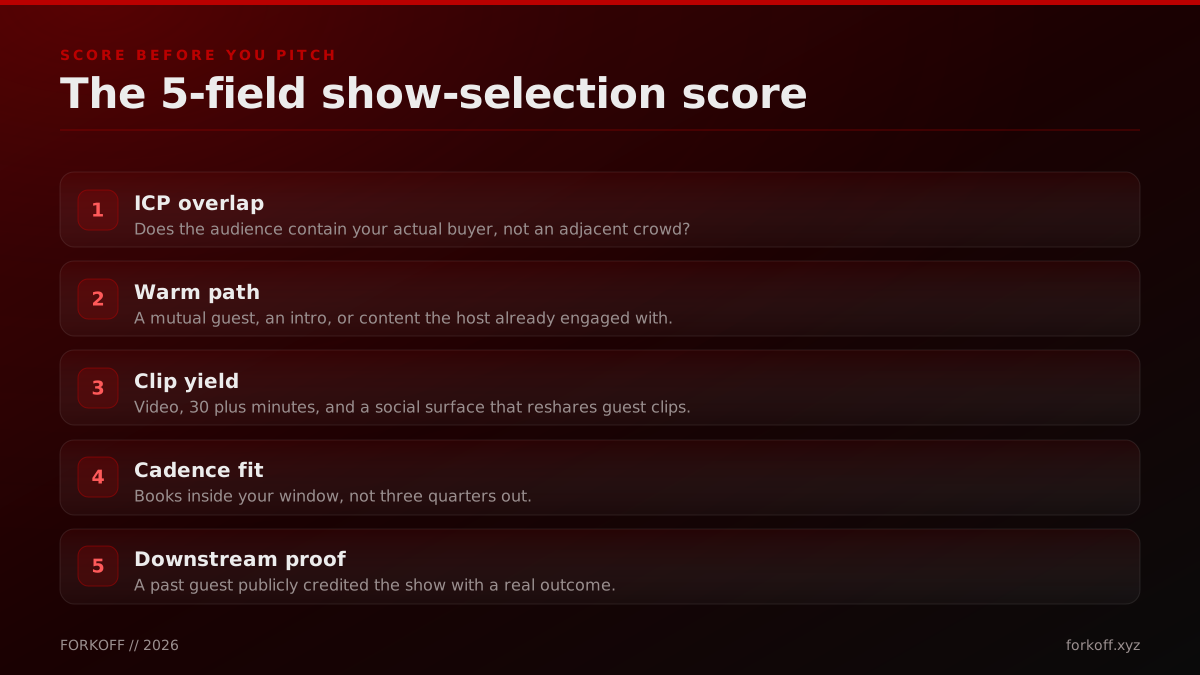
Field one is ICP overlap: does the audience contain your actual buyer, or a related crowd? Field two is the warm path: a mutual guest, an intro, or a piece of your content the host already engaged with. Field three is clip yield: video, thirty-plus minutes, and a social surface that reshares guest clips, because the clip compound carries roughly 80 percent of the value of an appearance. Field four is cadence fit: the host books inside your window, not three quarters out. Field five is downstream proof: a past guest publicly credited the show with a real outcome you can verify. A show that scores high on reach and low on ICP overlap is a vanity slot, and the FORKOFF Podcast Engine 6-block system runs the same selection logic from the host side at its guest-curation block, which is why a founder who understands the score reads exactly what a sharp host screens for.
The number that beats a better pitch is list targeting
The single most under-priced variable in a founder's pitch is not the wording, it is the list. Podseeker's analysis of 8,757 real pitches found that a mediocre pitch sent to a sharply targeted list books at roughly 35 percent, while a perfectly written pitch sent to a poorly targeted list stalls near 4 percent. That is close to an eight to one gap driven entirely by who you pitch, not what you write. The same dataset shows reply rate falling as show size rises, 11.9 percent under 1,000 listeners against 8.4 percent above 50,000. The takeaway for a founder is blunt: spend your first hour scoring shows, not polishing sentences.
Source: Podseeker analysis of 8,757 podcast guest pitches, 2024 to 2025
The evidence for scoring over volume is not internal. The Podseeker dataset shows a mediocre pitch to a sharp list beating a perfect pitch to a loose list by close to eight to one, and reply rate falling as show size rises. That is the whole argument against the "pitch the biggest show" reflex, and it is why the show-selection layer belongs before the copywriting layer in any founder's workflow. The format question that feeds the score, video versus audio-only, is covered with first-party clip data in the video podcast versus audio-only decision matrix.
Score each field zero to three for a fifteen-point ceiling, and the tiering falls out of the total. Take two candidate shows a founder might weigh. Show one has 50,000 downloads, a broad general-business audience, audio only, and a host who books two quarters out. It scores a two on ICP overlap, a zero on warm path, a zero on clip yield, a one on cadence fit, and a one on downstream proof, for a four. Show two has 4,000 downloads, an audience of exactly the founder's buyer, a mutual guest, full video, and a host who books inside a month. It scores a three, a three, a three, a three, and a two, for a fourteen. Every reach instinct says pitch show one. Every conversion signal says show two is the one that books, clips, and moves pipeline, and it routes to Tier A off the warm path while show one falls below the line entirely. The single most common list-construction error is letting a big-download show with no buyer overlap take a slot the small high-fit show should hold. The demand-mining that surfaces the show-two candidates in the first place runs through the same intent logic as the Reddit intent engine.
Operator noteList targeting beats copy polish about 8 to 1. A mediocre pitch to a sharp list books past a perfect pitch to a loose one., Podseeker, 8,757-pitch dataset
Podcast guest pitch reply rates: what to actually expect
A realistic founder reply rate on a scored list runs 8 to 20 percent blended, and a scored 50-show list turns into roughly 6 to 12 recordings. Anyone quoting a single reply-rate number for podcast pitching is hiding the variable that matters, which is list quality. The honest version is a range with a cause attached to each end. On a flat, one-template list of loose matches, FORKOFF sees 4 to 6 percent. On a tier-segmented, scored list with episode-specific pitches, the blended rate lands in the 16 to 24 percent range. Third-party numbers bracket the same territory: Podseeker's tool-level data sits around 8 to 12 percent by show size, and an agency spending 25 to 45 minutes per hand-researched pitch reports a 51 percent-plus average.
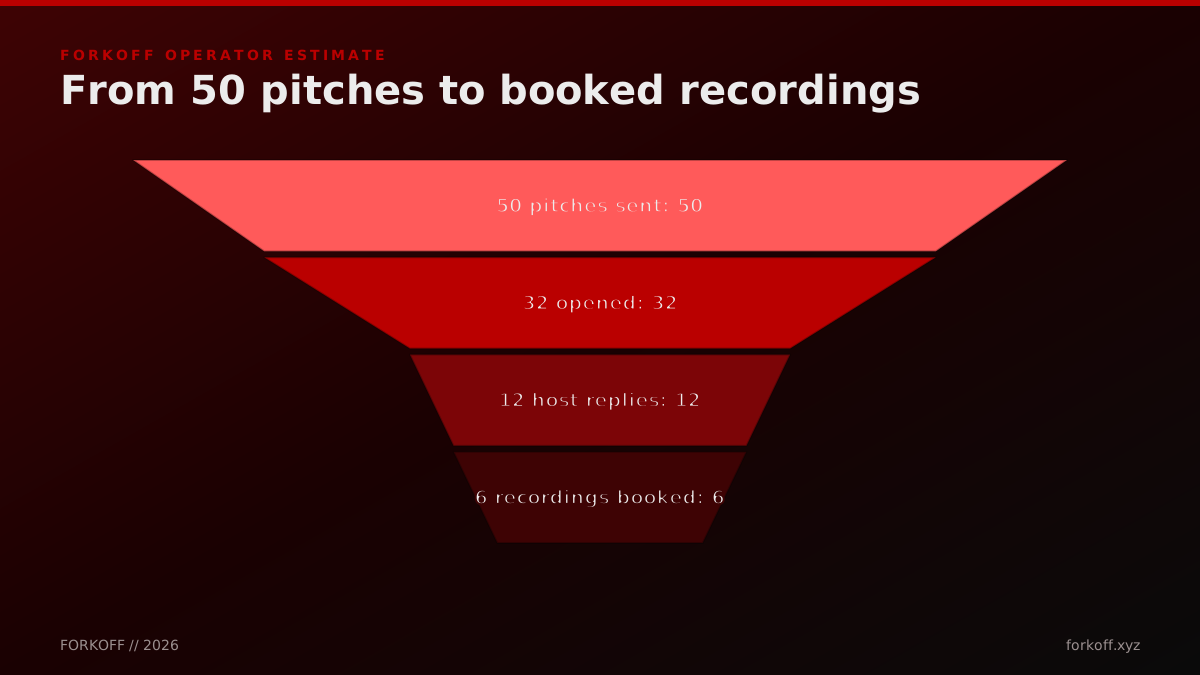
That funnel is a directional model for one scored list, and the reply-to-booking step is where the follow-up cadence earns its keep. The counterpoint worth holding onto is the labor cost. Fame's reply-rate breakdown reaches its 51 percent number by spending most of an hour per pitch, which does not scale past a small hand-picked list. The FORKOFF answer is not to out-labor that, it is to score the list so the template-plus-cadence approach hits a high enough rate without the per-pitch hour. The cold-email base rate makes the case for why podcast pitches convert at all: Alex Berman's teardown puts a founder's podcast-guest reply rate near 19 percent against roughly 0.3 percent for generic cold email, because a host has already spent an hour publicly explaining their interests.
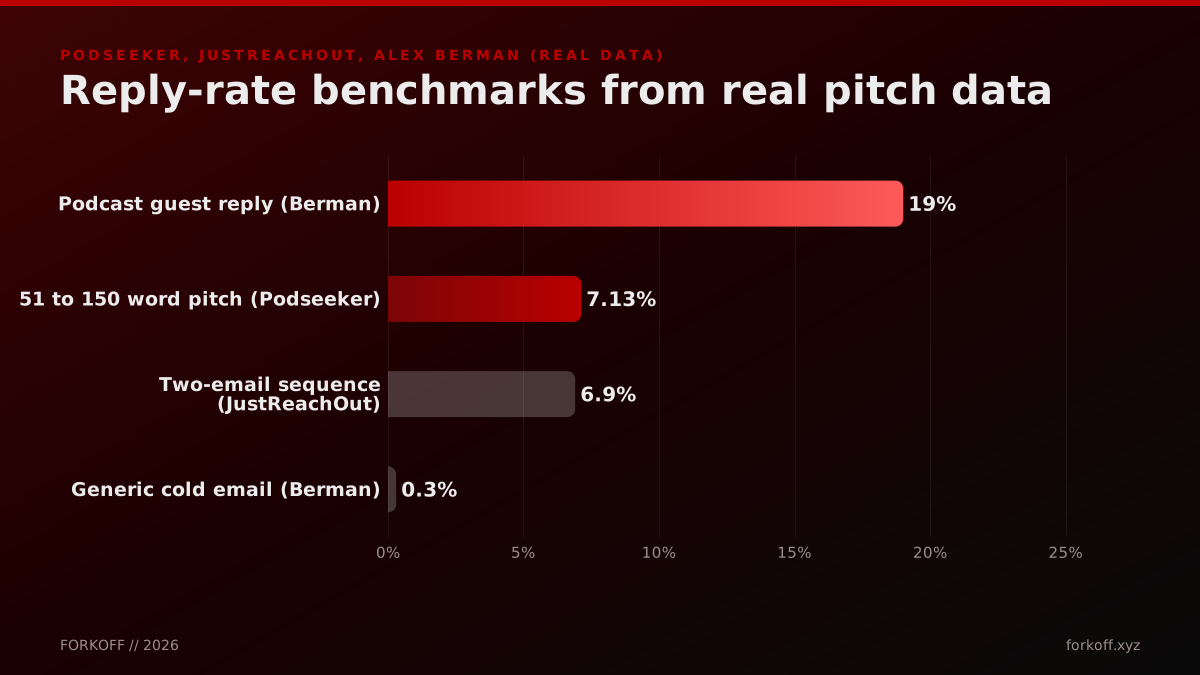
Those four bars are the honest anchor for any founder setting expectations: a podcast pitch is not generic cold email, and the reply rate reflects it. The gap between a 51 to 150 word pitch and a 500-plus word note is real, and it is why the template holds the line at 125 words.
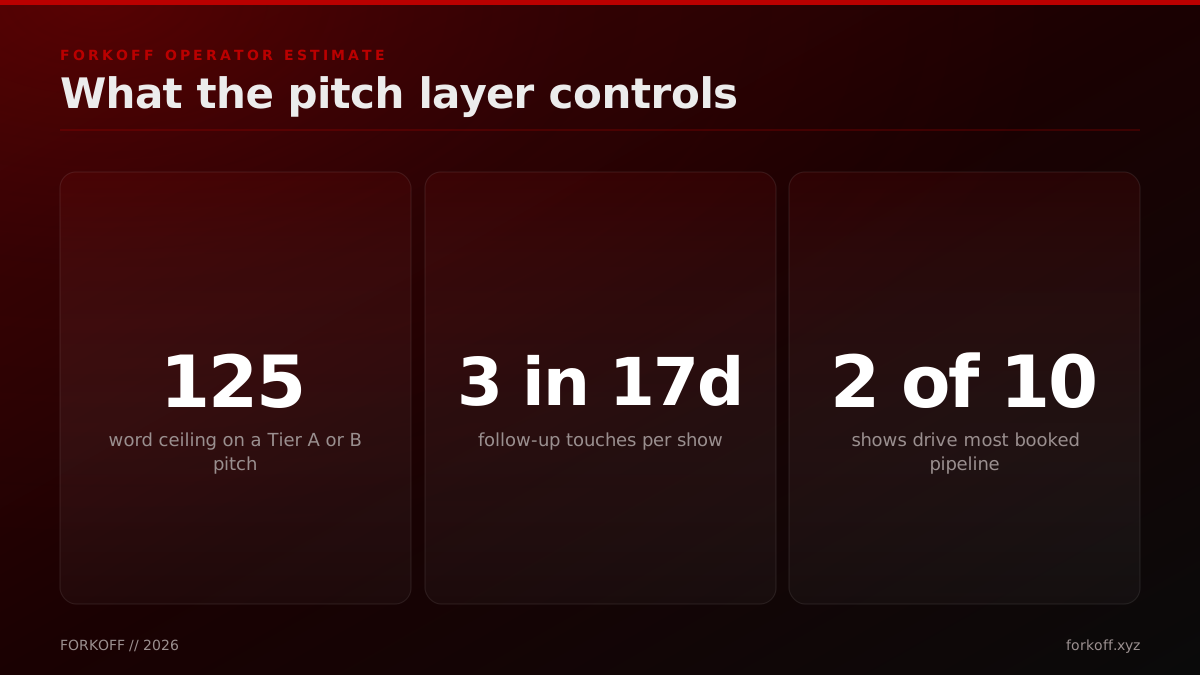
Three numbers the pitch layer controls: the 125-word ceiling, the three-touch cadence over 17 days, and the Pareto that says two of ten shows produce most of the pipeline. Everything else about the outcome is set upstream by the show-selection score. The field-side reality of running this at volume shows up in the practitioner threads, where the bottleneck is almost never the guest's credibility.
I ran cold email outreach for a podcast guest booker and they landed 8 podcast appearances in a month
I’ve been running cold email campaigns for a lead gen agency for the past few months, mostly for B2B clients. Recently we started working with a podcast booking agency that was struggling to land consistent show placements for their guests. Their clients had solid credibility, good talking points, real expertise,… Show more
That operator's read matches the data: the clients had real expertise, and the constraint was reach, not quality. The fix was a targeted list and consistent volume, which is the same conclusion the show-selection score reaches from the other direction. The reframe that moves a founder's own reply rate is the shift from asking to offering.
The aggregate data teaches the same lesson: pitch the host's audience, not the host. For the deeper channel comparison, the podcast guesting versus cold email breakdown runs the reply-rate and conversion math side by side.
The follow-up cadence that recovers half your bookings
The first pitch lands roughly a third of the bookings a founder eventually confirms; the follow-up cadence recovers the other two thirds. This is the part most founders abandon, because the first send returned silence and they read silence as a no. Across FORKOFF cohorts, the pitch-to-first-reply window runs 4 to 6 days on a healthy list, so a no-reply at day 7 is the normal case, not the rejection case. The cadence runs three touches over 17 days, and then a hold.
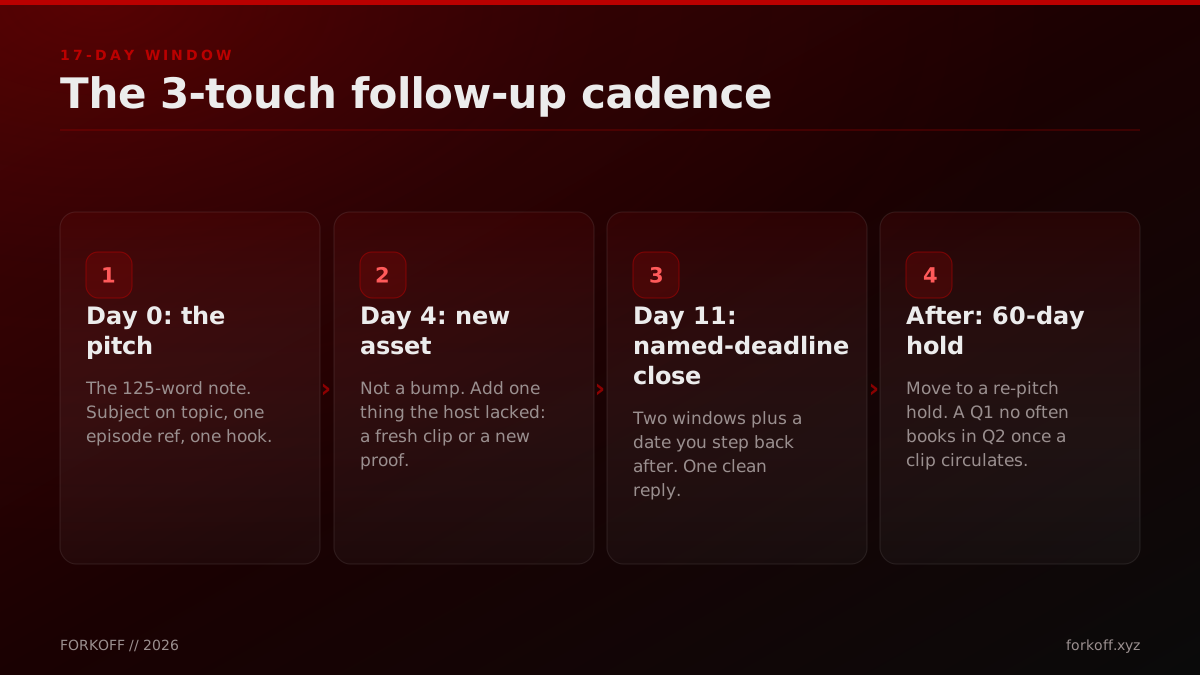
The 3-touch follow-up cadence
| Touch | Day | What you send |
|---|---|---|
| Touch 1 | Day 0 | The 125-word episode-specific pitch |
| Touch 2 | Day 4 | One new asset, a clip or proof, never a bare bump |
| Touch 3 | Day 11 | Named-deadline close, two recording windows |
| Hold | Day 12 and after | Move to a 60-day re-pitch hold, not the trash |
FORKOFF cadence; JustReachOut reports a two-email sequence at roughly 6.9 percent response, and Fame notes fewer than half of secured interviews book on the first email.
Touch two is the touch founders get wrong. A bump ("just following up on my note") signals a guest managing a list, which is the exact read that gets a pitch deleted. Touch two instead adds one concrete asset the host did not have on day zero: a fresh clip from a recent appearance, a new proof point, or a single line reacting to something the host published since the first send. Touch three, on day 11, is a named-deadline soft close: two recording windows and a date after which you will assume the timing is wrong and step back. The named deadline converts a share of the day-11 silent pitches because it replaces an open-ended ask with a decision the host can clear in one reply. JustReachOut's data puts a two-email sequence at roughly 6.9 percent response, and Fame notes that fewer than half of the interviews they secure book on the first email.
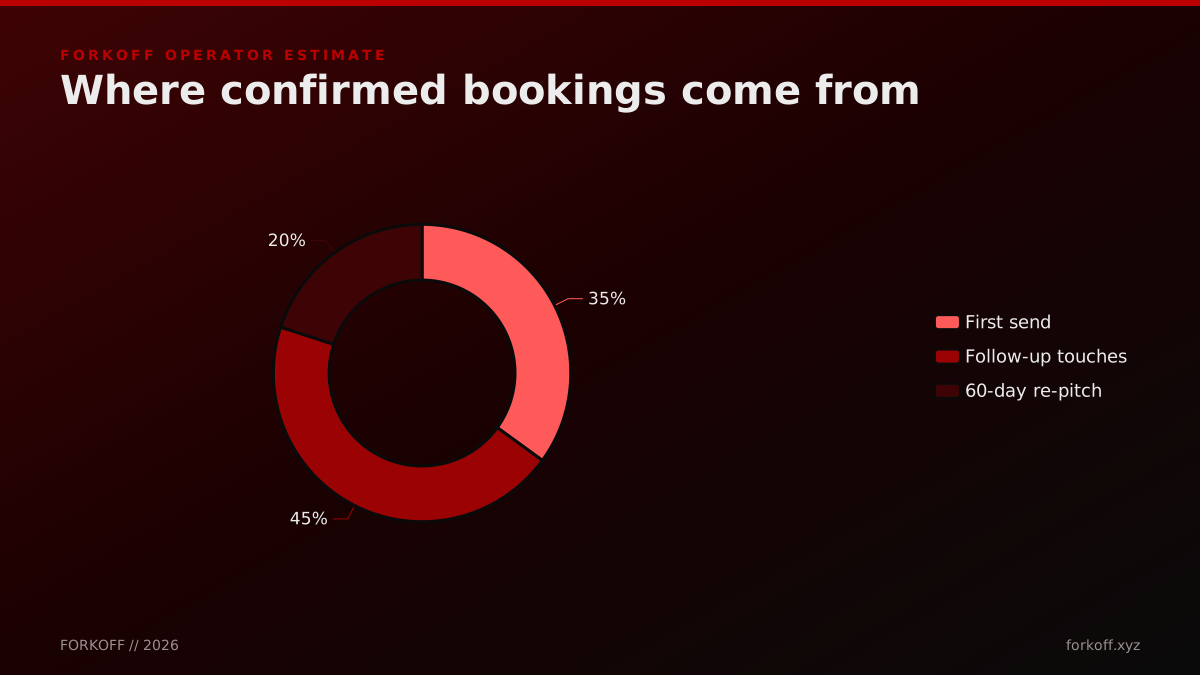
The booking-source split is why quitting after one send is the most expensive habit in founder guesting. After touch three, the show moves to a 60-day re-pitch hold, not the trash, because hosts who passed on a cold founder in Q1 frequently book the same founder in Q2 once a Tier C clip has circulated into their feed. The full 90-day operating system this cadence sits inside, with the tour calendar and the clip pipeline, is the podcast booking system for founders.
Operator noteTwo of every three confirmed bookings land on follow-up touches, not the first send., FORKOFF Podcast Service Cohort, directional
The host research brief behind a Tier A pitch
A Tier A pitch is carried by a one-page host research brief, and the brief is the artifact a warm-intro dream show actually reads. For the top ten shows, the pitch is short because the intro does the opening work, so the weight moves to how prepared you are once the host replies. The brief is five fields written by the founder, not an assistant, because the audible signal that converts is founder-specific operator detail a host hears inside three minutes.
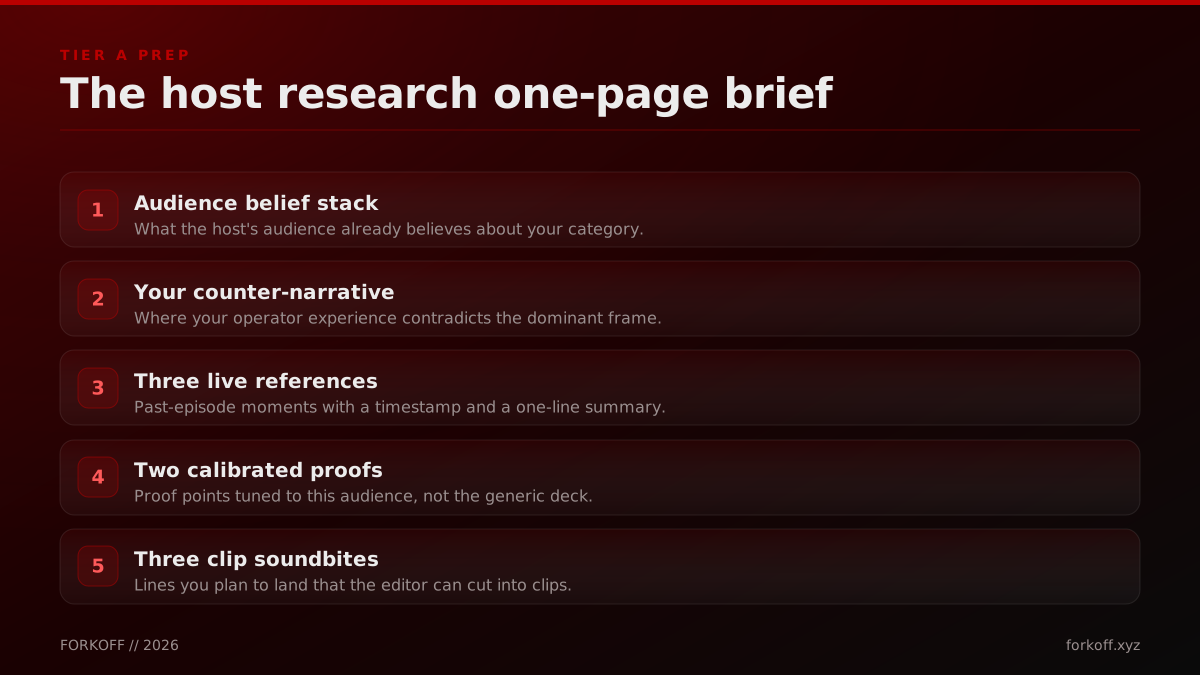
Field one is the audience belief stack: what does this host's audience already believe about your category, and what is the dominant frame across the last five episodes? Field two is the counter-narrative you bring, the place your lived operator experience contradicts that frame, which becomes the recording's central tension and the source of the clip that travels. Field three is three specific moments from past episodes you can reference live, each with a timestamp and a one-line summary. Field four is two proof points calibrated to this exact audience, not the generic deck version. Field five is three clip-ready soundbites you plan to land inside the conversation, because pre-loaded soundbites convert into clips at several times the rate of in-the-moment improvisation. Descript's guide to being a good podcast guest covers the recording behavior; the brief is what makes the recording worth clipping in the first place.
The FORKOFF audit-ledger benchmark behind the show-selection score
Two first-party datapoints anchor the numbers in this piece, both directional operator estimates from the FORKOFF Podcast Service Cohort. First, tier-segmented outreach across a scored 50-show list produces a blended reply rate in the range of 16 to 24 percent, versus 4 to 6 percent on a flat one-template list of the same size, roughly a four times yield on the same number of sends. Second, the appearance itself carries about 20 percent of the value and the clip compound carries the other 80 percent, which is why the show-selection score weights clip-yield surface as heavily as raw audience. Individual outcomes vary by niche, buyer, and execution.
Source: FORKOFF Podcast Service Cohort 2026-Q1, directional operator estimates
The brief is also what protects the 80 percent of an appearance's value that lives in the clips, not the conversation. A founder who shows up without the brief produces a flat recording the host does not reshare and the clipping team cannot cut into anything sharp, which collapses the compound the whole tour depends on. This is the layer FORKOFF's podcast service builds for each booked show, and Lower Street's pitch structure is a useful public reference for the credibility section a warm Tier A note still needs behind the intro. The founder-led sales podcast strategy covers how the brief plugs into a founder's broader narrative so every appearance reinforces the same story.
Tier A, B, and C: how the pitch changes by show
The same template runs at three settings depending on the show's tier, because a warm-intro dream show and a cold volume show do not read the same pitch the same way. Tier A is your top ten dream shows, worked by warm intro only, because cold pitches to top-decile shows convert near zero. Tier B is the reach layer, mid-audience shows whose hosts reply to a sharp cold pitch. Tier C is the volume layer, smaller shows often hungry for guests and willing to book on a one-week turnaround.
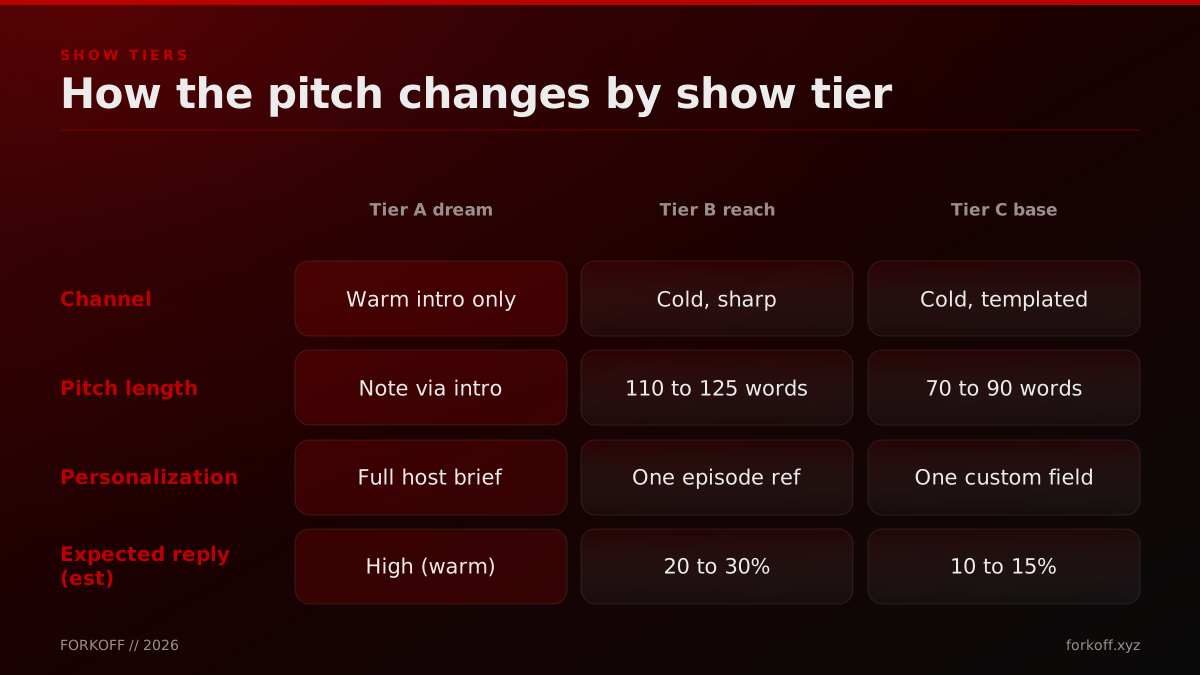
The tier decides three settings on the template: the channel, the length, and the personalization budget. Tier A goes out as a short note through the warm intro, with a full host-research brief behind it. Tier B is the 110 to 125 word cold pitch with one episode reference and the line-three hook. Tier C is a tighter 70 to 90 word template with one genuinely customized field per send. The mistake is running one setting across all three, either burning warm-intro capital on volume shows or sending a cold Tier C template to a dream show that needed the intro. The video below covers the email-writing layer of this well; the layer it does not touch is the show-selection score that decides which tier a show belongs in.
Get BOOKED on Podcasts With THIS Pitch Email
Growth Tools
Growth Tools walks through a pitch-email structure for getting booked as a guest. The email layer is what this piece annotates; the show-selection score is the layer the video does not cover.
If you are weighing whether to run this yourself or hand it off, the podcast agency versus DIY guesting cost breakdown has the line-item math, and the solo operator first five clients sprint covers the warm-graph repair that feeds Tier A.
Why most founder pitches fail (and how FORKOFF runs it)
Most founder pitches fail for one of five reasons, and none of them is the wording. The pattern is consistent enough across teardowns to name each failure and its fix directly.
- Pitching by reach. The founder fills the list with high-download shows that have zero buyer overlap, so the few replies that land never convert. The fix is the show-selection score, run before a single pitch goes out.
- One flat template across all tiers. A dream show gets the cold Tier C template, or a volume show burns a warm intro. The fix is three settings on one template, matched to the tier.
- Quitting after the first send. The founder reads day-7 silence as a no and leaves two thirds of the calendar unbooked. The fix is the three-touch cadence with a new asset at touch two.
- A generic hook. Line three proposes "marketing tips" instead of a contrarian operator angle, so the pitch reads like the other twenty in the inbox. The fix is a hook the host's last twenty guests did not bring.
- Optimizing the wrong metric. The founder tracks downloads instead of clip-cited pipeline, concludes the tour did not work, and misses the inbound that lands in months three through six. The podcast ROI attribution model fixes the measurement.
Each failure is a list or a process failure, which is why FORKOFF's answer starts with the score, not the copy. The Podseeker podcast pitch analysis makes the same point from the tool side: a default AI-written template booked at 3.2 percent against 1.7 percent for a fully manual pitch, but both are dwarfed by the list-quality effect, which is the variable a founder controls first.
Two of ten shows produce most of the booked pipeline
The uncomfortable pattern across FORKOFF cohorts is that roughly two of every ten appearances produce two thirds of the downstream pipeline, and the two are rarely the highest-download shows on the list. This is the operator argument against chasing reach: a founder who scores shows for buyer overlap and clip surface books the two that pay, while a founder who sorts by download count books the eight that do not. The directional read is that a tour of six well-scored shows beats a tour of twelve big-name shows on pipeline, every time we have measured it. Treat download count as the vanity metric it is.
Source: FORKOFF Podcast Service Cohort, directional operator estimate
The Pareto is the reason the score matters more than the sentence. When two of ten appearances produce most of the pipeline, the entire return depends on getting those two shows onto the list, and no amount of pitch polish rescues a list that does not contain them. The appearance itself is roughly a fifth of the value; the clip compound is the rest, which is why the score weights clip surface as heavily as audience and why the pitch routes straight into the clip pipeline covered in the podcast clipping revenue case study and priced in the podcast clipping pricing math. Founders instinctively rank guesting as low-friction distribution, which is exactly why the pitch, not the recording, is where the whole thing stalls.
Nathan Baschez
@nbaschez
Things I do, in order of cognitive load / stress / anxiety: 1. Writing 2. Programming 3. Designing / illustrating 4. Podcast hosting 5. Podcast guesting No clue why, but this ordering is pretty stable for me!
This is the layer FORKOFF runs as a service. We score your target shows against your actual buyer through the Founder Funnel, write the episode-specific pitch in your voice, run the three-touch cadence, and route every booked appearance into the podcast clipping pipeline. The measurement layer that proves the tour paid back, mapping each appearance to downstream pipeline, is the podcast ROI attribution model, and the show discovery that keeps the list fresh runs through the YouTube podcast discovery engine.
The Bottom Line
A founder podcast guest pitch is a 125-word email whose whole outcome is decided before the wording, by which shows are on the list and whether line one proves you listened. Keep the body under 125 words, name the episode topic in the subject in under 40 characters, and lead with a specific reference and a tension hook the host has not heard. Then hold the structure and run the three-touch cadence over 17 days, because two of every three bookings land on the follow-up, not the first send. The move that separates a booked founder from a busy one is upstream of all of it: score every show for buyer overlap and clip surface before you pitch it, so the reply converts into pipeline instead of a vanity download. Write the subject line and line one today, score your top 50 this week, and send the first ten before the week closes. The founder funnel strategy is where the booked tour turns into a repeatable distribution engine.