The best podcasts for founders to guest on in 2026 are not the biggest ones. They are the shows where your specific buyer already listens, where you can realistically get booked, and where the recording produces clips you can run for weeks (which depends on how you prepare for the interview, not on the show). This list is segmented by founder type (AI, SaaS, crypto) and every show carries a GREEN, AMBER or RED tag from FORKOFF's five-dimension show-vetting ledger, so you can see not just which shows are good, but which are worth your one warm intro.
The vetted founder-guesting list, in one scroll
Most founder podcast lists rank shows by follower count. That tells you a show is big, not whether it will move your pipeline. This list does the opposite. It is segmented by ICP (AI, SaaS, crypto), and every show is scored on a five-dimension rubric (ICP density, booking access, clip yield, host prep, audience-to-pipeline) then tagged GREEN (guest now), AMBER (guest with a guardrail) or RED (skip for now). The GREEN AI shows are No Priors, Latent Space and Cognitive Revolution. The GREEN SaaS shows are Lenny's Podcast, SaaStr, In Depth, The SaaS Podcast and Run the Numbers. The GREEN crypto shows are The Chopping Block, Empire and Unchained. Reach-only giants like Lex Fridman are RED for a growth-stage founder because the audience is too broad to convert. The moat here is not the names, it is the vetting: a Feedspot scrape cannot tell you which of these will actually produce a trial signup.
About these numbers
The rubric scores, the vetting index values, and the tour-funnel shapes in this post are FORKOFF editorial judgment and directional operator benchmarks from podcast booking and distribution engagements across 2025 and 2026, supplemented by publicly available podcast industry data from Edison Research and Spotify. The GREEN, AMBER and RED tags are opinions against a transparent rubric, not scraped follower counts, and individual results vary by show, topic fit, and the quality of the founder's offer. Every show named here is real and publicly listed; nothing about audience size is invented.
What makes a podcast worth guesting on as a founder?
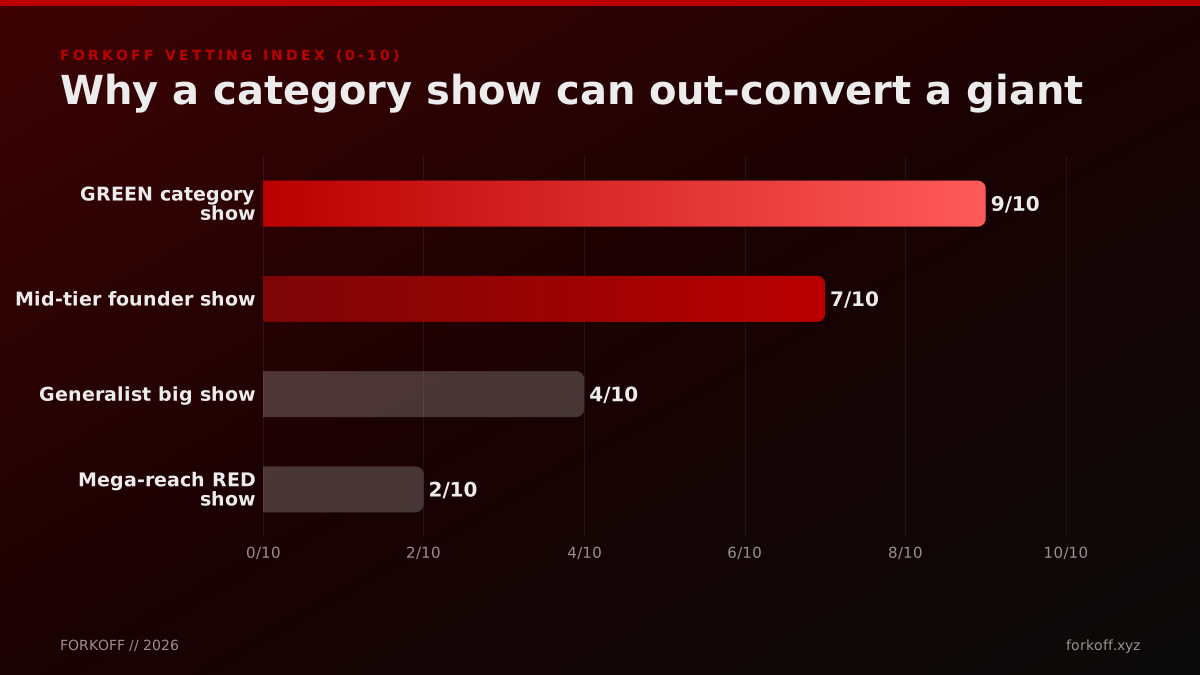
A podcast is worth guesting on when the audience is your buyer, the show is bookable, and the episode produces reusable assets. Reach is the least important of the three. A show with 500,000 downloads where almost none of the listeners are your ICP will produce less pipeline than a category show with 5,000 downloads where every listener is a potential customer. That is the single idea most founder podcast lists miss: they rank by follower count, which measures how big a show is, not whether it will move your business. Turning a shortlist into booked episodes is the next step, covered at how to get on podcasts.
Run the contrast in dollars and it stops being abstract. Imagine two appearances in the same week. The first is a generalist business show with a big audience where maybe one listener in a thousand could ever buy your product, so 500,000 downloads yield perhaps 500 relevant ears, scattered and cold. The second is a category show with 5,000 downloads where the entire audience is building in your space, so you reach 5,000 relevant ears who are already leaning in. The category show puts you in front of ten times the qualified attention despite being one percent of the size, and the qualified listeners convert at a far higher rate because the host already vouched for the room. That is the whole thesis of a vetted list in one example.
The reason the math works this way is trust transfer. When a founder appears on a show the audience already respects, the host's credibility flows to the founder by association, and it flows hardest when the audience is narrow and invested. This is why we score audience relevance far above raw reach, and it is the same mechanism that runs through the AI-startup podcast guesting playbook on direct signups. The proof point most founders underrate is how one right appearance compounds: a single episode that lands with the right room seeds inbound for months, because the listeners who matter carry it into their own networks.
There is a second, quieter reason the vetted approach wins, and it is about your own scarce resource. A founder has a limited number of warm introductions, a limited number of sharp pitches in them before pitch fatigue sets in, and a limited number of hours to prepare and record. Spending any of that on a show that cannot move pipeline is not neutral, it is a real cost with a real opportunity price. The list below exists so that every hour you spend guesting is spent on a show that can pay it back.
Dr. Roman Yampolskiy
@romanyam
OFFICIALLY #1. My interview with @StevenBartlett is now the most-viewed video in the history of The Diary of a CEO. Nearly 20 million views. Number one out of more than 800 videos on a channel with approximately 18 million subscribers and over 1.5 billion total views.
The demand side is not the problem. Founders know they should be on podcasts, and communities are full of them asking how. The discipline is the problem: almost nobody vets before they pitch, so the warm intro gets spent on the wrong show.
Podcast Guest and tips
A founder asks r/startups how to line up podcast guest spots and what actually moves the needle once you are on the mic.
Operator noteThree Tier-C category appearances routinely beat one mega-reach slot on trial signups. ICP density, not raw reach.
How does FORKOFF vet a show: the GREEN, AMBER, RED ledger
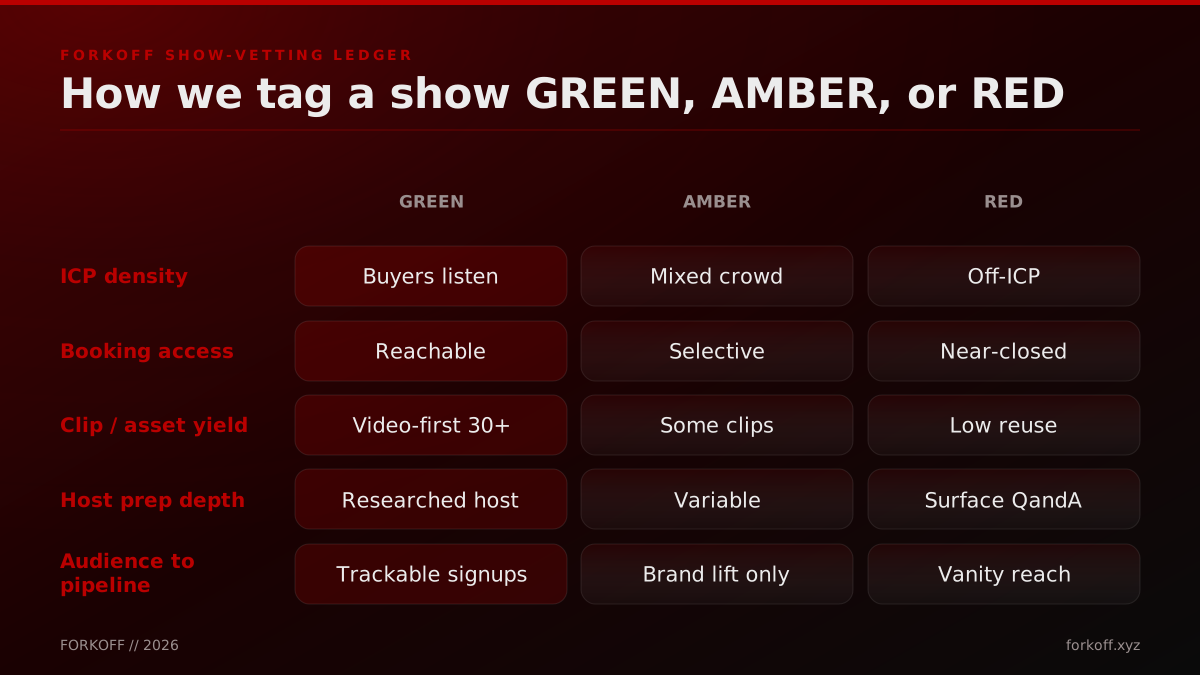
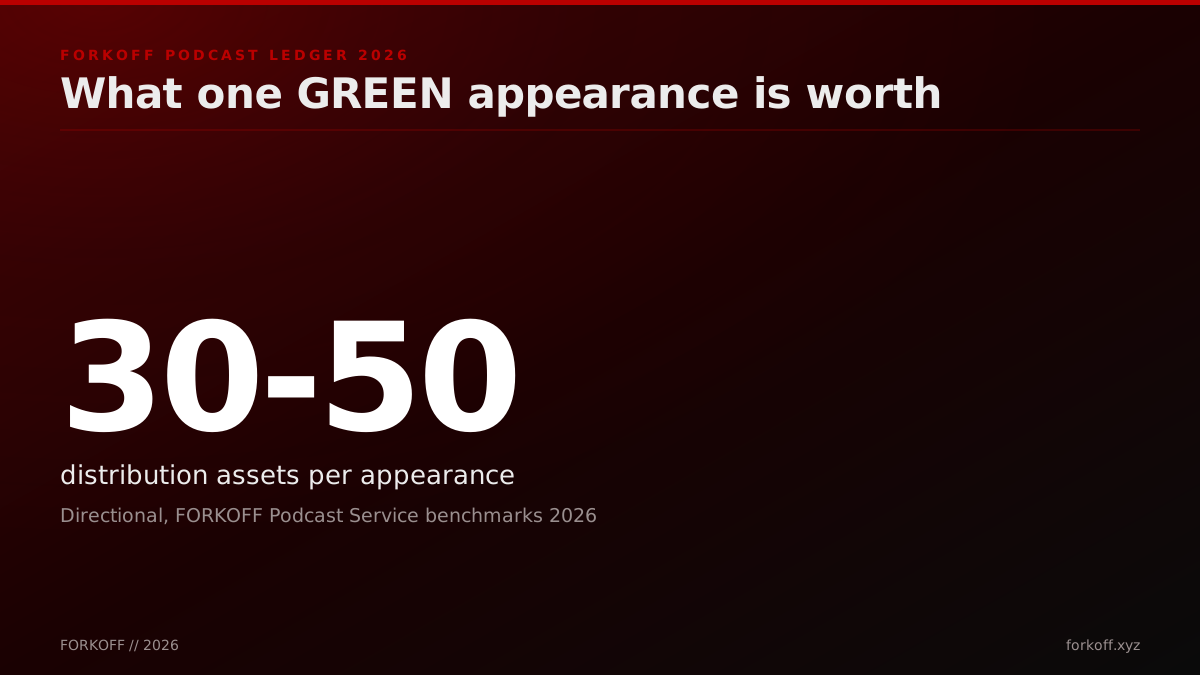
FORKOFF vets every show on five dimensions and reduces the result to a single tag. The dimensions are ICP density (do your buyers actually listen), booking access (can you realistically get on), clip and asset yield (does the show film for video so you get 30 to 50 reusable assets), host prep depth (does the host research guests before recording), and audience-to-pipeline fit (can you track signups, or is it vanity reach). A show that clears all five is GREEN. A show that clears most with a guardrail is AMBER. A show that fails ICP density or booking access is RED for a growth-stage founder, regardless of how large it is.
Each dimension carries its own failure mode, which is why we score all five rather than trusting a single gut read. ICP density is the one founders get wrong most often, because a big number feels like progress; the fix is to ask who the last ten guests were and whether their audience overlaps yours, not how large the audience is. Booking access is a sequencing signal: a show that only books founders with a portfolio of prior appearances is not a first move, and pretending otherwise wastes your best pitch. Clip and asset yield is decided by format before you ever record, because an audio-only show simply cannot hand you a video clip library no matter how good the conversation is. Host prep depth determines whether you get a real conversation or a generic interview that sounds like every other episode, and a host who has clearly read your work is worth more than one with twice the audience who has not. Audience to pipeline is the honesty check: if you cannot imagine how you would attribute a single signup to the appearance, the show is a brand play at best and a vanity slot at worst.
The rubric is the moat. A generic roundup cannot tell you any of this, because a follower count does not encode whether the host prepares or whether the audience converts. The tags below are the output of running this rubric, not a popularity contest. It is also why the same show can carry a different tag for two different founders: a show that is GREEN for an infrastructure founder can be AMBER for a consumer founder, because the audience density changes with who is asking. The rubric travels; the tag is always relative to your ICP.
The GREEN / AMBER / RED vetting rubric
| Dimension | GREEN | AMBER | RED |
|---|---|---|---|
| ICP density | Your buyers are the core audience | Mixed audience, some ICP overlap | Audience is broad or off-ICP |
| Booking access | Reachable with a sharp angle | Selective, needs a portfolio | Near-closed to a growth-stage founder |
| Clip and asset yield | Video-first, 30-plus reusable assets | Audio with some clip potential | Audio-only, low reuse |
| Host prep depth | Host researches every guest | Preparation varies by episode | Surface-level generic questions |
| Audience to pipeline | Trackable signups per episode | Brand lift, hard to attribute | Vanity reach, no measurable pipeline |
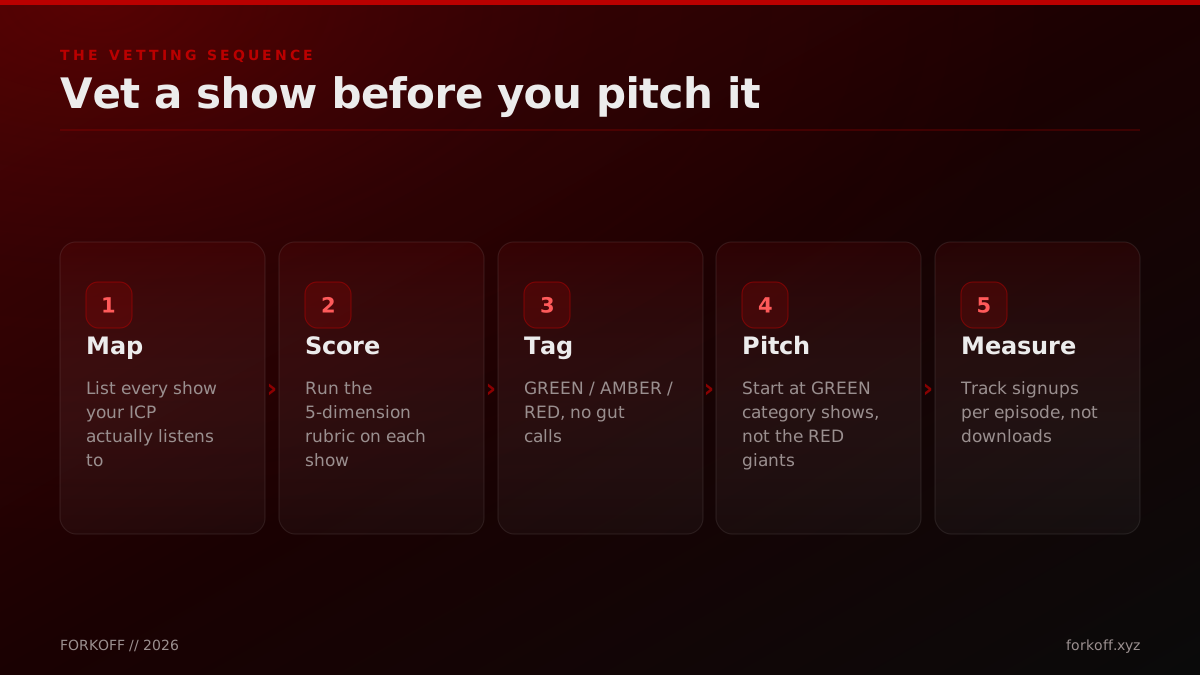
The sequence matters as much as the rubric. Map the shows your ICP listens to, score each one, tag it, then pitch the GREEN category shows first and save the giants for later. The podcast booking system for founders breaks down the five-field qualification score in more depth, and the cost tradeoffs of doing this yourself versus with help are covered in the agency versus DIY guesting analysis.
Podcast and webinar guesting. Guest spots often come with backlinks from show notes, event pages or recaps. These links build authority while surfacing your expertise to AI-trained content.
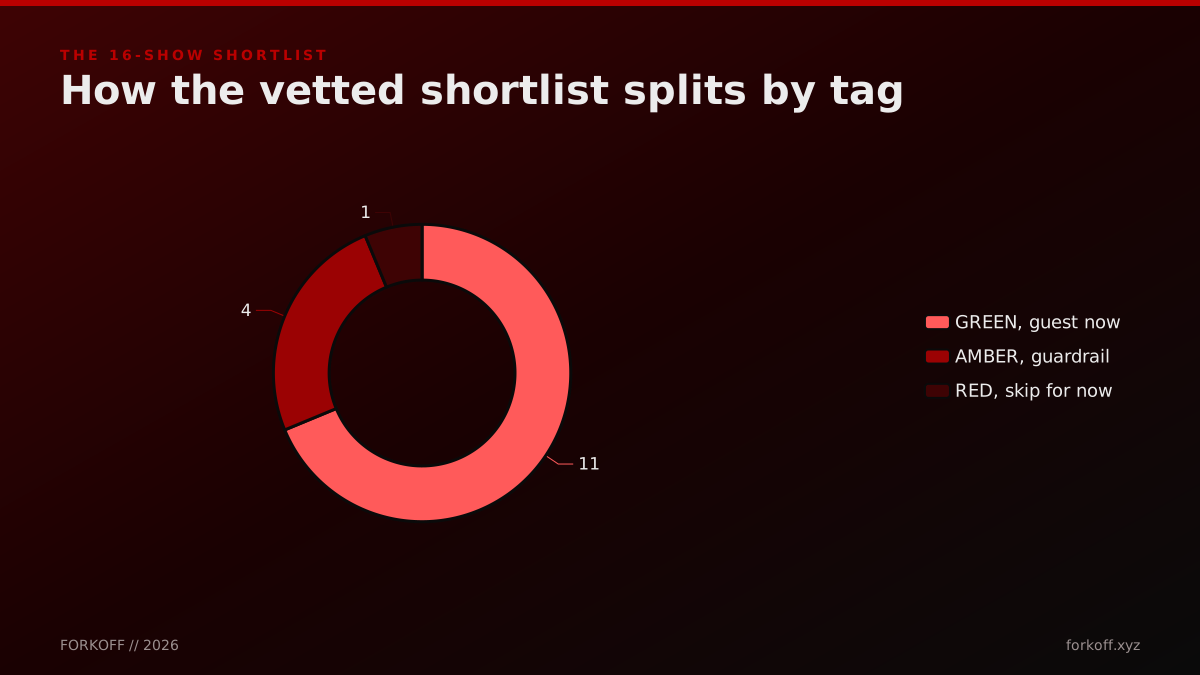
Once you run the rubric across a realistic shortlist, most shows land AMBER, a smaller set land GREEN, and a few land RED. The 16 shows below already survived that screen.
Best AI podcasts for founders to guest on in 2026
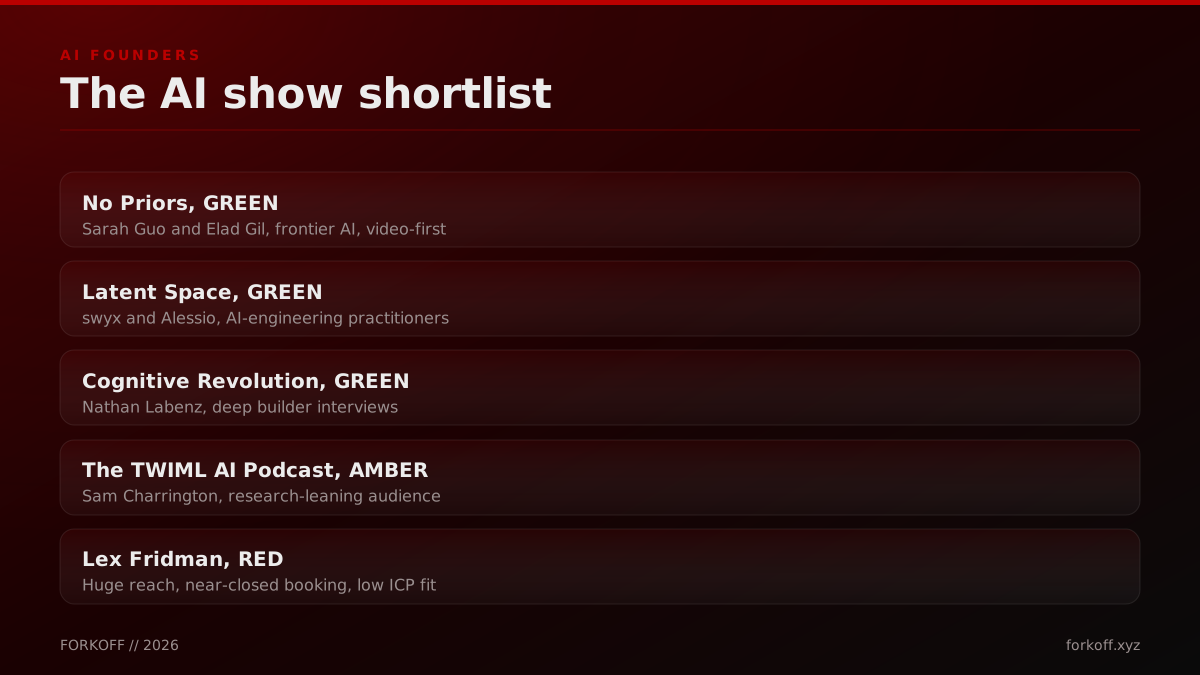
The best AI podcasts for founders to guest on are practitioner shows where the audience builds, not the reach-only interview giants. For an AI founder, the three GREEN shows are No Priors, Latent Space and Cognitive Revolution. No Priors, hosted by Sarah Guo and Elad Gil, interviews frontier founders and researchers and films every episode for YouTube, which makes it both a booking target and a clip engine. Latent Space, from swyx and Alessio Fanelli, is the show for AI-engineering credibility with a deeply technical audience. Cognitive Revolution, hosted by Nathan Labenz, runs long, substantive builder interviews.
The AMBER show is The TWIML AI Podcast with Sam Charrington, which is excellent but leans toward a research audience rather than a buyer audience for most commercial AI founders. If you are selling a developer tool or infrastructure, the overlap is real and the tag moves toward GREEN; if you are selling an AI application to a business buyer, the audience is a step removed from your ICP, so it stays AMBER. The RED tag goes to the Lex Fridman Podcast: the reach is enormous, but the audience is a general one, the booking bar is near-closed for a growth-stage founder, and the conversion math does not favor it as a first move. None of that is a criticism of the show. It is a statement about where it belongs in your sequence, which is late, after you have a named point of view and a portfolio of GREEN appearances to point at.
The sub-lane rule matters more in AI than in any other segment, because the category splits into distinct audiences that rarely overlap. An AI-engineering founder should weight Latent Space and Cognitive Revolution, whose listeners are the exact developers who will adopt a new framework. A founder selling an agentic product to operators should weight No Priors and the operator-heavy generalist shows, whose audiences make buying decisions. Matching the sub-lane to the show is the difference between a GREEN appearance that converts and a technically-adjacent one that produces polite silence.
AI founder show shortlist (2026)
| Show | Hosts | Format | Tag |
|---|---|---|---|
| No Priors | Sarah Guo and Elad Gil | Video-first | GREEN |
| Latent Space | swyx and Alessio Fanelli | Video and audio | GREEN |
| Cognitive Revolution | Nathan Labenz | Video and audio | GREEN |
| The TWIML AI Podcast | Sam Charrington | Audio-led | AMBER |
| Lex Fridman Podcast | Lex Fridman | Video-first | RED |
FORKOFF Podcast Ledger: why AI buyers reward long-form
AI builder-buyers in 2026 open ChatGPT and Perplexity before they open Google. Those engines cite long-form transcribed conversations at a higher rate than founder-essay content, because the model can attribute a claim to a specific named human. A GREEN AI show that films and transcribes every episode is therefore an AI-citation surface, not just a distribution channel. This is the mechanism behind the vetting index scoring practitioner shows above reach-only giants.
Source: FORKOFF Podcast Service benchmarks 2026
The format point is not cosmetic. A show like No Priors that films for YouTube gives you a video source recording, which is what a clipping engine needs to produce dozens of short-form assets from one hour. An audio-only show gives you a transcript and little else.
No Priors Ep. 144 | The 2026 AI Forecast with Sarah & Elad
No Priors: AI, Machine Learning, Tech, & Startups
A No Priors episode with Sarah Guo and Elad Gil. The video-first format is part of why the show is tagged GREEN for AI founders.
Operator noteWe tag Bankless AMBER, not RED. It is a strong show, but only if your thesis fits the ETH and DeFi lane.
Best SaaS podcasts for founders to guest on in 2026
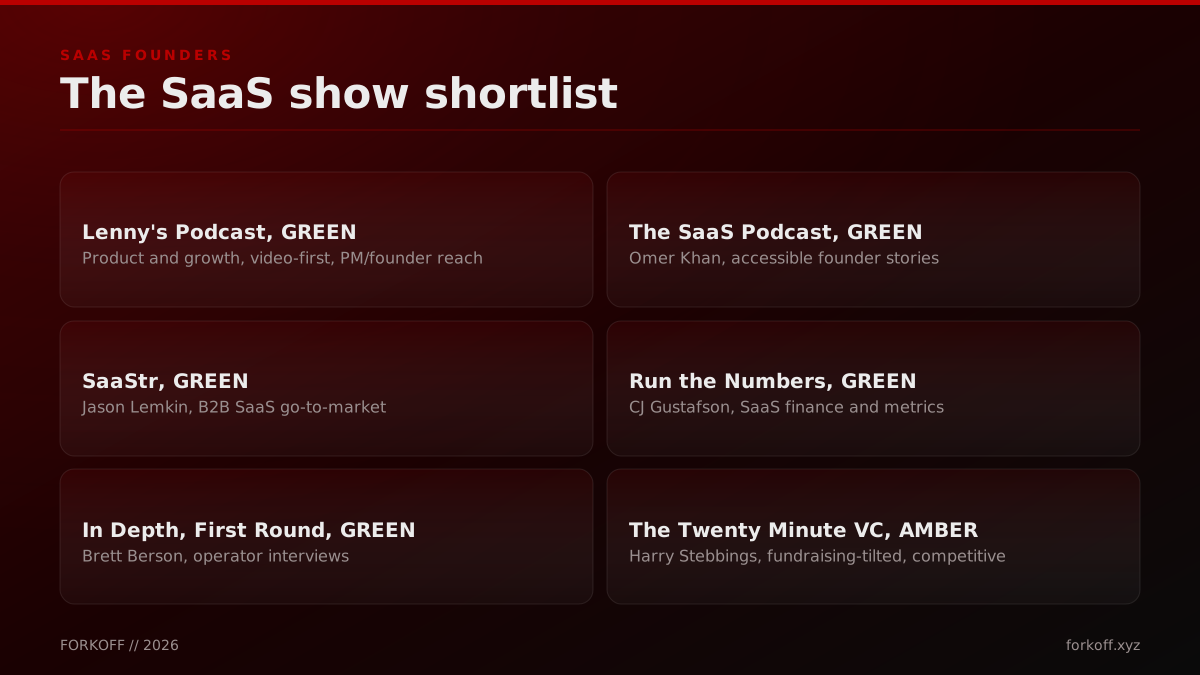
The best SaaS podcasts for founders to guest on cover the full go-to-market surface, from product to growth to finance, and most of them are highly bookable. The GREEN shows are Lenny's Podcast, SaaStr, In Depth from First Round, The SaaS Podcast and Run the Numbers. Lenny Rachitsky's show is the default GREEN for product and growth, films for YouTube, and reaches an enormous PM-and-founder audience. SaaStr, hosted by Jason Lemkin, is the canonical B2B SaaS go-to-market show. In Depth, hosted by Brett Berson, runs deep operator interviews. The SaaS Podcast with Omer Khan is one of the most accessible high-ICP shows for a bootstrapped or early SaaS founder, and Run the Numbers with CJ Gustafson is the show to target if your angle is SaaS finance and metrics.
The AMBER show is The Twenty Minute VC with Harry Stebbings, which has huge reach but tilts toward fundraising narratives and is competitive to book. It is a GREEN-caliber slot if your story is a fundraising or market-thesis story, and an AMBER one if you are trying to reach product buyers rather than investors. Notice there is no RED show in this segment: SaaS podcasting is deep and accessible enough that a founder with a sharp angle has many GREEN options before they ever need to chase a giant. The guest bar on a top show is high, which is exactly why the appearance is worth so much.
The practical advantage in SaaS is accessibility. Where an AI founder often has to earn the mid-tier before the giants reply, a SaaS founder can frequently book a genuinely high-ICP show like The SaaS Podcast or Run the Numbers early, because those hosts actively seek operator guests with a concrete story. That changes the strategy: a SaaS founder should front-load the accessible GREEN shows to build a portfolio quickly, then use that portfolio to reach Lenny's Podcast, SaaStr and In Depth, which sit at the top of the accessible tier and reward a guest who already has a track record. The gap between the accessible GREEN shows and the flagship GREEN shows is a matter of weeks of portfolio-building, not a permanent wall.
Choose the show by the decision your buyer is making. If your product is bought by a head of growth, weight Lenny's Podcast. If it is bought by a VP of sales or a founder-led sales motion, weight SaaStr and In Depth. If your wedge is finance, billing or metrics, Run the Numbers puts you directly in front of the person who signs the check. The show list is not a ranking to work top to bottom; it is a map you read against your own buyer.
Lenny Rachitsky
@lennysan
Upcoming podcast guests: Jeff Dean, Chief Scientist at Google DeepMind; Andrew Ambrosino, Head of PM and Eng for Codex; Fiona Fung, Head of Eng for Claude Code/Cowork; Tara Seshan, Head of ChatGPT, Productivity at OpenAI; Dianne Penn, Head of Product, Research at Anthropic.
SaaS founder show shortlist (2026)
| Show | Hosts | Format | Tag |
|---|---|---|---|
| Lenny's Podcast | Lenny Rachitsky | Video-first | GREEN |
| SaaStr | Jason Lemkin | Video and audio | GREEN |
| In Depth (First Round) | Brett Berson | Video and audio | GREEN |
| The SaaS Podcast | Omer Khan | Audio-led | GREEN |
| Run the Numbers | CJ Gustafson | Audio-led | GREEN |
| The Twenty Minute VC | Harry Stebbings | Video and audio | AMBER |
The cluster math on a GREEN SaaS tour
Across FORKOFF Podcast Service engagements, a founder running a 60-to-90-day clustered tour of GREEN and AMBER shows produces two to four long-form episodes per month and 30 to 50 distribution assets per appearance. Cohort-level inbound on the founder's primary channel rises within the cluster window. The compounding comes from concentration in time, not from scattering appearances across two years.
Source: FORKOFF Podcast Service benchmarks 2026
A SaaS appearance compounds hardest when the recording is wired into the rest of the funnel rather than treated as a one-off. Guesting is the input layer of the Founder Funnel, and the ROI only shows up when you attribute pipeline, not downloads. The Ramp episode below is a good example of the video-first format that makes a SaaS clip library possible.
Velocity over everything: How Ramp became the fastest-growing SaaS startup ever | Geoff Charles
Lenny's Podcast
A Lenny's Podcast episode on how Ramp scaled. The show films for YouTube, which is why a SaaS appearance here produces a full clip library.
A year ago Dan Shipper came on the podcast to predict where AI was heading. He was remarkably right, including the call that everyone was sleeping on Claude Code.
Best crypto podcasts for founders to guest on in 2026
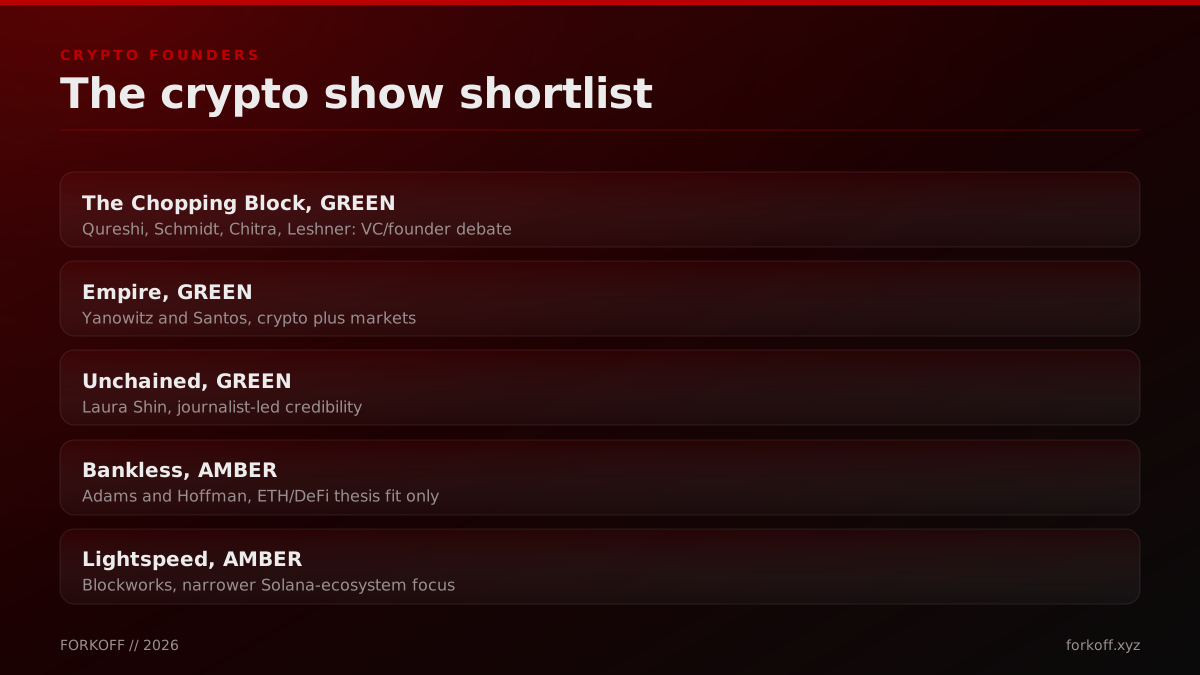
The best crypto podcasts for founders to guest on are the ones whose audience trusts the host enough that the trust transfers to you. Crypto audiences are skeptical and concentrated, so credibility matters more than size. The GREEN shows are The Chopping Block, Empire and Unchained. The Chopping Block pairs sharp VC and founder debate with an audience of serious operators. Empire, from Blockworks co-founder Jason Yanowitz and Santiago Santos, sits at the intersection of crypto and markets and interviews founders directly. Unchained, hosted by journalist Laura Shin, brings a rigor that makes an appearance function like a credibility stamp.
The AMBER shows are Bankless and Lightspeed. Bankless, hosted by Ryan Sean Adams and David Hoffman, is one of the largest shows in the space and films for video, but it is thesis-driven and Ethereum-leaning, so it is a GREEN-caliber slot only if your project fits that lane. Lightspeed is strong but narrower, focused on the Solana ecosystem, so its tag depends on where your protocol lives. There is no RED show here for a well-matched founder, because the crypto shows that matter are bookable if your thesis genuinely fits. The AMBER tag in crypto is almost always an ecosystem-fit flag, not a quality one: a Solana-native founder should read Lightspeed as GREEN and a general L2 founder should read it as AMBER, and the same logic inverts for an Ethereum-native project on Bankless.
Crypto rewards the vetted approach more sharply than the other two segments because the downside of the wrong room is higher. A skeptical crypto audience that decides you are shilling will say so publicly and permanently, and that reputational cost travels. The upside is symmetric: a credible appearance on Unchained or The Chopping Block, where the host is known for hard questions, functions as a diligence stamp that a paid placement can never buy, precisely because the audience knows the host does not hand out easy segments. The tag you want to earn in crypto is the one where the host is tough and the audience trusts them for it.
Jason Yanowitz
@JasonYanowitz
Blockworks' newest podcast. The go-to show to understand the intersection of crypto and capital markets. Would guess it becomes a top 3 show for us by end of year.
Crypto founder show shortlist (2026)
| Show | Hosts | Format | Tag |
|---|---|---|---|
| The Chopping Block | Haseeb Qureshi and co-hosts | Video and audio | GREEN |
| Empire | Jason Yanowitz and Santiago Santos | Video and audio | GREEN |
| Unchained | Laura Shin | Video and audio | GREEN |
| Bankless | Ryan Sean Adams and David Hoffman | Video-first | AMBER |
| Lightspeed | Blockworks | Video and audio | AMBER |
Why a crypto GREEN show transfers trust faster
Crypto audiences are unusually skeptical and unusually concentrated. A single credible appearance on a show like Unchained or The Chopping Block carries the host's hard-won trust to the founder by association, which shortens the diligence a skeptical buyer or LP would otherwise run. That trust transfer is worth more in crypto than a larger but lower-trust general audience, which is why ecosystem and thesis fit dominate the crypto tags.
Source: FORKOFF Podcast Service benchmarks 2026
A single founder interview on a credible crypto show gives you a long-form platform to explain your protocol in your own words, the exact trust-transfer that a paid post cannot buy. Understanding how a host decides who earns that slot is how you get picked, which is why the host-side conversation below is worth reading.
If you have a podcast how did you get your first few guests?
An operator thread on how podcast hosts source their first guests, the mirror image of how a founder gets picked as one.
Is Canton a Real Blockchain? | Canton Founder Yuval Rooz
Bankless
A founder interview on Bankless. A single crypto founder gets a long-form platform, the exact trust-transfer a GREEN or AMBER show provides.
Why does video-first change the guesting math?
Video-first changes the math because a filmed episode is a clip factory and an audio-only episode is not. When a show records video, one hour of conversation becomes the source for 30 to 50 short-form assets that a clipping engine can cut, caption and distribute for weeks. When a show is audio-only, you get a transcript that can rank in search and a link in the show notes, but almost nothing to fuel a short-form distribution engine. This is why format sits inside the vetting rubric and why a video-first AMBER show can be worth more in practice than an audio-only GREEN one.
The difference between video and audio-only podcasting is the difference between one asset and a library. The clip library is what makes the economics of a podcast tour work, and it is the same engine documented in the 13-days-of-clips revenue case study. If a show you love is audio-only, guest anyway, but plan to lean on the transcript for podcast transcript SEO rather than expecting a clip library.
This is why the format column sits in every table above and why a video-first AMBER show can beat an audio-only GREEN one on total output. A single filmed hour, run through a podcast clipping engine, becomes weeks of short-form content across every channel the founder cares about, plus the long-form asset itself, plus the transcript for search. An audio-only appearance still earns its place for the trust transfer and the search footprint, but you should walk in knowing which of the two you are getting so your distribution plan matches the raw material. Founders who assume every appearance yields a clip library end up disappointed by half their tour; founders who tag the format first plan the right output for each show.
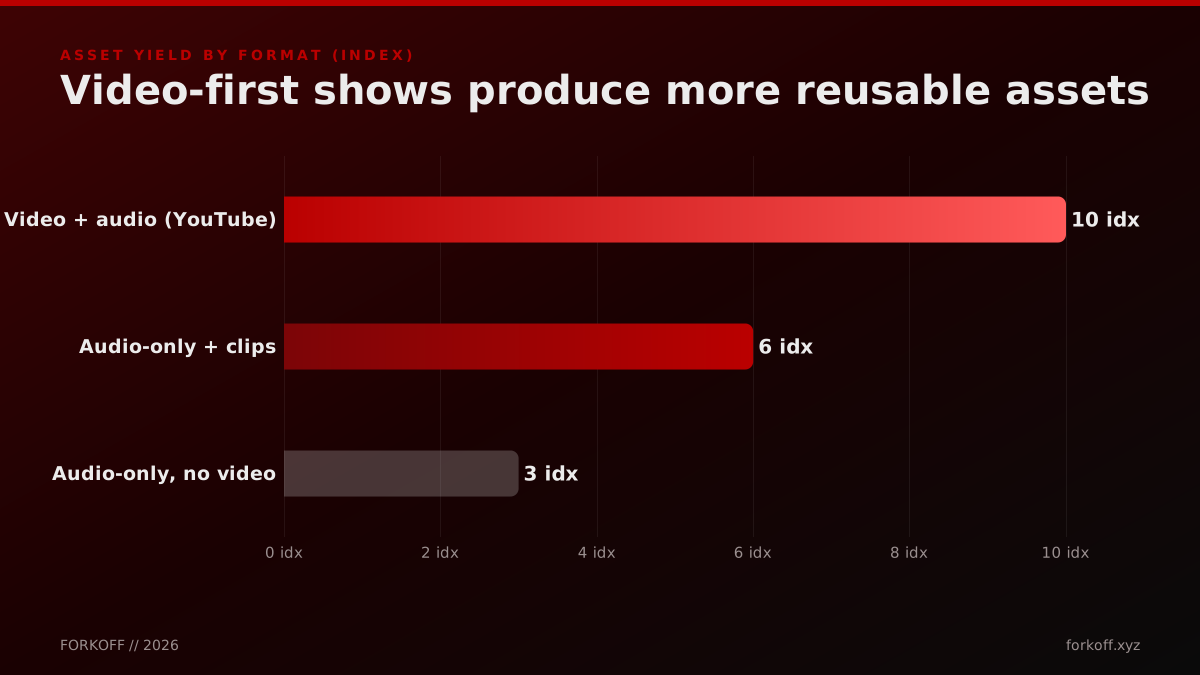
Operator noteA GREEN video-first show yields 30-50 clips per hour. An audio-only RED slot yields almost nothing reusable.
How do you get booked once you have picked your shows?
Once you have a tagged shortlist, getting booked is a sequencing problem, not a volume problem. Lock three prerequisites first: one named point of view you will defend on every show, one citable framework the host can introduce you with, and one next-step asset for listeners to land on. Then pitch the GREEN category shows first with a tight 200-word pitch that references a specific recent episode, and treat every AMBER show as a portfolio-builder. Expect your first six to twelve confirmed bookings to come disproportionately from GREEN and AMBER mid-tier shows, and treat any reply from a RED giant as a bonus rather than a plan.
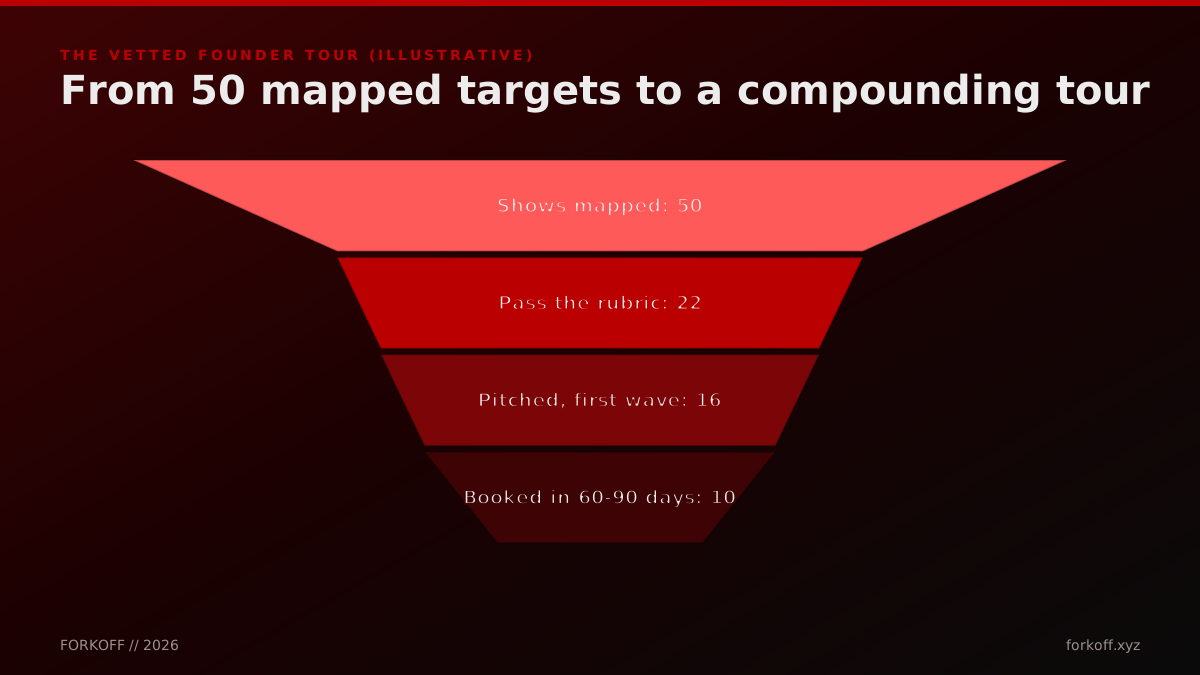
The number founders underestimate most is the pitch-to-booking conversion shape, so set the expectation honestly before the first wave goes out. Map 50 targets, keep the roughly 22 that pass the rubric, pitch the first wave, and a healthy first tour books around 10 inside a 60-to-90-day cluster. That cluster window is what produces the perception shift; scattered one-off appearances do not. Guesting is not a task you complete, it is the input layer of the Founder Funnel: the appearances feed the clips, the clips feed the outbound, and the outbound feeds the pipeline the show was supposed to influence in the first place.
The prerequisites are worth stating plainly because they are where most tours fail before they start. First, one named point of view you will defend on every show, so five appearances stack into a single category position instead of five forgettable conversations. Second, one citable framework the host can introduce you with, because a named thing the audience can repeat is the lowest-cost authority lever a founder has. Third, one next-step asset, a page or a beta or a benchmark for listeners to land on, without which even a great appearance produces zero attributable signups and the founder wrongly concludes the channel does not work. Lock those three before you touch the pitch, and the same 200-word pitch that would have been ignored starts booking GREEN shows.
The host side of this is worth studying, because the best shows are flooded with requests and vet hard before they say yes. Reading how hosts triage guest bookings tells you exactly what your pitch has to clear.
Operator noteThe best shows are flooded with pitches. Vet before you pitch, or you spend your one warm intro on a RED slot.
Thoughts on how to handle increase in guest bookings
A host asks how to manage a surge in guest booking requests, a reminder that the best shows get flooded and vet hard before they say yes.
The choice between running this yourself and having it run for you is a real one, and it is not always obvious. The agency versus DIY guesting cost breakdown covers when the math favors each, and guesting versus starting your own show covers whether you should be a guest at all before you host.
How often should a founder guest, and for how long?
A founder should aim for one to two long-form appearances per month, clustered into a 60-to-90-day window rather than spread evenly across the year. The cluster matters more than the raw count. Six appearances concentrated into a quarter build a visible perception shift, because your name starts showing up in adjacent feeds, hosts reference each other, and the clips compound while the memory is fresh. The same six appearances spread across two years produce six disconnected blips that never stack into authority. Concentration in time is the mechanic that turns individual episodes into a category position.
Sustainability is the other half of the answer. One to two appearances a month is a cadence a founder can hold without it consuming the calendar, and it leaves room to prepare properly for each show, which is what protects the quality that made the show GREEN in the first place. Guesting on ten shows in a month with no preparation produces ten mediocre conversations that damage rather than build the brand. The goal is not maximum volume, it is the highest-quality cluster you can sustain while still running the company. After the first cluster lands, drop to a steady one appearance a month to keep the search footprint and the clip engine fed without burning out, and time the next cluster to a real signal like a launch, a raise or a major product milestone, when hosts are most receptive and your story is most concrete.
The mistake founders make: chasing RED shows first
The most expensive mistake in founder podcasting is spending your first and best pitch on a RED giant. The giant almost never replies, and a single rejection convinces the founder that the whole channel does not work, so a strategy that would have compounded gets abandoned after one email. A RED tag is not a verdict on the show's quality. It is a verdict on sequence: the giant is a category-dominance play you earn after eight to twelve GREEN and AMBER appearances and a named point of view, not a cold first move.
The second mistake is subtler and just as costly: optimizing for the size of the audience in the room instead of the fit of the audience in the room. A founder gets an offer from a large generalist show and takes it over a smaller category show because the number is bigger, then wonders why the episode with 50,000 downloads produced fewer signups than the one with 4,000. The download count is a vanity metric at the point of decision. The only number that predicts pipeline is how many of those listeners could plausibly buy, and that number is almost always higher on the smaller, denser show. Read every offer through the rubric, not through the audience size the host quotes you.
The third mistake is treating the appearance as the finish line. The recording is the raw material, not the result. A founder who does a great episode and then does nothing with it captures maybe a tenth of its value, because the compounding lives in the clips, the outbound touches, the search footprint and the follow-up, not in the hour itself. Every GREEN appearance should trigger a downstream checklist before you book the next one, or you are leaving most of the return on the table.
This is also why guesting beats most cold channels once it is sequenced correctly. A warm appearance in front of an ICP audience does work that a cold email sequence cannot, and it feeds the same founder-led sales motion that a scattered outreach campaign never reaches. Start narrow, cluster in time, measure signups instead of downloads, and let the how-to-grow-a-podcast fundamentals inform how you package the appearances afterward.
If it ever seems like there's no room for another podcast, newsletter, book or anything else, there's always room for better.
The RED-show trap
The most common founder mistake is spending the first and best pitch on a RED giant. The giant almost never replies, the founder concludes podcasts do not work, and a channel that would have compounded gets abandoned after one rejection. A RED tag is not a knock on the show. It is a statement about sequence. Earn the giant after eight to twelve GREEN and AMBER appearances and a named point of view.
Source: FORKOFF Podcast Service benchmarks 2026
Guest on the GREEN shows in your segment, run the AMBER ones as guardrailed bets, and skip the RED giants until you have earned them. The list is the easy part. The vetting, the sequencing, and the clip engine are where the pipeline actually comes from, and they are exactly what the FORKOFF Podcast Service is built to run.