B2B podcast advertising vs guesting is not a question about whether podcasts work, it is a question about which arm of podcasting to buy. Podcast advertising means paying to place an ad, usually a host-read endorsement, on someone else's show. Podcast guesting means earning a seat as a guest on shows your buyers already listen to. Both put your brand in a trusted audio environment, both can source pipeline, and they cost, convert, and compound in completely different ways. This guide prices both sides with real 2026 numbers, shows which one actually buys pipeline, and lays out the stack-both cadence a founder should run.
B2B podcast advertising vs guesting in one scroll
Podcast advertising vs guesting is a which-arm question, not a which-medium one. Paid host-read ads buy reach and a trusted endorsement (business and finance CPMs $25 to $55, Million Podcasts 2026; a 100k-download mid-roll ~$2,500, Ad Results Media) and scale with budget, but an untargeted test converts almost nothing. Earned guesting buys a 30 to 60 minute conversation, relationships, and compounding assets (managed booking $1,000 to $3,000/mo; guest-to-client ~10 percent average, 25 to 40 percent on ICP-targeted shows), but it is slower and time-heavy. Reach is cheap and worthless; FIT is the whole game. Use ads for warm-demand capture and scale, guesting for founder-led high-ACV trust-gap sales, and STACK BOTH across 2 to 4 quarters: guest to warm the base, then buy host-read on the same ICP shows.
The reason this comparison gets muddled is that the people who write about it sell one side. The cost guides publish CPMs and never mention guesting. The guesting agencies argue guesting wins and never show a real ad price. A founder trying to decide where the next dollar of marketing budget goes ends up with two one-sided sales pitches and no honest head-to-head. We run the earned-guesting engine at FORKOFF, so we have a side too, and we are going to be straight about where paid ads beat it. The honest answer is that reach is cheap and worthless without fit, and the two motions are strongest stacked. Our podcast guesting vs cold email comparison already made the case that stacking beats picking; this one prices the paid arm against the earned one.
What is the difference between B2B podcast advertising and guesting?
Podcast advertising is a media buy: you pay a show, a network, or a programmatic marketplace to insert your message into episodes, and you are buying impressions plus, in the host-read case, a trusted voice reading your copy. Podcast guesting is earned media: you get booked as a guest, and you are buying 30 to 60 minutes of a decision-maker's attention plus a relationship with the host and an evergreen asset. The first is fast, scalable, and priced per thousand listens. The second is slower, capped by your calendar, and priced in time or a booking retainer. They are different instruments for different jobs, which is why comparing them on a single number is the wrong move.
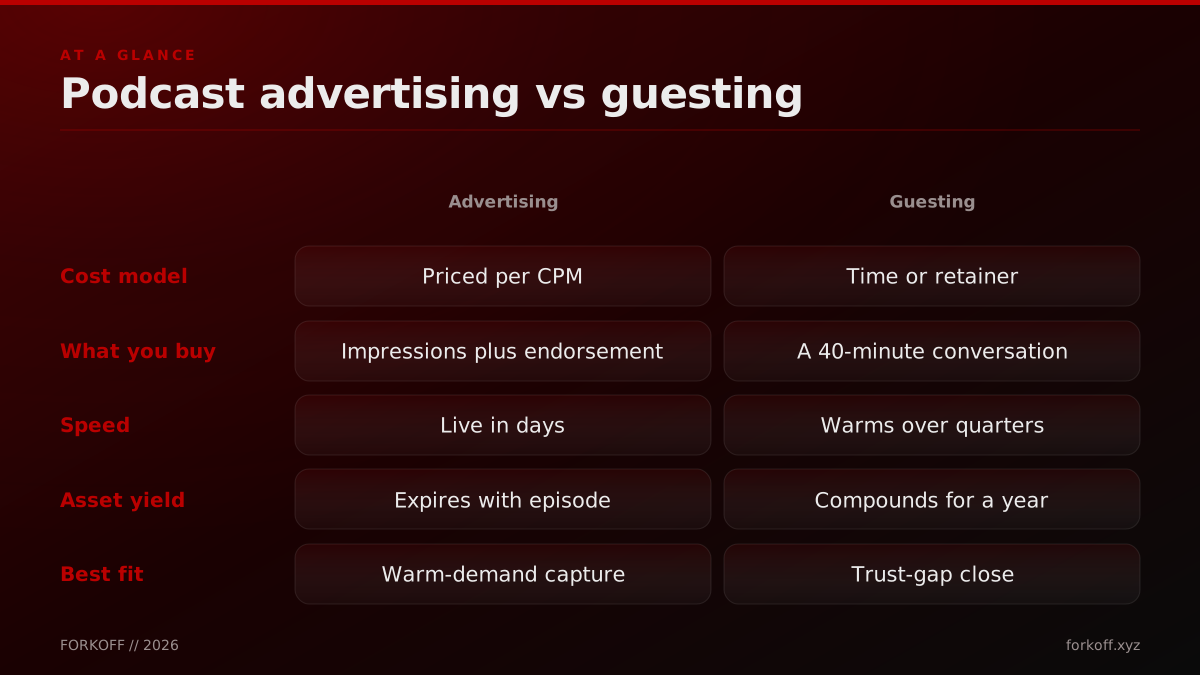
The confusion is worth clearing because the two words get used interchangeably by people who should know better. When a cost guide says podcast marketing costs $25 CPM, it means advertising. When a guesting agency says podcast marketing converts at 10 percent, it means guesting. Those are not the same metric applied to the same thing; they are two different products with different unit economics, different timelines, and different failure modes. Put the two side by side on the dimensions a buyer actually cares about, and the shape of the decision comes into focus: you are not choosing a better channel, you are choosing which job you need done this quarter.
B2B podcast advertising vs guesting, 2026 buyer comparison
| Dimension | Podcast advertising (paid) | Podcast guesting (earned) | Edge |
|---|---|---|---|
| Unit cost | $25 to $55 host-read; $8 to $20 programmatic | $1,000 to $3,000/mo managed booking retainer | Different cost models entirely |
| What you buy | Impressions plus a host endorsement | A 30 to 60 minute conversation plus a relationship | Guesting buys depth |
| Illustrative cost per touch | ~$2,500 per 100k-download mid-roll slot | ~$250 to $750 amortized per booking | Guesting on cost per real touch |
| Conversion signal | Promo-code and pixel attributed | Guest-to-client ~10% avg, 25 to 40%+ ICP-targeted | Guesting converts deeper |
| Asset yield | The ad expires when the episode ages out | Clips, transcript, backlink, evergreen page | Guesting compounds |
| Speed | Live in days, scales with budget | Slower to book, warms over quarters | Ads scale faster |
| Best fit | Warm-demand capture, reach, brand lift | Founder-led, high-ACV, trust-gap close | Match the motion to the goal |
Sources: Million Podcasts CPM by genre (updated Jun 2026), Ad Results Media (May 2025), Edison Research, IAB/PwC US podcast revenue FY2025, public managed-booking pricing. Cost-per-touch and guest-to-client figures are illustrative ranges, not guarantees.
The table makes the core asymmetry obvious. Advertising wins on speed and raw scale, because you can be live in days and buy as many impressions as your budget allows. Guesting wins on depth, conversion, and asset yield, because a 40-minute conversation builds a kind of trust a 30-second read cannot, and every appearance leaves behind a library of reusable content. Neither column is strictly better; each is better at a different job. B2B decision-makers are genuinely in the medium either way: 62 percent of B2B buyers now listen to podcasts, up from 48 percent in 2022, and 78 percent of business leaders listen weekly, according to Edison Research, which is why MarTech now calls podcasts a top channel for B2B marketing. The audience is real. The only real debate is which arm of the medium to buy, and when.
Real buyers are asking exactly this, out loud, and not getting a straight answer.
Does advertising on b2b podcasts work for SaaS businesses?
I've been running b2b podcast ad campaigns on behalf of several different SaaS brands that are doing at least $10M in ARR for a year now. My approach is a bit unorthodox but I believe it helps the clients I work with to drive more quality leads. In fact, one… Show more
The thread above is a SaaS operator saying paid B2B podcast ads have worked for $10M to $45M ARR brands. Another thread on the same question, Do podcasts actually work for B2B, or are they just a branding play, is the skeptic version. Both are chasing the same missing thing: a real, two-sided answer with numbers. That is what the rest of this article is, and it starts with what each side actually costs.
How much does B2B podcast advertising actually cost in 2026?
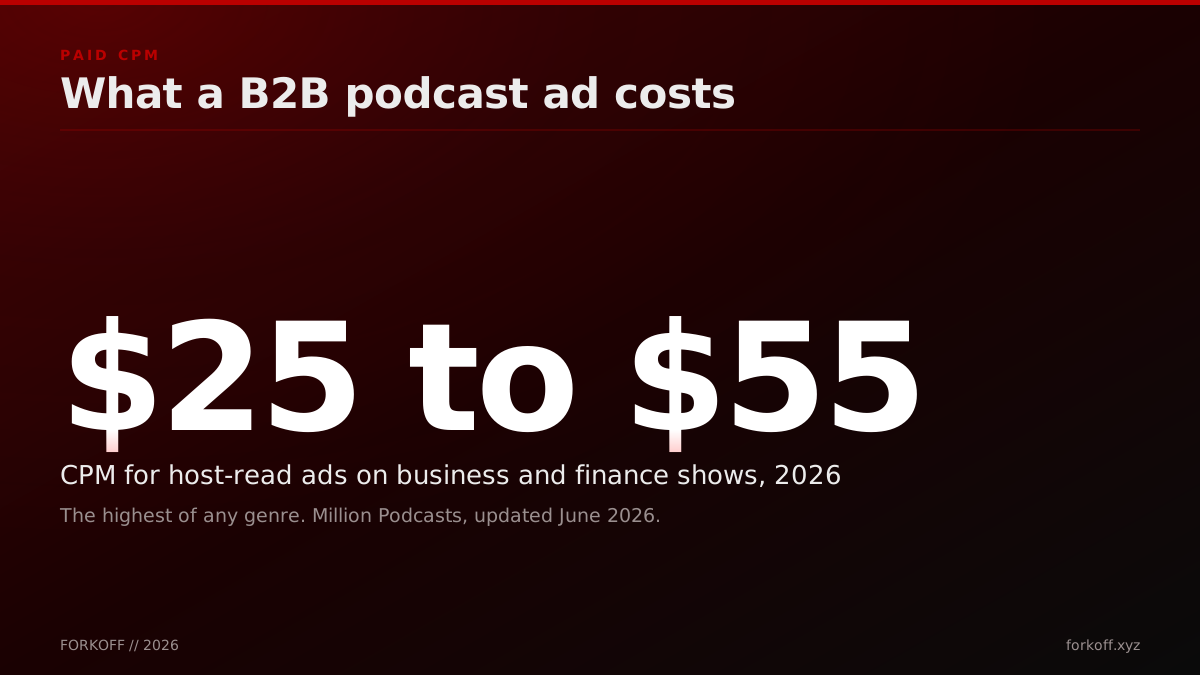
Podcast advertising is priced per thousand downloads, and for B2B the numbers run high because advertisers compete for decision-maker audiences. Host-read mid-roll ads on business and finance shows run $25 to $55 CPM in 2026, technology shows $22 to $45 (Million Podcasts CPM rates by genre), with host-read overall at $25 to $60 and programmatic audio far cheaper at $8 to $20, per Million Podcasts CPM rates by genre. A more conservative mid-roll benchmark of about $25 CPM from Ad Results Media puts a 60-second slot on a 100,000-download show at roughly $2,500. Host-read is the premium format for a reason: it outperforms producer-read ads by 31 percent on purchase rate per Podscribe's 2025 benchmark.
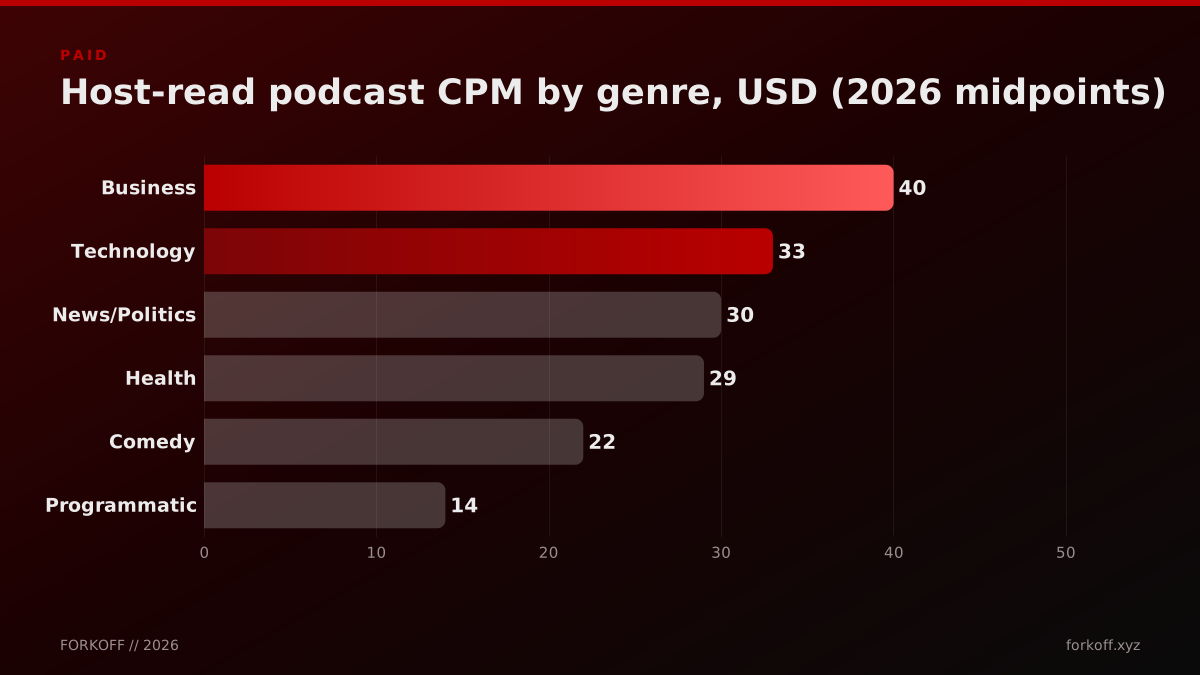
Those genre numbers hide the real driver, which is fit. A business and finance show at $45 CPM whose listeners are your exact ICP is a bargain; a comedy show at approximately $18 CPM whose listeners will never buy enterprise software is expensive at any price. The whole US podcast ad market only reached $2.862 billion in 2025, up 17.6 percent year over year per IAB and PwC, which is still just a sliver of the broader $8.4 billion digital audio category per industry reporting. The channel is small, which is the opposite of a problem: it means you can hand-pick a handful of ICP-perfect shows instead of spraying budget across an ocean of impressions.
What a B2B podcast ad actually costs in 2026
Business and finance shows carry the highest podcast ad CPMs of any genre because their audiences are decision-makers that B2B advertisers compete for. Per Million Podcasts (updated June 2026), host-read mid-roll ads on business and finance shows run $25 to $55 CPM, technology $22 to $45, with host-read overall at $25 to $60 and programmatic audio far cheaper at $8 to $20. Ad Results Media (May 2025) benchmarks mid-roll at roughly $25 CPM, so a 60-second mid-roll on a 100,000-download show costs about $2,500. The whole US podcast ad market reached $2.862 billion in 2025, up 17.6 percent year over year per IAB and PwC, yet still only about 2.8 percent of digital ad spend. The number that matters is not the CPM, it is whether the show's listeners are your ICP.
Source: Million Podcasts CPM by genre (Jun 2026); Ad Results Media (May 2025); IAB/PwC US Podcast Advertising Revenue FY2025
The format you buy matters as much as the show. Programmatic spots are cheap and interchangeable; host-read spots cost more because the host lends their credibility, which is the entire reason podcast ads work in the first place. Chasing the cheapest CPM is the classic mistake, because an estimated $10 programmatic impression that gets skipped is more expensive than a $45 host-read that a decision-maker actually trusts.
Many brands choose between programmatic and host-read podcast ads based on price. Price is the wrong question to be asking. We mapped every format to a funnel stage.
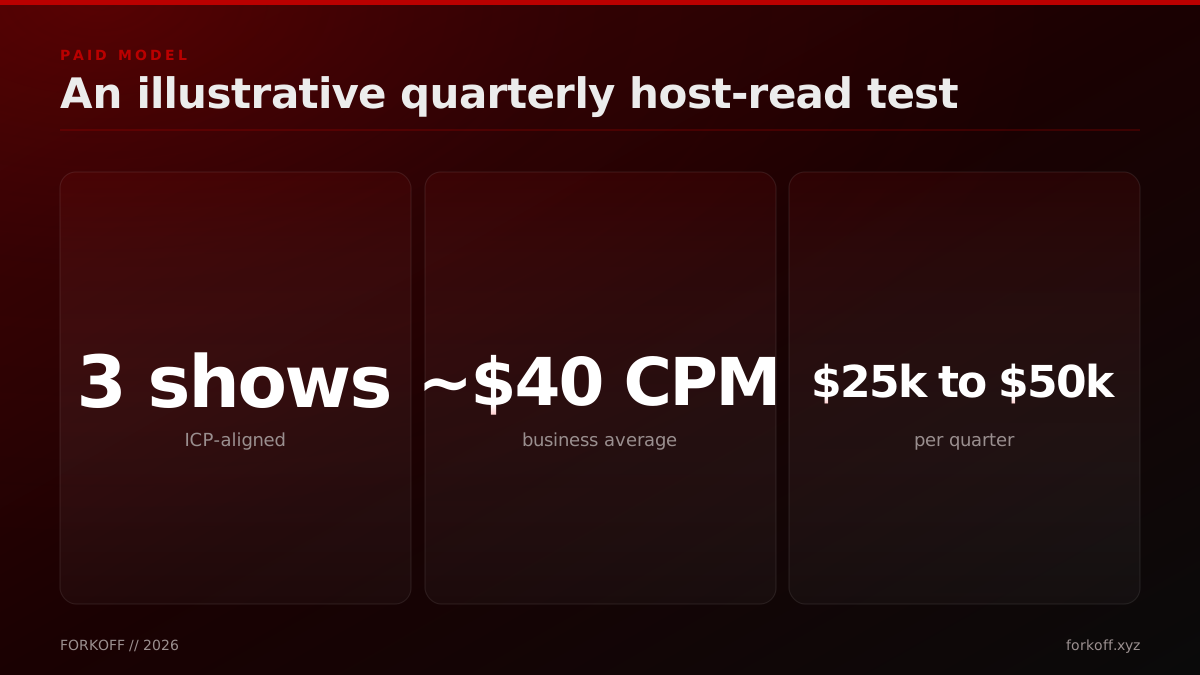
To turn CPMs into a plan, model a quarterly test rather than a single slot. A meaningful B2B host-read test runs across a few ICP-aligned shows at enough frequency for listeners to hear you more than once, which at approximately $40 CPM and 500,000 to 1,000,000 delivered impressions lands somewhere around $25,000 to $50,000 for the quarter. That is the real number a founder should budget for a paid podcast experiment that can actually read signal, not the $2,500 single-slot figure that produces noise. Anything smaller is a coin flip, because a single flight on a single show cannot separate a good creative from a good audience from plain variance.
How you buy matters almost as much as what you budget. You can go direct to a show, through an ad network or agency that packages several shows, or through a programmatic marketplace that places spots by audience segment. Direct host-read gives you the most control and the highest trust but takes the most work to arrange; programmatic is fast and cheap but interchangeable, and it strips the host endorsement that makes the medium convert in the first place. For a B2B test, favor a small set of direct host-read placements on shows you have vetted by listener fit, negotiate a promo code or a vanity URL so the show is at least partly measurable, and insist on enough frequency that a decision-maker hears you at least three times. A single impression on a busy executive is a rounding error, and a network that spreads your budget thin across dozens of shows you never chose is the paid equivalent of spray and pray.
Meta Ads vs Podcast Ads: Which Scales ROAS Faster?
SpotsNow
A media buyer comparing Meta ads and podcast ads on how fast each scales ROAS.
The video above compares podcast ads to Meta ads on how fast each scales, which is the honest paid-versus-paid framing. Podcast ads scale slower than programmatic social but land in a higher-trust environment. The same discipline we apply to paid channels in B2B conference sponsorship vs paid ads applies here: a paid channel only pays back when the audience is your buyer, and reach without fit is the most common way to burn a marketing budget.
What does earned podcast guesting cost per booking?
Guesting has two cost models: your time, or a managed booking retainer, and neither shows up as a clean CPM. Managed guest-booking services run approximately $1,000 to $3,000 per month and typically guarantee a set number of placements, which amortizes to roughly a few hundred dollars per booking depending on volume. The DIY path costs founder hours instead: cold outreach to shows converts at 1 to 10 percent, so you contact 40 to 400 prospects to land a handful of bookings, and every one still needs prep and recording time. Our podcast agency vs DIY guesting cost breakdown runs that time-versus-retainer math in full.
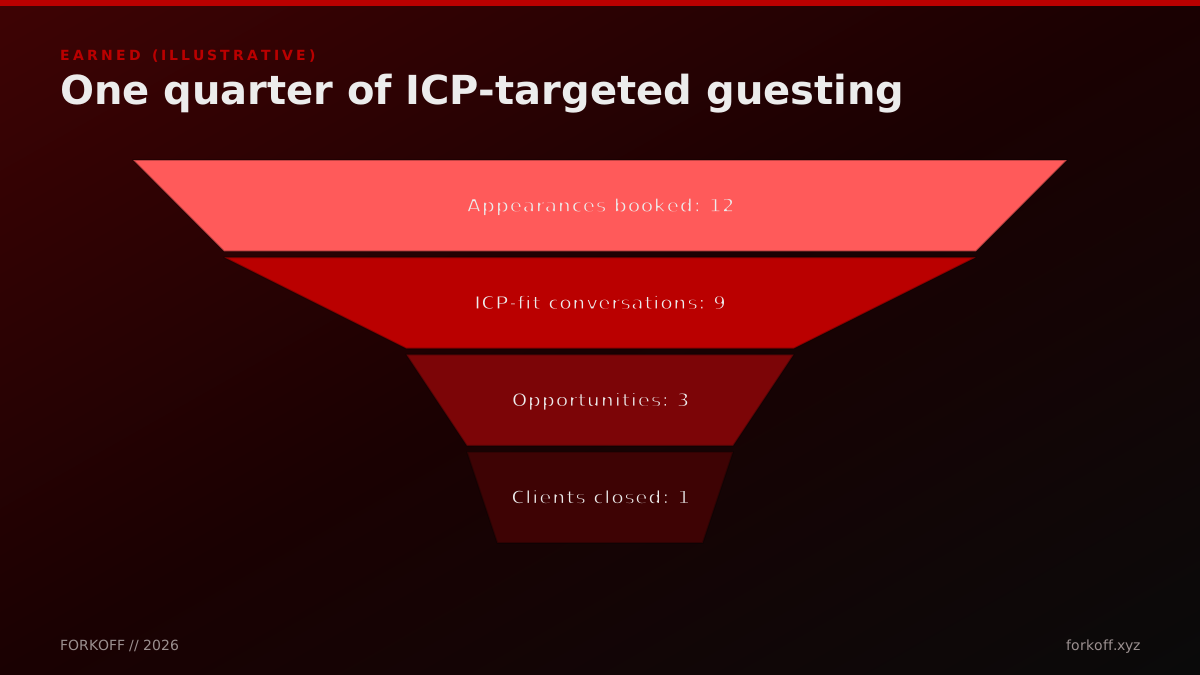
The number that decides whether guesting is worth it is not the cost per booking, it is the guest-to-client conversion rate, and that number moves entirely with show selection. Average guest-to-client conversion on B2B podcasts sits near 10 percent, but operators who target ICP-aligned shows and guests report 25 to 40 percent into pipeline within 12 months, and one company converted 48 percent of strategically selected target-account guests. That is the same lesson our podcast booking system for founders is built around: the guest list is the target-account list, and a whoever-says-yes list produces downloads while an ICP-scored list produces pipeline.
What earned guesting costs, and what it returns
Guesting is priced in time and, if managed, in a retainer. Public managed-booking retainers run about $1,000 to $3,000 per month and land a set number of placements, which amortizes to a few hundred dollars per booking; DIY cold outreach converts at 1 to 10 percent, so you contact 40 to 400 shows to land a handful. The return is a range, not a promise: average guest-to-client conversion on B2B shows sits near 10 percent, while operators who select ICP-aligned guests and shows report 25 to 40 percent into pipeline within 12 months. Across the FORKOFF podcast engine, that spread is explained almost entirely by fit, not by delivery. One guest who becomes a client at a $36k annual contract can pay for a year of the motion in the first month.
Source: Public managed-booking pricing; 2025 B2B podcasting benchmarks (guest-to-client ranges); FORKOFF operator experience, cited as estimate
Operator noteReach is cheap and nearly worthless. A podcast ad or booking only pays back when the show's listeners ARE your ICP. Fit is the whole game.
The economics only work when the show fits, and that is where most DIY guesting quietly fails. A founder who books ten shows because they said yes, rather than ten shows because their listeners are buyers, gets ten pleasant conversations and no pipeline, then concludes guesting does not work. It was not guesting that failed, it was targeting. The vetting is the job, which is why our podcast guesting playbook for AI startups spends more pages on show selection than on delivery. A show with 400 downloads whose listeners are five named accounts is worth more than a chart-topper whose audience will never buy.
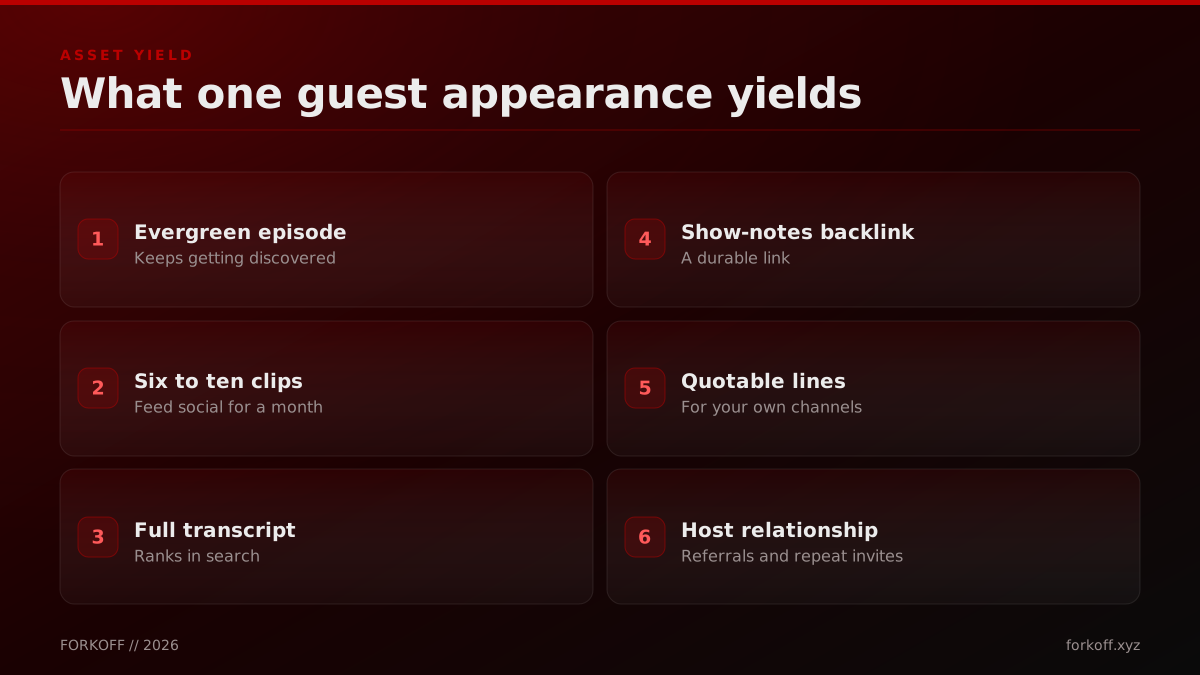
Guesting also produces something an ad slot never does: a durable asset. One appearance becomes an episode, clips, a transcript, a backlink from the show notes, quotable lines, and a warm relationship with a host who now knows your name. Our 6-block podcast engine turns a single appearance into 30 to 50 owned distribution assets, and podcast clip pricing shows what that repurposing layer costs. An ad, by contrast, plays once and ages out with the episode. That asset yield is the hidden line item that makes the cost-per-booking look expensive and the true cost-per-outcome look cheap.
The prep is the part founders underestimate, and skipping it is why a lot of guesting quietly fails to convert. A good B2B appearance is not a casual chat; it is a rehearsed set of stories, data points, and a soft call to action, and the founders who turn guests into pipeline treat each recording like a sales call they happen to be publishing. Budget two to three hours per appearance across research on the host, the recording itself, and the follow-up that actually turns a warm host and an engaged listener into a booked meeting. That follow-up is where the return lives: a founder who records ten episodes and never sends a single connection request has paid the full cost of guesting for almost none of the payoff. The channel did not fail; the last mile did.
Which one actually sources pipeline?
Both can source pipeline, but they source it differently: advertising is best at harvesting demand that already exists, and guesting is best at creating and warming demand that does not exist yet. A host-read ad works when a listener already has the problem you solve and your endorsement tips them into a search or a click, which is why ads convert best on warm, in-market audiences. Guesting works when a buyer has never heard of you and needs 40 minutes of the founder's thinking to trust the company, which is why it closes trust gaps that no 30-second spot can. If you only measure last-click, ads will look better and guesting will look invisible, because guesting creates the demand that a later branded search gets the credit for.
Ed Elson
@edels0n
OpenAI spent more on ads last year than the entire world spent on podcast advertising. They still lost $21 billion. The business model doesn't work yet. Here's how bad it actually is.
That measurement trap is the single biggest reason founders misjudge this decision. A podcast appearance that seeds a buyer in Q1 often shows up as a branded-search conversion in Q3, and a naive attribution model hands the credit to search and starves the podcast. This is exactly the problem our podcast ROI attribution model solves with a three-surface stack: direct CRM tagging, a required how-did-you-hear-about-us field, and assisted conversions, read together across a full cycle. Without that instrumentation, you will systematically underprice the channel that creates demand and overprice the channel that harvests it, and the whole ads-versus-guesting comparison collapses into a measurement error.
The practical fix is to pick a measurement window that matches your sales cycle and hold both channels to it. If your deals take four months to close, a 30-day attribution window credits whatever touched the buyer last, usually a branded search or a demo request, and both your ad and your guest appearance look like they did nothing. Widen the window to a full cycle, add the self-reported field at signup and on discovery calls, and the podcast touches that seeded the deal finally show up in the numbers. This is not a reporting nicety. It is the difference between a channel that survives a budget review and one that gets cut on a spreadsheet that was never built to see it, and it applies identically to the paid arm and the earned arm.
At Linear we only spent ~$30k on advertising (two podcast ads) before our Series B. Ads, especially before PMF, is a red flag to me on focus and understanding where the growth comes from, making something people want.
Karri Saarinen's point is not that ads never work; it is that spending on ads before you understand where growth comes from is a focus problem. For a pre-PMF company, a big paid podcast test buys reach into an audience you have not yet learned how to convert. Guesting at that stage is cheaper and more informative, because every conversation teaches you the exact buyer language you will later put into an ad. The founder-led sales podcast strategy treats those early appearances as market research that happens to also build pipeline, which is a return an ad slot never delivers.
I ran ads for a month and here is where I rank each platform
My podcast best falls into the leisure/comedy categories and I ran three different ad campaigns this month. Spotify Advertising was by far the worst and the most expensive: about $315 over the month got me 40,277 impressions, 77 clicks, 17 streams, 5 total listeners. $300 for 5 listeners is just… Show more
The Reddit thread above is the cautionary tale: approximately $315 of untargeted podcast promotion returned five listeners. That is what paid reach without fit looks like. The failure was not the channel, it was buying impressions from an audience that was never going to convert. Paid podcast ads have a floor of value only when the show's listeners are your ICP, which is the same condition that makes guesting work. The trust the medium is famous for lives in the host, not the ad unit, which is why a host-read endorsement on the right show beats a polished spot on the wrong one.
TWiT Tech Podcasts
@TWiT
Most ads fight for seconds of attention. Host read podcast ads can earn minutes of trust. TWiT reaches tech listeners who actually influence buying decisions. Advertise with TWiT: https://t.co/ZIXBQFgu2n
The through-line is that both arms of podcasting run on the same fuel: a trusted host and a fitting audience. An ad borrows the host's trust for 30 seconds; a guest appearance earns it for 40 minutes. Get the show right and either can source pipeline. Get it wrong and neither will, no matter how much you spend or how good the creative is.
When should you buy podcast ads instead of running guesting?
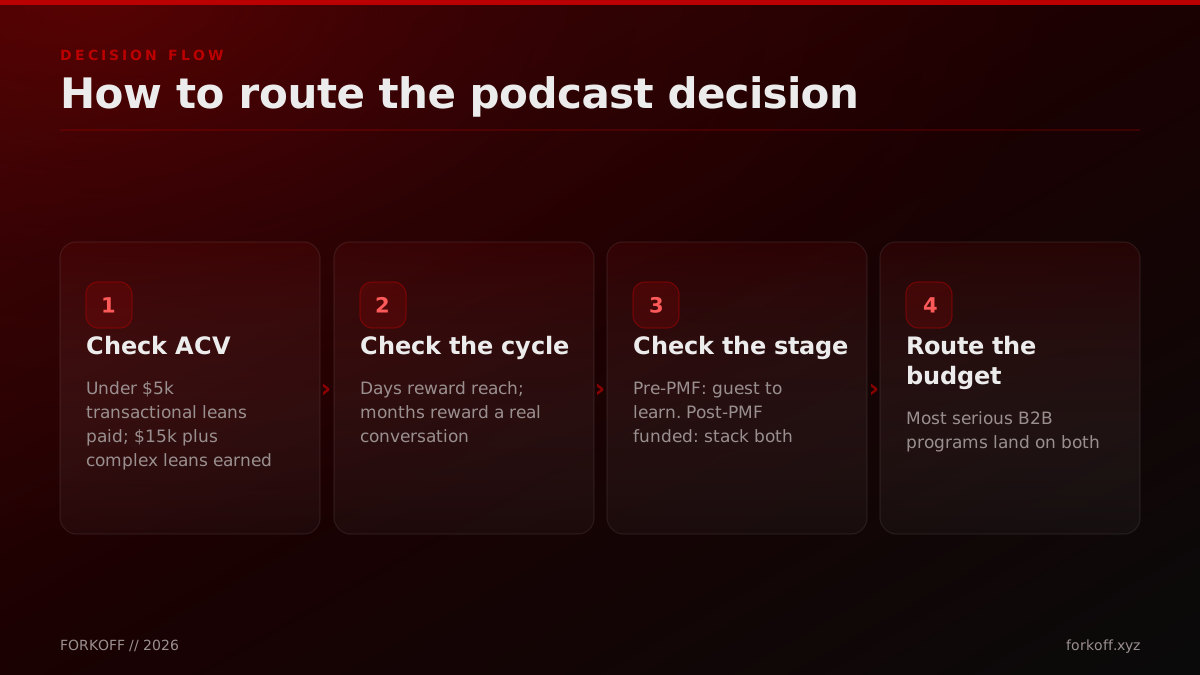
Match the motion to the deal. Buy podcast ads when your sales cycle is short, your ACV is low enough that a scaled cheap touch pays back, your demand is already warm, or your goal is reach and brand lift at a volume guesting cannot hit. Run guesting when your ACV is high, your sale is complex and trust-gated, you are founder-led, or you are still learning the market and need the buyer language a conversation gives you. Most B2B companies with a real ACV sit on the guesting side of that line first, then add ads once they know which shows convert. The decision is rarely either-or; it is a sequence that changes as you learn.
When to buy podcast ads vs run guesting, by situation
| Your situation | Podcast advertising | Podcast guesting | Why |
|---|---|---|---|
| ACV under $5k, transactional | Consider ads for cheap scaled touches | Lower priority | Short cycles reward reach over relationship |
| ACV $15k+, complex sale | Layer in later | Start here | A trust gap closes in a conversation, not a slot |
| Pre product-market fit | Avoid a big test | Guest to learn the market | Ads before PMF hide the real growth lever |
| Post-PMF and funded | $25k to $50k quarterly test | Keep the engine running | This is where you stack both |
| Goal: pipeline this quarter | Only if demand is already warm | Sources net-new pipeline | Guesting creates the demand ads harvest |
| Goal: category authority | Host-read on ICP shows | Guest on ICP shows | Both, weighted to earned |
Framework synthesized from Edison Research B2B consumption data, live DataForSEO SERP analysis (Jul 2026), and FORKOFF operator experience running the earned-guesting engine. Guidance, not a guarantee.
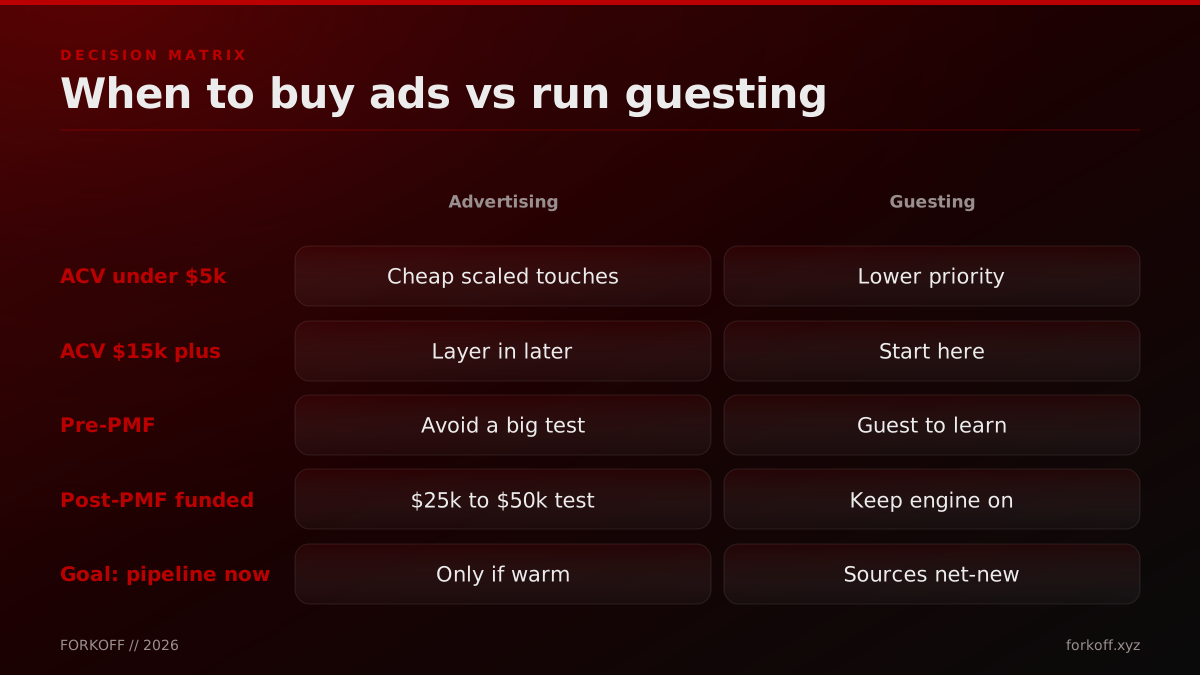
The same cut, drawn as a grid, makes the logic hard to argue with. Low ACV and transactional deals lean paid because reach beats relationship when the cycle is measured in days and a cheap touch at volume is enough to move the number. High ACV and complex deals lean earned because the trust gap is too wide for a 30-second read to bridge, and no amount of frequency substitutes for a founder explaining the thing for 40 minutes. Post-PMF and funded is the only row where the honest answer is unambiguously both, and it is the row most serious B2B companies occupy by the time podcasting is even on the table.
The variables that decide it are ACV, sales-cycle length, and stage. Below approximately $5,000 ACV with a transactional, sub-30-day cycle, cheap scaled touches matter more than deep relationships, and paid reach can pay back on volume. Above approximately $15,000 ACV with a multi-month, multi-stakeholder cycle, a trust gap closes in a 40-minute conversation, not a 30-second read, so guesting leads. Pre-PMF, avoid the big paid test entirely and guest to learn. Post-PMF and funded, you have the budget and the conversion knowledge to run both, which is where the stack lives. Read down the matrix and pick the row that describes your deal, not the channel a vendor happens to sell.
Operator noteBefore PMF a big paid-ad test hides your real growth lever. Guest to learn the market first, then buy ads once you know what converts.
There is a real counter-case for ads-first, and it is worth stating honestly so this does not read as a guesting infomercial. If you have already found PMF, your ICP is broad and reachable through a few big shows, and your product converts on a warm click without a founder conversation, then a paid host-read test can outrun guesting on speed and scale. This is the scenario the SaaS operator in the first Reddit thread is describing at $10M to $45M ARR, where the product is proven and the job is to pour more warm reach into a working funnel. If that is you, weight the budget toward paid and use guesting for authority. The podcast guesting vs hosting your own show decision is a similar stage-dependent call, and so is the video podcast vs audio-only format choice: the right answer depends on where you are, not on a universal rule.
What do you actually get from an ad slot versus a guest appearance?
An ad slot buys you a moment of borrowed trust; a guest appearance buys you a compounding asset library. The ad is a 15 to 60 second read that plays inside one episode, reaches that episode's listeners once, and disappears from rotation when the campaign ends. The guest appearance is a 30 to 60 minute segment that becomes an evergreen episode page, a transcript, a set of clips, a backlink, quotable lines for your own channels, and an ongoing relationship with a host who can refer you or invite you back. On a pure cost-per-impression basis the ad often looks cheaper. On a cost-per-durable-asset basis the appearance wins by a wide margin, because you are paying once and harvesting for a year.
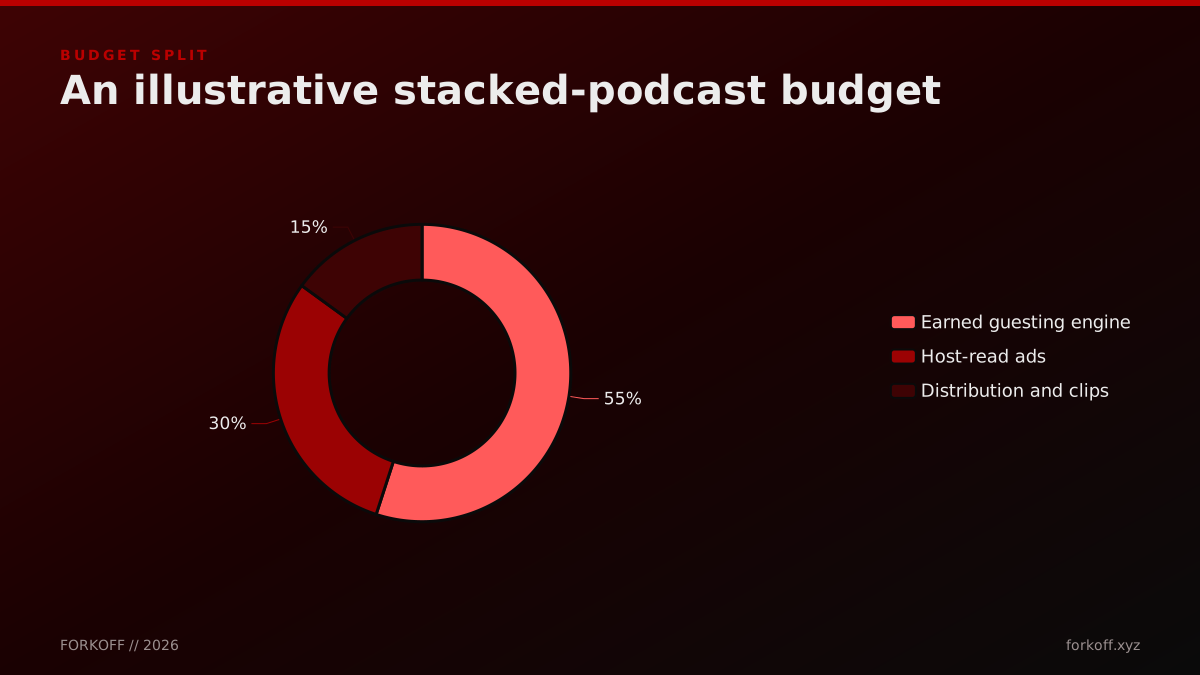
This asset-yield gap is why the honest budget is not a single line item. A serious quarterly podcast program spends on three things: the earned-guesting engine that creates demand and produces the assets, the paid host-read ads that harvest warm demand at scale, and the distribution and clipping layer that turns both into compounding content. Weighted toward the earned engine, with paid layered on the shows that already convert, that split is how the whole thing compounds instead of resetting every campaign. The alternative, buying only ad slots, means starting from zero every quarter with nothing to show but last quarter's impression count.
Put real numbers on the compounding and the asset side wins clearly. One vetted guest appearance might cost a few hundred dollars in amortized booking plus a few hours of founder time. From it you get an evergreen episode that keeps getting discovered, six to ten clips that feed your social channels for a month, a transcript that ranks in search, a backlink from the show notes, quotable lines for your own posts, and a host who now takes your call. A single host-read ad of similar cash cost gets you one flight of impressions and nothing that outlives the campaign. Over a year, the appearance keeps working while the ad is long gone, which is the whole reason the true cost-per-outcome of guesting undercuts its cost-per-booking, and why a budget built only on paid slots feels expensive no matter how good the CPM looked.
The stack-both sequence beats either channel alone
The strongest B2B podcast programs do not choose. They sequence. Run the earned-guesting engine first for a quarter or two so the founder learns the exact buyer language and discovers which shows actually convert, then layer host-read ads on those same ICP-aligned shows once the audience already recognizes the name. Guesting creates and warms demand; ads harvest and scale it. Reversed, or run in isolation, each channel underperforms: paid reach on a cold audience wastes budget, and guesting alone caps out at the founder's calendar. The multiplier comes from running both on the same ICP inside the same buying window, which is exactly how FORKOFF builds a founder funnel rather than a line item.
Source: FORKOFF operator experience running the earned-guesting engine; Edison Research B2B consumption data
Ryan Estes: B2B Selling through Podcasts and Cold Email
Honest Marketing Podcast
An operator on B2B selling through podcasts and cold email, the earned side of the stack.
The operator in the video above describes selling B2B through podcasts and cold email together, which is the same stack logic applied across channels: the appearance builds the trust, and a second touch converts it. Downloads and impressions are the trap on both sides. A paid campaign reports impressions; a guesting program reports downloads. Neither is pipeline. By Buzzsprout's global benchmark, an episode that clears roughly 32 downloads in its first week already sits in the top half of all podcasts, which tells you how little a raw audience number means for a B2B pipeline goal. Report guest-to-opportunity rate, influenced pipeline, and cost per opportunity instead, exactly as our podcast monetization math argues for audience-based models and our podcast AEO citation strategy argues for search visibility.
How do you stack podcast advertising and guesting across 2 to 4 quarters?
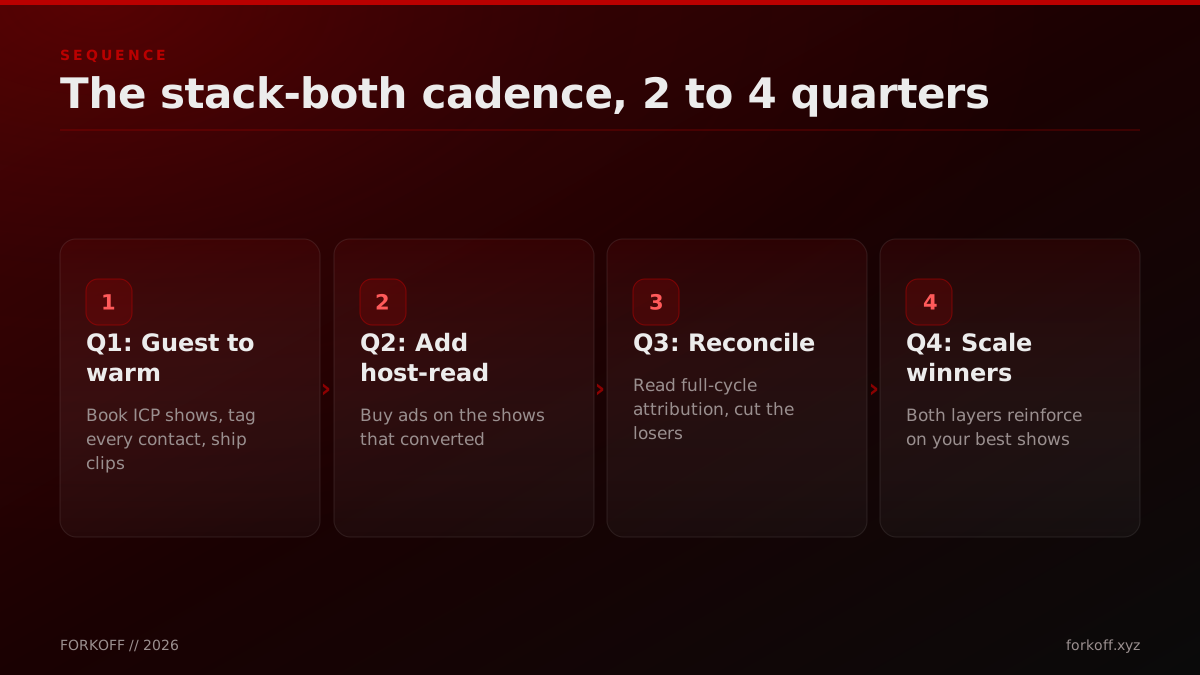
Stack them in sequence, not in parallel from a cold start. In quarters one and two, run the earned-guesting engine: book ICP-aligned shows, tag every guest and inbound contact in the CRM, ship the distribution layer, and learn which shows and messages actually move buyers. In quarters two and three, layer host-read ads onto the specific shows that converted, so paid reach lands on an audience that already recognizes your founder's name and voice. By quarter four, you are reconciling both motions to pipeline, killing the shows that do not convert, and scaling budget into the winners on both the paid and earned sides. Guesting builds the demand; ads harvest and scale it.
A concrete version looks like this. In quarter one, book eight ICP-aligned guest appearances, tag every guest and inbound contact in the CRM, and ship clips and a transcript from each. In quarter two, keep guesting and identify the two shows whose audiences produced real conversations, not just downloads, then buy host-read flights on exactly those two. In quarter three, read the attribution across both motions over a full-cycle window, cut the shows that produced only vanity numbers, and double the budget on the ones that produced pipeline. By quarter four, the paid and earned layers are reinforcing each other on your best two or three shows, and you are reporting influenced pipeline and cost per opportunity to your board instead of a download chart. That is a podcast channel that survives a budget review, and it is the opposite of the one-off ad flight that gets quietly dropped when finance asks what it returned.
Operator noteOrder matters. Run guesting to warm the base, then layer host-read ads on the same ICP shows once you know which ones convert.
The sequence matters because the two channels prime each other. A listener who heard the founder guest on a show in Q1, then hears a host-read ad for the same company on the same show in Q3, gets two trust signals inside their own buying window, and that repetition is what a single channel cannot manufacture. The mechanics of running podcasting as an integrated pipeline motion, rather than two disconnected line items, is what a founder funnel is: earned appearances, paid amplification, and distribution reconciled to one revenue number. The same play pairs with your other owned channels too, which is why founders often run this alongside Reddit marketing so the community layer and the audio layer warm the same accounts.
The reason most founders never get here is that they treat the two arms as a fork in the road instead of a sequence, pick one, judge it on downloads or impressions, and quit before either compounds. The podcast booking system and how to grow a podcast in 2026 cover the earned half; our podcast service runs the whole stack for founders who would rather buy the engine than build it, reconciled to pipeline from day one.
The verdict is simple. If you have to pick one to start, pick guesting, because it creates demand, produces assets, and teaches you the market at a lower cash cost. Add paid host-read ads once you know which shows convert and you have the budget to run a real quarterly test. And if you are serious about podcasting as a B2B pipeline channel rather than a branding gesture, do not pick at all: stack both across 2 to 4 quarters, reconcile everything to pipeline instead of downloads, and let the earned engine and the paid layer compound on the same ICP.