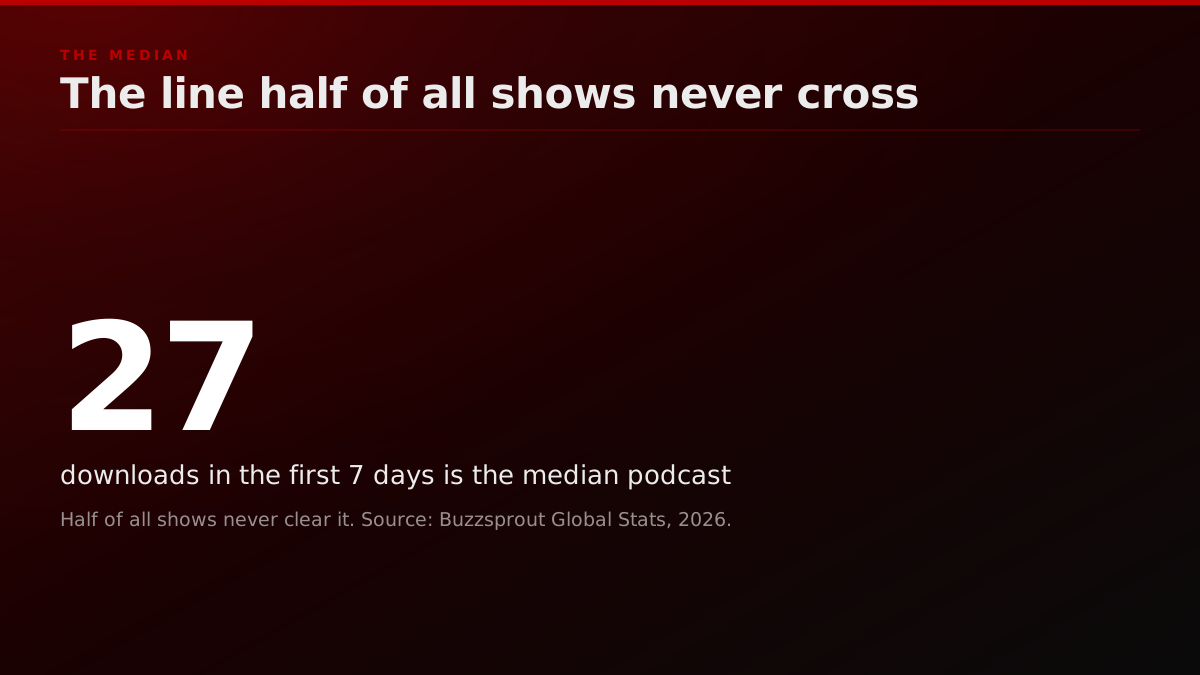
Roughly 3.8 million podcasts and 191 million episodes exist, per the live Listen Notes counter, and the vast majority of them will never clear the median. Growing a podcast to 100,000 downloads is not a viral event that happens to a lucky show. It is a staged climb up a measurable ladder, and the ladder is steeper than most advice admits. The median podcast gets 27 downloads in its first week, according to Buzzsprout Global Stats, and half of all shows never pass that line. So a 0-to-100k plan has to start by being honest about where the rungs actually are.
This playbook maps the 0-to-100k arc onto three stages across 12 months, and every stage is anchored to a real download benchmark rather than a story. It is deliberately different from the sister guide on the 4-channel distribution engine, which answers how to grow a podcast in general, and from the shorter how to promote a podcast answer that covers the per-episode distribution moves. This one answers a narrower, harder question: what does the science actually say it takes to climb from zero to the top 1 percent, month by month, and where do most shows fall off. For the founder using a show as a founder-led growth channel, the stage you are in determines the only move that matters next.
The 30-second answer on growing a podcast to 100k
Growing a podcast to 100,000 downloads is a staged problem, not a viral one. The median podcast gets 27 downloads in its first week and half of all shows never clear that line, per Buzzsprout Global Stats 2026. The path to 100k runs through three stages tied to real per-episode benchmarks: Stage 1 (Months 1 to 4) clears the median, Stage 2 (Months 5 to 8) reaches the top 5 to 10 percent (about 412 to 1,015 downloads in 7 days), and Stage 3 (Months 9 to 12) breaks into the top 1 percent (4,605-plus) and compounds a full catalog toward 100k monthly. The demand is real: 167 million Americans listen every month, per Edison Research. What kills most shows is not content quality. It is stalling in Stage 1 and treating downloads as the only scoreboard.
The median podcast gets 27 downloads in a week
Before any growth plan, calibrate against reality. Buzzsprout Global Stats puts the median podcast at 27 downloads within the first 7 days of an episode. The top 25 percent reach 98, the top 10 percent reach 412, the top 5 percent reach 1,015, and only the top 1 percent clear 4,605. Half of all shows never pass 27. That is the honest backdrop for a 0-to-100k plan: 100,000 monthly downloads is genuinely top-percentile territory, not a default outcome of publishing. A staged roadmap works precisely because it refuses to skip the median and pretend the top 1 percent is one viral clip away.
Source: Buzzsprout Global Stats, 2026
What does growing a podcast to 100,000 downloads actually take?
Growing a podcast to 100,000 downloads means reaching roughly the top 1 percent of shows and then compounding that across a full catalog, because 100,000 is a monthly figure that no single episode produces on its own. The honest math starts with the per-episode ladder. A show that clears the top 1 percent line of 4,605 downloads in a week, published weekly, plus a back-catalog and YouTube views, is in 100k-monthly territory. Getting there is a 12-month climb, not a launch.
The ladder below is the entire premise of this playbook. Instead of a vague promise of growth, it gives you the exact numbers each stage has to hit, sourced from a hosting platform that publishes its live percentile data. Read it as the scoreboard for everything that follows.
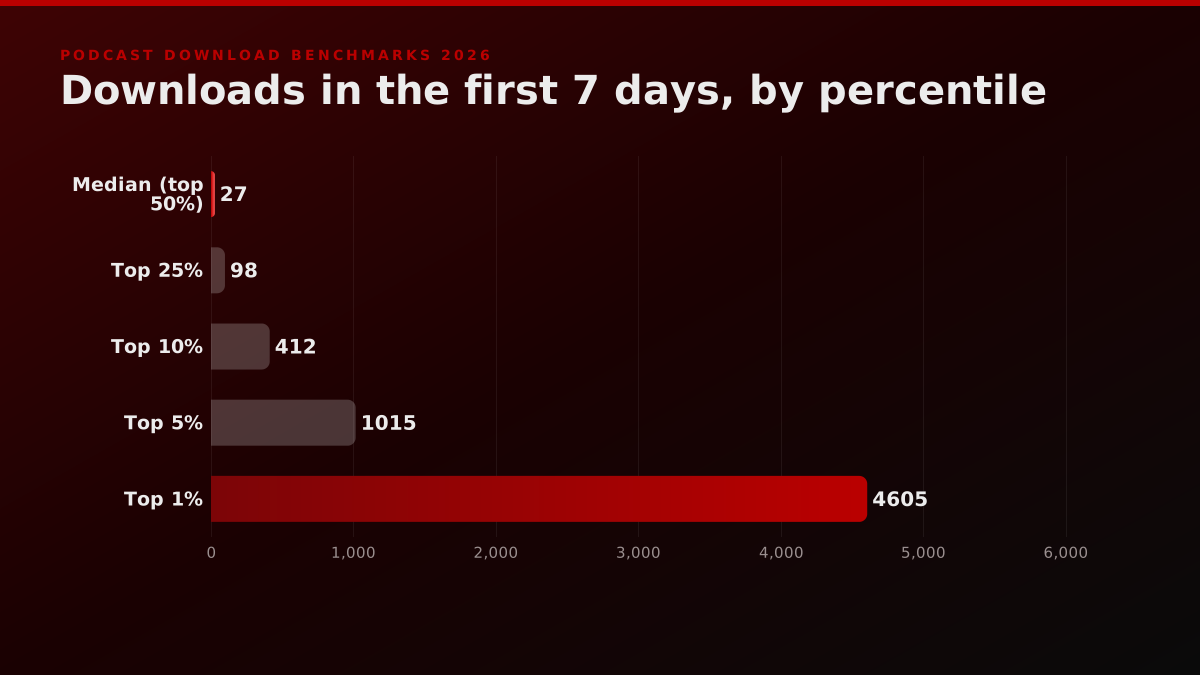
Podcast download benchmarks, where shows actually sit
| Tier | Downloads in first 7 days | What it signals |
|---|---|---|
| Median (top 50%) | 27 | Half of all shows never clear this line |
| Top 25% | 98 | Above the hobby floor, still pre-traction |
| Top 10% | 412 | Real traction, first sponsor conversations |
| Top 5% | 1,015 | Established show, reliable weekly audience |
| Top 1% | 4,605 | Breakout tier, the on-ramp to 100k monthly |
Source: Buzzsprout Global Stats, 2026. Downloads counted within the first 7 days of release.
Two things jump out of that ladder. First, the gap between the median and the top 1 percent is a factor of roughly 170, which is why "just publish good content" is not a strategy. Second, the jumps are non-linear: getting from 27 to 98 is a different problem than getting from 1,015 to 4,605, and they need different levers. A staged plan exists because the move that clears the median is not the move that breaks the top 1 percent.
Work the compounding math once and 100k stops being mystical. A show at the top 1 percent line, publishing weekly, produces roughly 4,600 downloads per new episode in the first week alone, and each episode keeps drawing downloads for months after it posts. Stack a back-catalog of 40 or more episodes that each still pull a steady trickle, add the YouTube views that search keeps surfacing, and the combined monthly total across new episodes, old episodes, and video crosses six figures. The per-episode benchmark is the gate you have to clear. The catalog and the indexed surfaces are what turn a single top-tier episode into a 100,000-download month.
Operator noteThe median podcast gets 27 downloads in its first week. Half of all shows never clear that line., Buzzsprout Global Stats, 2026
It helps to see the destination stated plainly by someone who reached it. The arc from a standing start to a large, monetized show is real, and it takes years of compounding rather than one breakout. The download number is the lagging indicator of a system that was built stage by stage.
In two years, I grew my podcast to 1 million downloads and over $100,000 in sponsorship revenue.
Jay Clouse
@jayclouse
In two years, I grew my podcast to 1 million downloads and over $100,000 in sponsorship revenue. I've gotten to interview creators like @TomFrankly, @JamesClear, @herfirst100K, and @AliAbdaal. It's been life-changing. Here are my top 20 lessons for new podcasters:
The reason to define 100k as a top-percentile outcome up front is to keep the plan honest. Most guides that promise 100k quietly conflate total lifetime downloads, monthly downloads, and per-episode numbers so the goal always sounds close. This one keeps them separate: per-episode benchmarks are the stage gates, and 100,000 is the compounded monthly result of clearing the top gate and letting a catalog work. For a sense of where revenue enters that curve, the podcast monetization math breakdown maps the listener line where a show starts paying for itself.
The reason the median sits so low reframes the whole goal. That 27-download figure is dragged down by an enormous long tail of shows that published a handful of episodes and then stopped. That long tail is not your competition. Your real competition is the much smaller set of shows that kept going, and the useful read of the ladder is that consistency alone lifts a show out of the bottom half, because most of the bottom half simply quit. The benchmark is beatable precisely because so few shows stay in the game long enough to beat it.
About these numbers
The benchmarks in this playbook come from public podcast industry data, primarily Buzzsprout Global Stats for the download percentile ladder and publishing cadence, Edison Research and Triton Digital for listenership and platform share, and Apple and Spotify creator documentation for ranking signals. The FORKOFF first-party figures cited later come from client distribution engagements and are anonymized where consent was not granted. All numbers are directional, and individual outcomes vary widely by niche, format, and execution.
Where a commonly repeated claim could not be verified to a primary source, it is left out or flagged rather than presented as fact. That matters for a science-backed guide, because several of the most-quoted podcast growth statistics trace back to no original study at all. Being explicit about which numbers are load-bearing and which are folklore is part of the method here.
What the data says actually grows a podcast (and what it does not)
The data points at a short list of levers that move downloads, and an equally important list of things that do not. On the "does" side: the audience exists at massive scale, consistent publishing keeps shows alive, and discovery surfaces like YouTube convert strangers. On the "does not" side sit several claims that get repeated so often they feel true. Separating the two is the core of a science-backed approach, because time spent on a non-lever is time stolen from a real one.
Start with the demand, because it removes the most common excuse. The audience is not the constraint. Tens of millions of people listen every week, and the most-used surface for podcasts has shifted decisively toward video.
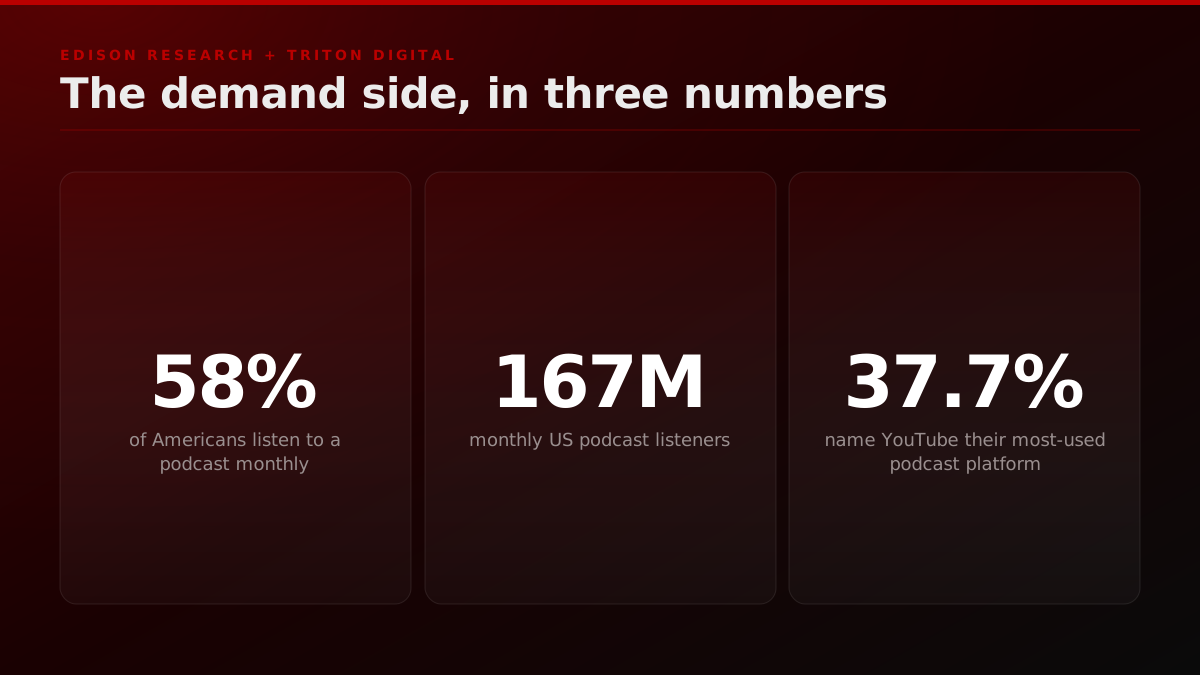
That last shift is the single biggest structural change in podcast growth. Triton Digital's 2025 US Podcast Report, reported by Barrett Media, found YouTube is now the most-used podcast platform at 37.7 percent of the audience, up from 28.1 percent in 2022. YouTube also indexes uploads against search indefinitely, and YouTube's own guidance shows how Shorts surface to viewers outside the existing subscriber base, which is why it belongs in Month 1 of any growth plan. The tradeoffs between shipping video and staying audio-only are covered in the video podcast versus audio-only comparison, and the discovery mechanics specifically are mapped in the YouTube podcast discovery engine guide.
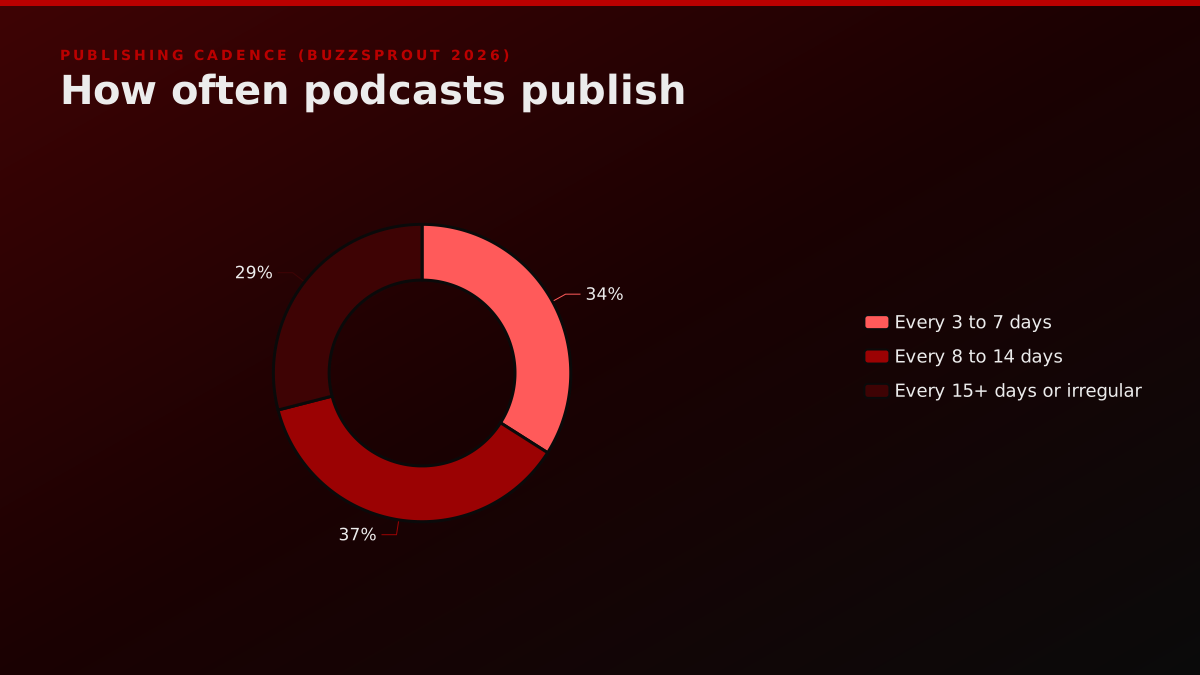
Consistency is the second real lever, but state it carefully. The distribution of publishing cadence among surviving shows is clear even if a clean causal study is not.
Consistency is necessary, not magical
The community consensus and the data both point at cadence, but be precise about the claim. Buzzsprout reports that 34 percent of shows publish every 3 to 7 days and 37 percent every 8 to 14 days, so a regular rhythm is the norm among shows that survive. What the public data does not prove is a clean causal multiplier from cadence to downloads. Treat consistency as the price of entry that keeps a show alive long enough for distribution to compound, not as a growth hack that works on its own.
Source: Buzzsprout Stats, 2026
A community analysis of how the top 1,000 podcasts publish backs the pattern: a regular weekly or twice-weekly rhythm dominates the shows that made it, and irregular publishing is where growth quietly dies. The safest way to read this is that cadence is the price of staying in the game long enough for compounding to start, not a lever that grows downloads by itself.
I Analyzed 1,000 Top Podcasts: Here's How Often They Actually Publish
Daily isn't rare. 185 shows (18.5%) publish every day. Weekly dominates. 582 shows (58.2%) stick to the 3-9 day rhythm.
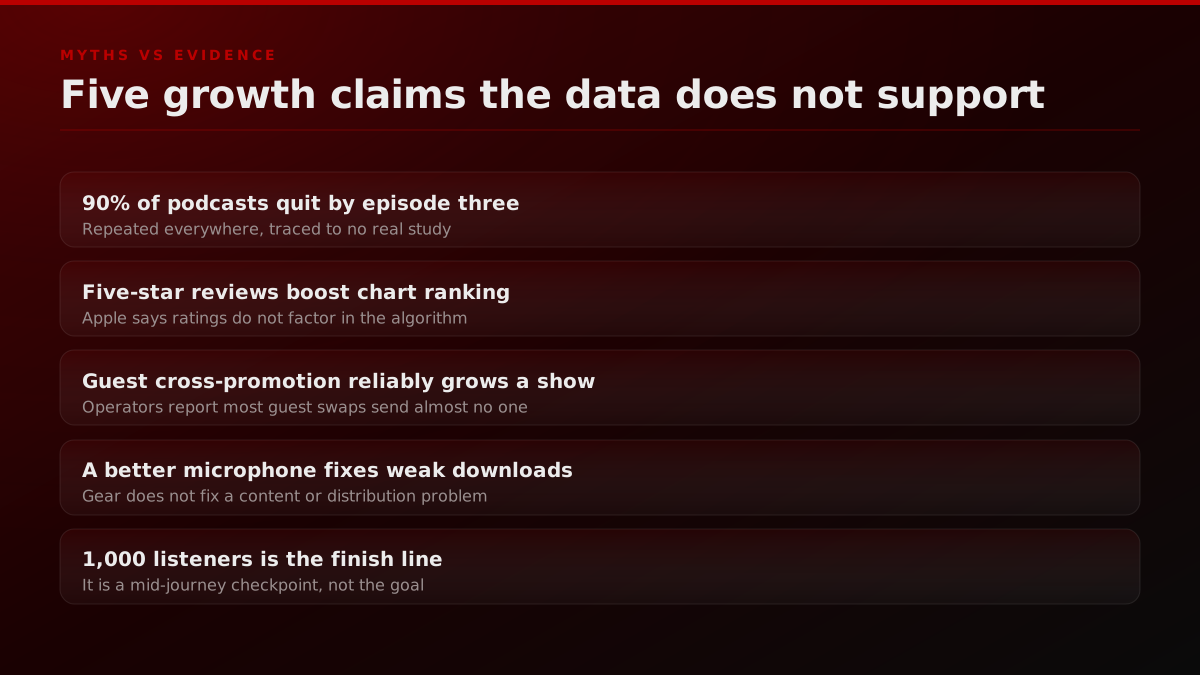
Now the "does not" side, which is where a science-backed guide earns its name. Several of the loudest podcast growth claims do not survive contact with a primary source. The most-cited "90 percent of podcasts quit by episode three" figure traces back to no original study. The advice to farm 5-star reviews to climb the charts contradicts Apple's own documentation, which states plainly that its Charts rank on listening, follows, and completion rate, and that ratings, reviews, and shares do not factor into the Top Shows or Trending algorithm. Dropping these frees real time for the levers that work.
The demand is not the problem
If the ceiling were audience size, no plan would matter. It is not. Edison Research reports in The Infinite Dial 2026 that 58 percent of Americans 12 and older, roughly 167 million people, listened to a podcast in the last month, and 45 percent, about 130 million, listened in the last week. Podcasting reached 53.6 percent of the US population monthly in 2025 by Triton Digital measurement. The listeners exist in the tens of millions. The bottleneck is discovery and consistency, which is exactly what a staged 12-month system is built to fix.
Source: Edison Research, The Infinite Dial 2026
The AI-answer surface is a newer discovery layer worth naming here, because a growing share of listeners find shows through AI answers and search rather than podcast apps. Structuring episode pages so they get cited is its own discipline, covered in the podcast AEO citation strategy guide, and it pairs with transcript pages as a durable, compounding source of new listeners.
Group these levers by their time horizon and the strategy clarifies. Consistency and completion are the short-horizon levers that keep a show alive and rank it on-platform. YouTube, transcript pages, and AI-answer citations are the long-horizon levers that keep working for months, because they are indexed rather than fed. A growth plan that only pulls the short-horizon levers plateaus the moment publishing stops feeling rewarding. A plan that also builds the indexed surfaces is the one where an episode from Month 3 is still recruiting listeners in Month 12, which is the mechanism behind reaching 100k.
Podcast growth stages: the three phases from 0 to 100k
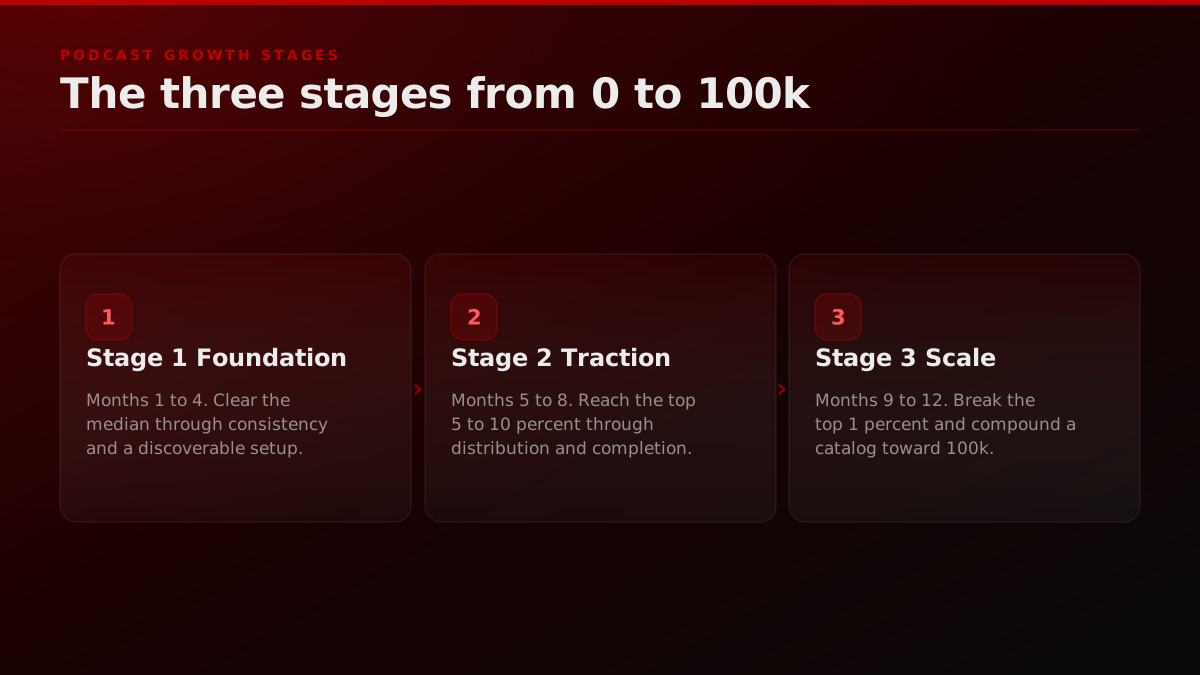
Podcast growth runs through three stages, each defined by a download band and a dominant lever. Stage 1 Foundation covers Months 1 to 4 and is about clearing the median. Stage 2 Traction covers Months 5 to 8 and moves a show from the median into the top 5 to 10 percent. Stage 3 Scale covers Months 9 to 12 and breaks into the top 1 percent while compounding a catalog toward 100k monthly. The stages are strictly sequential, and the most common failure is trying to run a later stage's playbook before the earlier stage's benchmark is cleared.
The flow below is the whole model in one view. The point of naming the stages is not tidiness. It is that each stage has a single primary lever, and pouring effort into the wrong lever for your stage is the most common way founders waste a year.
Look at what changes across the stages and you can see why generic advice fails. A Stage 1 show does not need a distribution agency. It needs to publish 12 episodes without missing a week. A Stage 3 show does not need more publishing discipline. It needs a compounding surface and an owned list. The grid below lays out the requirement that dominates each stage so you can locate yourself honestly.
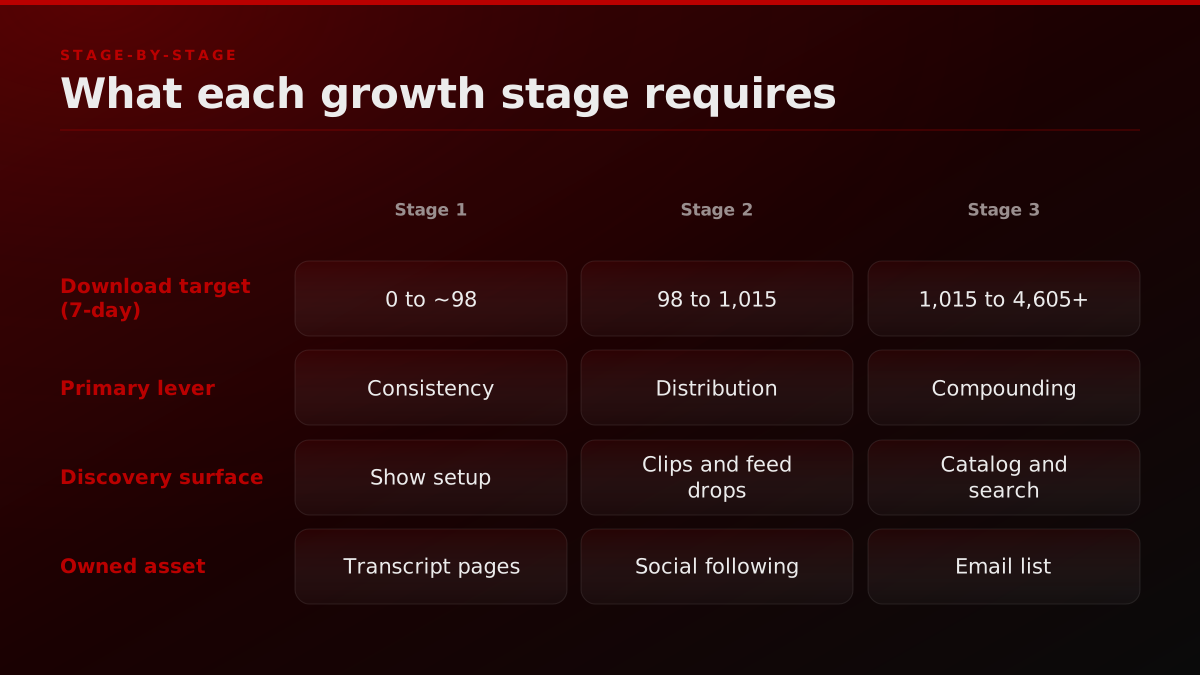
The three stages from 0 to 100k
| Stage | Months | Download target (7-day) | Primary lever |
|---|---|---|---|
| 1 Foundation | 1 to 4 | 0 to about 98 | Consistency and a discoverable setup |
| 2 Traction | 5 to 8 | 98 to 1,015 (top 5 to 10%) | Distribution surface and completion |
| 3 Scale | 9 to 12 | 1,015 to 4,605-plus (top 1%) | Compounding catalog and an owned list |
Percentile anchors from Buzzsprout, 2026. 100k monthly downloads compounds from clearing the top-1 percent per-episode line across a full catalog.
Podcast experts asked how they actually grew tend to describe exactly this staging, even when they do not name it. Early on it is reps and consistency. Later it is systems and surfaces. The through-line is that they stopped doing the beginner moves once those moves stopped being the constraint.
I Asked Podcast Experts How to Grow Your Audience, Here's What They Said!
Riverside
Podcast experts answering how they actually grew their audiences.
Stage 1 (Months 1 to 4): clear the median
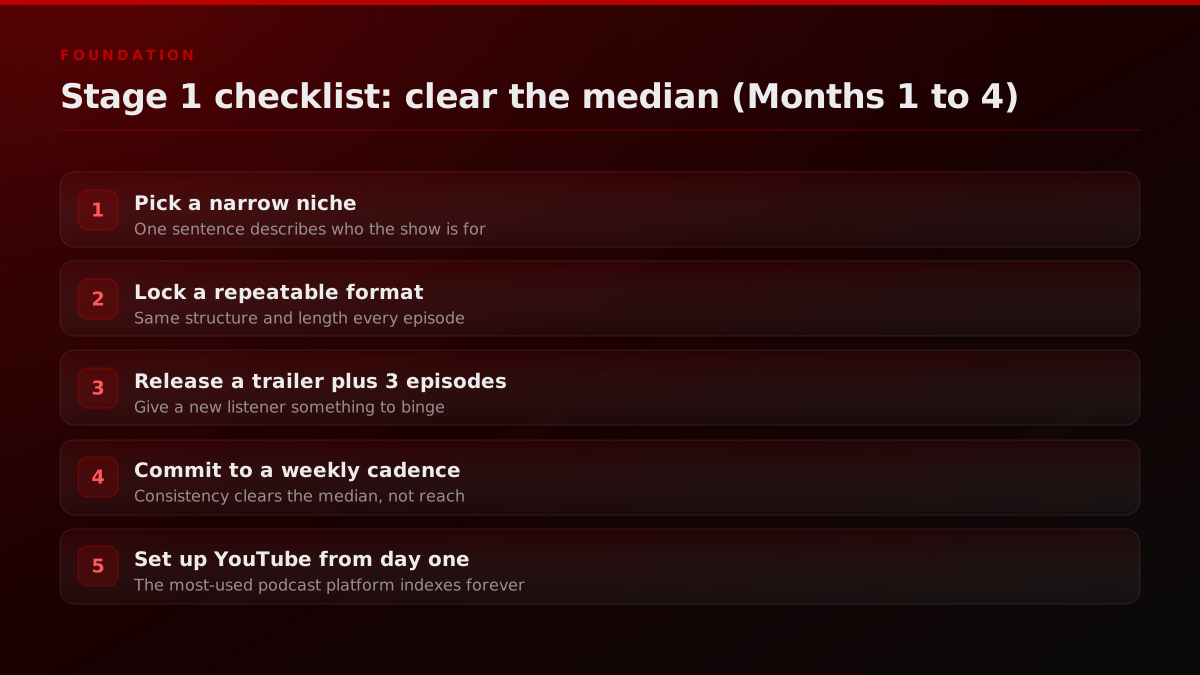
Stage 1 has one job: clear the median of 27 downloads in the first 7 days and climb toward the top 25 percent line of about 98, per Buzzsprout 2026 data. Everything in the first four months serves that single benchmark. The levers are unglamorous and they are all about foundation: a specific niche, a locked format, a trailer plus the first three episodes released together, a weekly cadence, and a YouTube channel set up from day one. Reach and promotion come later. Survival and consistency come first.
The checklist below is the entire Stage 1 job. It looks small because it is. The reason most shows never leave Stage 1 is not that this list is hard. It is that the list is boring, and boredom is what kills a show around episode 10, exactly when the compounding would have started.
Operator noteMonths 1 to 4 are won on consistency, not reach. Clear the median before you spend a dollar on promotion., FORKOFF podcast cohort, 2026
The community evidence on Stage 1 is unanimous and a little grim. Operators who documented their first year from zero describe slow, linear climbs to roughly 1,000 to 1,200 monthly downloads, driven almost entirely by not skipping weeks. The lesson repeated across every honest retrospective is that discipline, not a growth hack, is what carries a show through the first four months. One year-one retrospective puts the whole grind in plain terms.
A year of Podcasting from absolute zero: Here's what I learned.
A year in, the show averages around 1,200 monthly downloads. Small compared to the big names, sure, but every month it climbs a little, and slow steady growth has honestly been better for my head than blowing up and stagnating would have been.
A practical Stage 1 move that pays off later: publish a transcript page for every episode from the start. It costs almost nothing during Stage 1 and becomes a compounding search asset by Stage 3, as the podcast transcript SEO layer explains. The founders who set up the discoverable scaffolding in Month 1 are the ones whose Stage 2 distribution has something to compound against.
One Stage 1 decision deserves more weight than the rest: how narrow the show is. A specific niche loses on total addressable audience and wins on everything that matters early, because a sharply defined show is easier to describe, easier to recommend, and easier for a discovery algorithm to place with the right listeners. Broad shows compete with everything. Narrow shows own a lane. The founders who clear the median fastest almost always picked a lane narrow enough that a listener could say in one sentence who the show is for, which is also what makes the Stage 2 distribution cuts land with the right audience instead of a general one.
Stage 2 (Months 5 to 8): from the median to the top 5 percent
Stage 2 moves a show from the median into the top 5 to 10 percent, roughly 98 to 1,015 downloads in the first 7 days. This is the stage where distribution surface, not publishing discipline, becomes the primary lever, because the show is now consistent and the constraint has shifted to reaching strangers. The moves that matter are placing platform-native segments of each episode in the feeds where new listeners already spend attention, improving completion and follows on the platforms, and running the handful of cross-promotions that actually work. This is where a real distribution engine earns its keep.
The mechanics of that engine are covered in depth in the sister guide on how to grow a podcast with its 4-channel distribution model, and the operating cadence lives in the podcast distribution strategy playbook. The short version: the sister guide details how one recording is cut into platform-native segments across video, social, and email, so a single episode produces dozens of discovery points instead of the one or two a raw feed upload gets. One host who credited a fast run of downloads and views to exactly this kind of consistent multi-surface push framed it simply.
Xavier Miller
@XaviercMiller
My podcast got over 400k downloads and 12 million+ views across all platforms in the past 2 months. Results of consistency, it's the #1 ingredient for brand growth.
Cross-promotion is the Stage 2 tactic most founders overrate, and the data says to be selective. Coordinated feed drops, where two shows swap full episodes into each other's feeds, can convert far better than a standard 30-second promo swap, per operational data from one podcast network that reported feed drops converting 10 to 40 times better than a generic cross-promo. A generic swap, by contrast, often adds only a few dozen listeners. The community is even blunter: many operators report guest appearances sending almost no measurable subscribers, because listeners came for the guest, not the show. So run feed drops with genuinely matched shows and stop counting on generic guest swaps. For founders who do want a structured guesting motion, the podcast guesting playbook for AI startups covers how to pick shows that actually fit.
The platform signals to optimize in Stage 2 are the ones the platforms actually reward. Apple ranks on listening, follows, and completion rate. Spotify weighs recent streams, follower growth, and engagement, and defines completion as the share of listeners who reach at least 95 percent of an episode. Both reward the same behavior: episodes people finish and follow. That is a content-and-hook problem more than a promotion problem, and it is why a strong cold open and a tight edit matter more in Stage 2 than any single distribution trick.
Improving completion is more concrete than it sounds. The biggest drop-off on most shows is the first two minutes, where a long cold open or a meandering intro loses the listeners who gave the episode a chance. Cutting straight to the strongest moment, tightening the edit, and moving housekeeping to the end reliably lifts the share of listeners who reach the 95 percent mark that Spotify counts as a completion. Follows compound the same way: a clear, repeated ask to follow the show, placed after the best segment rather than at the top, converts the warm listener while the value is fresh. Neither move costs a dollar in promotion, and both feed the exact signals the platforms rank on.
Stage 3 (Months 9 to 12): break into the top 1 percent and compound to 100k
Stage 3 breaks a show into the top 1 percent, the 4,605-plus line, and compounds a full catalog toward 100,000 monthly downloads. The primary lever here is compounding: the back-catalog, the indexed YouTube library, the transcript pages, and above all the owned email list. By Stage 3 the show is producing enough surface area that old episodes keep pulling new listeners, and the operator's job shifts from chasing each episode's numbers to maintaining the machine that makes them. This is also where monetization becomes reliable, because a measurable owned audience is what sponsors and pipeline both respond to.
The newsletter is the piece most shows postpone and the one that pays the most in Stage 3. It is the only channel where the operator owns the relationship outright, with no ranking model deciding who sees the send. A simple weekly digest of the episode, three or four takeaways and a single clear link, turns passive listeners into a list the operator can reach directly, and every subscriber who forwards it brings an owned touchpoint that bypasses every platform gate. A measurable list with a known open rate is also the cleanest asset to monetize, because a sponsor can verify it in a way a raw download number never allows.
The moves that compound are different in kind from earlier stages, which is why the list below reads nothing like the Stage 1 checklist. The center of gravity is the owned list, because it is the only channel a ranking change cannot switch off.
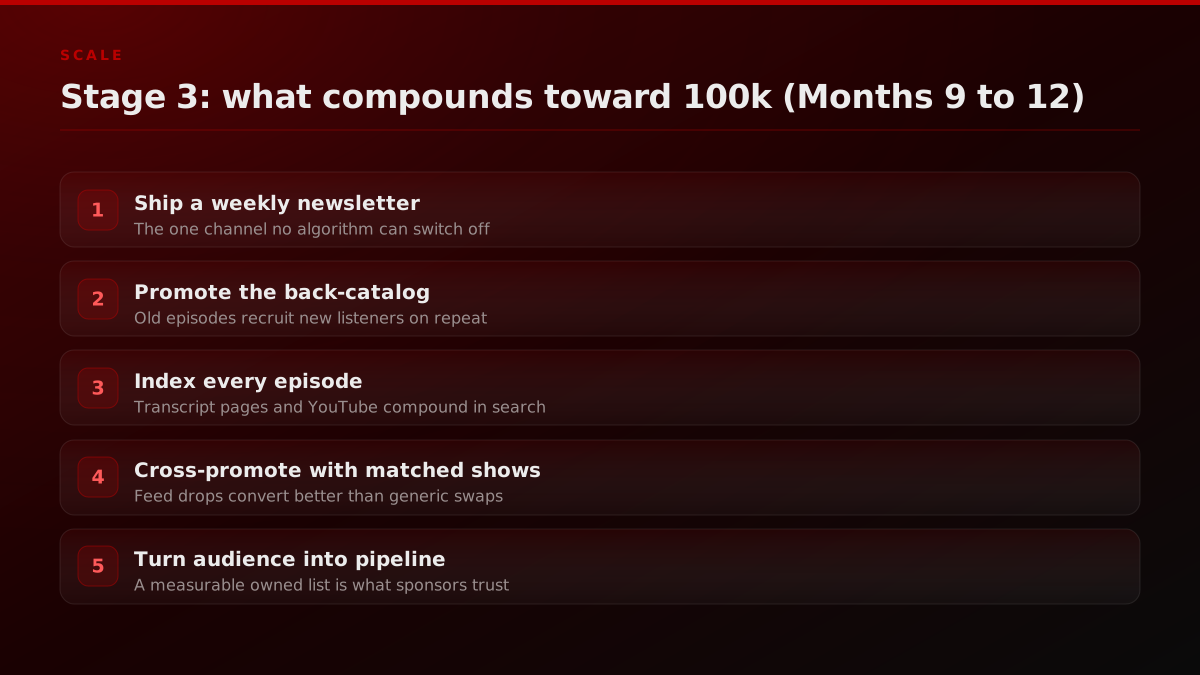
The owned list is the only channel a platform cannot switch off
Every ranking surface can change overnight. An email list cannot. In Stage 3, the owned newsletter becomes the asset that converts a rented audience into a durable one, because the operator reaches the listener without a recommendation model deciding who sees the message. Spotify documents that its discovery rewards completion and follower growth, both of which improve when warm owned traffic lands on the episode page. The owned list is the lowest-churn compounding layer, and it is the one most shows postpone because it produces no vanity number on publish day.
Source: Spotify for Creators, 2026
A grounding note on ambition. The 1,000-listener or 1,000-download milestone that so much advice fixates on is a Stage 2 checkpoint, not the finish line, and treating it as the goal is how shows plateau. The r/podcasting community pushes back on the milestone myth directly.
It's a milestone for sure, but not the finish line.
The '1,000 Listeners' Myth: A Reality Check
I don't understand why some are pushing the idea that 1,000 listeners is the gateway to full-time podcasting. It's a milestone for sure, but not the finish line.
Top 1 percent shows tend to share a small set of Stage 3 behaviors, and studying how they operate is more useful than copying their topics. The common threads are relentless consistency long past the point it feels rewarding, a real owned channel, and a discovery surface that compounds. A breakdown of what the top 1 percent do differently is worth the watch for anyone at the top-5-percent line.
3 Podcast Growth Strategies Used By Top 1% Podcasts
Grow The Show
A breakdown of three growth strategies used by top 1 percent podcasts.
The 12-month podcast growth timeline
The 12-month timeline sequences the three stages into concrete two-month windows, each with a focus and a milestone. Months 1 to 4 lock the foundation and clear the median. Months 5 to 8 build the distribution surface and reach the top 10 percent. Months 9 to 12 compound the catalog and push toward the top 1 percent. The value of the timeline is that it turns a vague goal into a set of dated checkpoints, so a founder can tell in Month 6 whether the show is on track or stuck, instead of discovering it a year later.
The table below is the whole year on one page. Treat the milestones as diagnostic gates: if you have not cleared the median by Month 4, the problem is Stage 1 consistency, not Stage 2 distribution, and the fix is to keep publishing rather than to spend on promotion.
The 12-month podcast growth timeline
| Window | Focus | Milestone |
|---|---|---|
| Months 1 to 2 | Format lock, niche, trailer plus first 3 episodes | First episodes live, YouTube channel set up |
| Months 3 to 4 | Weekly cadence, transcript pages, first clips | Clear the median (27 in 7 days) |
| Months 5 to 6 | Distribution surface, guest swaps that fit | Reach the top 25 percent (about 98) |
| Months 7 to 8 | Completion and follows, coordinated feed drops | Reach the top 10 percent (about 412) |
| Months 9 to 10 | Owned list, back-catalog promotion | Reach the top 5 percent (about 1,015) |
| Months 11 to 12 | Compounding and monetization | Push toward the top 1 percent (4,605-plus) |
A representative path, not a guarantee. Most shows stall before Month 5, and the median never leaves Stage 1.
Compressed to four phases, the same year looks like this. Each phase has one dominant job, and the fastest way to fall behind is to jump to a later phase's work before the current phase's milestone is real.
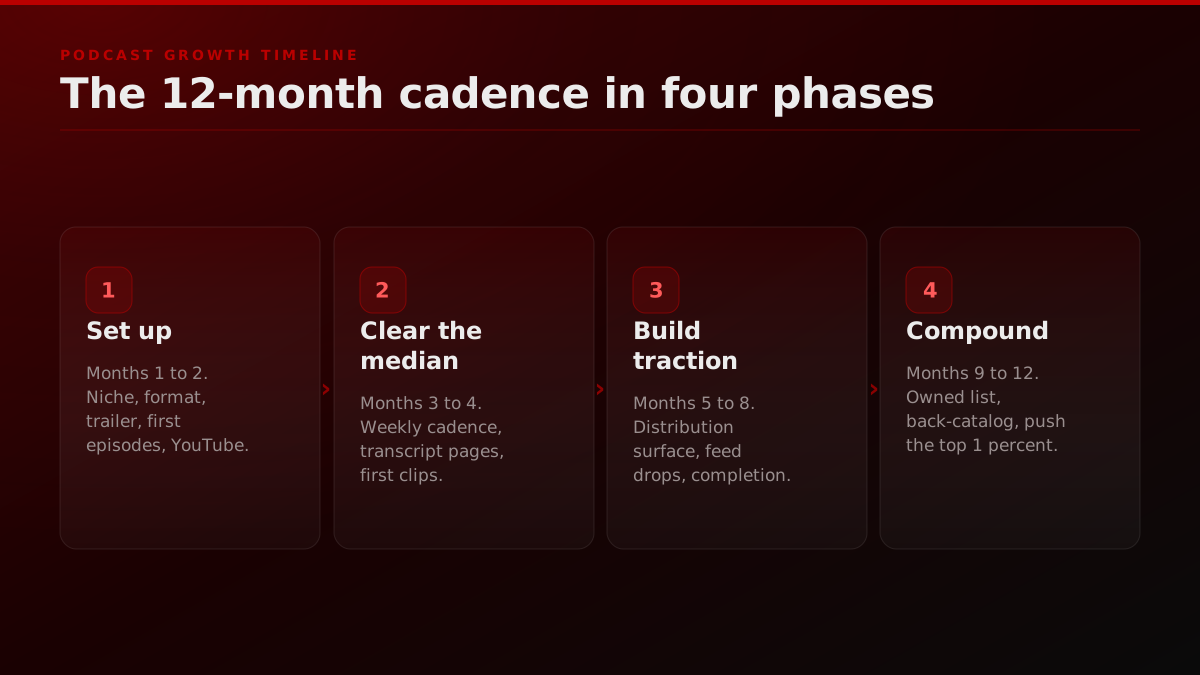
The month-by-month structure also protects against the two most common timeline mistakes. The first is front-loading promotion in Months 1 to 2 when there is no catalog to promote, which burns effort for nothing. The second is coasting in Months 9 to 12 on the assumption that a good show grows itself, when Stage 3 is precisely where an owned list and a compounding surface have to be built deliberately. The founder-led sales podcast strategy maps this same timeline onto pipeline for founders using the show to sell.
The most useful checkpoint on the whole timeline is Month 6. By then a show has published enough to know whether it is tracking. If downloads are climbing toward the top 25 percent line, the foundation held and the job is to keep building distribution surface. If the show is still stuck near the median at Month 6 despite consistent publishing, the problem is almost never cadence, it is that no distribution surface exists yet, and the fix is to start placing channel-native cuts rather than to publish harder. Diagnosing that at Month 6 instead of Month 12 is the difference between a course correction and a wasted year.
Why most podcasts never reach Stage 2
Most podcasts never reach Stage 2 because they stop publishing before consistency has a chance to compound, and the numbers are stark. Of roughly 4.5 million podcasts, only about 480,600 published an episode in the last 90 days by Podcast Index data, which means the large majority are already inactive. The shows that quit almost never quit because the content was bad. They quit because the download count stayed near the median, the feedback loop felt broken, and the operator ran out of reasons to keep recording into what felt like a void.
The second reason is subtler: many operators measure the wrong thing and demoralize themselves. Downloads are a lagging, noisy metric in the first months, and fixating on them is how a show that is actually on track talks itself into quitting. The industry pushback on the download obsession is worth hearing.
Write down 3 reasons you make your show that are NOT tied to downloads.
Arielle Nissenblatt
@arithisandthat
If you're struggling to grow your podcast and wondering why you're not reaching a wider audience, do this: Write down 3 reasons you make your show that are NOT tied to downloads. Feel free to share them here
Operator noteAbout 480,600 of roughly 4.5 million podcasts published in the last 90 days. Most shows are already inactive., Podcast Index via Podcastatistics, 2026
There is also a trap in over-optimizing too early. Operators who bolt on every "must-do" growth tactic in Stage 1, before the foundation is solid, often report that the extra work drained the time and the enjoyment that kept the show alive, without moving downloads. The science-backed sequence protects against this: do the small number of things that matter for your stage, and ignore the rest until your benchmark says otherwise. For founders weighing whether to run their own show at all versus getting booked on others, the podcast booking system for founders covers the guesting alternative that can run in parallel.
The practical fix for the plateau is to stop steering by downloads in the early months and instead watch leading indicators that move first. Follows, completion rate, YouTube impressions, and newsletter signups all respond to good work before the download number does, and they are far less noisy week to week. A founder who tracks those signals can see a show working in Month 3, long before the downloads confirm it, which is exactly the evidence that keeps a good show from quitting in the gap between doing the right things and seeing them pay off in the headline metric.
How to compress the 12-month timeline into a system
The 12-month timeline compresses when distribution runs as a system instead of a weekly scramble, because the constraint that stalls most shows in Stage 2 is production capacity, not strategy. A founder who has to personally cut clips, write threads, and manage a posting cadence burns out around episode 10. A founder whose recording feeds a clip-and-distribution pipeline gets the Stage 2 surface without the Stage 2 workload, which is what lets a show move through the stages in months rather than years. The strategy in this playbook is public. The execution is where the timeline actually bends.
This is the layer FORKOFF runs for founders. The division of labor is simple: the founder records, and the clipping pipeline turns every episode into the platform-native segments that build the reach footprint, while the managed podcast distribution service handles placement and cadence. The result is the surface area that Stage 2 requires, produced as infrastructure rather than as a second job.
Operator noteOne FORKOFF client campaign produced 3,085 clips and 1,190,014 organic views in 13 active distribution days., a crypto educator client, 2026
20 Rules of Podcasting: How To Go From Zero Subscribers to Millions
Valuetainment
A long-form take on the arc from zero subscribers toward a mass audience.
What that looks like at full tilt is a volume most solo operators cannot match by hand. One FORKOFF client campaign for a crypto educator produced 3,085 clips and 1,190,014 organic views in 13 active distribution days, with conversions attributed at the payment level rather than inferred from platform analytics. The internal mechanics are broken down in the FORKOFF podcast engine system, and founders weighing outside help can compare the managed lane in the best podcast marketing agency roundup or start with a direct strategy conversation through the founder funnel.
The verdict is straightforward. Growing a podcast to 100k is not a lottery and it is not a grind with no map. It is a three-stage, 12-month climb up a ladder whose rungs are measurable: clear the median, reach the top 10 percent, break the top 1 percent, and let a compounding catalog do the rest. The median show gets 27 downloads in a week and never leaves Stage 1. The shows that reach 100k are the ones that respected the sequence, stayed consistent long enough to compound, and built the distribution surface as a system. Pick your stage, run its one lever, and stop skipping rungs.