Most advice on how to go viral on X is written for Instagram. Open the top ten Google results for "how to go viral" and you get Reels pacing, TikTok hooks, and YouTube retention curves. Almost none of it addresses the platform where founders actually launch products in 2026, and none of it explains the thing every founder is really asking: how do you take a single post to a million views on purpose, and how do you prove it was real?
The 40-second answer
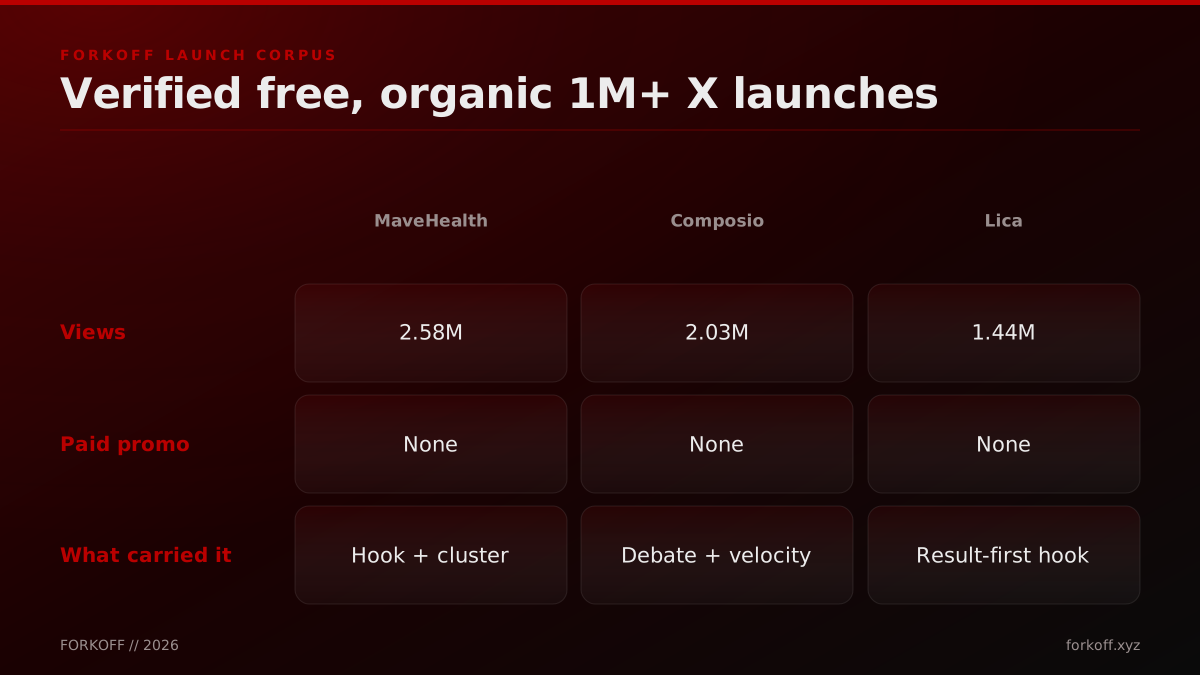
To go viral on X in 2026 you engineer velocity, not content. Trigger weighted engagement (replies, reposts, and quote tweets count far more than likes) inside a 30 to 60 minute first-hour window using a one-second hook, a pre-warmed cluster, and a wave you are riding. The public 1M-view launches we forensically audited (MaveHealth 2.61M, Composio 2.05M, Lica 1.44M) all ran that same first-hour mechanic. RADAR still reads each launch on its own: a views-to-likes ratio under about 500:1 and correlated view-and-like growth at Pearson r >= 0.2, and MaveHealth, at 825 views per like, sits above that line.
This is that runbook. It is written from the launches we have actually run and measured, not from theory. At FORKOFF we build distribution for startups across AI, SaaS, Web3, DevTools, and Fintech, and our clipping network has processed more than 5B views, so we see the difference between a launch that fires and a launch that gets ignored at close range and at scale.
Here is the thesis in one line: going viral on X is an engineering problem, not a content problem. You do not write a viral tweet. You build velocity into a launch, in a specific window, with a specific hook, riding a specific wave, and then you verify it was organic with a test we will give you. Every number in this guide is either from a named public launch or from our own launch corpus, dated so you can check it.
Why every startup launch on X suddenly crosses a million views (2026)
The short version: the launch video became the default GTM motion for early-stage founders, and the ones who understand the algorithm compound while the ones who copy the format cold get ignored. Where a launch a few years ago meant a Product Hunt post and a link drop, in 2026 it is genuinely hard to open X during a launch week without seeing a polished 28-second product video with a million-plus view counter. The mechanics are closer to classic viral marketing than to a press release. Founders have noticed the pattern and are asking, openly, why it happens.
The wave has a clear origin. After Remotion's own launch flooded timelines with programmatic launch videos, the "vibe-coded launch video" became a repeatable asset that a solo founder could produce with prompts alone. One founder shipped a full launch video "with just prompts, all vibe coded" and pulled 311K views doing it. Another documented a formula for 250K to 5M+ views per launch video and claimed one shippable asset per month drives 200K+ in inbound. The format democratized; the distribution did not. (If the asset itself is your bottleneck, our product launch video service builds it, and we break down what a launch video actually costs in a companion piece.)
That is the gap this guide fills. The players who win, the Gammas and the Composios, are not winning on video polish. They are winning on the mechanics underneath: warm-up, first-hour velocity, weighted engagement, and wave-riding. The launch video is the visible surface. The runbook below is the machine.
Why does every startup launch on X get millions of views now?
If you want the creative-lever version of this argument (the five levers that make a post shareable), we cover that in our companion piece on the five levers to go viral on X, and the launch-day version in how to make a launch go viral on X. This post is the execution layer: how to actually run the launch.
How do you get a single post to go viral on X?
You engineer early velocity. In the first 30 to 60 minutes you trigger weighted engagement, lead with a one-second hook, and seed the first 20 to 30 engagements from a warmed cluster so the algorithm registers momentum before your own followers even wake up. Velocity in that window, not raw follower count, is what pushes a post past its normal reach ceiling.
This is the mental model that every generic guide misses. X does not decide a post is good and then show it to people. X shows a post to a small in-network sample, watches how fast that sample engages, and uses that early signal to predict how the wider network will respond. A post that earns thirty replies in twenty minutes gets fanned out. A post that earns three likes in an hour gets buried, no matter how good the copy is.
So "how do I go viral" reduces to three engineered inputs, in order of leverage:
- A hook that earns the read in one second, so the sampled audience stops scrolling at all.
- A first-hour cluster that fires weighted engagement before the algorithm makes its fan-out decision.
- A wave you are riding, so the sampled audience already cares about the topic.
Everything else in this runbook is a detailed version of those three inputs. A small account with no wave, no cluster, and a soft hook will not go viral on the strength of a clever sentence. The X algorithm marketing playbook goes deeper on how the ranking model reads those signals; here we stay on execution.
How does the X algorithm decide what goes viral in 2026?
X scores every post on predicted weighted engagement. Per the recommendation code X open-sourced in March 2023, replies and author-to-replier back-and-forth are weighted far above likes, reposts sit in between, and negative signals carry heavy penalties. The model estimates an engagement probability from your first-hour signals, then decides how far to push the post out-of-network.
You do not have to guess at this. Twitter open-sourced its recommendation algorithm on 31 March 2023 (github.com/twitter/the-algorithm), and while the exact multipliers have evolved since, the relative structure is documented and widely analyzed. The public repo ships a ranking README and a separate machine-learning models repo that together spell out how the heavy ranker scores candidates. The heuristic weights that circulated from that release told a consistent story: a like was worth a fraction of a point, a repost was worth roughly one point, a reply was worth many times a like, and the single strongest positive signal was the author replying back to a replier, which was reported at around 75x. Negative actions ("show less often," mute, block, report) carried large penalties.
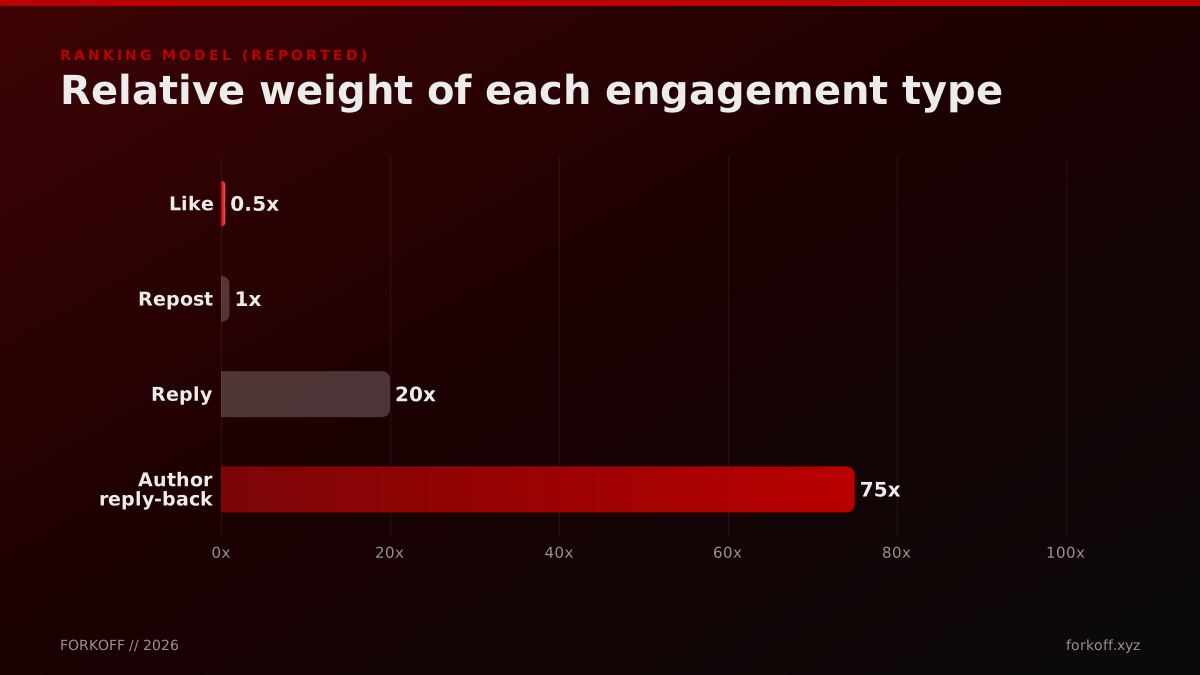
The 2026 For-You algorithm is open source, so the velocity thesis is auditable
X open-sourced its For-You recommendation stack (xai-org/x-algorithm, Apache-2.0), and the May 15 2026 update shipped the end-to-end inference pipeline plus a new grox content-understanding service for spam detection and post-category classification. The README states the team has "eliminated every single hand-engineered feature and most heuristics from the system": ranking now rides on predicted engagement probabilities, not hand-tuned tricks. The practical read for a launch is unchanged from the 2023 release, only sharper: the system rewards the genuine early engagement it predicts you will earn, which is exactly what the W1 window measures.
Source: xai-org/x-algorithm README (Apache-2.0), May 15 2026 update
We have eliminated every single hand-engineered feature and most heuristics from the system.
The practical translation for a launch is blunt. Thirty real replies that you answer back on beat three hundred passive likes for triggering out-of-network reach, because the model reads the reply-and-reply-back loop as the highest-confidence signal that a conversation is worth spreading. This is exactly why the "reply guy" tactic exists, and why a launch tweet that asks a question or stakes a debate outperforms one that just announces.
There is a second layer worth naming: the model penalizes signals that look manufactured. A burst of identical replies from low-quality accounts, or a spike of views with no corresponding conversation, reads as inauthentic and can be down-ranked or purged. That is the bridge to the authenticity problem we solve later with the RADAR test. For now, hold one rule: the algorithm rewards conversation velocity and punishes fake volume.
We are not the only ones reading the code this way. When a practitioner ran the open-sourced recommendation system through Grok for an independent breakdown, his tldr landed on the same sentence this section opened with: engagement prediction trumps everything.
tetsuo
@tetsuoai
X's Recommendation Algorithm Analysis ===================================== Used Grok Code Fast to get a quick breakdown of X's recommendation system. What Makes a post Go Viral =========================== tldr: Engagement prediction trumps everything. Post content that
| Engagement type | Reported relative weight | What it signals to X |
|---|---|---|
| Like / favorite | ~0.5 (baseline) | Passive approval, weak spread signal |
| Repost / retweet | ~1x | Endorsement, moderate spread signal |
| Reply | ~13x to 27x (reported range) | Active conversation, strong spread signal |
| Author replies back to a reply | ~75x (reported) | Highest-confidence "worth spreading" signal |
| Mute / block / "show less" | large negative | Suppression signal, caps fan-out |
Figures reflect the widely-reported heuristic weights from the March 2023 open-source release (github.com/twitter/the-algorithm); exact production multipliers are not public and evolve. Treat the ordering, not the precise numbers, as load-bearing.
How long does it take a tweet to go viral, and what is the first-hour velocity window?
The decision is fast. X reads your first-hour signals, and the first 30 to 60 minutes, the window we call W1, are the highest-leverage stretch of the entire launch. Dense engagement in W1 tells the model to expand reach out-of-network. A flat first hour usually caps the post at your follower baseline. Viral posts are almost always visibly accelerating by the 60-minute mark.
Think of W1 as an audition. The algorithm hands your post to a small in-network sample and measures the engagement rate against what it expected for an account your size. If your post is beating its expected rate, the model widens the audience, measures again, and widens further. This is a compounding loop, which is why virality looks like a hockey stick: nothing, nothing, then a near-vertical climb once the out-of-network fan-out kicks in.
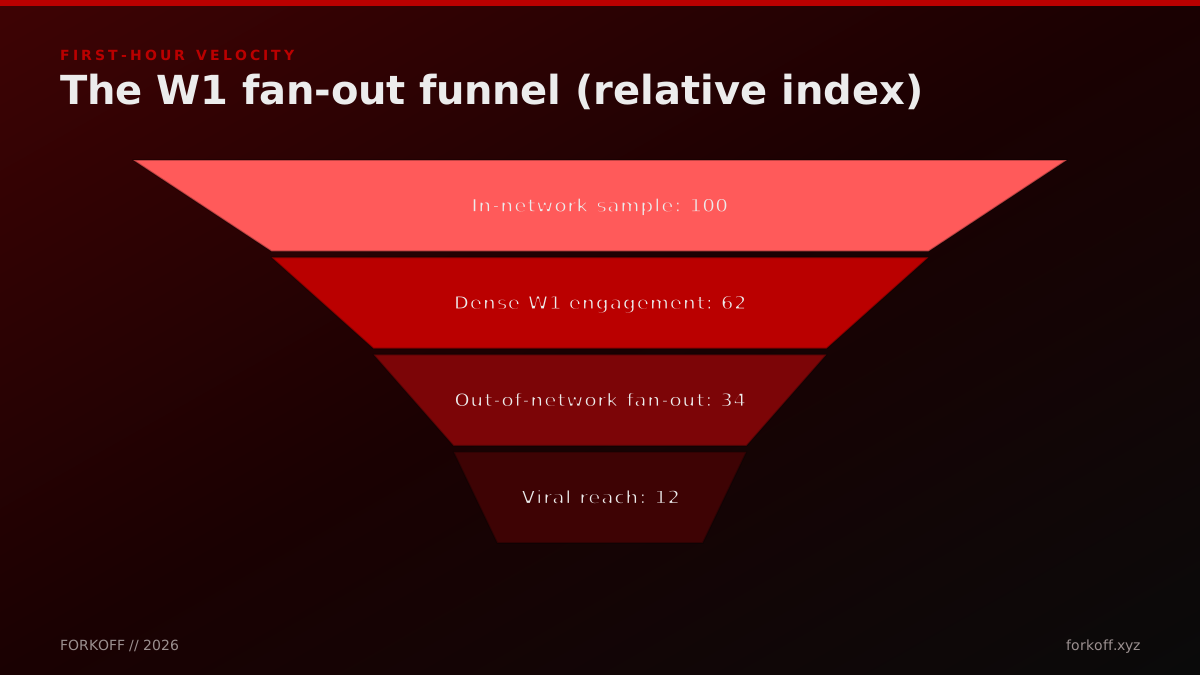
The tactical consequences are specific:
- You do not schedule a launch and walk away. You post, then you sit on the reply tab for sixty minutes answering everyone, because your author-replies are the 75x signal.
- Your cluster fires early, not late. Twenty engagements in the first fifteen minutes are worth more than two hundred spread across a day, because they land inside the audition.
- A slow first hour is rarely rescued. If W1 is flat, the honest move is often to learn from it and re-launch the asset later with a better hook and a hotter cluster, not to keep boosting a post the model has already scored.
This is also why timing matters, though not for the reason people think. Posting at a peak hour does not make a post viral; it stacks the most possible online accounts into W1 so your cluster and your early repliers can actually fire. We give exact windows in the timing section below.
What makes a scroll-stopping hook for a viral X post?
A one-second hook earns the read before the reader decides to scroll. The strongest patterns are a concrete number, a stated stake or contradiction, a curiosity gap, or a visible product result in the first frame of a video. Vague setups lose the read. On X, the first line of the tweet and the first frame of the video carry the entire hook.
The hook is not the headline. It is the single beat that stops the thumb. Because X autoplays video muted and truncates text, you have roughly one second of a person's attention to convert a scroll into a read. Decades of usability research say people do not read online, they scan: Nielsen Norman Group's work on how users read on the web, the F-shaped reading pattern, and the finding that visitors read at most about 20 to 28 percent of the words on a page all point the same way. Everything downstream, the retention, the payoff, the CTA, only matters if the hook wins that second.
Readers scan, so the hook carries the whole post
Nielsen Norman Group's eyetracking research found users read at most about 28 percent of the words on an average page visit, with 20 percent more likely, and that attention follows an F-shaped pattern concentrated on the first lines. On X the effect is compounded by autoplay and truncation: the first line of the tweet and the first frame of the video get one second of attention to convert a scroll into a read. Everything downstream of the hook only matters if that second is won.
Source: Nielsen Norman Group, How Little Do Users Read
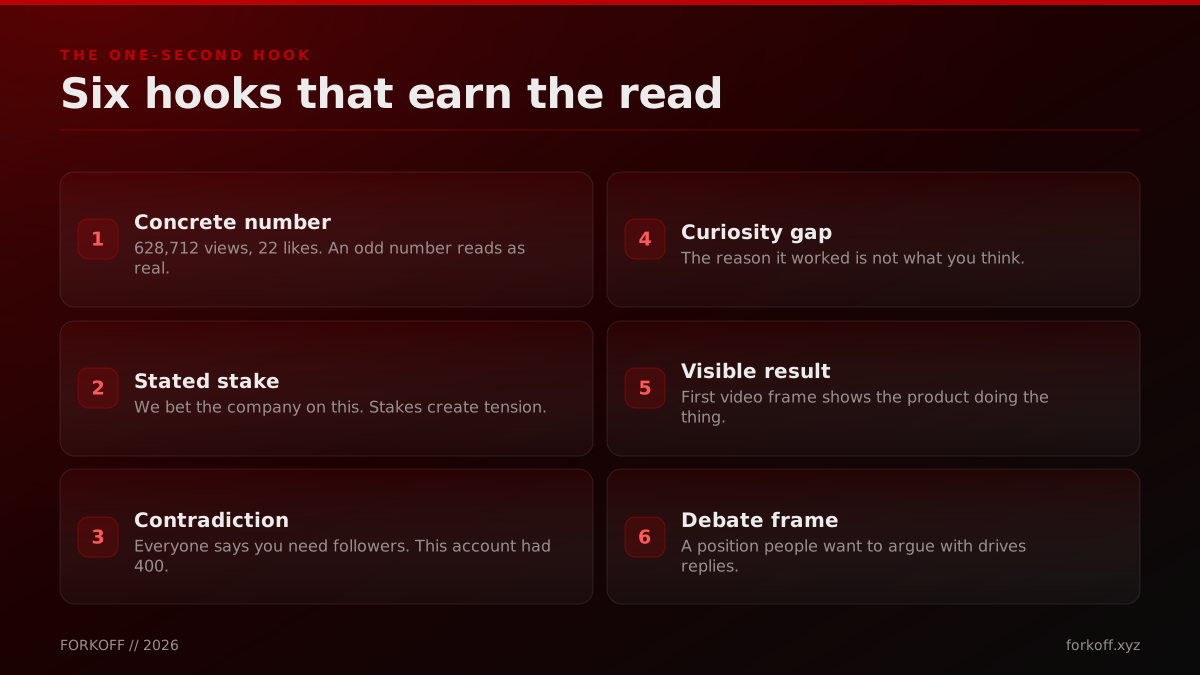
Here is the hook library we actually use, with the pattern and why it works:
- The concrete number. "628,712 views. 22 likes. Here is what that tells you." A specific, slightly odd number reads as real and promises a payoff.
- The stated stake. "We bet the company on this launch. It just crossed 2M views." Stakes create tension the reader wants resolved.
- The contradiction. "Everyone says you need followers to go viral. This account had 400." Contradiction of a held belief is the highest-arousal hook.
- The curiosity gap. "The launch worked. The reason it worked is not what you think." A gap the reader has to close.
- The visible result (video). First frame shows the product doing the thing, no logo, no intro. Show the outcome, not the brand.
- The debate frame. "Rage baiting is for losers. Here is why our launch did the opposite." A position people want to argue with drives replies, and replies are the 75x signal.
Why does high-arousal phrasing win? Because it is measured. In their study of nearly 7,000 New York Times articles, Berger and Milkman found that content evoking high-arousal emotion (awe, anger, anxiety, excitement) was significantly more likely to be shared than low-arousal content (What Makes Online Content Viral, Journal of Marketing Research, 2012). A hook that provokes is not a gimmick; it is the emotional trigger the research says drives sharing. The line between provocation and rage-bait is a real one, and we draw it explicitly later.
Virality is partially driven by physiological arousal. Content that evokes high-arousal positive (awe) or negative (anger or anxiety) emotions is more viral. Content that evokes low-arousal, or deactivating, emotions (e.g., sadness) is less viral.
The reading research points the same direction from the other side: the hook has to do all its work in one glance, because the glance is all you get.
On the average Web page, users have time to read at most 28% of the words during an average visit; 20% is more likely.
The six one-second hook patterns
| Pattern | Example shape | Why it works |
|---|---|---|
| Concrete number | "628,712 views. 22 likes." | A specific, slightly odd number reads as real |
| Stated stake | "We bet the company on this launch." | Stakes create tension the reader wants resolved |
| Contradiction | "Everyone says you need followers. This account had 400." | Contradiction of a held belief is the highest-arousal hook |
| Curiosity gap | "The reason it worked is not what you think." | A gap the reader has to close |
| Visible result (video) | Product doing the thing in frame one | Show the outcome, not the brand |
| Debate frame | A position people want to argue with | Replies are the 75x signal |
Patterns restate the hook-library section of this post; arousal basis per Berger and Milkman (JMR 2012).
How many replies, reposts, and quote tweets do you need to trigger virality on X?
There is no fixed number, only a velocity threshold relative to your baseline. A practical W1 target for a small account is 20 to 40 weighted engagements, replies plus quote tweets plus reposts, with replies you answer back on. Because replies and quotes outweigh likes in the ranking model, thirty real replies beat three hundred passive likes for triggering out-of-network reach.
The reason there is no universal number is that the algorithm scores your engagement rate against your expected rate. An account that normally gets 5 likes needs far less absolute engagement to signal "this is beating expectation" than an account that normally gets 5,000. What is constant is the shape: a steep early slope of the highest-weighted actions.
So the target is not "get 1,000 retweets." The target is:
- 20 to 40 weighted engagements in W1 for a small-to-mid account, front-loaded into the first fifteen minutes.
- A reply-to-like ratio that skews toward replies, because replies and author-back-and-forth are the strongest signals.
- Quote tweets from principals, because a quote tweet exposes your post to a non-overlapping audience and carries endorsement weight.
This is where the warm cluster earns its place in the runbook. You are not buying engagement (that fails the RADAR test and risks a purge). You are pre-arranging that fifteen to thirty genuine accounts in your niche, people who actually care, are online and ready to reply with real commentary in W1. The difference between seeding real early conversation and botting flat volume is the entire back half of this guide.
Operator note20 to 40 weighted engagements inside W1 is the cluster target we set for small accounts., FORKOFF launch corpus 2026
How do you go viral on X without an existing following?
Borrow reach instead of owning it. Reply with genuine value under larger accounts in your niche, tag debate principals who will quote you, and seed the first 20 to 30 engagements from a warmed cluster so the algorithm registers early velocity before your own audience exists. Every verified launch we track borrowed reach through a wave; none relied on the founder having a big following first.
This is the single most-searched worry we see: small accounts convinced the algorithm will never show their posts no matter how good the content is. You can watch the belief form in real time: a thread titled "X is dead for free accounts" pulled 137 comments from people who "tried every kind of viral post" and saw no impressions. The belief is half right.
::directive{id="em-rd-freeaccounts"} The algorithm will not show a cold post from a zero-following account to a big audience on hope. But it will fan out a post that is beating expectation in W1, and W1 engagement can be borrowed. The same borrowing logic works off-platform too: seeding demand in the right communities via Reddit marketing and building the cluster through targeted Twitter DM outreach both feed the warm audience your launch draws on.
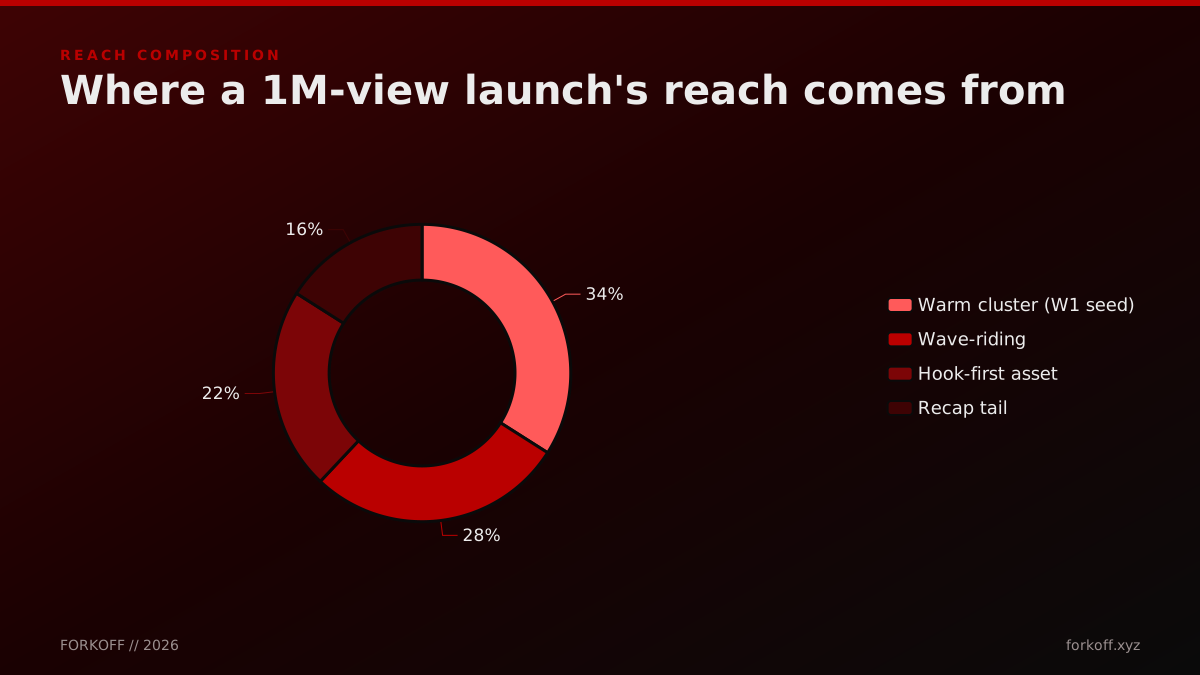
Three mechanics let a near-zero account borrow reach:
- Reply-under-giants. Post genuinely useful replies under large accounts in your exact niche. A great reply gets seen by their audience and pulls profile clicks, which are themselves a weighted signal. This is how you build the cluster before you need it.
- Debate-principal tagging. Identify the two or three accounts who are the principals in your topic's ongoing debate. Frame your launch as a contribution to that debate and tag them. If one quotes you, you inherit their audience and their endorsement weight.
- Warm-cluster seeding. The fifteen to thirty accounts you built relationships with during warm-up fire real replies in W1. Not bots. Real people who followed you because your replies were good.
A founder who analyzed 65+ viral X videos concluded that "anyone can go viral" because the pattern is extractable and repeatable, not gated by follower count. We agree, with one correction: anyone can go viral who runs the borrowing mechanics. The follower count is the output of doing this repeatedly, not the prerequisite.
I analysed 65+ viral videos on X and realised anyone can go viral
How many views actually counts as viral on X?
Viral is relative to your baseline, not a fixed number. A workable rule: a post is viral when it clears roughly 10x your usual view count, which for a small account often means 100K+ impressions. The concrete, non-relative thresholds are the monetization ones: 5M organic impressions in 90 days plus 500 followers to qualify for X ad-revenue sharing.
People want a single number, and there is not one, because a post that would be routine for a large account is a genuine viral event for a small one. On X specifically, where reach is capped hard by follower count until the fan-out loop kicks in, the honest definition is a multiple of your own baseline. If you normally see 2,000 impressions and a post does 200,000, that post went viral by any reasonable standard, even though a 200K post is a Tuesday for a major account. For scale, X reaches only a minority of US adults relative to platforms like YouTube and Facebook, per Pew Research social-media usage data, so a six-figure impression count already represents real reach into the platform's active base.
Where the number does get concrete is monetization, and this is the real driver behind a lot of "how many views is viral" searches. X's own creator monetization documentation sets the eligibility bar for ad-revenue sharing at a Premium subscription, at least 500 followers, and 5M organic impressions across your posts in the last three months (help.x.com). That 5M-in-90-days threshold is why so many creators chase impression counts explicitly: it is the gate to getting paid.
X creator ad-revenue-sharing eligibility: the concrete thresholds
| Requirement | Threshold |
|---|---|
| Subscription | X Premium (or Premium+) |
| Followers | At least 500 |
| Organic impressions | 5M across your posts in the last 3 months |
X creator monetization documentation (help.x.com). This 5M-in-90-days gate is why creators chase impression counts explicitly.
X reach is a minority of US adults, which makes six figures real reach
Per Pew Research Center's social media fact sheet, X is used by a minority of US adults, well behind YouTube and Facebook. That context cuts two ways for a launch: the platform's total pool is smaller than the giants, so a six-figure impression count already represents genuine penetration of the active base, and the audience skews toward exactly the builder and media crowd a startup launch needs. Measure viral against your baseline and the platform's real size, not against YouTube numbers.
Source: Pew Research Center, Social Media Fact Sheet
We wrote a full breakdown of the viral threshold by account size in our sibling guide on how many views is viral; use it to set a realistic target for your account before you launch, so you are measuring against the right baseline.
The 14-day pre-launch warm-up protocol
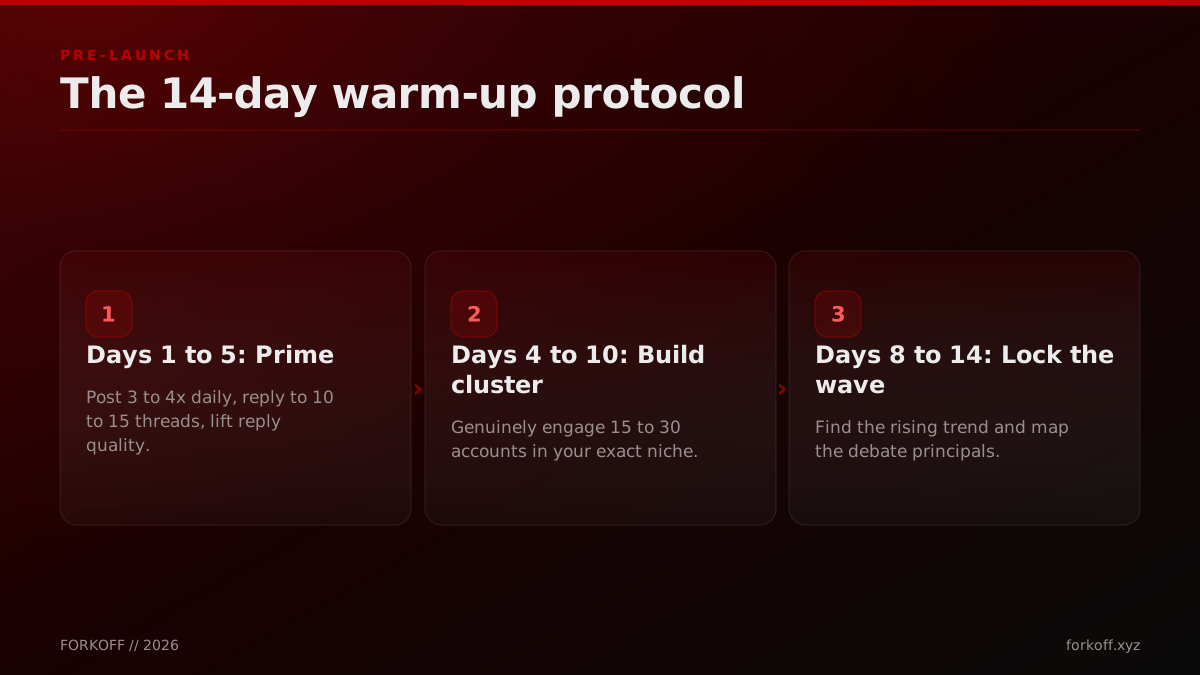
Before any viral push, run a 14-day warm-up: prime the account signal, build the close cluster, and lock the wave. This is the FORKOFF warm-up protocol, and it is the step every generic guide skips. You cannot fire a first-hour cluster you have not built, and you cannot ride a wave you have not identified. Warm-up is where both get done.
The warm-up does three jobs in parallel over two weeks:
- Days 1 to 5, account priming. Post 3 to 4 times a day in your niche, reply to 10 to 15 relevant threads daily, and drive your reply quality up. The goal is to train the algorithm that your account produces engagement, so your launch post starts from a higher expected-rate baseline instead of a cold one.
- Days 4 to 10, cluster building. Identify and genuinely engage 15 to 30 accounts in your exact niche. Real relationships: thoughtful replies, useful DMs, shared work. These are the people who will reply in W1 because they actually care, not because you paid them. This is the difference between an organic launch and a botted one, decided two weeks early.
- Days 8 to 14, wave-locking. Monitor for the rising trend cluster you will attach your launch to, and identify the debate principals and recap accounts who syndicate wins in your space. Launch day is when you fire; warm-up is when you load.
The reason this matters is causal, not cosmetic. Every metric later in this guide, the W1 velocity, the weighted engagement, the correlated growth that keeps you on the organic side of RADAR, is produced by the cluster and the wave you built here. Skip the warm-up and your only remaining path to a first-hour spike is buying it, which is exactly the path that fails the authenticity test and gets purged. Our Twitter/X marketing team runs this warm-up as a service precisely because it is the part founders most often skip and most need.
How do you launch a product on X and take it to 1M views?
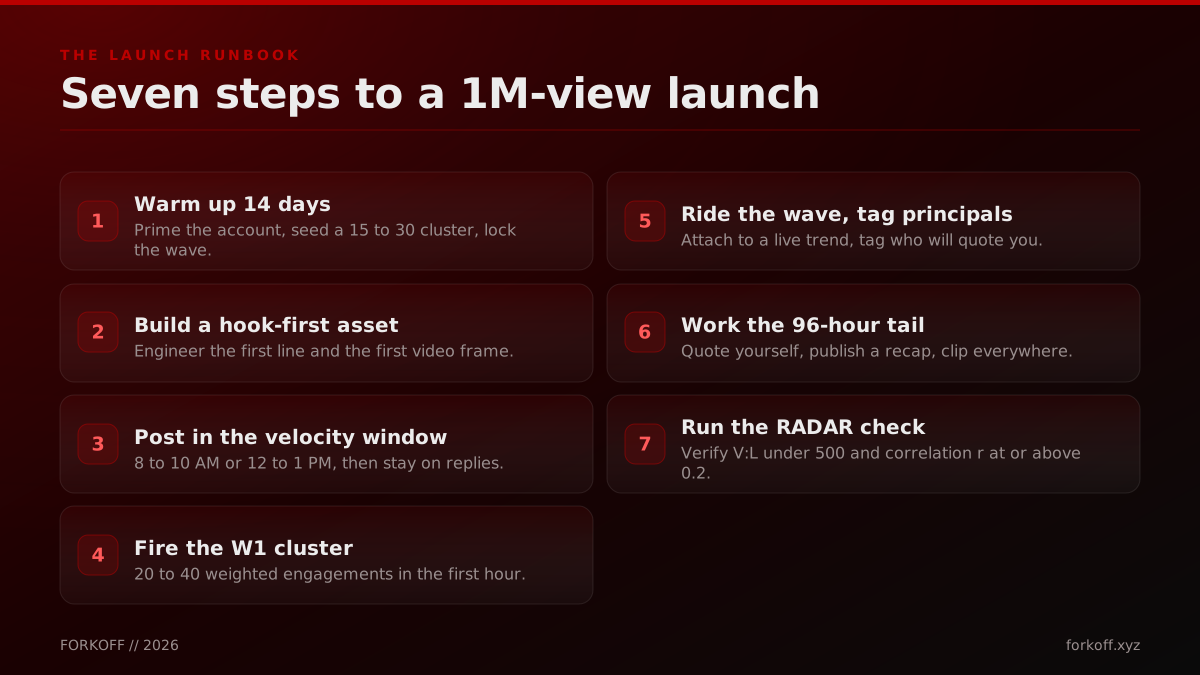
Run the full runbook: 14-day warm-up, a hook-first asset, a first-hour cluster firing 20 to 40 weighted engagements in W1, a wave you are riding, debate-principal tagging, and a 96-hour recap tail. The verified crossings we track (MaveHealth 2.61M, Composio 2.05M, Lica 1.44M) all followed this shape, and all of them did it for free.
This is the whole thing assembled into a sequence you can execute. Nobody hits a million views on one lever; they stack all of them and the stack compounds through the W1 fan-out loop.
The 1M-view launch runbook (step by step)
STEPS- 01
Warm up for 14 days
Prime the account, seed a close cluster of 15 to 30 accounts, and identify the wave you will ride before launch day.
- 02
Build a hook-first asset
Engineer the first line and first video frame around a one-second hook. The hook is the asset; everything after it is retention.
- 03
Post inside the velocity window
Publish at 8 to 10 AM or 12 to 1 PM in your primary time zone, then stay online to answer every early reply.
- 04
Fire the first-hour cluster
Trigger 20 to 40 weighted engagements (replies, quotes, reposts) inside the 30 to 60 minute W1 window so the algorithm sees velocity.
- 05
Ride the wave and tag principals
Attach to a live trend cluster and tag debate principals and recap accounts who will quote and syndicate the post.
- 06
Work the 96-hour tail
Quote your own post with a new angle, publish a recap, and clip the asset across platforms so the win compounds.
- 07
Run the RADAR authenticity check
Verify V:L under 500:1 and correlated view-and-like growth at r >= 0.2 so the launch reads as organic and survives any purge.
Walk it end to end:
- Warm up for 14 days. Prime the account, build the 15 to 30 account cluster, lock the wave. (Covered in full above.)
- Build a hook-first asset. Engineer the first line and first video frame around one of the six hook patterns. If it is a launch video, the product result is visible in frame one, before any logo. The hook is the asset.
- Post inside the velocity window. Publish at 8 to 10 AM or 12 to 1 PM in your primary time zone, then stay on the reply tab for the full first hour.
- Fire the first-hour cluster. Your warmed accounts reply with real commentary in the first fifteen minutes. You answer every one (the 75x signal). Target 20 to 40 weighted engagements inside W1.
- Ride the wave and tag principals. Attach the launch to the live trend cluster and tag the debate principals and recap accounts who will quote and syndicate.
- Work the 96-hour tail. Quote your own post with a fresh angle, publish a recap, and clip the asset across platforms so the win compounds instead of decaying.
- Run the RADAR check. Verify the launch reads as organic (V under 500, correlation r >= 0.2) so it survives any purge and so you can prove it later.
The runbook by step, with the target each step must hit
| Step | Window | Target |
|---|---|---|
| Warm-up | Days 1 to 14 pre-launch | 15 to 30 account cluster built, wave locked |
| Post timing | 8 to 10 AM or 12 to 1 PM primary time zone | Maximum online audience stacked into W1 |
| First-hour cluster | First 30 to 60 minutes (W1) | 20 to 40 weighted engagements, every reply answered |
| Wave-ride and tagging | Launch day | Debate principals and recap accounts tagged |
| Recap tail | 96 hours post-launch | Quote-tweet recap, cross-platform clips |
| RADAR check | Post-launch audit | V:L under 500:1, correlated growth r >= 0.2 |
Figures restate the runbook sections of this post (FORKOFF launch corpus).
A named example makes the shape concrete. Mau Baron, a founder growing a bootstrapped app toward six figures a month, broke down a launch that hit 1.9M views and 17.7K bookmarks, and the structure maps cleanly onto this sequence: warmed audience, hook-first asset, heavy early conversation, and a recap tail that carried the win forward. If your launch is a video specifically, our companion guide on getting 100K+ views on a launch video drills into the asset itself; this runbook is the distribution around it.
Finn Mallery
@fin465
I might regret posting this cuz it's one of our best growth hacks and anyone can do it, BUT here's how to get 250k-5m+ views on your launch video its OP cuz if you crack the formula, you can ship a new vid each month and drive insane inbound. We make 1/month and clear 200k+
Can you go viral on X for free, without ads or paid promotion?
Yes. Ad spend was not what carried the public 1M+ launches we audited. Reach came from engineered velocity: warm-up, hook, first-hour cluster seeding, and wave-riding. RADAR still reads part of MaveHealth's reach as lightly amplified, so the view count and the authenticity read are two separate questions. Paid amplification can widen an already-firing post, but it cannot manufacture the first-hour velocity the algorithm actually scores.
This is worth stating plainly because a persistent 2026 belief is that viral launches are secretly bought, and that a small unknown account cannot pull one off. The data from our own corpus contradicts it. The three verified crossings below were free, organic, and driven by the mechanics in this runbook, not by promotion.
Public 1M+ launches FORKOFF forensically audited
| Launch | Views | RADAR read | What carried it |
|---|---|---|---|
| MaveHealth | 2.61M | Paid-lite, 825:1 | Hook-first asset, warmed cluster, wave-ride |
| Composio | 2.05M | Not in RADAR (1,892:1) | Debate frame, first-hour velocity, recap tail |
| Lica | 1.44M | Not in RADAR | Visible-result video hook, cluster seeding |
Public launches FORKOFF forensically audited, 2026. MaveHealth views from its RADAR row; Composio re-read on X 2026-09-23. Cailyn Yongyong's four consecutive 100K+ hits sit in the same audit set.
Cailyn Yongyong's four consecutive 100K+ hits sit in the same corpus and reinforce the pattern: repeatability, not a single fluke.
Operator noteEvery 1M+ crossing in our corpus ran on zero ad spend: MaveHealth 2.61M, Composio 2.05M, Lica 1.44M., FORKOFF launch corpus, verified 2026-06-30
The nuance is that "free" does not mean "effortless." Free means no ad spend. It still costs two weeks of warm-up, a genuinely good asset, and an hour of live reply work in W1. Paid promotion has a real role, but it is downstream: once a post is already accelerating out-of-network organically, a modest boost can extend the tail. Spending on ads to rescue a post with a flat W1 is lighting money on fire, because you are paying for reach the model has already declined to give for free.
Is buying engagement or views to go viral safe, or does X detect and purge it?
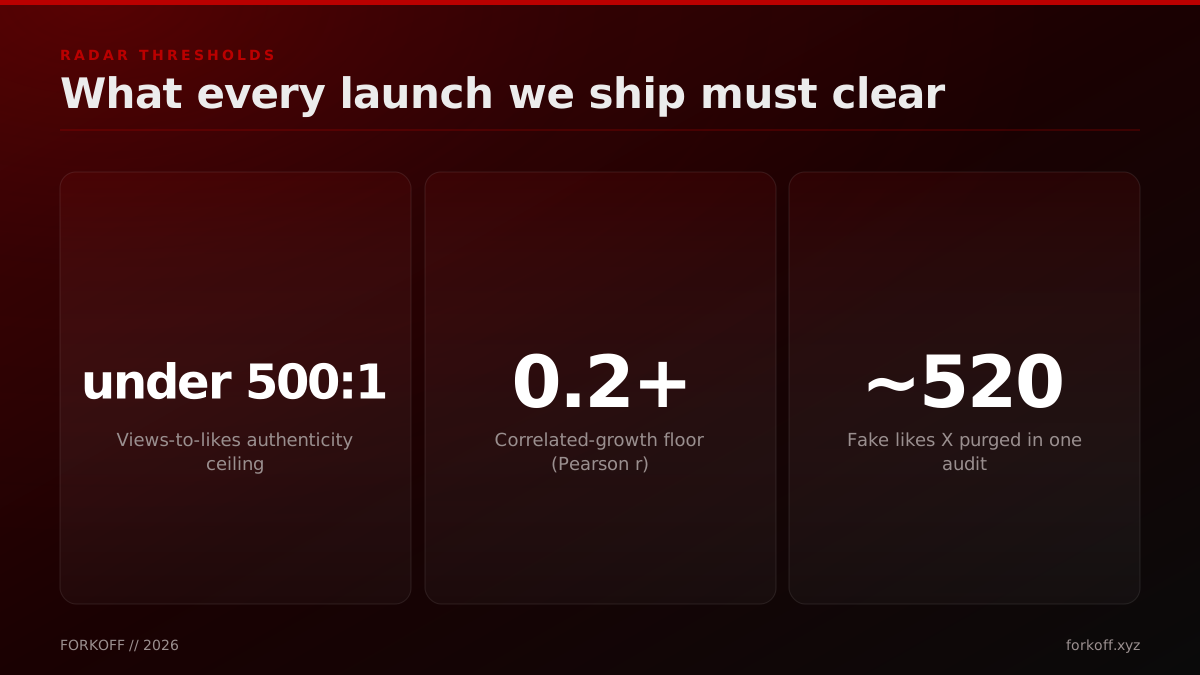
No, it is not safe. X detects and purges fake engagement, and it is easy to spot from the outside: bought launches show a views-to-likes ratio above roughly 2,884 (botted runs exceed 6,731) versus about 759 for organic. In one launch we audited, X purged around 520 fake likes from a 628,712-view burst. Bought virality fails the authenticity test and puts the account at risk.
The reason buying does not work is not moral, it is mechanical. Platform manipulation and spam, including buying fake engagement, is a direct violation of X's platform-manipulation policy, and the enforcement is automated. Bought views arrive flat: a wall of impressions with no corresponding conversation, because the accounts pushing them are not really reading or replying. That flatness is a fingerprint. When you plot views against likes across launch types, the organic and botted populations separate cleanly.
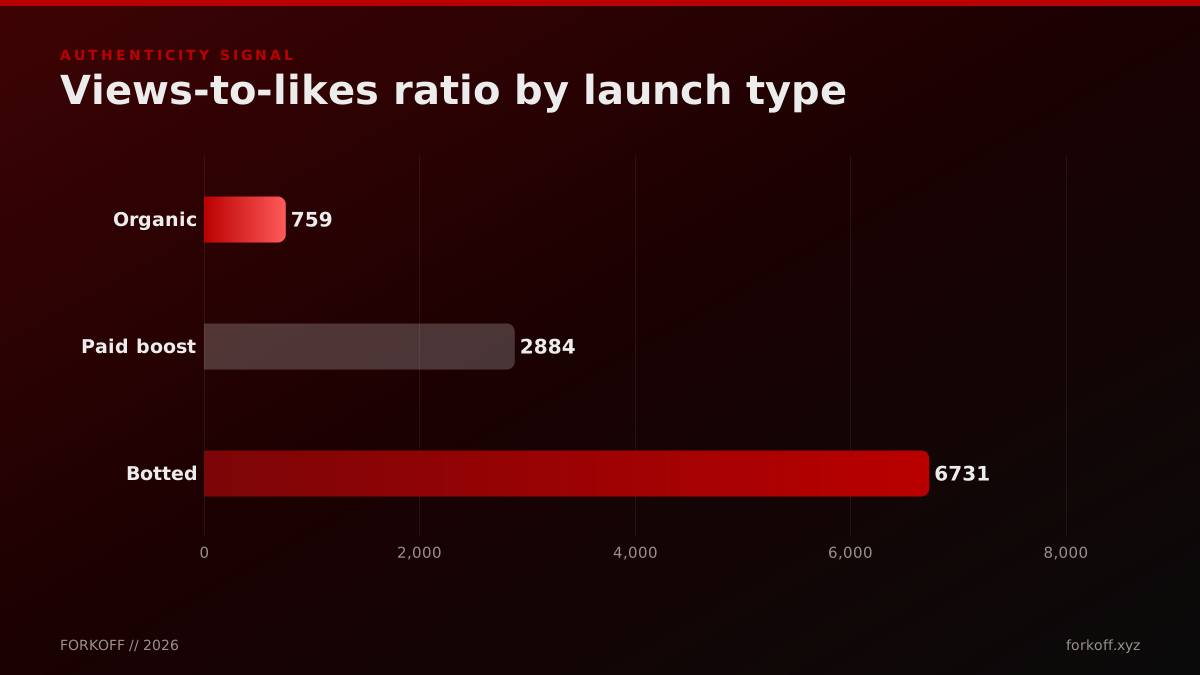
Here is the separation, from our launch corpus:
Views-to-likes ratio by launch type
| Launch type | Views-to-likes ratio (median) | Typical range |
|---|---|---|
| Organic | ~759 | 364 to 2,092 |
| Paid (legitimate ad boost) | ~2,884 | Elevated but conversational |
| Botted (bought fake volume) | ~6,731 | Far above the organic ceiling |
FORKOFF Launch RADAR bands, 2026-06-30. Above roughly 500:1 starts to look inorganic; above 2,000:1 is almost certainly bought.
The enforcement is not theoretical, and it tightened again in 2026: X now removes accounts for engagement farming at scale, with nearly 4,000 pulled in a single day and repeat engagement-solicitation costing creators their revenue-sharing eligibility.
DogeDesigner
@cb_doge
Engagement farming on 𝕏 can now cost you monetization and even your account. • Soliciting engagement 3+ times may lead to removal from Creator Revenue Sharing and referral for suspension • Nearly 4,000 accounts were removed in one day • Grok now detects copied content 3×
Operator noteX purged roughly 520 fake likes from that botted burst after our RADAR flag., FORKOFF Launch RADAR audit 2026
The practical ceiling is the number to remember: a views-to-likes ratio above about 500 starts to look inorganic, and above 2,000 it is almost certainly bought. Founders sometimes cross the organic ceiling by accident on a genuinely huge post, which is why RADAR uses a second signal (correlated growth) to avoid false positives. But a launch sitting at 6,000
is not an accident. We dug into this exact question, whether launches are engineered or gamed, in our sibling piece on whether Twitter launches are a scam.What is the difference between an organic viral launch and a botted one? The FORKOFF Launch RADAR
An organic launch grows views and likes together (delta-views tracks delta-likes at Pearson r >= 0.2) and holds a views-to-likes ratio under about 500. A botted launch buys flat views while likes stay near zero, spiking the ratio past 2,000 and failing the correlated-growth check. The FORKOFF Launch RADAR uses both signals together to separate the two, and it is the framework that lets us prove a launch was real.
RADAR exists because a single signal can be fooled. A huge organic post can briefly cross the V
ceiling; a careful botter can buy a few likes to hold the ratio down. So RADAR reads two independent signals and requires both.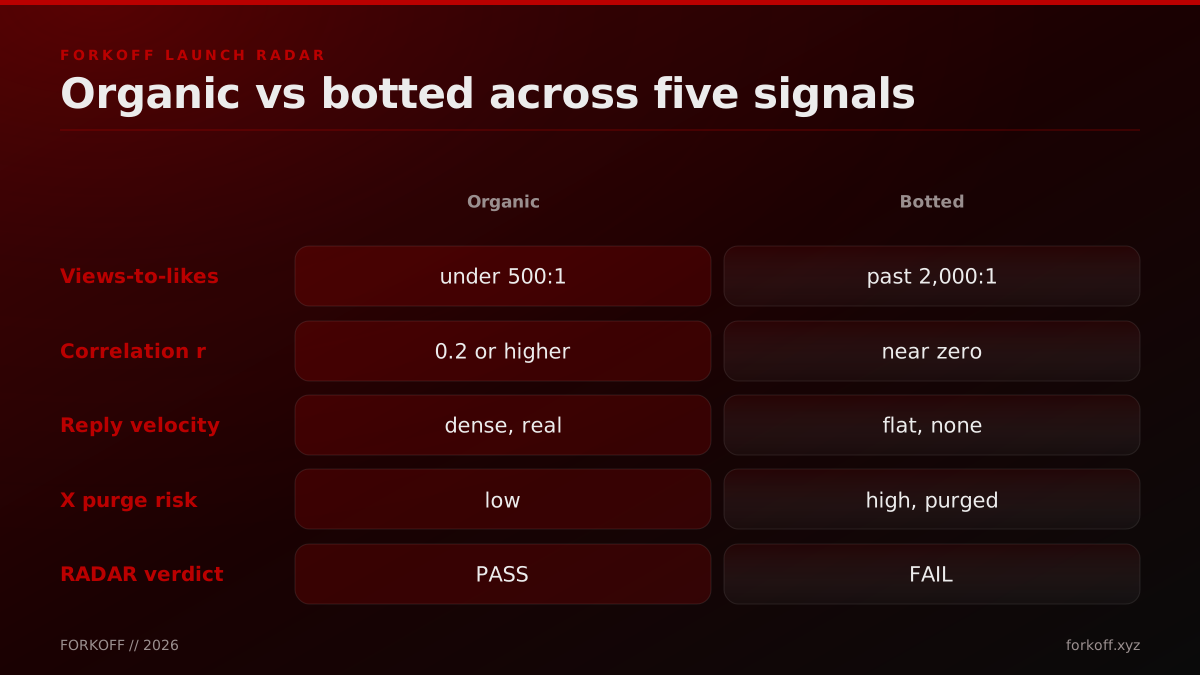
- Signal 1, the V authenticity ceiling. Views-to-likes under roughly 500 is the organic band. Above 2,000 is a strong bot signal. This catches the crude case: flat bought views with no engagement.
- Signal 2, the correlated-growth gate. Through the burst, the change in views must track the change in likes at Pearson r >= 0.2. Real virality grows both together, because the same people who are seeing it are reacting to it. Bought views break the correlation because the volume is decoupled from any human reaction.
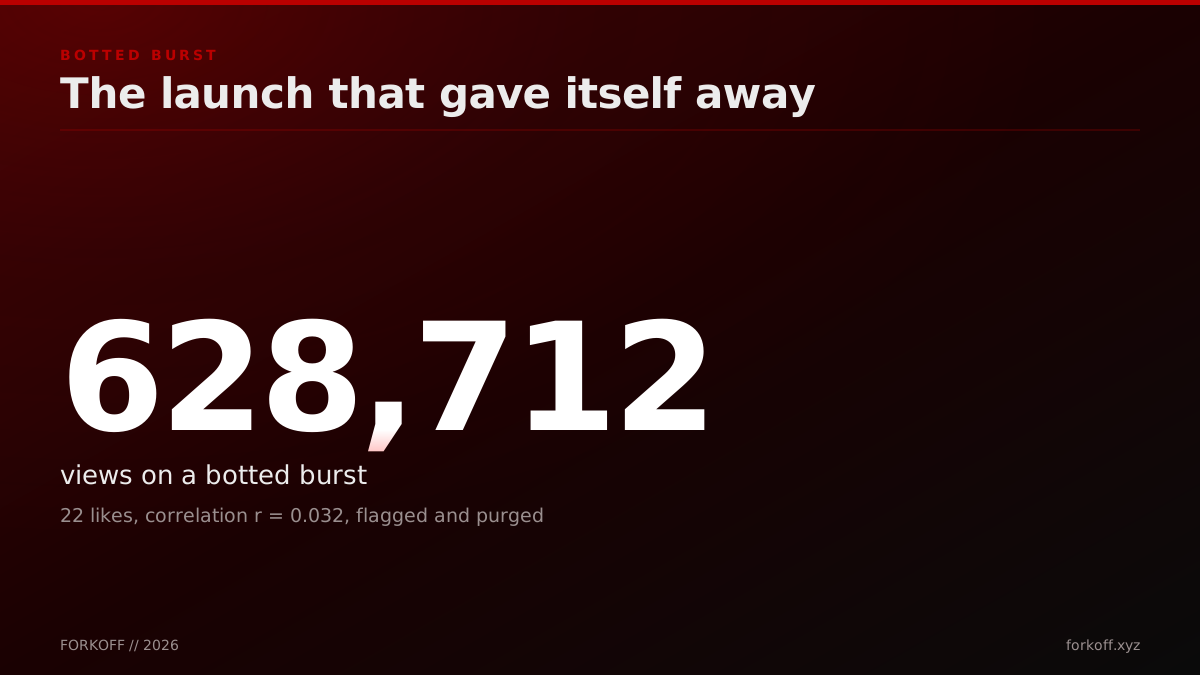
The correlated-growth gate is the one that catches the sophisticated case, and we have a clean example. A 628,712-view burst that carried just 22 likes computed to a correlation of r = 0.032, an order of magnitude below the organic floor. RADAR flagged it as botted, and X later purged roughly 520 fake likes from it, independently confirming the call.
Operator noteThe 628,712-view burst we audited carried 22 likes and computed to Pearson r = 0.032., FORKOFF Launch RADAR audit 2026
The RADAR bands separate organic from botted with two signals
Across the FORKOFF launch corpus (verified 2026-06-30), organic launches hold a median views-to-likes ratio near 759 while botted runs exceed 6,731, and organic bursts grow views and likes together at Pearson r >= 0.2 while bought volume decouples them. The two signals fail independently, which is why RADAR requires both: a huge organic post can briefly cross the V:L ceiling, and a careful botter can buy likes, but faking correlated growth and a sane ratio at the same time is what bought volume cannot do.
Source: FORKOFF Launch RADAR bands, launch corpus verified 2026-06-30
Why does this matter to a founder who is not botting? Two reasons. First, if you buy engagement to fake a launch, RADAR-style detection (and X's own purge) will catch it, and the purge can drag the whole post down. Second, and more useful: RADAR is how you prove your organic launch was real to investors, press, and partners who are rightly skeptical in 2026. A launch that passes both gates is a receipt. The X algorithm marketing playbook explains why the platform's own systems reward exactly this correlated, conversational pattern.
What is the best time of day to post to maximize viral reach on X?
Publish between 8 and 10 AM or 12 and 1 PM in your primary audience time zone, weighting to US Eastern for a US or global launch, then stay online to answer every early reply. Timing does not create virality. It stacks the first-hour velocity window with the most people online, so your cluster and your early repliers can actually fire W1.
The mechanism is the point. A brilliant post at 3 AM local time has almost no one online to seed W1, so the audition happens against a thin audience and the fan-out loop never gets fuel. The same post at 9 AM lands when your warmed cluster is awake and the broader niche is scrolling, so the first-hour engagement that the algorithm scores can actually accumulate. The published best-time datasets converge on the same morning-and-midday windows: see the aggregate reads from Sprout Social, Buffer, and Hootsuite. Treat them as a starting prior, then calibrate to when your own cluster is actually online.
For the Tier-1 English-speaking markets most FORKOFF launches target (US, UK, Canada, Australia, New Zealand), the practical guidance is:
- US or global launch: post 8 to 10 AM US Eastern. This catches the US East Coast morning and the UK afternoon in one window.
- UK-primary launch: 8 to 10 AM GMT hits the UK morning and the US pre-dawn night owls.
- Australia or New Zealand primary: 8 to 10 AM AEST or NZST, and accept that your US cluster will be asleep, so weight your warmed cluster toward local accounts.
- Never launch and leave. Whatever the window, you are on the reply tab for the following sixty minutes. The timing only sets up W1; you still have to fire it.
One caveat that matters for wave-riding: if you are attaching to a live trend cluster, the wave's timing can override the clock. A rising debate at 6 PM is a better launch moment than a dead 9 AM, because the audience is already primed on the topic. Time to the wave first, the clock second.
Wave-riding: how to ride a rising cluster instead of launching cold
Wave-riding means attaching your launch to a trend cluster that is already accelerating, so your post inherits an audience that already cares, instead of trying to create demand from a cold start. It is the single most under-covered lever in every generic virality guide, and it is how small accounts borrow the reach they do not own.
A cold launch asks the algorithm and the audience to care about your product from zero. A wave-ridden launch enters a conversation that is already hot, where the audience is primed, the principals are active, and the algorithm is already fanning related content out-of-network. You are not fighting for attention; you are redirecting a stream that is already flowing.
The reason this compounds is that a hot cluster changes the algorithm's prior about your post before anyone engages. When a topic is accelerating, X is already fanning adjacent content out-of-network to feed the demand, so a post that credibly belongs to that cluster inherits a higher expected reach the moment it lands. Your W1 engagement then does not have to fight uphill against a cold prior; it confirms a signal the model is already inclined to believe. That is the difference between pushing a boulder and stepping onto a moving walkway, and it is why two identical assets can post the same hour and one dies at 3,000 views while the other clears 300,000. The asset did not change. The wave did.
The wave-riding workflow, which you set up during warm-up:
- Monitor for rising clusters. Watch for a topic in your niche that is accelerating, a model drop, a controversy, a new format, a competitor's move. You are looking for a wave on its way up, not one that has already peaked.
- Find the debate principals. Every hot cluster has two or three accounts driving it. They are the ones getting quote-tweeted. Map them during warm-up.
- Frame your launch as a contribution to the debate. Not "here is my product," but "here is my answer to the thing everyone is arguing about, and it happens to be the product." The debate frame is also a hook (pattern six).
- Tag the principals and the recap accounts. A quote from a principal hands you their audience. A pickup from a recap account (the accounts that syndicate "here is what happened this week") extends the tail into the 96-hour window.
The "vibe-coded launch video" wave is a live case study in this. When Remotion's launch normalized the programmatic launch video, a whole cluster of founders rode that format wave, and the ones who tagged into the ongoing "how did you make that" conversation compounded far past the ones who posted their video cold. The format was the wave; the tagging was the ride.
Small X / Twitter Accounts: Do THIS and the Algorithm Will LOVE You!
Hypefury
A breakdown of what small X accounts change to earn algorithmic reach.
Does going viral even convert? Turning 1M views into signups
Not automatically. Founders routinely report huge view spikes that produce almost no signups, because views and demand are different things. A viral launch converts only when the asset is built for the buyer, the landing surface captures intent, and the 96-hour tail routes attention into a product people can actually adopt. Views are the input, not the win.
This is the most important reframe in the guide, and it is where a lot of viral advice goes quiet. Getting a million views is a solved engineering problem. Getting a million views to convert is a product and funnel problem, and plenty of famous viral launches converted almost nothing.
The number that actually matters is signups per view, not the view counter itself. A launch that does 1M views and converts at 0.05 percent produces 500 signups; a tighter launch that does 200K views to the right audience and converts at 1 percent produces 2,000. The second launch is four times better on the only axis that pays rent, and it did it with a fifth of the reach. This is why we tell founders to stop optimizing the headline number the moment the post is firing and start instrumenting the path from the post to the product. A viral post with no attribution is a launch you cannot learn from, because you cannot see which slice of the million actually moved.
Nikunj Kothari
@nikunj
Mini rant on how we’ve swung the pendulum a bit too far from product-maxxing to views-maxxing.. For years, companies have been told to focus on distribution first. Building a good product is important but it’s also important to focus on sales. There’s a long graveyard of vir… Show more
The counter-voices here are worth taking seriously. One founder ranted, accurately, that the industry has "swung too far from product-maxxing to views-maxxing," and that there is "a long graveyard of viral launches that converted nothing." Ro's Z Reitano publicly broke down a 1.49M-view launch specifically to show the gap between views and actual conversion. The retention literature agrees: reach without retention is a vanity spike. Andrew Chen's long-standing point, that acquisition without retention is a leaky bucket, applies directly to a viral launch.
So here is the conversion checklist we run on every launch, so the spike lands somewhere:
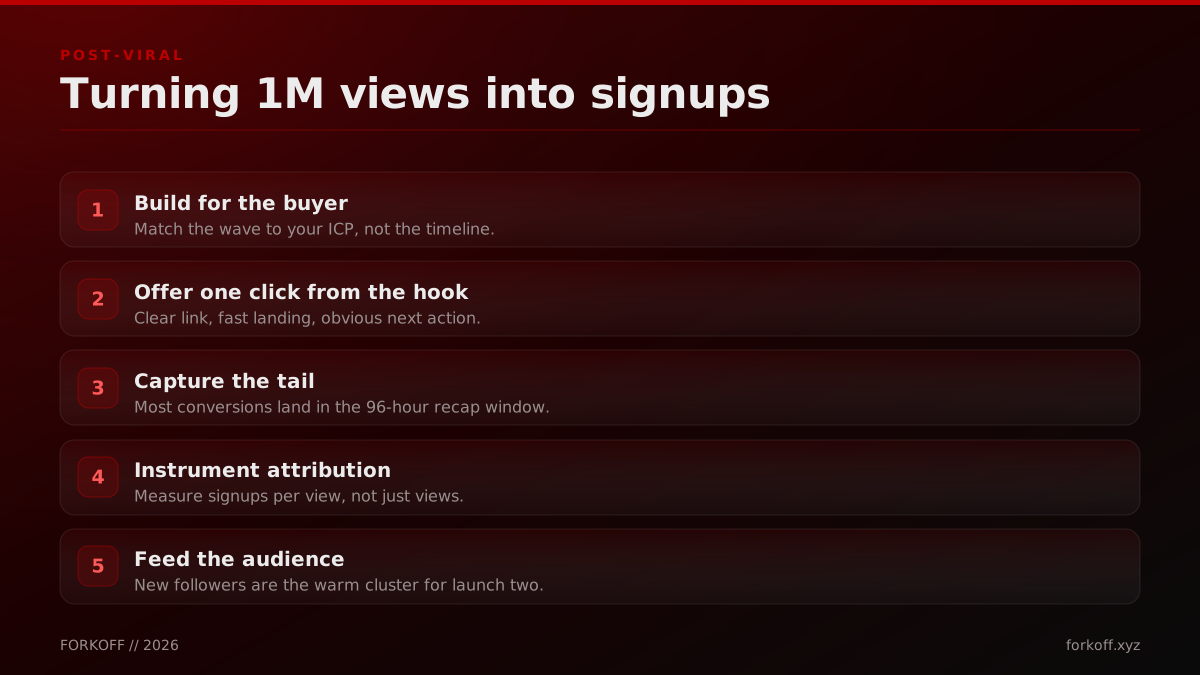
- Build the asset for the buyer, not the timeline. A hook that goes viral with the wrong audience produces views that never convert. Match the wave to your actual ICP.
- Put the offer one click from the hook. The reply-to-signup path has to be frictionless: a clear link, a fast landing surface, an obvious next action.
- Capture the tail, not just the spike. Most conversions happen in the 96-hour recap window, not the first hour. Route the recap post to a capture surface, not just applause.
- Instrument attribution. Tag the launch traffic so you can measure signups per view, not just views. If you cannot see conversion, you cannot improve it.
- Feed the audience, not just the metric. The followers a launch earns are the warm cluster for your next launch. Retention of the audience is what makes launch two easier than launch one.
This is exactly why our founder funnel service exists downstream of the launch: a viral asset with no funnel is a fireworks show. The three-ring distribution model is the compounding version of this idea, turning a one-time spike into a distribution system.
Rage-bait versus genuine value: is farming controversy worth it?
Controversy drives attention, and the algorithm rewards the replies it generates, but rage-bait carries a brand cost that usually outweighs the reach for a company that wants customers, not just eyeballs. The debate frame is a legitimate hook; deliberate rage-farming is a different, riskier thing. Choose provocation that invites real argument, not outrage that invites contempt.
This is a genuinely open debate on X in 2026, and it deserves an honest answer rather than a rule. On one side, YC's Chad IDE launch proved that engineered outrage can generate enormous attention (that launch pulled around 1.49M views largely off controversy). On the other, operators like Jordi Hays argued directly that "rage baiting is for losers," on the grounds that the attention it buys is the wrong kind and the brand damage compounds. The irony is instructive: Hays's anti-rage-bait post itself crossed 1.49M views, riding the exact debate-frame mechanics this guide describes.
Rage Baiting is for Losers
High-arousal emotion is the measured driver of sharing
In their study of roughly 7,000 New York Times articles, Berger and Milkman found that virality is partially driven by physiological arousal: content evoking high-arousal positive (awe) or negative (anger, anxiety) emotions was shared significantly more, while low-arousal content (sadness) was shared less, even controlling for how surprising, interesting, or practically useful the content was. This is the peer-reviewed basis for the hook patterns in this guide: a staked position or contradiction is not a gimmick, it is the emotional trigger the data says drives transmission.
Source: Berger and Milkman, What Makes Online Content Viral, Journal of Marketing Research 2012
Both are right, which is why the useful frame is a spectrum, not a switch:
- Provocation that invites argument (good). A staked position that thoughtful people will genuinely disagree with. It generates replies (the 75x signal) from people engaging in good faith. Hook pattern three (contradiction) and pattern six (debate) live here.
- Rage-bait that invites contempt (bad). Manufactured outrage designed to make people angry rather than engaged. It generates replies too, but from people dunking on you, and it attaches the wrong emotion to your brand at exactly the moment the most people are watching.
The tell is what the replies say. If your viral launch is full of "actually, I think you are wrong because..." you are provoking. If it is full of "this is the worst thing I have seen," you are rage-baiting, and you are teaching a million people to associate your product with a bad feeling. For a company that needs those viewers to become customers, that is a bad trade, no matter how large the view counter gets.
How many followers do you actually need, and the realistic 0-to-10K path
You do not need a big following to go viral, but you do need a real one, and the honest 0-to-10K path is three to six months of consistent replying and posting, not a single hack. The follower count is not a gate on virality; it is the pool your warm cluster is drawn from. A 400-follower account with 20 genuinely engaged accounts in its niche can fire W1. A 40,000-follower account with a dead audience often cannot.
The confusion comes from conflating two different questions. "Can I go viral with no followers?" is answered yes above: you borrow reach through waves and clusters. "Can I reliably launch product after product and have each one pop?" is a different question, and the answer there is that you want a warm base of a few thousand engaged followers, because that base becomes the reliable W1 seed for every future launch. Building that base is Paul Graham's do things that don't scale applied to distribution: the early, manual, unscalable relationship work is exactly what makes the later launches look effortless.
The most common unscalable thing founders have to do at the start is to recruit users manually. Nearly all startups have to.
Here is the realistic 0-to-10K path, from accounts we have watched build:
- 0 to 500 (weeks 1 to 6): reply, do not broadcast. Fifteen to twenty genuinely useful replies a day under bigger accounts in your niche. Almost all your early followers come from replies, not from your own posts.
- 500 to 2,000 (weeks 6 to 16): start posting your own threads and building-in-public updates 3 to 4 times a week, keep replying, and begin forming real relationships (the cluster) with peers at your level.
- 2,000 to 10,000 (months 4 to 8): run your first small launches to a warm base, ride a wave or two, and let the compounding kick in. Each viral moment adds followers who become the seed for the next one.
The mistake is treating 10K as the prerequisite for a launch. It is not. Ship your first launch at 2,000 engaged followers on a good wave and it can cross six figures of views. The base makes launch three easier than launch one, but you do not wait for it. If you want the base built for you while you build the product, that is the founder-side work our Twitter/X marketing team does.
A launch broken down step by step: reverse-engineering a viral video
Every repeatable viral launch has the same skeleton under it, and you can see it by reverse-engineering the ones that worked. When a founder analyzed 65+ viral X videos, the point was that the pattern is extractable: hook, structure, cadence, and distribution repeat across hits regardless of the product. Here is that skeleton mapped onto a single launch, so you can copy the shape rather than the surface.
Take the archetype the format wave produced, the polished 28-second launch video that crosses a million views. Reverse-engineered against this runbook, it looks like this:
- Seconds 0 to 1, the hook. The video opens on the product doing the thing, or on a one-line claim with a concrete number. No logo, no "we are excited." This is the one-second hook winning the read (visible-result or concrete-number pattern).
- Seconds 1 to 20, the retention spine. A tight demo or story, cut so there is a new beat every two to three seconds. This is not what makes it viral; it is what keeps the read once the hook has won it.
- Seconds 20 to 28, the payoff and the ask. The result lands, and the call to action is one clear line. The offer is one click from the post.
- The post text, the debate frame. The tweet copy stakes a small position or asks a question, because the copy has to generate the replies that the algorithm weighs at 13x to 75x.
- W1, the fired cluster. The warmed accounts reply in the first fifteen minutes with real commentary, and the founder answers every one.
- The tail, the recap. Two days later, a quote-tweet recap ("this launch crossed 1M, here is what happened") re-fires the asset and captures the conversions the first spike missed.
That is the whole machine in one asset. The founders who reliably clear 250K to 5M+ views per launch video are not luckier; they are running this skeleton on repeat, which is exactly why one of them can claim a shippable asset every month. Before you ship, run the asset against our launch video readiness checklist so the hook, the retention spine, and the payoff are all doing their job. Copy the skeleton, not the surface, and change the hook and the wave for each launch.
Why most launches flop: the five failure modes
Most launches that get ignored fail for a small set of repeatable reasons, and every one of them is upstream of the algorithm. The algorithm did not bury your post; your warm-up, your hook, or your timing did. Here are the five failure modes we see most often, and the fix for each.
- No warm-up. The account is cold, so its expected engagement rate is near zero and there is no cluster to fire W1. Fix: the 14-day warm-up, non-negotiable.
- A soft hook. The first line is "Excited to announce" and the first video frame is a logo. The read is lost in one second and nothing downstream matters. Fix: rebuild the asset around one of the six hook patterns.
- Launch and leave. The founder posts and walks away, so the 75x author-reply signal never fires and W1 goes flat. Fix: block the sixty minutes after posting to work the reply tab live.
- Cold start, no wave. The launch asks the audience to care from zero instead of riding a cluster that is already hot. Fix: lock a wave during warm-up and frame the launch as a contribution to it.
- Bought the spike. The founder panicked and bought views, which arrived flat, failed the correlated-growth gate, and got purged. Fix: seed real early conversation from a warmed cluster, never buy volume.
Notice that four of the five are decided before or during the first hour, not by post quality in the abstract. This is the whole thesis restated as a checklist: virality is an engineering problem, and the engineering happens in the warm-up and W1, not in the wording of a clever sentence. If your last launch flopped, run it against these five before you blame the algorithm.
X versus other platforms: why launch virality is different here
X is the only major platform where launch virality is driven by conversation weight rather than watch-time or completion rate, which is why the reply-and-quote mechanics in this guide do not transfer cleanly from Reels or TikTok advice. If you have been applying Instagram or TikTok virality tactics to your X launch, that is likely why it is not working.
The generic "how to go viral" advice is written for video-completion platforms, where the ranking signal is how long people watch and whether they finish. On X, the dominant signal is conversation: replies, quote tweets, and the author-to-replier loop. That single difference changes the entire tactical stack.
| Signal | X | Reels / TikTok | Implication for a launch |
|---|---|---|---|
| Dominant ranking signal | Weighted engagement (reply, quote, repost) | Watch-time, completion, re-watch | On X you engineer conversation, not retention curves |
| The critical window | First 30 to 60 minutes (W1) | First few hours to days | X rewards a dense first hour; you must be live for it |
| How small accounts break in | Borrow reach via replies + wave-riding | Sound/trend surfing + For You page luck | On X the path is deliberate, not luck-of-the-FYP |
| Author action that matters most | Replying back to repliers (reported ~75x) | Posting frequency + hook | On X the founder's live replies are a top signal |
| Monetization gate | 5M organic impressions / 90 days + 500 followers | Views + follower + watch thresholds | X's impression gate rewards raw reach explicitly |
Sources: reported weights from the open-sourced X ranking model (github.com/twitter/the-algorithm, 2023); X creator monetization eligibility (help.x.com). Platform mechanics evolve; treat the structural contrast, not the exact numbers, as the takeaway.
The practical lesson is that you cannot port a Reels playbook onto an X launch and expect it to fire. The hook transfers (attention is attention), but the distribution mechanics do not: on X you are engineering a conversation in a sixty-minute window, not a completion curve over days. Our X algorithm marketing playbook is the platform-specific version; use it, not generic social-media advice, for anything you launch on X.
How FORKOFF runs viral launches (and when to run one yourself)
We treat a launch as an engineering project: warm-up, asset, first-hour cluster, wave-ride, recap tail, and a RADAR authenticity receipt at the end. The runbook in this guide is the same one our product launch team runs for clients, and the reason we can run it is that we have measured what works across a real launch corpus instead of guessing. X is the velocity engine, but a full launch usually spans several surfaces at once, which is why we map the launch platforms beyond Product Hunt into the same week.
Here is where a partner earns its keep, and where you are better off running it yourself:
- Run it yourself when you have a genuine wave in your niche, a warm cluster you have actually built, and the hour to work W1 live. A founder with a real audience and a real hook does not need help; they need to execute the sequence.
- Bring in help when the warm-up is the bottleneck (you have no cluster and two weeks is not enough), when you need the reach borrowed through KOLs and reply networks you do not have, or when the launch has to convert and not just spike. That is the paid-distribution and KOL marketing layer, sitting on top of your organic W1.
Operator noteThe FORKOFF clipping network has processed 5B+ views across client launches and clips., FORKOFF clipping network 2026
Our first-party edge is the measurement. Because we track launches against the RADAR bands, we can tell you before launch day whether your account, your wave, and your cluster can plausibly produce a first-hour velocity that crosses into out-of-network fan-out, and we can prove after the fact that the result was organic. That is the difference between "we posted and hoped" and "we engineered a launch and here is the receipt." A founder documented the same underlying reality when he shared a launch-video formula that reliably clears 250K to 5M+ views per asset: the point was never one lucky post, it was a repeatable machine.
The NEW Way To Get 5M Impressions On X/Twitter
Jacob C. Edmunds
The mechanics behind crossing 5M impressions on X.
The bottom line
Going viral on X in 2026 is not luck and it is not a clever sentence. It is a machine built on how the X algorithm marketing playbook breaks down how the ranking model actually scores a post: a 14-day warm-up that builds a cluster and locks a wave, a hook-first asset that earns the read in one second, a first-hour velocity window where 20 to 40 weighted engagements tip the algorithm into out-of-network fan-out, a wave you ride instead of a cold start you fight, and a 96-hour recap tail that compounds the win. The verified 1M+ launches we track (MaveHealth 2.61M, Composio 2.05M, Lica 1.44M) all ran that machine, all for free, and all pass the RADAR authenticity test.
The two things most guides skip are the two things that matter most: the warm-up that makes the first hour possible, and the authenticity test that proves the result was real. Get both right and the million views become an output you can produce on purpose and defend afterward, not a spike you hope for. Buy the spike instead and X will find it, purge it, and leave you worse off than if you had never launched.
If your next launch has to cross a million views and convert, not just spike, that is the exact engineering problem we solve. Book a call and we will map your warm-up, your wave, and your first-hour cluster, and tell you honestly whether the launch can get there.


![How to Make a Launch Go Viral on X: The 5-Lever Playbook [2026]](/blog/covers/how-to-make-launch-go-viral-on-x-2026-cover.jpg)