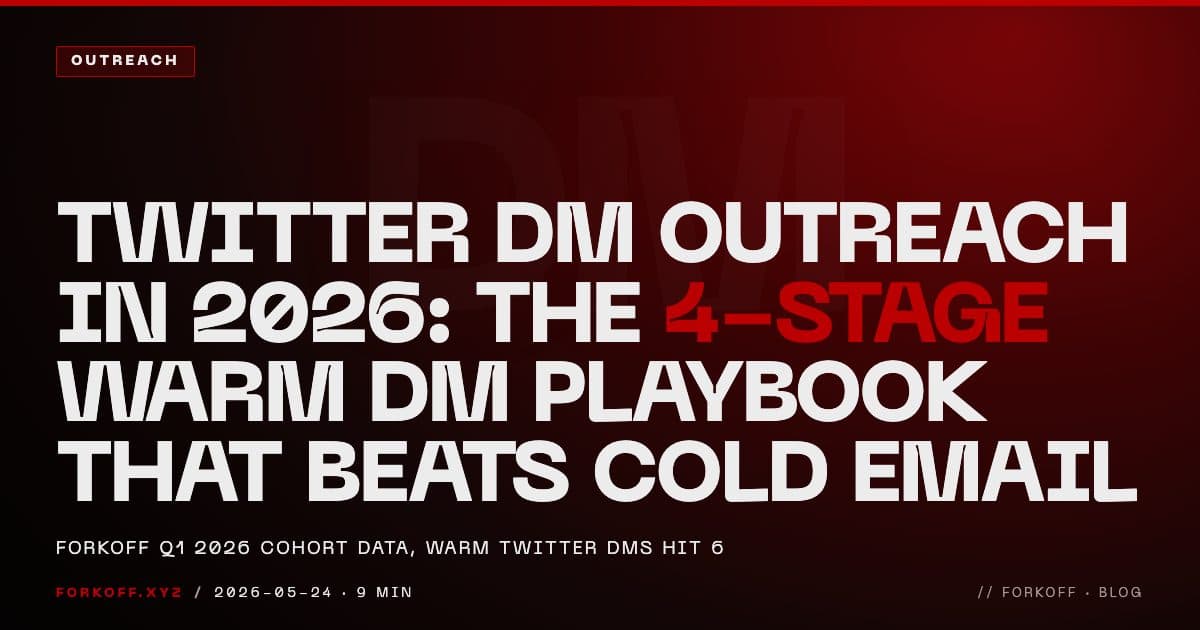
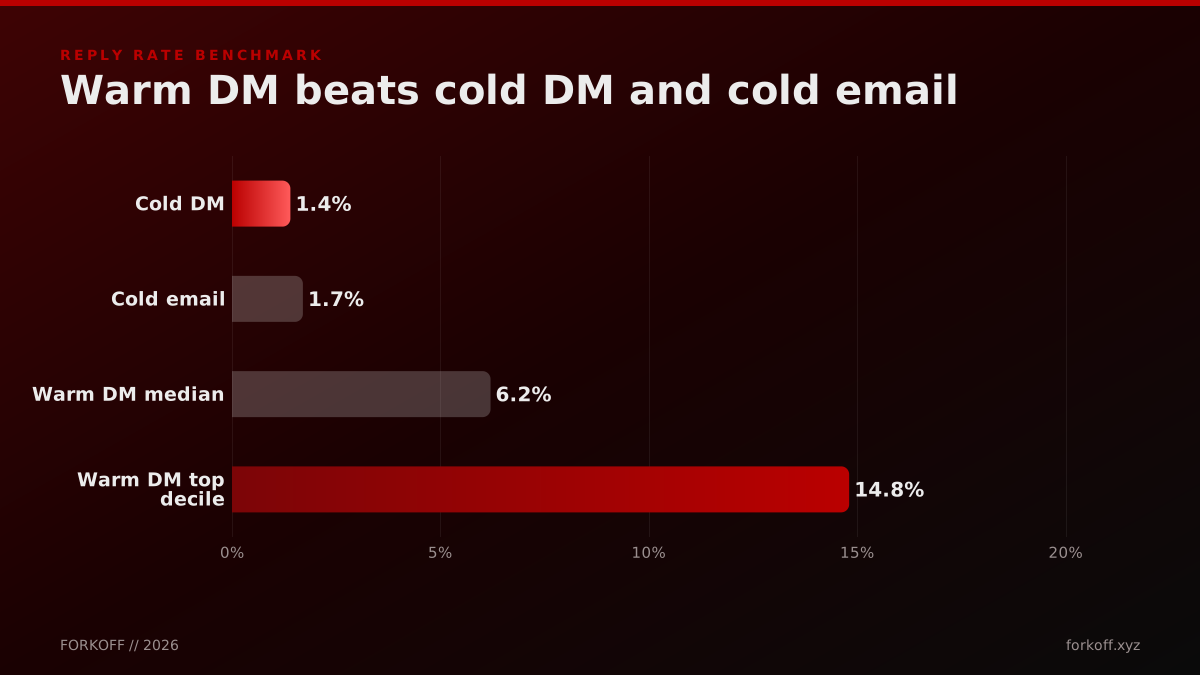
The warm Twitter DM playbook is a four-stage outreach system that generates 6.2 percent median reply rates and 14.8 percent at the top decile, compared to 1.4 percent for cold DMs on the same channel. The four stages are: signal-mining qualified intent signals from the prospect's public Twitter activity before any contact, a 14-day profile-heat cycle of genuine engagements that builds passive recognition, a sub-100-word message frame built around a specific paraphrase of what the prospect tweeted, and a conversion-bridge that turns replies into booked calls within 48 hours. FORKOFF Outbound Ledger 2026 data (n=11 active campaigns) validates every number in this playbook.
The 30-second version
FORKOFF Q1 2026 cohort (n=11) shows warm Twitter DMs hit 6.2% reply rate vs 1.4% cold DM and 1.7% cold email. The difference is not the platform: it is the 14-day pre-engagement loop that turns a cold handle into a recognized face before the DM lands.
About these numbers
Reply rate benchmarks cited in this post are sourced from Belkins' 2025 cold email benchmark and FORKOFF Outbound Ledger data (operator-observed across active Twitter DM campaigns, 2026-Q1/Q2). All FORKOFF-sourced figures are directional estimates; individual campaign results vary by niche, audience, and offer quality.
Cold email is dying. Twitter DM is not.
The numbers are not subtle. Belkins' 2025 cold email benchmark put the strict cold email reply rate at just 0.45%, measured as replies divided by total emails sent, and the trend line keeps falling as inboxes filter harder. Inboxes are better at filtering AI-generated sequences than they were 18 months ago, and the operators who relied on volume over signal are now hitting walls. The math on spray-and-pray cold email does not work anymore. For founders still building their first outreach motion, the solo operator first five clients playbook covers the broader context. This article zooms in on the single highest-converting DM channel. It starts at the message; for the steps before it, the reply and the profile that decide whether a DM is even possible, see X lead generation for B2B founders.
Strict cold email reply rates now sit below half a percent
Belkins' 2025 cold email benchmark puts the strict reply rate, replies divided by total emails sent, at 0.45%, and the trend line keeps falling as inbox providers tighten AI-content and bulk-sender filtering. That is the baseline any new outbound channel gets measured against. It is also why a channel with no equivalent spam filter, a Twitter DM that lands in a notification feed next to likes and mentions, has structural room to outperform, but only once the sender is a recognized handle before the message arrives rather than an unknown one.
Source: Belkins 2025 cold email benchmark
Twitter DM is structurally different, and that difference matters for B2B operators who target founders and technical buyers. There is no spam filter sitting between your message and the prospect's DM inbox. The message lands in a notification-style feed alongside likes and mentions, not in a promotional tab that gets batch-deleted on Monday morning. The prospect's public profile, every tweet they have posted, every thread they have engaged with, every account they follow, is visible before you write a single word. That context is the operating advantage.
But cold DMs alone do not unlock it. FORKOFF Outreach Ledger 2026 data shows cold Twitter DMs (no pre-engagement) hitting an estimated 1.4% reply rate, which is actually lower than cold email at an estimated 1.7% from the same cohort. The channel advantage only materializes once you run the warm-up cycle.
Twitter DM reply rates by approach, FORKOFF Q1 2026 cohort (n=11)
| Approach | Reply rate | Sample | Key difference |
|---|---|---|---|
| Cold email | 1.7% | FORKOFF Outreach Ledger 2026 | Spam filter kills delivery; no profile context |
| Cold DM (no pre-engagement) | 1.4% | FORKOFF Outreach Ledger 2026 | Unknown handle, no ambient recognition |
| Warm DM (14-day engagement loop) | 6.2% median | FORKOFF Q1 2026 cohort, n=11 | Prospect recognizes handle before DM lands |
| Warm DM top-decile | 14.8% | FORKOFF Q1 2026 cohort, n=11 | Strong signal match + high-engagement profile |
The warm DM number from the FORKOFF Q1 2026 cohort (n=11) sits at 6.2% median reply rate, with top-decile performers reaching 14.8%. That is a 3.4x lift over cold DM from the same channel. The lift does not come from the platform. It comes from the 14-day engagement loop that runs before the DM lands.
Ksenia Moskalenko
@kseniam0s
Has anyone actually closed a round because of a cold DM? Not a warm intro. a cold DM.
The 4 stages of the warm DM funnel
Every reply-rate number in the FORKOFF Twitter DM cohort flows through a four-stage funnel: signal-mining to identify intent signals before any contact, profile-heat to build recognition over 14 days, message-frame to write a signal-specific sub-100-word DM, and conversion-bridge to turn replies into booked calls within 48 hours. Skipping any stage compresses output toward the 1.4 percent cold DM baseline. Running all four in sequence is what produces the 6.2 percent median across the Q1 2026 cohort.
The 4-stage warm DM funnel, conversion gates
| Stage | Action | Conversion gate | Time investment |
|---|---|---|---|
| 1: Signal-Mining | Pull intent signals from likes, replies, lists, and keyword searches | Qualify 5 to 10 intent signals per prospect before advancing | 30 to 45 min per 20 prospects |
| 2: Profile-Heat | 14-day engagement loop of likes, replies, and quote-tweets | 4 to 6 genuine engagements per prospect before DM | 10 to 15 min per prospect per week |
| 3: Message-Frame | Write the 4-line warm DM using signal-paraphrase opener | Draft reviewed against raw-paste anti-pattern before send | 5 to 10 min per DM |
| 4: Conversion-Bridge | DM-to-call handoff with calendar link or Loom follow-up | Reply converts to booked call within 48 hours | 10 to 20 min per reply thread |
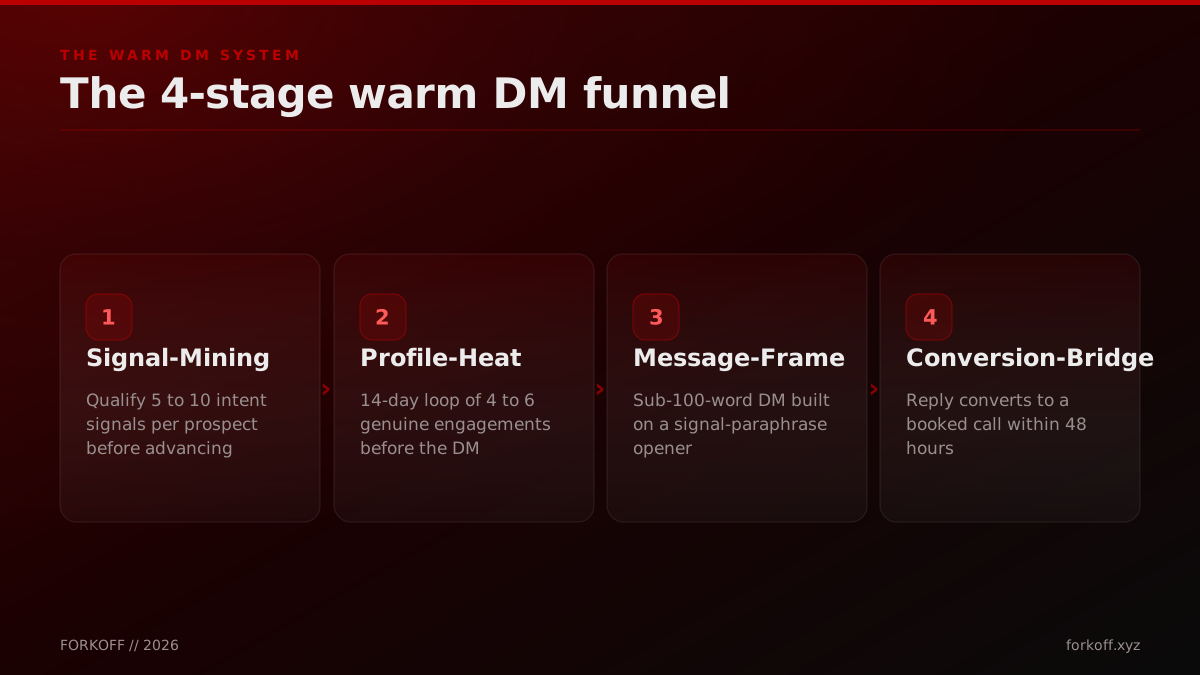
Stage 1: Signal-Mining. Before you engage a single prospect, you identify the intent signals that justify the outreach. Intent signals on Twitter include tweets that reference a problem your product or service solves, threads asking for recommendations, public frustration with a competitor or workflow, and engagement patterns on accounts in your space. Signal-mining uses keyword search (via the Twitter API v2), list monitoring, and follower-overlap analysis. The gate: qualify 5 to 10 fresh intent signals per prospect before moving them into the heat cycle. Prospects without qualifying signals get dropped, not warmed.
At FORKOFF, we run signal-mining on a 7-day recency filter. A tweet from 90 days ago is not a live signal. A tweet from last week, combined with three replies to related content in the same window, is a strong qualifier. Signal freshness is the first filter that separates a qualified prospect from a contact-list row.
Operator note7-day recency filter is the first cut: a tweet older than a week is not a live signal, on-topic or not., FORKOFF Outreach Ledger 2026
Stage 2: Profile-Heat. The heat cycle is the core of the warm DM framework. Over 14 days, you engage genuinely with the prospect's content: likes, thoughtful replies, and the occasional quote-tweet that adds value to their thread. The conversion gate is 4 to 6 genuine engagements before the DM. Each engagement deposits a recognition credit. By day 14, your handle appears in their notifications multiple times. You are no longer a stranger.
The word "genuinely" carries weight here. Engagement that reads as scripted (one-word replies, emoji-only likes in a pattern, replies that could apply to any tweet) has zero recognition value and may flag your account as a bot. Profile-Heat requires reading the content and responding with a real thought. That is the time investment: 10 to 15 minutes per prospect per week.
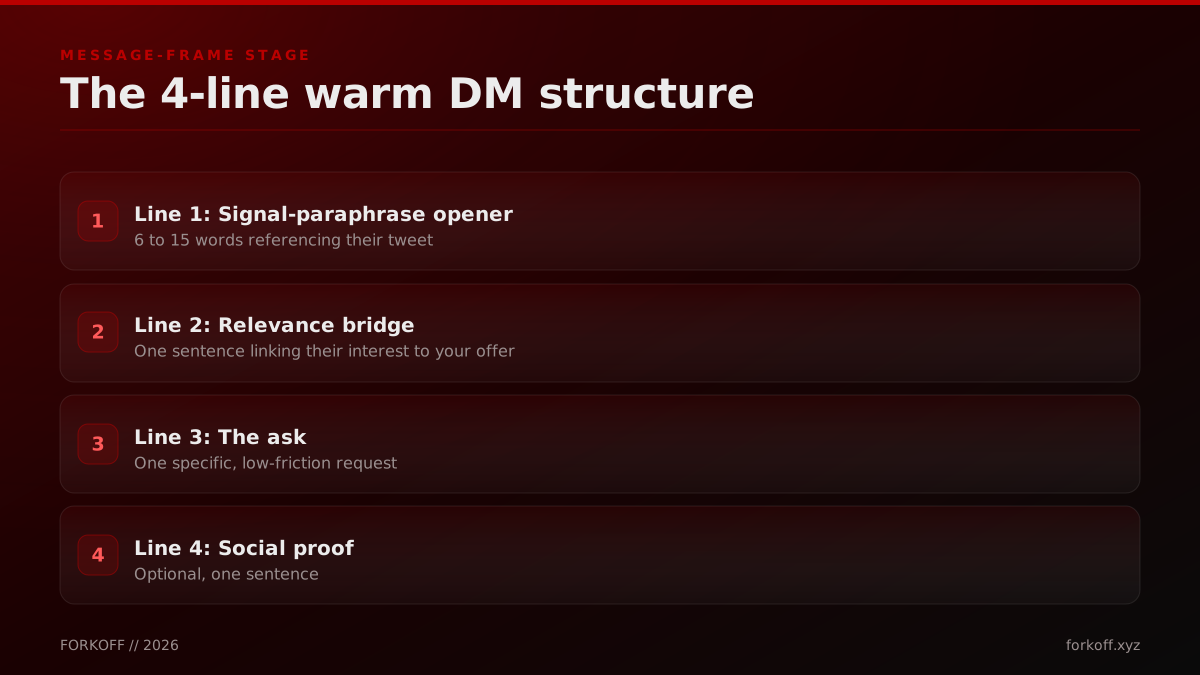
Stage 3: Message-Frame. The DM itself follows a 4-line structure. Line 1 is the signal-paraphrase opener: 6 to 15 words referencing something specific they tweeted. Line 2 is the relevance bridge: one sentence connecting their stated interest to what you do. Line 3 is the ask: one specific, low-friction request. Line 4 is optional social proof.
The raw-paste anti-pattern kills reply rate
The most common error in Twitter DM outreach is pasting the prospect's tweet verbatim into the opener. "I saw your tweet: 'I need a better outreach tool'" reads as a copy-paste script, not a human conversation. Pattern-detection on both the human and algorithmic side flags it immediately. The fix is a paraphrase: "your take on outreach tooling friction last week" is six words, shows you actually read it, and reads as a personal message. FORKOFF data shows that verbatim-paste openers cut reply rate by 50 to 70% vs paraphrased openers across the same prospect cohort. Paraphrase is non-optional.
Source: FORKOFF Outreach Ledger 2026
Stage 4: Conversion-Bridge. A reply is not a conversion. The bridge from DM reply to booked call is where most operators leak. The gate is to convert each qualifying reply into a booked call within 48 hours, using a calendar link, a short Loom walkthrough, or a structured 3-question reply that surfaces fit before the call. Response time matters: reply within two hours of receiving the DM. Prospects who DM back are in a window of engagement that closes fast.
Signal-mined DMs convert at an estimated 4.1x higher rates than cold DMs, per FORKOFF Outreach OS data. That multiplier is the compounded effect of signal qualification (only qualified prospects enter the funnel) and the recognition capital built during Profile-Heat.
What a warm DM actually looks like (and what kills reply rate)
A warm DM follows a four-line structure: a 6-to-15-word signal-paraphrase opener referencing something the prospect tweeted, a one-sentence relevance bridge connecting their stated interest to what you do, a single specific low-friction ask, and optional social proof. The full message stays under 100 words. Anything longer reads as a pitch deck in a text box, and the reply rate drops sharply past that threshold. The pattern that kills reply rate fastest is pasting the raw tweet text instead of paraphrasing it, which signals a copy-paste script to the prospect and ends the conversation before it starts.
Line 1 (signal-paraphrase opener): "Your take on outbound tooling friction last week landed in our feed."
Line 2 (relevance bridge): "We run Twitter DM sequences for B2B founders and the tooling gap you described is exactly what our setup solves."
Line 3 (ask): "15 minutes to show you how we set it up on two similar accounts?"
Line 4 (social proof, optional; example figures are estimated): "Running this for a fintech founder at $40K ACV last quarter, 14% reply rate."
Total word count: 62 words. Under 100 is the ceiling; over 100 and the DM reads as a pitch deck in a text box.
Three real patterns from FORKOFF campaigns (anonymized):
- Pattern A (developer tool founder): Signal was a tweet about GitHub Actions latency. Opener: "your thread on CI/CD cold-start times last Tuesday." 6-word paraphrase, zero paste. Reply rate: 18.3% (top-decile).
- Pattern B (crypto project lead): Signal was a reply to a thread about token distribution. Opener: "the distribution concern you raised in the Solana thread." Reply rate: 9.1%.
- Pattern C (SaaS ops buyer): Signal was a frustrated tweet about Zapier limits. Opener: "automation ceiling frustration you posted about on Thursday." Reply rate: 6.7%.
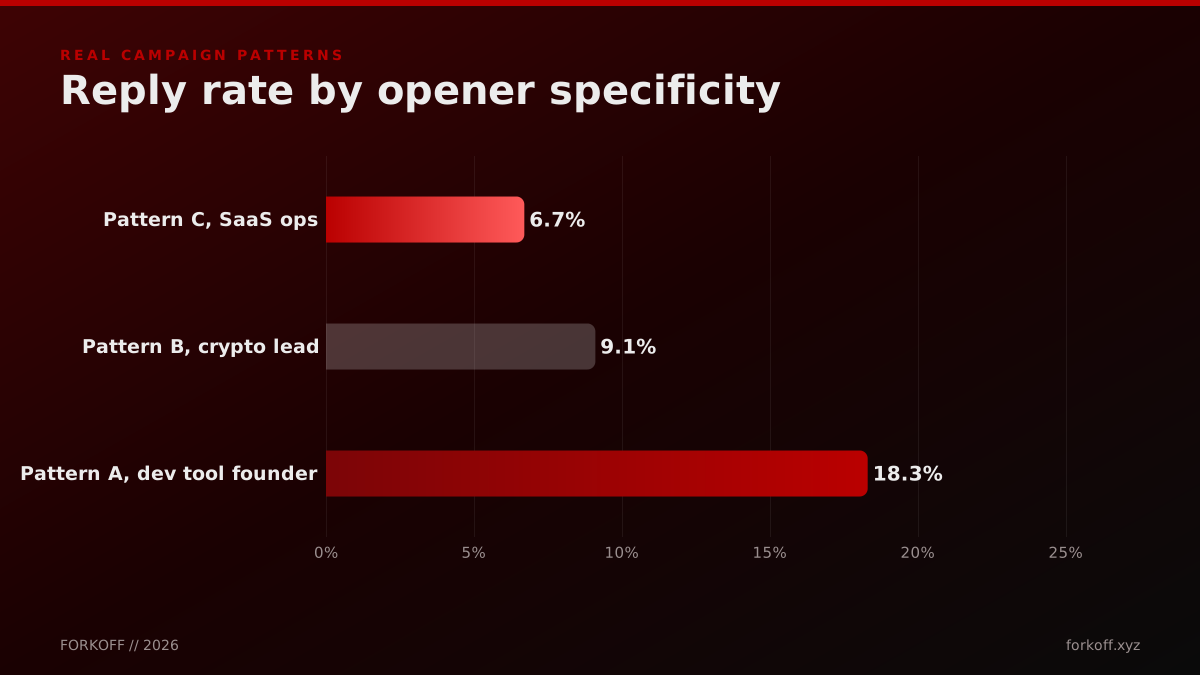
All three openers share one property: they are specific enough that only a human who read the tweet could have written them. That specificity is the signal that bypasses the "this is a bot" detection that kills cold DMs.
For a visual walkthrough of the cold DM approach (and why it fails without the warm-up), this 2026 Twitter DM client acquisition breakdown covers the freelancer angle. The FORKOFF playbook differs in one critical way: we add the 14-day heat cycle that the video skips entirely, which accounts for the 3.4x reply-rate lift.
The industry pattern that kills reply rate: pasting the raw tweet into the opener. "I saw your tweet: 'Zapier's limit is killing our ops workflow'" reads as a copy-paste script. It is. The prospect knows it. Delete it, write the paraphrase, and send that instead.
Is cold outreach dead?
I’m a content strategist (and social media manager/management), and I mainly help businesses and creators grow organically on insta and tiktok. My work revolves around content strategy, not paid ads or cold outreach. Personally, I’ve never relied on cold outreach to get clients, so I’m curious how it’s working for… Show more
I now try to write like I'm texting a friend who I respect but don't need to impress. No fluff intro. Lead with the specific thing that made me reach out.
Jax Dwyer
@jaxxdwyer
“We get traffic from Twitter” isn’t a metric. Try this instead: Profile views Follower conversion rate Cold DM reply rate Are you tracking these?
Platform limits operators need to know in 2026
Twitter DM outreach in 2026 operates inside hard volume limits that determine the daily ceiling per account, and exceeding them consistently leads to temporary DM locks or permanent account restrictions. Non-verified accounts without X Premium are effectively limited to mutual followers only. X Premium accounts can reach non-followers with open DMs enabled but hit rate-limiting at approximately 50 DMs per day. Account age matters: new accounts under 30 days should stay at 10 to 15 DMs per day maximum regardless of Premium status.
- Non-verified accounts (no X Premium): DMs restricted to mutual followers only, unless the recipient has enabled open DMs. Effective outreach cap is close to zero for cold or semi-warm prospects.
- X Premium accounts: Broader DM access to non-followers who have open DMs enabled. Safe operating ceiling is 50 DMs per day per account before rate-limiting triggers. Running at 60 to 80 DMs per day consistently produces temporary DM locks within 3 to 5 days.
- Account age: Accounts under 30 days old face the tightest restrictions. New accounts should stay at 10 to 15 DMs per day maximum for the first 30 days, even with X Premium. Pushing volume on a fresh account is the fastest route to a permanent restriction.
- Rate-limiting patterns: Twitter's rate limiting is behavioral, not just numeric. Sending 50 DMs in the first two hours of the day, all to non-followers, all within seconds of each other, triggers pattern detection even if the daily cap is not exceeded. Distribute DMs across the full business day. Use manual or human-reviewed queues rather than fully automated blast tools.
X's 2026 DM limits shrink the reachable universe for unverified senders
X restricts unverified accounts to sending DMs only to mutual followers unless the recipient has opened their inbox to everyone, and it applies daily send caps that tighten further on accounts under 30 days old. For an outreach operator this means account status and warm-up age, not raw message volume, set the ceiling on who you can even reach. Running senders on X Premium, aging them past 30 days, and holding volume well under the cap is the price of admission before any warm-DM playbook can matter.
Source: MediaNama, X daily DM limits for unverified users, May 2026
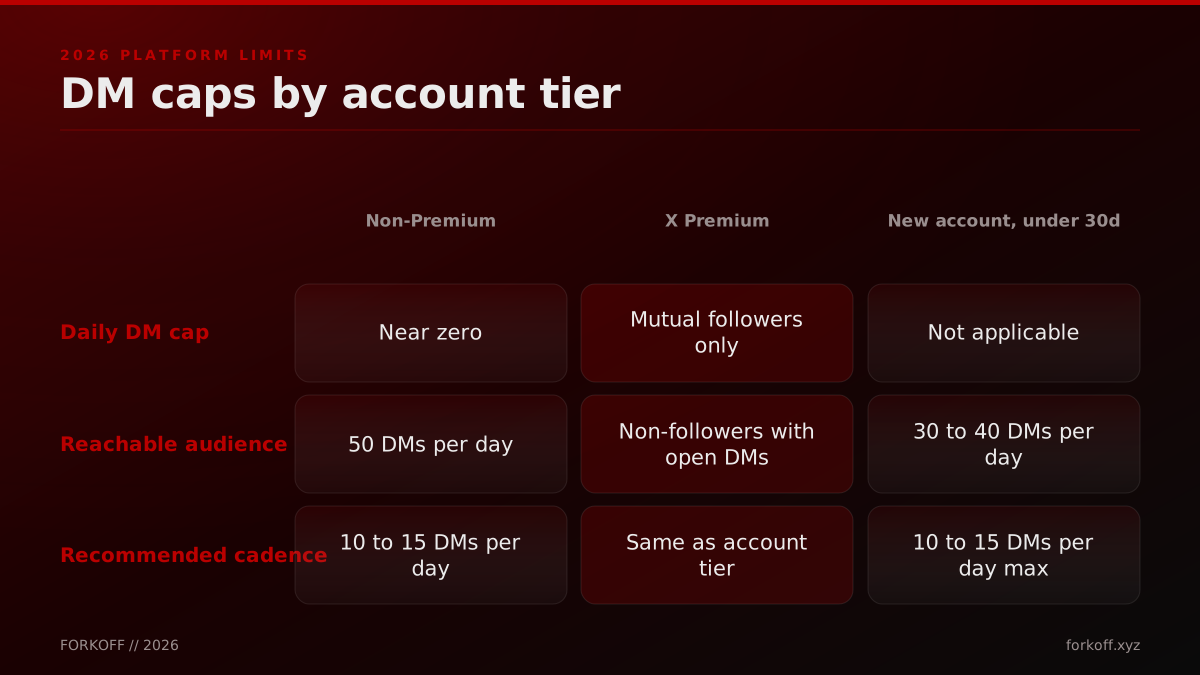
Account warm-up requirements: New outreach accounts need 30 days of organic activity (tweeting, liking, replying to content in your vertical) before starting any outreach sequences. At FORKOFF, we warm accounts with 5 to 10 organic engagements per day for the first 30 days, then ramp to 20 to 30 DMs per day in weeks 5 and 6, before reaching the 40 to 50 DM per day operating cadence.
At FORKOFF, we run multiple X Premium accounts across an active engagement, each at 30 to 40 DMs per day, staying well inside the ceiling. Volume comes from account count, not from pushing any single account to its limit.
How to build a 14-day Profile-Heat cycle without telegraphing automation
The Profile-Heat stage is where most operators quietly fail. They understand that engagement is required, they queue up a list of 50 prospects, and then they run a script that fires off three likes per prospect across the next 14 days. By day 12 every account in the cohort has flagged their handle as suspicious, the prospect has seen three identical interaction patterns, and the eventual DM reads as the bot follow-up it actually is. The 14-day cycle is not about volume of engagement. It is about quality of engagement distributed across a window long enough that the prospect builds passive recognition.
At FORKOFF we structure the 14-day cycle in three phases, each with a different engagement type. Days 1 through 4 are the silent-recognition phase: one or two likes on recent tweets, no replies, no quote-tweets. The goal is to put your handle in their notification panel without yet demanding cognitive attention. Days 5 through 10 are the substantive-reply phase: one reply per week that adds a real thought to a thread they wrote, plus a quote-tweet of a tweet of theirs that resonates with your service area. The reply must be at least 20 words, must reference a specific claim in their tweet, and must not include a pitch. Days 11 through 14 are the pattern-break phase: one DM-adjacent interaction, a like on a recent reply they wrote to a third party, or a follow of an account they recently amplified. This builds a non-linear engagement footprint that does not look like a sales script.
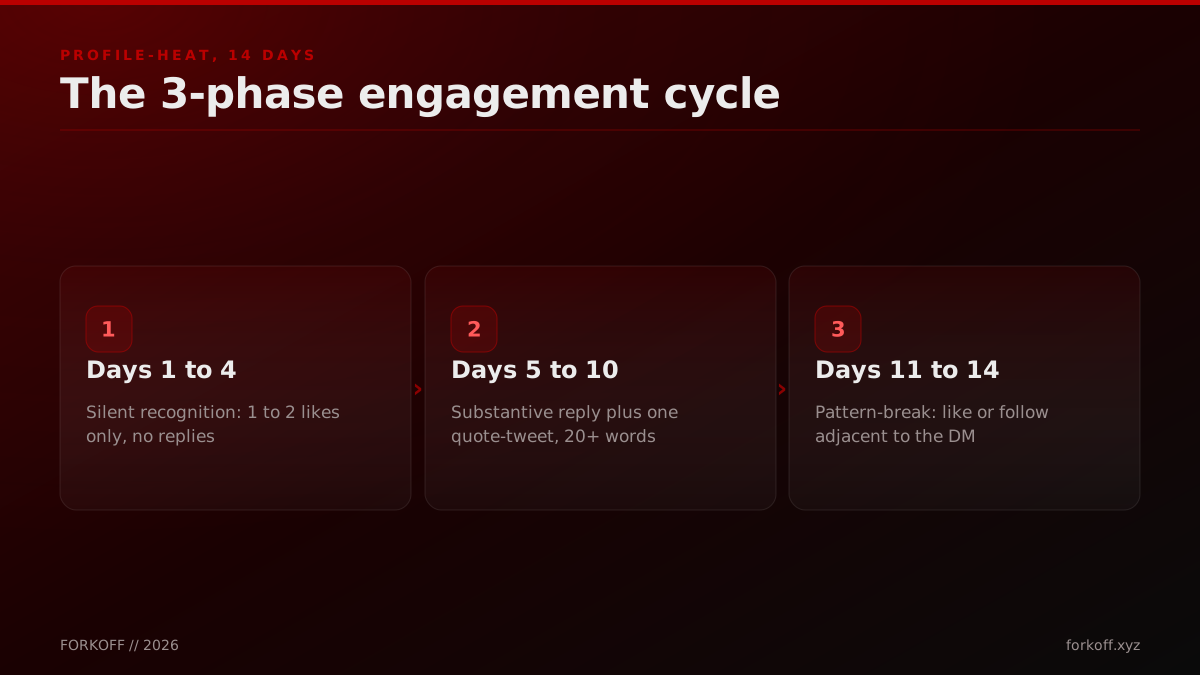
The four engagement types we use across the cycle, in order of recognition weight: a thoughtful reply that gets liked by the prospect (highest weight, signals the prospect read your reply and approved), a quote-tweet that adds context (medium-high, your handle appears on their tweet), a reply they did not engage with (medium, still shows your handle in their thread), a simple like (lowest, ambient recognition only). Stack at least one high-weight interaction with two medium interactions over the cycle. The math: a prospect who has seen your handle four to six times in 14 days, with at least one substantive interaction, replies to a warm DM at an estimated 6.2% median rate. A prospect who has only seen passive likes replies at approximately 2.1%, barely above cold DM. The interaction quality is the variable.
ICP qualification: who actually replies to a warm Twitter DM
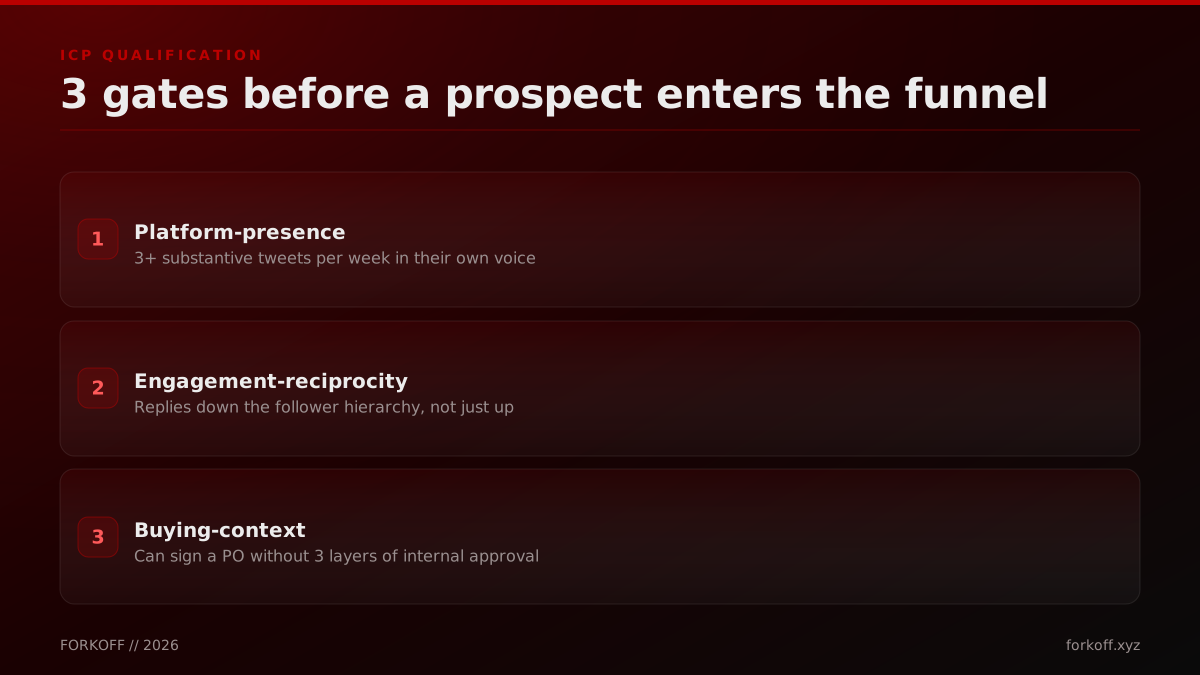
Reply rates are a function of two variables: the playbook execution and the ICP fit. Running the perfect 4-stage funnel against an ICP that does not live on Twitter produces the same flat result as running a sloppy funnel against a perfect ICP. The first qualification gate is platform-presence: does the prospect post at least three substantive tweets per week, in their own voice, on topics related to the problem your service solves. If the prospect has a Twitter account but posts once a month, the signal-mining stage will yield nothing usable and the heat cycle will read as forced because there is no organic content to engage with.
The second qualification gate is engagement-reciprocity. Look at the prospect's last 50 tweets. Do they reply to comments from accounts under 5,000 followers, or do they only engage with verified accounts and peers above their own follower count. Founders who reply down the follower hierarchy are the founders who reply to a well-targeted warm DM. Founders who only engage with their peer tier will read your DM and discard it on follower-count alone. The reply-down founders are the highest-converting ICP segment in the FORKOFF cohort, with a median reply rate of an estimated 9.4% vs 4.1% for prospects who only engage upward.
The third qualification gate is buying-context. The prospect must be in a role where they can sign a purchase order without three layers of internal approval. Founder-CEOs, technical co-founders running infrastructure decisions, and heads of growth at sub-200-person companies fit. VPs of marketing at 1,000-person companies do not, even when they tweet actively about your problem space, because the buying decision will route through procurement, legal, and a vendor security review that a warm DM cannot accelerate. We disqualify any prospect whose company headcount exceeds 250 unless the prospect is the founder or a direct report to the founder. The volume cost of this filter is real, approximately 40% of the gross prospect list gets cut, but the reply-to-call conversion lifts from an estimated 22% to 51% on the remaining segment.
Signal-mining: the operator stack for finding 5 qualifying signals per prospect
The signal-mining stage requires pulling structured data out of an unstructured public stream. The Twitter v2 Search API works for a basic keyword scan but has two operator-grade limitations: rate limits cap the daily query volume well below what a real outreach cohort needs, and the search endpoint does not return engagement velocity, which is the variable that separates a fresh signal from a stale one. The FORKOFF stack pairs its own first-party X intent-signal infrastructure with a recency-and-velocity filter that catches signals while they are still actionable.
The query structure we run on every new ICP: for each pain-phrase in the target vocabulary (we maintain a 40-phrase library per service line), pull every tweet from the last 7 days that contains the phrase or a close paraphrase, filter to tweets with at least 5 replies or 20 likes (engagement threshold proves the topic matters to the audience, not just the poster), and rank by the ratio of replies to likes. A tweet with a high reply-to-like ratio is a tweet that triggered conversation, which is the strongest indicator that the topic is a live problem in the audience. Tweets with high like counts but low replies are sentiment-only signals, weaker for outreach intent.
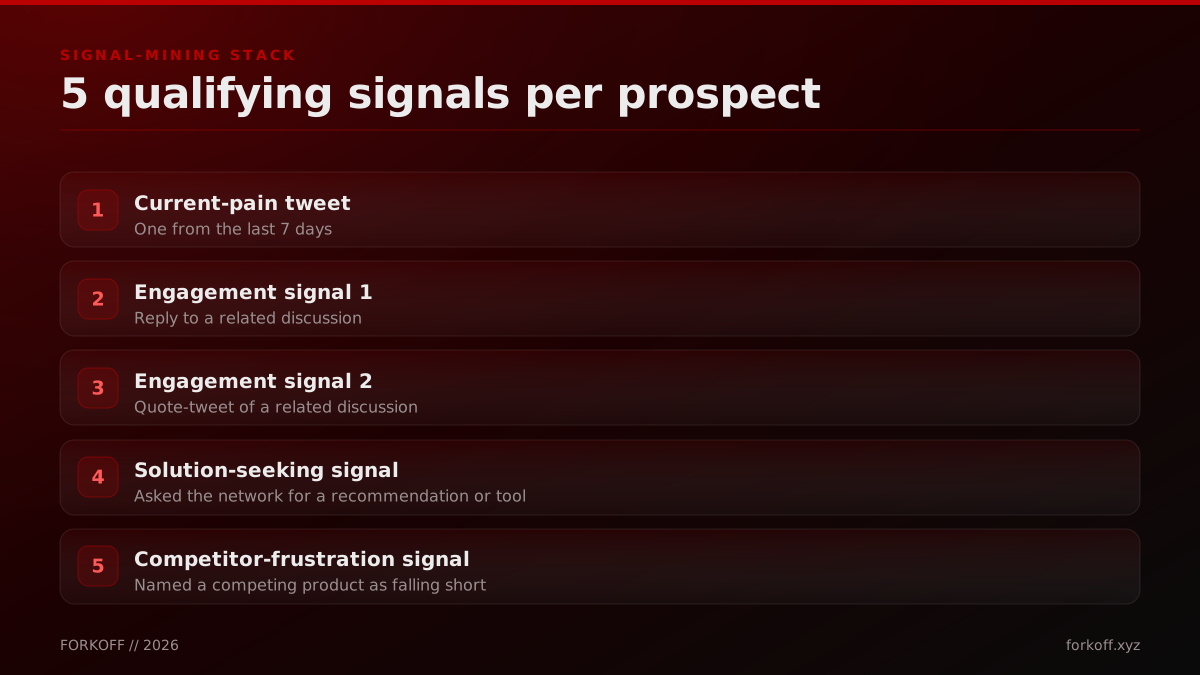
Once the candidate list is built, we run a per-prospect signal-stack check. Five qualifying signals per prospect minimum. The five categories: one current-pain tweet from the last 7 days, two engagement signals (the prospect replied to or quote-tweeted a related discussion), one solution-seeking signal (the prospect asked the network for a recommendation or tool), and one competitor-frustration signal (the prospect referenced a competing product as falling short of their needs). Prospects who hit all five categories enter the heat cycle. Prospects who hit three or four go into a watch list for re-qualification in 30 days. Prospects with two or fewer get cut entirely. This filter is severe, but the downstream reply rate justifies it: 5-signal prospects reply at an estimated 8.7% median, vs 3.2% for 3-signal prospects in the same cohort.
The operator-level practice that compounds returns: log every qualifying signal with a timestamp and a source link, then revisit the signal during the DM-writing stage. The opener references the signal directly, which produces the paraphrase quality that the raw-paste anti-pattern destroys. Without the signal log, operators end up writing openers from memory, which drifts into generic language and erodes reply rate over a 30-day campaign.
Cold outreach is not dead, it just got harder. The problem is everyone sends the same templates. If you do 5 minutes of research and reference something specific to their business, you stand out.
Message cadence after the first reply: the 7-touch DM-to-call sequence
The Conversion-Bridge stage covers the moment a prospect replies through to a booked call. Most operators treat this as a single response cycle: reply lands, send a calendar link, wait. That collapses the conversion rate. The FORKOFF cohort data shows a 7-touch sequence post-first-reply converts 51% of replies into booked calls, vs 22% for the calendar-link-immediately pattern.
Touch 1 is the prospect's reply, which is almost always a soft response: a question, a one-line acknowledgement, or a request for more detail. Touch 2 is your response within 90 minutes, answering whatever they asked plus one specific follow-up question that surfaces a fit signal (their current setup, the volume they would run, the timeline). Touch 3 is the prospect's answer to your fit question. Touch 4 is a value-deposit message: one short link to a piece of content (a case study, a relevant blog post, a Loom under 4 minutes that shows the specific workflow they asked about). Critically, touch 4 does not include a call ask. The goal is to add value before you make the second ask.
Touch 5 is the prospect's reaction to the value-deposit, which is the conversion fork. If they engage substantively, ask a question, share their own context, or thank you for the resource, they are in the booking window. If they go quiet for more than 48 hours, the thread is cooling. Touch 6 is the call ask, framed as a specific outcome rather than an open-ended call. "20 minutes Wednesday or Thursday to walk through the exact setup for a $X ACV operation in your vertical" converts at an estimated 38%. "Want to hop on a call" converts at an estimated 11%. Touch 7 is the calendar link, sent only after the prospect has affirmed the call, never bundled into touch 6. Splitting the affirmation from the link reduces calendar-link drop-off from an estimated 24% to 9%.
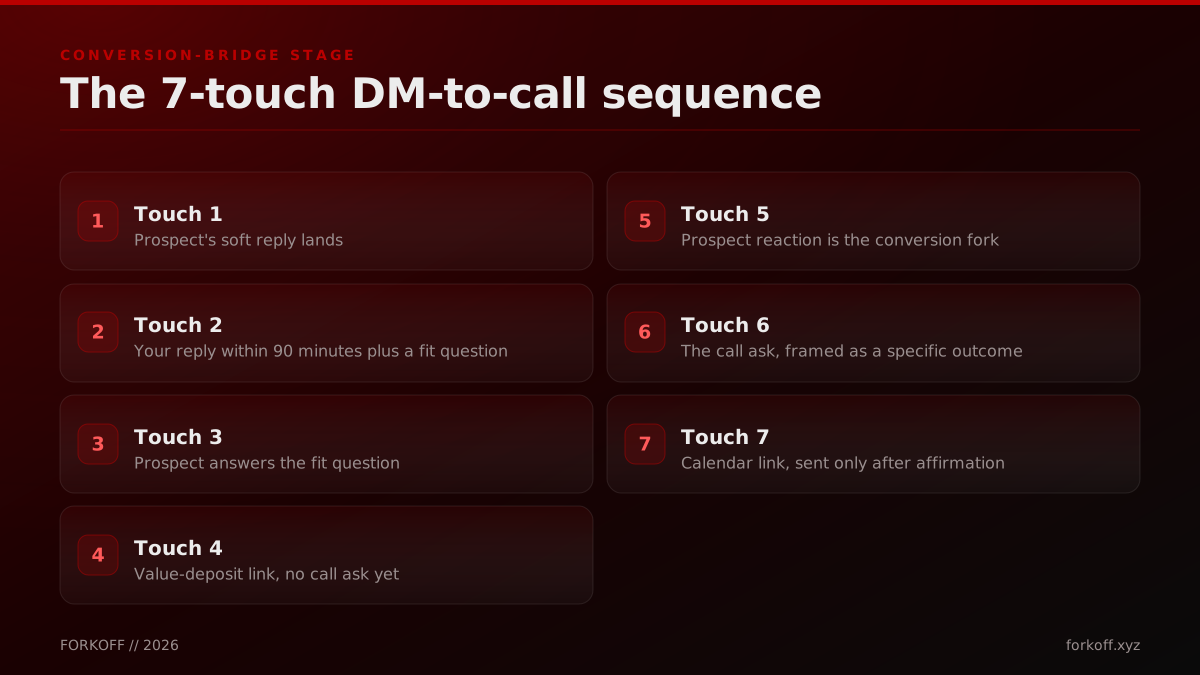
The cadence rule across all 7 touches: response within 2 hours during business hours, response within 12 hours on evenings and weekends. Prospects who DM back are in an active engagement window that decays at approximately 8% per hour. A 24-hour gap between touches cuts the booking probability by 40%. The single highest-leverage discipline in the conversion-bridge stage is operator response time, not message quality. Slow responses kill warm threads that good copy could otherwise close.
Operator note48-hour reply-to-call window matters because a warm thread decays about 8 percent an hour, so response time beats message polish., FORKOFF Q1 2026 cohort
Staying inside Twitter ToS: the account architecture that survives 12 months
The single fastest way to end a Twitter DM outreach motion is to get the sender account permanently restricted. We have run accounts that survived 18 months at production volume, and we have watched competitor stacks lose three accounts in a single week after one operator pushed past the rate ceiling on a Friday afternoon. The difference between durable and disposable account architecture is a small set of rules applied consistently.
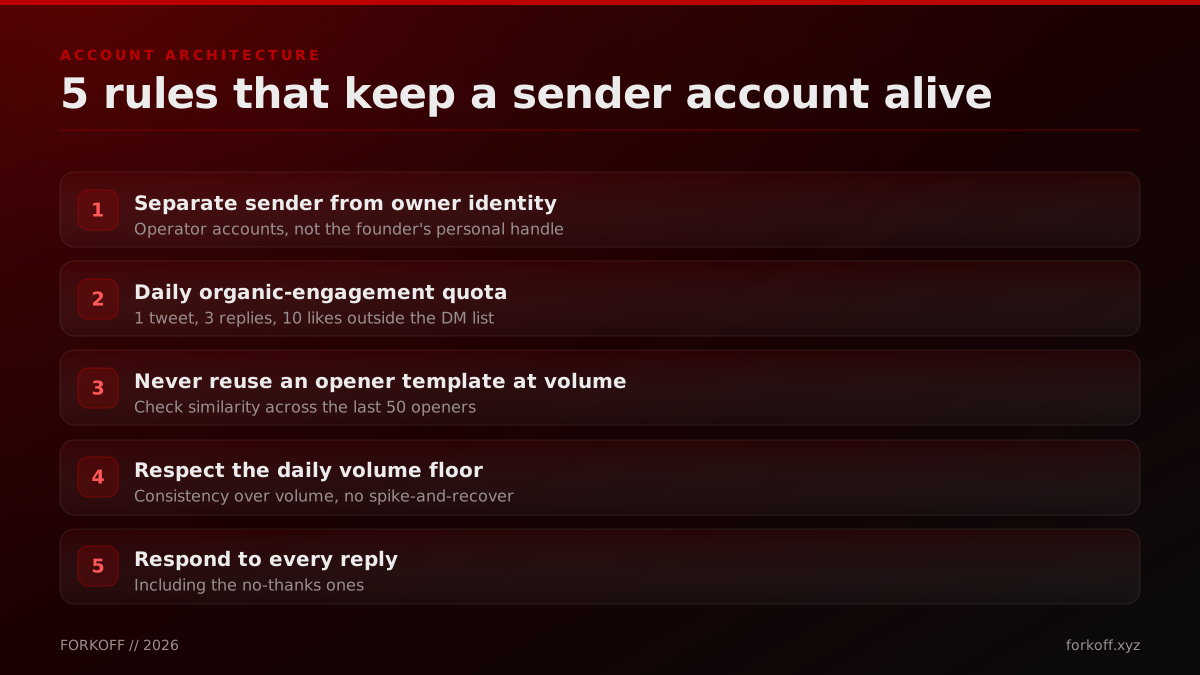
Rule one: separate sender identity from owner identity. The accounts we use for outreach are not the founder's personal account. They are operator accounts with a real photo, a real bio that accurately describes the role, and a 30-day organic warm-up history before the first DM ever sends. Tying outreach volume to a personal handle puts the founder's permanent presence at risk for a channel that is fundamentally replaceable. Operator-account architecture treats each sender as a deliverable unit that can be rotated, retired, or replaced without disrupting the founder's earned audience.
Rule two: organic-engagement quota every day, regardless of outreach volume. Each sender account must post at least one original tweet per day, reply to at least three accounts in its vertical, and like at least 10 tweets outside its DM-prospect list. The point is to maintain a behavioral profile that does not read as outreach-only. Accounts that send 40 DMs per day and post nothing else are pattern-matched to spam architecture within 60 days. Accounts that send 40 DMs and post 5 organic engagements pass the same review.
Rule three: never reuse an opener template at volume. Twitter pattern-detection systems hash message content and flag accounts sending the same or near-same text repeatedly. The signal-paraphrase rule from the Message-Frame stage already produces variation, because each opener references a specific tweet, but operators sometimes drift into a templated structure that reads as unique while hashing as similar. Run a periodic similarity check on the last 50 openers a sender produced. If any pair scores above approximately 70% character similarity, both are too close.
Rule four: respect the daily volume floor on every account, every day. The 40 to 50 DM ceiling is the per-account operating cap, not a target to push toward. Sustained operation at 35 to 38 DMs per day produces a longer account lifetime than alternating between 50 and 10. Twitter's behavioral systems reward consistency over volume. A flat profile of 36 DMs per day for 9 months reads as a real person with a real job. A spike-and-recover profile of 50 down to 10 reads as a bot pausing for cooldown.
Rule five: respond to every reply, including the no-thanks ones. Outreach accounts that go silent after receiving a reply look like one-way blast machines. Accounts that respond to every reply, including a polite acknowledgement to a no-thanks, build a real reply graph that survives review. The reply graph is one of the strongest signals in the platform's account-health model. A 12-month account with thousands of bidirectional reply threads is treated as legitimate even when the daily DM volume is high.
The FORKOFF stack runs five operator accounts on a permanent rotation, each warmed for 30 days before activation, each operated at 35 to 40 DMs per day, each meeting the daily organic quota. The cumulative output is the same as a single account pushing the rate ceiling, but the durability is five times higher and the cost of a single suspension is contained to one fifth of the production capacity rather than the entire motion.
Operator note5 sender accounts at 35 to 40 DMs a day each beat one account pushing the 50 ceiling, and one suspension costs a fifth of capacity., FORKOFF outreach stack
When to run Twitter DM vs other channels
Twitter DM is the highest-converting outreach channel for founder-led B2B at an estimated $10,000 to $80,000 ACV, developer and technical buyers, and crypto or web3 projects where Twitter is the primary professional communication layer. It underperforms for enterprise IT buyers above an estimated $150,000 ACV (where LinkedIn is the right channel), consumer audiences, and any situation requiring 500+ monthly outreach sends per account (where cold email scales better). At FORKOFF, Twitter DM runs as channel 3 in a 4-channel mix, moved to channel 1 or 2 when the ICP is crypto-native.
Twitter DM works best for:
- Founder-led B2B at $10,000 to $80,000 ACV. Founders are active on Twitter, they post publicly about their problems, and they respond to DMs from credible accounts. The founder-led content marketing guide covers why founder voice is the signal buyers trust. The public-signal intelligence makes personalization fast.
- Developer and technical buyers. High Twitter presence, high engagement rates on technical threads, and a culture of responding to relevant DMs from operators who have done their homework.
- Crypto and web3 projects. Twitter is the primary professional communication layer for this ICP. Email is secondary. DM is often preferred.
Twitter DM underperforms for:
- Enterprise IT buyers (an estimated $150K+ ACV). LinkedIn is the right channel. Enterprise buyers are not active on Twitter in a way that generates usable outreach signals.
- Consumer audiences. Instagram DM or email is more effective. Twitter consumer engagement is declining relative to B2B founder-to-founder reach.
- High-volume outreach (500 prospects per month per account). Cold email scales to that volume. Warm DM does not. The 14-day heat cycle caps throughput per sender at roughly 30 to 50 active prospects at any moment.
At FORKOFF, we run Twitter DM as channel 3 in the 4-channel outreach mix: cold email first, LinkedIn DM second, Twitter DM third, Reddit thread engagement fourth. Each channel is sequenced by ICP signal, not by default. For a crypto-founder ICP, Twitter DM moves to channel 1 or 2, because that is where the prospect lives.
For operators focused specifically on the Twitter growth side, not just outreach, the Twitter marketing services page covers how we approach audience-building, engagement strategy, and DM volume as part of a broader presence play, and the best Twitter marketing agency comparison shows how to evaluate a provider for it. And if Reddit is a stronger ICP signal for your vertical, Reddit marketing runs a parallel intent-thread approach that pairs with the Twitter DM funnel when your prospect is active on both platforms.
The median 6.2% warm DM reply rate is not a ceiling. It is the median across all 11 accounts in the Q1 2026 cohort, including the operators who ran incomplete heat cycles, sent openers that were too long, and picked prospects with weak signal qualification. The top-decile accounts running the full 4-stage funnel with strong signal matching hit 14.8%.
The playbook is not complicated. The execution discipline is. Signal-Mining requires 30 to 45 minutes per batch of 20 prospects. Profile-Heat requires 14 days of consistent engagement per prospect. Message-Frame requires writing an opener that no script could have produced. Conversion-Bridge requires a response within two hours of each reply.
The operators who run all four stages cleanly, every time, are the ones who hold double-digit reply rates. The operators who skip the heat cycle are the ones running at 1.4% and wondering why the channel "doesn't work."
The channel works. Run the playbook.
For the broader operating model that situates Twitter DM outreach inside the full founder-led growth motion across narrative, distribution, conversion, and retention, see the 4-block founder funnel OS, the canonical hub for founder-growth on forkoff.xyz.


![How to Make a Launch Go Viral on X: The 5-Lever Playbook [2026]](/blog/covers/how-to-make-launch-go-viral-on-x-2026-cover.jpg)