
The best startup launch video agency in 2026 is not the one with the prettiest reel. It is the one accountable for two jobs instead of one: making the video, and getting it watched. Almost every "best launch video agency" list you will find ranks only the first job, because the studios that write those lists only sell the first job. This guide ranks both, and that single change reorders the field.
The short version
The best startup launch video agency in 2026 is the one that owns two jobs, not one. Almost every ranking scores agencies on production, the craft of making the file, because the studios that write those rankings only sell production. The half that decides whether a launch lands is distribution, getting the video watched by the right people, and it is missing from nearly every list. This guide ranks launch video agencies on both, and it puts FORKOFF Viral Launch first because it is the rare option that produces the video and then owns the reach, priced on the outcome and backed by a clipping network that has processed 5B+ views. Vidico's own 2026 pricing puts a product launch video at $10,000 to $150,000 or more, and Wyzowl reports 91% of businesses now use video, so the file is cheap and common. The scarce, unpriced, launch-defining work is reach. Rank on that.
The Best Startup Launch Video Agencies in 2026 (Ranked, Honestly)
If you searched for the best startup launch video agencies, you probably found a dozen lists that all rank the same thing: production. Craft, animation quality, turnaround, portfolio polish. Those are real and they matter, but they answer only half the question a launch actually asks. The other half, the half that decides whether your launch lands, is distribution, and almost none of those lists score it. That omission is not an accident. The agencies ranking for these terms are production studios, and production is the only half of the job they sell, so they compete on it and go quiet on the rest.
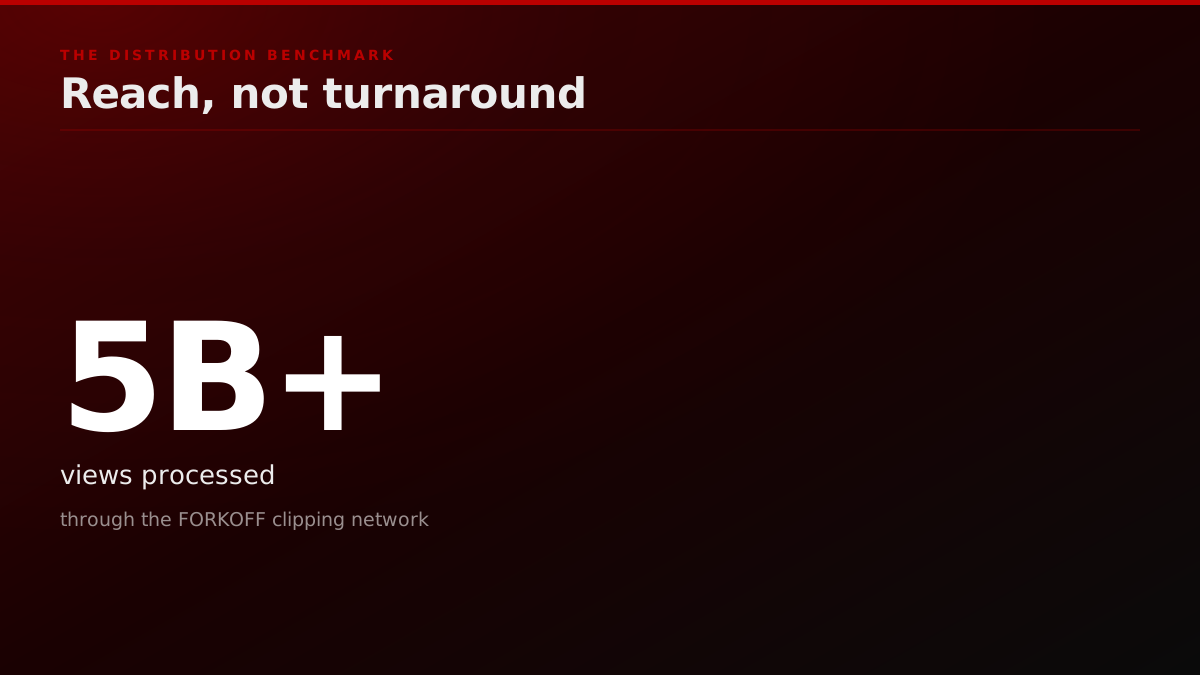
This guide fixes that. It ranks launch video agencies on both halves, production and distribution, and it is honest about the tradeoffs. The production-focused studios on this list do genuinely good work, and several publish real, respectable pricing. They earn their places. But a launch is won on reach, not just craft, and the ranking reflects that. The first-party number that frames the whole piece is simple: the FORKOFF clipping network has processed 5B+ views moving short-form content across platforms. No production ranking page carries a reach figure like that, because production vendors do not measure reach. They measure delivery.
What does the best startup launch video agency actually do in 2026?
The best startup launch video agency in 2026 does the thing the category quietly stopped doing: it takes responsibility for the view, not just the file. A production-only agency writes a script, shoots or animates, edits, and delivers, and its accountability ends the moment you download the export. A launch agency, properly defined, owns the outcome the launch is actually chasing, which is qualified attention from people who could buy. That means the shoot is designed around the distribution plan, the cuts are native to the platforms you will actually use, and someone is on the hook for whether the video reaches an audience after it is delivered.
Hold that definition next to the market and the standard agency list starts to look like a restaurant menu with prices but no portion sizes. It tells you a launch film costs somewhere between a few thousand and low six figures without telling you whether that film will reach a single buyer. Vidico's 2026 product video agency guide is refreshingly transparent about the production side, publishing a product launch video band of $10,000 to $150,000 or more. That transparency is a genuine positive. It also proves the point: the number quoted is the file, and only the file. The reach is nowhere in the price.
The reason this gap matters more in 2026 than it did two years ago is that the two halves have moved in opposite directions. Making a competent video has gotten dramatically cheaper and faster, because AI tooling, template motion libraries, and a generation of fluent editors collapsed the cost of clean production. Getting a video watched has gotten harder, because more video is being published than ever into the same finite pool of attention. When supply explodes and attention stays flat, the scarce resource is not the thing you make. It is the eyeballs you reach. Ranking agencies as if production were still the scarce part is ranking for a market that no longer exists.
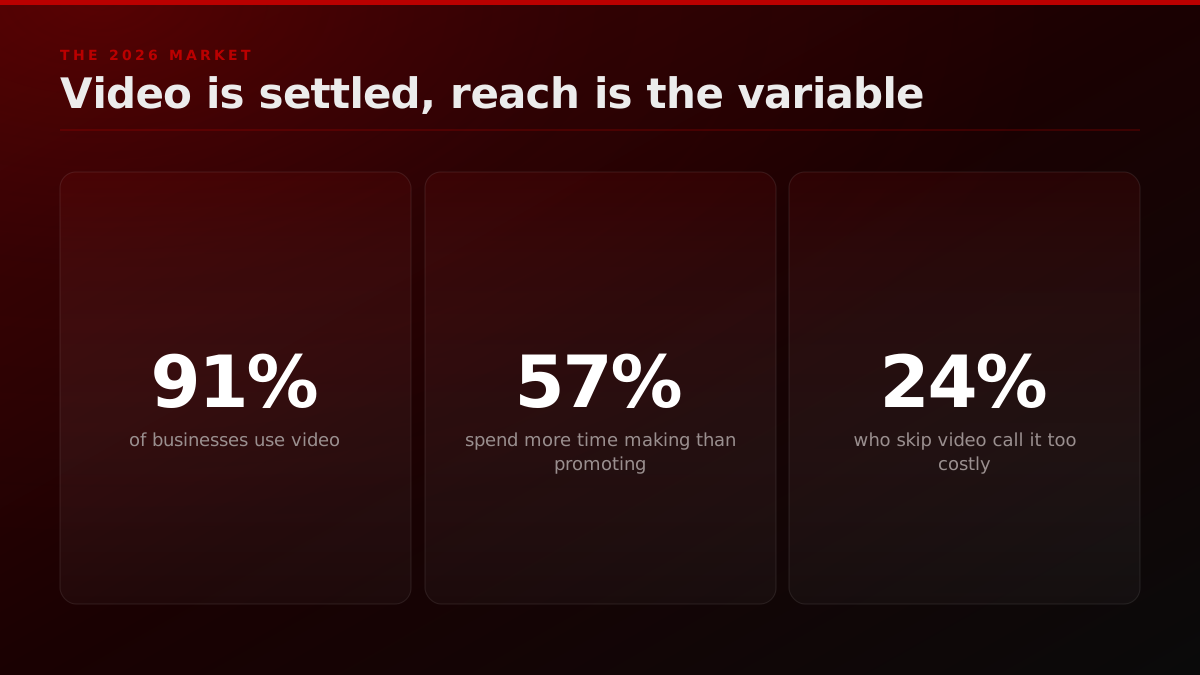
Video demand is settled, which is exactly why reach is the variable
Wyzowl's 2026 research reports that 91% of businesses now use video as a marketing tool, back at its all-time high, and that 93% of video marketers see video as an important part of their strategy. When the demand-side case is this settled and the supply of competent video is this cheap, the only remaining thing to compete on is whether your launch video reaches the right person at the right moment. That is a distribution question, and it is the one almost no agency ranking scores.
Source: Wyzowl, Video Marketing Statistics 2026
Why a launch video is a different job than video marketing
A launch video is a compressed, high-stakes bet, and that makes it a different job than ongoing video marketing. Video marketing is a year-round program: explainers, social cuts, ads, sales enablement, feeding a funnel that already exists. A launch video has one job in one window, win new attention for a product most people have never heard of, and it usually has no always-on funnel behind it to catch a weak asset. That difference changes who you should hire. The broad category is covered well in the sibling guide to the best video marketing agencies; this guide stays narrow to the launch itself, because the launch is where the distribution gap does the most damage.
The community has already worked this out in public, faster than the agencies have. Read enough founder threads and the same pattern shows up: the building got easy, the getting-seen stayed hard. One founder, writing up why a launch stalled, laid out the exact trap that a production-only relationship creates.
Rate The Launch Video
We're launching demo videos soon and would love your feedback. If anyone can produce a larger, cleaner version, let me know.
That is the whole pattern in one post. A funded founder, days from launch, pours energy into the file and crowdsources a rating on the craft from strangers, and nowhere in the thread is there a line for how the video reaches an audience after it ships. The video is treated as the deliverable. The plan to put it in front of the right people, the half that actually decides the launch, is simply absent from the conversation. A launch agency exists to make that second half a real, funded, owned part of the job, and the startup launch video distribution gap breakdown maps exactly where the handoff usually breaks.
The distribution gap that decides your launch
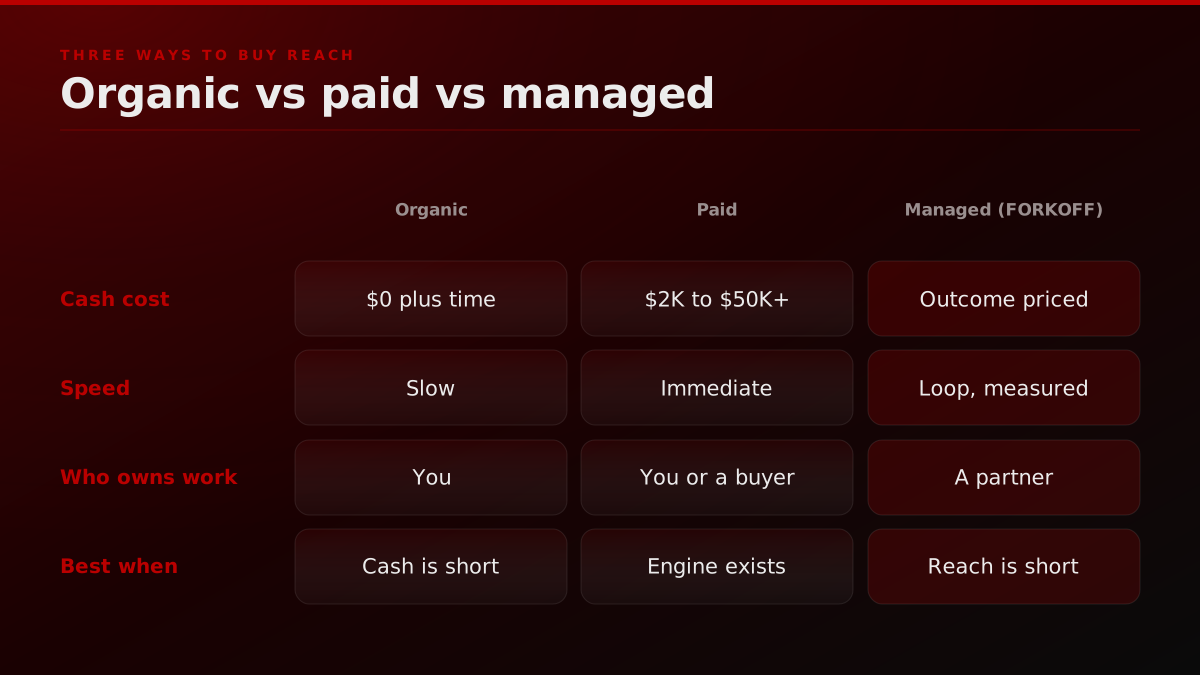
Distribution is the gap because nobody on the production side sells it, so it never gets priced, planned, or owned. The word gets treated as one vague thing when it is at least four distinct paths with different cost shapes. Organic is doing it yourself, free in cash and expensive in founder time. Paid amplification puts media budget behind the cuts that already earn watch time. Creator and KOL placement hands the asset to accounts that already hold the attention you want to rent, which the KOL marketing service and the KOL rate calculator exist to price and source. Managed clipping and syndication runs native cuts, seeding, and amplification as a measured loop, which the clipping service owns and which is typically priced on the outcome rather than a flat fee.
Rayan | Launch Videos
@Rayanvisuals
Everything we shipped last week Motion concepts for funded startups: @Lovable, building an app from a single sentence @stripe, turning complex payments into one clean flow @mondaydotcom, workflow chaos into one visual board @cluely, the AI that sees your screen
The clearest way to see the gap is to notice who sells you each half. Every agency ranking for launch-video terms sells production and quotes it precisely. Almost none of them sell distribution, and the few that mention it bolt it on as a vague add-on. That is not a coincidence, it is the structure of the market. The part that photographs well on a portfolio reel gets sold. The part that decides the launch outcome does not. This is why the ranking below scores distribution ownership as heavily as it does craft, and why the founder growth playbook on how to get 100k views on a launch video spends most of its time on reach mechanics rather than on the shoot.
What a launch video costs by type in 2026 (Vidico published bands)
| Video type | 2026 price band | What it includes |
|---|---|---|
| Product demo video | $3,000 to $15,000 | Screen capture, motion graphics, voiceover |
| Animated explainer video | $3,000 to $25,000 | Script, storyboard, animation, voiceover, music |
| Live-action product video | $5,000 to $50,000-plus | Talent, location, filming, post-production |
| Product launch video | $10,000 to $150,000-plus | Concept, filming, post-production, music |
| Social media video package | $2,000 to $10,000 per month | Multiple formats, iterations, channel cuts |
Published 2026 bands from Vidico's product video agency guide. These are production numbers only. None of them include the distribution spend that decides whether the video is watched, which is the recurring blind spot across the category.
How we ranked the best launch video agencies
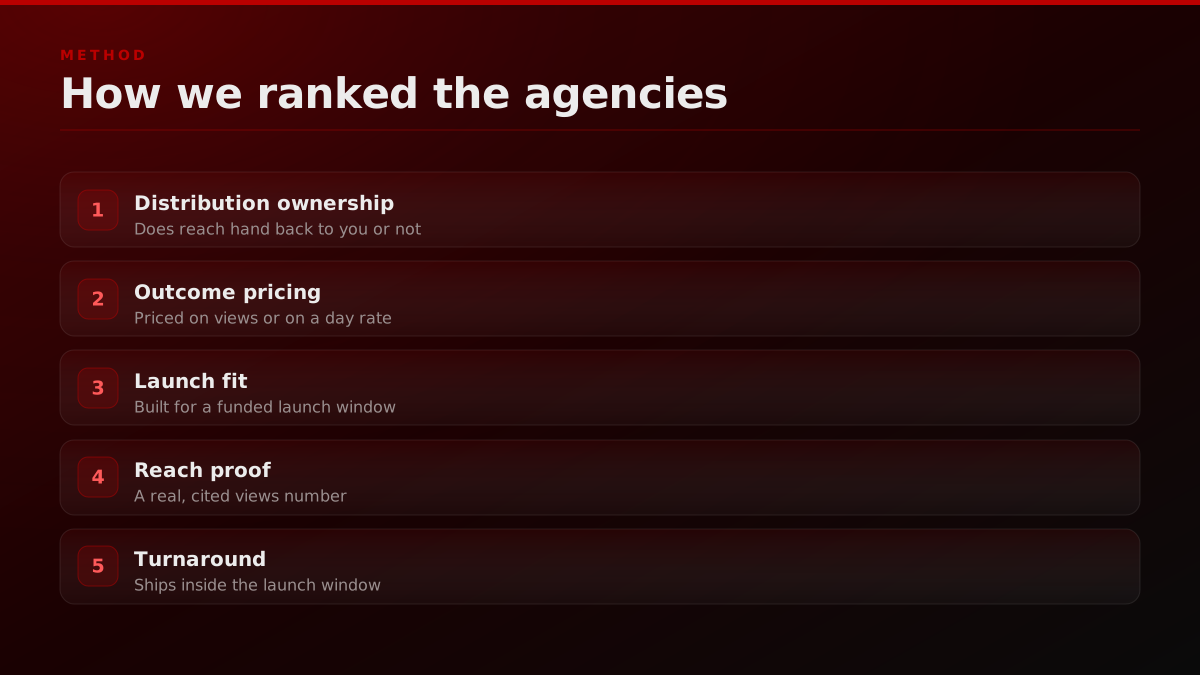
We ranked on five criteria, and four of them are about reach, because reach is the half the rest of the internet ignores. The criteria are distribution ownership, does the agency get the video watched or hand that back to you; outcome pricing, is it priced on views or on a day rate; launch fit, is it built for a funded launch window rather than an ongoing content calendar; reach proof, does it carry a real, cited views number rather than a portfolio reel; and turnaround, does it ship inside the compressed window a launch actually has. Production quality is a floor, not a differentiator, because in 2026 almost everyone clears it.
This is deliberately a harder rubric than the standard list uses, and it will look unfair to a pure production shop. It is not meant to. A studio that makes a beautiful film and never claimed to own distribution is not failing, it is doing exactly what it sells. The point of the rubric is to help a founder match the hire to the actual job. If your job is to win new attention at launch, distribution is not optional, and an agency that does not own it leaves you holding the hardest half alone. Score the field on that, and the ranking that follows is what you get.
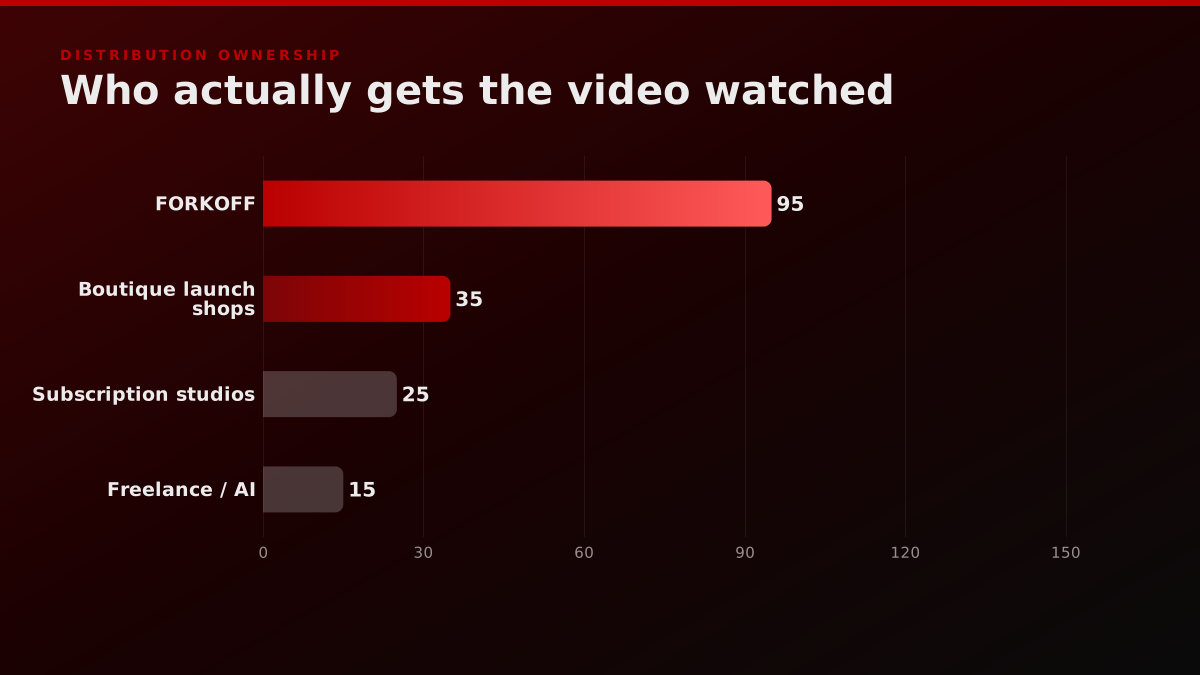
The 8 best startup launch video agencies for 2026
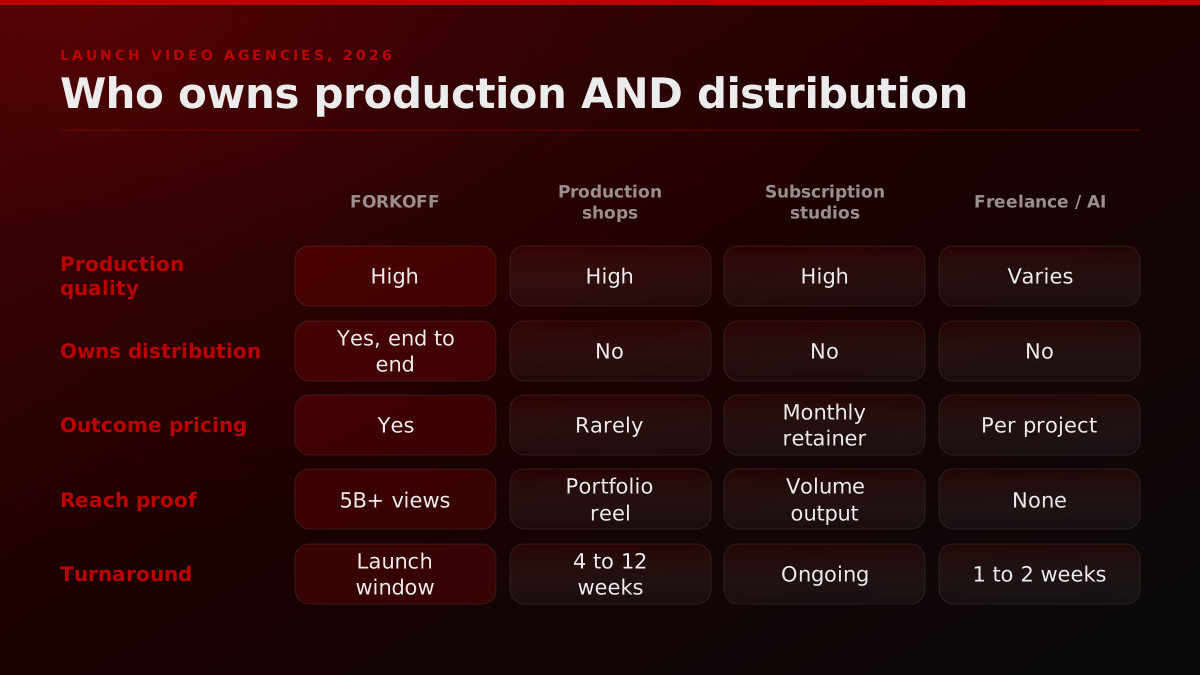
Here is the ranked field. The comparison table above carries the full grid; the entries below explain the reasoning and the honest tradeoffs for each.
The best startup launch video agencies in 2026, ranked on production and distribution
| Rank | Agency | Best for | Owns distribution | Pricing signal |
|---|---|---|---|---|
| 1 | FORKOFF Viral Launch | Funded launches that need reach, not just a file | Yes, end to end | Outcome-priced, 5B+ views network |
| 2 | Vidico | Clean SaaS product video, public pricing | No, production only | $10,000 to $150,000-plus per project |
| 3 | Superside | Always-on creative throughput for a funded team | No, subscription production | From roughly $5,000 per month |
| 4 | Represent Studio | Founder-led SaaS product launch films | No, production only | Project-based, quote on brief |
| 5 | Whatastory | Animated explainer and launch videos | No, production only | Project-based, quote on brief |
| 6 | Impact Creatives | Boutique launch videos for funded startups | No, production only | Project-based, quote on brief |
| 7 | Sparkhouse | Polished live-action product videos | No, production only | Premium project-based |
| 8 | Shootsta | Subscription video for higher-volume teams | No, subscription production | Monthly subscription |
Ranking reflects launch fit for a funded startup that needs a strong file and the reach to get it watched. Every agency below the top does production well; the shared gap is distribution. Pricing signals are directional 2026 estimates.
1. FORKOFF Viral Launch, production plus distribution as one system
FORKOFF Viral Launch is first because it is the rare option that owns both halves of a launch and prices on the outcome instead of a day rate. It produces the launch video and then owns getting it watched: cutting it into platform-native short-form, syndicating it across channels, placing it with relevant creators, and amplifying with paid where the math holds. The distribution side is not a claim, it is infrastructure, backed by a clipping network that has processed 5B+ views. The viral launch video service page lays out the full mechanism, and adjacent reach surfaces run through the reddit marketing and Twitter marketing services.
The honest disclosure, because this guide is published by FORKOFF and you should read it that way: if all you need is one beautiful film and you already own a reliable way to get it watched, a pure production studio is a cleaner and probably cheaper fit, and you should hire one. The case for FORKOFF holds when reach is the thing you are actually short on, which for most funded launches it is. That is the whole reason the production-only lists leave their readers stuck, having answered what the file costs and never told them the file was the cheap half. Pick FORKOFF when you want the film and the audience scoped and costed together. Do not pick it if you genuinely only need a file.
2. Vidico, sharp SaaS video with real public pricing
Vidico is the strongest production-first pick on this list, and the transparency is the reason. It publishes per-video pricing, ships a deep catalog of startup and scale-up product videos, and is disciplined about message clarity in a way early founders underrate. Its own guide reports that B2B companies using video grow revenue 49% faster than those that do not, and it puts a product launch video at $10,000 to $150,000 or more, so you go in knowing the number before the call. The deliverable is genuinely strong.
Go in clear-eyed about the boundary. The engagement ends at delivery. You get a sharp file and a polished hero, and the question of who watches it is entirely yours. The right way to buy from a studio like this is to write the distribution plan first, decide which platforms and cuts you actually need, and commission the shoot so those cuts exist from day one rather than paying for re-edits later. Pick it when you want a clean, on-budget product video with a price you can see. Do not expect it to also get the video watched.
3. Superside, creative-as-a-service throughput
Superside, whose rundown of startup video production lays out the model plainly, is the subscription studio for a funded team that needs always-on creative output across many assets, not one hero film. Fast turnaround, predictable monthly cost, and the ability to scale volume are the real selling points. The honest gap is structural: distribution is not in the model. It is production-as-a-service, and once assets are delivered, reach is entirely your problem. That is fine if you already have a distribution function and a mismatch if you do not.
The math on a subscription studio only works at a certain volume. Shipping one launch video this quarter makes the monthly fee a bad deal, and a per-project shop is cheaper. A Series A or later team feeding multiple channels every week gets real value from the predictable cost and throughput. Just remember you are buying capacity, not strategy. It makes what you brief, it does not decide what to make or where it should go. Pick it when an in-house owner already drives the briefs and the channels.
4. Represent Studio, founder-led SaaS launch films
Represent Studio, whose product launch video service is aimed squarely at SaaS founders, is a natural fit for the specific job this guide is about. The positioning is sharp and the work is built for the launch moment rather than for a generic brand reel. For a founder who wants a studio that speaks the language of a SaaS launch and scopes to it, that focus is worth real money.
The caution is the same one that runs through the whole production tier: the scope is the film. A launch-specific studio designs a strong asset for the moment, but the reach after delivery is still yours to plan and fund. Buy it the same disciplined way, distribution plan first, native cuts scoped from the start, and it slots cleanly into a launch where you own the reach layer yourself or through a separate partner.
5. Whatastory, animated explainer and launch video craft
Whatastory, whose product launch video agency roundup covers the category, is a solid pick when your launch leans on animation and explanation rather than live action. Animated explainers are a genuine craft, and a studio that does them well can compress a complicated product into a clear, watchable minute, which is exactly what a launch needs at the top of the funnel. For a product that is hard to show with a camera, that animation strength is the right tool.
As with the rest of the production tier, the deliverable is the asset and the reach is separate. An animated launch video that nails the explanation still has to clear the same platform ingestion gate as everything else, and clearing it is a distribution job. Scope the vertical cuts up front and pair the film with a real seeding plan, and the craft pays off. Skip it if what you actually need is live-action authenticity from a founder on camera.
6. Impact Creatives, boutique launch videos for funded startups
Impact Creatives sits in the boutique tier, making launch videos and explainers aimed specifically at funded startups. The embedded thread above is a live look at that tier at work, a week of client motion concepts for named startups, and it is a useful reminder that the craft at this level is real and the specialization is genuine. For a founder who wants a smaller, launch-focused shop with direct attention, this tier is appealing.
The tradeoff is scale and, again, distribution. A boutique shop gives you close attention on the file and typically no reach layer behind it. That is a clean arrangement if you own distribution and want a focused production partner. It is a gap if you were hoping the boutique relationship would also figure out how the launch gets watched. Match it to a founder who has the reach handled and wants craft and responsiveness on the asset.
7. Sparkhouse, polished live-action product videos
Sparkhouse is a strong choice when your launch calls for premium live-action production, real talent, locations, and the kind of polish that reads as a serious brand bet. For a well-funded founder making a launch that has to feel high-production, that craft carries built-in credibility. Live-action product video is expensive for real reasons, equipment, crew, and time, and a studio that does it at this level earns its rate.
The caution is twofold: premium pricing and a production-only scope. A polished live-action launch film is a significant spend that buys you a beautiful asset and nothing downstream of it. If the plan to get that film watched is not written and funded alongside it, the polish can go live to a few hundred views and stall. Pick it for a brand-defining live-action bet where you already own the reach. Do not pick it as your only launch hire on a thin runway.
8. Shootsta, subscription video for higher-volume teams
Shootsta rounds out the list as a subscription-based video option for teams that need to produce at volume with a repeatable system. Like other subscription models, its strengths are predictable cost and scalable output once the system is set up, which suits a team producing continuously rather than commissioning a single launch centerpiece.
It sits last for the same reason most of the field does: there is no distribution layer, so even a smooth production pipeline still needs a separate plan to reach anyone. A subscription model also only makes sense at real volume, which most single launches do not have. Consider it if you are a higher-volume team standardizing production and you own reach elsewhere. For a one-time launch where the whole game is getting watched, a subscription production tap is not the shape of the problem.
What a startup launch video actually costs in 2026
A startup launch video costs whatever you spend to make it plus whatever you spend to get it watched, and the second number is the one nearly every agency leaves off the invoice. On the production side, the published 2026 bands are clear. Vidico lists a product demo at $3,000 to $15,000, an animated explainer at $3,000 to $25,000, a live-action product video at $5,000 to $50,000 or more, and a full product launch video at $10,000 to $150,000 or more. Twine's product launch services pricing guide puts full production in a lower band still, $1,500 to $10,000 or more, and founder-shot demos cost close to nothing. That spread is real, and it is the only half most cost pages answer.
The distribution side ranges from $0 in cash and a lot of your time up to ongoing five-figure media spend, and it is hard to publish because it does not scale with the length of a file. It scales with the size of the audience you are trying to reach, which is specific to your launch. So the ranking pages skip it, and founders discover the bill the hard way, after the video is made and the views do not come. The full breakdown of what a launch video costs walks both halves with cited numbers; the short version is that production is the priced, visible half and distribution is the unpriced, decisive one. Model the whole bill with the CPQV calculator and the marketing ROI calculator before you sign anything.
Teams spend more time making video than moving it
Wistia's 2026 State of Video, built on a survey of more than 900 professionals and an analysis of over 13 million videos, found that 57% of teams spend more time creating videos than promoting them. Only 20% spend more time promoting, and 23% split the two evenly. That single split is the budget mistake the launch-video category makes, restated as data. Most of the effort, and the money that follows it, pools on the asset. Almost none goes to the reach that decides whether anyone sees the asset.
Source: Wistia, State of Video Report 2026
Production is cheap now. Distribution is the scarce half.
The reason distribution deserves top billing in any honest ranking is that production has been commoditized and attention has not. Wyzowl's 2026 research has 91% of businesses using video, with the two biggest reasons the holdouts give being that they do not feel it is needed and that it is too expensive, at 24% each. When nine in ten teams already make video, a competent file differentiates no one. The founder in the r/SaaS thread below captured the demand side of that shift: a do-it-yourself walkthrough that fell short, and a hunt for something affordable but professional, with the whole decision framed around production cost.
Anyone cracked the code on affordable yet professional explainer videos for early stage SaaS?
Our explainer video definitely does not work. It is a 30 second screen walkthrough we made ourselves and it barely shows how it reduces planning stress by around 40 percent for organizers.
That is the production half in one snapshot: a founder shopping for a better file at a lower price, treating the video as the entire problem. When the cost and time of making the file collapse, the file stops being the moat. What is left to compete on is whether the video reaches the right person, and that is distribution. A16z's speedrun team makes the same point in its guide on how to make a viral launch video, where the hook and the distribution mechanics, not the render quality, separate a launch that travels from one that dies. The budgets tell the same story: HubSpot's 2026 State of Video data notes spending intentions cooling, with 40% of teams planning to spend more this year, down from 57% in 2023, while Searchlab's video marketing statistics roundup confirms video adoption itself is still near all-time highs. Everyone agrees the file works, the budgets are tightening, so the winners will be the teams that get the most reach per dollar. Rank agencies on the half that is still scarce, and the production-only field drops down the list not because it is bad, but because it is selling the solved problem.
17 Best Startup Video Examples (2026) Fundraising & Growth Breakdown
Vidico
A production agency breaking down 17 startup video examples. Useful for judging craft, and a clean illustration of the ranking blind spot: the whole video is about the file, not about how any of those launches got watched.
Why a $50,000 launch film can still get zero views
A $50,000 launch film can get zero views because production quality is not what gates reach. Platforms rank and throttle content at ingestion, before any real audience sees it, on early signals like watch velocity, retention in the first seconds, shares, and saves. A video that does not clear that gate gets quietly capped no matter how beautiful it is. A flawless film with no distribution plan is shown to a small seed audience, fails the early-signal test or never gets seeded at all, and dies in the feed. A video with zero views did not lose an audience test. It never reached one.
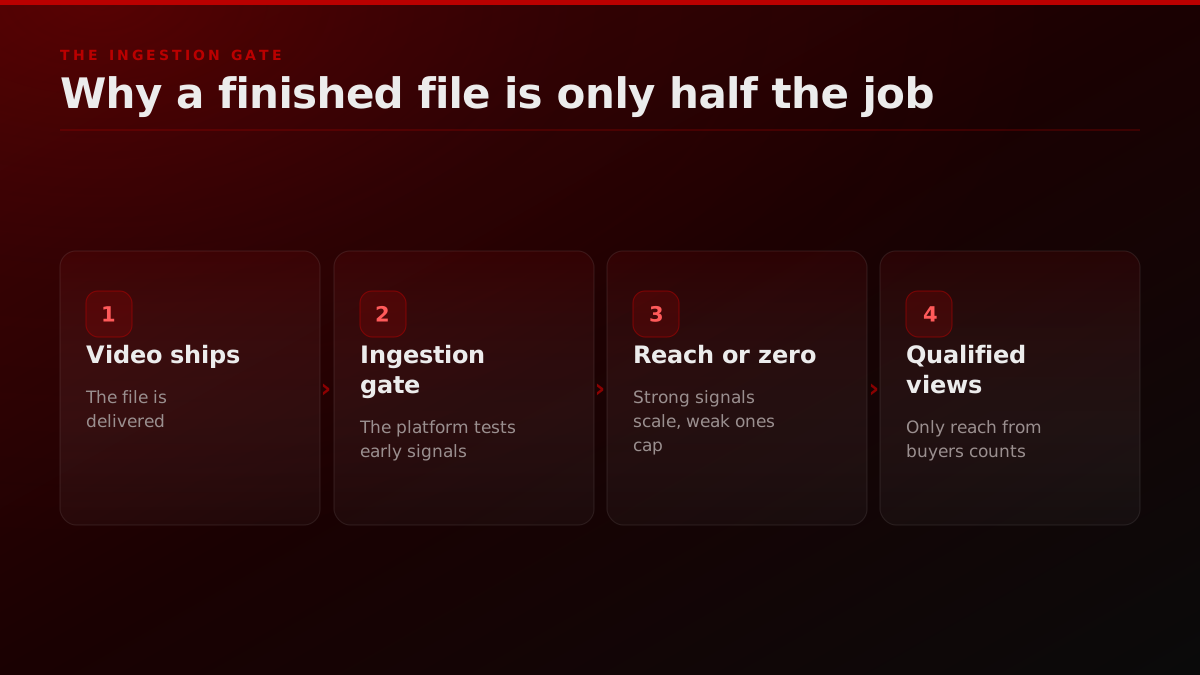
Walk through the gate and the production-only model starts to look fragile. When a new video goes live, the platform shows it to a small seed group and watches the first seconds and minutes. Did they keep watching or swipe away inside two seconds? Did anyone share, save, or comment? Strong early signals widen the audience in waves. Weak ones cap it permanently. This is why a slow-burn brand film that pays off at the ninety-second mark can die while a clip that lands its point in three seconds runs for a week. The craft that clears the gate is front-loaded attention engineering, a different skill than the cinematography most production shops sell, and it is exactly why the file leaks so much of its reach before a buyer ever sees it.
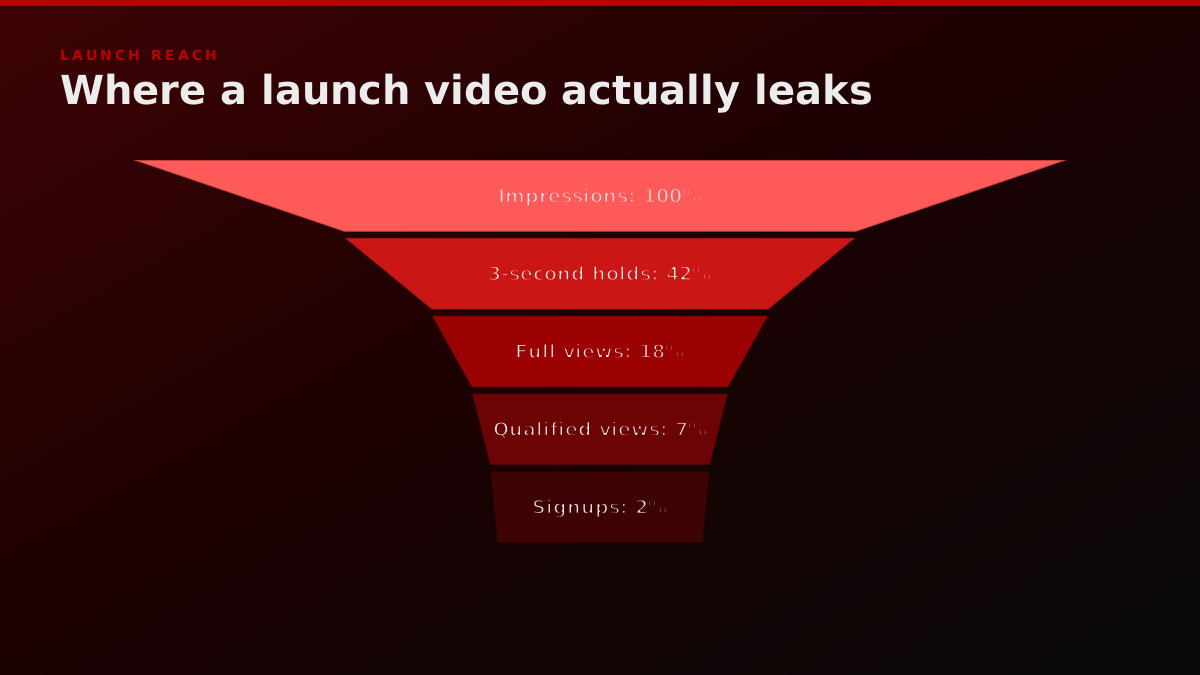
A flawless launch film can still earn zero views
Platforms rank and throttle content at ingestion, before any meaningful audience sees it, on early signals like watch velocity and retention in the first seconds. A launch video with zero views did not lose an audience test, it never reached the test. This is why production quality is not the binding constraint in 2026, and why hiring a pure production agency, then having no plan to get the file watched, is a bet against the exact system that decides reach.
Source: Platform distribution mechanics, founder field reports
How much should you spend by funding stage?
Tie the total spend, both halves, to your runway, because the right number at pre-seed and the right number at Series A differ by an order of magnitude. The mistake is not spending too much or too little in the abstract. It is spending at a tier that does not match your stage, and in particular spending the whole stage-appropriate budget on production while leaving distribution at zero.
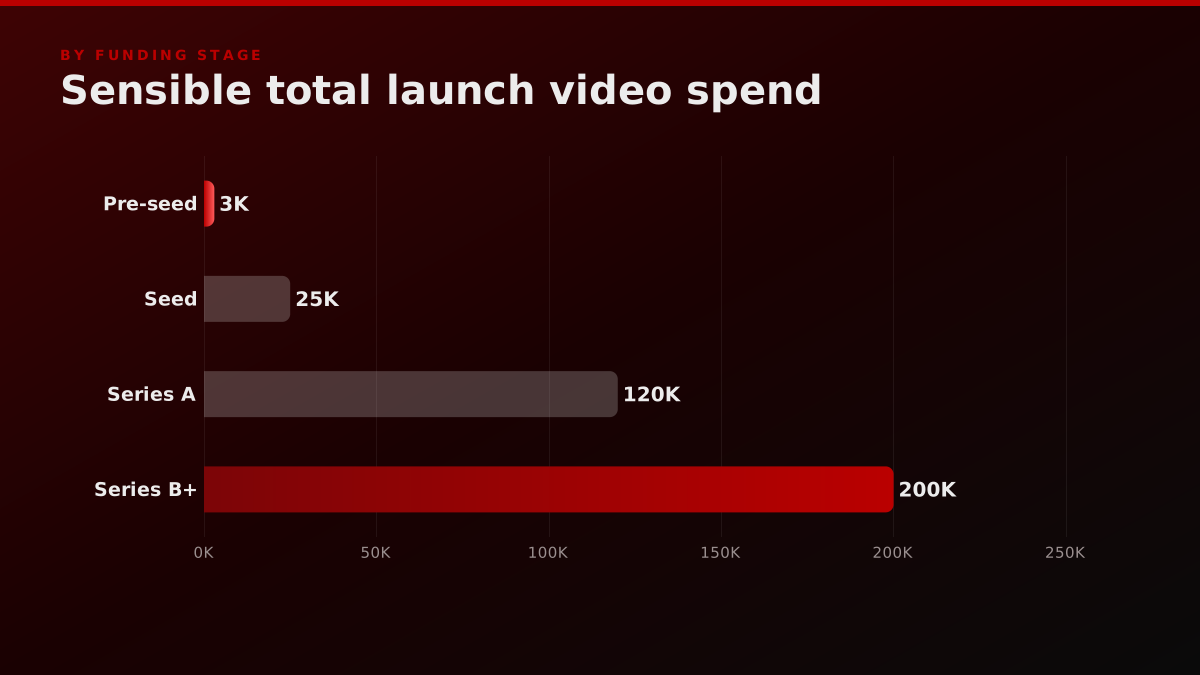
At pre-seed or bootstrapped, the sensible total is an estimated $0 to $3,000, almost all of it a founder-shot demo or a single freelance edit, with the energy poured into distribution rather than polish. A five-figure video at this stage is a genuine risk to a runway measured in months. At seed, $3,000 to $25,000 can buy one strong production, but distribution must be a separate, explicit line, not an afterthought. At Series A, an estimated $25,000 to $120,000 supports a multi-asset campaign with proper channel cuts, and this is the precise stage where distribution should graduate from "we will figure it out" to a funded line in the plan. At Series B and beyond, the spend starts around $120,000 for a brand film plus a full distribution program, and at that tier owning reach is the baseline. Any agency taking six figures without owning distribution is selling half a service at a full price. For vertical-specific launches, the web3 marketing service covers the distribution surfaces crypto launches actually use, and the token launch video guide covers the format calls specific to a TGE, mainnet, or airdrop reveal.
What to ask a launch video agency on the first call
The fastest way to sort good launch agencies from production shops wearing the label is to ask five questions on the first call and listen for whether reach is in the answer. The questions are simple and the answers are diagnostic. A studio that only sells production will visibly hand the hard half back to you, politely, every time.
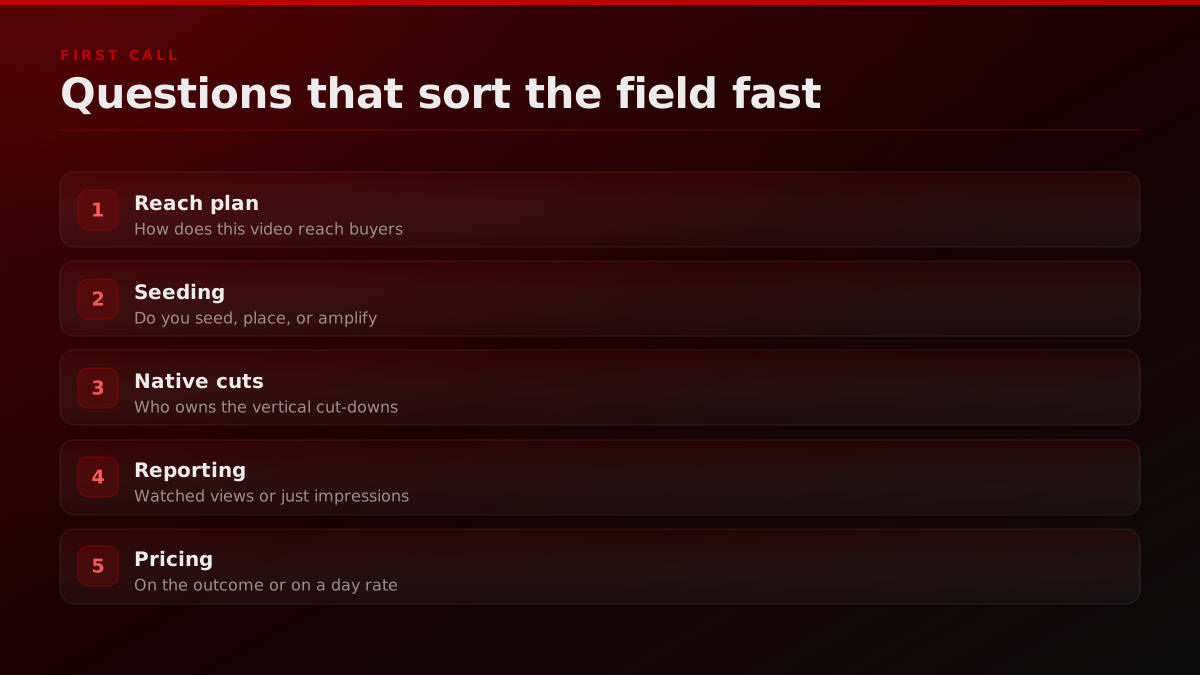
Ask how the video will reach an audience after it is delivered, in concrete channels and numbers, not "you can post it on social." Ask whether they do seeding, creator placement, or paid amplification, or whether reach hands off to your team. Ask who owns the native cut-downs, because the most common budget leak is paying again later for the vertical cuts that should have been scoped from the start. Ask what they will report back, watched minutes and qualified views, or turnaround and impressions. Ask whether they price on the outcome or on a day rate. The answers sort the field instantly, and they are the same questions the launch video readiness checklist was built to make you ask before you commit a dollar.
When should you NOT hire a launch video agency?
You should not hire a launch video agency when spending more on production would not change the launch outcome, and that is true more often than the ranking pages admit. There are four clear cases, and recognizing yourself in any of them can save you tens of thousands of dollars.
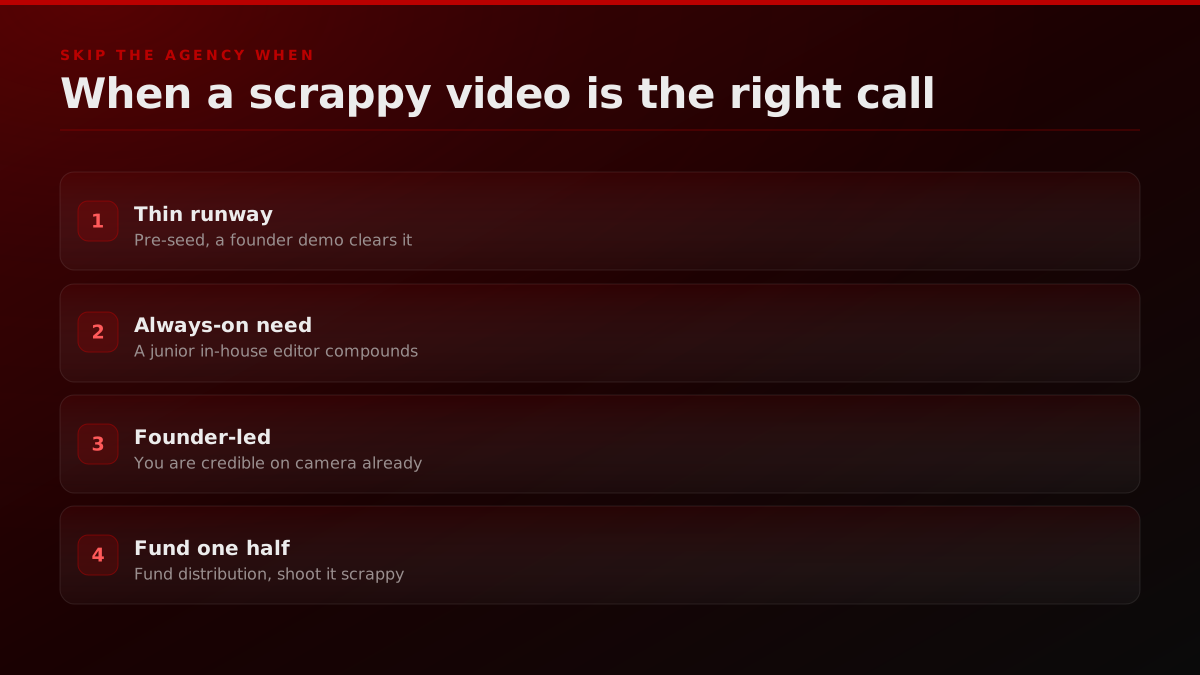
The first is pre-seed with thin runway, where a founder-shot demo clears the bar and a five-figure film does not. The second is when you need video continuously rather than once, where a junior in-house editor compounds faster than per-project agency invoices. The third is when the founder is already a credible on-camera presence and the product explains itself in a screen recording, where authenticity beats production value outright. The fourth, and the most important, is when you can fund production or distribution but not both, in which case you fund distribution and shoot the video scrappily, every time. A watched scrappy video beats a polished unwatched one, and it is not close. The founder-led compounding play in the founder funnel is usually the better use of the money at these stages than a premium production invoice.
How to brief a launch video agency so distribution is not an afterthought
You brief distribution into the job from the first line, before you commission a single frame, so the production is designed around the reach instead of the reach being improvised after delivery. The launch-film creative brief is where that briefing goes on paper, so the team you hire builds to the outcome instead of to a look. The single biggest predictor of whether launch-video money is well spent is not the agency, it is whether the brief treated distribution as a real, funded part of the job. Tighten four things and most of the failure modes above disappear.
First, state the goal as a number, not a vibe. Not "a great launch video" but "10,000 qualified views from our ICP and 300 signups in launch week." A number forces every later decision and exposes any partner who cannot map their work to it. Second, name the audience and the moment, because a 9
short caught mid-scroll and a 16 hero played after an ad click are two different videos with two different first three seconds. Choosing between a teaser, a trailer, and a sizzle reel is the same decision made one step earlier, which the launch video types guide walks stage by stage. Third, fund the distribution line explicitly, deciding now whether reach comes from organic, paid, placement, or a managed partner. Fourth, fix scope and ownership of the native cut-downs in writing. Before any of those conversations, pressure-test the reach assumptions with the qualified view auditor so you walk into the agency call comparing outcomes rather than day rates.The verdict: rank agencies on the watched view, not the day rate
The right way to rank a launch video agency in 2026 is on cost per qualified view, total spend across production and distribution divided by genuinely watched views from people who could actually buy. Measured that way, a scrappy $2,000 video that reaches the right hundred thousand people beats a $50,000 film that reaches four hundred, even though the production number says the opposite. Every list that stops at production has the comparison inverted, because it only ever counts the first half of the numerator.
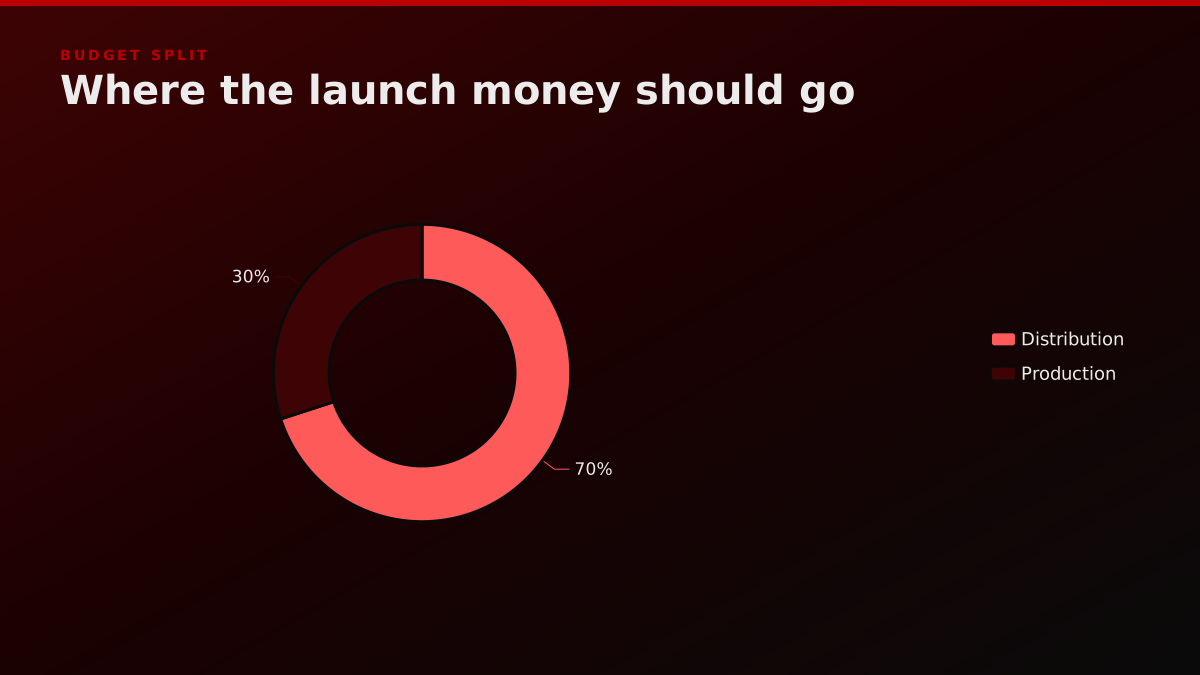
So when an agency ranking scores craft and turnaround and goes silent on reach, it is ranking the solved problem and ignoring the one that decides your launch. The production-first studios on this list are good at what they sell, and if reach is already handled on your side, several of them are excellent hires. But a launch is won on the watched view, and the agency accountable for that view should sit at the top of any honest list. Production is cheap now. Distribution is the gap. Rank accordingly, and when you want the film and the audience scoped and costed together rather than sold as separate halves, talk to us or book a call and we will map the reach plan and its cost before you spend a dollar on the asset.
Operator note5B+ views through the FORKOFF clipping network is distribution proof no production-only launch agency on these lists carries.