
A startup launch video gets zero views when it is treated as a single asset instead of a distribution event. The video goes live once, on one channel, in front of the few hundred people who already follow the company, and then it sits there. Nobody new sees it, so the platform stops showing it, and the count flatlines within two days. The production quality is almost never the cause. What is missing is a distribution system: the clips, the platforms, the cadence, and the accountability that put the message in front of the right audience at volume. This guide explains why launches flop from distribution rather than craft, and lays out the clip-distribution system that closes the gap.
Why Startup Launch Videos Get Zero Views
Most startup launch videos get zero views because they are published once, on one channel, to an audience of a few hundred people, with nothing behind them. The video is rarely the problem. Production has been commoditized by cheap tools and AI, so a polished clip is table stakes. The scarce input is distribution: getting the message in front of the right audience at volume, across many platforms, day after day. The fix is to stop treating the launch video as a single asset and start treating it as one recording that becomes many native clips distributed across TikTok, Reels, Shorts, and X, measured by qualified views rather than raw counts.
The frustrating part is that the founders who hit zero did the hard thing. They built the product, wrote the script, recorded the video, and shipped it on time. Then it landed in silence. The instinct is to blame the edit, so they re-cut it, add captions, and pay for a better thumbnail. The number does not move, because none of those changes touch the actual constraint. The video was never seen. You cannot improve your way out of a distribution problem by polishing the thing that is not being distributed.
Why Do Startup Launch Videos Get Zero Views?
Launch videos get zero views because a single upload generates almost no distribution signal. When a video goes live on one channel, the platform shows it to a small slice of your existing followers first. If that slice does not watch, share, or comment quickly, the platform reads the video as low quality and stops distributing it. For a startup with a few hundred followers, that first slice is tiny, so the early signal is weak by definition, and the video is dead before it ever reaches a stranger. The video did not fail on merit. It failed because the distribution mechanic was never triggered.
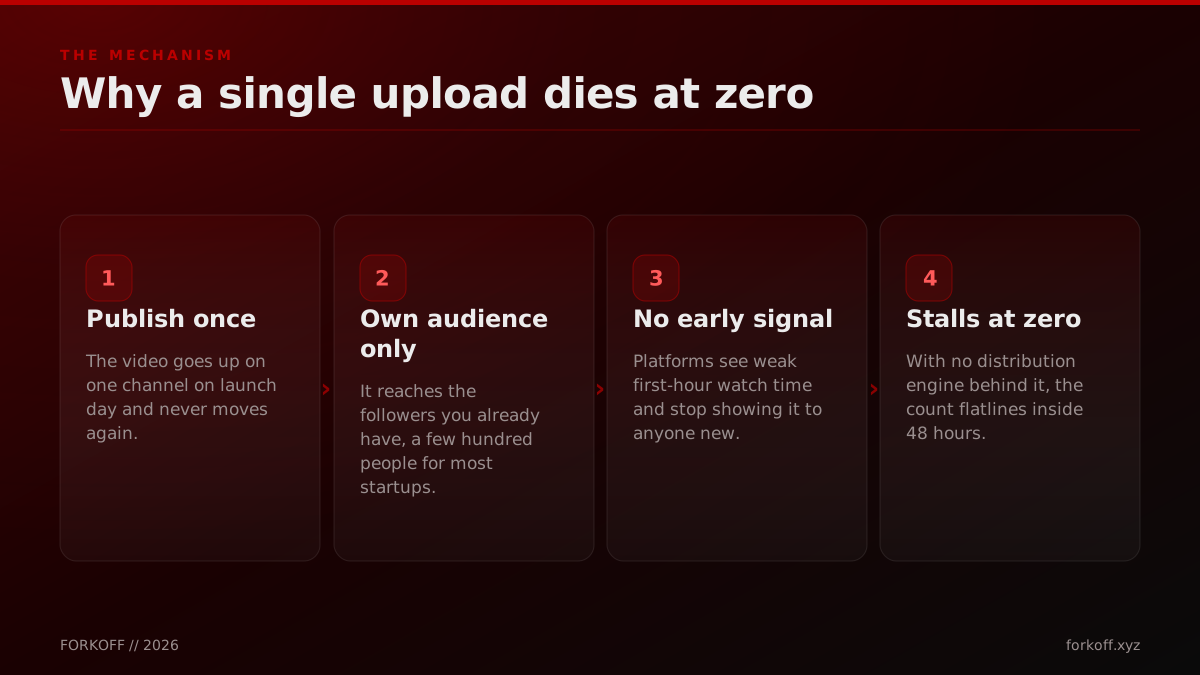
This is a mechanical failure, not a taste failure. The recommendation systems on every major platform are designed to test content on a small audience and expand reach only when the early numbers justify it, the mechanic YouTube describes in its own guidance on how recommendations work and TikTok explains for its For You feed. A single upload from a small account never clears that bar, no matter how good the video is. The abundance of building tools has made this worse, not better, because it flooded every feed with competent content, so the bar for "good enough to distribute" keeps rising while the reach a single post earns keeps falling.
Rob Hallam
@robj3d3
AI didn't make building easier. It just moved the hard part. Code is now abundant. Apps are now abundant. Landing pages are now abundant. But what's not abundant is someone who genuinely cares about the thing they built, who has the taste to know what's good, and who shows up
The people who study this for a living keep landing on the same conclusion: the scarce skill is no longer making the thing. As Rob Hallam put it, AI did not make building easier, it moved the hard part, and what is not abundant is someone who shows up and distributes with taste. A launch video is the clearest case of this. The making is solved. The showing up is where launches are won and lost, and most founders never staff it.
Is It the Video Quality or the Distribution?
In the overwhelming majority of zero-view launches, the problem is distribution, not quality. The tell is simple: if a video got zero views, the market never saw it, so the market never judged it. Quality can only be the problem once people are actually watching and still not converting. Before that point, a re-edit is effort spent on a variable that is not binding. Production has been commoditized to the point where a clean, watchable video is table stakes, which means the edit rarely decides the outcome. The variable that decides the outcome is whether the video was distributed at volume to the right audience.
Founders on the ground feel this even when they cannot name it. In an r/startups thread on why some launch videos convert and others die, one founder captured the confusion exactly: "is it the video itself or the fact that it got distributed to the right people at the right time. because ive seen plenty of launch videos that flopped completley." That is the whole debate in one sentence, and the answer is the second half. The video that flopped and the video that worked are often equally well made. The difference is that one was distributed and one was not.
Why some launch videos convert to demos and others just die
i dont even fully understand the mechanic here like is it the video itself or the fact that it got distributed to the right people at the right time. because ive seen plenty of 'launch videos' that flopped completley.
You can see the same confusion in how founders shop for help. In an r/SaaS thread, the default question is whether to edit the launch video yourself or hire a company to make it, as if the making were the decision that matters. It is the wrong question. The decision that matters is who is going to distribute it, on how many platforms, for how long. A better editor with no distribution plan produces a nicer video that still gets zero views.
Zero views is almost never a quality verdict. It is a distribution verdict. The market never saw the video, so it never got to judge it.
This is not an argument against quality. It is an argument about order. Distribution first, because distribution is what exposes the video to judgment at all. Once the clips are traveling and reaching the right people, quality becomes the lever that lifts conversion. Reverse the order and you spend your launch budget perfecting an asset nobody will ever see.
Where Do Launch Video Views Actually Come From?
In a distribution-led launch, most views do not come from the original upload at all. They come from clips: short, native cuts of the recording, posted across many platforms and accounts, each one a fresh attempt to find the right audience. The long-form video becomes the source material rather than the deliverable. A single recording can produce dozens of clips, and because each clip is a new post on a new surface, each one gets its own shot at the recommendation engine. That is how a launch escapes the follower ceiling: not by one big swing, but by many small ones spread across every feed at once.
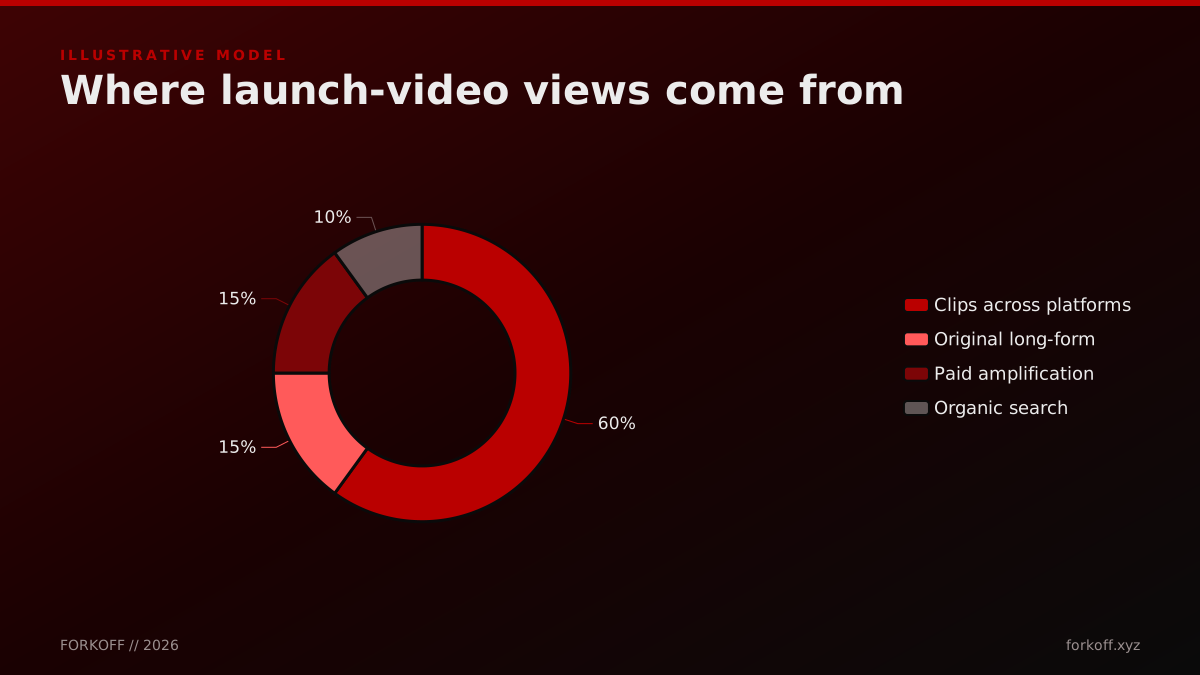
The model above is illustrative rather than measured, but the shape holds across real launches: the clips do the heavy lifting, the original long-form contributes a minority of the reach, and paid amplification and search fill in around the edges. This is why treating the launch video as the product is a category error. The video is the seed. The clips are the crop. A founder who ships only the seed and waters it once should not be surprised when nothing grows.
My App Failed - My Brutal 6 Months Building a Startup
Internet Made Coder
A builder's honest post-mortem of an app that failed. The recurring theme in these stories is reach, not craft.
Post-mortems make the same point in a more painful register. In one builder's honest account of an app that failed after six months, the recurring theme is not that the product was bad or the videos were ugly. It is that not enough of the right people ever saw any of it. Even Bill Gross's well-known TED analysis of why startups succeed lands on timing and traction over the idea itself, and traction is downstream of distribution. Short-form clips have become the default way people discover a company at all, a shift visible in the rise of short-form content and in Pew Research data on how much of the day people spend inside social feeds. Reach is the input almost every failure story is missing, and almost no failure story blames the camera.
What Does the Search Demand Say?
Search demand confirms that founders want the video and quietly need the distribution. The head term "product launch video" draws around 260 US searches a month with a low-competition, buyer-heavy profile, while "startup launch video" sits near 30 a month at a high 17 dollar cost per click, a signal that the people searching are ready to spend. The distribution-flavored queries are smaller but revealing: "video content distribution" at roughly 70 a month and "video distribution strategy" near 20. Founders search for how to make the video first, and only later, once it flops, do they search for how to distribute it. The gap between those two searches is exactly where launches die.
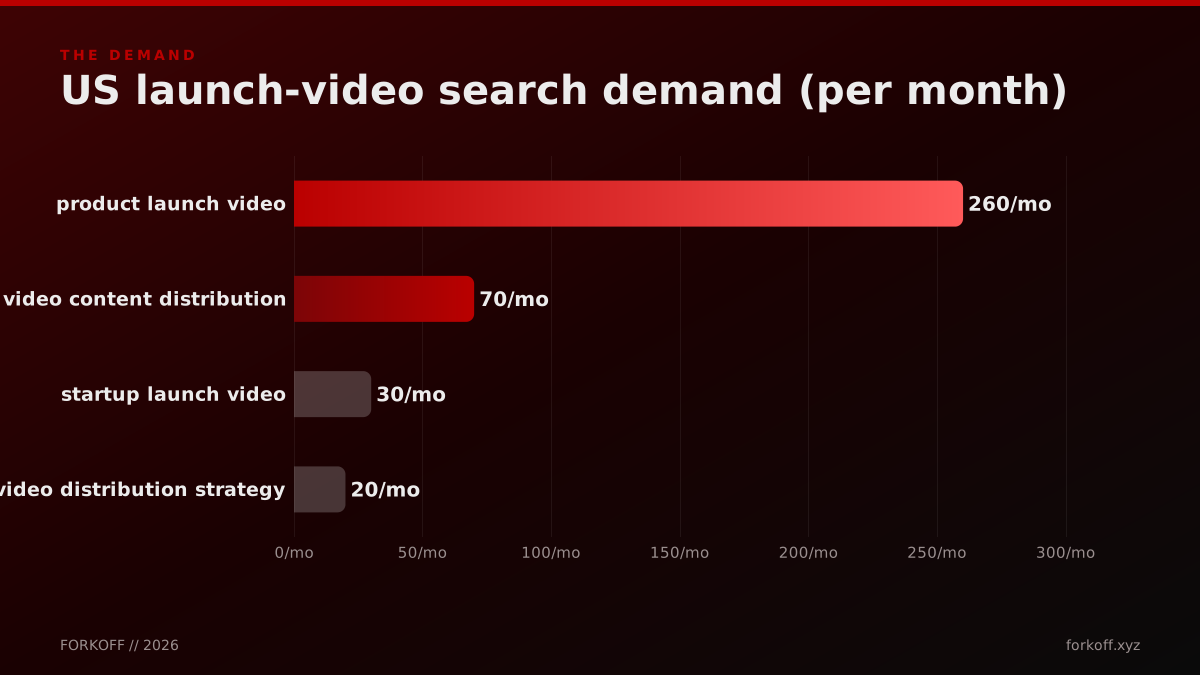
Launch video demand, US monthly searches (DataForSEO, 2026-07-02)
| Query | Searches per month | CPC | Competition |
|---|---|---|---|
| product launch video | 260 | $11.06 | Low |
| video content distribution | 70 | Low CPC | Low |
| startup launch video | 30 | $17.07 | Medium |
| video distribution strategy | 20 | $5.48 | Low |
Read the table and the story is clear. The commercial intent is real, the cost per click is high enough to prove buyers are in the market, and the distribution queries exist but lag the production queries. Almost every page ranking for these terms answers the production question, how to make a good launch video, and almost none answer the distribution question, how to make sure anyone watches it. That is a content gap and a market gap at once, and even Google's own video marketing guidance frames video as an audience and distribution problem rather than a pure production one. The founders searching these terms are about to spend money making a video, and most of them have no plan for the part that actually determines whether it works.
Industry Context
The 2026 shift is that distribution, not production, is the scarce input. Cheap editing tools and AI mean anyone can make a passable launch video, so the polish of any single edit no longer decides who wins. Getting a message in front of the right audience at volume is the hard part, which is why distribution became the paid category.
This is the crux of the 2026 shift. When production was hard, making a great video was a real edge. Now that production is cheap and fast, the edge moved downstream to distribution, and the market has not caught up. The pages, the tools, and the vendors are still selling the making. The scarce thing is the distributing, and that is where a launch should put its effort and its budget.
What Is the Distribution Gap?
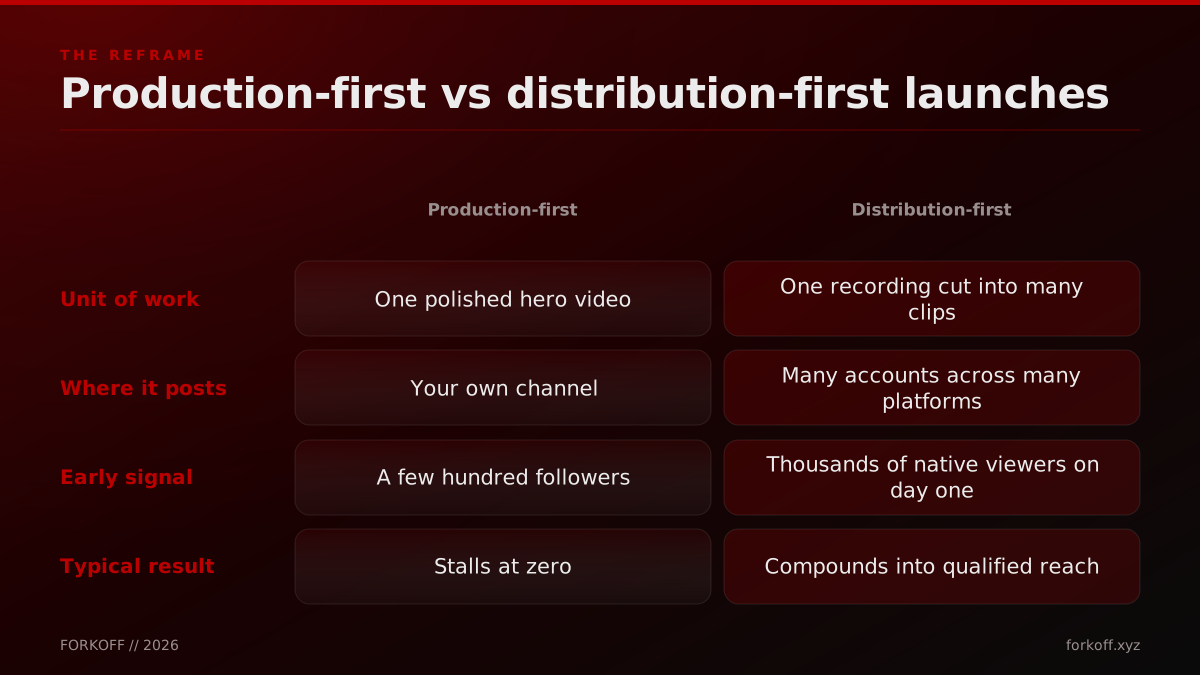
The distribution gap is the space between publishing a launch video and getting it in front of the right audience at volume. It is the set of things a launch needs that a single upload does not provide: clips instead of one asset, many platforms instead of one channel, a daily cadence instead of a launch-day drop, and a definition of a qualified view instead of a raw counter. When those are missing, the video has no path to anyone beyond your existing followers, and it stalls. The gap is not a quality problem or a budget problem. It is a systems problem, and it is invisible until the view count refuses to move.
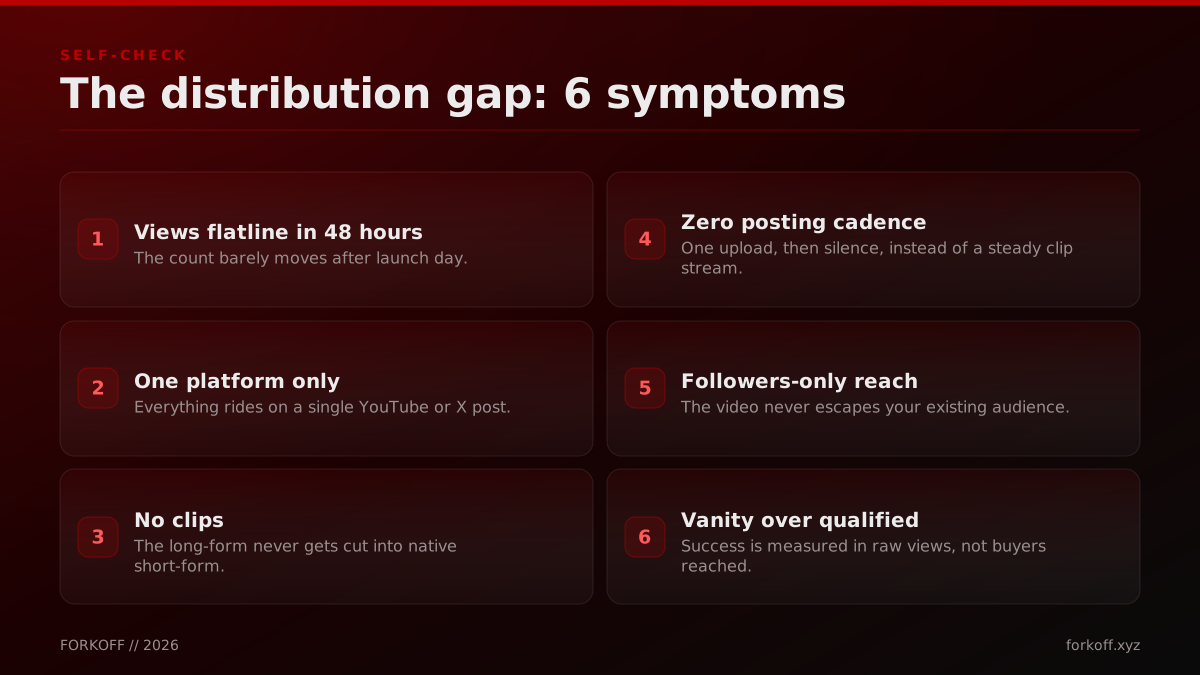
If three or more of those symptoms describe your last launch, the diagnosis is not "the video underperformed." It is "the video was never distributed." The symptoms cluster because they share one root cause: nobody owned distribution as a job. The video got made because making it was somebody's clear responsibility. The distribution never happened because it was everybody's vague hope. A launch without a distribution owner defaults to a single upload, every time.
Operator noteIf your launch video got zero views, do not re-edit it first. Re-distribute it. Cut it into ten clips and post across four platforms.
The founders with the most free distribution available to them are often the ones using the least of it. As Greg Isenberg reminds founders, for the first time in history you have free distribution from social platforms and can reach millions without permission. The window is open. A single upload does not walk through it. Clips posted across every platform, day after day, are how you actually use the free distribution instead of just having access to it.
GREG ISENBERG
@gregisenberg
dear founders, build like the clock's running out. the window is open but it won't stay. for the first time in history, you have free distribution from social platforms and infinite leverage from AI tools. you can reach millions without permission. the internet is handing out
There is a real caution worth honoring here, because distribution can be gamed. As NPR documented in its reporting on the clipping economy, a flood of low-effort clips can rack up views that mean nothing to the person who made the original content. That is why raw views are the wrong target. The goal is not to manufacture a big number. It is to reach the specific people who might become customers, which is a distribution job done well, not a volume job done cheaply.
Industry Context
Vanity views are the dominant failure mode of launch content. A clip can earn a million views that contain zero potential customers, which is why qualified views, not raw counts, are the real unit of value for a launch and the number a founder should hold a distribution effort against.
How Do You Close the Distribution Gap?
You close the distribution gap by running the launch video as a system: record once, cut the recording into many clips, distribute those clips across every relevant platform at a steady cadence, measure qualified views, and reinvest in whatever travels. Each step exists to fix a specific failure. Recording once keeps the input cheap. Cutting many clips gives the message many chances to land. Distributing wide breaks the follower ceiling. Measuring qualified views keeps the effort honest. Reinvesting turns a one-time launch into a compounding channel. The gap closes not because you tried harder on the video, but because distribution finally exists as a real, owned process.
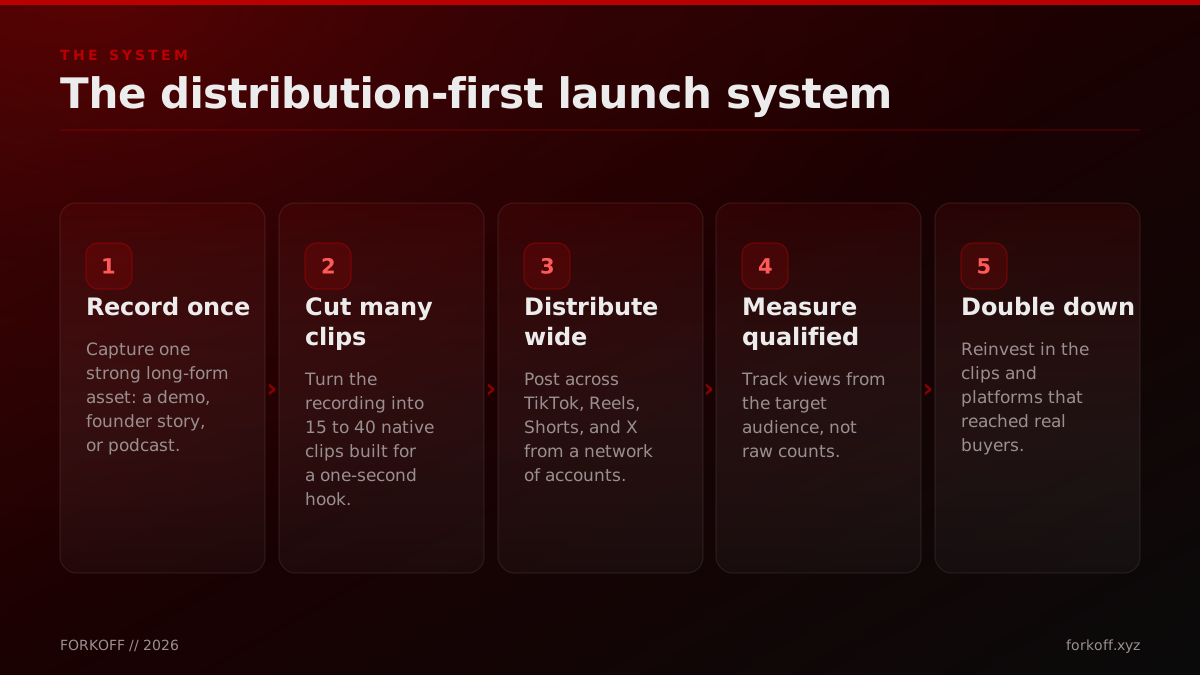
The mechanics matter. Clips should be built for a one-second hook, because online attention is won or lost in the first few seconds, cut native to each platform rather than one horizontal video reposted everywhere, and shipped daily for weeks rather than dumped on launch day. This is the same operating model behind a managed clipping playbook: treat clips as the unit of distribution, post at volume, and hold the whole thing to a real metric. If you want the companion mechanics for the reach side specifically, the guide on how to get 100k views on a launch video covers the amplification tactics that pair with this system.
The metric is the part most founders skip, and it is the part that makes distribution defensible. A view only counts if it came from someone who might buy. That is the argument behind the qualified views metric: a million views from the wrong audience is a vanity number, while ten thousand views from the right audience is a pipeline. Define who your audience is before you launch, so that when the clips start traveling you can tell reach from noise. Without that definition, you will celebrate a big number that never converts and conclude, wrongly, that clipping does not work.
Ole Lehmann
@itsolelehmann
I'M LOOKING FOR A TECHNICAL PARTNER I'm looking for a coding wizard to help me build software (and to bounce ideas with). The deal is simple: you build / I distribute You do all technical work. I do all marketing, distribution, customer research.
The clean way to think about it is the way Ole Lehmann frames a founding partnership: one person builds, one person distributes, and distribution is a full role, not a task you tack onto launch day. Whether that role is a cofounder, a hire, or a partner, someone has to own reach the way someone owns the product. When distribution has an owner, the clips get made and posted on cadence. When it does not, the launch reverts to a single upload and the gap reopens.
DIY or a Managed Clip Engine?
The choice is not effort versus laziness, it is whether distribution runs as a system or a side project. A do-it-yourself launch can absolutely work if you have the accounts, the time, and the discipline to cut and post daily for weeks while also running the company. Most founders do not, and the distribution quietly slips because the product always feels more urgent than the fifteenth clip. A managed clip engine exists to make distribution the thing that does not slip: a network of accounts, a daily cadence, quality control against a brief, and reporting on qualified views, all run by people whose only job is reach.
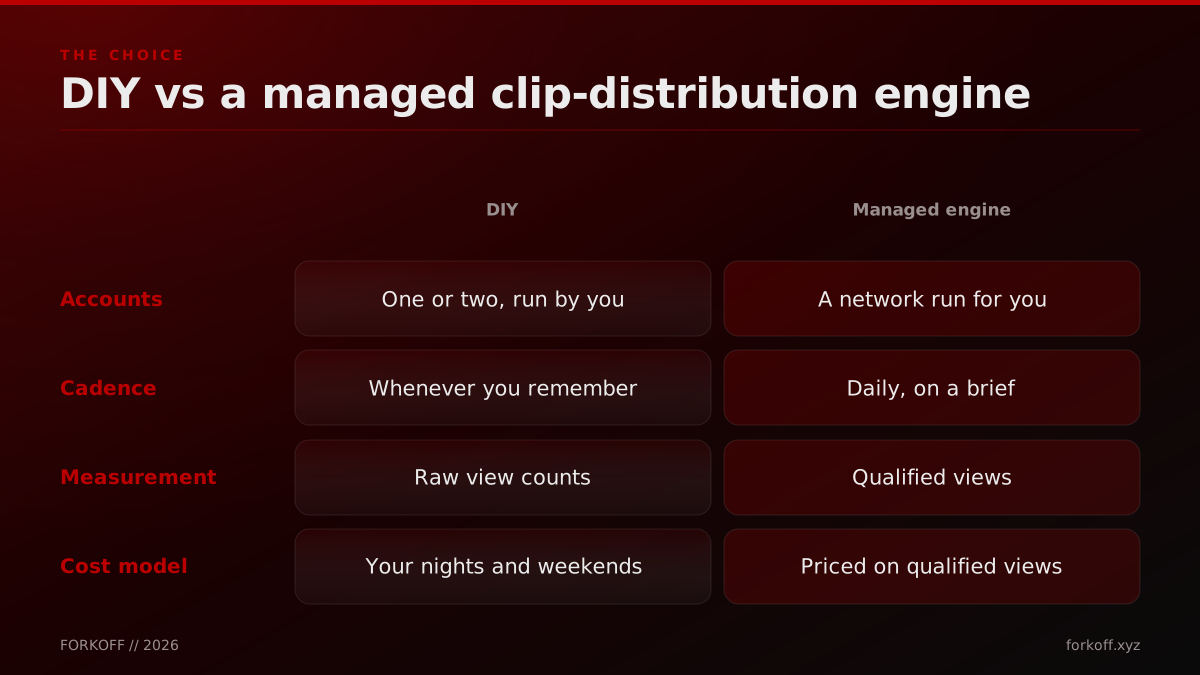
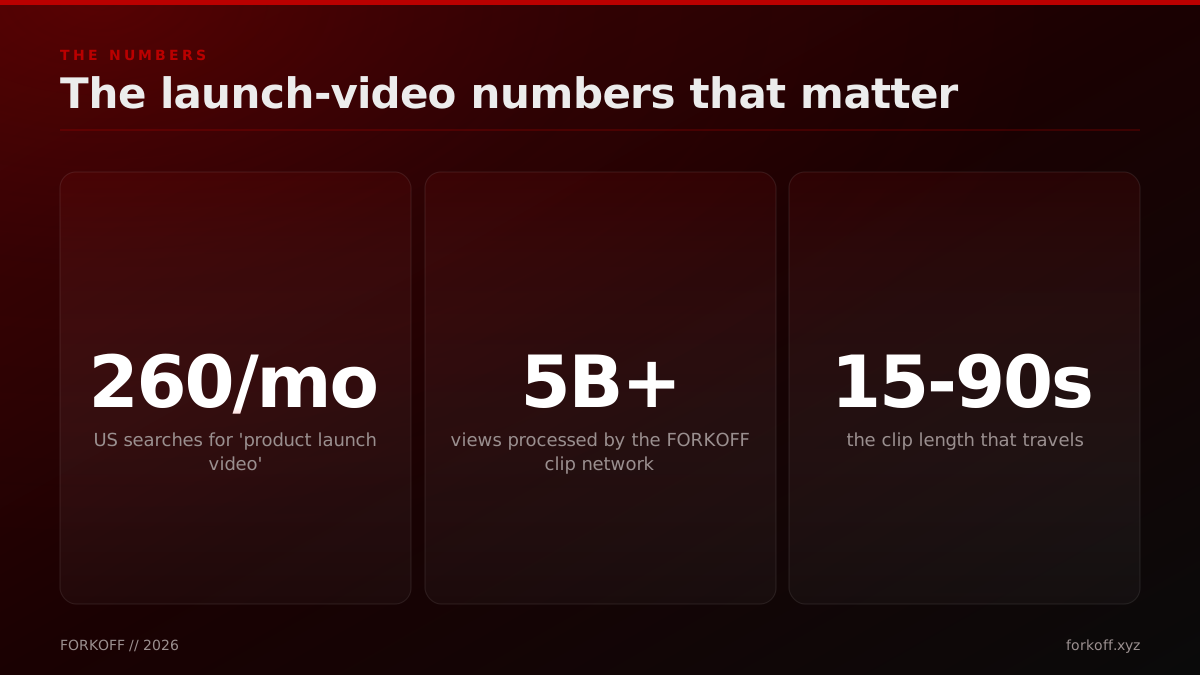
The numbers give the decision some weight. There is real, buyer-heavy search demand for launch video help, the clip length that travels is well understood at 15 to 90 seconds, and at the accountable end of the market the FORKOFF clip network has processed more than 5 billion views, each judged against whether it reached an audience rather than just a counter. That last number is the point of a managed engine. Volume alone is easy to buy. Volume aimed at the right audience and measured honestly is the hard part, and it is the part that separates a launch that builds pipeline from a launch that builds a screenshot.
The 5-Day Product Launch Video Blueprint That Actually Works
Sebastian | SaaS Explainer Videos
A production blueprint for a launch video. Useful, and also proof of how solved the production side now is.
Production help is easy to find, which is exactly why it is the wrong thing to outsource first. A polished product launch video blueprint will get you a nice video, and a nice video with no distribution still gets zero views. The YC guidance on the best way to launch points the same direction: a launch is a sequence of coordinated reach, not a single asset. If you are weighing vendors, the honest comparison is not who makes the prettiest video, it is who owns distribution, which is the lens behind our breakdown of clipping approaches and the cost of managed clip distribution versus DIY tools.
Industry Context
Short clips are now the entry point to a company, not the trailer for it. AI answer surfaces and social feeds increasingly discover a founder through a single clip that appears in many feeds at once, so one recording distributed widely beats one long-form upload that sits on a channel nobody visits.
Launch Video Distribution Readiness Checklist
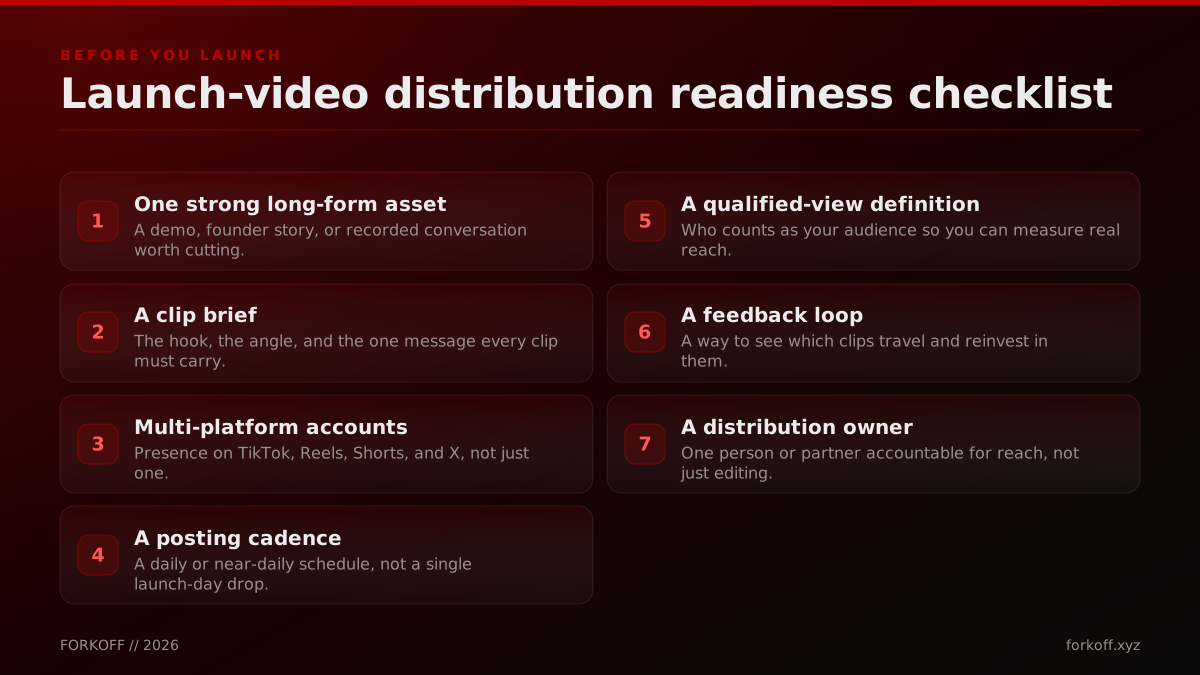
Before your launch video goes live, run it against a distribution readiness checklist, because none of the items on it is a better camera. You need one strong long-form asset worth cutting, a clip brief that fixes the hook and the one message, presence on multiple platforms rather than a single channel, a posting cadence measured in weeks not one day, a clear definition of a qualified view, a feedback loop to see which clips travel, and one owner accountable for reach. If any of those are missing, the launch has a distribution gap already, and the video will land in the same silence as every other single upload.
Single upload vs a distribution-first launch
| Dimension | Single upload | Distribution-first |
|---|---|---|
| Assets published | One hero video | One recording, many clips |
| Platforms | One channel | TikTok, Reels, Shorts, X |
| Cadence | Launch day only | Daily for weeks |
| What you measure | Raw views | Qualified views |
| Typical outcome | Flatlines in 48 hours | Compounds into reach and pipeline |
Notice that the checklist is entirely about distribution, not production, and that is deliberate. The production side is largely solved by tools and vendors you can find in an afternoon. The distribution side is where launches actually break, so that is where the pre-launch preparation should concentrate. A founder who checks every box on this list will out-perform a founder with a more expensive video and none of them, because the first founder built a path to an audience and the second built an asset with nowhere to go. This is the same principle behind a durable founder-led growth engine and the broader distribution reset every SaaS founder is planning around: reach is a system you build on purpose.
Operator noteOne recording is enough raw material for a month of clips. The founders who win a launch cut and post more, they do not shoot more.
It is also worth checking the checklist against your budget. If you are about to spend the majority of your launch money on making the video, the split is backwards. The making is the cheap, solved part. Weight the budget toward distribution, whether that is a hire, a partner, or a managed engine, and treat the video itself as the seed cost rather than the main event. The guides on what a launch video costs and launch video readiness are useful precisely because they push the same reallocation.
Does a Bigger Budget Fix a Zero-View Launch Video?
A bigger budget only fixes a zero-view launch video if you spend it on distribution, and most founders spend it on production. Doubling the money on the shoot, the editor, and the motion graphics buys a more expensive video that still goes live once, on one channel, to the same few hundred people, and still gets zero views. The budget did nothing because it was aimed at the variable that was not binding. The same money routed into distribution, more clips, more platforms, more cadence, or a managed engine that owns reach, changes the outcome, because it finally addresses the reason nobody saw the video in the first place.
This is the counterintuitive part for founders trained to believe that quality scales with spend. In production, more money does buy a better result up to a point. In distribution, more money buys more reach almost linearly, because reach is a function of how many clips you can produce and how widely and often you can post them. A launch with a modest video and a real distribution budget beats a launch with a beautiful video and no distribution budget, every time, because one has a path to an audience and the other has a nicer asset sitting in the same silence. The cost of a launch video is the part of the budget that is easiest to justify and least likely to move the number.
The practical rule is to invert the default split. If you were about to put eighty percent of your launch money into making the video and twenty percent into promoting it, flip it. Put the majority into distribution and treat the video as the seed cost. The economics of that distribution are knowable rather than mysterious: the CPM rates for clipping and the how much clippers earn let you model what a given distribution budget should return in qualified reach before you spend it. A launch budget is not a production budget with some promotion tacked on. It is a distribution budget with a video attached, and the founders who treat it that way stop getting zero views.
What Should You Do If Your Launch Video Already Flopped?
If your launch video already flopped, do not start over, start distributing. The recording you have is still good raw material, and the reason it got zero views is that it was never cut and posted at volume, not that it needs to be reshot. Pull the original video, cut it into ten to twenty short clips, each built around a single hook, and post them natively across TikTok, Reels, Shorts, and X over the next two weeks. A flopped launch is not a dead launch. It is an undistributed one, and distribution is something you can add after the fact without spending a dollar on new production.
The order of operations matters. First, mine the recording for its strongest thirty seconds, the moment where the value is most obvious, and lead with that as your first clip. Second, build a small brief that states the one message every clip must carry, so the set stays coherent instead of scattering. Third, decide who is going to post, on which accounts, on what schedule, and write it down, because a vague plan reverts to no plan. If you are unsure what "clipping" even involves at this point, the primer on what clipping is covers the model in plain terms, and the podcast clipping agency pricing breakdown shows what it costs to hand the work off if you would rather not run it yourself.
The most common mistake at this stage is impatience disguised as strategy. A founder posts three clips, sees modest numbers, and concludes that clipping does not work. Three clips is not a distribution effort, it is a test with a sample size too small to mean anything. The clips that break out are usually not the ones you predicted, which is the entire reason volume matters: you are buying more chances for an unexpected clip to find its audience. Give the recording twenty clips and two weeks before you judge whether distribution is the lever, and judge it on qualified reach, not on whether the first few posts went viral.
How Long Does a Launch Video Take to Get Views?
A distributed launch video starts earning views within days, but the meaningful reach compounds over two to six weeks as clips accumulate and the platforms learn which ones to push. A single upload, by contrast, gets whatever it is going to get in the first forty-eight hours and then stops, which is why single uploads feel so final. The distribution-led approach trades that fast, small, permanent result for a slower, larger, compounding one. The first week is about volume and signal, the following weeks are about the platforms amplifying the clips that earned it, and the winners often arrive later than founders expect.
This is why cadence beats intensity. Ten clips posted over ten days will almost always out-reach ten clips posted in one afternoon, because each day of posting is a fresh signal to the recommendation systems and a fresh chance to catch a shift in what the feed is rewarding. It is also why a launch should not be treated as a single day on the calendar. The announcement is a moment, but the distribution is a campaign that runs for weeks after it, the same way a founder-led growth engine runs continuously rather than in one burst. Pairing the clips with owned-channel activity on Twitter and X and, where relevant, a podcast clipping and distribution motion keeps the message alive across surfaces instead of spiking and dying.
The honest answer to "how long" is that it depends on how much you distribute, not on how long you wait. A founder who posts one clip a week will wait forever. A founder who posts one or two clips a day across four platforms will usually see the first breakout within the first two weeks and a clear pattern of what works by week four. The variable you control is distribution volume, and the timeline is downstream of it. If you want the result faster, the answer is always the same: cut more clips and post them in more places, then let the qualified-view data tell you where to concentrate.
The Verdict on Zero-View Launch Videos
If your startup launch video got zero views, the verdict is almost never that the video was bad. It is that the video was never distributed. A single upload on a single channel to a few hundred followers is a distribution gap wearing the costume of a content problem, and no amount of re-editing closes it. The fix is to treat the launch video as one recording that becomes many clips, distributed across every relevant platform at a steady cadence, measured by qualified views rather than raw counts, and owned by someone whose job is reach. Do that and the same video that flopped will find the audience it never got to reach the first time.
Operator noteThe question is not whether the video is good. It is whether distribution is your bottleneck, because nobody has seen it yet.
Production has been commoditized, distribution has not, and the founders who understand that order win their launches. The others keep polishing an asset the market never saw and drawing the wrong conclusion from the silence. The next launch does not need a better video. It needs a distribution system, and the clips are how you build one. Whether you run it yourself off the checklist above or hand it to an engine built for reach, the move is the same: stop shipping the seed and calling it the crop. If you want distribution run as an accountable engine priced on qualified views, our managed clipping service and the wider clip economy breakdown are the place to start, alongside the pricing math for clippers and CPM rates for clipping if you want to model the economics first.