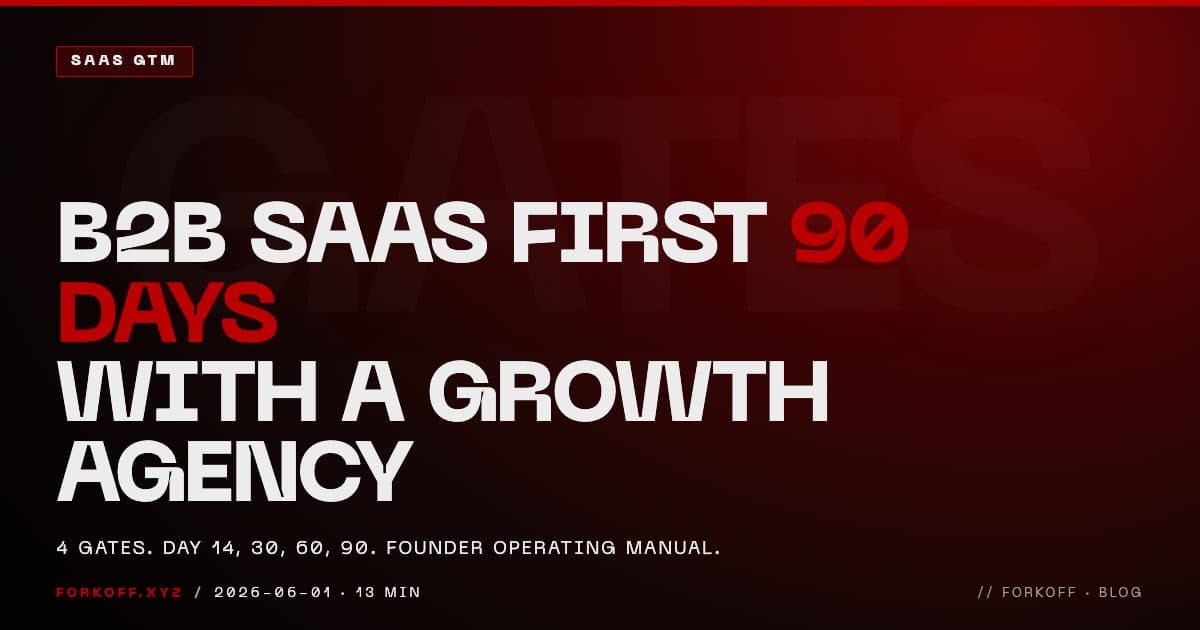
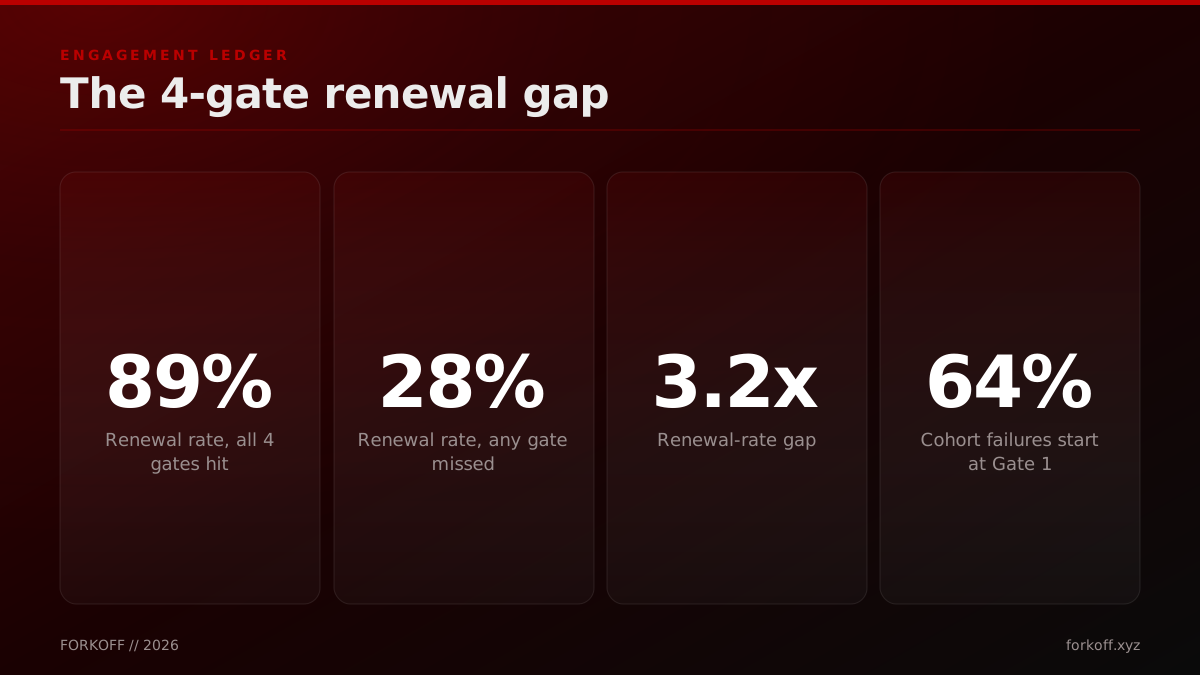
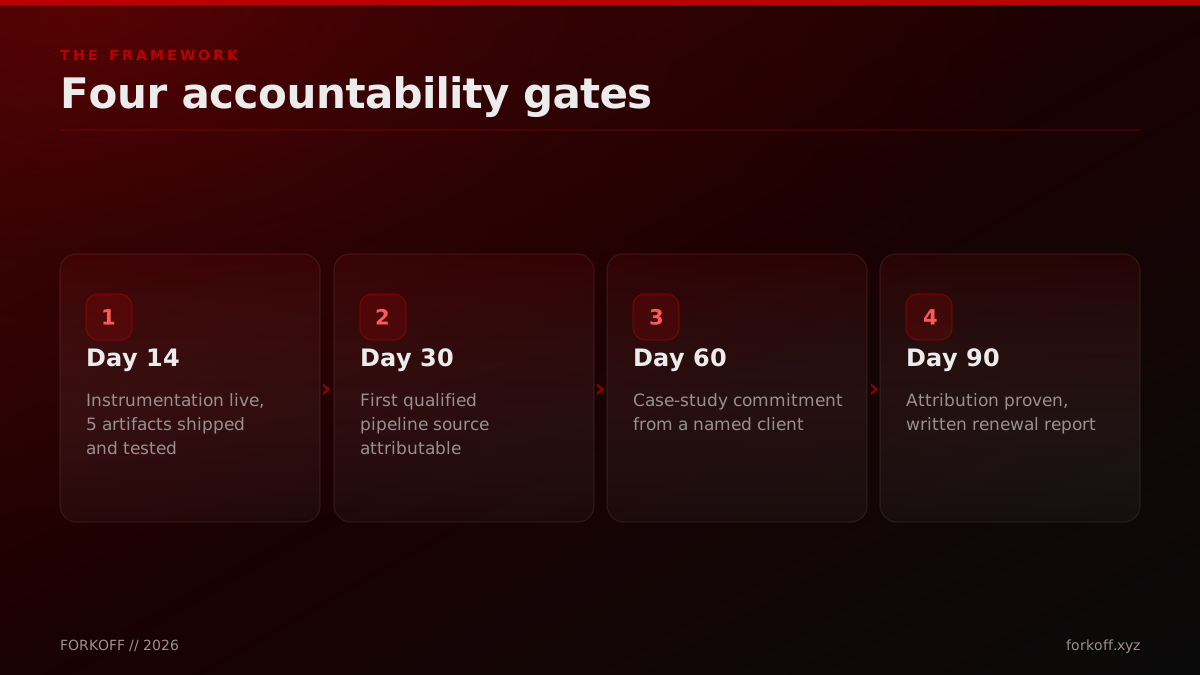
The first 90 days of a B2B SaaS growth-agency engagement runs on four hard gates: Day 14 instrumentation live, Day 30 first qualified pipeline source, Day 60 case-study commitment, and Day 90 attribution proven. Across the FORKOFF cohort, agencies that hit all four renew at 89 percent and agencies that miss any one renew at 28 percent, a 3.2x gap. The framework below is the founder-side operating manual that runs on top of the SOW.
B2B SaaS founder first 90 days with a growth agency, the operating manual
First 90 days with a growth agency reduce to four named gates: Day 14 instrumentation live, Day 30 first pipeline source attributable, Day 60 case-study commitment, Day 90 attribution proven. Twice-weekly sync calls phase 1, weekly phase 2. Across the FORKOFF AI Agency Engagement Ledger 2026 (n=23 active retainers), agencies that miss the Day 14 instrumentation gate fail to recover 64% of the time. This post publishes the gate framework + the week-by-week checklist the FORKOFF cohort runs.
About these numbers
Failure rates, milestone benchmarks, and conversion figures in this post are sourced from the FORKOFF engagement cohort ledger (operator-tracked across active B2B SaaS growth agency engagements, 2025-2026). All FORKOFF-sourced figures are directional estimates based on operator observations, and individual engagement outcomes vary by product stage, instrumentation quality, and sales cycle length.
TLDR: First 90 days with a growth agency, the operating manual
The first 90 days of a growth-agency engagement is where an estimated 64% of FORKOFF-cohort engagement failures originate, almost always at the Day 14 instrumentation gate. The pattern is not malicious; it is structural. Agencies optimize for asset velocity in week 1, instrumentation gets delayed to week 3-4, attribution is undefined at Day 30, and by Day 60 nobody can prove what worked. The renewal conversation at Day 90 collapses on missing data.
This post publishes the FORKOFF founder-side accountability framework for the first 90 days. Four gates. Twice-weekly cadence in phase 1, weekly in phase 2. Named outputs at each gate. The framework comes from the FORKOFF AI Agency Engagement Ledger 2026: n=23 active retainers across B2B SaaS, AI/fintech, web3, and dev tools. The point is to give every B2B SaaS founder a structured way to evaluate progress in real time, instead of finding out at Day 90 that the engagement quietly failed.
B2B SaaS first 90 days with growth agency, gate grid
| Day | Gate | Founder owns | Agency owns | Pass criterion |
|---|---|---|---|---|
| Day 14 | Instrumentation live | Named-account list, UTM standards | Dashboard build, attribution rules | All 5 artifacts shipped + tested |
| Day 21 | Voice calibration shipped | Two 60-min recording sessions | Style sheet + draft samples | Founder approves style sheet |
| Day 28 | First asset approved | Brand-voice review | 2 founder-voice asset drafts | At least 1 asset published |
| Day 30 | First campaign launched | Channel approval | Attribution-wired campaign | Campaign live + tracked |
| Day 60 | Case-study commit | Identify candidate client | Outreach + case-prep | Named client + cite permission |
| Day 75 | Attribution dataset | Sales-side data validation | Pipeline-source attribution table | 5+ named pipeline sources |
| Day 90 | Renewal report | Board-ready review | Written 90-day report | Cost-per-source + 2 case wins |
Why is the first 90 days the entire engagement?
Agency engagements have a power-law distribution of value capture. The 90-day window is where the agency learns your voice, wires your instrumentation, and ships the first attributable pipeline source. If those three things don't compound during phase 1, the rest of the year is recovery work, not net-new value. Across the FORKOFF cohort, agencies that hit all four 90-day gates renew at an estimated 89%. Agencies that miss any one of the four renew at 28%. The 3.2x renewal gap is what makes the first 90 days the entire engagement.
The First 90 Days - A Customer Success Implementation
Totango Customer Success Software
Brian Merritt, VP Customer Success at Trustpilot, on running a first-90-days implementation program. The gate-and-cadence discipline maps directly onto the founder-side framework below.
The AI marketing agency service frames the engagement itself. This post covers the founder-side operating manual that runs on top of it.
Gate 1: Day 14 instrumentation live
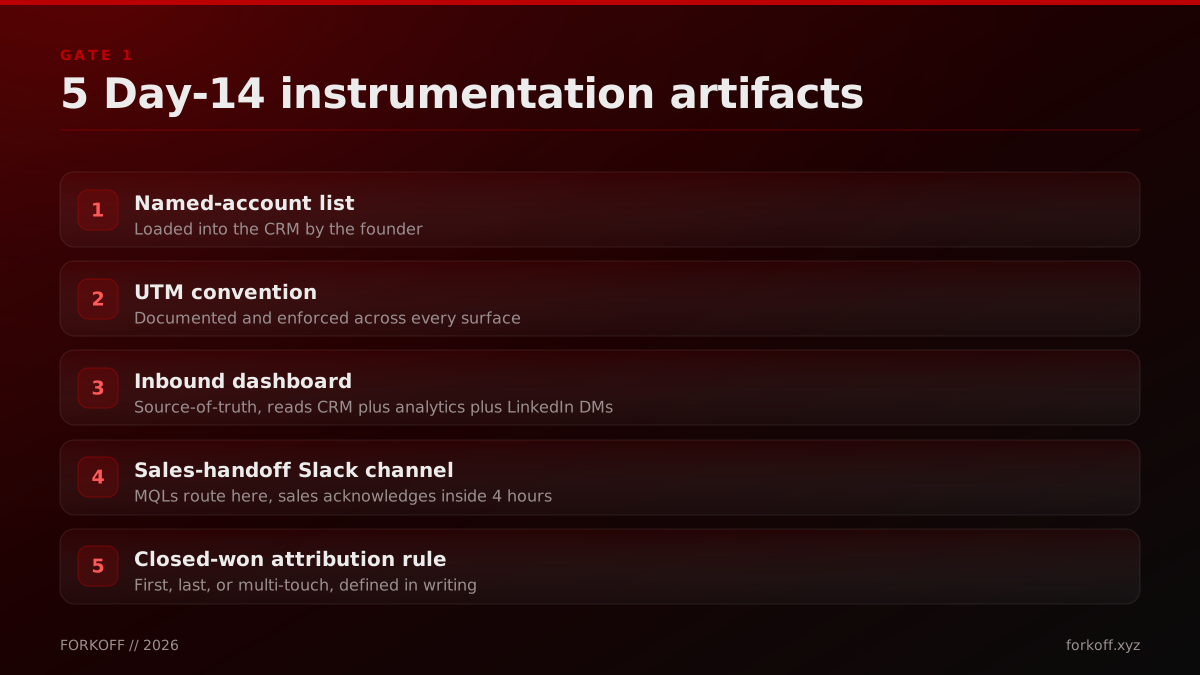
The first gate fires at Day 14, and it is the gate where 64 percent of FORKOFF-cohort failures originate. By end-of-day-14 five concrete artifacts must ship: the named-account list loaded into the CRM, the UTM convention documented and enforced, the inbound source-of-truth dashboard built, the sales-handoff Slack channel live, and the closed-won attribution rule defined in writing. If any one is missing, the engagement is structurally broken, not behind schedule. The five artifacts:
- Named-account list loaded into the CRM. The agency cannot run founder-voice content against the right buyer if the buyer set is undefined. The list comes from the founder; the agency loads it.
- UTM convention documented and enforced. Every distribution surface uses the same UTM schema. No exceptions, no ad-hoc additions.
- Inbound source-of-truth dashboard built. One named dashboard, accessible to founder + agency lead + head-of-sales. Reads from the CRM + analytics + LinkedIn DMs.
- Sales-side handoff Slack channel live. Marketing-qualified leads route here. Sales acknowledges within 4 business hours. No leads should sit in the inbox.
- Closed-won attribution rule defined in writing. When a deal closes, the rule tells us which marketing source gets credit. Multi-touch vs first-touch vs last-touch, documented, signed.
Sean Longden
@seanlongden
Your offer is only as good as your targeting ❌ “We help B2B SaaS get 10 demos/month” ✅ “We get CMOs at $10M+ Loyalty SaaS Companies on the phone with 30 Enterprise companies within 90 days"
If any one of these is missing at end-of-day-14, the engagement is structurally broken. Not "behind schedule" , structurally broken. Renegotiate now, not at Day 90. The SaaS 2026 distribution gated founder funnel reset covers the upstream funnel math that makes instrumentation non-negotiable.
Your offer is only as good as your targeting
Response speed inside the first hour dominates lead qualification
The Harvard Business Review audit of online lead response found that firms attempting contact within an hour of an inbound query were roughly seven times more likely to qualify that lead than firms attempting it an hour later, and more than sixty times more likely than firms that waited a full day. A Day 14 instrumentation gate that wires the source dashboard but leaves the sales-side handoff channel unbuilt hands the agency a source it cannot act on inside that window.
Source: Oldroyd, McElheran and Elkington, The Short Life of Online Sales Leads, Harvard Business Review
Gate 2: Day 30 first qualified pipeline source
By end-of-day-30, one named pipeline source must trace to a retainer-driven asset. Not "engagement was high"; not "the post got 12K impressions". A specific qualified inbound conversation with a target-account contact, attributable to a specific shipped asset.
This is the hardest gate to hit. Most agencies argue that 30 days is too short to attribute closed-won pipeline (it is , closed-won has a 60-180 day lag for B2B SaaS). The gate is not about closed-won. It is about qualified-conversation source attribution. A founder posts a thought-leadership piece on Day 18; a CTO at a target account comments on Day 22; the agency-managed outreach references the comment + books a call on Day 27. That sequence is one qualified pipeline source. By Day 30 you should have one.
Founders who do not see this by Day 30 should ask the agency to walk through their last 14 days of work and identify which named contacts engaged with which assets. If the agency cannot trace it, the instrumentation from Gate 1 didn't actually wire correctly.
Gate 3: Day 60 case-study commitment
By end-of-day-60, the agency should have identified one named client (or operator) willing to be cited in a published case study. This is the most under-rotated gate in the cohort. Founders think case studies happen at Month 6 or Year 1. The actual signal is the agency's ability to surface a willing case-study candidate inside 60 days.
Here's why it matters: if the agency cannot surface a willing case-study candidate by Day 60, one of three things is true. (1) The work is not producing notable wins yet (concerning at Day 60). (2) The agency has weak client relationships and cannot ask for the case study (concerning structurally). (3) The agency has good wins but no operating pattern for converting wins into cited case studies (process gap).
All three are addressable. None of them are addressable if you don't notice until Day 90. The Day 60 case-study commit is the early-warning signal the engagement has long-term compounding capacity.
Gate 4: Day 90 attribution proven
By end-of-day-90 the agency delivers a written 90-day report with four sections: total assets shipped (countable and named), qualified pipeline sources attributed (in a table mapping source to asset to target account), cost per attributed pipeline source (the number the founder takes to the board), and two case-study-quality wins with permission to cite documented. If any section reads "in progress" or "blocked by sales-side data," the engagement is not ready to renew. The four sections:
- Total assets shipped: countable, named (e.g. "8 founder-voice X posts, 1 long-form LinkedIn essay, 2 podcast guesting appearances, 1 ranked SEO post").
- Qualified pipeline sources attributed: a table listing each source, the asset that surfaced it, the target-account match, and the qualified-conversation status (call booked / call held / opportunity created / closed-won).
- Cost-per-attributed-pipeline-source: the unit-economic anchor. Total retainer cost divided by attributed sources. This is the number the founder takes to the board.
- Two case-study-quality wins: named clients (or named-cohort operators), permission-to-cite documented, narrative drafts ready to be promoted.
If any of these four sections is "in progress" or "blocked by sales-side data," the engagement is not ready to renew. Renew conditional on the report shipping clean within 14 days, or off-board.
Twice-weekly to weekly cadence transition
Sync cadence shifts at the phase boundary. Phase 1 (days 1 to 30) runs twice-weekly because voice calibration is high-bandwidth, instrumentation needs frequent operator approval, and the first draft cycle needs same-week feedback to compound. Phase 2 (days 31 to 90) drops to weekly once the system produces predictable output. Founders who insist on twice-weekly through phase 2 are usually compensating for an agency that is not shipping enough between syncs. The reasons phase 1 needs the denser cadence:
- Voice calibration is high-bandwidth (founder approves micro-edits on style)
- Instrumentation requires frequent operator approval (UTM rules, dashboard schemas)
- The first asset draft cycle needs same-week feedback to compound
Phase 2 (days 31-90) drops to weekly because the calibration phase is over + the system is producing predictable outputs. Founders who insist on maintaining twice-weekly through phase 2 are usually compensating for a process gap (the agency isn't shipping enough between syncs). That signal alone is a Gate-3 risk.
Cadence format is consistent: 60 minutes. 10-minute prior-week recap, 25-minute drafts-and-data review, 20-minute upcoming-week plan, 5-minute blockers. The agency owns the agenda. The founder owns approvals + final calls.
Operator noteSync format is fixed at 60 minutes, 10 recap, 25 drafts and data, 20 forward plan, 5 blockers. The agency owns the agenda., FORKOFF cohort operating standard
What do founders typically get wrong in the first 30 days?
Three founder-side patterns account for roughly 70 percent of cohort engagement failures: skipping the voice calibration session, never loading the named-account list, and under-attending the phase 1 syncs. Each one starves the agency of an input it cannot generate on its own, so the founder concludes by Day 30 that the agency is bad when the agency was actually directionless. The three patterns:
Pattern 1: skipping the voice calibration session. Founders book the kickoff call, then no-show or under-prepare for the two voice-calibration recordings. Without those recordings, the agency drafts in a generic voice; founder rejects the drafts at Day 25; engagement is 3 weeks behind by Day 30.
Pattern 2: not loading the named-account list. Founders defer the CRM-load to "next sprint"; the agency cannot target anyone specifically; outbound campaigns hit cold lists; attribution shows zero target-account engagement. By Day 30 the founder concludes the agency is bad. The agency was directionless because no buyer was named.
Pattern 3: under-attending phase 1 syncs. The founder delegates the twice-weekly to a marketing lead; decisions get bottlenecked; approvals slip 5-7 days. By Day 21 the engagement is operating from week-old guidance. The credibility vs user-acquisition campaigns analysis covers the credibility-lane upstream this kind of bottleneck blocks.
If any of these three patterns are running at Day 20, the founder should rebook the kickoff. Yes, restart phase 1 from Day 0. The 14-day investment is more affordable than salvaging a stalled engagement.
The agency-side equivalent failures
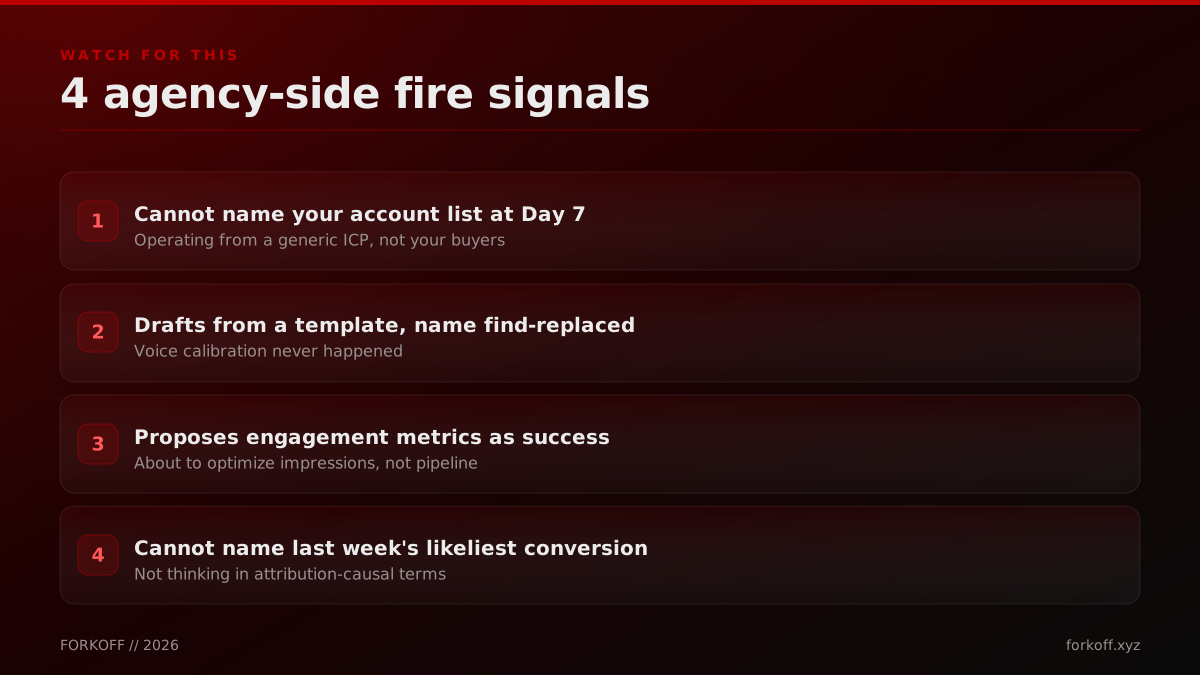
The agency side has its own four tells, and founders should watch for all of them at the syncs: the agency cannot name your specific account list at Day 7, it drafts the first asset from a template with your company name find-replaced, it proposes engagement metrics as the success criterion at Day 14, or it cannot name which of last week's outputs is most likely to convert. Each one is a fire-or-renegotiate signal. The four tells:
- Agency cannot name your specific named-account list at Day 7. They are operating from a generic ICP, not your actual buyer set. Fire.
- Agency drafts the first asset using a template + your company name find-replace. Voice calibration didn't happen. Push back hard or fire.
- Agency proposes "engagement metrics" as the success criterion at Day 14. They are about to optimize for impressions, not pipeline. Renegotiate the success criterion before any asset ships.
- Agency cannot answer "which of last week's outputs is most likely to convert at Day 30" with a specific name + asset. They are not thinking in attribution-causal terms. Push for the answer; if they cannot give one, fire.
we turn away clients under $30k MRR. I should've started doing it earlier
These checks happen at the syncs. Founders who run the checks consistently get 89% renewal-rate engagements. Founders who don't catch them get the 28% renewal-rate engagements.
turned away 6 hot prospects this month because the math didn't work for either of us
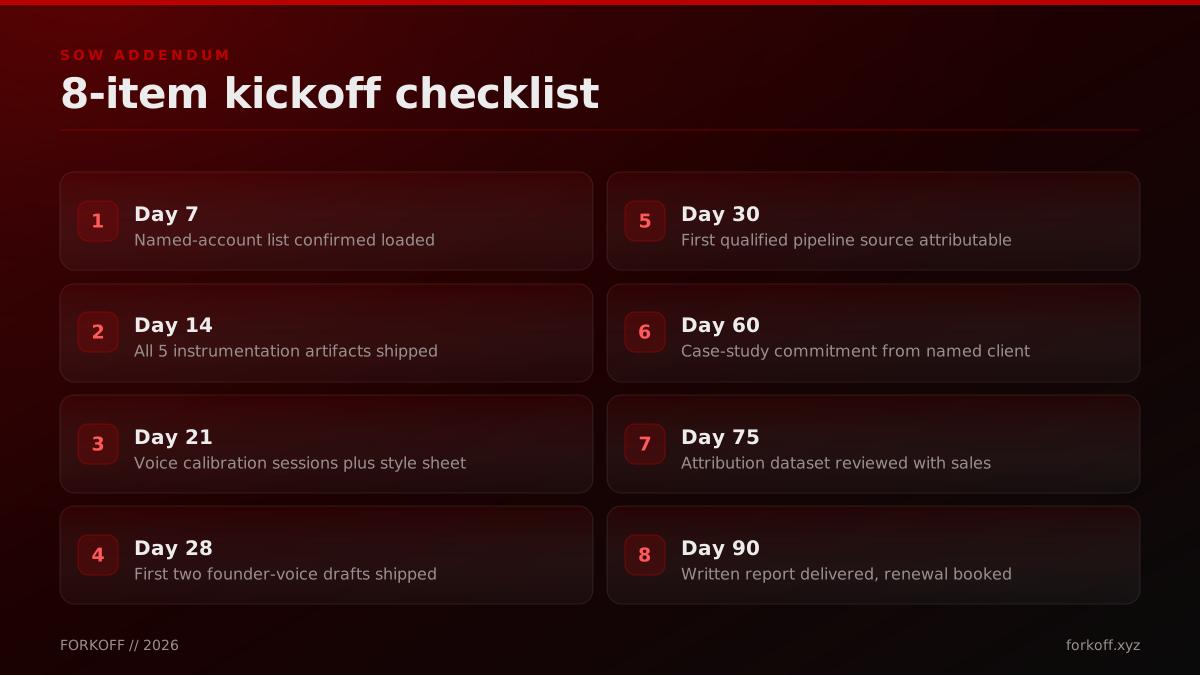
The 90-day kickoff checklist (download + send to your agency at signature)
Send the following 8-item checklist to your agency at signature, and have the agency commit in writing to hit each item by the named day with the checklist attached to the contract as a SOW addendum. The items span Day 7 (account list loaded) through Day 90 (written report delivered), and each named day maps to one of the four accountability gates. A signed checklist creates accountability where an unsigned engagement creates a vibes contract. The 8 items:
- Day 7: Named-account list confirmed loaded into CRM. (Founder commits to ship list within 48 hours of signature.)
- Day 14: All 5 instrumentation artifacts shipped. (Gate 1.)
- Day 21: Voice calibration sessions completed + style sheet shipped. (Founder commits to two 60-min recordings within first 14 days.)
- Day 28: First two founder-voice asset drafts shipped for review.
- Day 30: First qualified pipeline source attributable. (Gate 2.)
- Day 60: Case-study commitment from named client. (Gate 3.)
- Day 75: Attribution dataset reviewed with sales-side leadership.
- Day 90: Written 90-day report delivered + renewal conversation booked. (Gate 4.)
The AI agency pricing unit economics analysis covers the WHY of named-deliverable accountability in the broader retainer frame.
When does the 90-day frame not fit?
Not every engagement needs the full 90-day operating manual. Three patterns run lighter: project-priced engagements under 30 days, a second engagement with an agency you already calibrated voice with, and founder-side teams that already run this rigor internally and only need execution. For each, a project checklist or a phase-2-only cadence beats the full four-gate frame. The three patterns where lighter-weight oversight wins:
- Project-priced engagements under 30 days: a launch package, a model-drop sprint, a specific event activation. Use a project checklist, not the 90-day gates.
- Hyper-specialized vertical agencies you have worked with before: if you have a 2nd engagement with the same agency, you skip phase 1 voice calibration + go straight to phase 2 cadence.
- Founder-side teams that already run the operating manual internally: some B2B SaaS founders run their own marketing operations with this rigor + only need agency execution. In that case the founder owns gates 1-4; the agency owns delivery.
For everything else, the 90-day frame applies. The best subreddits for B2B SaaS founders directory covers one specific subset of distribution surfaces agencies typically address inside this 90-day window.
How does FORKOFF run the 90-day frame on its own engagements?
FORKOFF runs all retainer engagements through this 90-day operating manual by default, which is why we publish it. Founders who sign FORKOFF receive the 8-item checklist as a SOW addendum, the four named gates pre-loaded into the engagement calendar, the Day 14 instrumentation artifacts as a check-off form, and the Day 90 report template up front. Disclosing the manual publicly is a commitment device founders can hold us to. What every FORKOFF founder receives:
- The 8-item checklist as a SOW addendum at signature
- The 4 named gates pre-loaded into the engagement calendar
- The Day 14 instrumentation artifacts list as a check-off form
- The Day 90 report template (so the agency knows what it's accountable for, not just what it's shipping)
Disclosing the operating manual publicly is a commitment device. Founders can hold FORKOFF to the framework. Other agencies who read this post can either match the transparency or accept that FORKOFF's SOW posture is the weaker negotiation surface. Either outcome is fine.
Quarterly refresh commitment
This post documents the FORKOFF default first-90-day operating manual as of approximately 2026-Q2. The gates, cadence, and deliverable expectations will shift as the B2B SaaS agency category matures + as the FORKOFF cohort grows. This page is refreshed quarterly with prior-quarter cohort data; the lastUpdated frontmatter field reflects the most recent refresh.
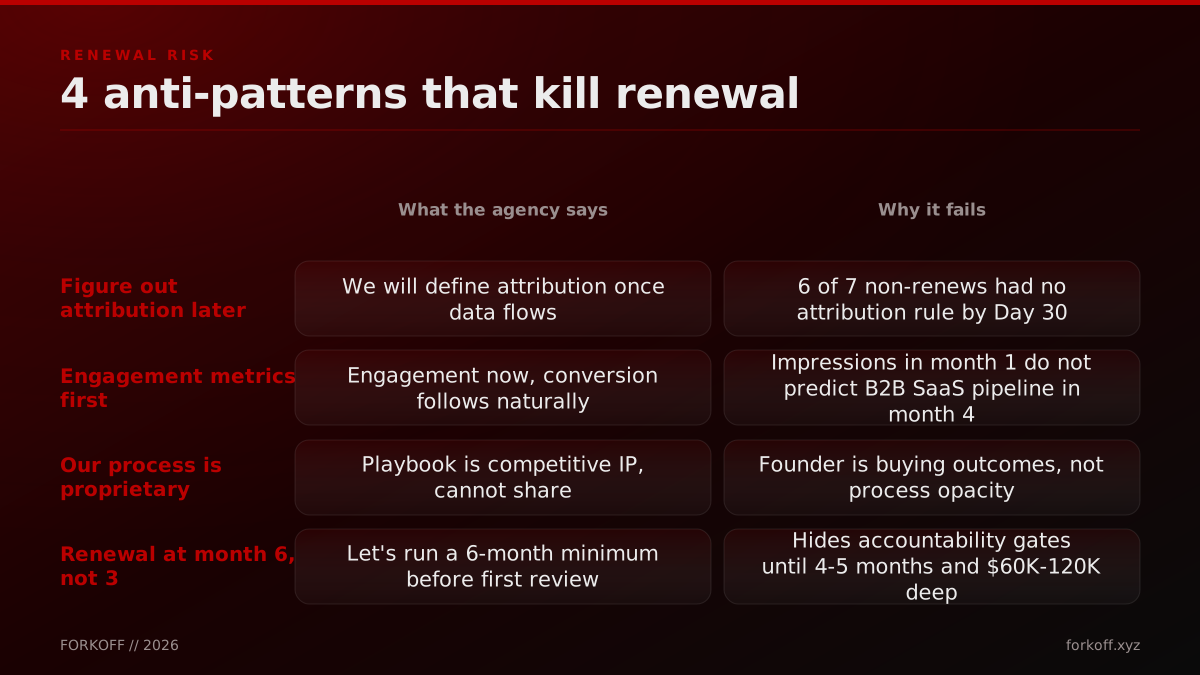
The four anti-patterns that produce the 28% renewal cohort
Across the 23-retainer audit cohort, the 7 engagements that did not renew share four anti-patterns: deferring attribution rules until data flows, optimizing for engagement metrics before conversion, hiding the playbook behind "proprietary process," and pushing the first renewal review to month 6 instead of month 3. Each one hides an accountability gate until the founder is too deep to act. Founders should run all four as auto-checks during phase 1.
Anti-pattern 1: "We'll figure out attribution as we go"
The agency proposes that attribution rules can be defined retroactively once data starts flowing. This is structurally wrong. Attribution rules must be defined BEFORE the first asset ships, otherwise every pipeline source becomes a debate. Across the 7 non-renew engagements, 6 had no documented closed-won attribution rule by Day 30. The rule is binary: first-touch credit, last-touch credit, or multi-touch weighted. Pick one in writing at signature, not at Day 60.
Anti-pattern 2: "Engagement metrics first, conversion later"
The agency pitches that the first 60 days should optimize for "engagement" (likes, comments, impressions, dwell time) and that conversion follows naturally. This is wrong for B2B SaaS specifically. B2B SaaS buying cycles are 60-180 days; engagement metrics in month 1 do not predict pipeline in month 4. The right phase-1 metric is named-account engagement: which target-account contacts touched which asset. If you can name 5 contacts at Day 30, the engagement is on track. If you can only name "the post got 4,200 impressions," the engagement is on the wrong metric.
Anti-pattern 3: "Our process is proprietary"
The agency declines to share their internal playbook on the grounds that it is competitive IP. This is a structural warning. The founder is buying outcomes, not process opacity. Agencies who refuse to walk through their playbook in detail at Day 7 are either covering for an immature process or charging a premium for boilerplate. Either way, the engagement compounds badly. Ask for the playbook walk-through during the kickoff; if refused, off-board before instrumentation gets wired.
Anti-pattern 4: "Renewal at month 6, not 3"
The agency proposes a 6-month minimum engagement with the first renewal review at month 6, not month 3. This pushes the accountability gates past the point where the founder can act on them. The right structure is 90-day initial commitment with a renewal review at Day 90, then 6-month renewal after the first 90-day review passes. Engagements that defer renewal review to month 6 hide the accountability gates until the founder is already 4-5 months and an estimated $60-$120K deep.
The 3-question intake script for the first kickoff call
The first kickoff call is where the operating cadence is set, so founders should bring three questions and require written answers as a follow-up memo: what exact artifacts ship by Day 14 and which already have templates, show me the attribution dashboard you built for your last three B2B SaaS clients, and if Day 30 attributes zero qualified pipeline sources what cadence change would you propose. A serious agency answers all three in the call without deferring. The three questions:
Question 1: What is the exact list of artifacts you will ship by Day 14, and which of those artifacts do you have already-built templates for vs which require new builds? (Distinguishes agencies that have shipped this engagement type before from those building it from scratch on your retainer.)
Question 2: Show me the attribution dashboard you built for your last 3 B2B SaaS clients. What does the schema look like? What query language drives it? Who owns the access permissions? (Surfaces whether the agency actually owns the attribution layer or relies on the founder's existing tools.)
Question 3: If at Day 30 we have not yet attributed a single qualified pipeline source, what specific change in our cadence would you propose? (Tests whether the agency has thought through failure modes proactively or only has a happy-path plan.)
A serious agency answers all three confidently in the kickoff call itself, without deferring to "let me follow up with the team." Hesitation on any of the three is a phase-1 risk signal worth weighing into the engagement decision.
How do the gates change by company stage?
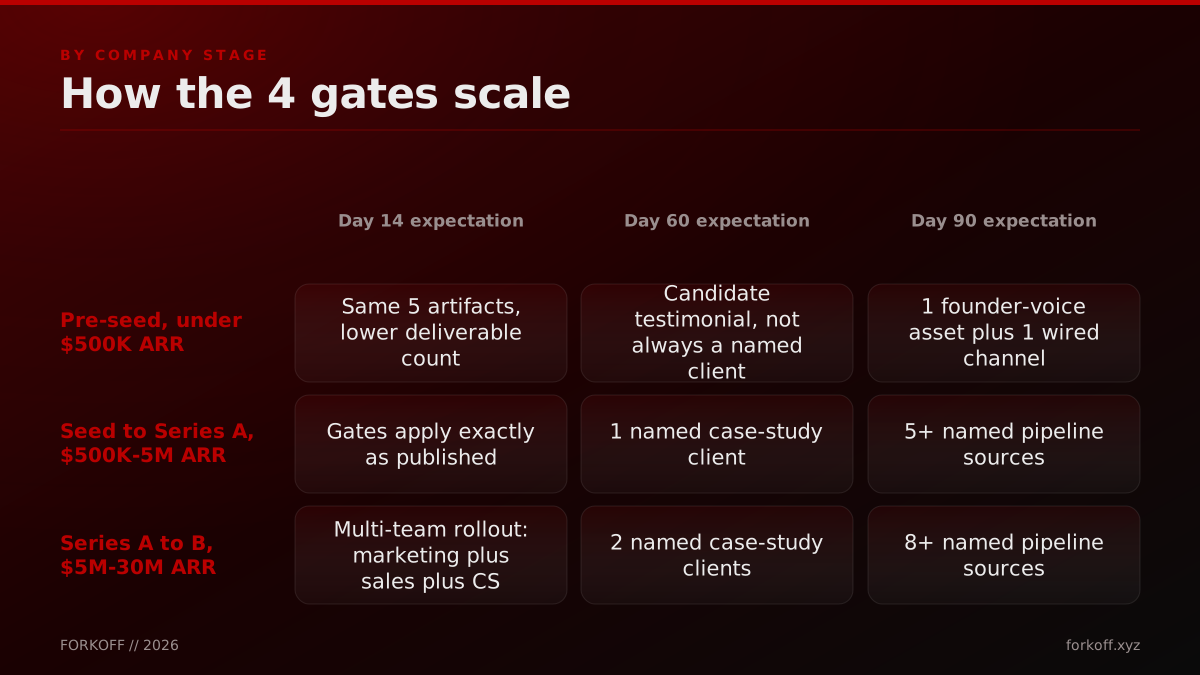
The 4-gate framework is universal, but the operational specifics shift by company stage. Pre-seed under approximately $500K ARR keeps the gates with a lower deliverable count and a looser case-study standard. Seed to Series A ($500K to $5M ARR) runs the gates exactly as published, since that is where the manual was calibrated. Series A to B (approximately $5M to $30M ARR) fires the gates faster with multi-team rollout and a higher pipeline-source bar. The three stage adaptations:
Pre-seed B2B SaaS (under $500K ARR): gates are the same but the deliverable count is lower. Day 30 expectation is 1 founder-voice asset + 1 attribution-wired channel, not 2 + 1. Day 90 case-study commit may not produce a named client; instead the agency surfaces a "candidate testimonial conversation" from an operator who has used the product. The looser case-study standard reflects the pre-seed ICP, not a lower bar on rigor.
Seed to Series A B2B SaaS ($500K-$5M ARR): gates apply as published. This is the modal stage in the FORKOFF cohort and where the operating manual was calibrated. Founders here see the full benefit of the 4-gate accountability framework.
Series A to Series B B2B SaaS ($5M-$30M ARR): gates fire faster. Day 14 instrumentation expectation includes multi-team rollout (marketing + sales + customer success). Day 60 case-study commit raises to 2 named clients (not 1). Day 90 attribution dataset expects 8+ named pipeline sources, not 5. The bar scales with deal-velocity capacity.
For Series B+ B2B SaaS, the engagement is usually multi-vendor by default + the 4-gate framework applies per-agency, not in aggregate. The SaaS go-to-market three-ring distribution model covers the multi-channel orchestration that overlays the per-agency 4-gate accountability.
What to do with this post in practice
If you are a B2B SaaS founder evaluating or running a growth-agency engagement, do three things with this post: bring the gate grid to every agency intro call and get a written commitment to each gate, run the 30-day check against the four named outputs and restart phase 1 if fewer than three are complete, and run the 60-day case-study check as the early read on whether the engagement compounds to Day 365. The three moves:
- Print the dataTable above. Bring it to every agency intro call. Ask the agency to confirm in writing they can hit each gate at each named day.
- Run the 30-day check-in against the 4 named outputs (instrumentation, voice, asset, campaign). If fewer than 3 of 4 are complete, restart phase 1 OR off-board.
- Run the 60-day case-study check. If the agency cannot surface a willing case-study candidate by Day 60, the engagement is unlikely to compound to Day 365.
The framework is yours. The accountability is yours. Run a clean engagement.
The week-by-week operating rhythm inside phase 1
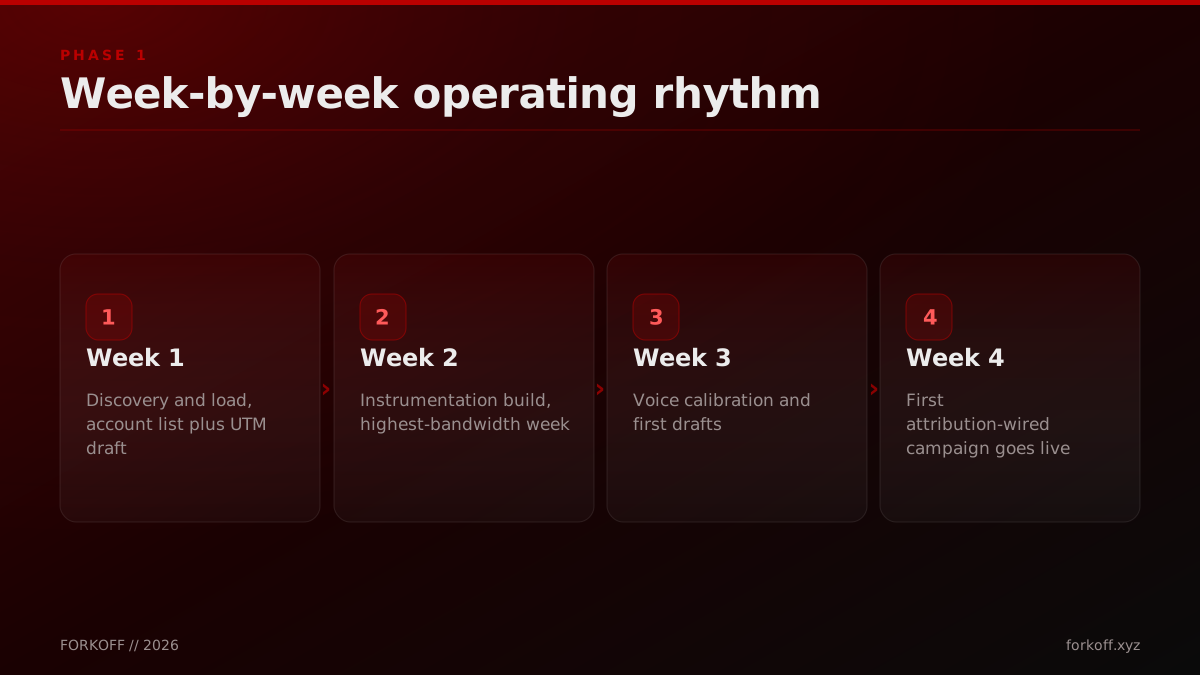
Phase 1 (days 1 to 30) is dense enough that founders benefit from a week-level breakdown, not just gate-level checkpoints. The FORKOFF cohort runs phase 1 in four named weeks: week 1 is discovery and load, week 2 is the instrumentation build and the highest-bandwidth week in the engagement, week 3 is voice calibration and the first drafts, and week 4 ships the first attribution-wired campaign. Each week splits deliverables cleanly between agency and founder. The four weeks in detail:
Week 1 (days 1 to 7), discovery + load. The agency owns five deliverables: kickoff agenda, ICP confirmation memo, named-account list import, UTM convention draft, dashboard wireframe. The founder owns three deliverables: named-account list export from CRM, two 60-minute voice-recording slots booked, head-of-sales introduced to agency lead inside Slack. By end of week 1, both sides have the same picture of who the engagement is targeting and what artifacts ship by Day 14. Founders who skip the head-of-sales introduction in week 1 produce engagements where sales rejects marketing-sourced leads at Day 45 with no recourse.
Week 2 (days 8 to 14), instrumentation build. The agency owns dashboard build, attribution rule documentation, sales-handoff Slack channel setup, Day 14 gate review prep. The founder owns CRM access provisioning, attribution rule sign-off, UTM convention sign-off. Week 2 is the highest-bandwidth week in the entire engagement. Founders who treat week 2 as a low-touch week ship into Day 14 with broken instrumentation and the agency spends weeks 3 to 4 firefighting instead of producing assets. Twice-weekly syncs in week 2 are non-negotiable. The failure points that surface when an attribution pipeline is automated without operator review are mapped in where AI workflow automation breaks, which is the same class of breakage week 2 is designed to catch early.
Week 3 (days 15 to 21), voice calibration + first draft. The agency owns style-sheet drafting, two founder-voice asset drafts, calibration session facilitation. The founder owns the two 60-minute voice recordings, style-sheet approval, draft review and feedback inside 48 hours. Week 3 is where the agency learns whether the founder is a "fast-approve" operator (returns drafts inside 24 hours with line edits) or a "slow-approve" operator (returns drafts inside 5 to 7 days with thematic redirects). Both operating styles work; the agency adapts its draft cycle accordingly. The signal that matters is consistency, not speed.
Week 4 (days 22 to 30), first campaign live. The agency owns first asset publishing, first attribution-wired campaign launch, Day 30 readout prep. The founder owns final asset approval, distribution-channel amplification, first qualified-pipeline-source review. Week 4 closes phase 1 with a clean handoff into the weekly cadence of phase 2. Founders who run a tight week 4 set the operating standard for the next 60 days.
Phase 1 week-by-week ownership split, days 1 to 30
| Week | Focus | Agency owns | Founder owns | Week closes when |
|---|---|---|---|---|
| Week 1 (days 1-7) | Discovery and load | Kickoff agenda, ICP memo, account import, UTM draft, dashboard wireframe | Account export, two recording slots booked, head of sales introduced | Both sides name the same target list |
| Week 2 (days 8-14) | Instrumentation build | Dashboard build, attribution rules, handoff channel, gate review prep | CRM access, attribution sign-off, UTM sign-off | All five Day 14 artifacts ship and test clean |
| Week 3 (days 15-21) | Voice calibration | Style sheet, two founder-voice drafts, calibration facilitation | Two 60-minute recordings, style approval, feedback inside 48 hours | Founder approves the style sheet |
| Week 4 (days 22-30) | First campaign live | Asset publishing, attribution-wired campaign, Day 30 readout prep | Final asset approval, channel amplification, first source review | Campaign is live and tracked |
Operator noteDay 14 gate misses go unrecovered 64% of the time across the engagement ledger, which is why week 2 is the dense one., FORKOFF AI Agency Engagement Ledger 2026, n=23
What does the agency learn about you in phase 1, and why does it matter in phase 2?
Phase 1 is bidirectional discovery: the founder learns whether the agency can execute, and the agency learns five things about the founder that determine how phase 2 runs. Those five are draft-approval velocity, risk tolerance on voice, CRM hygiene, sales-side responsiveness, and founder availability for distribution amplification. Each one resets the realistic asset cadence, the editorial register, or the attributable pipeline ceiling for the next 60 days. The five observations:
- Draft-approval velocity. Does the founder return drafts inside 24 hours, 72 hours, or 5+ days? This sets the realistic asset shipping cadence for phase 2.
- Risk tolerance on voice. Does the founder approve sharp, opinionated drafts or soften every controversial sentence? This determines whether the agency drafts hot takes or evergreen explainers in phase 2.
- CRM hygiene. Is the named-account list clean and current, or stale and partial? Stale CRM data means the agency runs more first-party enrichment in phase 2, adjusting the retainer scope accordingly.
- Sales-side responsiveness. Does sales acknowledge marketing-sourced leads inside 4 hours or 4 days? Slow sales acknowledgment caps the agency's attributable pipeline, regardless of asset quality.
- Founder availability for distribution amplification. Does the founder reshare and engage with agency-produced assets, or treat them as the agency's distribution problem? Founder amplification is a 3x to 8x reach multiplier; agencies plan phase 2 differently depending on which posture the founder takes.
The Day 30 internal review on the agency side covers all five. Founders who ask their agency lead to walk through these five observations during the Day 30 sync get a clearer picture of what phase 2 will produce than any deliverables list. The credibility vs user-acquisition campaigns analysis covers how the credibility lane responds to these five founder-side variables.
The renewal conversation script at Day 90
The Day 90 renewal conversation is the most under-prepared call in the entire engagement on both sides. Founders walk in with a vague sense of whether the engagement worked. Agencies walk in with a deliverable count and hope for the best. Neither posture produces a clean renewal decision. The FORKOFF cohort runs the Day 90 conversation as a structured 75-minute review with five agenda items in fixed order.
Agenda item 1 (15 minutes), the 4-gate scorecard. The agency walks through each of the 4 gates with binary pass or fail, plus a one-sentence explanation per gate. No softening, no "mostly passed" framing. Either the gate was hit or it was not.
Agenda item 2 (20 minutes), the attribution dataset walk-through. The agency screen-shares the pipeline-source attribution table and walks through each named source. The founder asks one question per source: "Is this source one I would have produced without the agency?" The answer separates retainer-attributable pipeline from organic pipeline that happened to land in the agency's tracking window.
Agenda item 3 (10 minutes), the cost-per-attributed-source calculation. The agency presents total retainer spend divided by net-new attributable sources (organic pipeline subtracted). This is the unit-economic number the founder takes to the board. Healthy B2B SaaS engagements at Series A typically run an estimated $2K to $6K per attributable qualified source. Below $2K usually means attribution is over-claimed; above $6K usually means the engagement is mismatched to the channel mix.
Agenda item 4 (15 minutes), the renewal options menu. The agency presents three renewal options: continue-as-is, expand-scope (added channel or added team), or contract-scope (lower price for narrower deliverables). The founder reacts to each option, asks clarifying questions, and commits to a written decision inside 7 days.
Agenda item 5 (15 minutes), the case-study handoff plan. Regardless of the renewal decision, the agency and founder agree on the case-study publication plan for the two case-study-quality wins identified at Day 60. The founder commits to a quote and a named-cite permission; the agency commits to a publication timeline.
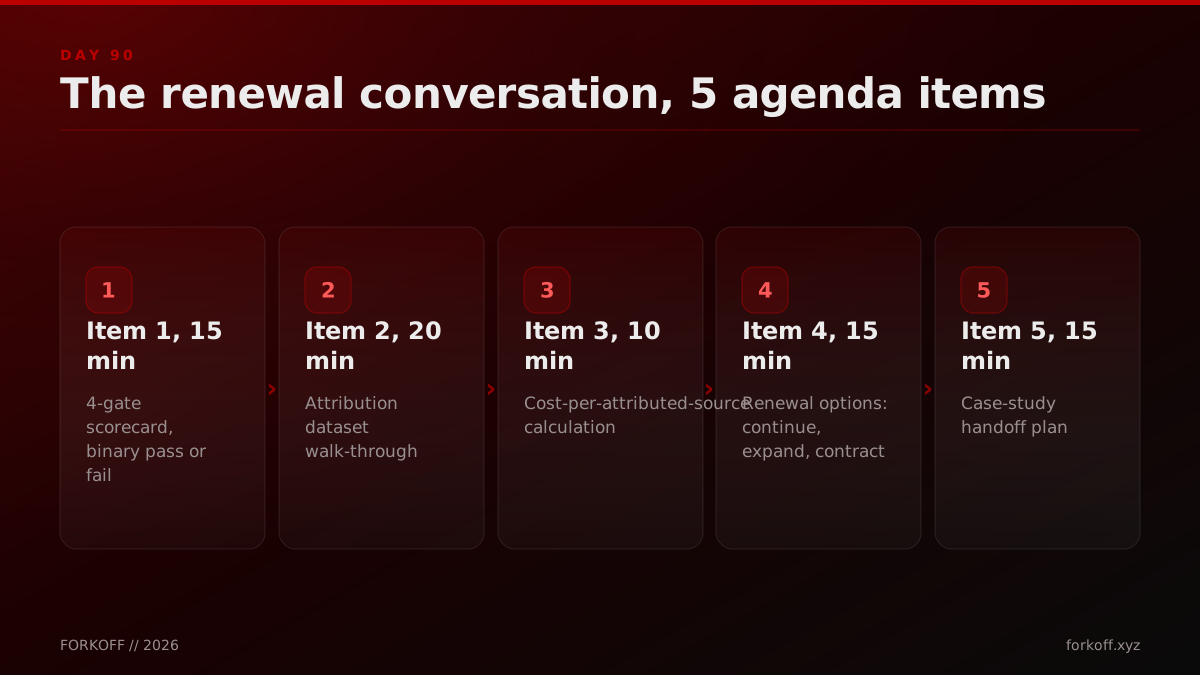
A founder who runs the Day 90 conversation through this 5-item agenda gets a clean renewal decision based on data, not vibes. An agency that resists the 5-item agenda is signaling that one of the five items will not hold up to scrutiny. Either signal is useful information for the renewal decision.
Attribution reporting reads CRM objects, not campaign labels
HubSpot documents its attribution reports as built on contact and deal object interactions, which means the report only resolves once contacts and deals are actually associated with the touch that created them. This is the mechanical reason the Day 14 artifact list names the CRM account load and the closed-won attribution rule as separate line items. A campaign launched before either exists produces touches that no report can later assign.
Source: HubSpot Knowledge Base, Create attribution reports
Phase 2 cadence and the 60 to 90 day compounding window
Phase 2 (days 31 to 90) is where the engagement either compounds or stalls. The weekly sync cadence is consistent, but the underlying operating posture shifts from "build the system" to "run the system at scale." Three operating shifts mark a healthy phase 2.
Shift 1, asset production decouples from founder approval. By Day 45, the agency should be drafting in founder voice well enough that 70 percent of drafts ship with line edits only, not thematic rewrites. If the founder is still doing thematic rewrites at Day 45, voice calibration did not stick and the agency needs a second 60-minute recording session.
Shift 2, the named-account list expands. By Day 60, the agency proposes additions to the named-account list based on engagement signals from phase 1. New accounts surface from comment threads, asset replies, and inbound conversation patterns. The founder approves or rejects each addition. A healthy phase 2 sees the named-account list grow by 15 to 30 percent.
Shift 3, sales-side feedback loops the attribution dataset. By Day 75, the agency receives weekly sales-side feedback on which marketing-sourced leads converted to opportunities and which stalled at first call. This feedback loops into asset selection for the final 15 days of phase 2. Agencies that do not establish this feedback loop by Day 75 ship Day 90 reports with self-attributed pipeline numbers and no sales-side validation. The SaaS 2026 distribution gated founder funnel reset covers the upstream funnel data that makes this feedback loop possible.
A written UTM convention is what makes Day 90 readable
Google Analytics documents campaign URL parameters as the mechanism that assigns traffic to a named source, medium and campaign. The parameters are free text, so consistency is a convention the team enforces rather than something the tool validates. An engagement that never writes the convention down produces a Day 90 dataset where the same channel appears under several spellings, which is indistinguishable from a channel that underperformed.
Source: Google Analytics Help, URL builders and campaign data
Operator noteThe attribution table is a Day 75 artifact, not a Day 90 one. That 15-day gap is what makes the renewal report shippable., FORKOFF AI Agency Engagement Ledger 2026, n=23
How do you read the Day 90 report against the FORKOFF cohort benchmark?
When the Day 90 report lands, read it against the n=23 FORKOFF AI Agency Engagement Ledger 2026 on three benchmark ranges: assets shipped (median 14, range 8 to 22), qualified pipeline sources attributed (median 6, range 3 to 11), and cost per attributed source (median approximately $3,800, range $2,100 to $5,600). Numbers below the floor flag instrumentation or capacity gaps, and numbers above the ceiling usually flag quantity over voice fidelity or low-intent conversations counted as qualified. The three benchmark ranges:
- Assets shipped in 90 days: median 14, range 8 to 22. Below 8 indicates production capacity gaps; above 22 usually indicates the agency is shipping quantity over voice fidelity.
- Qualified pipeline sources attributed: median 6, range 3 to 11. Below 3 indicates instrumentation or targeting gaps; above 11 usually indicates the agency is counting low-intent conversations as qualified.
- Cost per attributed source: median $3,800, range $2,100 to $5,600. Outliers in either direction warrant a conversation, not an immediate renewal decision.
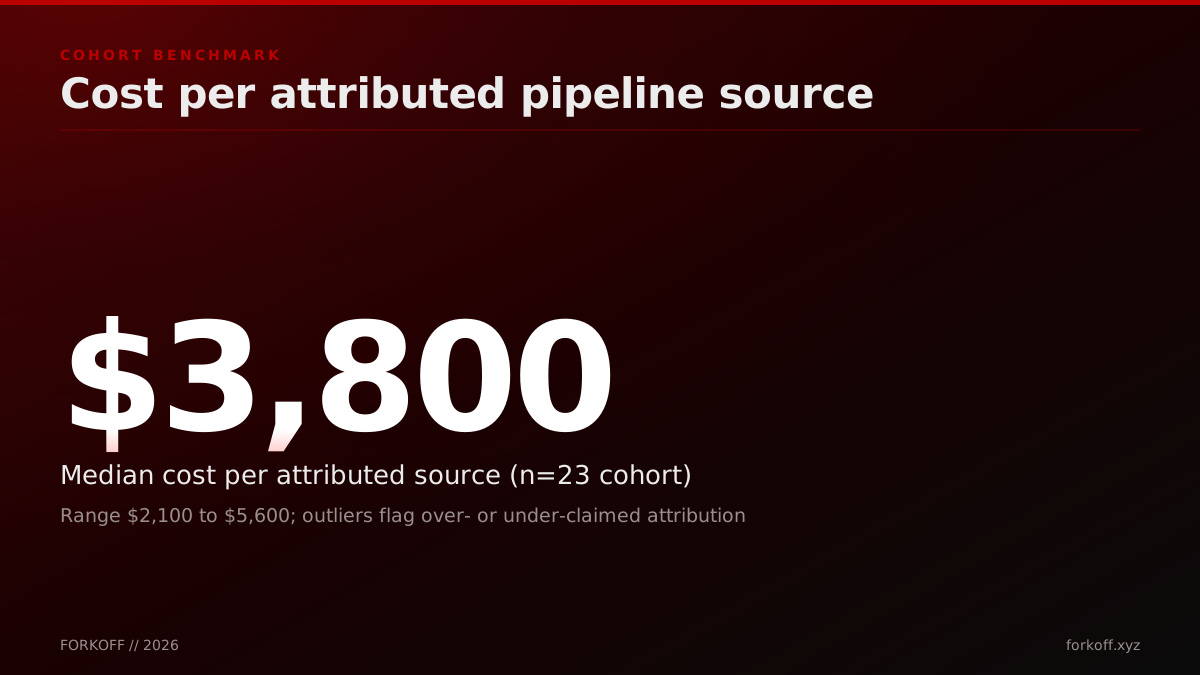
These benchmarks shift by company stage (pre-seed runs lower numbers; Series B runs higher), but the ranges hold within stage cohorts. Founders who anchor the Day 90 conversation against named benchmarks get cleaner renewal decisions than founders who evaluate the report in isolation.
Closing thought: why the framework compounds beyond the first 90 days
The 4-gate framework is not just a phase-1 accountability tool. It is the foundation for the renewal conversation at Day 90, the quarterly reviews at Days 180 / 270 / 360, and the structural decision to continue with the agency into Year 2. Founders who run the framework rigorously in phase 1 set the operating standard for the entire engagement. Agencies that hit the four gates in phase 1 establish credibility that compounds into looser oversight in phase 2 + 3, which lets the founder reallocate operating attention to product + sales while marketing runs predictably in the background. That is the real value of the framework: it converts a 90-day risk-management exercise into a multi-year operating system. It is the same operating system our founder funnel engagement installs from day one. Across the FORKOFF AI Agency Engagement Ledger 2026, the 16 of 23 cohort engagements that have crossed the 18-month mark all came from the cohort that hit the 4 gates in phase 1. Zero of the 7 non-renew engagements ever recovered to the 18-month mark, regardless of the recovery work attempted in months 4-12.
Want a tailored 90-day plan for your stage and ICP? Talk to a strategist. Want the form-based brief intake? Use the contact form.